
A SOP Template for Dishwashing Operations in Restaurants ensures consistent cleaning procedures, maintaining hygiene and safety standards. It outlines step-by-step instructions for proper use of dishwashing equipment, chemical handling, and sanitation protocols. Adhering to this template minimizes contamination risks and enhances operational efficiency.
Dish collection and sorting procedures.
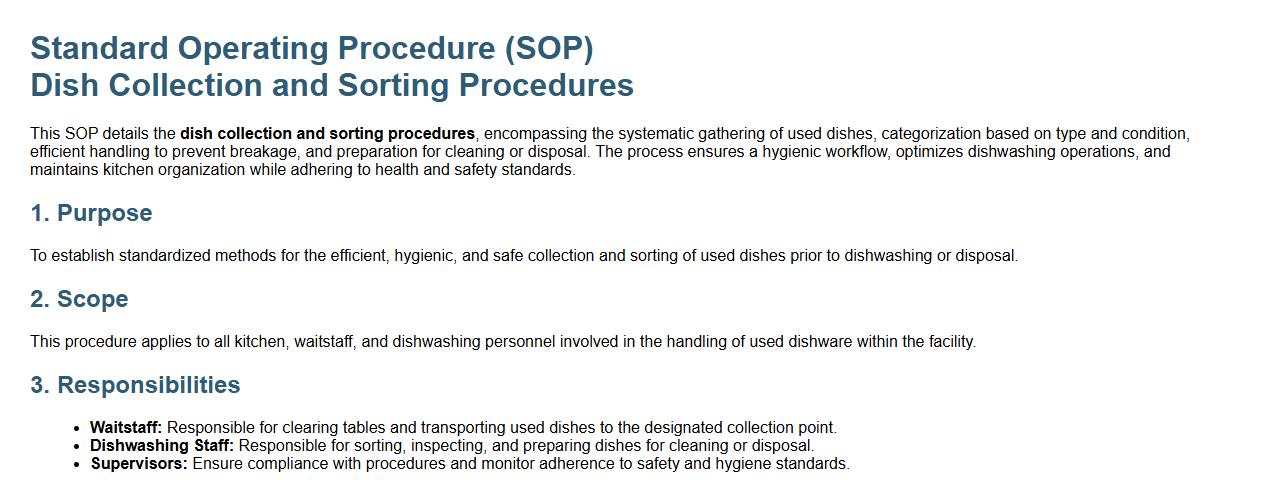
This SOP details the dish collection and sorting procedures, encompassing the systematic gathering of used dishes, categorization based on type and condition, efficient handling to prevent breakage, and preparation for cleaning or disposal. The process ensures a hygienic workflow, optimizes dishwashing operations, and maintains kitchen organization while adhering to health and safety standards.
Pre-rinsing and debris removal steps.
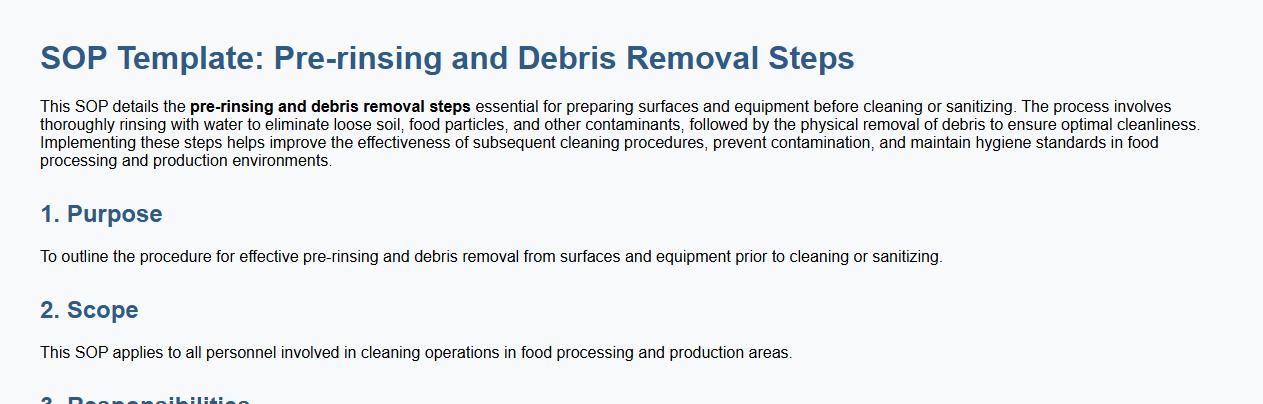
This SOP details the pre-rinsing and debris removal steps essential for preparing surfaces and equipment before cleaning or sanitizing. The process involves thoroughly rinsing with water to eliminate loose soil, food particles, and other contaminants, followed by the physical removal of debris to ensure optimal cleanliness. Implementing these steps helps improve the effectiveness of subsequent cleaning procedures, prevent contamination, and maintain hygiene standards in food processing and production environments.
Proper loading of dishwashing machines.
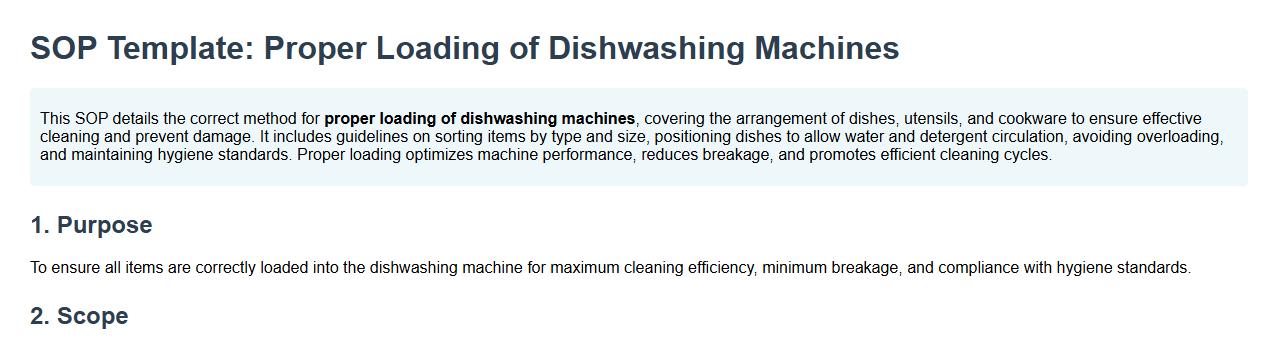
This SOP details the correct method for proper loading of dishwashing machines, covering the arrangement of dishes, utensils, and cookware to ensure effective cleaning and prevent damage. It includes guidelines on sorting items by type and size, positioning dishes to allow water and detergent circulation, avoiding overloading, and maintaining hygiene standards. Proper loading optimizes machine performance, reduces breakage, and promotes efficient cleaning cycles.
Manual dishwashing techniques and standards.
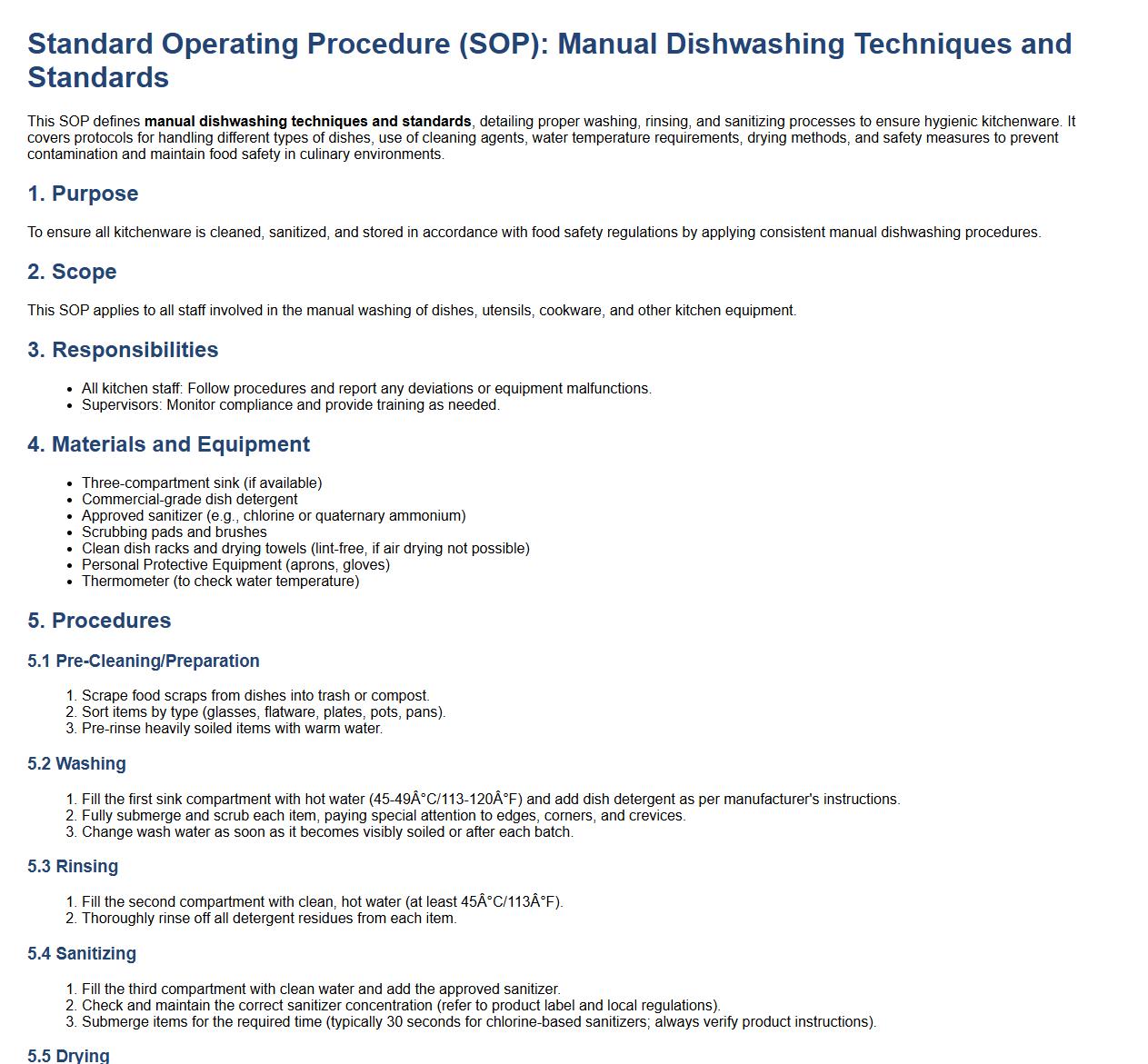
This SOP defines manual dishwashing techniques and standards, detailing proper washing, rinsing, and sanitizing processes to ensure hygienic kitchenware. It covers protocols for handling different types of dishes, use of cleaning agents, water temperature requirements, drying methods, and safety measures to prevent contamination and maintain food safety in culinary environments.
Chemical handling and detergent measurement guidelines.
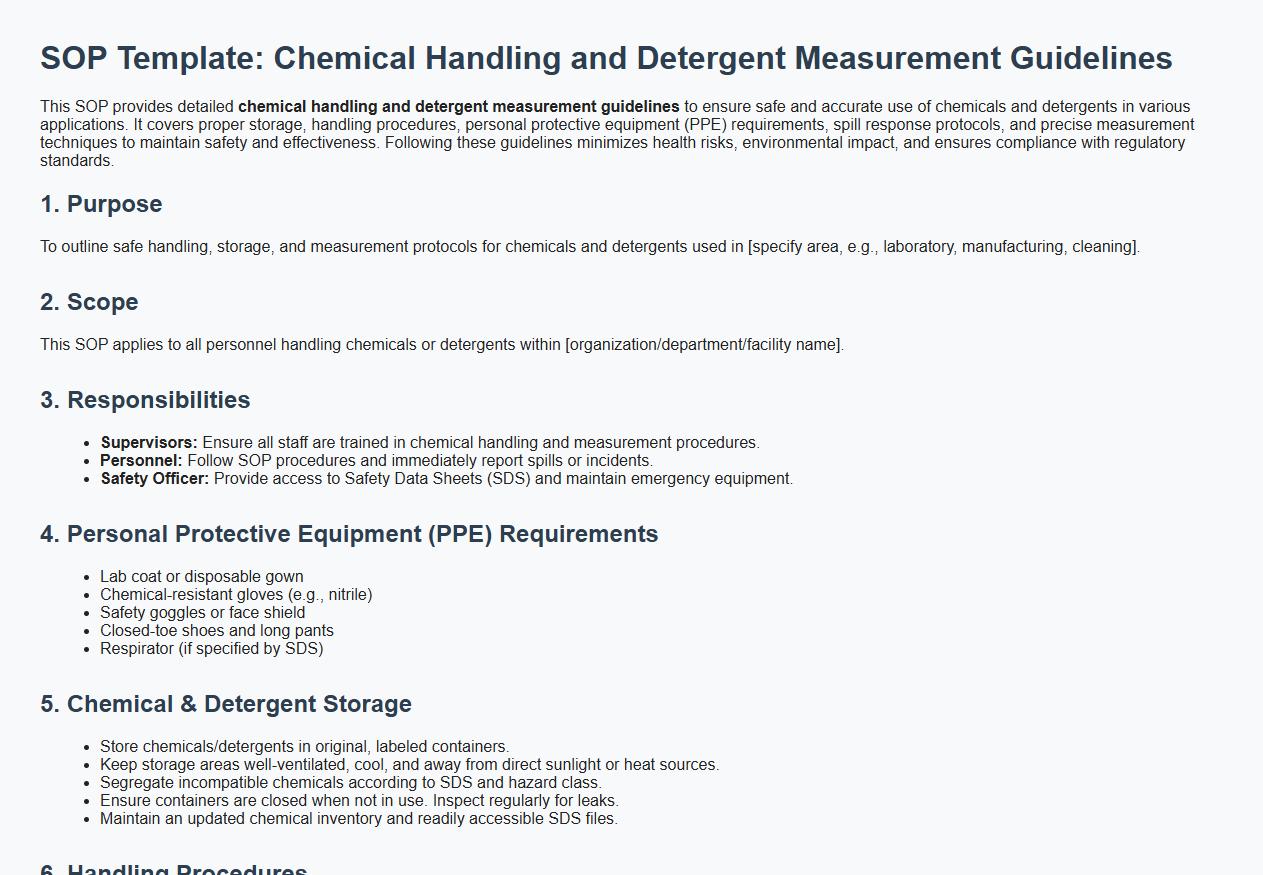
This SOP provides detailed chemical handling and detergent measurement guidelines to ensure safe and accurate use of chemicals and detergents in various applications. It covers proper storage, handling procedures, personal protective equipment (PPE) requirements, spill response protocols, and precise measurement techniques to maintain safety and effectiveness. Following these guidelines minimizes health risks, environmental impact, and ensures compliance with regulatory standards.
Machine operation: startup, cycle monitoring, shutdown.
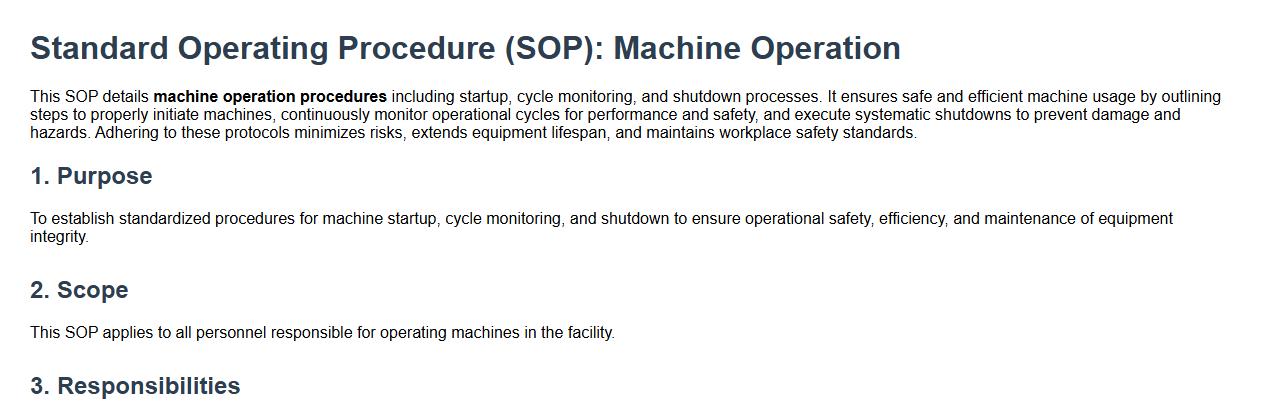
This SOP details machine operation procedures including startup, cycle monitoring, and shutdown processes. It ensures safe and efficient machine usage by outlining steps to properly initiate machines, continuously monitor operational cycles for performance and safety, and execute systematic shutdowns to prevent damage and hazards. Adhering to these protocols minimizes risks, extends equipment lifespan, and maintains workplace safety standards.
Quality control: inspection and re-washing protocols.
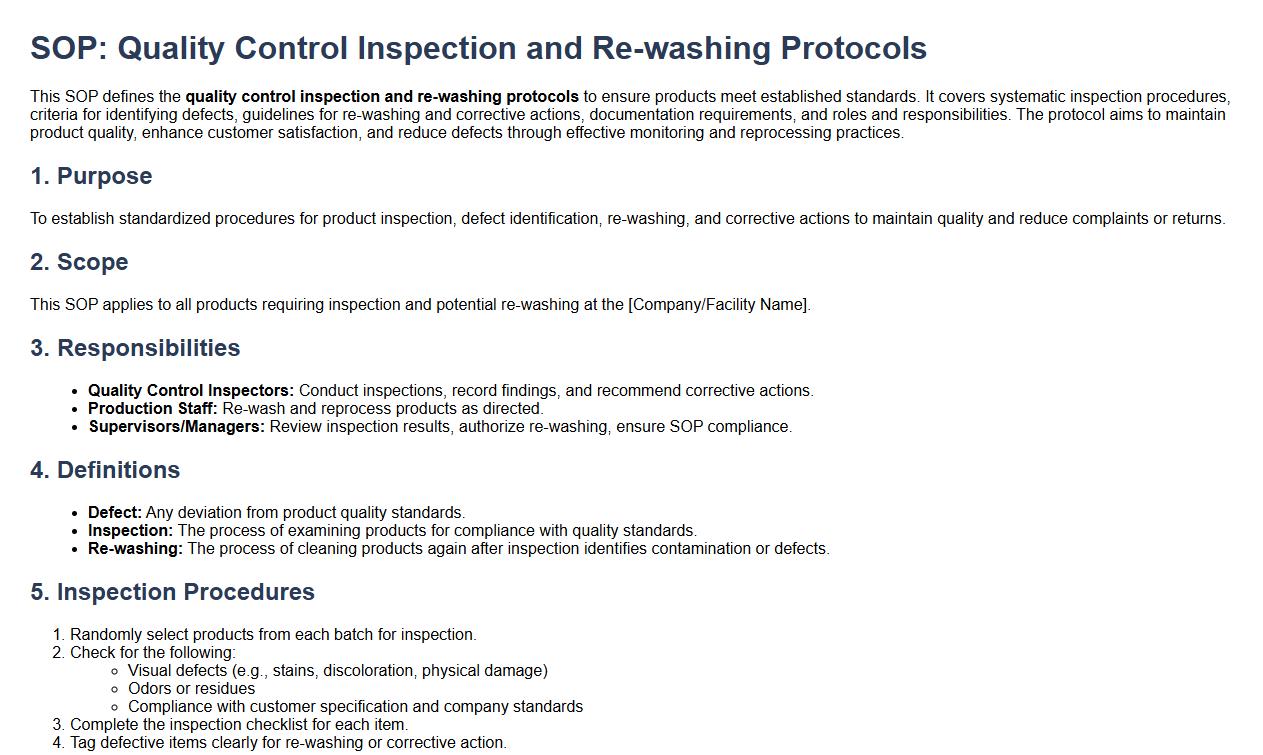
This SOP defines the quality control inspection and re-washing protocols to ensure products meet established standards. It covers systematic inspection procedures, criteria for identifying defects, guidelines for re-washing and corrective actions, documentation requirements, and roles and responsibilities. The protocol aims to maintain product quality, enhance customer satisfaction, and reduce defects through effective monitoring and reprocessing practices.
Sanitizing and drying procedures.
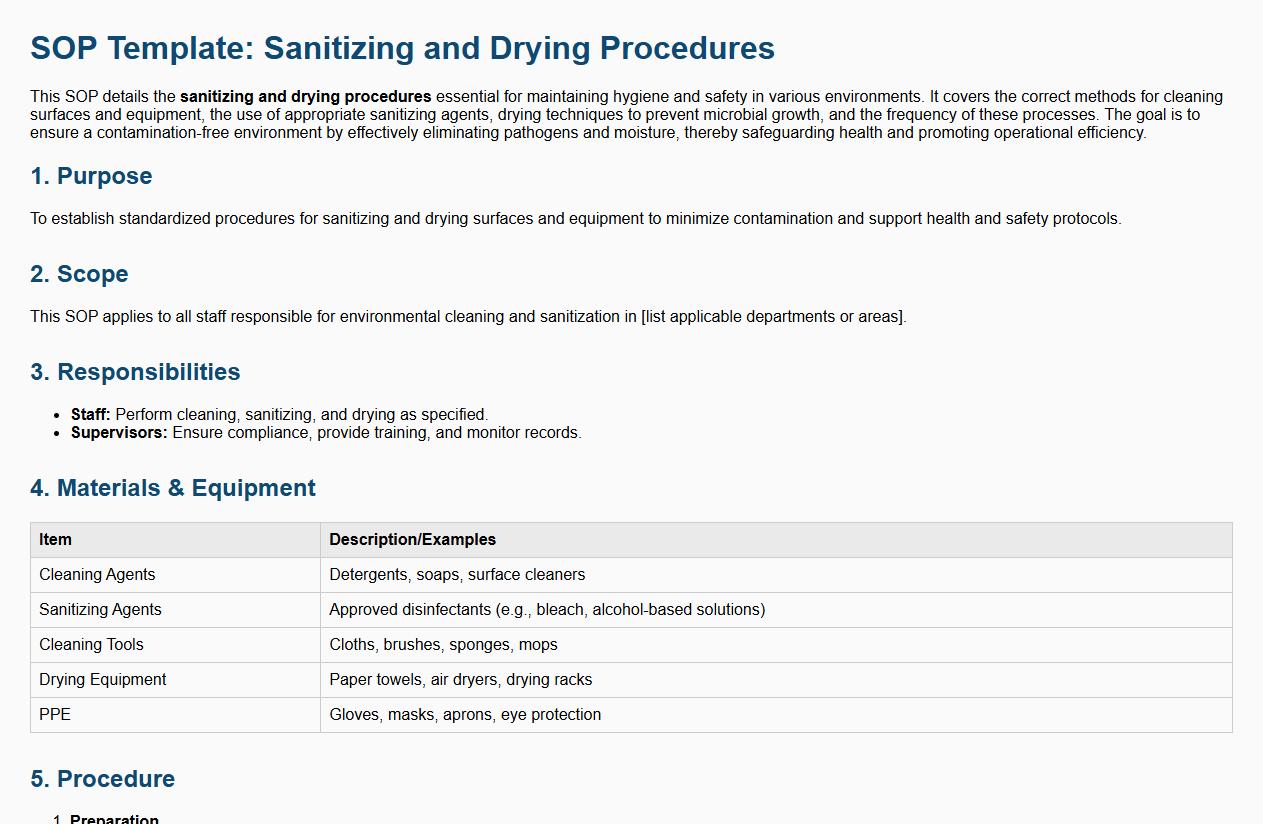
This SOP details the sanitizing and drying procedures essential for maintaining hygiene and safety in various environments. It covers the correct methods for cleaning surfaces and equipment, the use of appropriate sanitizing agents, drying techniques to prevent microbial growth, and the frequency of these processes. The goal is to ensure a contamination-free environment by effectively eliminating pathogens and moisture, thereby safeguarding health and promoting operational efficiency.
Clean dish storage and rotation policy.
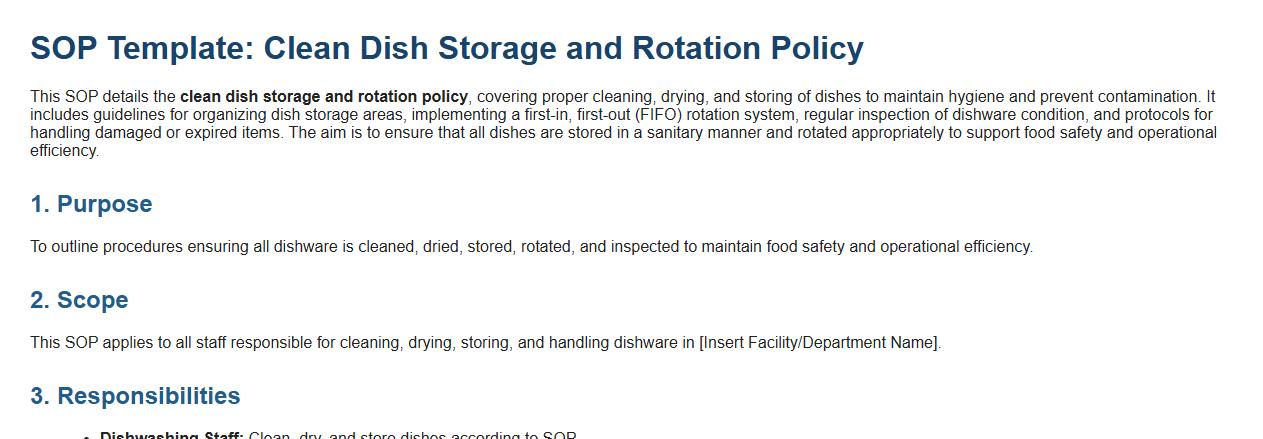
This SOP details the clean dish storage and rotation policy, covering proper cleaning, drying, and storing of dishes to maintain hygiene and prevent contamination. It includes guidelines for organizing dish storage areas, implementing a first-in, first-out (FIFO) rotation system, regular inspection of dishware condition, and protocols for handling damaged or expired items. The aim is to ensure that all dishes are stored in a sanitary manner and rotated appropriately to support food safety and operational efficiency.
End-of-shift cleaning, maintenance, and waste disposal process.
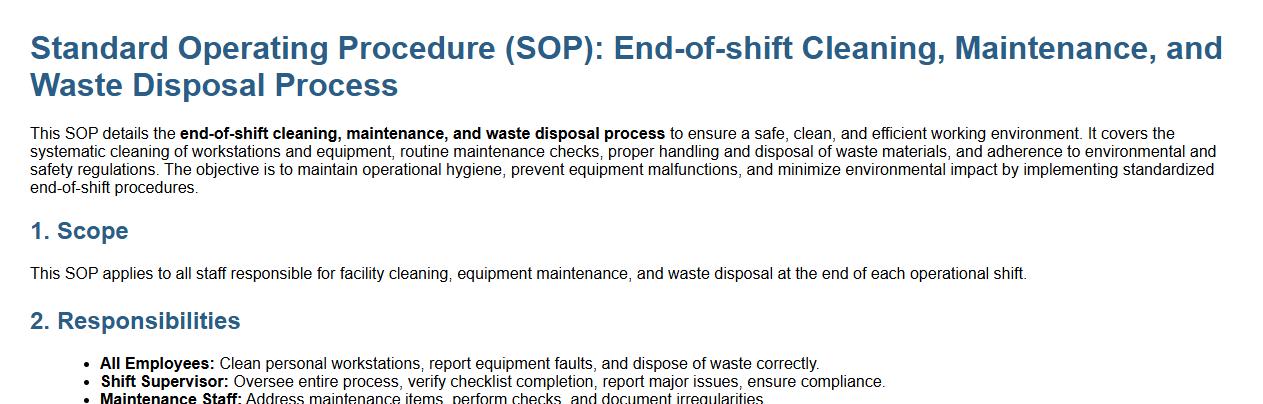
This SOP details the end-of-shift cleaning, maintenance, and waste disposal process to ensure a safe, clean, and efficient working environment. It covers the systematic cleaning of workstations and equipment, routine maintenance checks, proper handling and disposal of waste materials, and adherence to environmental and safety regulations. The objective is to maintain operational hygiene, prevent equipment malfunctions, and minimize environmental impact by implementing standardized end-of-shift procedures.
Key Steps in Pre-washing and Sorting Dirty Dishes
The SOP emphasizes thorough pre-washing to remove food residues effectively before the main wash cycle. Sorting is crucial by separating dishes based on type and soil level to optimize cleaning efficiency. Proper sorting also prevents cross-contamination and ensures smoother workflow.
Specified Cleaning Agents and Sanitizers
The SOP mandates the use of food-safe detergents that effectively break down grease and stains without damaging dishware. It specifies sanitizers such as chlorine or quaternary ammonium compounds to ensure all pathogens are eliminated. Using the correct chemical concentrations is essential for safety and compliance with health standards.
Procedures for Operating and Maintaining Dishwashing Equipment
Operating procedures include selecting appropriate cycles based on dish type and soil level for maximum efficiency. The SOP requires routine checks and cleaning of the equipment to prevent malfunctions and maintain performance. Regular calibration and maintenance schedules are outlined to extend the lifespan of the dishwashing machines.
Proper Drying and Storage of Cleaned Dishes and Utensils
The SOP highlights the importance of air drying to prevent bacterial growth on cleaned items. Dishes and utensils must be stored in a clean, dry area to maintain hygiene and avoid contamination. Proper storage also includes organizing items in a way that facilitates easy access and prevents damage.
Safety and Personal Hygiene Requirements
The SOP enforces strict adherence to wearing protective gear like gloves and aprons to prevent injury and contamination. Personal hygiene practices such as regular handwashing and avoiding jewelry are strongly emphasized. Safe handling instructions for cleaning chemicals are provided to minimize health hazards for staff.