
A SOP Template for Food Sanitation provides a standardized framework to ensure consistent cleaning and hygiene practices in food handling environments. This template outlines step-by-step procedures, cleaning schedules, and safety protocols to minimize contamination risks and maintain compliance with health regulations. Implementing a clear SOP Template for Food Sanitation enhances food safety and protects consumer health effectively.
Sanitation schedule and frequency for all areas.
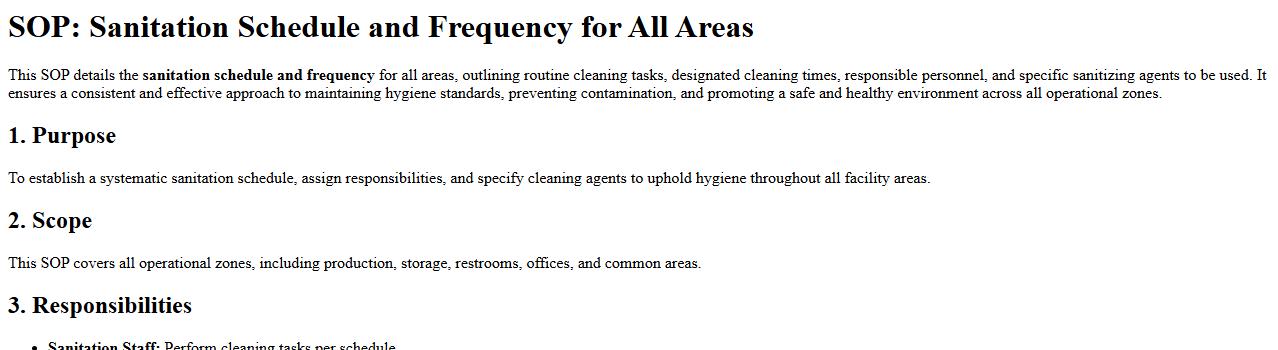
This SOP details the sanitation schedule and frequency for all areas, outlining routine cleaning tasks, designated cleaning times, responsible personnel, and specific sanitizing agents to be used. It ensures a consistent and effective approach to maintaining hygiene standards, preventing contamination, and promoting a safe and healthy environment across all operational zones.
Cleaning procedures for food contact surfaces.
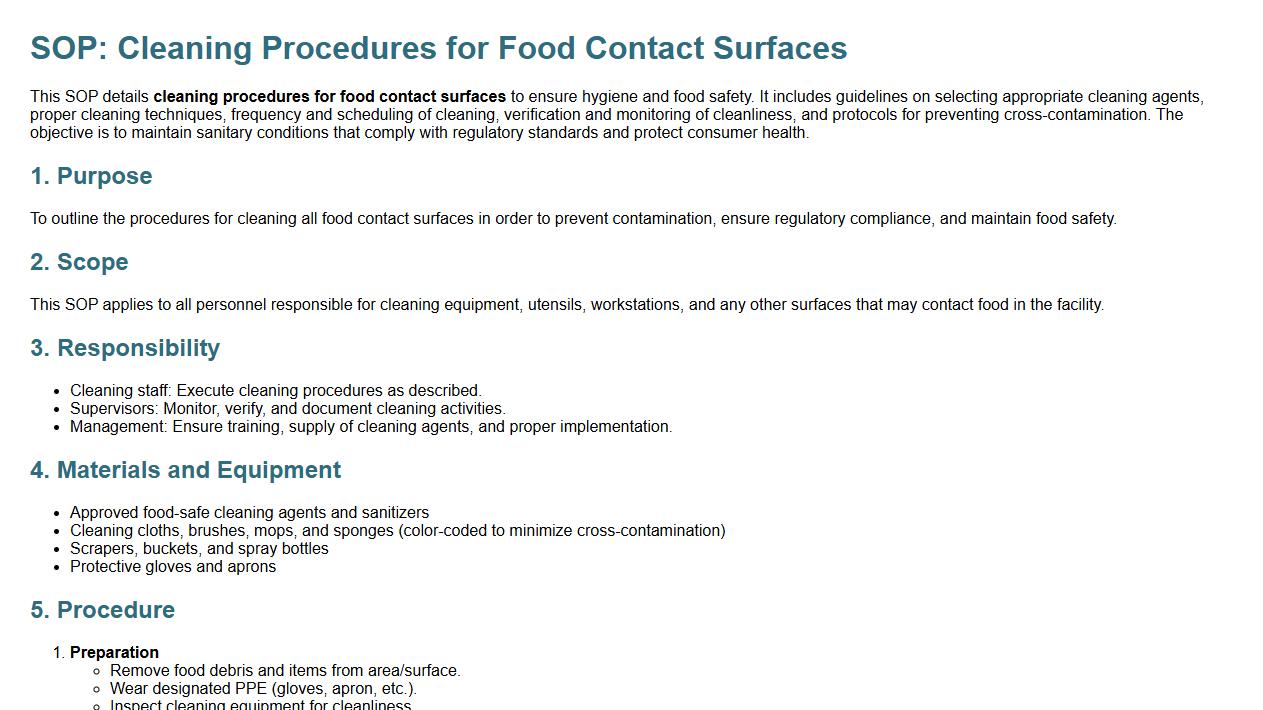
This SOP details cleaning procedures for food contact surfaces to ensure hygiene and food safety. It includes guidelines on selecting appropriate cleaning agents, proper cleaning techniques, frequency and scheduling of cleaning, verification and monitoring of cleanliness, and protocols for preventing cross-contamination. The objective is to maintain sanitary conditions that comply with regulatory standards and protect consumer health.
Personal hygiene and handwashing protocols.
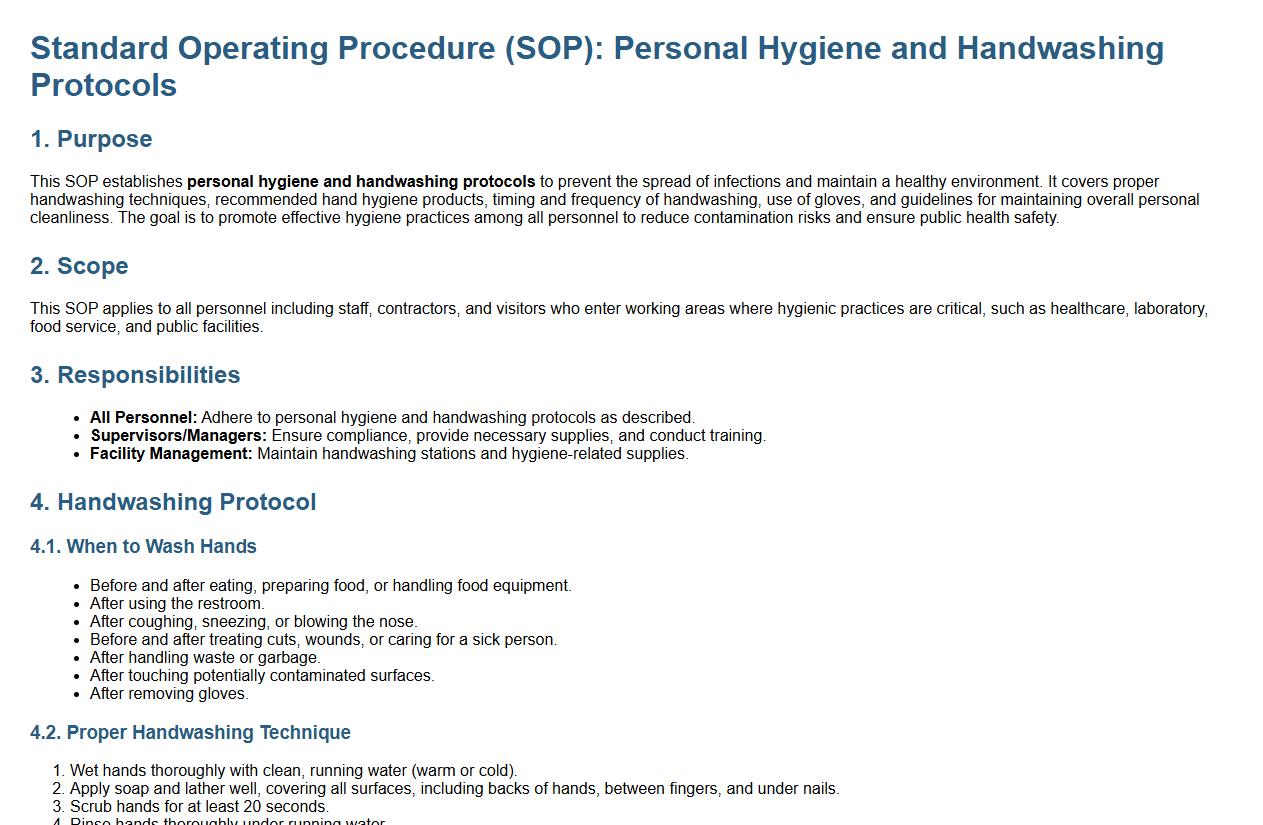
This SOP establishes personal hygiene and handwashing protocols to prevent the spread of infections and maintain a healthy environment. It covers proper handwashing techniques, recommended hand hygiene products, timing and frequency of handwashing, use of gloves, and guidelines for maintaining overall personal cleanliness. The goal is to promote effective hygiene practices among all personnel to reduce contamination risks and ensure public health safety.
Proper use and storage of cleaning chemicals.
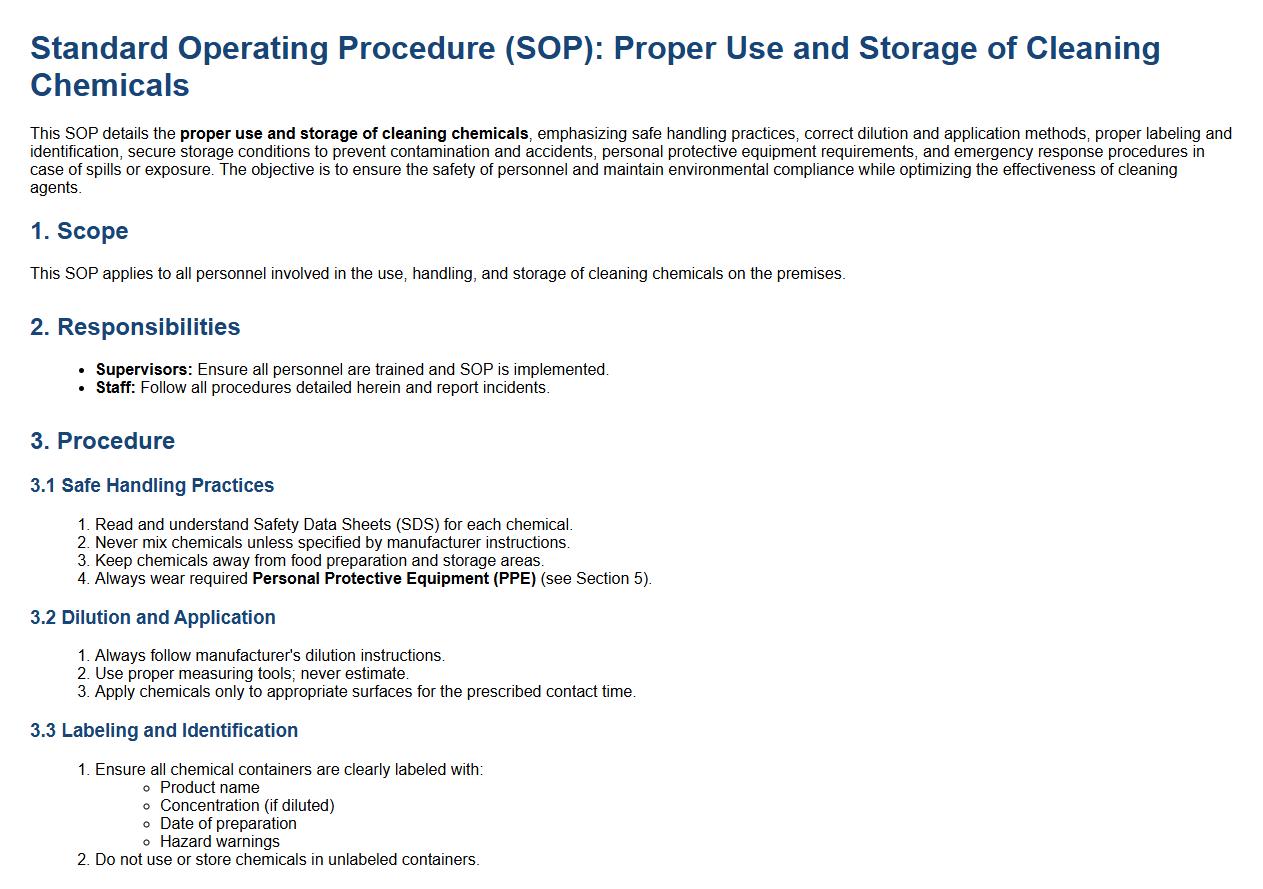
This SOP details the proper use and storage of cleaning chemicals, emphasizing safe handling practices, correct dilution and application methods, proper labeling and identification, secure storage conditions to prevent contamination and accidents, personal protective equipment requirements, and emergency response procedures in case of spills or exposure. The objective is to ensure the safety of personnel and maintain environmental compliance while optimizing the effectiveness of cleaning agents.
Detailed equipment sanitation guidelines.
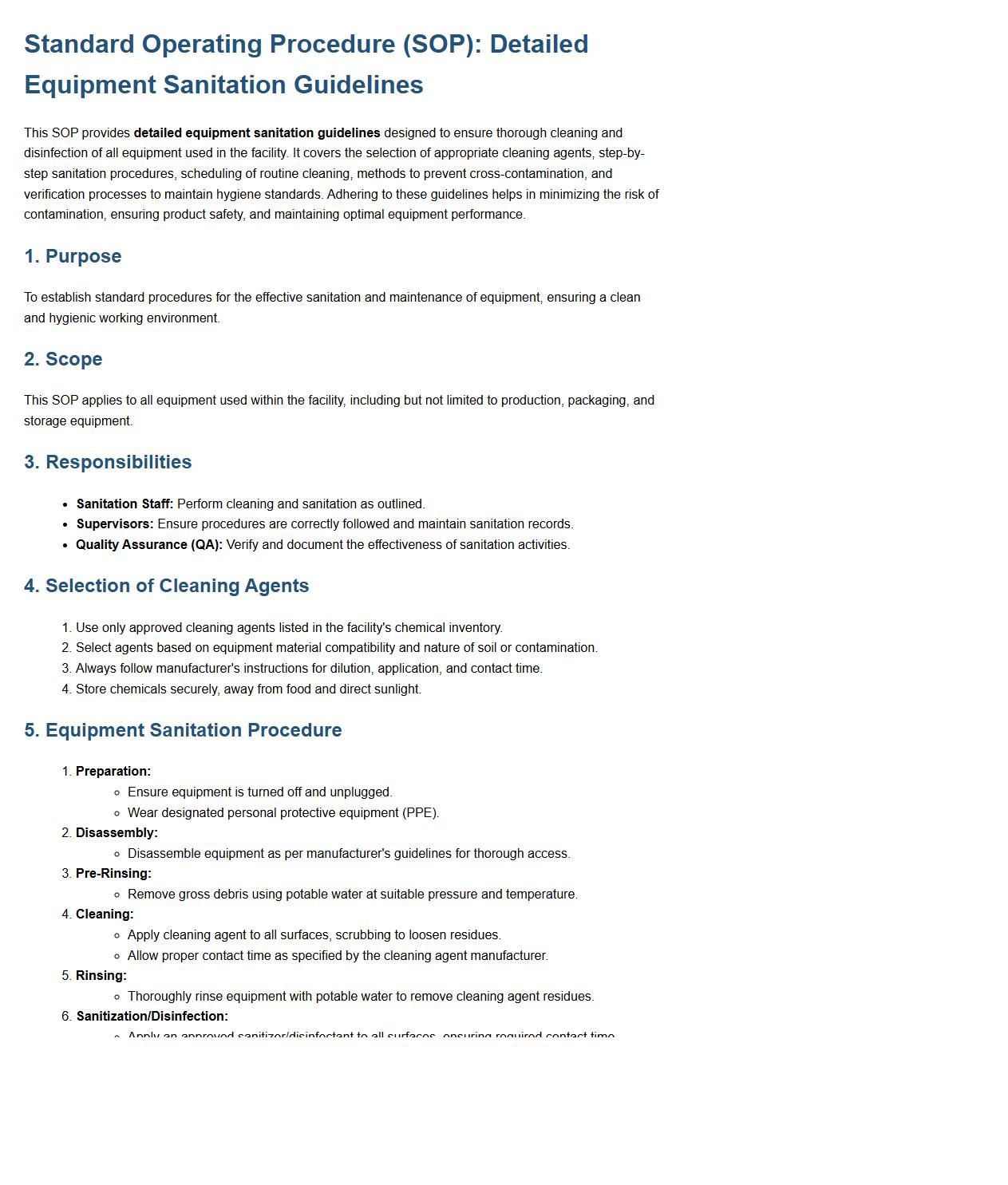
This SOP provides detailed equipment sanitation guidelines designed to ensure thorough cleaning and disinfection of all equipment used in the facility. It covers the selection of appropriate cleaning agents, step-by-step sanitation procedures, scheduling of routine cleaning, methods to prevent cross-contamination, and verification processes to maintain hygiene standards. Adhering to these guidelines helps in minimizing the risk of contamination, ensuring product safety, and maintaining optimal equipment performance.
Waste disposal and removal procedures.
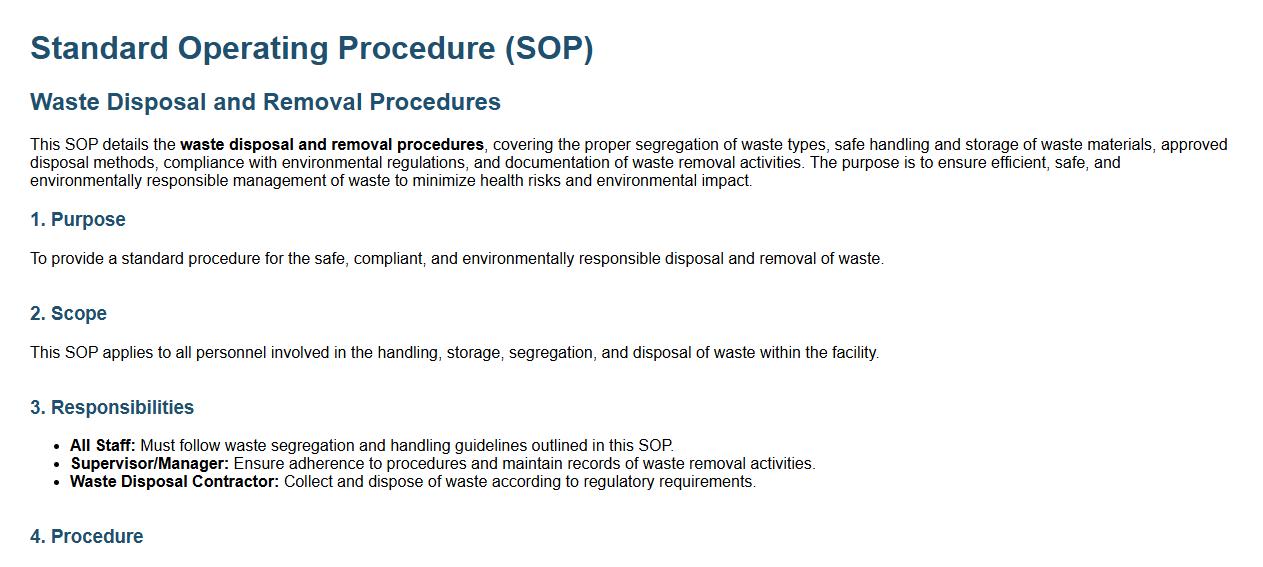
This SOP details the waste disposal and removal procedures, covering the proper segregation of waste types, safe handling and storage of waste materials, approved disposal methods, compliance with environmental regulations, and documentation of waste removal activities. The purpose is to ensure efficient, safe, and environmentally responsible management of waste to minimize health risks and environmental impact.
Inspection and monitoring of sanitation effectiveness.
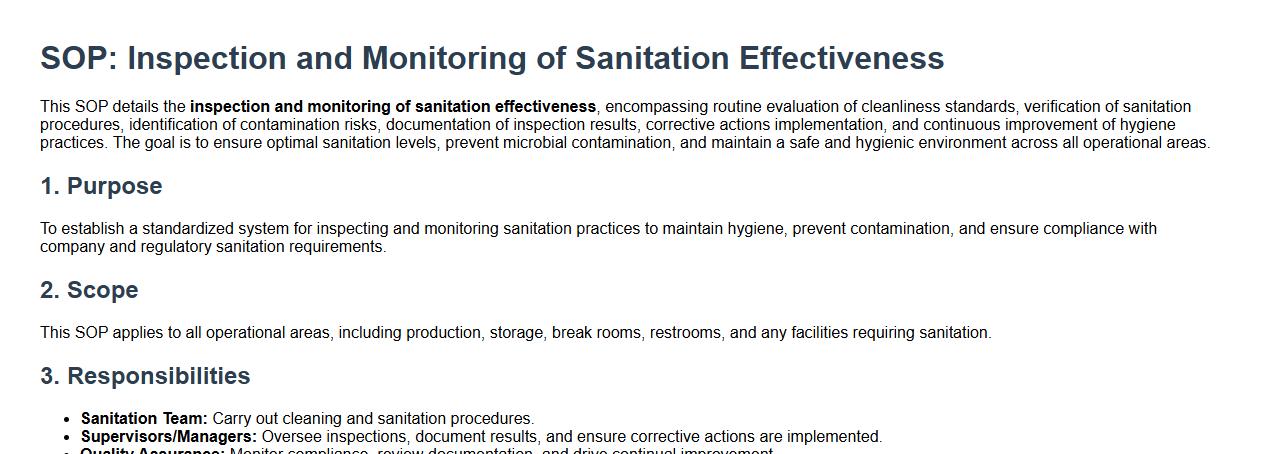
This SOP details the inspection and monitoring of sanitation effectiveness, encompassing routine evaluation of cleanliness standards, verification of sanitation procedures, identification of contamination risks, documentation of inspection results, corrective actions implementation, and continuous improvement of hygiene practices. The goal is to ensure optimal sanitation levels, prevent microbial contamination, and maintain a safe and hygienic environment across all operational areas.
Corrective actions for sanitation violations.
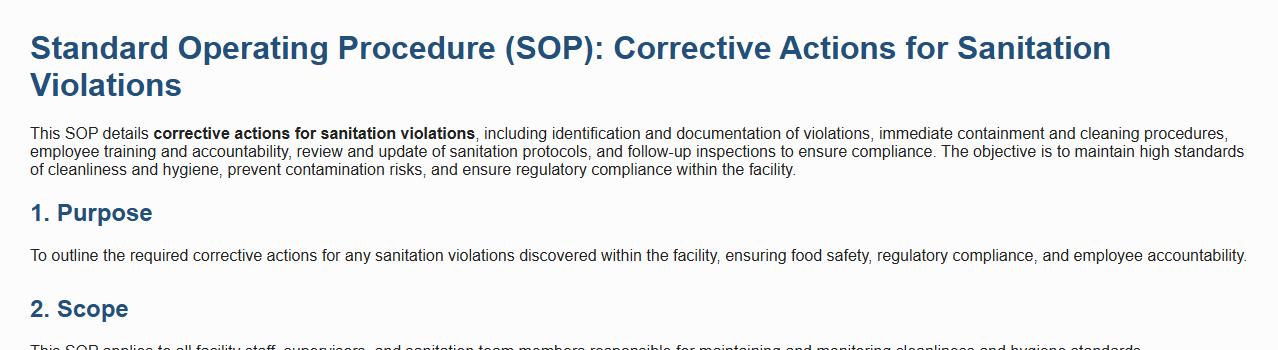
This SOP details corrective actions for sanitation violations, including identification and documentation of violations, immediate containment and cleaning procedures, employee training and accountability, review and update of sanitation protocols, and follow-up inspections to ensure compliance. The objective is to maintain high standards of cleanliness and hygiene, prevent contamination risks, and ensure regulatory compliance within the facility.
Documentation and record-keeping requirements.
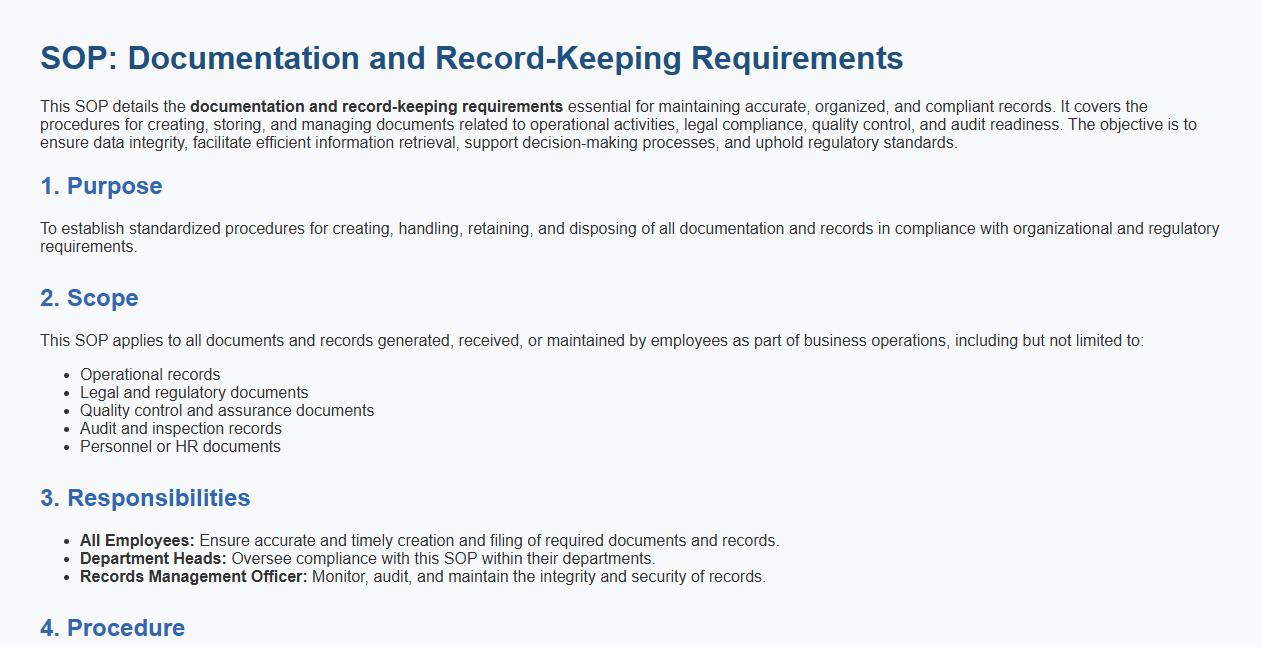
This SOP details the documentation and record-keeping requirements essential for maintaining accurate, organized, and compliant records. It covers the procedures for creating, storing, and managing documents related to operational activities, legal compliance, quality control, and audit readiness. The objective is to ensure data integrity, facilitate efficient information retrieval, support decision-making processes, and uphold regulatory standards.
Employee training and retraining protocols.
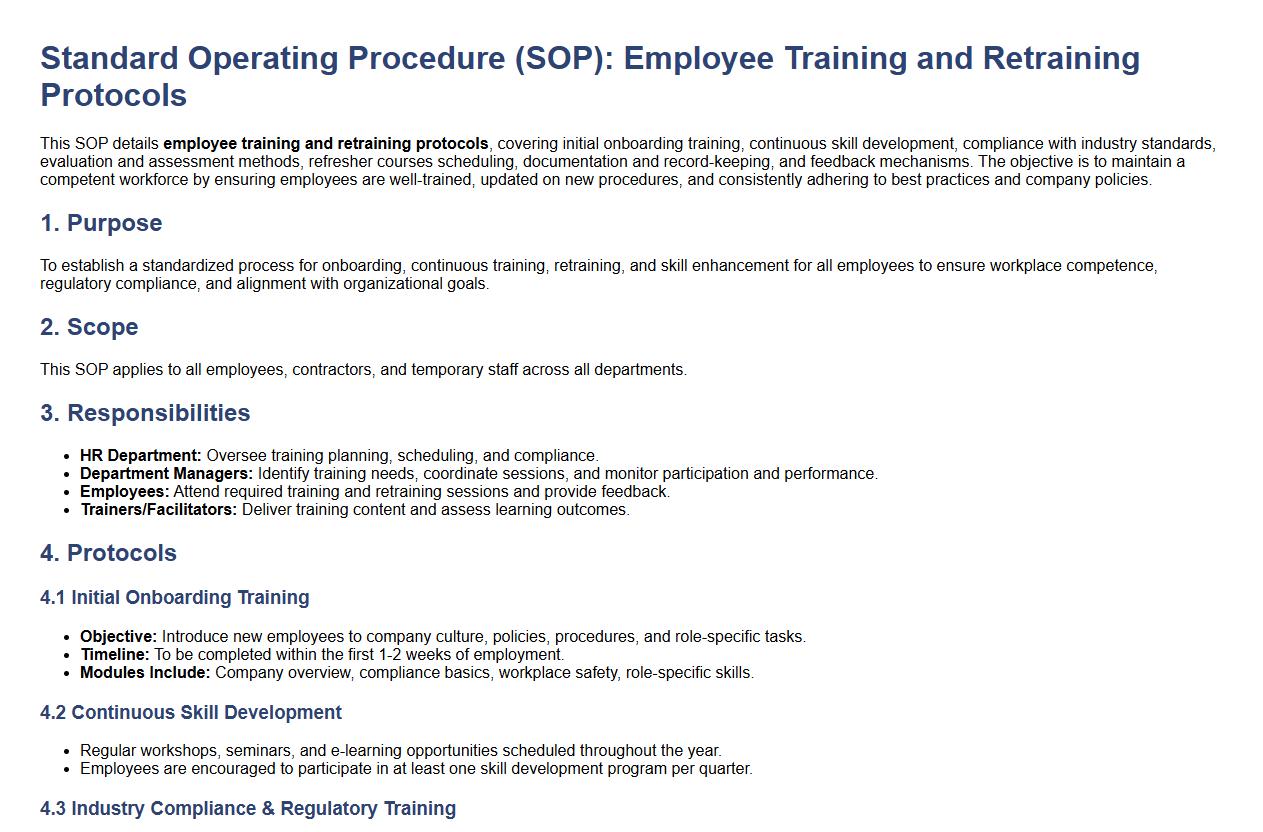
This SOP details employee training and retraining protocols, covering initial onboarding training, continuous skill development, compliance with industry standards, evaluation and assessment methods, refresher courses scheduling, documentation and record-keeping, and feedback mechanisms. The objective is to maintain a competent workforce by ensuring employees are well-trained, updated on new procedures, and consistently adhering to best practices and company policies.
Key Hygiene Practices for Maintaining Food Contact Surfaces
The SOP emphasizes thorough cleaning and sanitizing of all food contact surfaces to prevent contamination. It mandates the use of approved cleaning agents and adherence to prescribed contact times for sanitizers. Regular training for staff on hygiene best practices ensures consistent compliance and food safety.
Procedures for Proper Cleaning and Sanitizing of Kitchen Equipment
The SOP details specific steps including pre-cleaning, washing with detergents, rinsing, and sanitizing with approved agents. It stresses the importance of disassembling equipment parts when possible for effective cleaning. Equipment must be allowed to air dry to prevent bacterial growth before reassembling.
Prevention of Cross-Contamination During Food Preparation
The SOP outlines strict separation of raw and cooked foods through designated utensils and work areas. It requires frequent handwashing and changing of gloves between tasks to reduce contamination risk. Color-coded cutting boards and tools are recommended to maintain clear separation of food types.
Monitoring and Documentation Requirements for Food Sanitation
The SOP mandates routine checks and detailed records of cleaning schedules, sanitizer concentrations, and equipment inspections. Monitoring involves verifying temperature controls and surface cleanliness through swab tests. Documentation supports traceability and accountability for food safety audits.
Corrective Actions in Case of Sanitation Failure or Contamination
The SOP specifies immediate cessation of operations in affected areas upon detection of contamination. It requires thorough re-cleaning and sanitizing before resuming use of equipment or surfaces. Additionally, incident reports and staff retraining are implemented to prevent recurrence.