
A SOP Template for Kitchen Cleaning provides a structured guideline to ensure thorough and consistent cleaning practices in commercial or residential kitchens. It outlines essential steps, safety protocols, and cleaning schedules to maintain hygiene standards and prevent contamination. This template helps streamline operations and enhances overall kitchen safety and efficiency.
Daily cleaning schedule and task assignment.
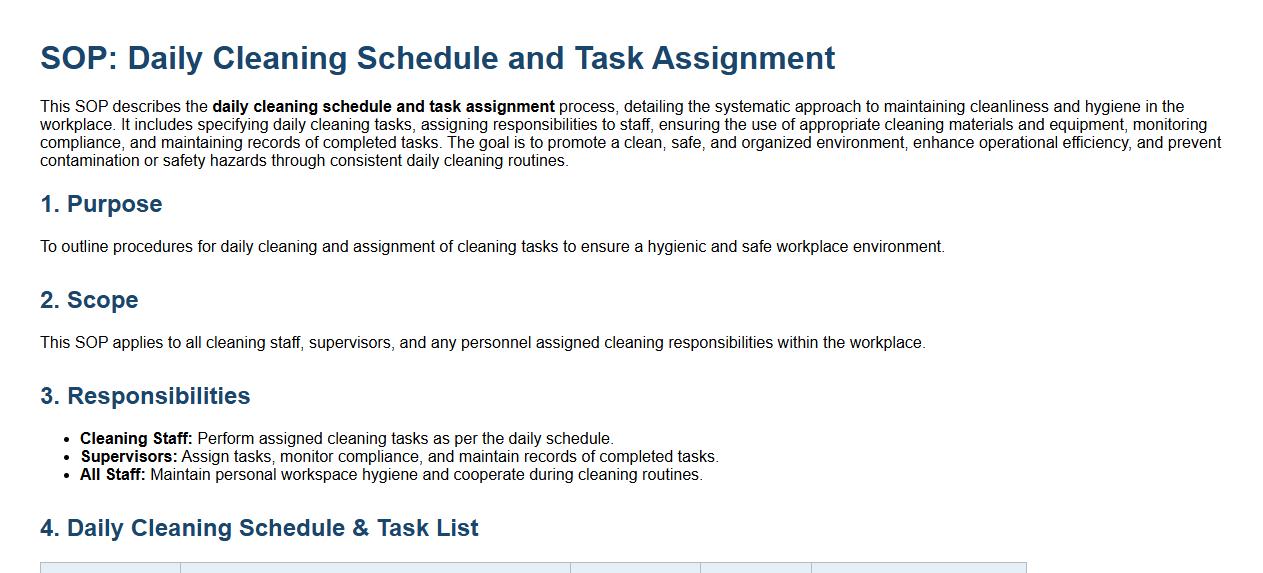
This SOP describes the daily cleaning schedule and task assignment process, detailing the systematic approach to maintaining cleanliness and hygiene in the workplace. It includes specifying daily cleaning tasks, assigning responsibilities to staff, ensuring the use of appropriate cleaning materials and equipment, monitoring compliance, and maintaining records of completed tasks. The goal is to promote a clean, safe, and organized environment, enhance operational efficiency, and prevent contamination or safety hazards through consistent daily cleaning routines.
Surface and countertop sanitization procedures.
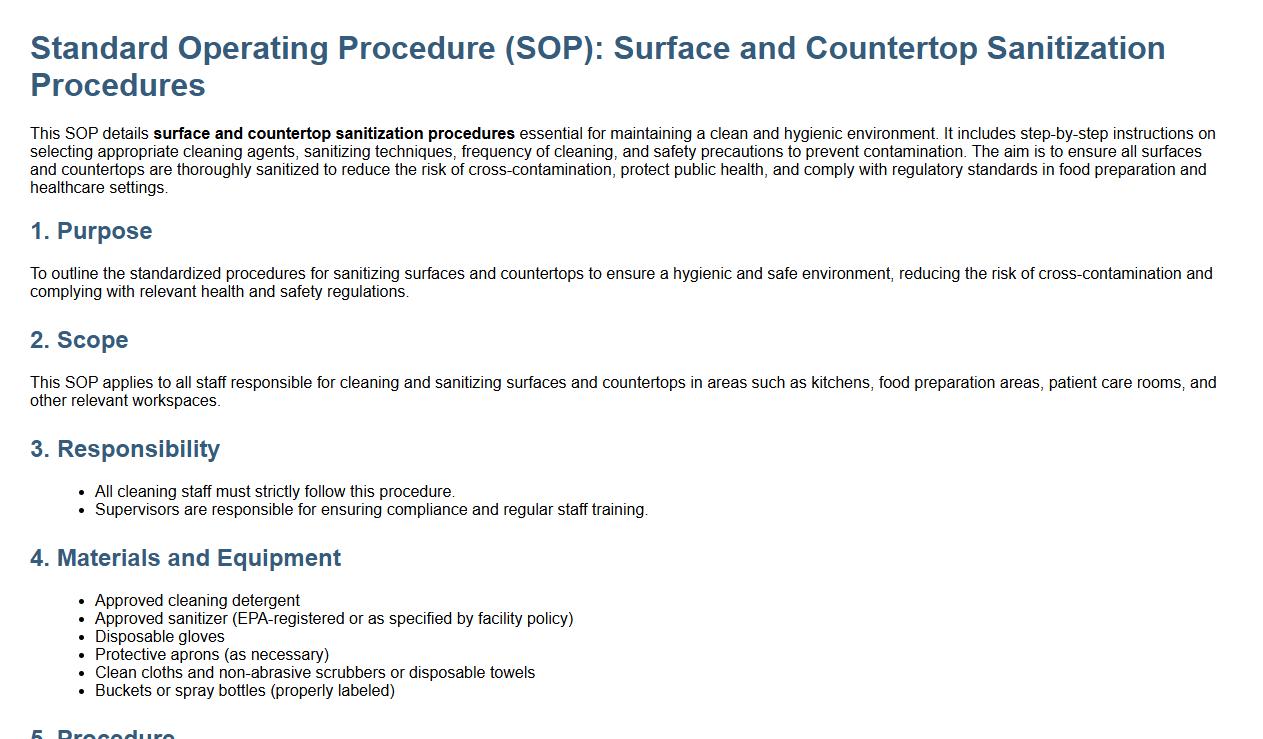
This SOP details surface and countertop sanitization procedures essential for maintaining a clean and hygienic environment. It includes step-by-step instructions on selecting appropriate cleaning agents, sanitizing techniques, frequency of cleaning, and safety precautions to prevent contamination. The aim is to ensure all surfaces and countertops are thoroughly sanitized to reduce the risk of cross-contamination, protect public health, and comply with regulatory standards in food preparation and healthcare settings.
Dishwashing and utensil sterilization protocols.
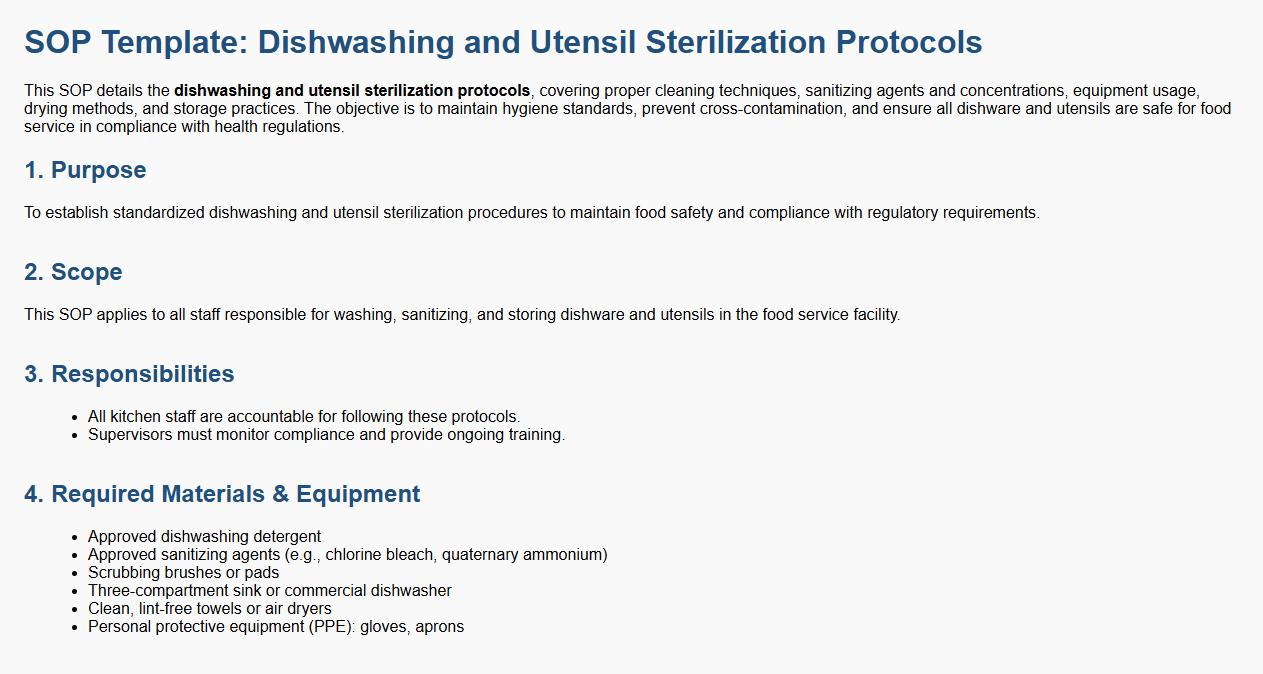
This SOP details the dishwashing and utensil sterilization protocols, covering proper cleaning techniques, sanitizing agents and concentrations, equipment usage, drying methods, and storage practices. The objective is to maintain hygiene standards, prevent cross-contamination, and ensure all dishware and utensils are safe for food service in compliance with health regulations.
Floor sweeping, mopping, and spill management guidelines.
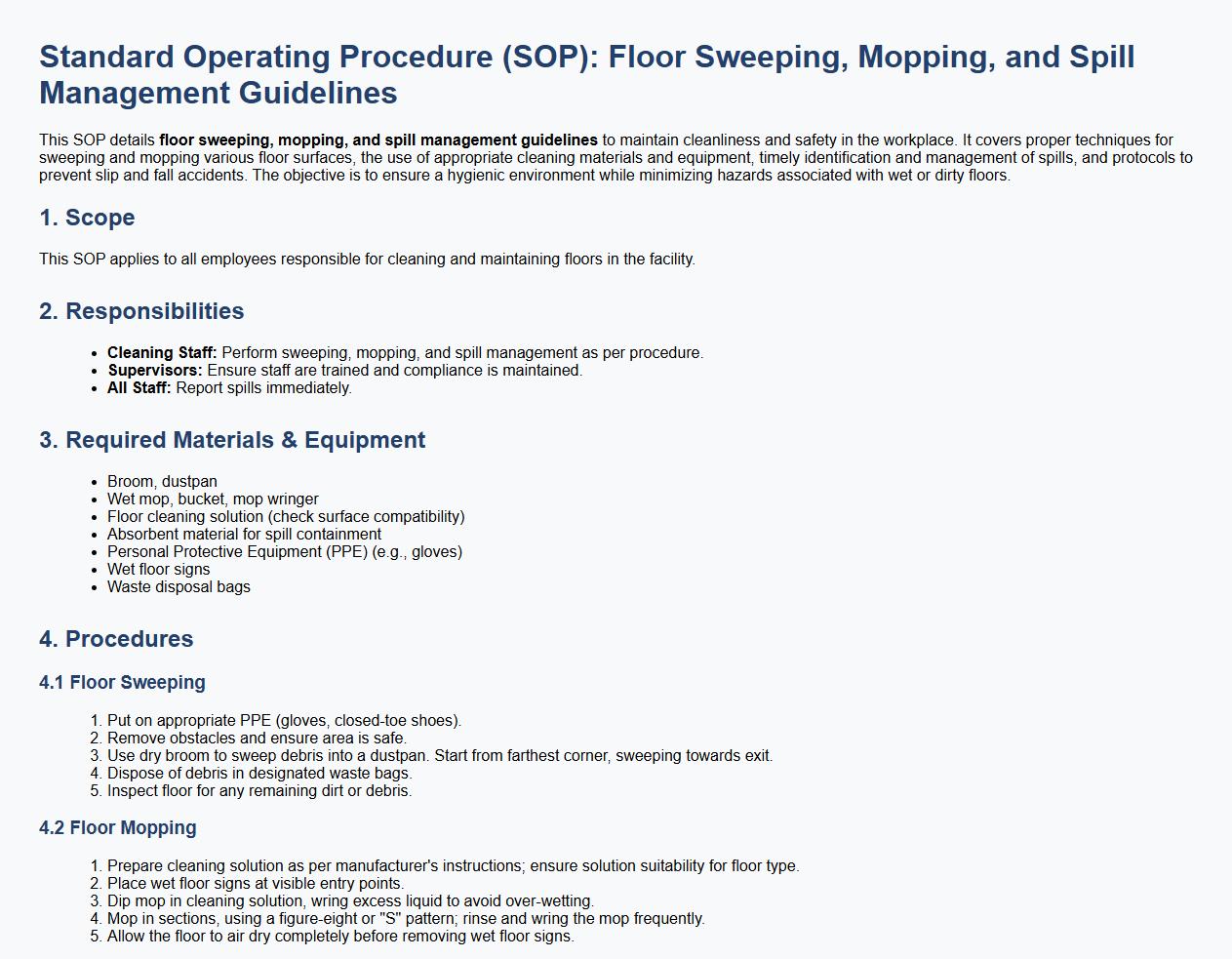
This SOP details floor sweeping, mopping, and spill management guidelines to maintain cleanliness and safety in the workplace. It covers proper techniques for sweeping and mopping various floor surfaces, the use of appropriate cleaning materials and equipment, timely identification and management of spills, and protocols to prevent slip and fall accidents. The objective is to ensure a hygienic environment while minimizing hazards associated with wet or dirty floors.
Garbage collection, disposal, and bin sanitization methods.
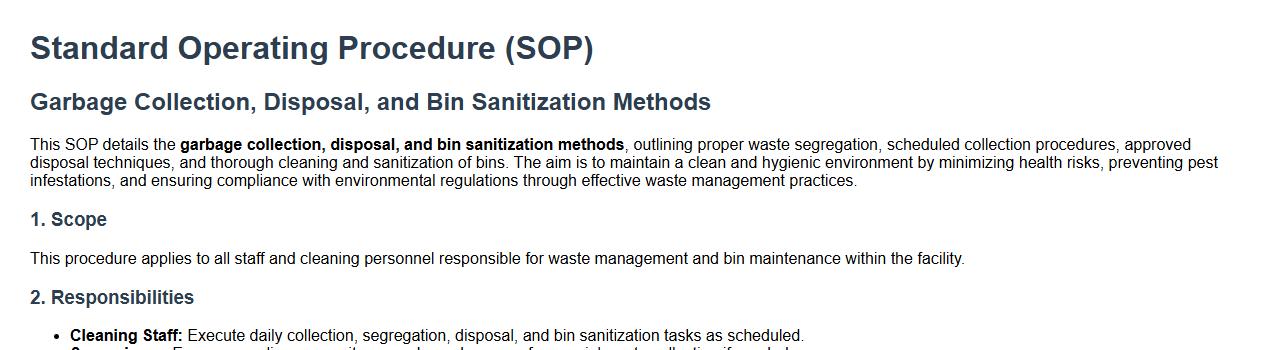
This SOP details the garbage collection, disposal, and bin sanitization methods, outlining proper waste segregation, scheduled collection procedures, approved disposal techniques, and thorough cleaning and sanitization of bins. The aim is to maintain a clean and hygienic environment by minimizing health risks, preventing pest infestations, and ensuring compliance with environmental regulations through effective waste management practices.
Appliance cleaning (ovens, microwaves, refrigerators) instructions.
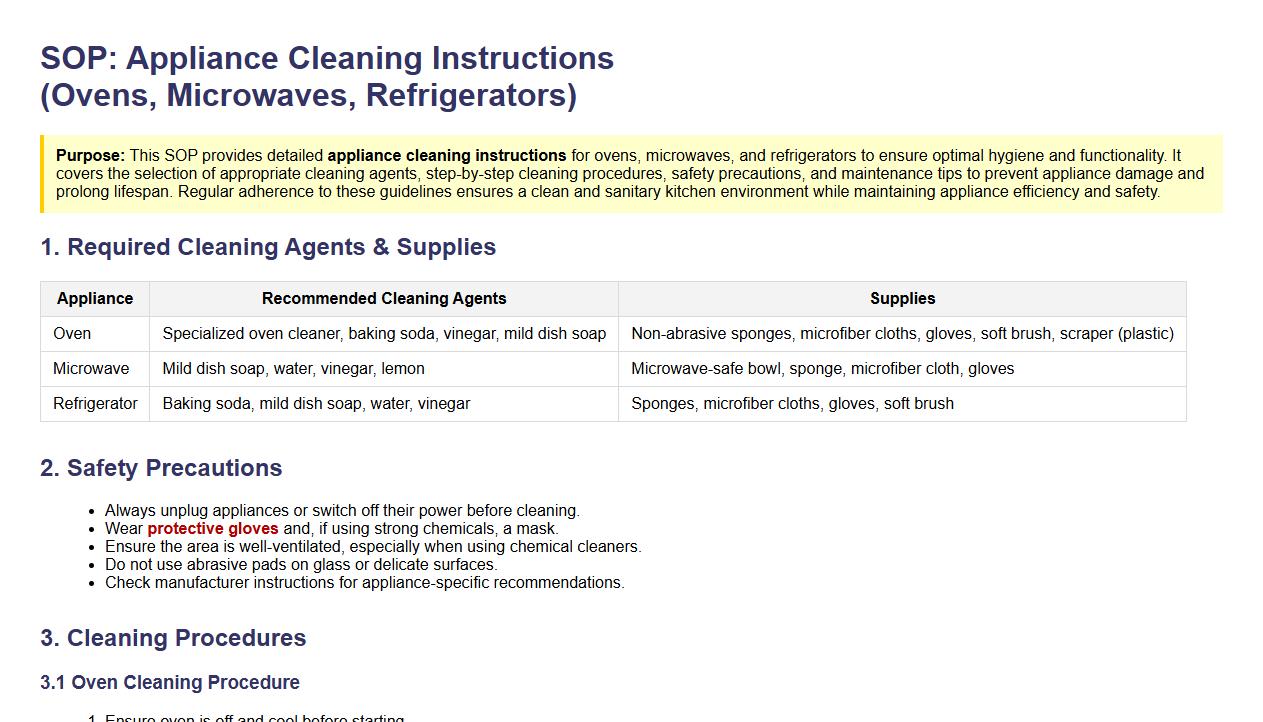
This SOP provides detailed appliance cleaning instructions for ovens, microwaves, and refrigerators to ensure optimal hygiene and functionality. It covers the selection of appropriate cleaning agents, step-by-step cleaning procedures, safety precautions, and maintenance tips to prevent appliance damage and prolong lifespan. Regular adherence to these guidelines ensures a clean and sanitary kitchen environment while maintaining appliance efficiency and safety.
Storage area organization and labeling standards.
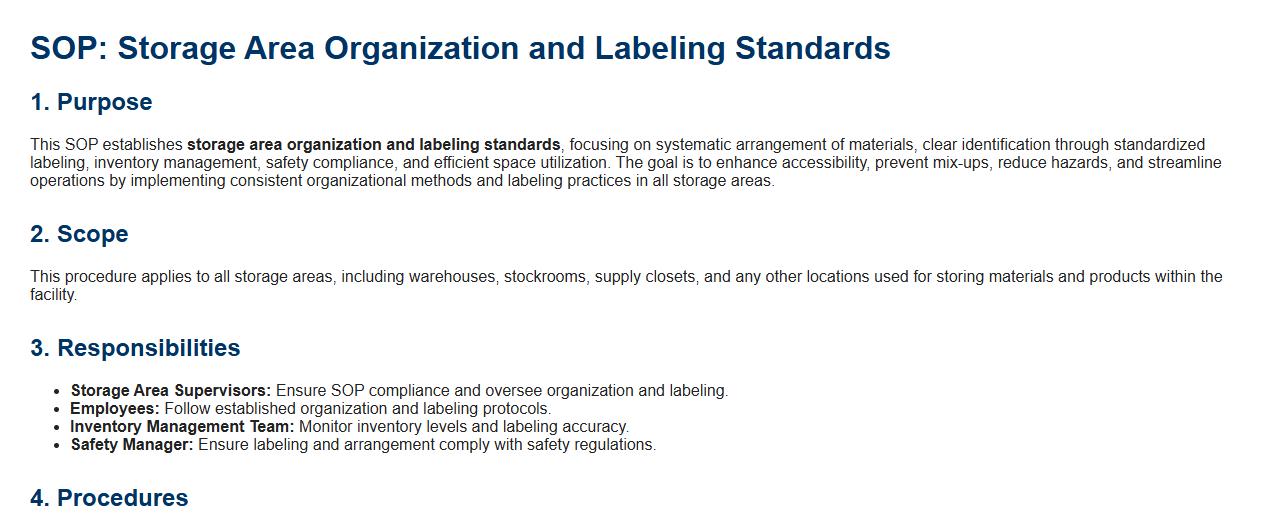
This SOP establishes storage area organization and labeling standards, focusing on systematic arrangement of materials, clear identification through standardized labeling, inventory management, safety compliance, and efficient space utilization. The goal is to enhance accessibility, prevent mix-ups, reduce hazards, and streamline operations by implementing consistent organizational methods and labeling practices in all storage areas.
Deep cleaning and disinfection frequency and methods.
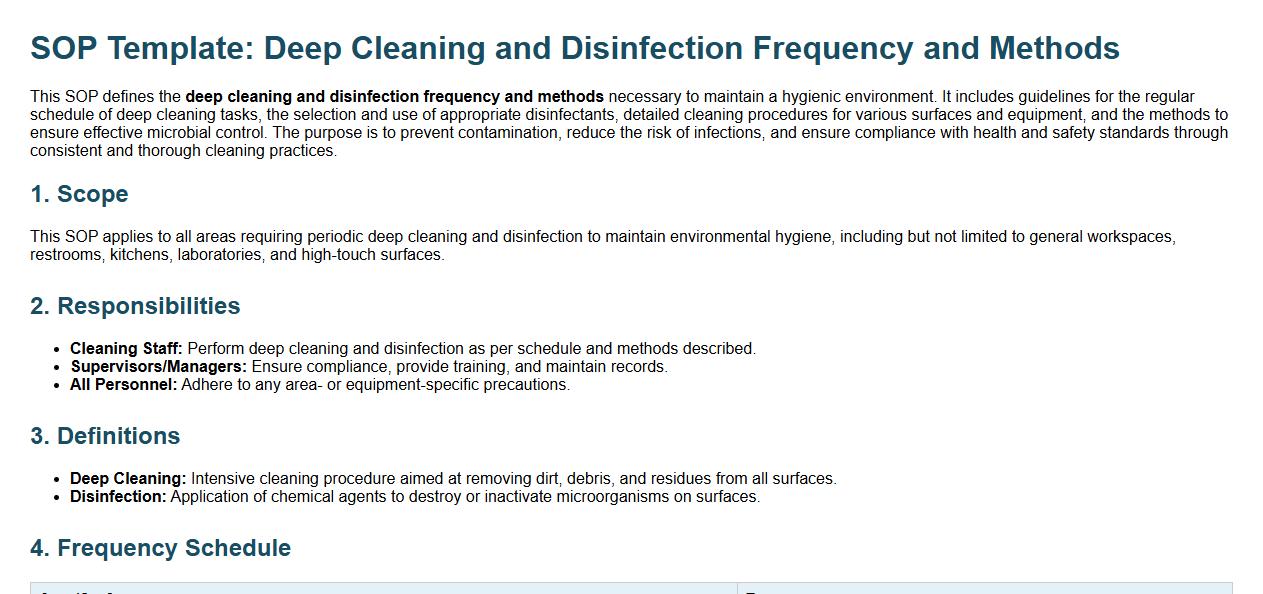
This SOP defines the deep cleaning and disinfection frequency and methods necessary to maintain a hygienic environment. It includes guidelines for the regular schedule of deep cleaning tasks, the selection and use of appropriate disinfectants, detailed cleaning procedures for various surfaces and equipment, and the methods to ensure effective microbial control. The purpose is to prevent contamination, reduce the risk of infections, and ensure compliance with health and safety standards through consistent and thorough cleaning practices.
Inspection checklist for cleanliness and compliance.
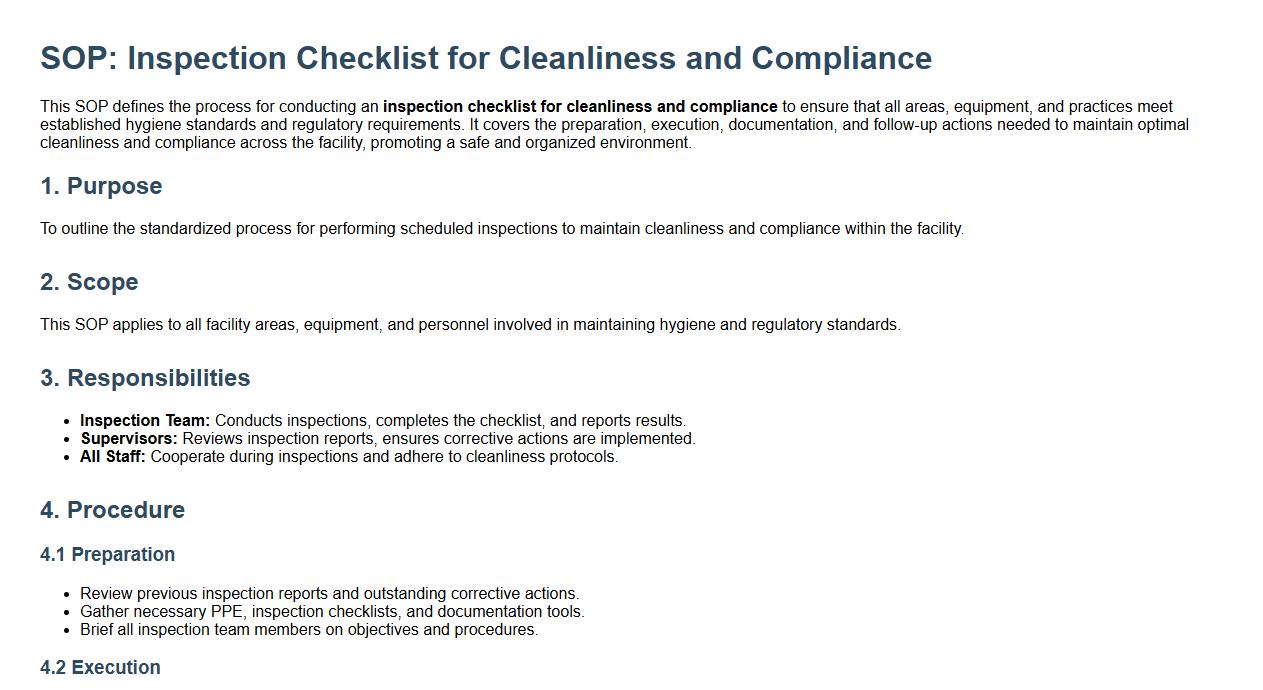
This SOP defines the process for conducting an inspection checklist for cleanliness and compliance to ensure that all areas, equipment, and practices meet established hygiene standards and regulatory requirements. It covers the preparation, execution, documentation, and follow-up actions needed to maintain optimal cleanliness and compliance across the facility, promoting a safe and organized environment.
Personal hygiene and protective equipment requirements.
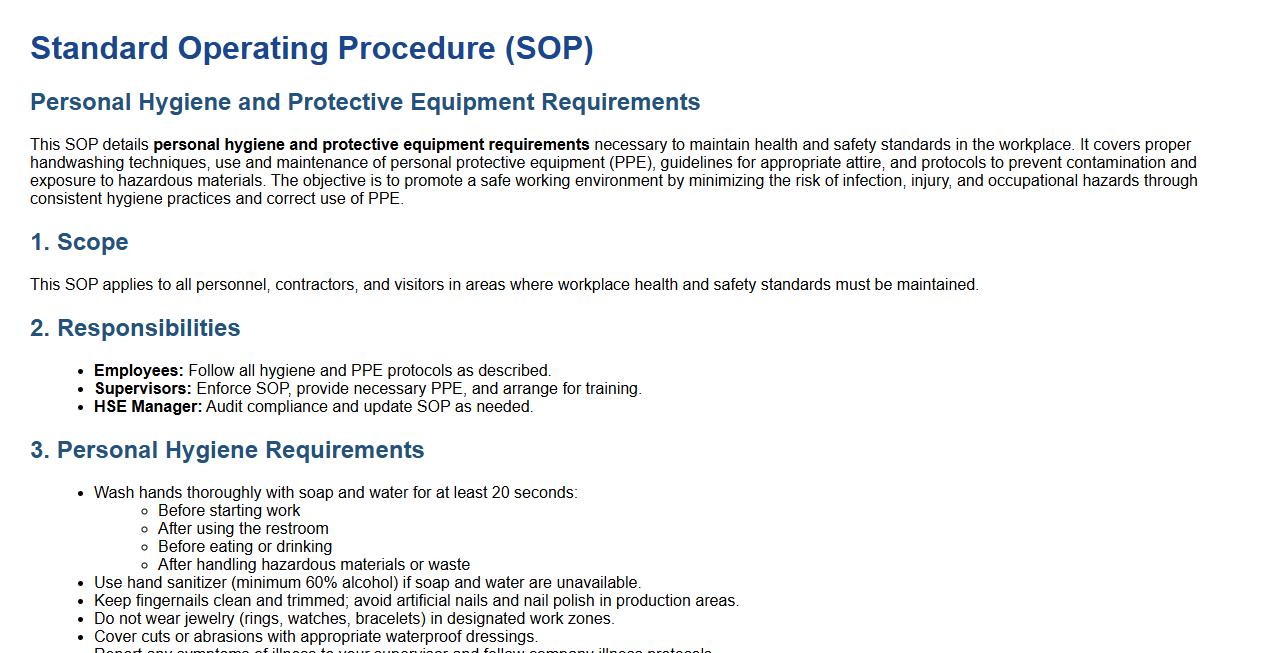
This SOP details personal hygiene and protective equipment requirements necessary to maintain health and safety standards in the workplace. It covers proper handwashing techniques, use and maintenance of personal protective equipment (PPE), guidelines for appropriate attire, and protocols to prevent contamination and exposure to hazardous materials. The objective is to promote a safe working environment by minimizing the risk of infection, injury, and occupational hazards through consistent hygiene practices and correct use of PPE.
What are the key objectives outlined in the Kitchen Cleaning SOP document?
The key objectives of the Kitchen Cleaning SOP focus on maintaining hygiene and safety standards to prevent cross-contamination and foodborne illnesses. It aims to ensure all kitchen areas are consistently cleaned and sanitized according to a scheduled timeline. Additionally, the SOP emphasizes compliance with health regulations and enhancing overall kitchen operational efficiency.
Which areas and equipment are specified for daily, weekly, and monthly cleaning in the SOP?
The SOP specifies that daily cleaning includes high-touch areas like countertops, sinks, and cooking utensils to minimize immediate contamination risks. Weekly tasks cover deeper cleaning of appliances such as ovens, refrigerators, and storage racks to remove accumulated grease and debris. Monthly cleaning involves more intensive procedures like vent hood degreasing and deep sanitization of heavy-duty equipment to maintain long-term functionality.
What personal protective equipment (PPE) is required according to the SOP before starting kitchen cleaning tasks?
The SOP mandates the use of specific personal protective equipment (PPE) such as gloves, aprons, and safety goggles for all kitchen cleaning tasks. These items protect staff from chemical exposure, hot surfaces, and potential splashes during the cleaning process. Proper PPE ensures both employee safety and hygiene standards are upheld throughout cleaning operations.
What are the step-by-step procedures described for sanitizing food preparation surfaces in the SOP?
The SOP outlines a clear procedure starting with removing debris and washing surfaces with detergent and water to eliminate dirt. Next, it specifies applying an approved sanitizer and allowing adequate contact time to neutralize pathogens effectively. Finally, the surfaces are rinsed if required and air-dried to prevent recontamination before use.
How does the SOP address the documentation and verification of completed cleaning tasks?
The SOP requires thorough documentation and verification to ensure accountability and traceability of cleaning activities. Cleaning logs must be updated with dates, times, and responsible personnel signatures after each scheduled task. Regular audits and supervisory checks are also incorporated to verify compliance and address any lapses promptly.