
A SOP Template for Transportation Services outlines standardized procedures to ensure efficient and consistent transport operations. It provides clear guidelines for vehicle maintenance, driver responsibilities, and route management to enhance safety and reliability. Implementing this template helps organizations maintain compliance and improve service quality.
Route planning and scheduling procedures.
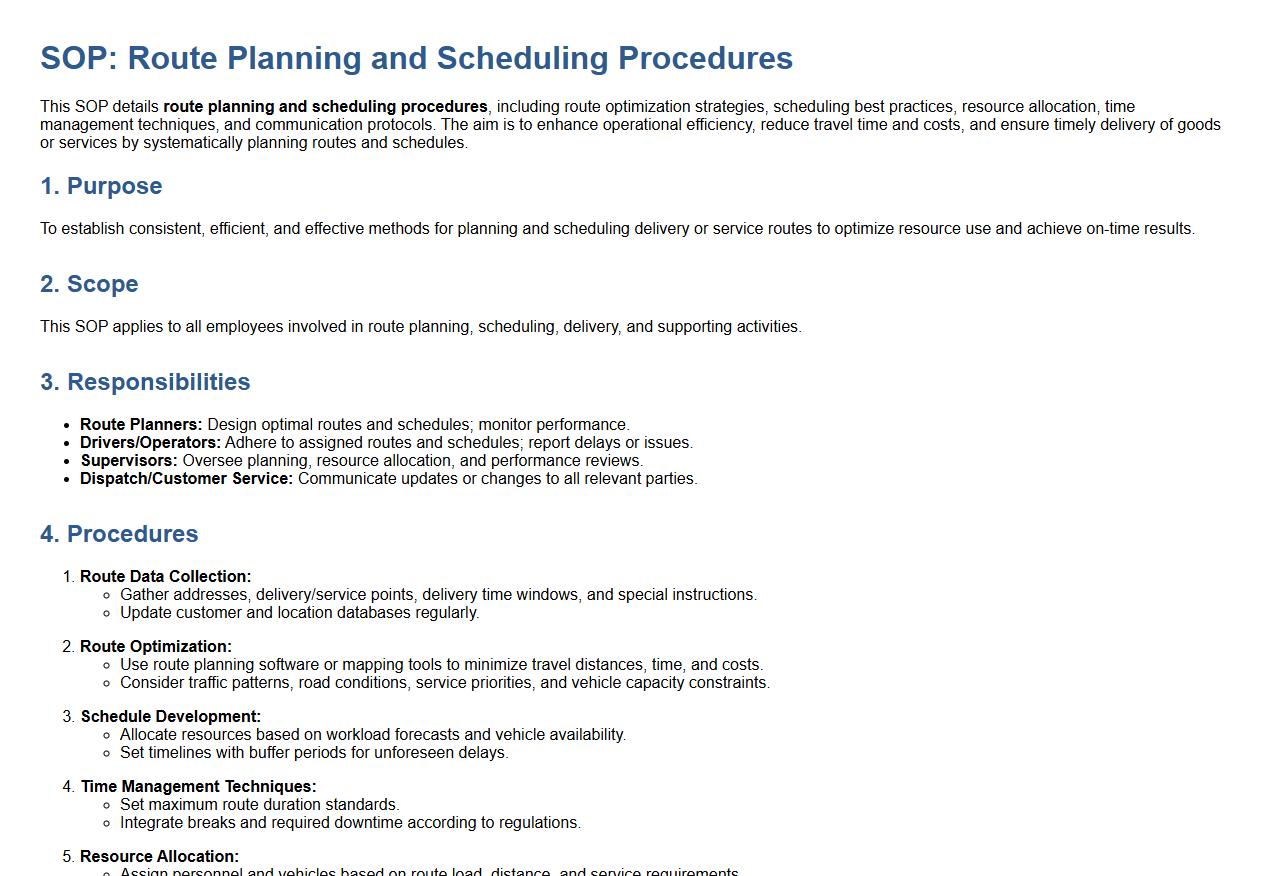
This SOP details route planning and scheduling procedures, including route optimization strategies, scheduling best practices, resource allocation, time management techniques, and communication protocols. The aim is to enhance operational efficiency, reduce travel time and costs, and ensure timely delivery of goods or services by systematically planning routes and schedules.
Vehicle inspection and maintenance protocols.
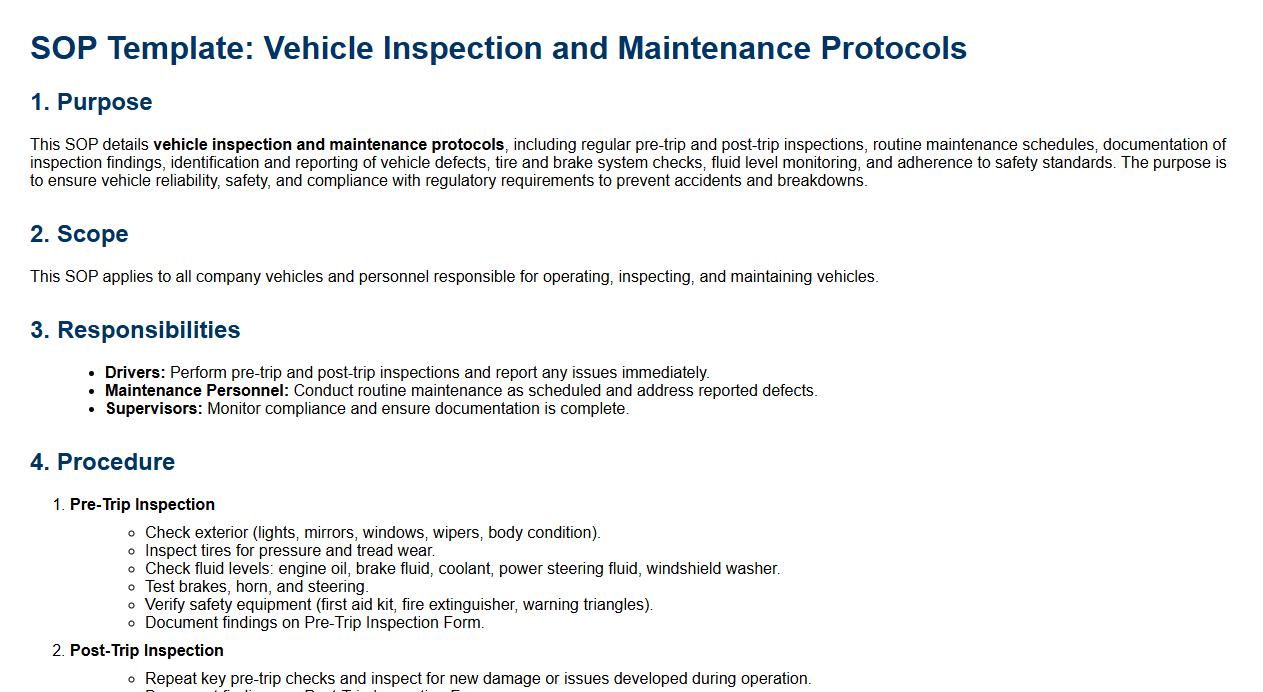
This SOP details vehicle inspection and maintenance protocols, including regular pre-trip and post-trip inspections, routine maintenance schedules, documentation of inspection findings, identification and reporting of vehicle defects, tire and brake system checks, fluid level monitoring, and adherence to safety standards. The purpose is to ensure vehicle reliability, safety, and compliance with regulatory requirements to prevent accidents and breakdowns.
Driver qualification and training requirements.
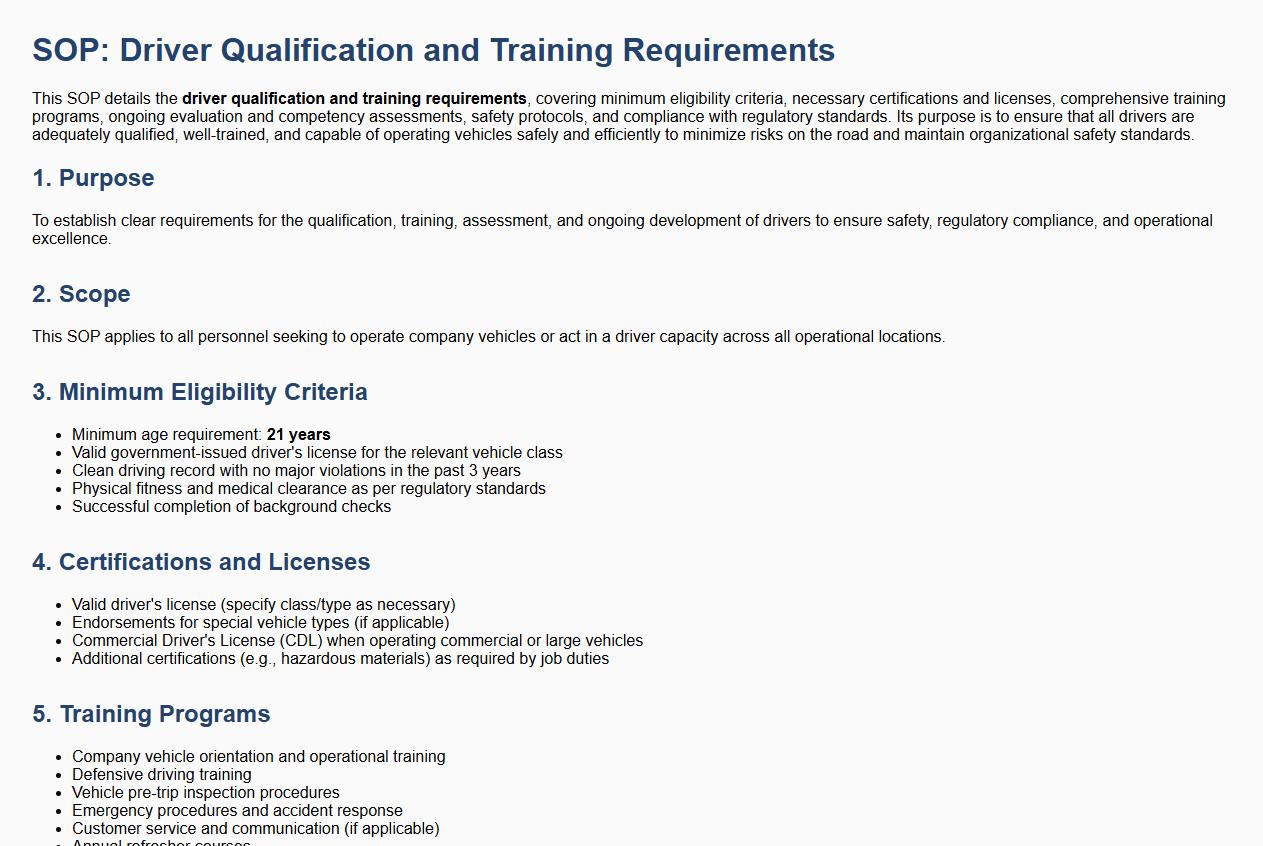
This SOP details the driver qualification and training requirements, covering minimum eligibility criteria, necessary certifications and licenses, comprehensive training programs, ongoing evaluation and competency assessments, safety protocols, and compliance with regulatory standards. Its purpose is to ensure that all drivers are adequately qualified, well-trained, and capable of operating vehicles safely and efficiently to minimize risks on the road and maintain organizational safety standards.
Cargo loading and unloading guidelines.
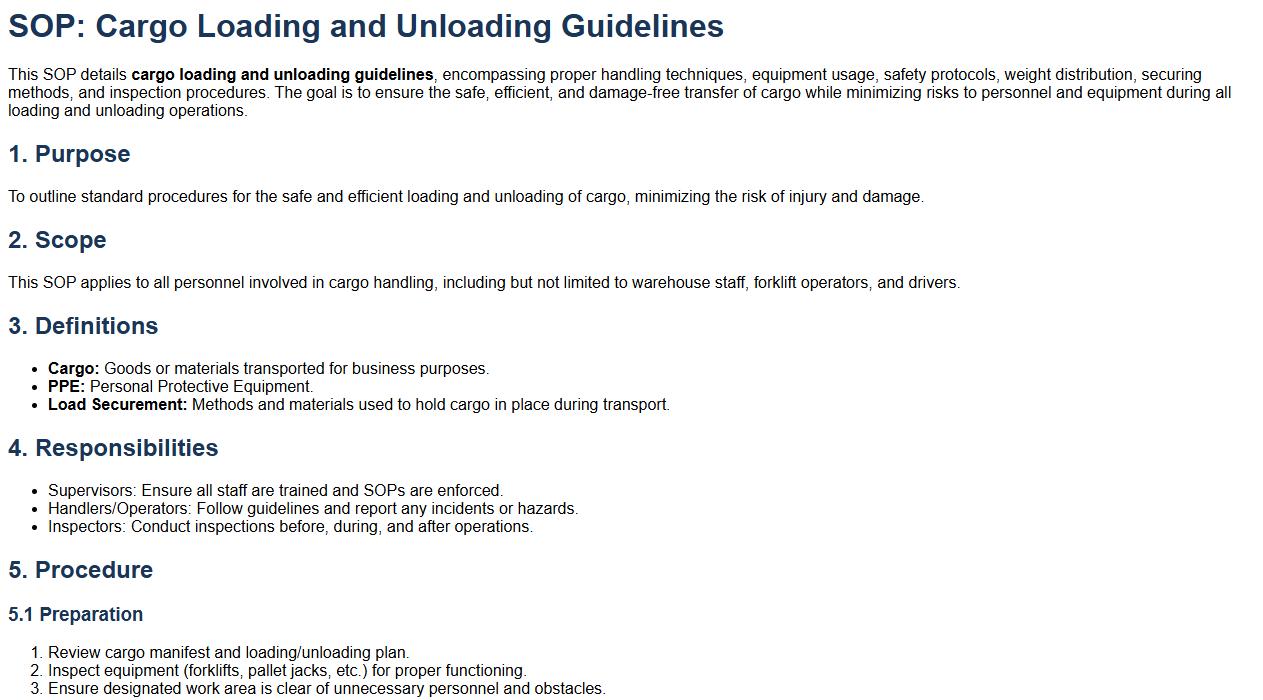
This SOP details cargo loading and unloading guidelines, encompassing proper handling techniques, equipment usage, safety protocols, weight distribution, securing methods, and inspection procedures. The goal is to ensure the safe, efficient, and damage-free transfer of cargo while minimizing risks to personnel and equipment during all loading and unloading operations.
Safety and accident response procedures.
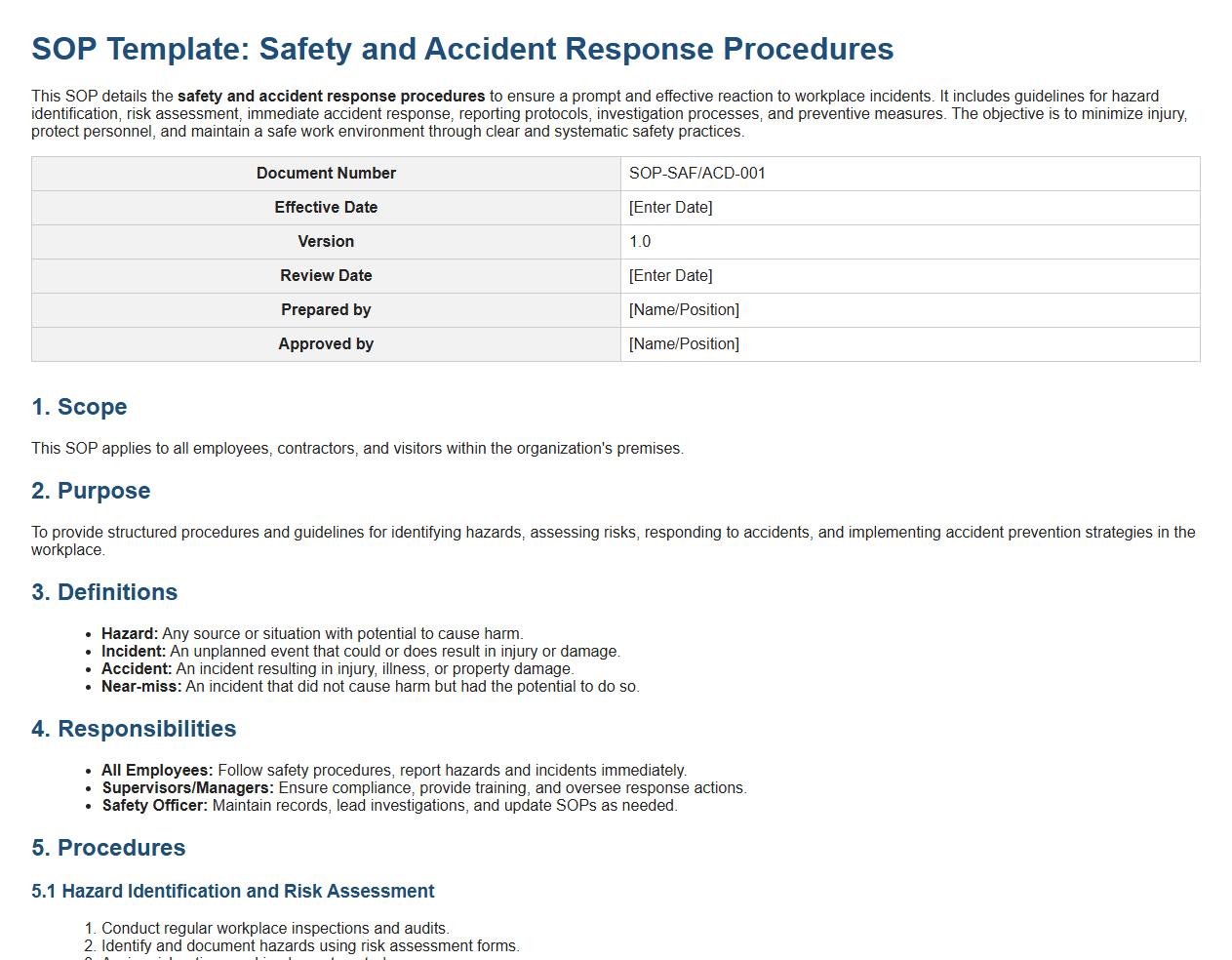
This SOP details the safety and accident response procedures to ensure a prompt and effective reaction to workplace incidents. It includes guidelines for hazard identification, risk assessment, immediate accident response, reporting protocols, investigation processes, and preventive measures. The objective is to minimize injury, protect personnel, and maintain a safe work environment through clear and systematic safety practices.
Documentation and record-keeping standards.
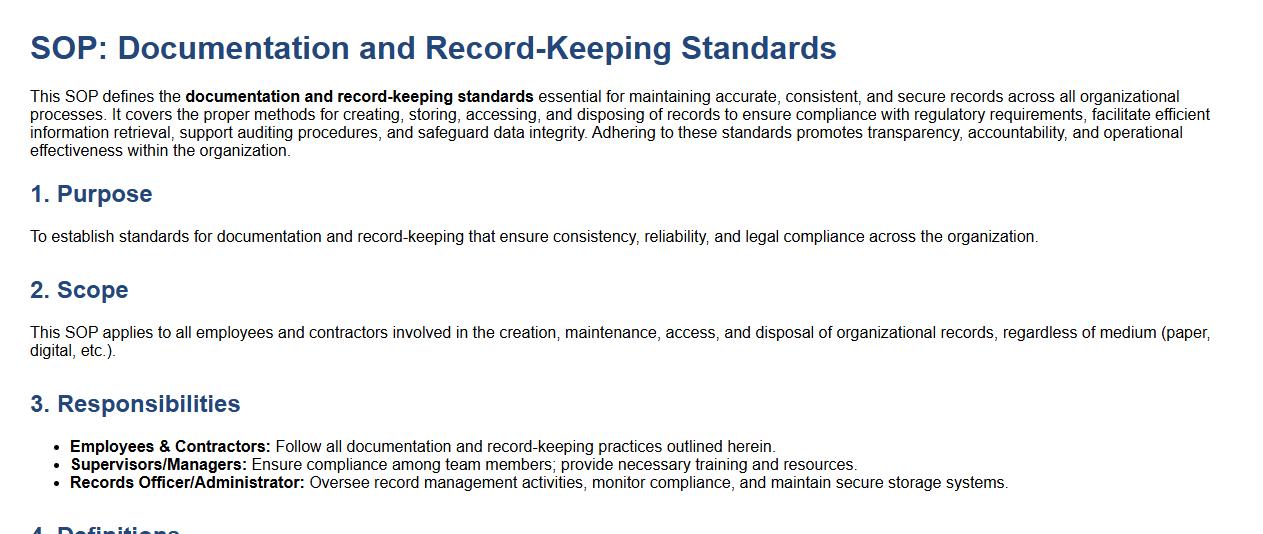
This SOP defines the documentation and record-keeping standards essential for maintaining accurate, consistent, and secure records across all organizational processes. It covers the proper methods for creating, storing, accessing, and disposing of records to ensure compliance with regulatory requirements, facilitate efficient information retrieval, support auditing procedures, and safeguard data integrity. Adhering to these standards promotes transparency, accountability, and operational effectiveness within the organization.
Fuel management and usage monitoring.
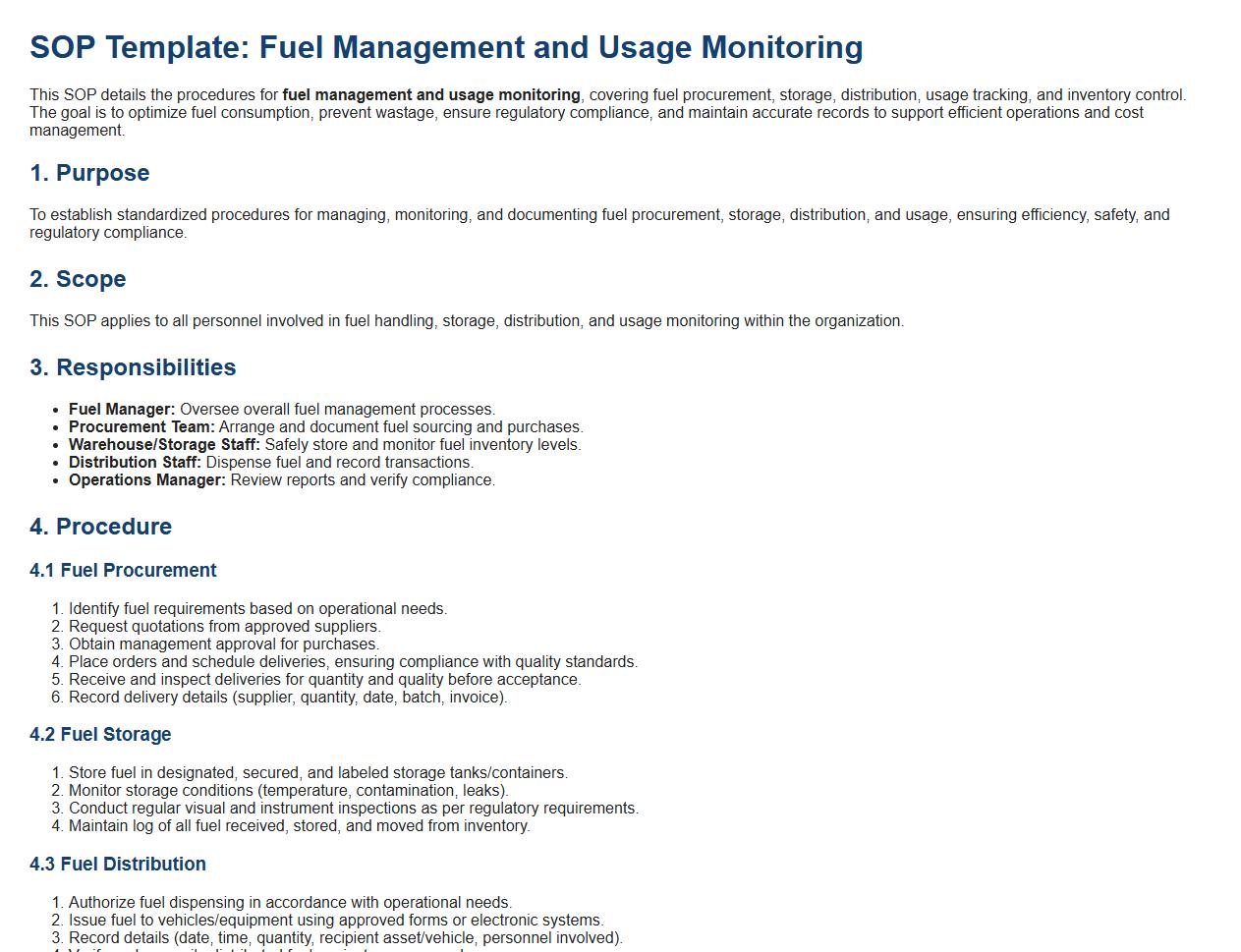
This SOP details the procedures for fuel management and usage monitoring, covering fuel procurement, storage, distribution, usage tracking, and inventory control. The goal is to optimize fuel consumption, prevent wastage, ensure regulatory compliance, and maintain accurate records to support efficient operations and cost management.
Customer communication and service protocols.
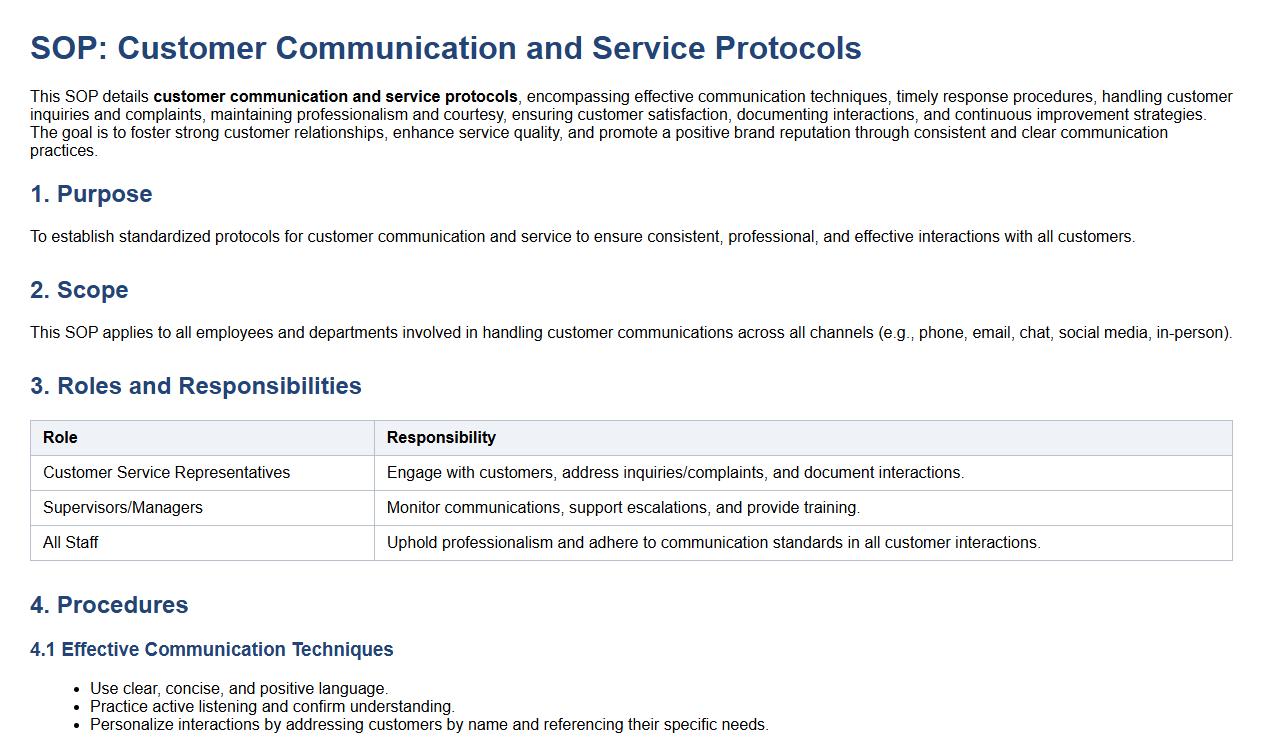
This SOP details customer communication and service protocols, encompassing effective communication techniques, timely response procedures, handling customer inquiries and complaints, maintaining professionalism and courtesy, ensuring customer satisfaction, documenting interactions, and continuous improvement strategies. The goal is to foster strong customer relationships, enhance service quality, and promote a positive brand reputation through consistent and clear communication practices.
Compliance with transportation regulations.
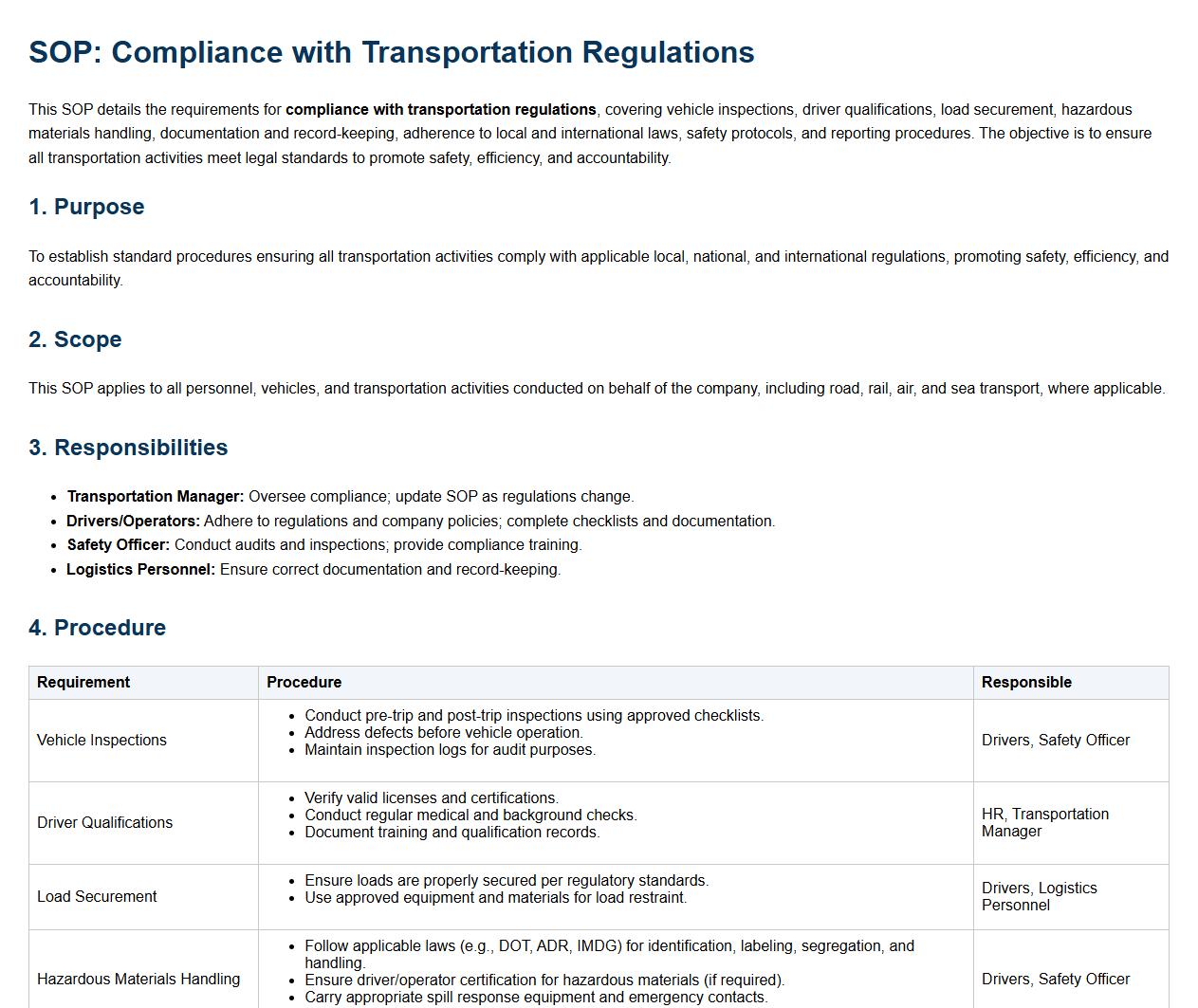
This SOP details the requirements for compliance with transportation regulations, covering vehicle inspections, driver qualifications, load securement, hazardous materials handling, documentation and record-keeping, adherence to local and international laws, safety protocols, and reporting procedures. The objective is to ensure all transportation activities meet legal standards to promote safety, efficiency, and accountability.
Incident reporting and resolution process.
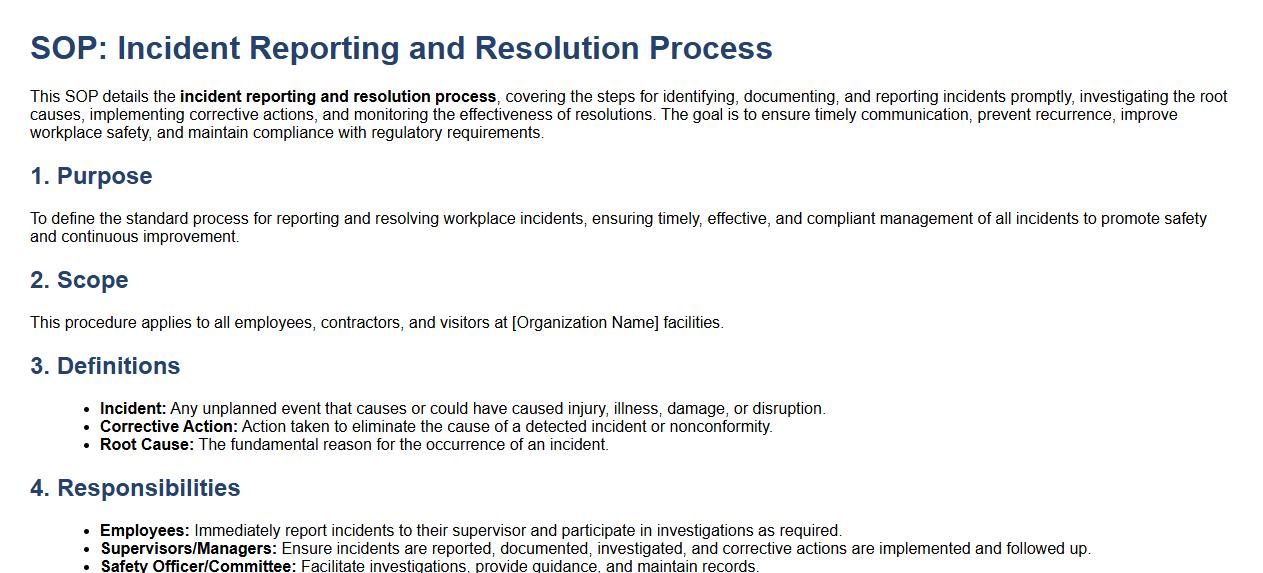
This SOP details the incident reporting and resolution process, covering the steps for identifying, documenting, and reporting incidents promptly, investigating the root causes, implementing corrective actions, and monitoring the effectiveness of resolutions. The goal is to ensure timely communication, prevent recurrence, improve workplace safety, and maintain compliance with regulatory requirements.
Procedures for Vehicle Inspection Before Starting a Service Trip
According to the SOP, a thorough vehicle inspection must be conducted before commencing any service trip. This includes checking the engine, brakes, lights, and tire conditions to ensure optimal safety. Any irregularities identified during the inspection must be documented and addressed before the vehicle is used.
Process for Reporting and Responding to Transport Incidents or Accidents
The SOP mandates immediate reporting of any transport incidents or accidents to the designated authority. Staff must document the incident details, including time, location, and involved personnel, promptly. An investigation is initiated to determine causes and implement corrective actions to prevent recurrence.
Documentation Required for Each Transportation Activity
The SOP specifies that each transportation activity must be supported by accurate and complete documentation. This includes trip logs, vehicle inspection reports, and incident reports if applicable. Proper record-keeping ensures compliance with regulatory standards and facilitates audits.
Roles and Responsibilities Assigned to Transportation Staff
Transportation staff members are assigned specific duties as per the SOP, including vehicle maintenance checks, timely reporting of issues, and adherence to safety protocols. Drivers are responsible for following traffic regulations and ensuring passenger safety. Supervisors monitor compliance and provide necessary support to the team.
Process for Handling and Resolving Customer Complaints Related to Transport Services
The SOP outlines a structured process to address customer complaints promptly and effectively. Complaints must be logged, acknowledged, and investigated by the transport service team. Resolution involves communication with the customer and implementing measures to enhance service quality.