

A SOP Template for Professional Security Services provides a structured framework to ensure consistent and efficient security operations. It outlines detailed procedures for risk assessment, incident response, and communication protocols. Using this template enhances compliance, accountability, and service quality within security teams.
Security personnel deployment and briefing procedures.
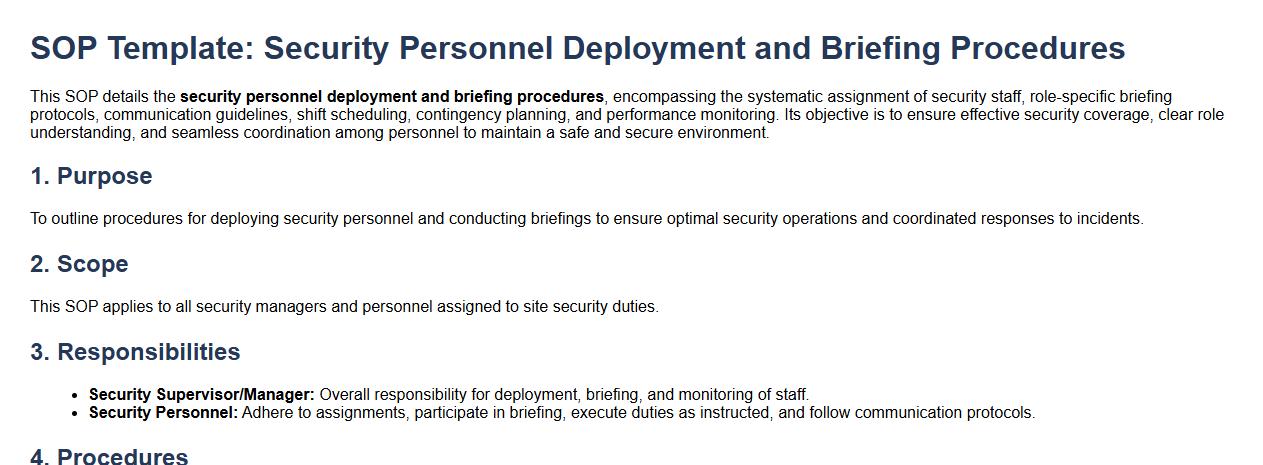
This SOP details the security personnel deployment and briefing procedures, encompassing the systematic assignment of security staff, role-specific briefing protocols, communication guidelines, shift scheduling, contingency planning, and performance monitoring. Its objective is to ensure effective security coverage, clear role understanding, and seamless coordination among personnel to maintain a safe and secure environment.
Site access control and visitor management.
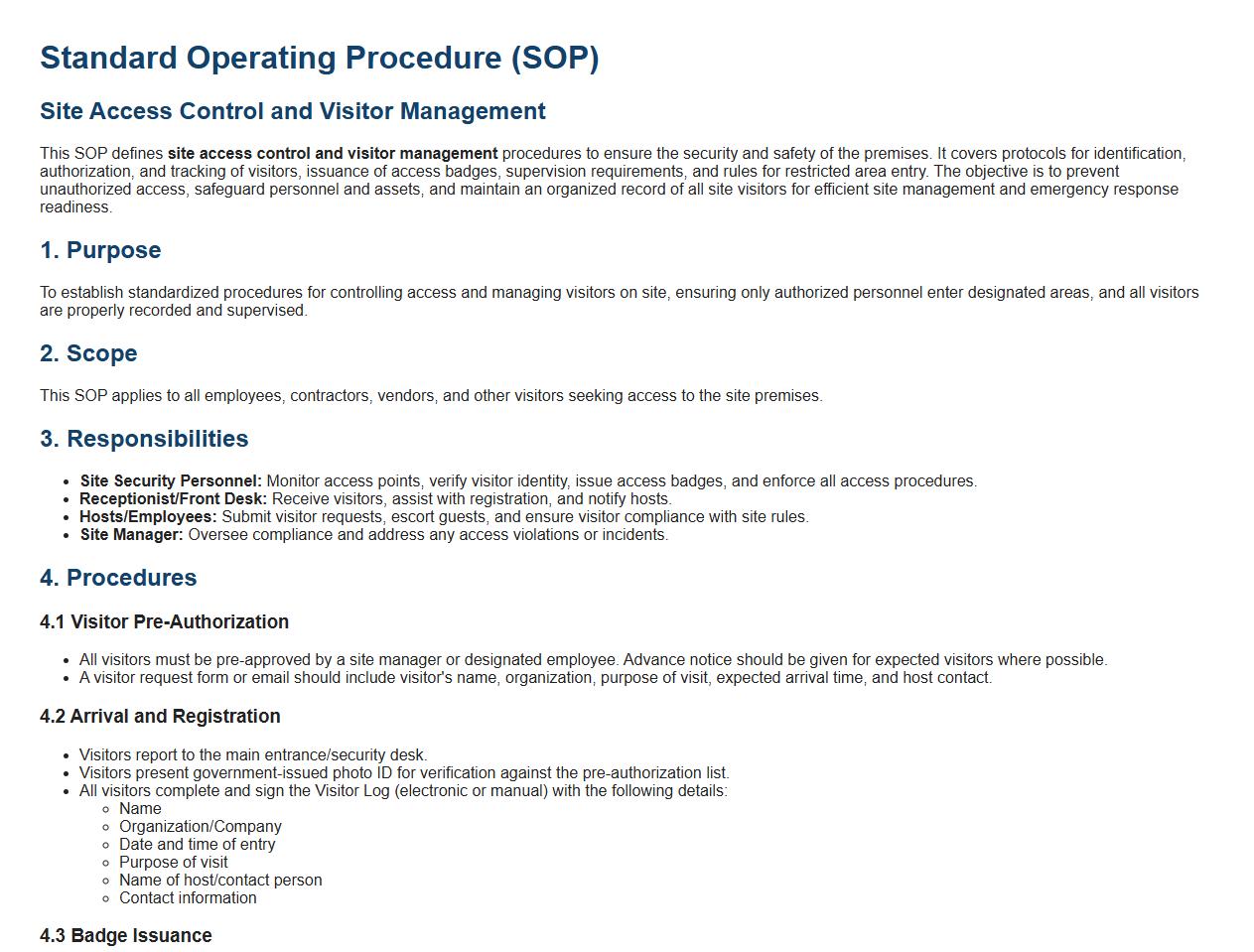
This SOP defines site access control and visitor management procedures to ensure the security and safety of the premises. It covers protocols for identification, authorization, and tracking of visitors, issuance of access badges, supervision requirements, and rules for restricted area entry. The objective is to prevent unauthorized access, safeguard personnel and assets, and maintain an organized record of all site visitors for efficient site management and emergency response readiness.
Security patrol routes and reporting protocols.
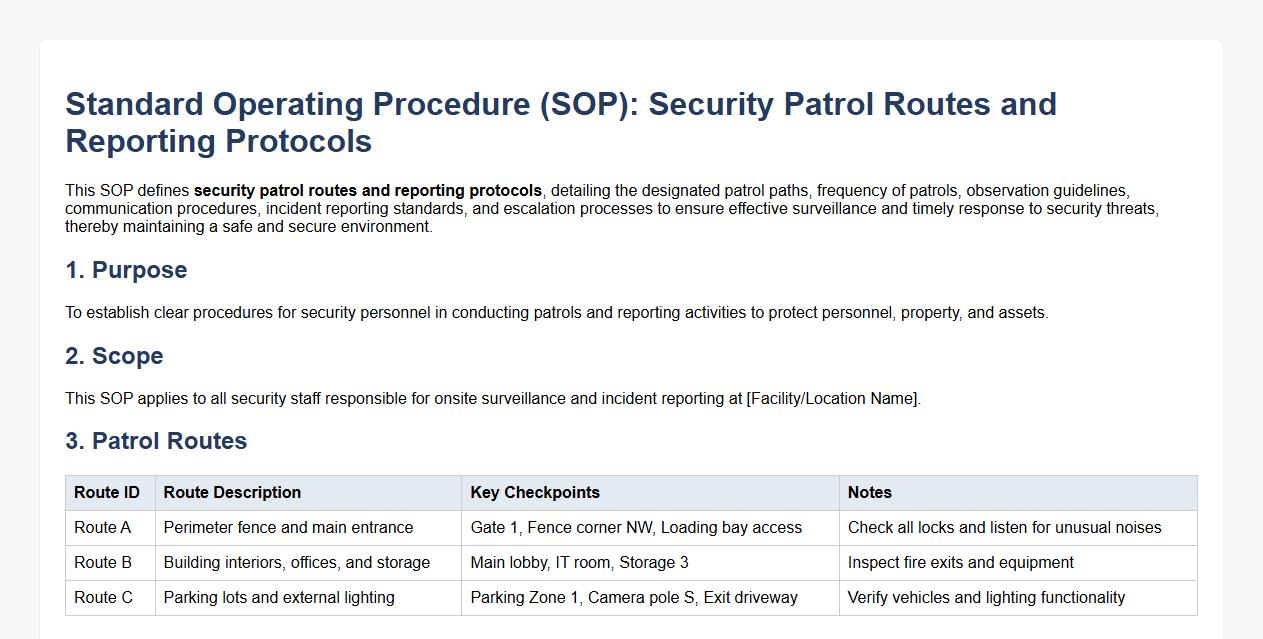
This SOP defines security patrol routes and reporting protocols, detailing the designated patrol paths, frequency of patrols, observation guidelines, communication procedures, incident reporting standards, and escalation processes to ensure effective surveillance and timely response to security threats, thereby maintaining a safe and secure environment.
Incident response and emergency management.
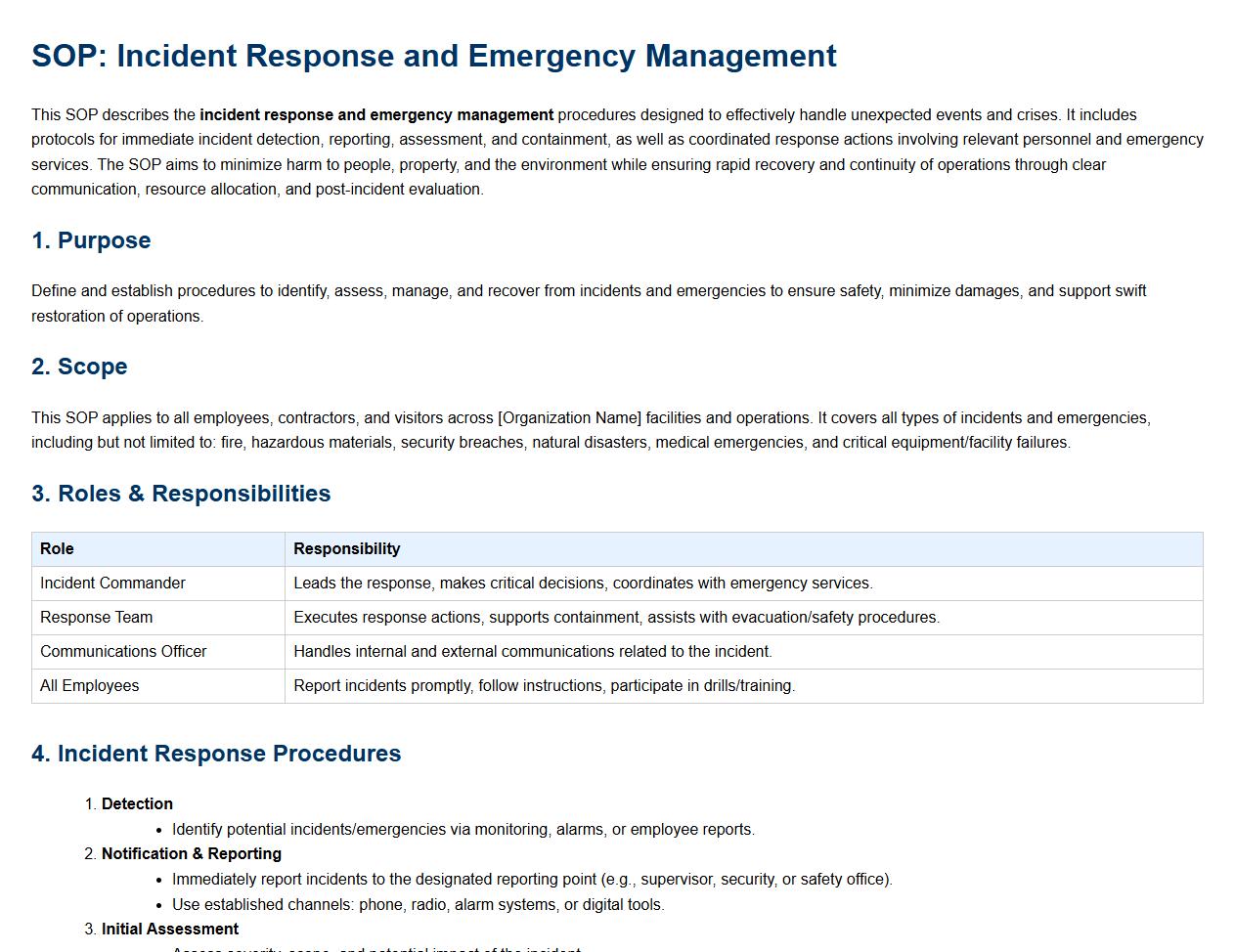
This SOP describes the incident response and emergency management procedures designed to effectively handle unexpected events and crises. It includes protocols for immediate incident detection, reporting, assessment, and containment, as well as coordinated response actions involving relevant personnel and emergency services. The SOP aims to minimize harm to people, property, and the environment while ensuring rapid recovery and continuity of operations through clear communication, resource allocation, and post-incident evaluation.
Key and asset control guidelines.
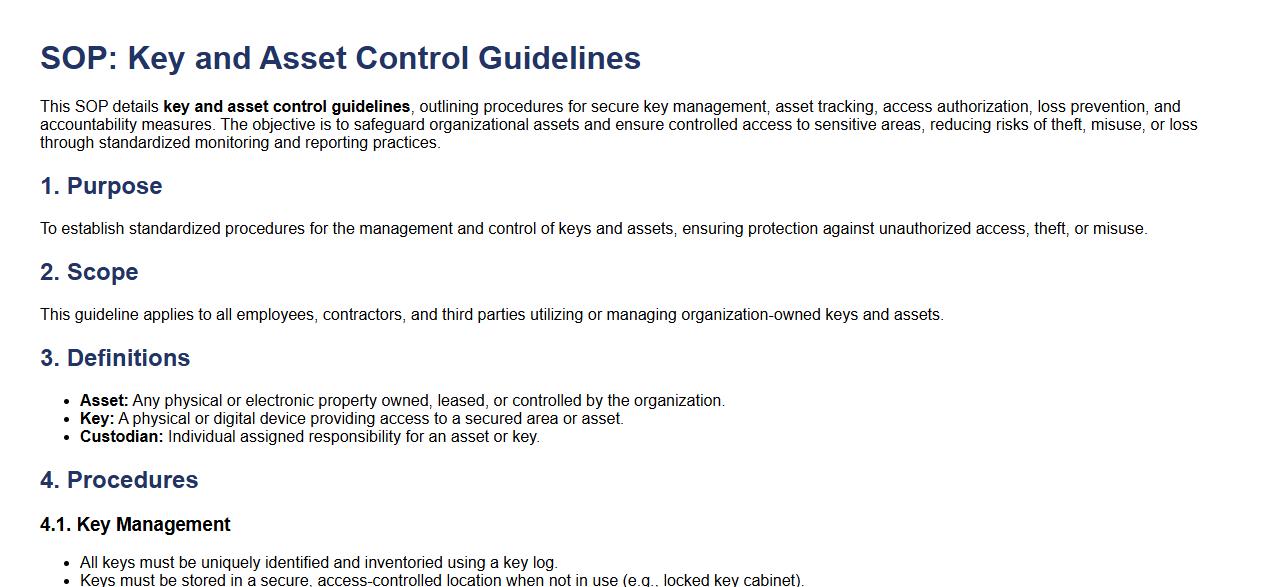
This SOP details key and asset control guidelines, outlining procedures for secure key management, asset tracking, access authorization, loss prevention, and accountability measures. The objective is to safeguard organizational assets and ensure controlled access to sensitive areas, reducing risks of theft, misuse, or loss through standardized monitoring and reporting practices.
CCTV monitoring and surveillance operations.
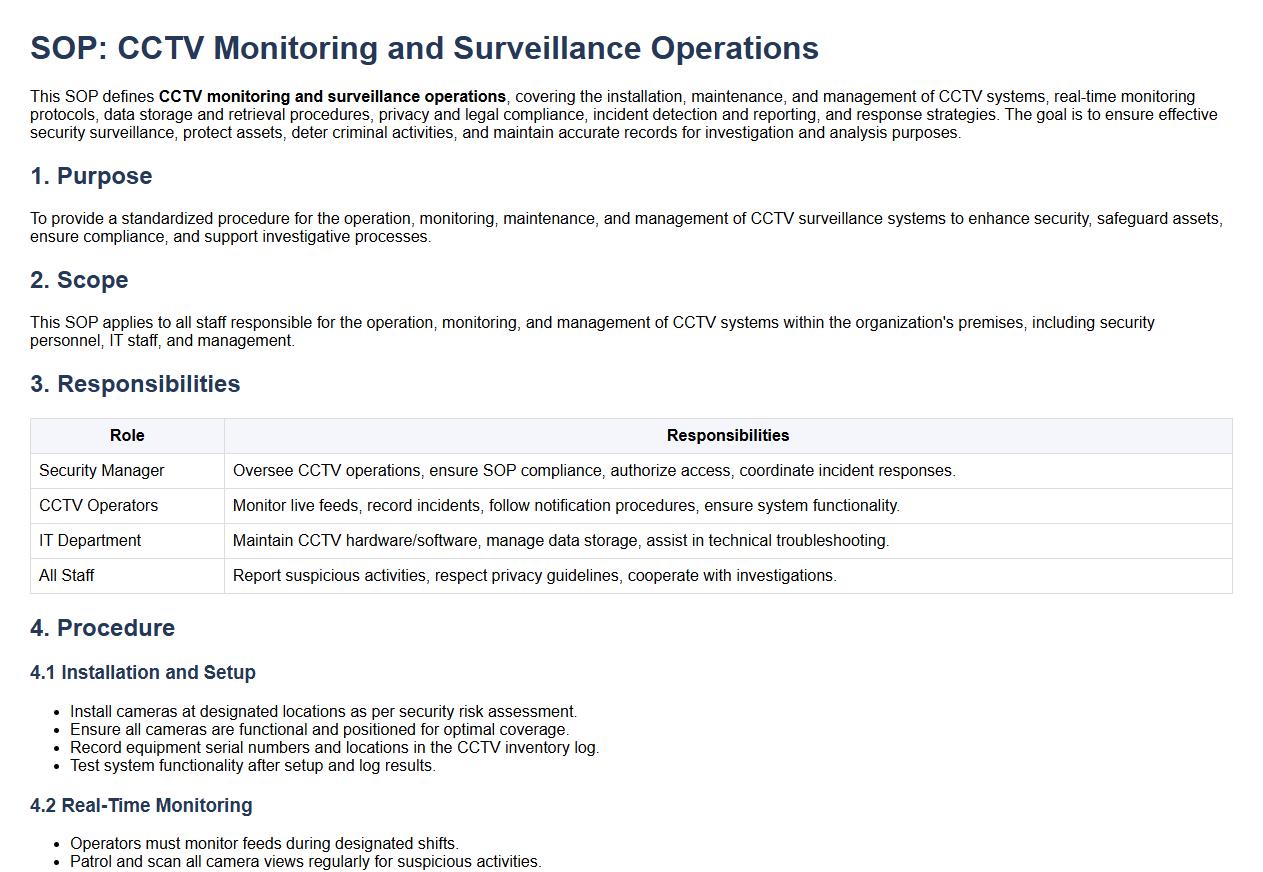
This SOP defines CCTV monitoring and surveillance operations, covering the installation, maintenance, and management of CCTV systems, real-time monitoring protocols, data storage and retrieval procedures, privacy and legal compliance, incident detection and reporting, and response strategies. The goal is to ensure effective security surveillance, protect assets, deter criminal activities, and maintain accurate records for investigation and analysis purposes.
Lost and found property handling procedures.
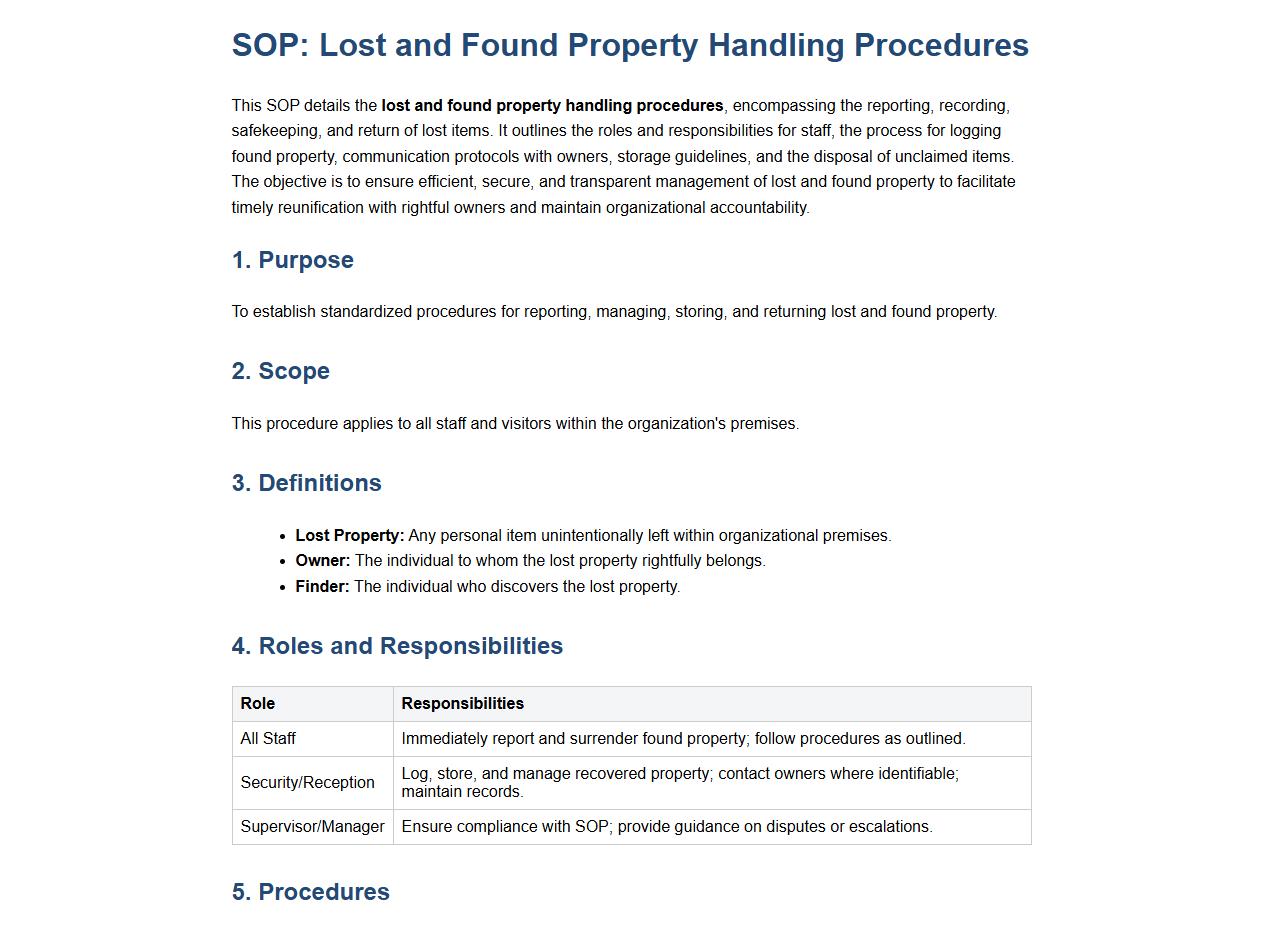
This SOP details the lost and found property handling procedures, encompassing the reporting, recording, safekeeping, and return of lost items. It outlines the roles and responsibilities for staff, the process for logging found property, communication protocols with owners, storage guidelines, and the disposal of unclaimed items. The objective is to ensure efficient, secure, and transparent management of lost and found property to facilitate timely reunification with rightful owners and maintain organizational accountability.
Equipment check-in/check-out and maintenance.
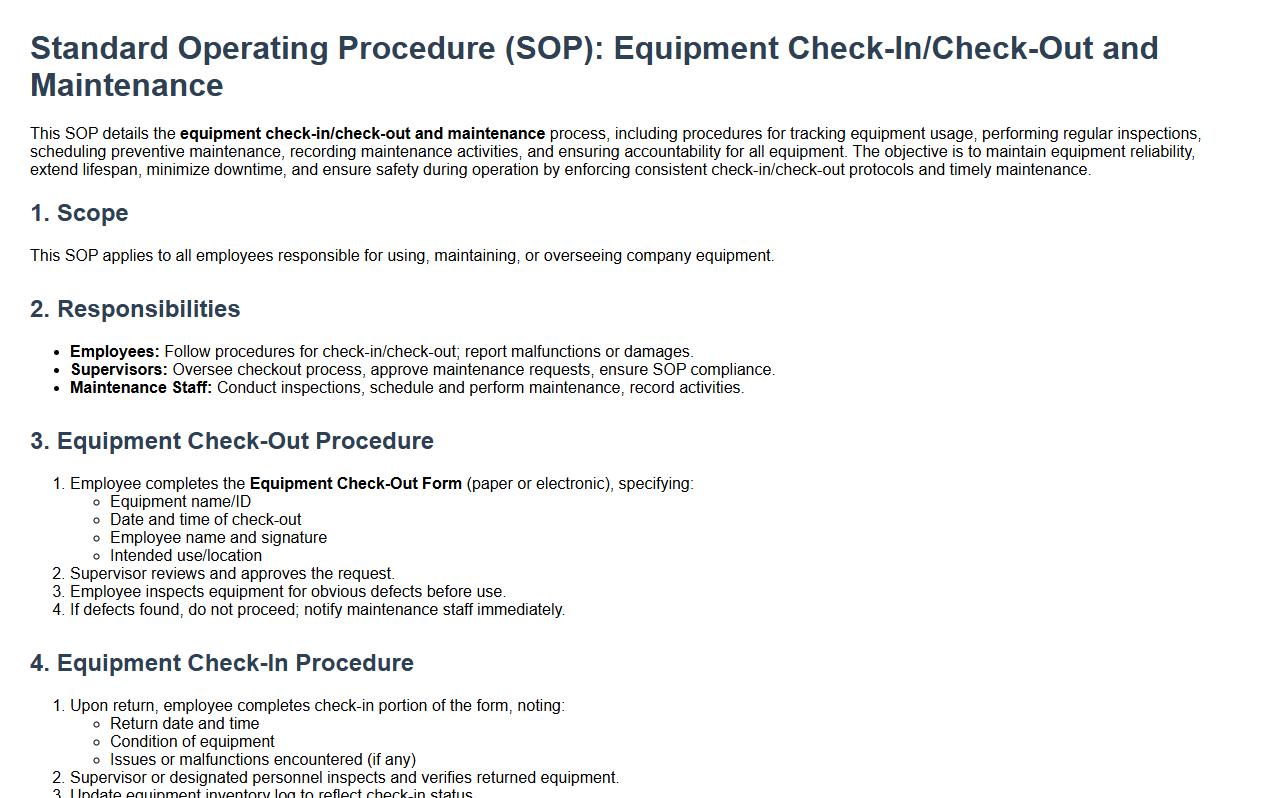
This SOP details the equipment check-in/check-out and maintenance process, including procedures for tracking equipment usage, performing regular inspections, scheduling preventive maintenance, recording maintenance activities, and ensuring accountability for all equipment. The objective is to maintain equipment reliability, extend lifespan, minimize downtime, and ensure safety during operation by enforcing consistent check-in/check-out protocols and timely maintenance.
Communication and escalation hierarchy.
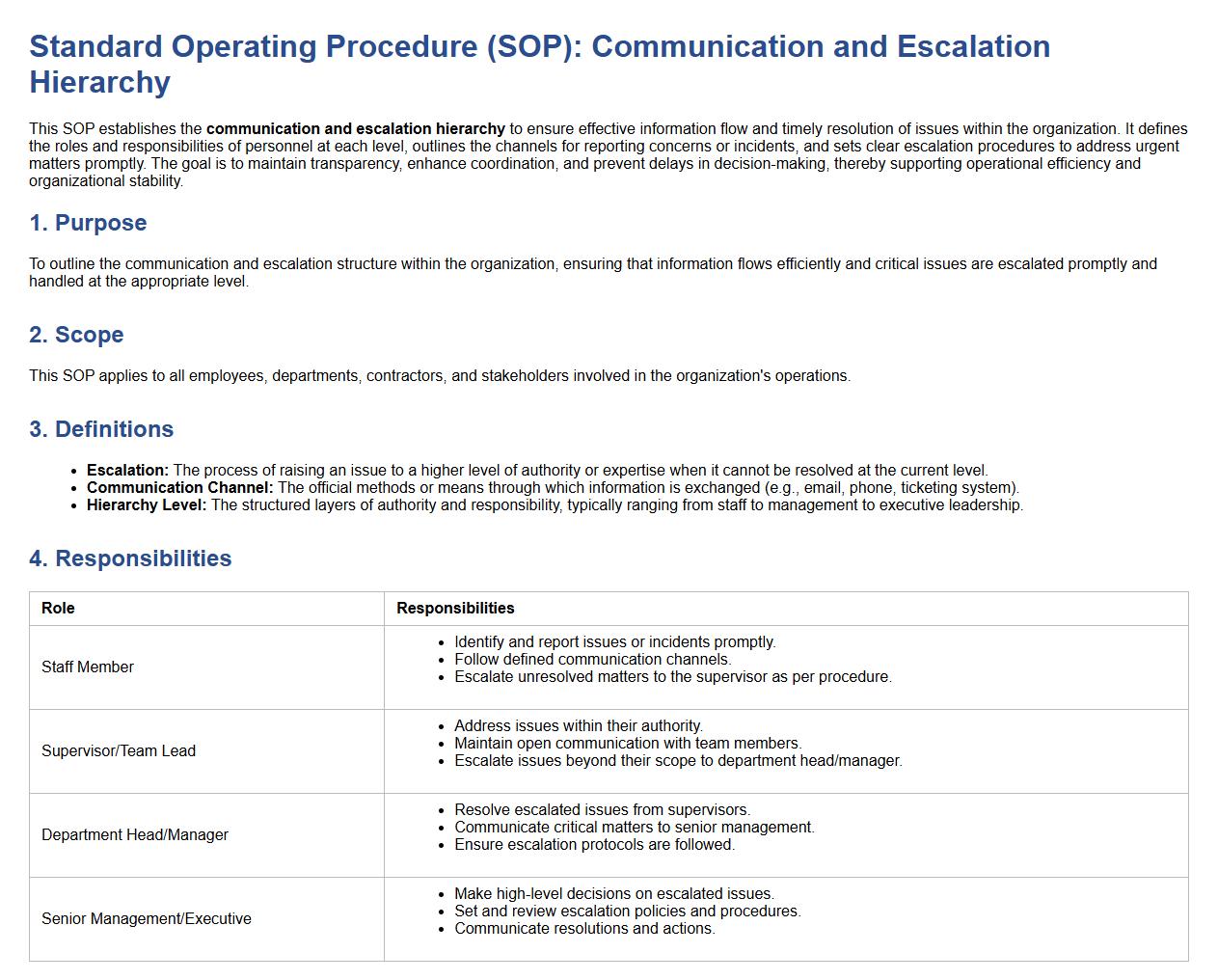
This SOP establishes the communication and escalation hierarchy to ensure effective information flow and timely resolution of issues within the organization. It defines the roles and responsibilities of personnel at each level, outlines the channels for reporting concerns or incidents, and sets clear escalation procedures to address urgent matters promptly. The goal is to maintain transparency, enhance coordination, and prevent delays in decision-making, thereby supporting operational efficiency and organizational stability.
Shift handover and daily reporting processes.
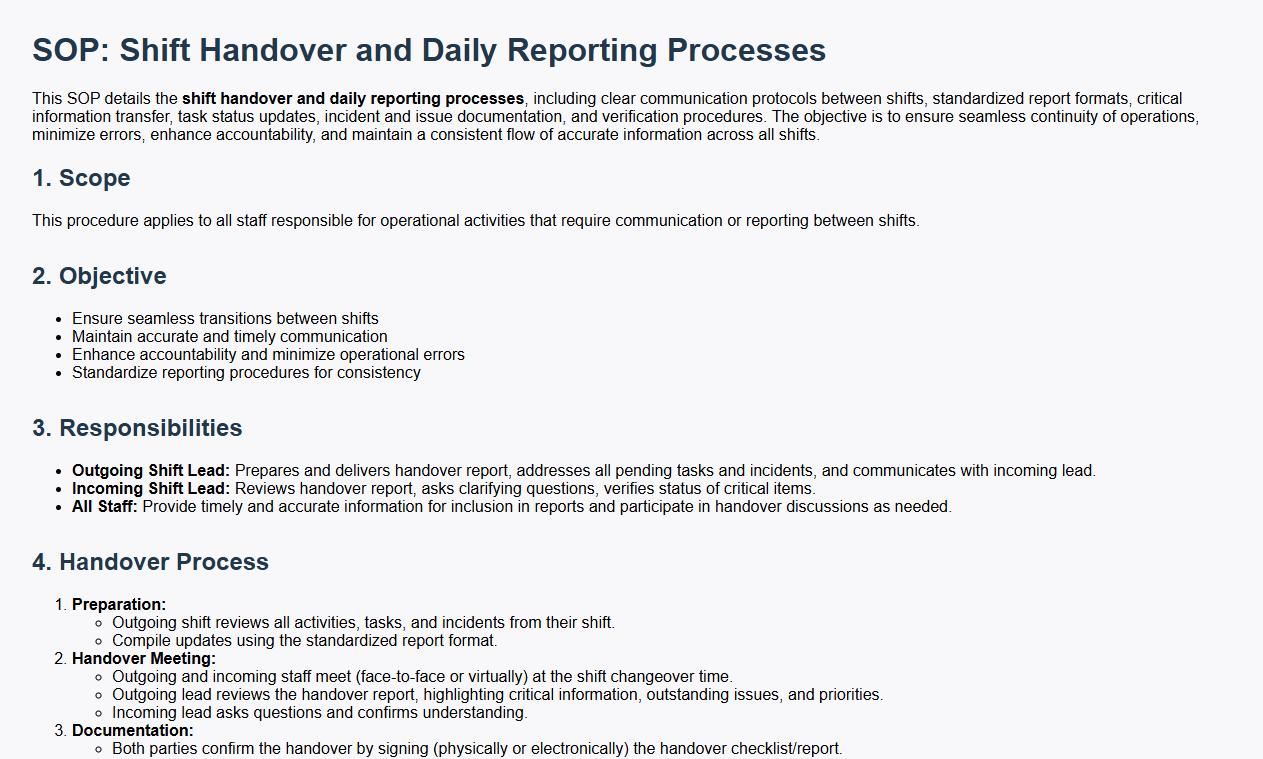
This SOP details the shift handover and daily reporting processes, including clear communication protocols between shifts, standardized report formats, critical information transfer, task status updates, incident and issue documentation, and verification procedures. The objective is to ensure seamless continuity of operations, minimize errors, enhance accountability, and maintain a consistent flow of accurate information across all shifts.
What are the key objectives outlined in the Standard Operating Procedure (SOP) for Professional Security Services?
The key objectives of the SOP for Professional Security Services focus on ensuring safety and security for all personnel and assets. It aims to establish clear guidelines to prevent security breaches and respond efficiently to emergencies. Additionally, the SOP emphasizes maintaining professionalism and consistency in all security operations.
Which roles and responsibilities are defined within the SOP for security personnel?
The SOP defines specific roles and responsibilities for security personnel, including surveillance, access control, and emergency response. Each security officer is assigned duties to uphold the integrity of the security system and protect property. Clear accountability is established to ensure that tasks are performed diligently and without lapses.
What are the protocols for incident reporting and escalation according to the SOP?
The SOP outlines strict protocols for incident reporting to ensure timely and accurate communication of security breaches. It mandates immediate documentation and notification to designated authorities based on the severity of the incident. Escalation procedures are detailed to guarantee swift resolution and prevent further complications.
How does the SOP address the handling and control of security equipment and access points?
The SOP stresses the proper handling and control of security equipment to maintain operational efficiency and security integrity. It includes procedures for regular maintenance, authorized use, and secure storage of all devices. Access points are regulated through strict policies to prevent unauthorized entry and ensure continuous monitoring.
What compliance and regulatory standards are referenced in the security services SOP?
The SOP references key compliance and regulatory standards relevant to security services, ensuring alignment with legal requirements. These standards include local laws, industry best practices, and international guidelines to safeguard organizational security. Adherence to these regulations is critical for legitimacy and effectiveness of security operations.