

A SOP Template for Security Services provides a structured framework to standardize security protocols and ensure consistent service delivery. It outlines clear procedures for risk assessment, incident response, and routine patrols, enhancing overall safety and efficiency. Implementing this template helps security teams maintain compliance with industry standards and improve communication across operations.
Access control procedures for entry and exit points.
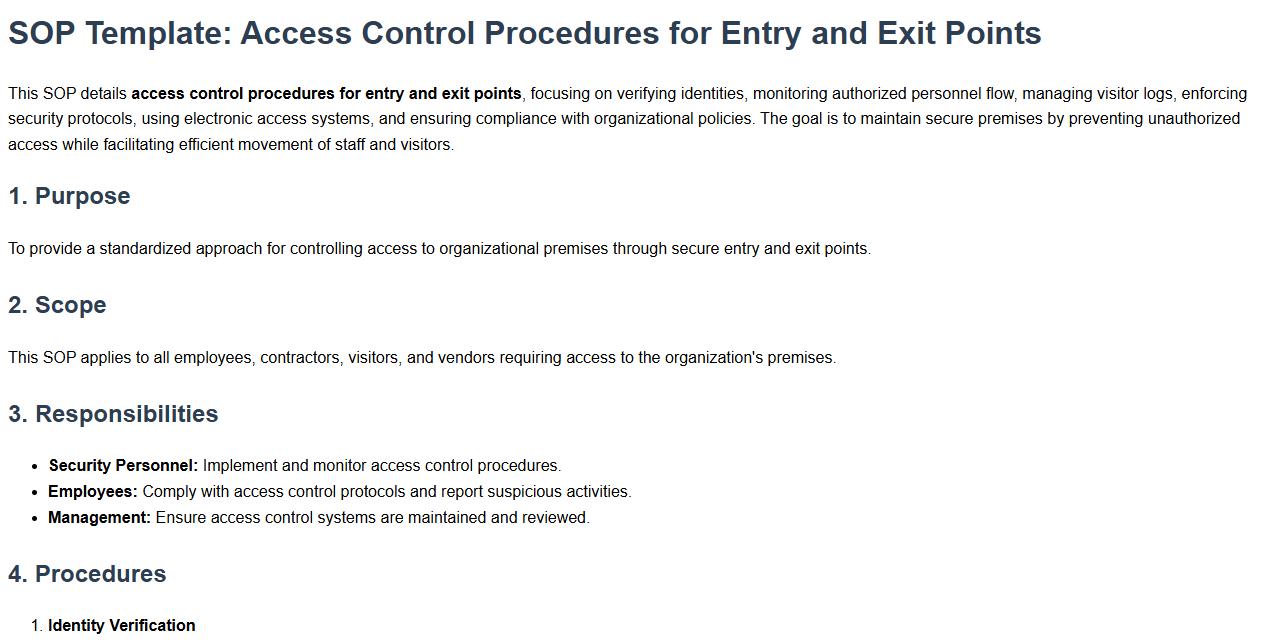
This SOP details access control procedures for entry and exit points, focusing on verifying identities, monitoring authorized personnel flow, managing visitor logs, enforcing security protocols, using electronic access systems, and ensuring compliance with organizational policies. The goal is to maintain secure premises by preventing unauthorized access while facilitating efficient movement of staff and visitors.
Visitor management and registration protocols.
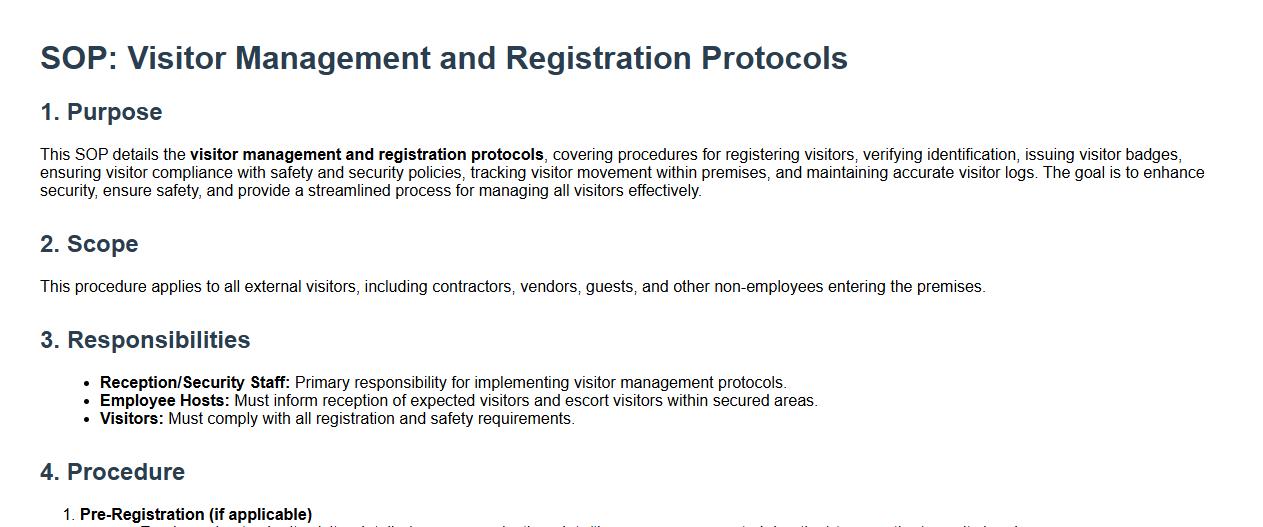
This SOP details the visitor management and registration protocols, covering procedures for registering visitors, verifying identification, issuing visitor badges, ensuring visitor compliance with safety and security policies, tracking visitor movement within premises, and maintaining accurate visitor logs. The goal is to enhance security, ensure safety, and provide a streamlined process for managing all visitors effectively.
Patrol and surveillance routines and schedules.
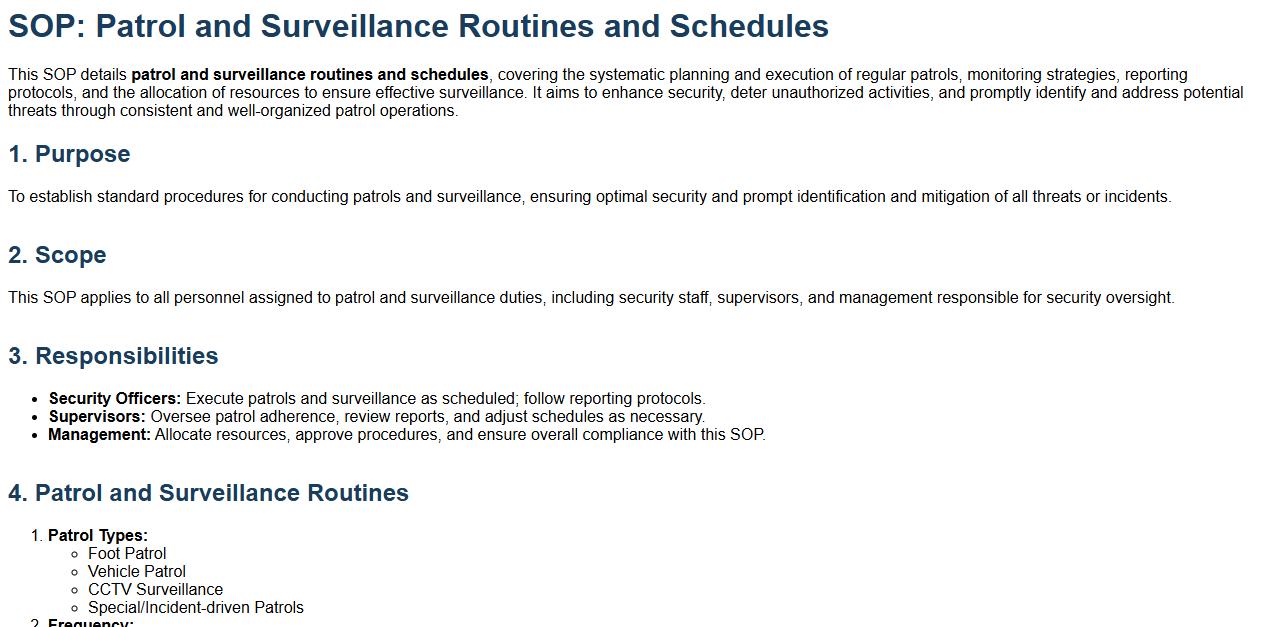
This SOP details patrol and surveillance routines and schedules, covering the systematic planning and execution of regular patrols, monitoring strategies, reporting protocols, and the allocation of resources to ensure effective surveillance. It aims to enhance security, deter unauthorized activities, and promptly identify and address potential threats through consistent and well-organized patrol operations.
Incident response and emergency procedures.
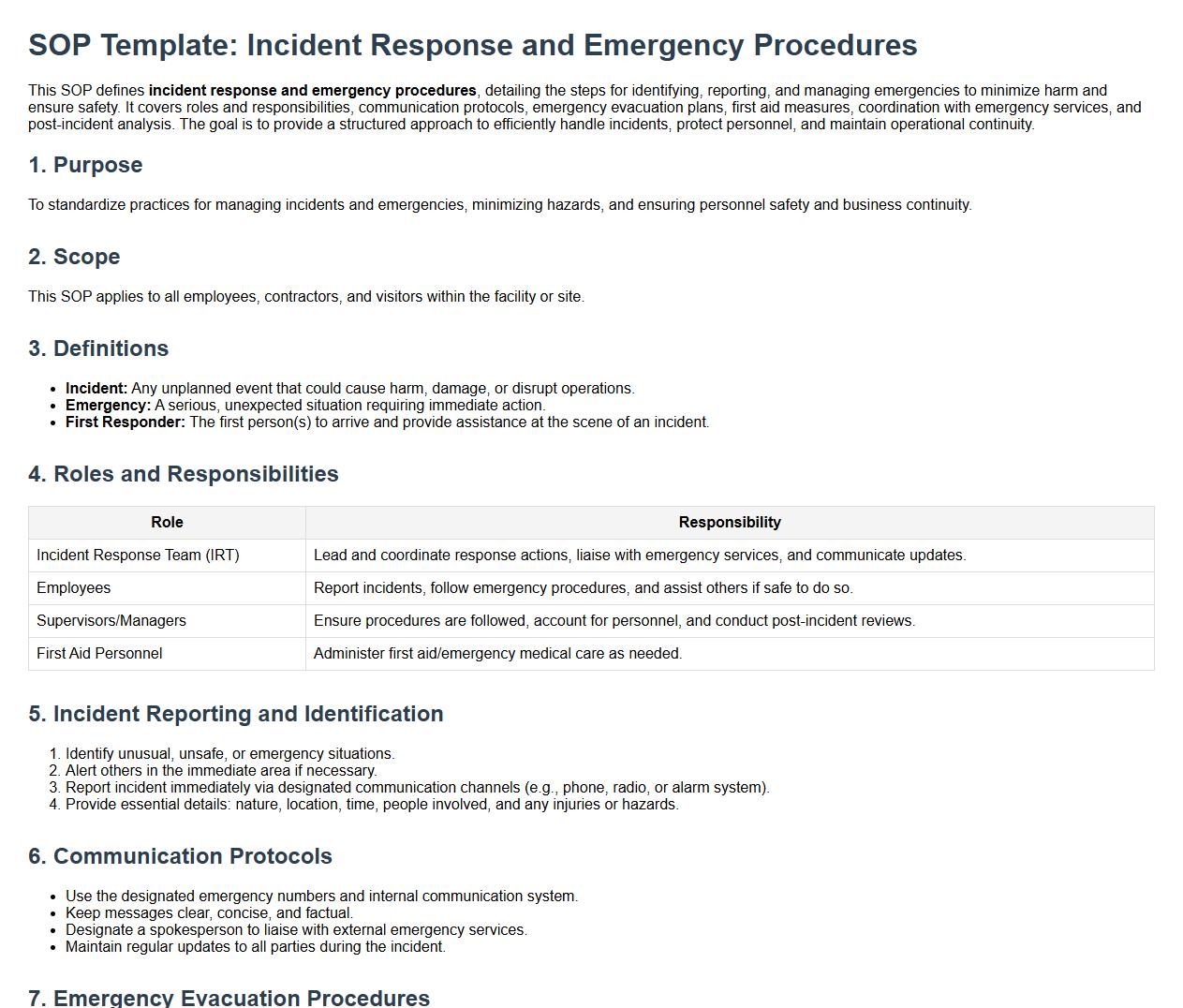
This SOP defines incident response and emergency procedures, detailing the steps for identifying, reporting, and managing emergencies to minimize harm and ensure safety. It covers roles and responsibilities, communication protocols, emergency evacuation plans, first aid measures, coordination with emergency services, and post-incident analysis. The goal is to provide a structured approach to efficiently handle incidents, protect personnel, and maintain operational continuity.
CCTV monitoring and footage handling guidelines.
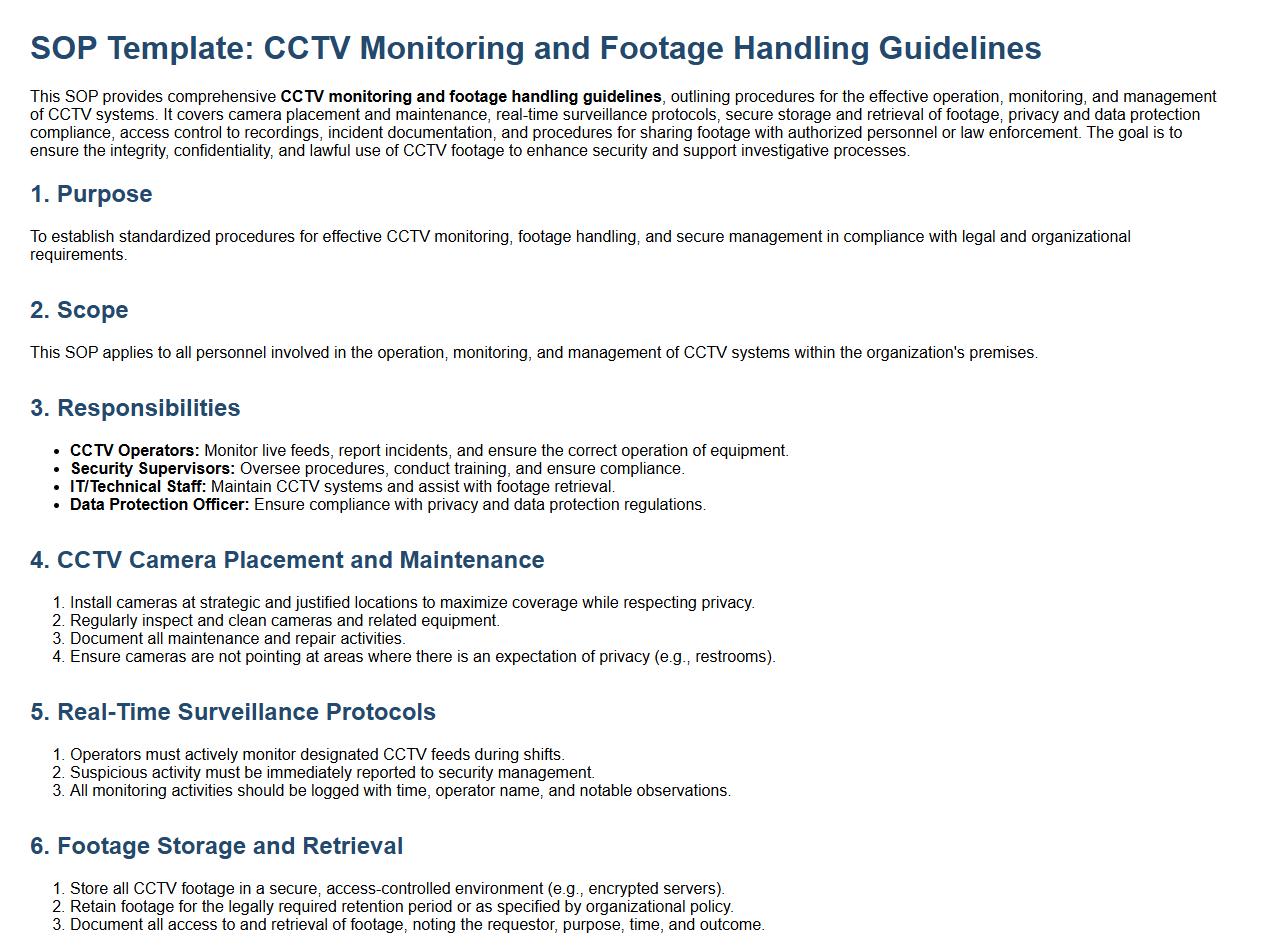
This SOP provides comprehensive CCTV monitoring and footage handling guidelines, outlining procedures for the effective operation, monitoring, and management of CCTV systems. It covers camera placement and maintenance, real-time surveillance protocols, secure storage and retrieval of footage, privacy and data protection compliance, access control to recordings, incident documentation, and procedures for sharing footage with authorized personnel or law enforcement. The goal is to ensure the integrity, confidentiality, and lawful use of CCTV footage to enhance security and support investigative processes.
Key management and issuance processes.
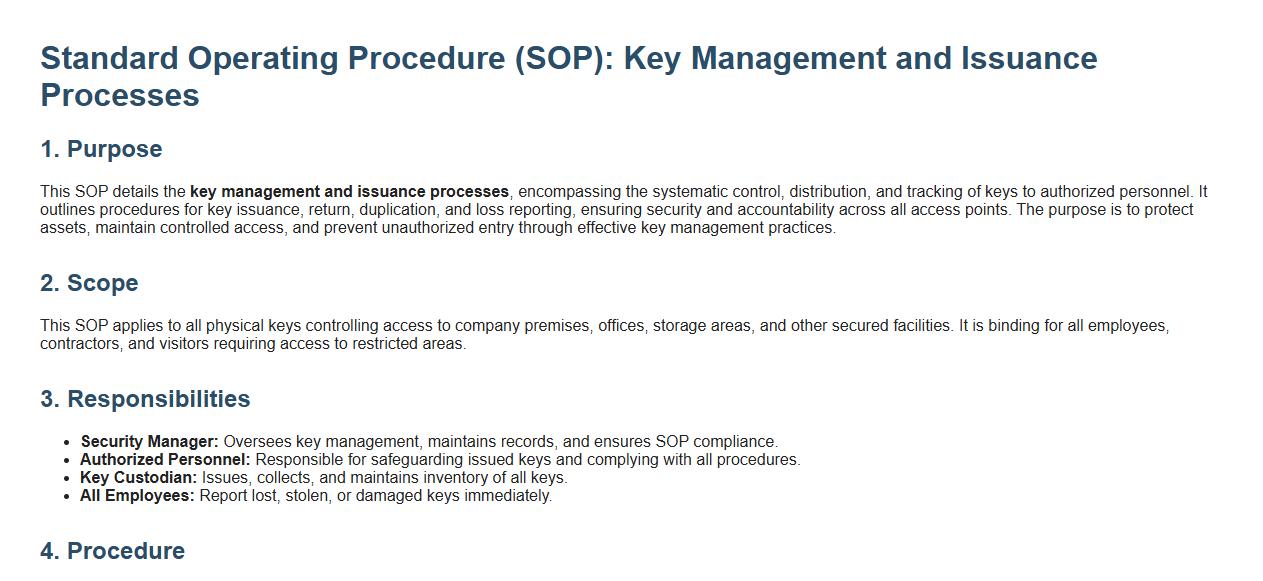
This SOP details the key management and issuance processes, encompassing the systematic control, distribution, and tracking of keys to authorized personnel. It outlines procedures for key issuance, return, duplication, and loss reporting, ensuring security and accountability across all access points. The purpose is to protect assets, maintain controlled access, and prevent unauthorized entry through effective key management practices.
Weapons and equipment handling rules.
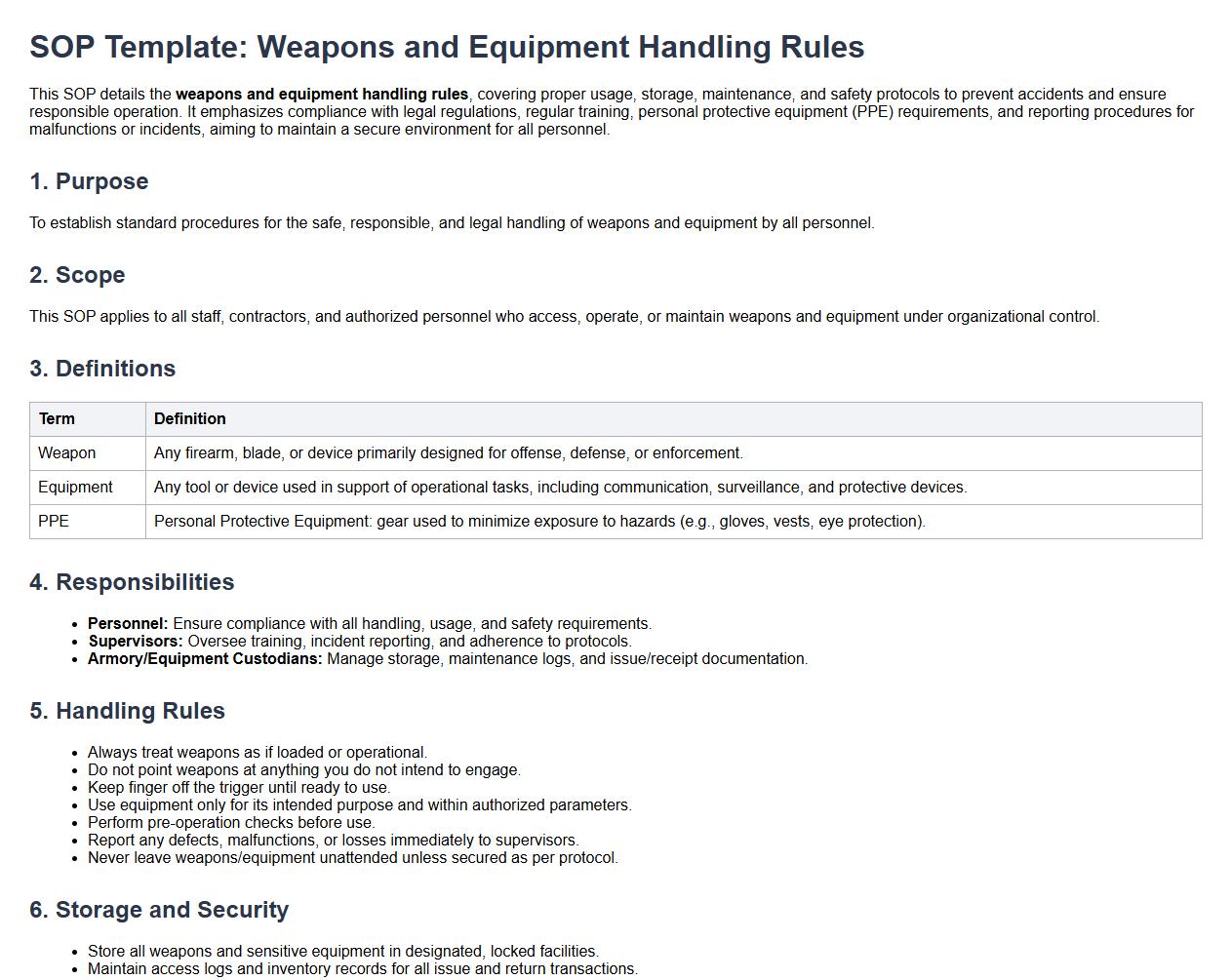
This SOP details the weapons and equipment handling rules, covering proper usage, storage, maintenance, and safety protocols to prevent accidents and ensure responsible operation. It emphasizes compliance with legal regulations, regular training, personal protective equipment (PPE) requirements, and reporting procedures for malfunctions or incidents, aiming to maintain a secure environment for all personnel.
Communication protocols for security personnel.
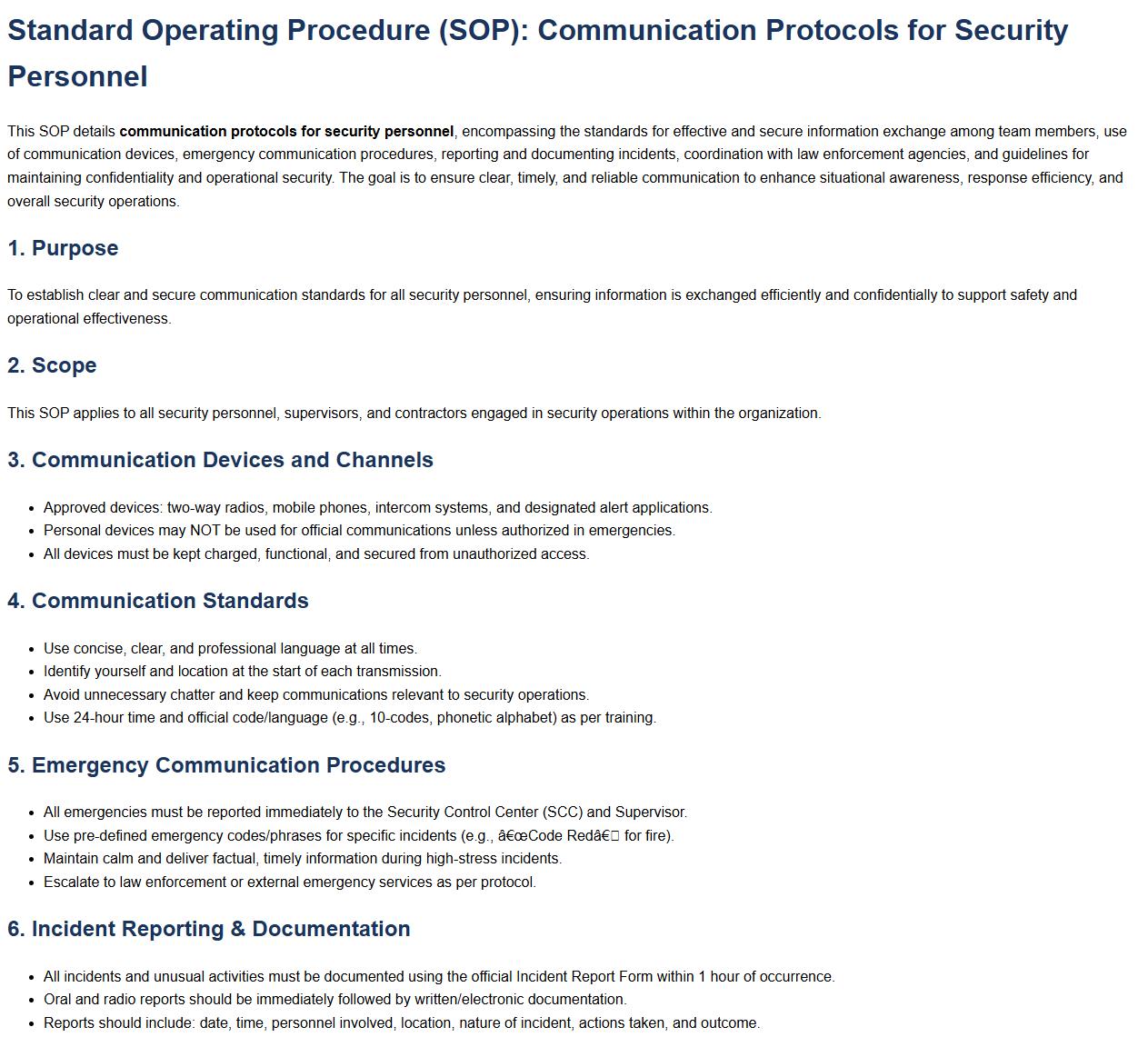
This SOP details communication protocols for security personnel, encompassing the standards for effective and secure information exchange among team members, use of communication devices, emergency communication procedures, reporting and documenting incidents, coordination with law enforcement agencies, and guidelines for maintaining confidentiality and operational security. The goal is to ensure clear, timely, and reliable communication to enhance situational awareness, response efficiency, and overall security operations.
Reporting and documentation of security incidents.
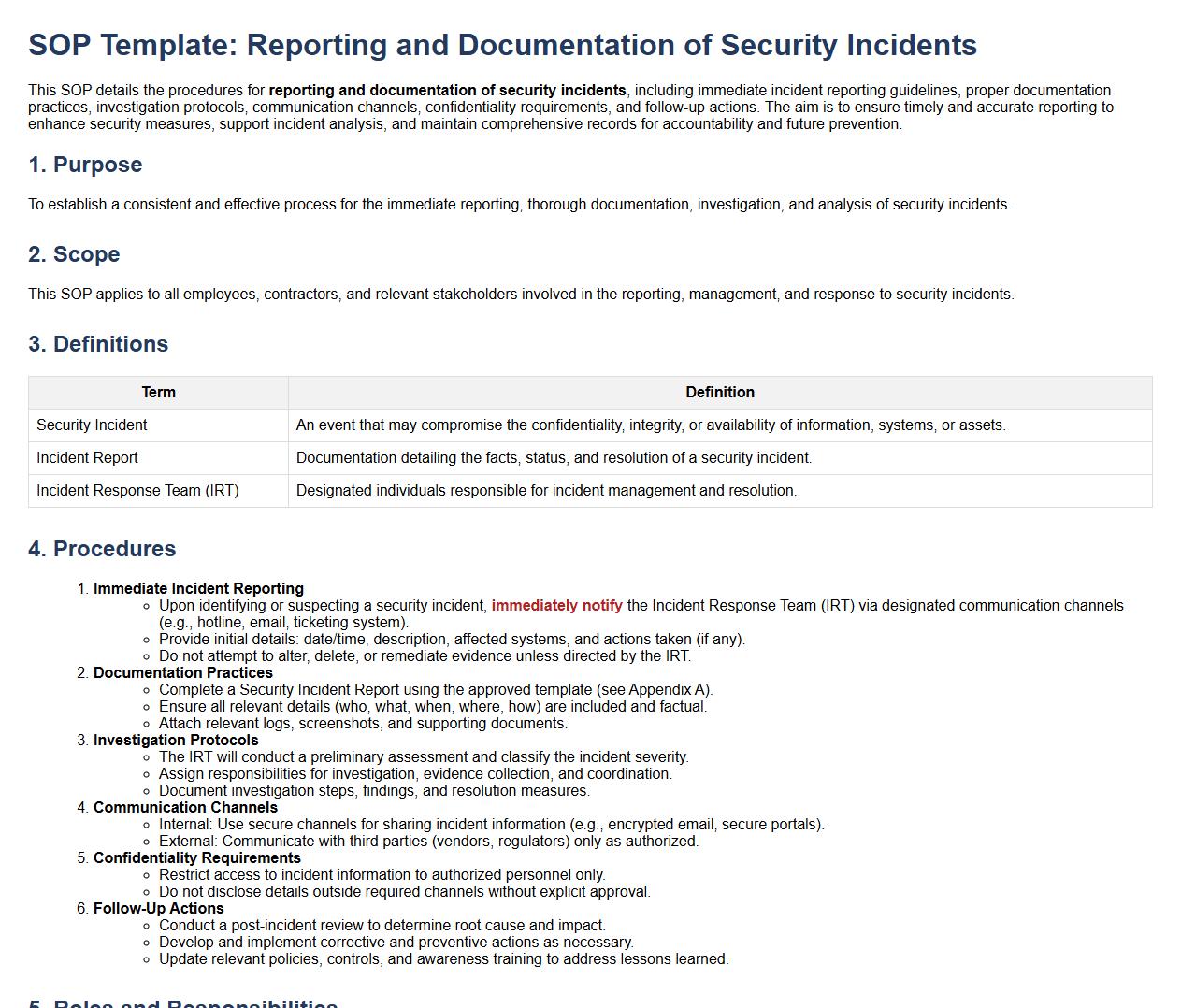
This SOP details the procedures for reporting and documentation of security incidents, including immediate incident reporting guidelines, proper documentation practices, investigation protocols, communication channels, confidentiality requirements, and follow-up actions. The aim is to ensure timely and accurate reporting to enhance security measures, support incident analysis, and maintain comprehensive records for accountability and future prevention.
Training and performance evaluation of security staff.
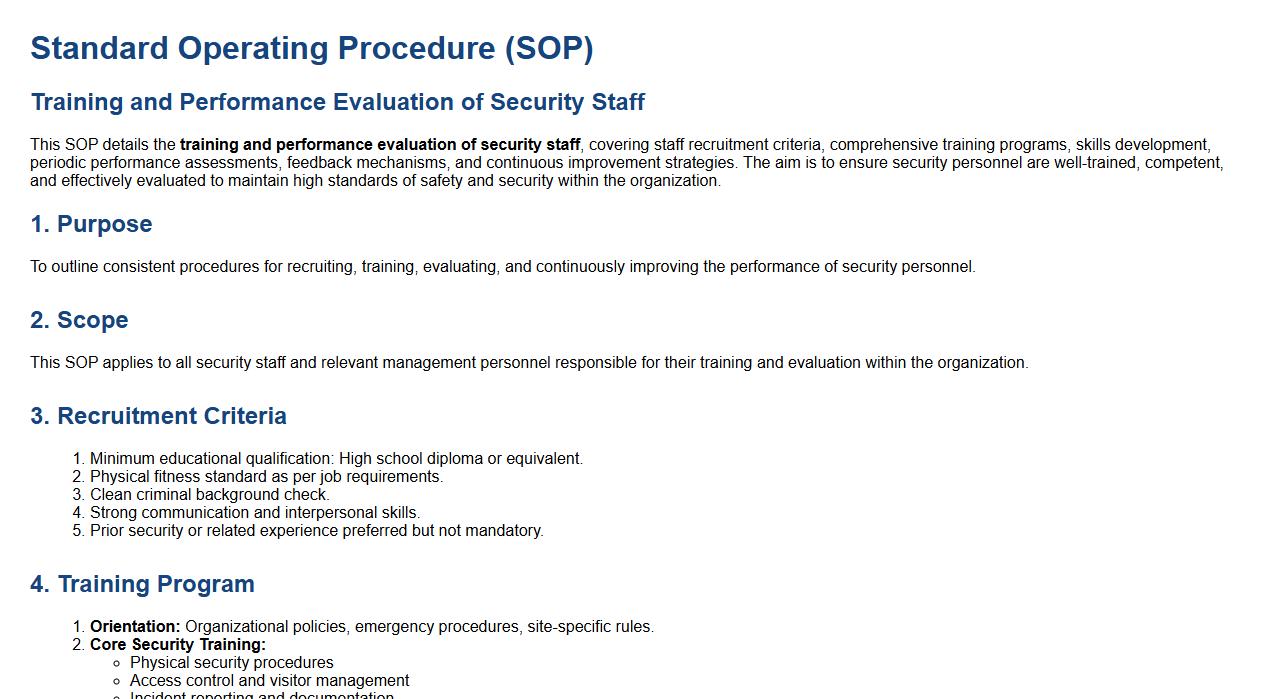
This SOP details the training and performance evaluation of security staff, covering staff recruitment criteria, comprehensive training programs, skills development, periodic performance assessments, feedback mechanisms, and continuous improvement strategies. The aim is to ensure security personnel are well-trained, competent, and effectively evaluated to maintain high standards of safety and security within the organization.
What are the primary objectives of the SOP for Security Services?
The primary objectives of the SOP for Security Services include maintaining safety, protecting assets, and ensuring compliance with legal requirements. It aims to standardize security operations to reduce risks and enhance efficiency. Additionally, the SOP provides clear guidelines to promote proactive threat prevention and swift incident response.
Who are the authorized personnel responsible for enforcing the SOP protocols?
Authorized personnel typically include security officers, supervisors, and designated management staff trained in SOP execution. These individuals have the responsibility to monitor adherence and intervene when security protocols are breached. Their role ensures consistent enforcement to maintain a secure environment.
What procedures should be followed during a security breach according to the SOP?
During a security breach, the SOP mandates immediate threat assessment, containment measures, and notification of higher authorities. Personnel must follow established communication channels and prioritize the safety of all individuals involved. Documentation of all actions taken is essential to facilitate investigations and corrective measures.
What are the required documentation and incident reporting steps in the SOP?
The SOP requires thorough documentation of all security incidents, including detailed reports on the nature, time, and response actions. Incident reporting steps involve notifying supervisors and relevant stakeholders promptly. Accurate records support accountability, review processes, and continuous improvement of security measures.
How does the SOP address emergency response and evacuation processes?
The SOP outlines clear emergency response protocols, including immediate action plans and evacuation procedures to safeguard personnel and property. It emphasizes regular drills and training to ensure preparedness and efficient execution. Coordination with emergency services is also a critical component to manage crises effectively.