
A SOP Template for Retail Cleaning Procedures ensures consistent and thorough cleaning standards across retail environments. It outlines step-by-step instructions for cleaning staff to maintain hygiene, safety, and customer satisfaction. Following this template helps optimize operational efficiency and compliance with health regulations.
Opening and Pre-Cleaning Checklist.
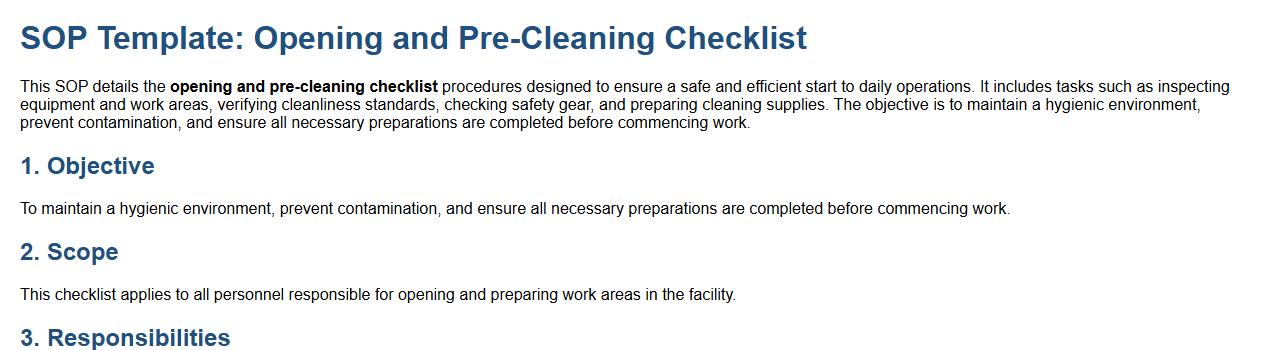
This SOP details the opening and pre-cleaning checklist procedures designed to ensure a safe and efficient start to daily operations. It includes tasks such as inspecting equipment and work areas, verifying cleanliness standards, checking safety gear, and preparing cleaning supplies. The objective is to maintain a hygienic environment, prevent contamination, and ensure all necessary preparations are completed before commencing work.
Personal Protective Equipment (PPE) Requirements and Usage.
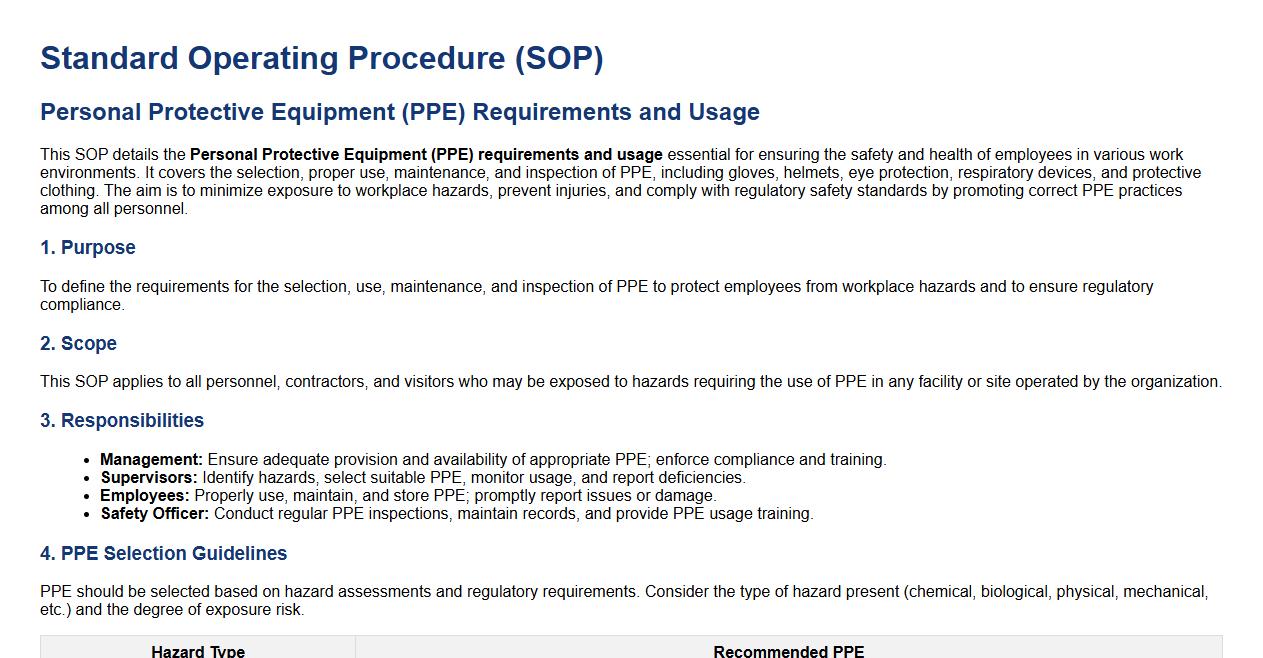
This SOP details the Personal Protective Equipment (PPE) requirements and usage essential for ensuring the safety and health of employees in various work environments. It covers the selection, proper use, maintenance, and inspection of PPE, including gloves, helmets, eye protection, respiratory devices, and protective clothing. The aim is to minimize exposure to workplace hazards, prevent injuries, and comply with regulatory safety standards by promoting correct PPE practices among all personnel.
Surface Dusting and Spot Cleaning Procedures.
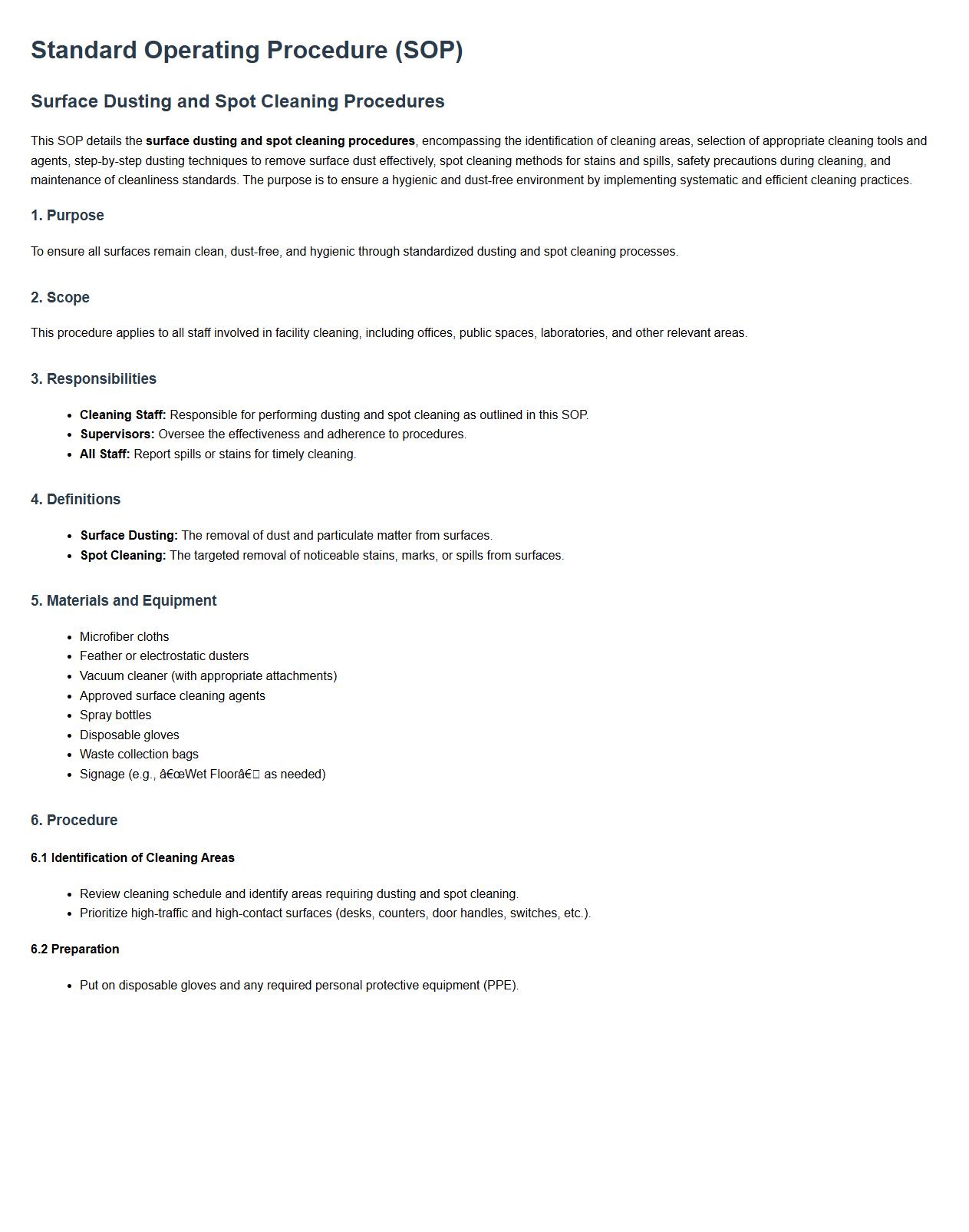
This SOP details the surface dusting and spot cleaning procedures, encompassing the identification of cleaning areas, selection of appropriate cleaning tools and agents, step-by-step dusting techniques to remove surface dust effectively, spot cleaning methods for stains and spills, safety precautions during cleaning, and maintenance of cleanliness standards. The purpose is to ensure a hygienic and dust-free environment by implementing systematic and efficient cleaning practices.
Floor Sweeping, Mopping, and Vacuuming Steps.
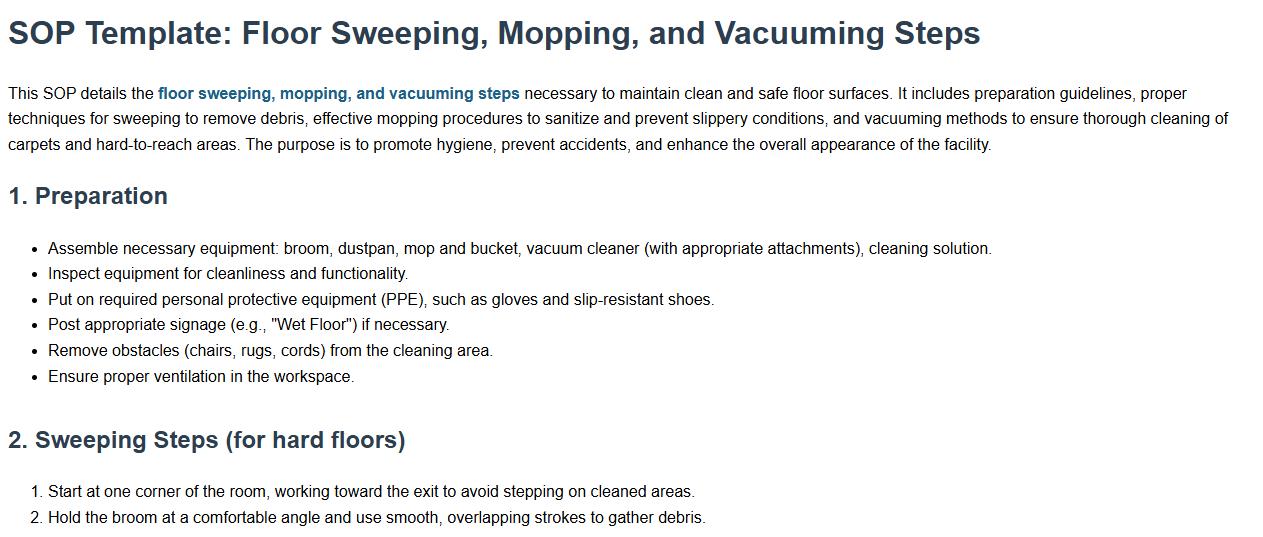
This SOP details the floor sweeping, mopping, and vacuuming steps necessary to maintain clean and safe floor surfaces. It includes preparation guidelines, proper techniques for sweeping to remove debris, effective mopping procedures to sanitize and prevent slippery conditions, and vacuuming methods to ensure thorough cleaning of carpets and hard-to-reach areas. The purpose is to promote hygiene, prevent accidents, and enhance the overall appearance of the facility.
Restroom Cleaning and Sanitization Process.
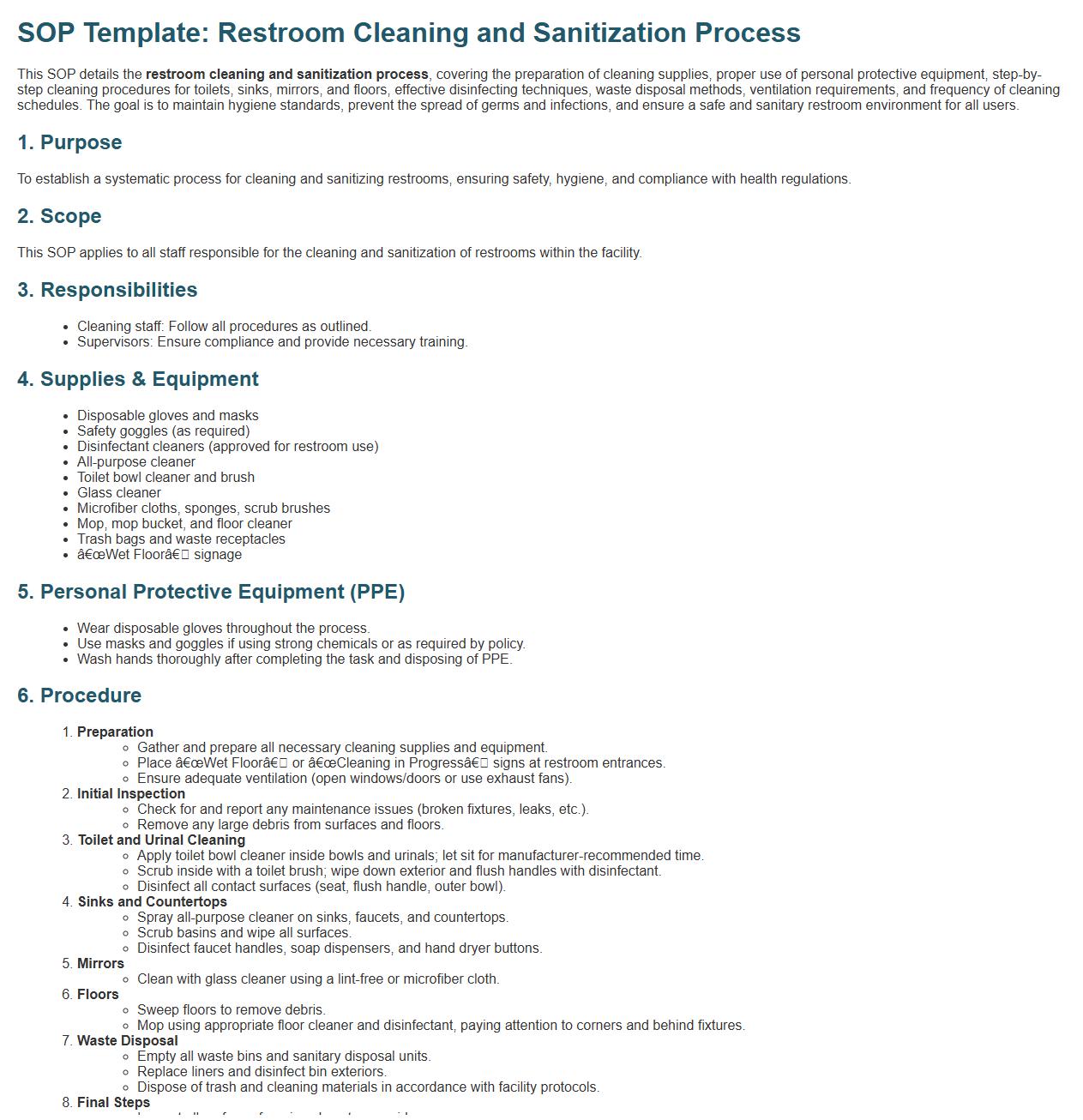
This SOP details the restroom cleaning and sanitization process, covering the preparation of cleaning supplies, proper use of personal protective equipment, step-by-step cleaning procedures for toilets, sinks, mirrors, and floors, effective disinfecting techniques, waste disposal methods, ventilation requirements, and frequency of cleaning schedules. The goal is to maintain hygiene standards, prevent the spread of germs and infections, and ensure a safe and sanitary restroom environment for all users.
High-Touch Surface Disinfection Protocol.
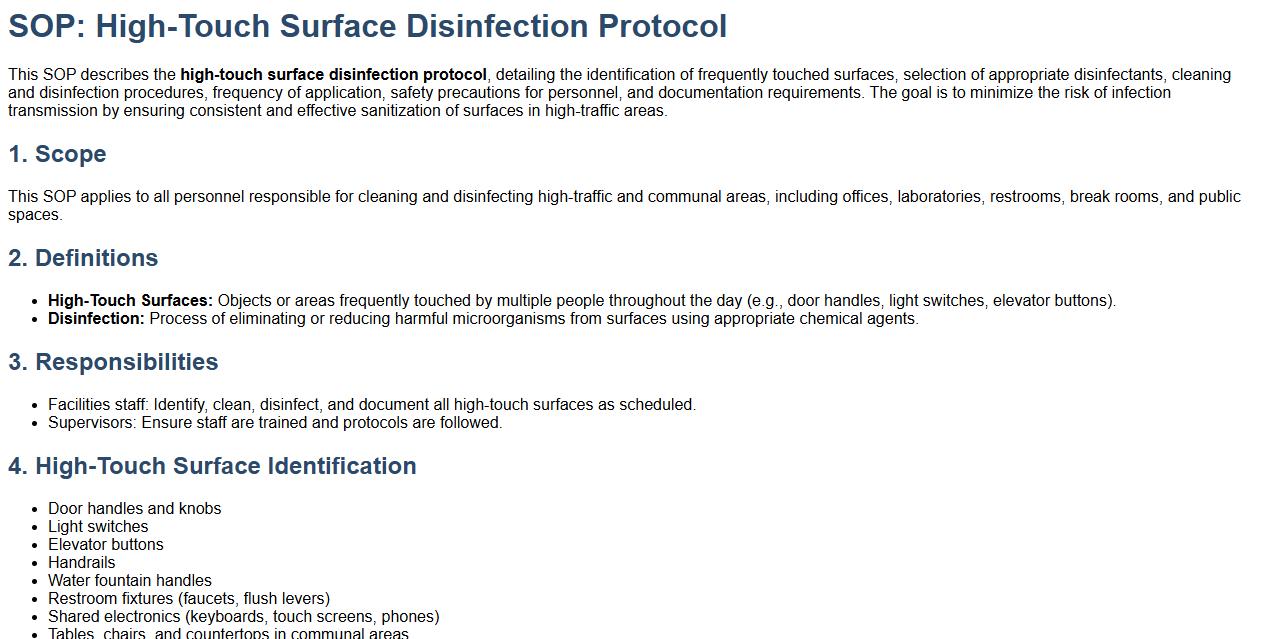
This SOP describes the high-touch surface disinfection protocol, detailing the identification of frequently touched surfaces, selection of appropriate disinfectants, cleaning and disinfection procedures, frequency of application, safety precautions for personnel, and documentation requirements. The goal is to minimize the risk of infection transmission by ensuring consistent and effective sanitization of surfaces in high-traffic areas.
Trash Collection, Removal, and Liner Replacement.
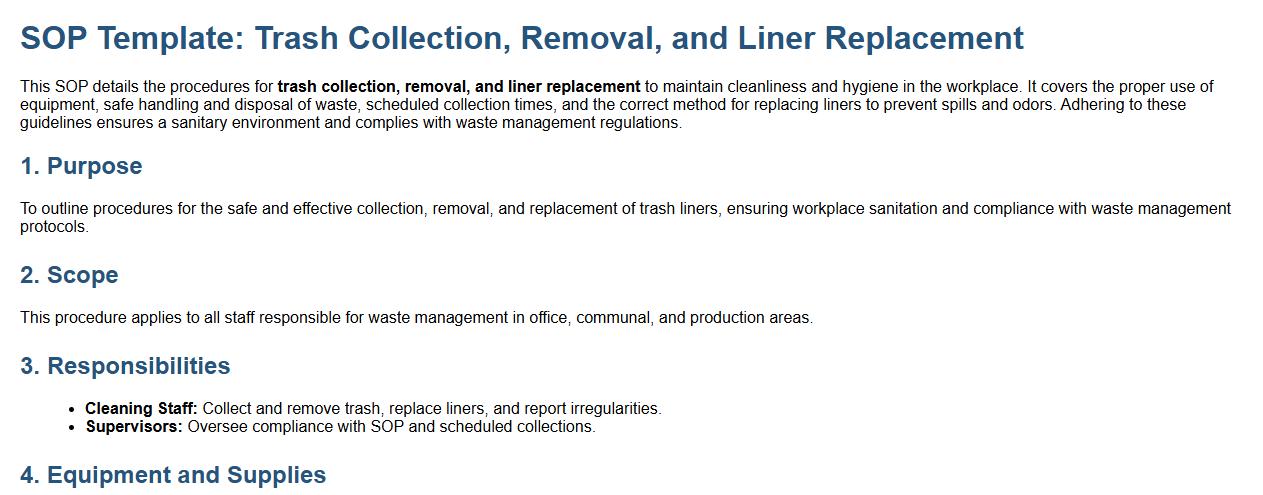
This SOP details the procedures for trash collection, removal, and liner replacement to maintain cleanliness and hygiene in the workplace. It covers the proper use of equipment, safe handling and disposal of waste, scheduled collection times, and the correct method for replacing liners to prevent spills and odors. Adhering to these guidelines ensures a sanitary environment and complies with waste management regulations.
Cleaning and Restocking of Shelves and Displays.
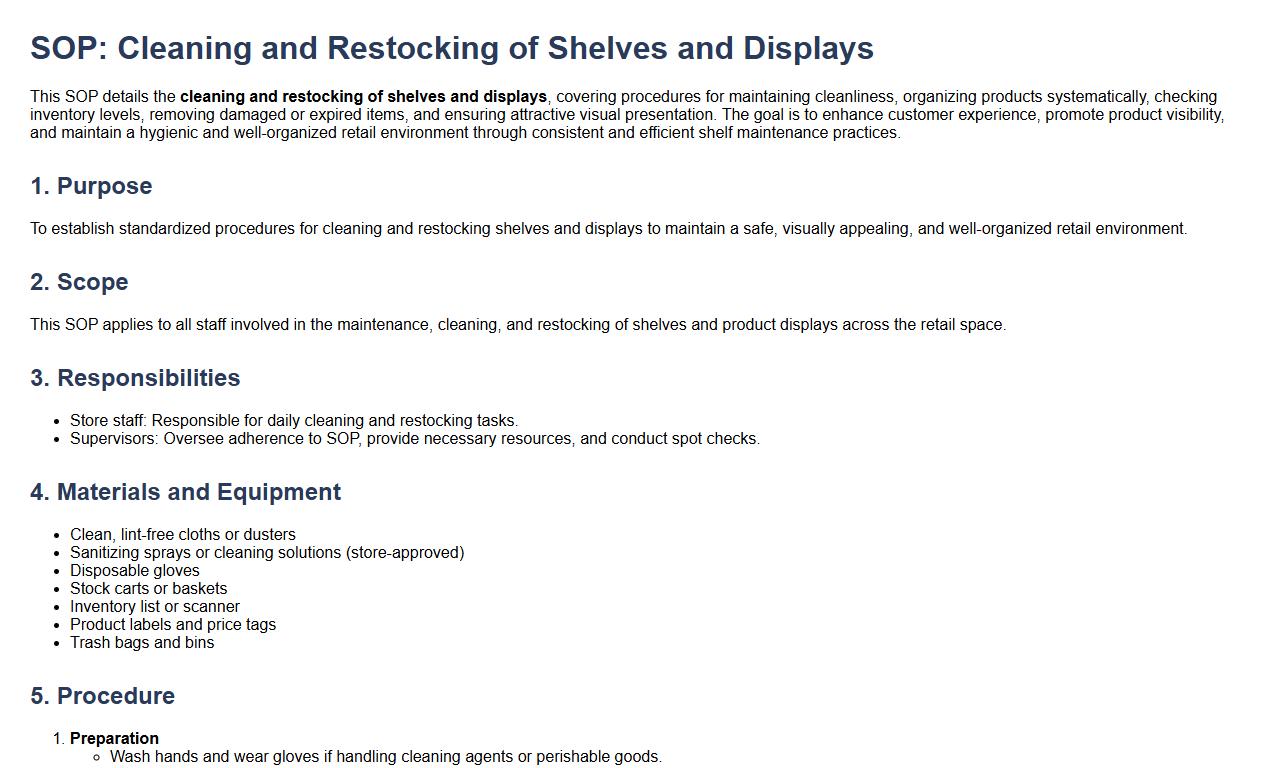
This SOP details the cleaning and restocking of shelves and displays, covering procedures for maintaining cleanliness, organizing products systematically, checking inventory levels, removing damaged or expired items, and ensuring attractive visual presentation. The goal is to enhance customer experience, promote product visibility, and maintain a hygienic and well-organized retail environment through consistent and efficient shelf maintenance practices.
Use, Dilution, and Storage of Cleaning Chemicals.
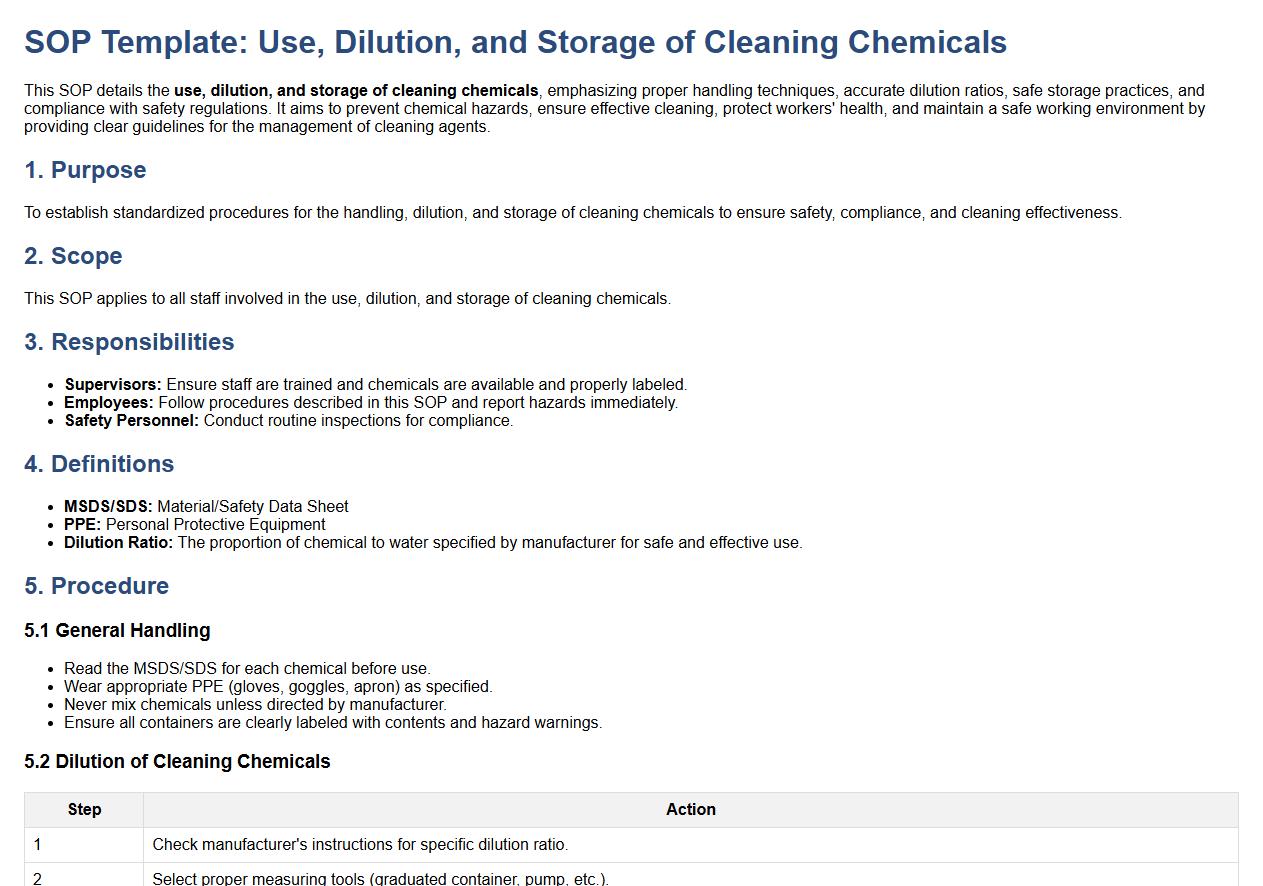
This SOP details the use, dilution, and storage of cleaning chemicals, emphasizing proper handling techniques, accurate dilution ratios, safe storage practices, and compliance with safety regulations. It aims to prevent chemical hazards, ensure effective cleaning, protect workers' health, and maintain a safe working environment by providing clear guidelines for the management of cleaning agents.
Closing Inspection and Sign-Off Procedure.
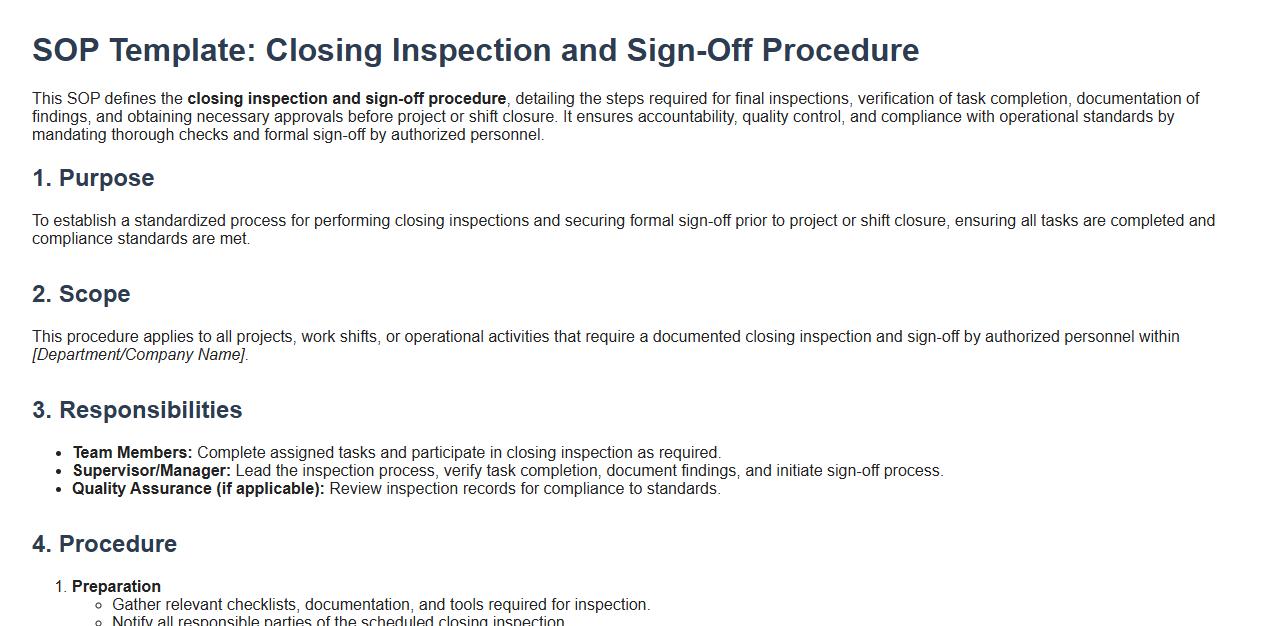
This SOP defines the closing inspection and sign-off procedure, detailing the steps required for final inspections, verification of task completion, documentation of findings, and obtaining necessary approvals before project or shift closure. It ensures accountability, quality control, and compliance with operational standards by mandating thorough checks and formal sign-off by authorized personnel.
What are the key objectives outlined in the SOP for Retail Cleaning Procedures?
The key objectives of the SOP for Retail Cleaning Procedures focus on ensuring a safe, hygienic, and welcoming environment for customers and staff. It aims to maintain cleanliness standards that prevent contamination and reduce health risks. Additionally, the SOP promotes consistent cleaning practices to uphold the store's reputation and comply with regulatory requirements.
Which areas and surfaces are prioritized for frequent cleaning as per the SOP?
The SOP prioritizes high-touch areas such as door handles, checkout counters, and shopping carts for frequent cleaning. Restrooms, break rooms, and employee areas also receive special attention to maintain hygiene. Floors and window surfaces are cleaned regularly to ensure overall store cleanliness and customer satisfaction.
What are the standardized steps for safely handling and disposing of cleaning chemicals in retail environments?
The SOP mandates clear labeling and proper storage of cleaning chemicals away from food and customer areas. Staff must wear appropriate personal protective equipment (PPE) when handling chemicals and follow dilution and application instructions precisely. Disposal protocols require using designated containers and adhering to environmental and safety regulations to prevent hazards.
How does the SOP specify the proper use and maintenance of cleaning equipment?
The SOP emphasizes regular inspection and cleaning of all cleaning equipment to ensure effectiveness and longevity. Proper use involves training staff on equipment operation and safety precautions to avoid damage or injury. Scheduled maintenance and timely repairs are critical components to prevent equipment failure and maintain cleaning quality.
What documentation or checklists does the SOP require to ensure compliance and accountability?
The SOP requires the use of detailed cleaning checklists that track daily, weekly, and monthly cleaning tasks for transparency and accountability. Logs must be maintained to record chemical usage, equipment maintenance, and staff training. Regular audits and reviews of these documents support continuous improvement and compliance with cleaning standards.