

A SOP Template for Retail Floor Management streamlines daily operations by providing clear guidelines for staff responsibilities, customer service, and inventory control. This template ensures consistent performance and enhances efficiency across all retail floor activities. Utilizing a standardized approach helps maintain store appearance, manage staff schedules, and address customer issues effectively.
Opening and closing procedures for the retail floor.
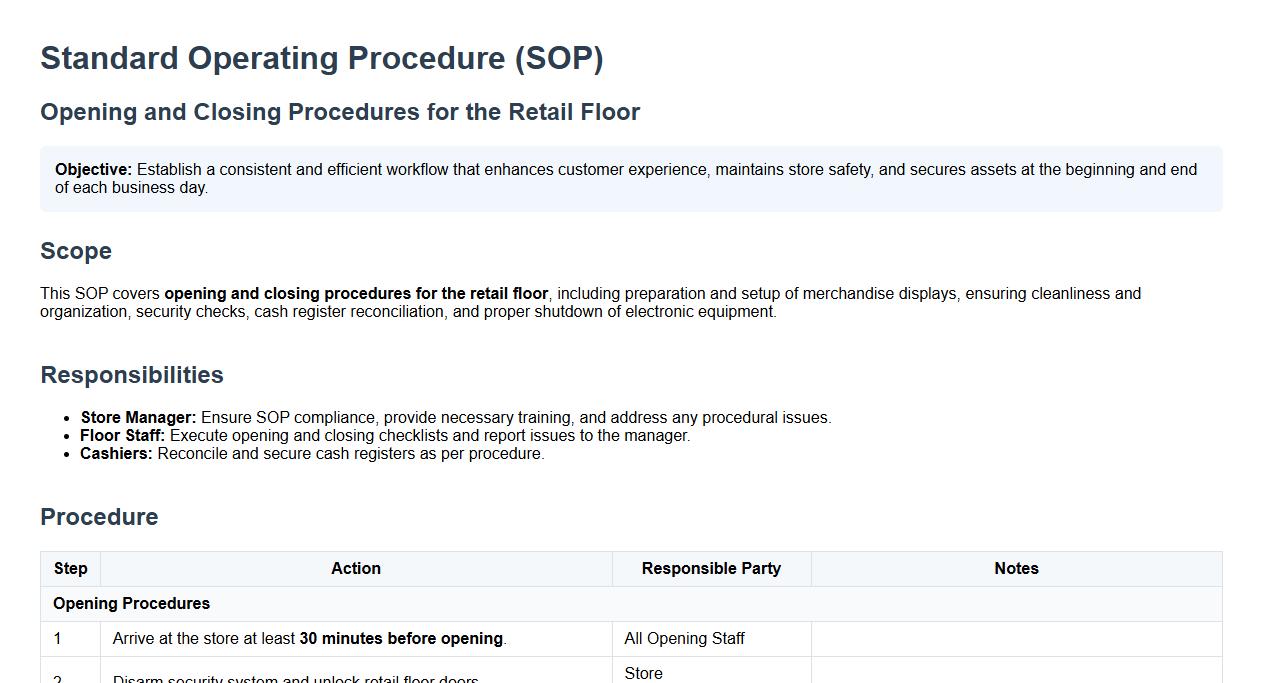
This SOP details the opening and closing procedures for the retail floor, including preparation and setup of merchandise displays, ensuring cleanliness and organization, security checks, cash register reconciliation, and proper shutdown of electronic equipment. The objective is to establish a consistent and efficient workflow that enhances customer experience, maintains store safety, and secures assets at the beginning and end of each business day.
Customer service and complaint resolution guidelines.
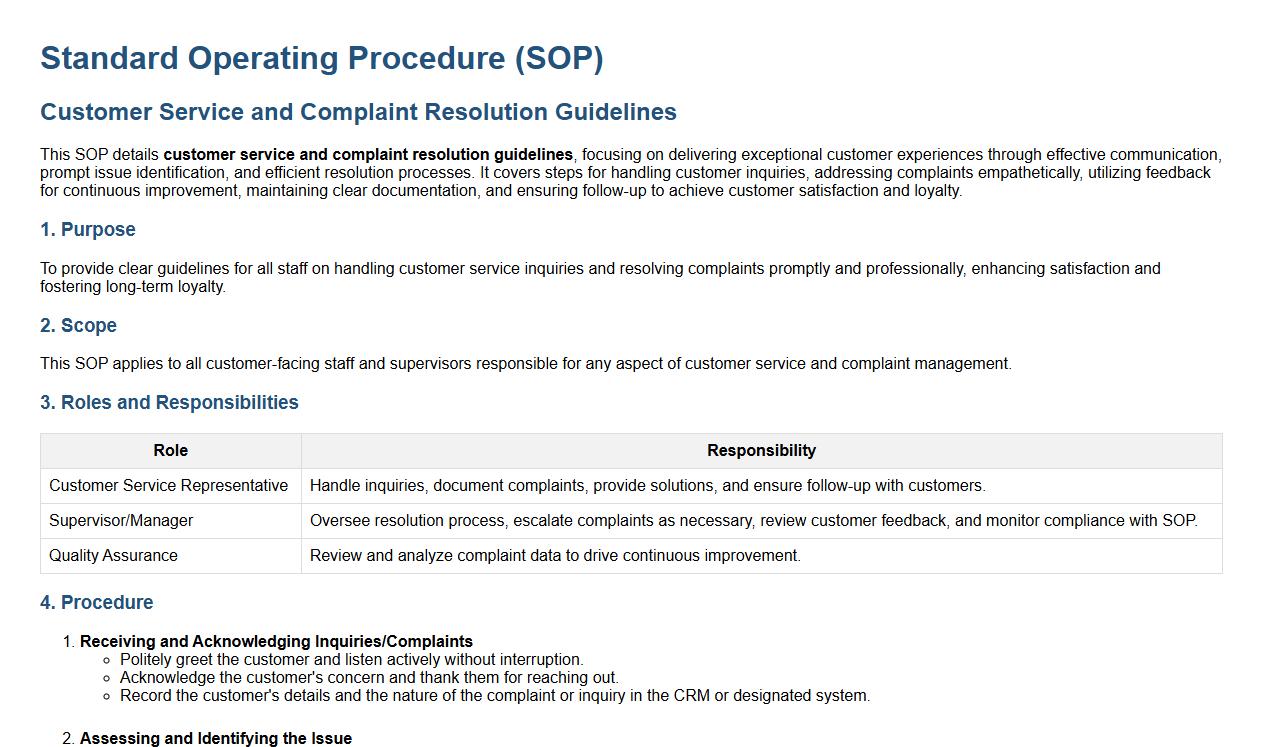
This SOP details customer service and complaint resolution guidelines, focusing on delivering exceptional customer experiences through effective communication, prompt issue identification, and efficient resolution processes. It covers steps for handling customer inquiries, addressing complaints empathetically, utilizing feedback for continuous improvement, maintaining clear documentation, and ensuring follow-up to achieve customer satisfaction and loyalty.
Product merchandising and display standards.
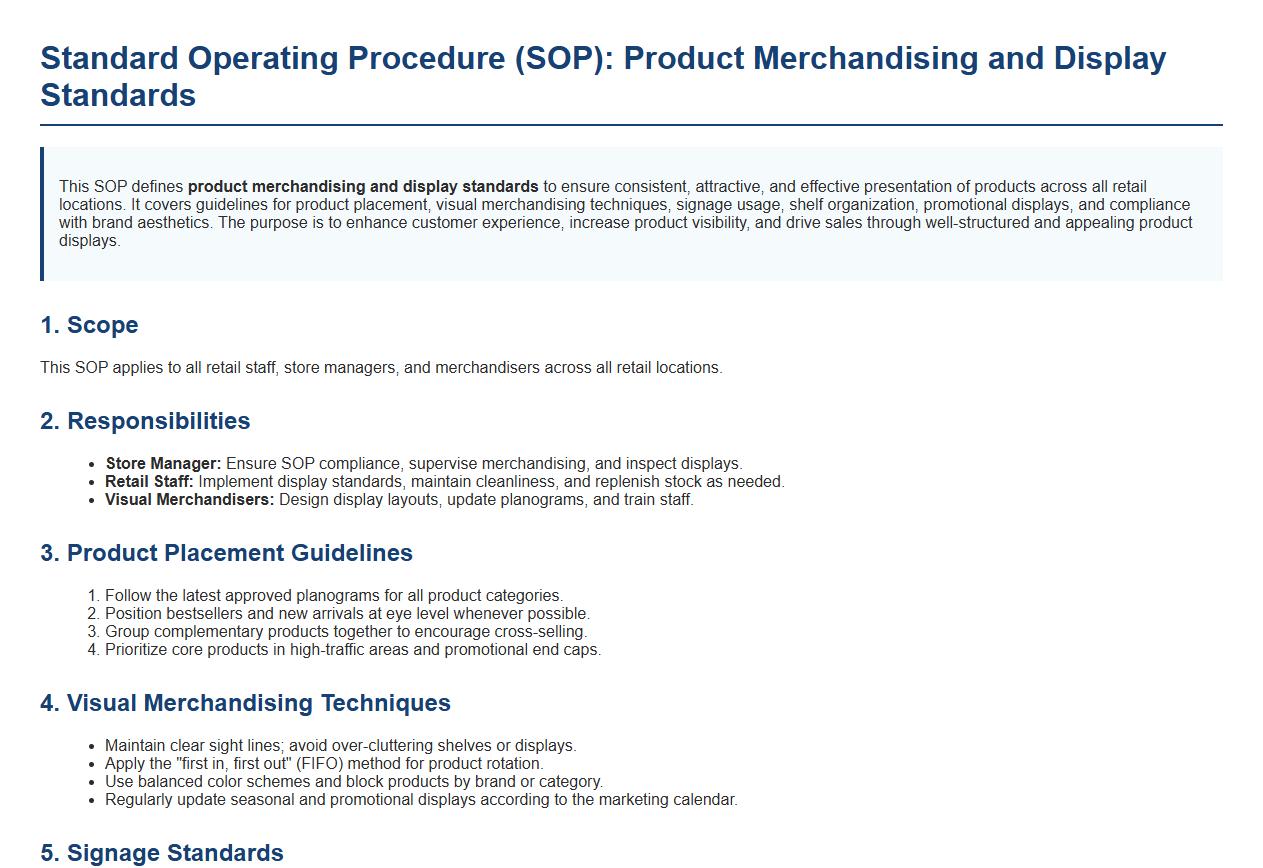
This SOP defines product merchandising and display standards to ensure consistent, attractive, and effective presentation of products across all retail locations. It covers guidelines for product placement, visual merchandising techniques, signage usage, shelf organization, promotional displays, and compliance with brand aesthetics. The purpose is to enhance customer experience, increase product visibility, and drive sales through well-structured and appealing product displays.
Cash handling and point-of-sale (POS) operations.
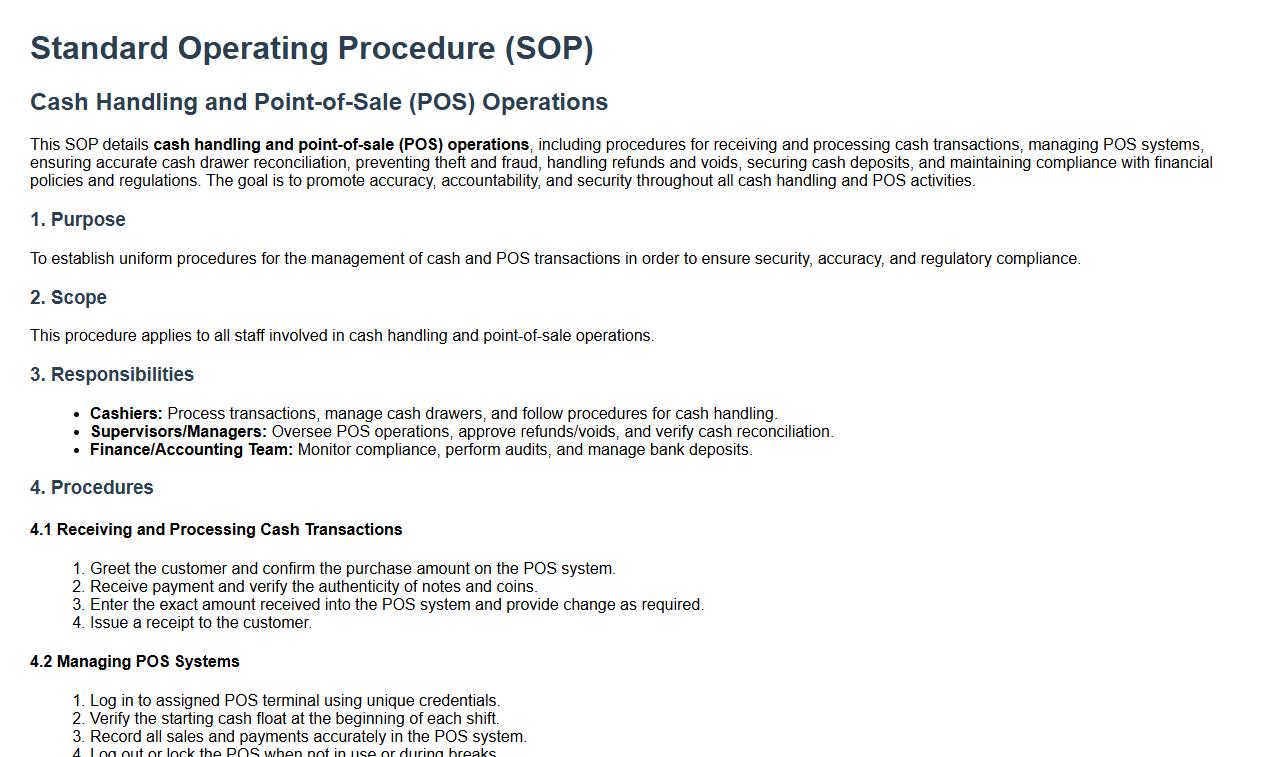
This SOP details cash handling and point-of-sale (POS) operations, including procedures for receiving and processing cash transactions, managing POS systems, ensuring accurate cash drawer reconciliation, preventing theft and fraud, handling refunds and voids, securing cash deposits, and maintaining compliance with financial policies and regulations. The goal is to promote accuracy, accountability, and security throughout all cash handling and POS activities.
Inventory management and stock replenishment protocols.
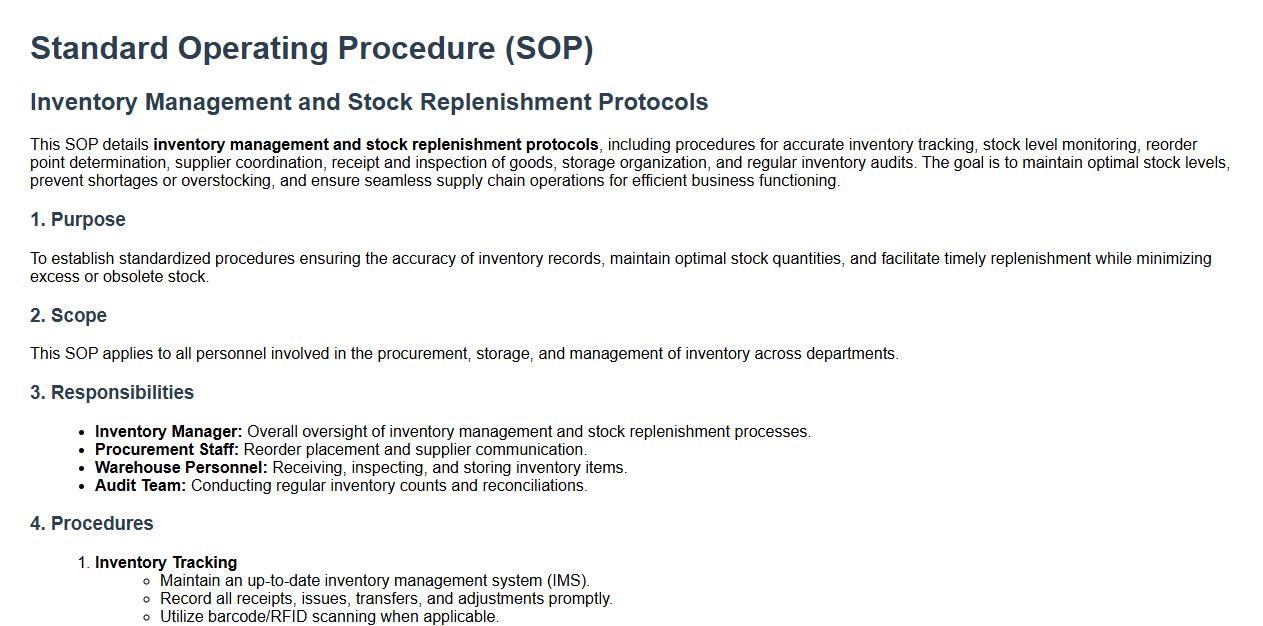
This SOP details inventory management and stock replenishment protocols, including procedures for accurate inventory tracking, stock level monitoring, reorder point determination, supplier coordination, receipt and inspection of goods, storage organization, and regular inventory audits. The goal is to maintain optimal stock levels, prevent shortages or overstocking, and ensure seamless supply chain operations for efficient business functioning.
Staff scheduling, roles, and shift handover processes.
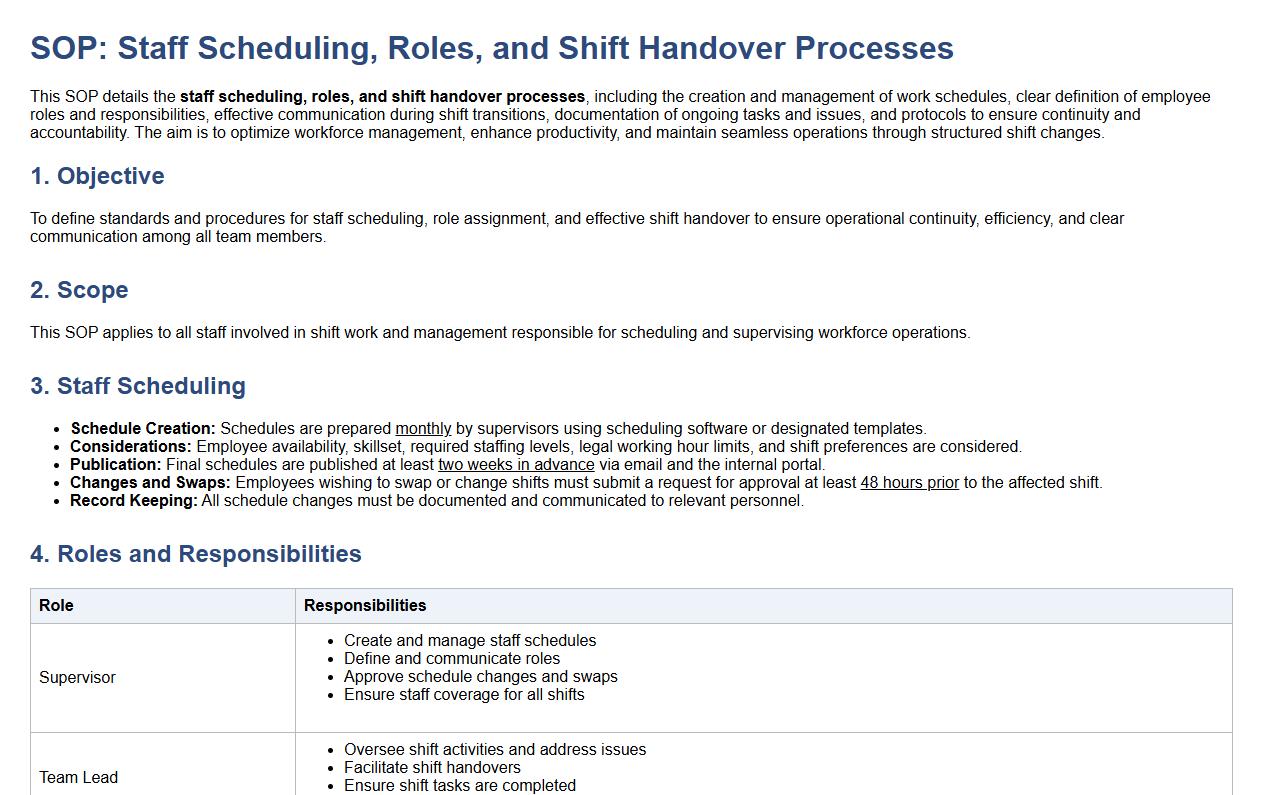
This SOP details the staff scheduling, roles, and shift handover processes, including the creation and management of work schedules, clear definition of employee roles and responsibilities, effective communication during shift transitions, documentation of ongoing tasks and issues, and protocols to ensure continuity and accountability. The aim is to optimize workforce management, enhance productivity, and maintain seamless operations through structured shift changes.
Loss prevention and security measures.
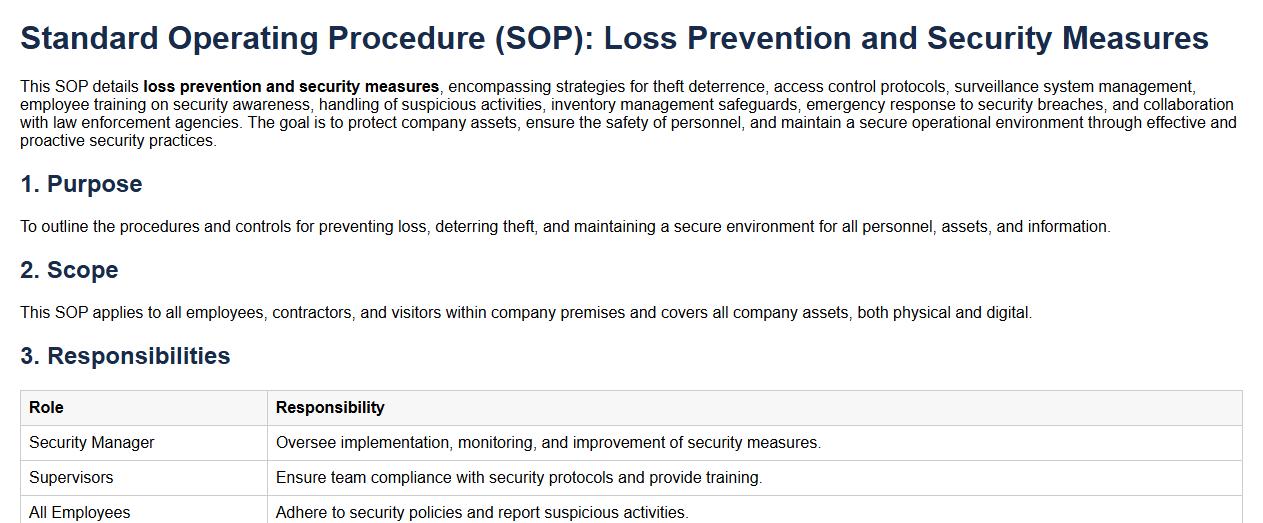
This SOP details loss prevention and security measures, encompassing strategies for theft deterrence, access control protocols, surveillance system management, employee training on security awareness, handling of suspicious activities, inventory management safeguards, emergency response to security breaches, and collaboration with law enforcement agencies. The goal is to protect company assets, ensure the safety of personnel, and maintain a secure operational environment through effective and proactive security practices.
Cleaning, sanitation, and store appearance maintenance.
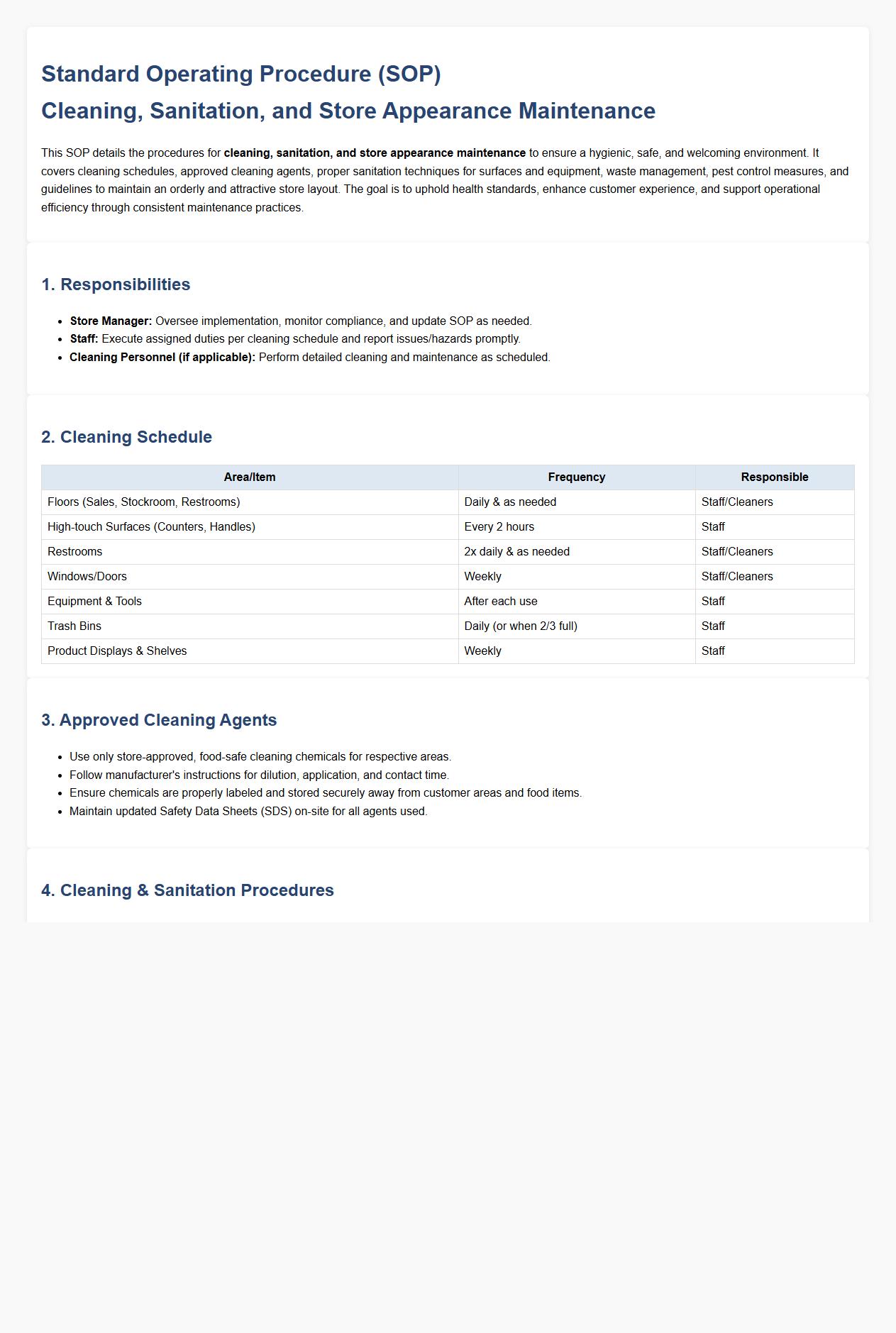
This SOP details the procedures for cleaning, sanitation, and store appearance maintenance to ensure a hygienic, safe, and welcoming environment. It covers cleaning schedules, approved cleaning agents, proper sanitation techniques for surfaces and equipment, waste management, pest control measures, and guidelines to maintain an orderly and attractive store layout. The goal is to uphold health standards, enhance customer experience, and support operational efficiency through consistent maintenance practices.
Health, safety, and emergency response procedures.
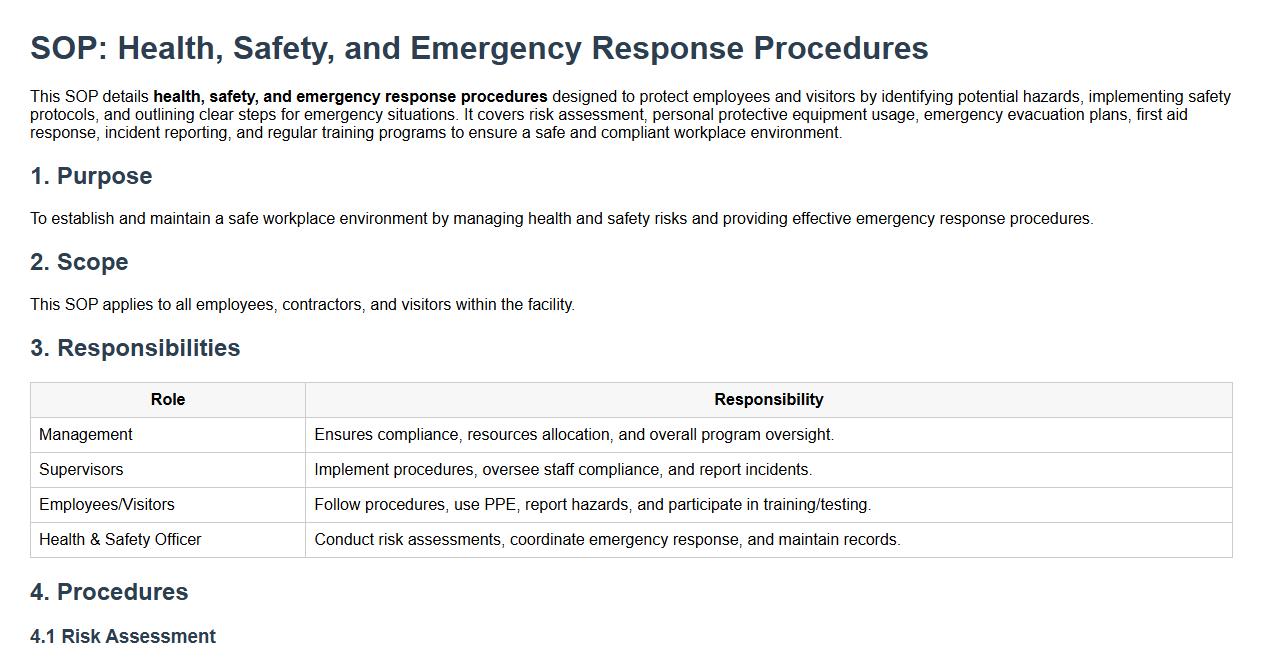
This SOP details health, safety, and emergency response procedures designed to protect employees and visitors by identifying potential hazards, implementing safety protocols, and outlining clear steps for emergency situations. It covers risk assessment, personal protective equipment usage, emergency evacuation plans, first aid response, incident reporting, and regular training programs to ensure a safe and compliant workplace environment.
Daily sales reporting and performance tracking.
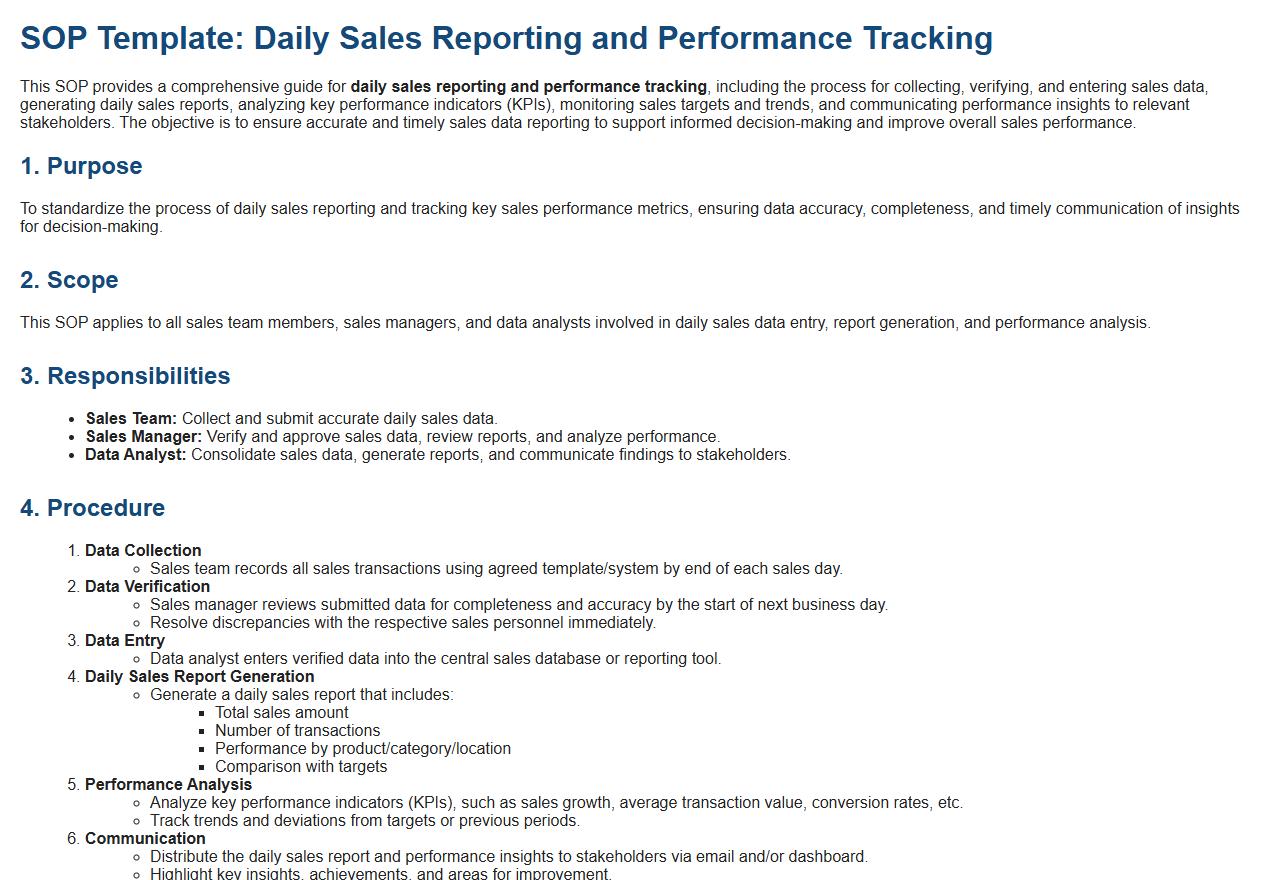
This SOP provides a comprehensive guide for daily sales reporting and performance tracking, including the process for collecting, verifying, and entering sales data, generating daily sales reports, analyzing key performance indicators (KPIs), monitoring sales targets and trends, and communicating performance insights to relevant stakeholders. The objective is to ensure accurate and timely sales data reporting to support informed decision-making and improve overall sales performance.
What are the main objectives of the SOP for Retail Floor Management?
The main objectives of the SOP for Retail Floor Management are to standardize operations, enhance customer experience, and maximize sales efficiency. It seeks to ensure consistency in store presentation and staff performance across all retail locations. Additionally, the SOP aims to streamline communication and operational processes to improve overall store management.
Which key roles and responsibilities are defined in the SOP for floor staff and supervisors?
The SOP clearly defines the roles and responsibilities for floor staff, including maintaining store cleanliness, assisting customers, and managing inventory displays. Supervisors are tasked with overseeing daily operations, coaching floor staff, and ensuring compliance with store policies. Both roles emphasize teamwork and customer service excellence to drive store success.
What are the mandatory procedures for store opening, daily operations, and closing as specified in the SOP?
The SOP outlines mandatory procedures for store opening such as security checks, cash register setup, and stock verification. During daily operations, it mandates regular floor inspections, customer engagement, and inventory management. For closing, procedures include cash reconciliation, final store cleaning, and securing all entrances to ensure store safety.
How does the SOP ensure compliance with health, safety, and security standards on the retail floor?
The SOP enforces compliance by specifying regular safety audits, employee training, and strict adherence to health protocols. It requires immediate reporting and rectification of hazards to maintain a safe environment. Security measures such as surveillance monitoring and controlled access are integral components to protect staff and customers.
What protocols does the SOP outline for handling customer complaints and emergency situations?
The SOP details a systematic approach for handling customer complaints that includes active listening, prompt resolution, and escalation procedures if needed. For emergency situations, it prescribes clear evacuation plans, communication channels, and roles for floor staff to manage incidents efficiently. These protocols ensure customer satisfaction and staff safety under all circumstances.