
A SOP Template for Retail Cleanliness and Maintenance ensures consistent and efficient cleaning practices within retail environments, promoting a safe and welcoming atmosphere for customers. This template outlines standardized procedures for daily, weekly, and monthly maintenance tasks to uphold hygiene standards and prevent equipment malfunctions. Implementing this SOP helps streamline operations and maintain a professional retail appearance.
Daily store opening cleanliness checklist.
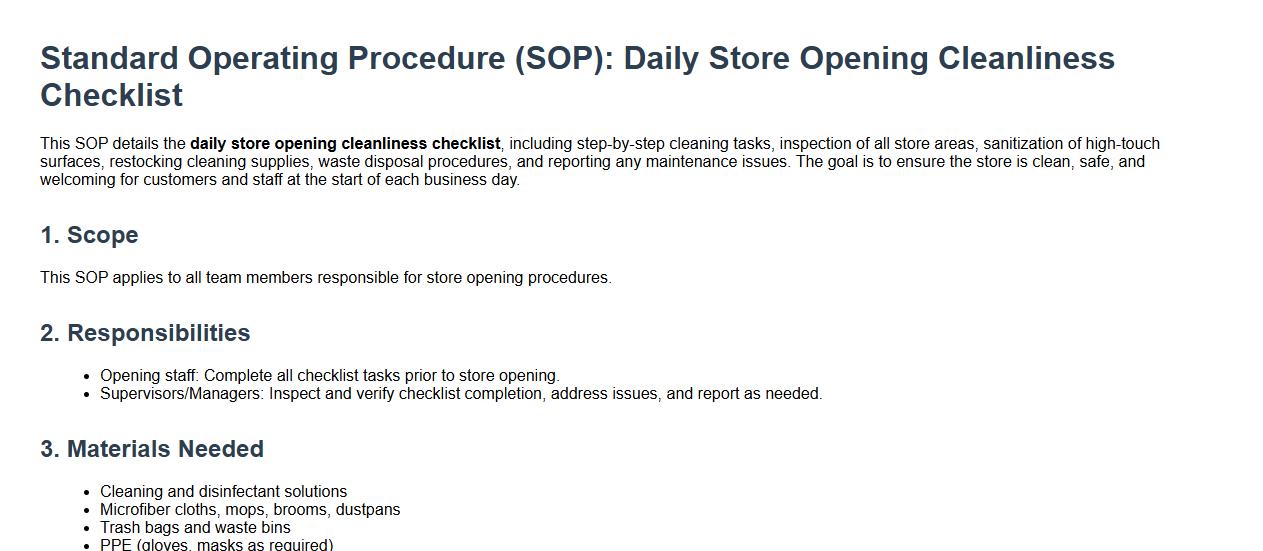
This SOP details the daily store opening cleanliness checklist, including step-by-step cleaning tasks, inspection of all store areas, sanitization of high-touch surfaces, restocking cleaning supplies, waste disposal procedures, and reporting any maintenance issues. The goal is to ensure the store is clean, safe, and welcoming for customers and staff at the start of each business day.
Sanitization protocols for high-touch surfaces.
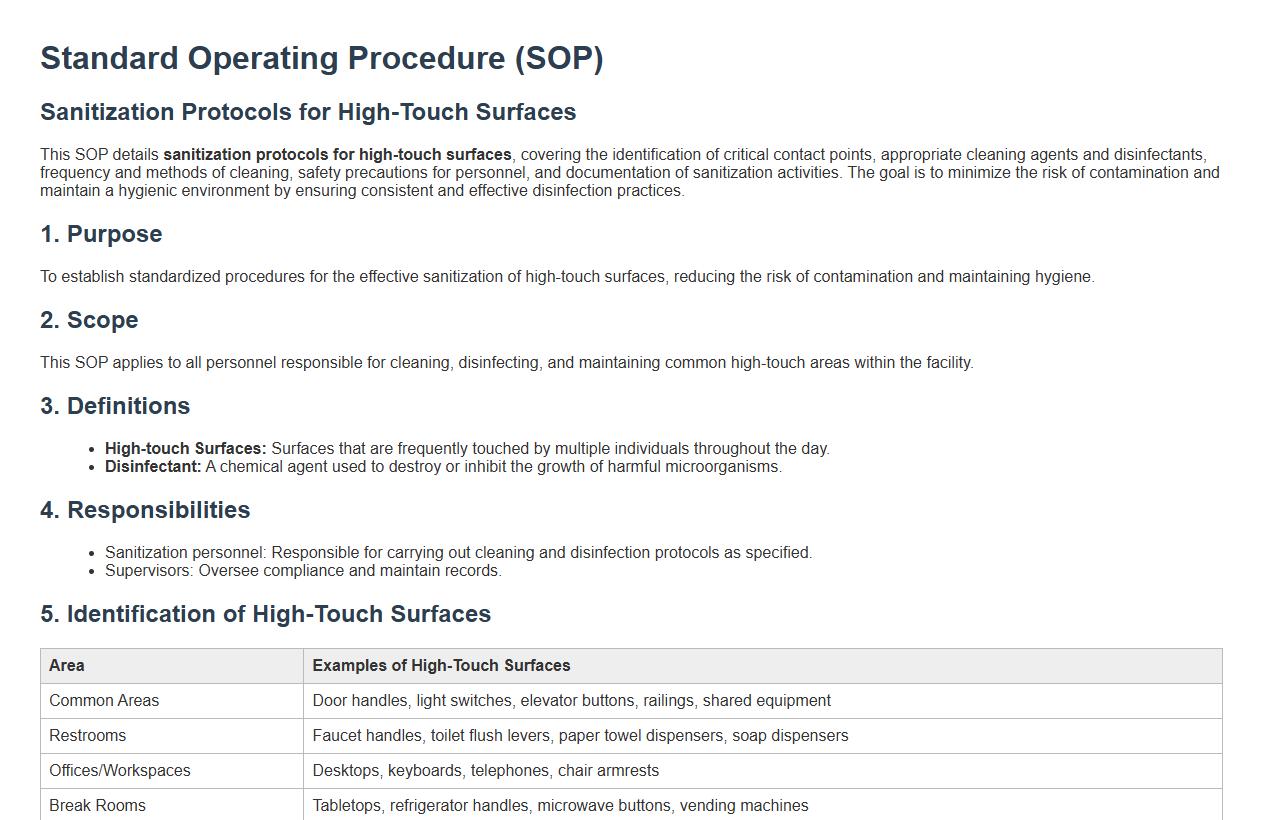
This SOP details sanitization protocols for high-touch surfaces, covering the identification of critical contact points, appropriate cleaning agents and disinfectants, frequency and methods of cleaning, safety precautions for personnel, and documentation of sanitization activities. The goal is to minimize the risk of contamination and maintain a hygienic environment by ensuring consistent and effective disinfection practices.
Restroom cleaning and restocking procedures.
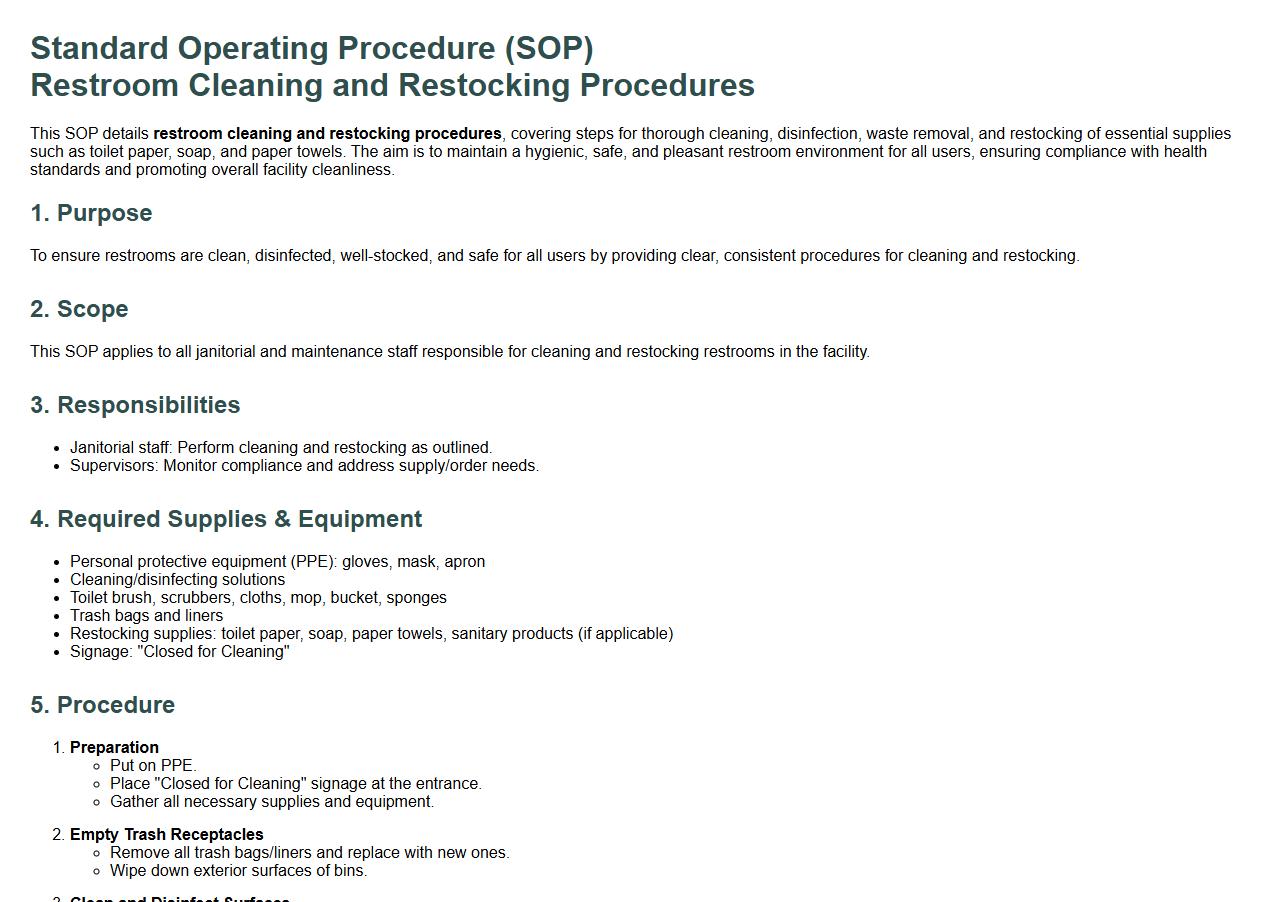
This SOP details restroom cleaning and restocking procedures, covering steps for thorough cleaning, disinfection, waste removal, and restocking of essential supplies such as toilet paper, soap, and paper towels. The aim is to maintain a hygienic, safe, and pleasant restroom environment for all users, ensuring compliance with health standards and promoting overall facility cleanliness.
Floor and aisle sweeping and mopping schedules.
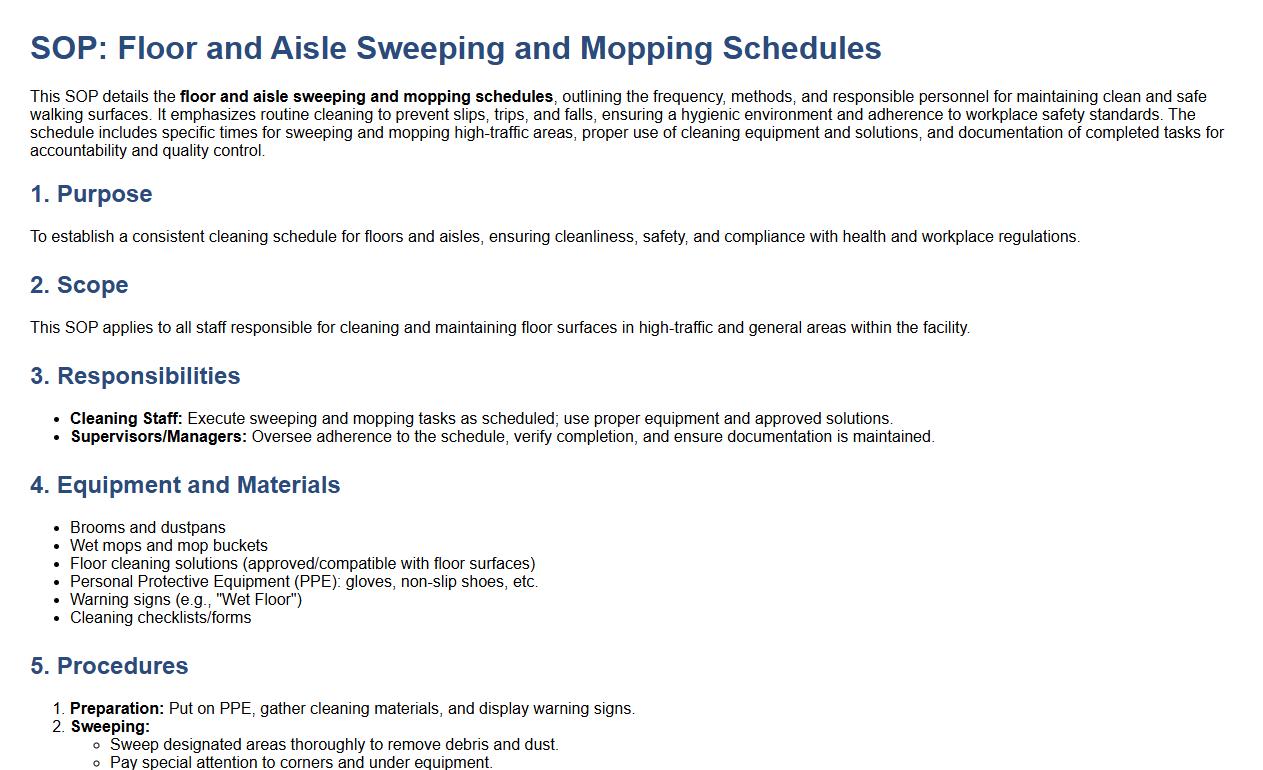
This SOP details the floor and aisle sweeping and mopping schedules, outlining the frequency, methods, and responsible personnel for maintaining clean and safe walking surfaces. It emphasizes routine cleaning to prevent slips, trips, and falls, ensuring a hygienic environment and adherence to workplace safety standards. The schedule includes specific times for sweeping and mopping high-traffic areas, proper use of cleaning equipment and solutions, and documentation of completed tasks for accountability and quality control.
Trash removal and waste disposal guidelines.
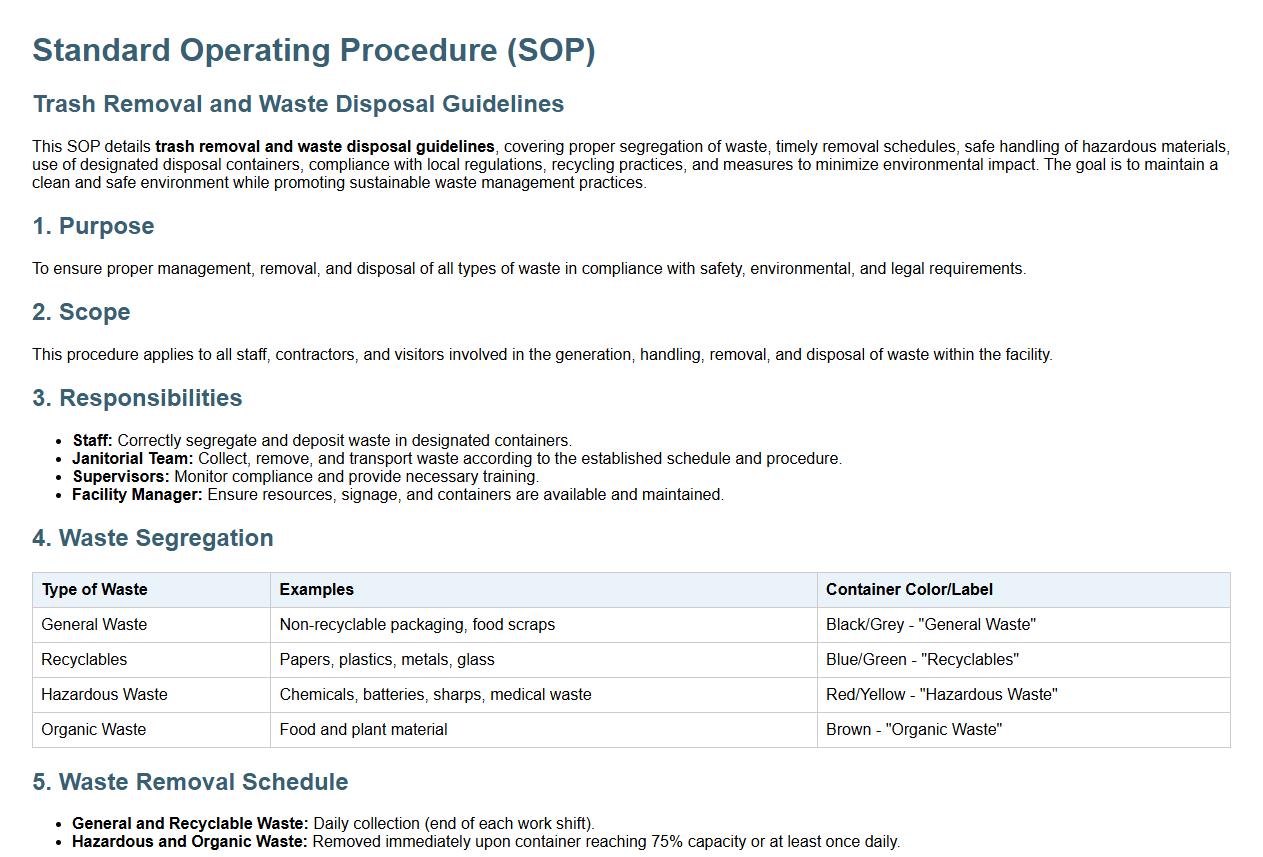
This SOP details trash removal and waste disposal guidelines, covering proper segregation of waste, timely removal schedules, safe handling of hazardous materials, use of designated disposal containers, compliance with local regulations, recycling practices, and measures to minimize environmental impact. The goal is to maintain a clean and safe environment while promoting sustainable waste management practices.
Display and shelving dusting and cleaning routines.
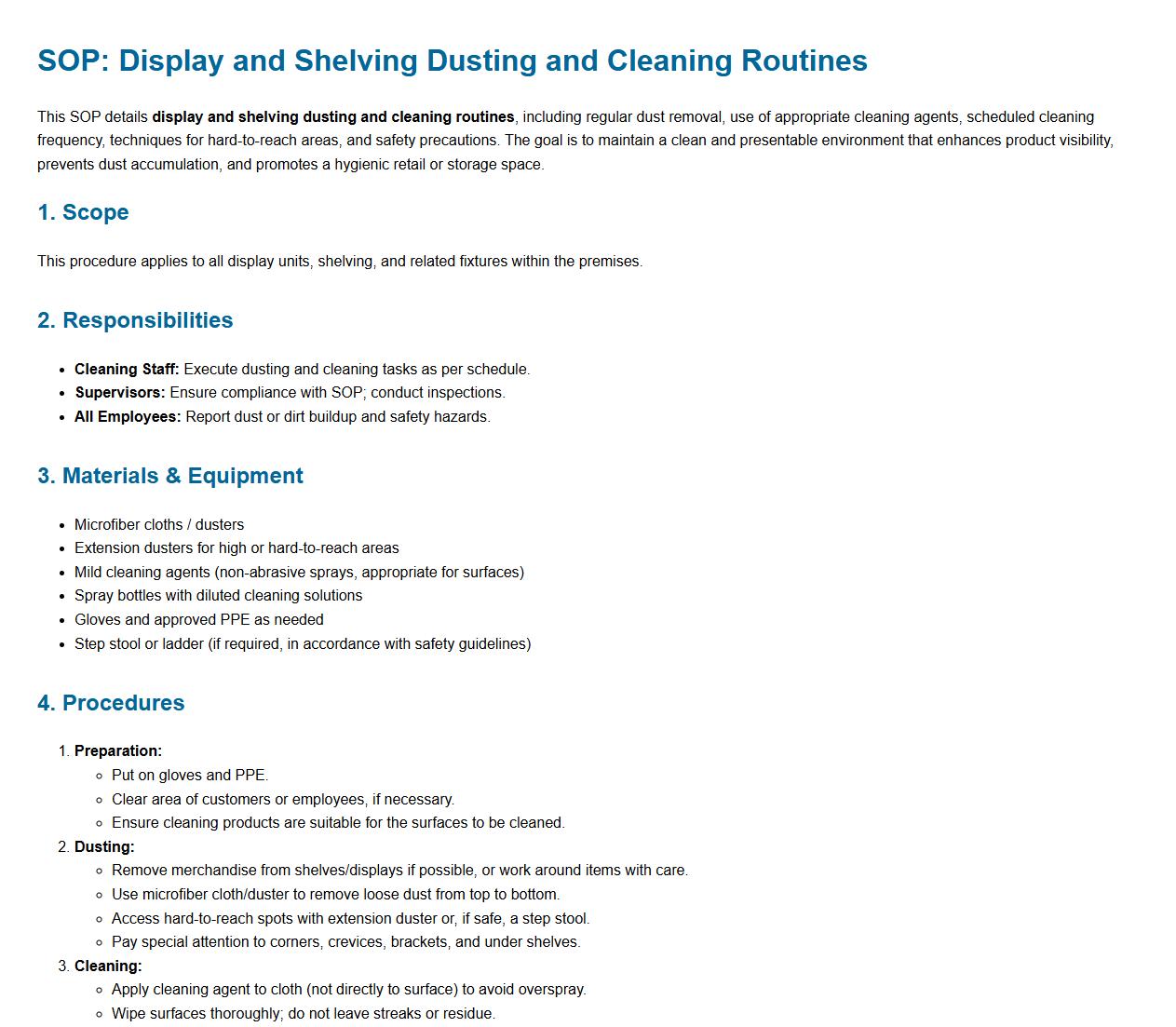
This SOP details display and shelving dusting and cleaning routines, including regular dust removal, use of appropriate cleaning agents, scheduled cleaning frequency, techniques for hard-to-reach areas, and safety precautions. The goal is to maintain a clean and presentable environment that enhances product visibility, prevents dust accumulation, and promotes a hygienic retail or storage space.
Stockroom and back office organization standards.
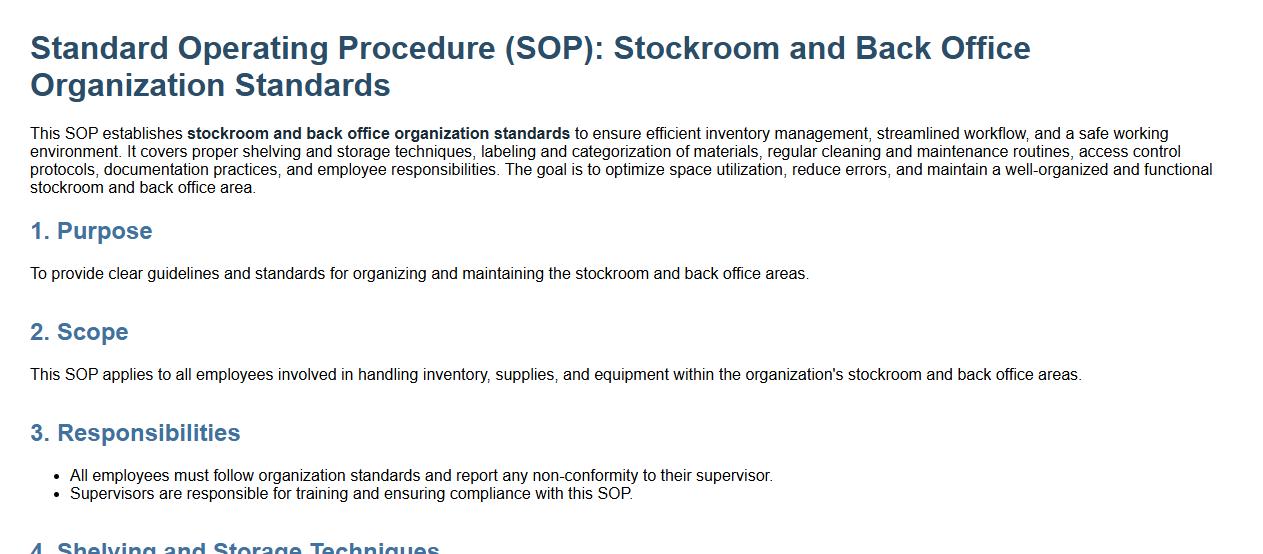
This SOP establishes stockroom and back office organization standards to ensure efficient inventory management, streamlined workflow, and a safe working environment. It covers proper shelving and storage techniques, labeling and categorization of materials, regular cleaning and maintenance routines, access control protocols, documentation practices, and employee responsibilities. The goal is to optimize space utilization, reduce errors, and maintain a well-organized and functional stockroom and back office area.
Equipment and cleaning supply management.
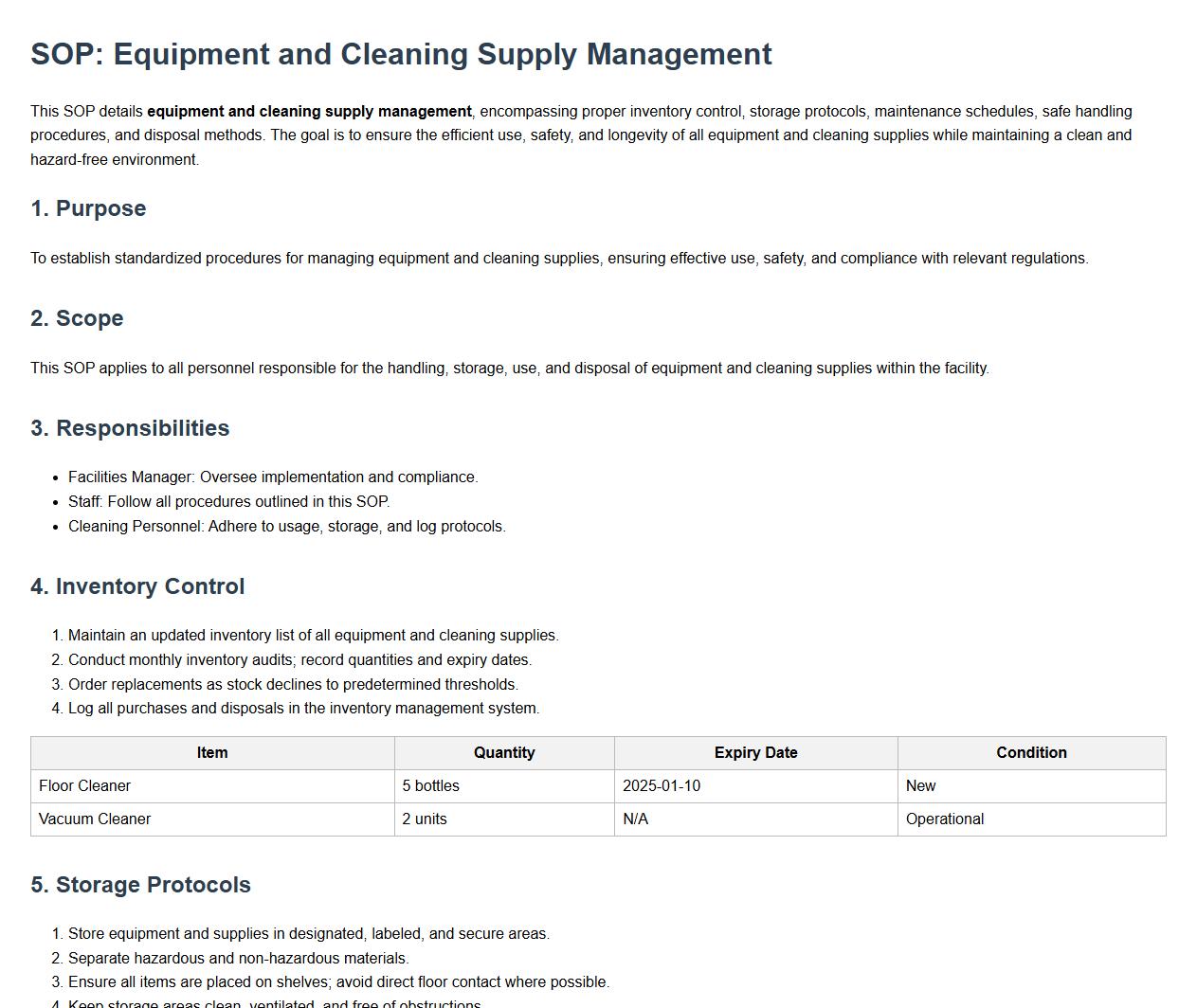
This SOP details equipment and cleaning supply management, encompassing proper inventory control, storage protocols, maintenance schedules, safe handling procedures, and disposal methods. The goal is to ensure the efficient use, safety, and longevity of all equipment and cleaning supplies while maintaining a clean and hazard-free environment.
Pest control and prevention measures.
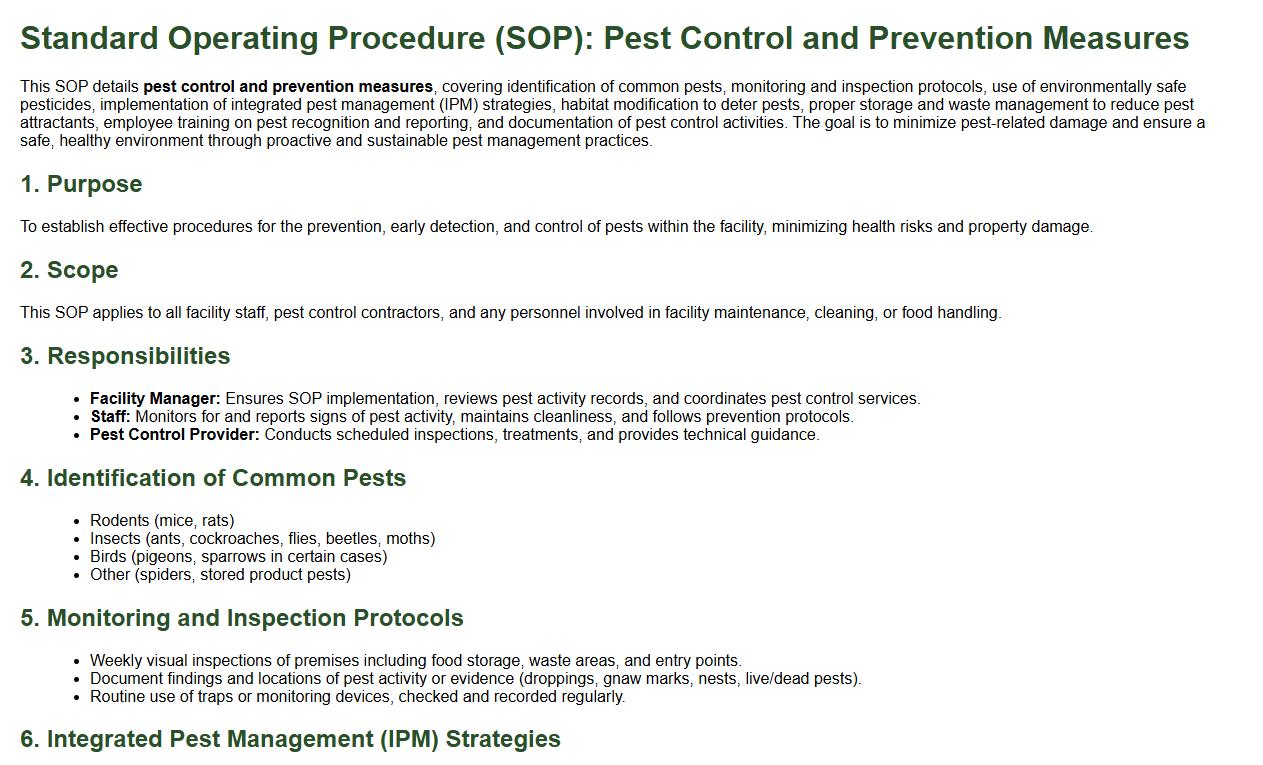
This SOP details pest control and prevention measures, covering identification of common pests, monitoring and inspection protocols, use of environmentally safe pesticides, implementation of integrated pest management (IPM) strategies, habitat modification to deter pests, proper storage and waste management to reduce pest attractants, employee training on pest recognition and reporting, and documentation of pest control activities. The goal is to minimize pest-related damage and ensure a safe, healthy environment through proactive and sustainable pest management practices.
Store closing cleanliness inspection checklist.
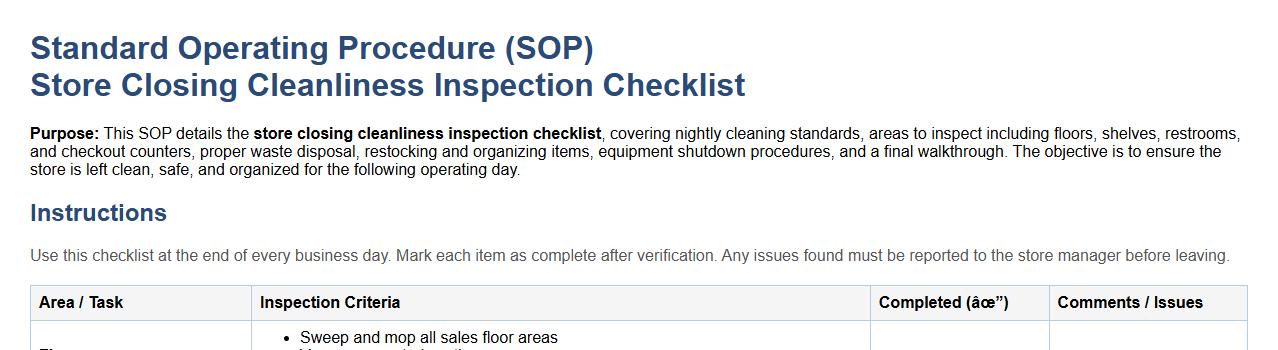
This SOP details the store closing cleanliness inspection checklist, covering nightly cleaning standards, areas to inspect including floors, shelves, restrooms, and checkout counters, proper waste disposal, restocking and organizing items, equipment shutdown procedures, and final walkthrough to ensure the store is left in optimal condition for the next operating day. The goal is to maintain a clean, safe, and welcoming environment for customers and staff by enforcing consistent closing cleanliness practices.
What are the key objectives outlined in the SOP for maintaining retail cleanliness and hygiene standards?
The primary objective of the SOP is to ensure a consistently clean and hygienic environment for both customers and staff. It aims to minimize health risks and enhance the overall shopping experience by adhering to strict cleanliness protocols. Maintaining high standards supports brand reputation and complies with local health regulations.
Which standard procedures must staff follow for daily cleaning of high-traffic customer areas?
Staff are required to perform thorough cleaning of high-traffic areas such as entrances, aisles, and checkout counters multiple times a day. This includes sweeping, mopping, and sanitizing surfaces using approved cleaning agents. Additionally, timely disposal of trash and restocking of hygiene supplies are mandatory components of the daily routine.
How does the SOP define the roles and responsibilities of personnel regarding store maintenance tasks?
The SOP clearly delineates that each team member has specific roles in maintaining cleanliness, from floor staff to supervisors. Floor staff handle routine cleaning and immediate issue resolution, while supervisors monitor compliance and conduct periodic audits. This hierarchical structure ensures accountability and seamless execution of maintenance duties.
What protocols are specified in the SOP for responding to unexpected spills, damages, or maintenance issues?
The SOP mandates immediate action upon detection of any spills, damages, or repairs to prevent accidents and maintain operational flow. Staff must secure the area, notify the relevant maintenance team, and follow documented clean-up or repair procedures. Reporting these incidents promptly enables timely resolution and minimizes customer disruption.
Which scheduled inspection and reporting processes are included in the SOP to ensure continual compliance?
Regularly scheduled inspections are outlined to assess cleanliness, identify hazards, and verify adherence to hygiene standards. Detailed reports are generated post-inspection and reviewed by management to track improvement areas and enforce compliance. These systematic audits facilitate proactive maintenance and uphold store standards consistently.