
A SOP Template for Retail Returns and Refunds provides a clear, step-by-step guide to manage customer return requests and process refunds efficiently. It ensures consistency, minimizes errors, and improves customer satisfaction by outlining specific procedures for product inspection, approval criteria, and refund timelines. This template helps retail teams maintain compliance with company policies while streamlining the returns workflow.
Customer return eligibility assessment.
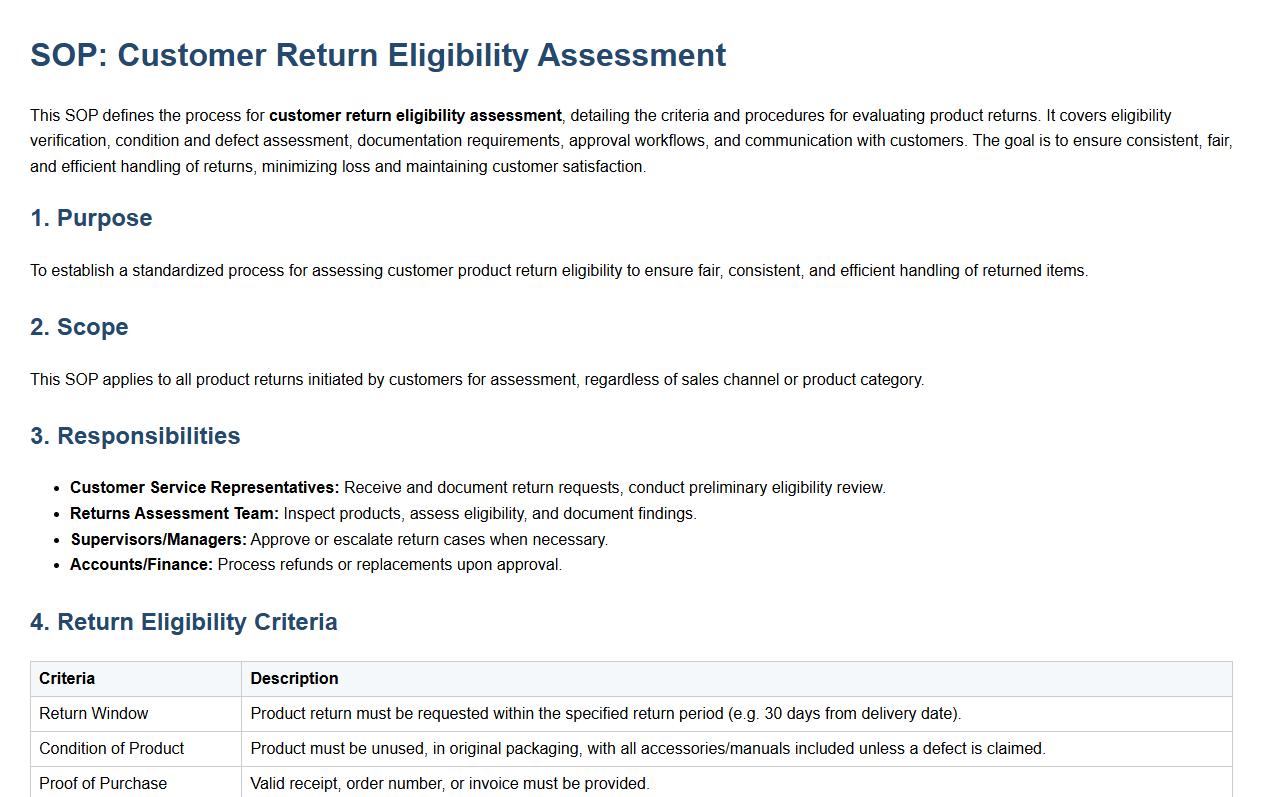
This SOP defines the process for customer return eligibility assessment, detailing the criteria and procedures for evaluating product returns. It covers eligibility verification, condition and defect assessment, documentation requirements, approval workflows, and communication with customers. The goal is to ensure consistent, fair, and efficient handling of returns, minimizing loss and maintaining customer satisfaction.
Return merchandise authorization (RMA) procedures.
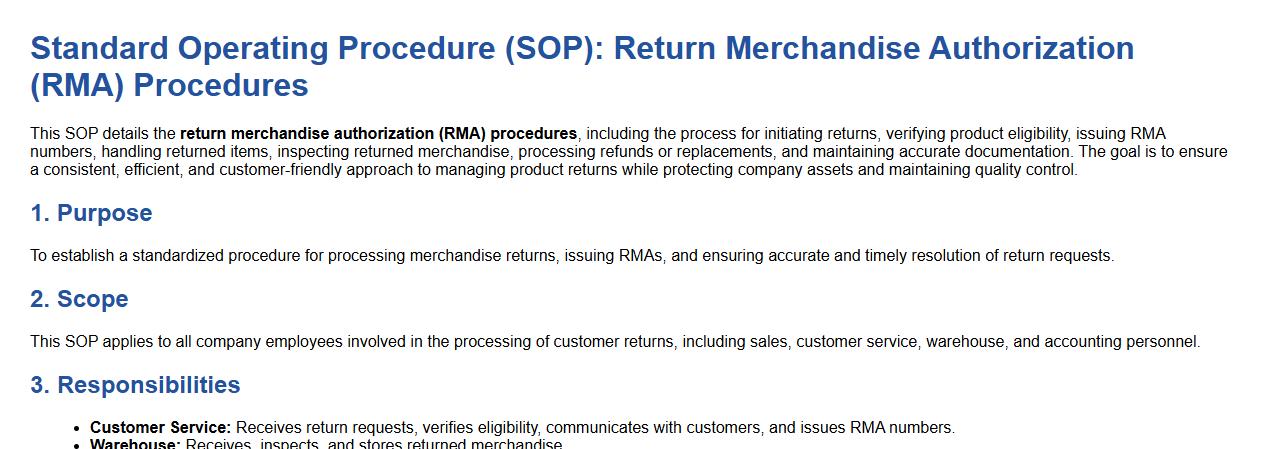
This SOP details the return merchandise authorization (RMA) procedures, including the process for initiating returns, verifying product eligibility, issuing RMA numbers, handling returned items, inspecting returned merchandise, processing refunds or replacements, and maintaining accurate documentation. The goal is to ensure a consistent, efficient, and customer-friendly approach to managing product returns while protecting company assets and maintaining quality control.
Product inspection and condition verification.
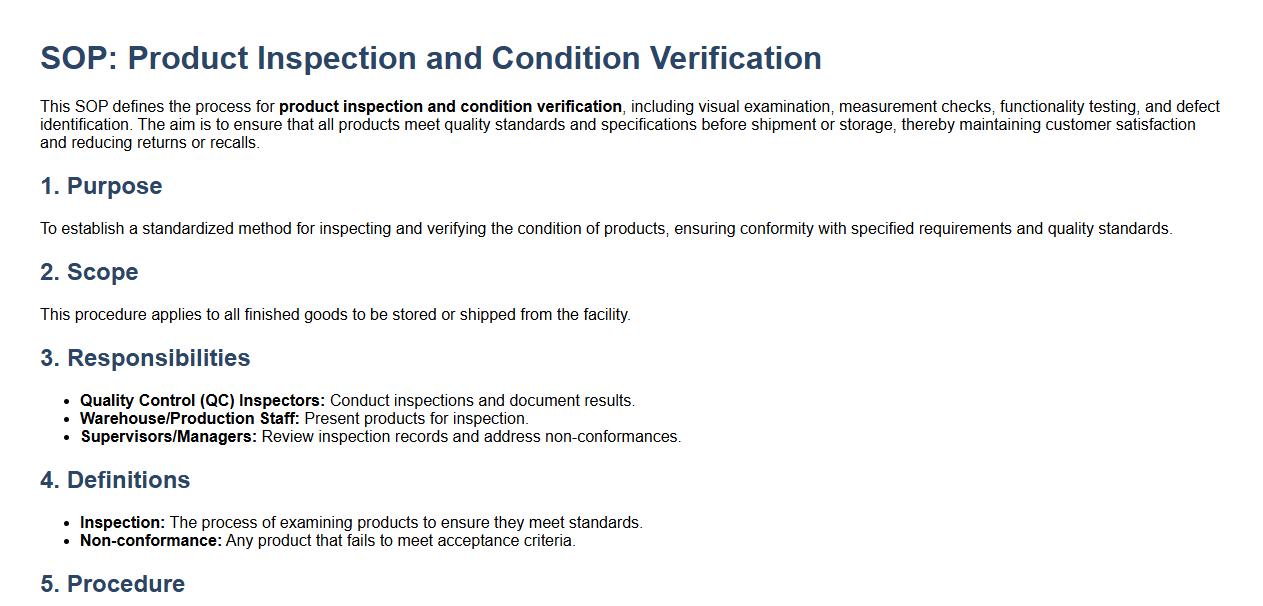
This SOP defines the process for product inspection and condition verification, including visual examination, measurement checks, functionality testing, and defect identification. The aim is to ensure that all products meet quality standards and specifications before shipment or storage, thereby maintaining customer satisfaction and reducing returns or recalls.
Documentation of returned items.
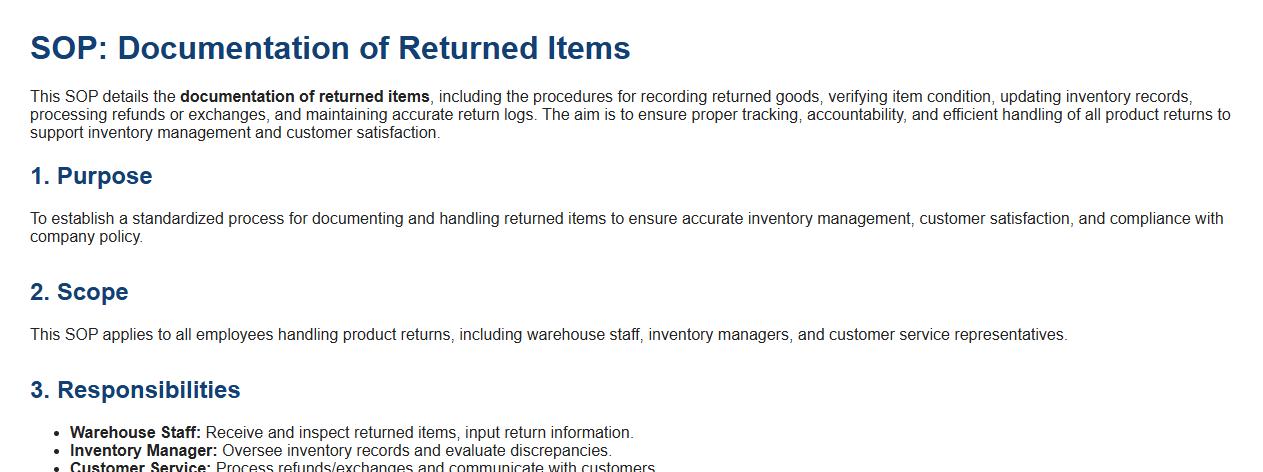
This SOP details the documentation of returned items, including the procedures for recording returned goods, verifying item condition, updating inventory records, processing refunds or exchanges, and maintaining accurate return logs. The aim is to ensure proper tracking, accountability, and efficient handling of all product returns to support inventory management and customer satisfaction.
Processing refunds and exchanges.
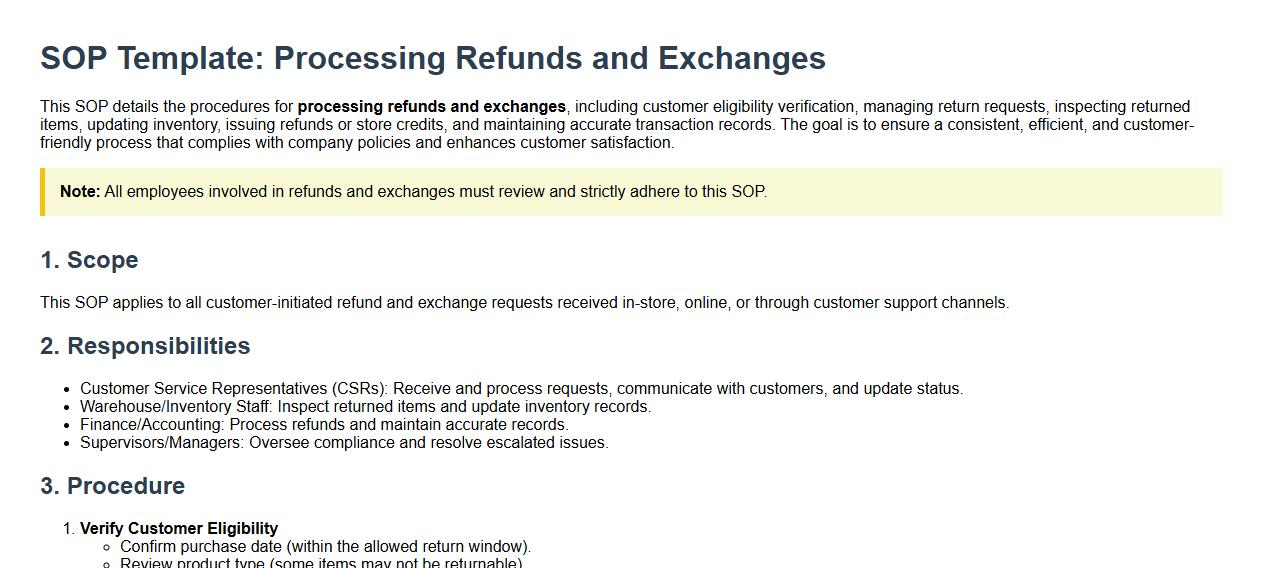
This SOP details the procedures for processing refunds and exchanges, including customer eligibility verification, managing return requests, inspecting returned items, updating inventory, issuing refunds or store credits, and maintaining accurate transaction records. The goal is to ensure a consistent, efficient, and customer-friendly process that complies with company policies and enhances customer satisfaction.
Update inventory and restocking procedures.
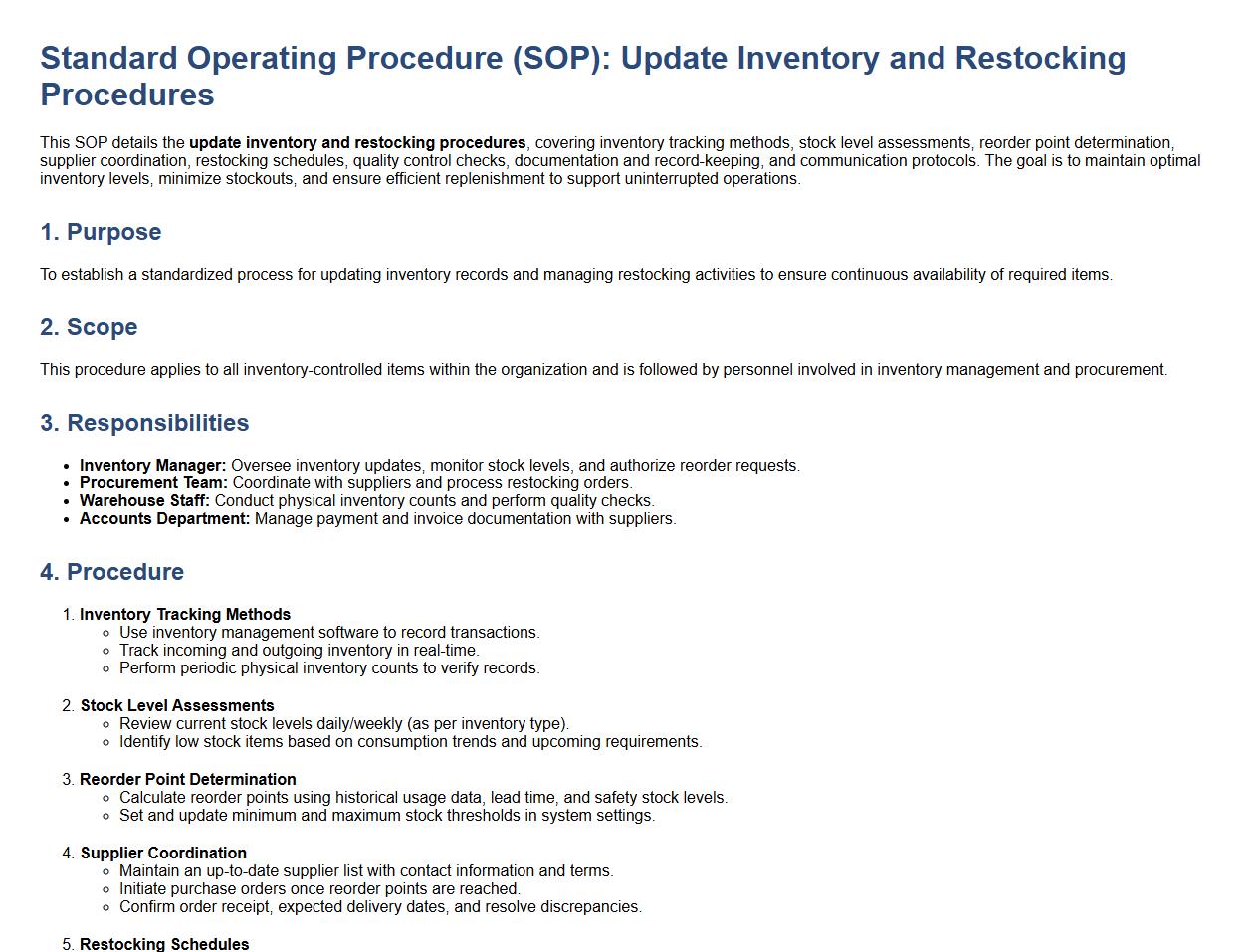
This SOP details the update inventory and restocking procedures, covering inventory tracking methods, stock level assessments, reorder point determination, supplier coordination, restocking schedules, quality control checks, documentation and record-keeping, and communication protocols. The goal is to maintain optimal inventory levels, minimize stockouts, and ensure efficient replenishment to support uninterrupted operations.
Customer communication and notification guidelines.
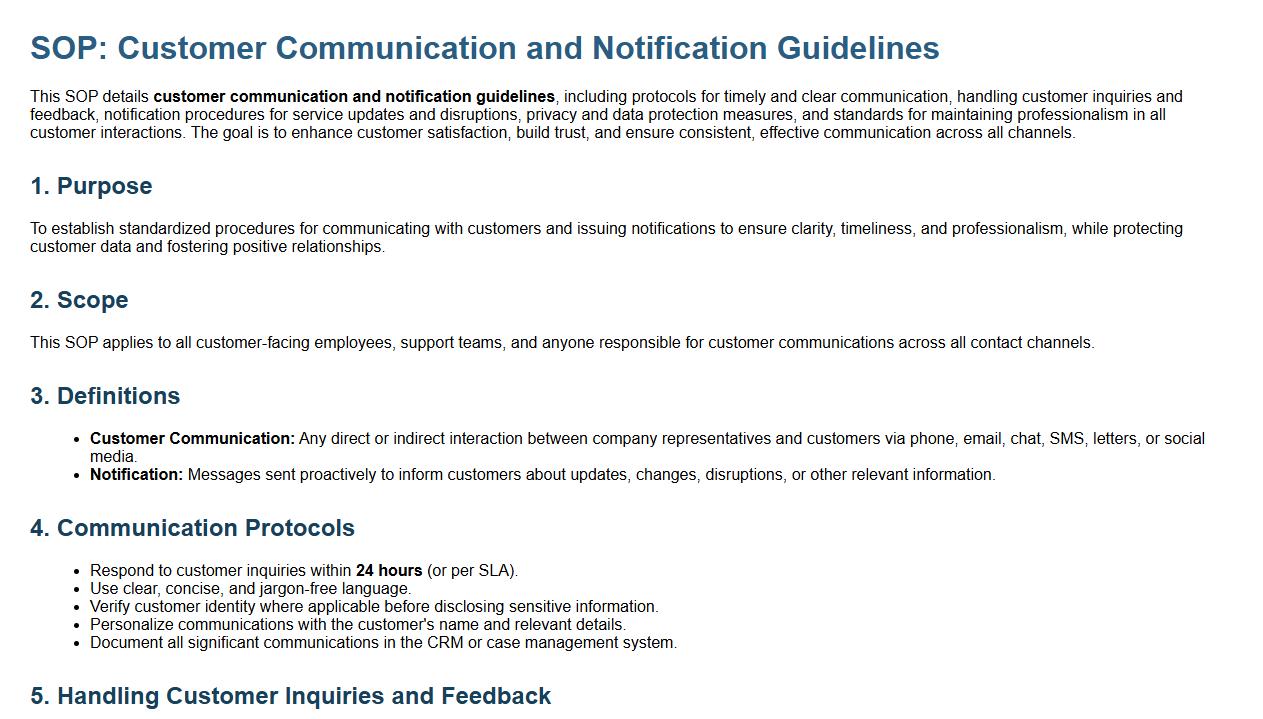
This SOP details customer communication and notification guidelines, including protocols for timely and clear communication, handling customer inquiries and feedback, notification procedures for service updates and disruptions, privacy and data protection measures, and standards for maintaining professionalism in all customer interactions. The goal is to enhance customer satisfaction, build trust, and ensure consistent, effective communication across all channels.
Handling non-returnable or defective items.
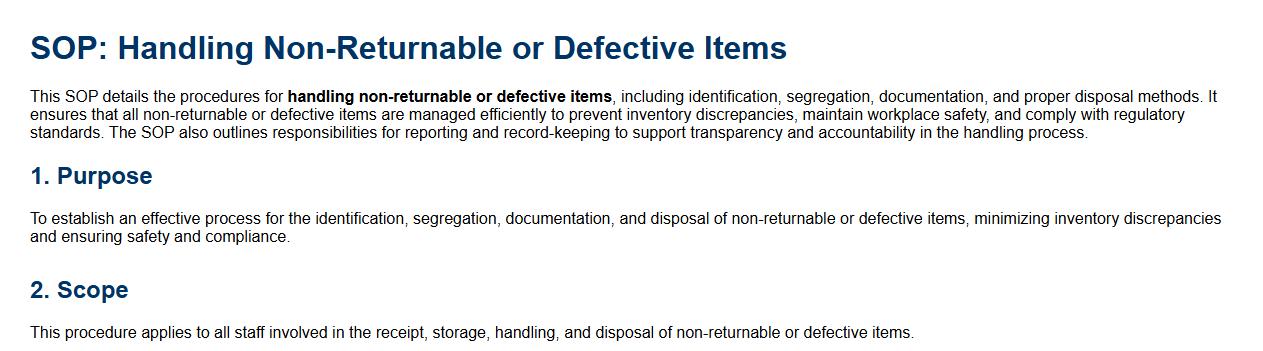
This SOP details the procedures for handling non-returnable or defective items, including identification, segregation, documentation, and proper disposal methods. It ensures that all non-returnable or defective items are managed efficiently to prevent inventory discrepancies, maintain workplace safety, and comply with regulatory standards. The SOP also outlines responsibilities for reporting and record-keeping to support transparency and accountability in the handling process.
Fraud prevention and exception handling.
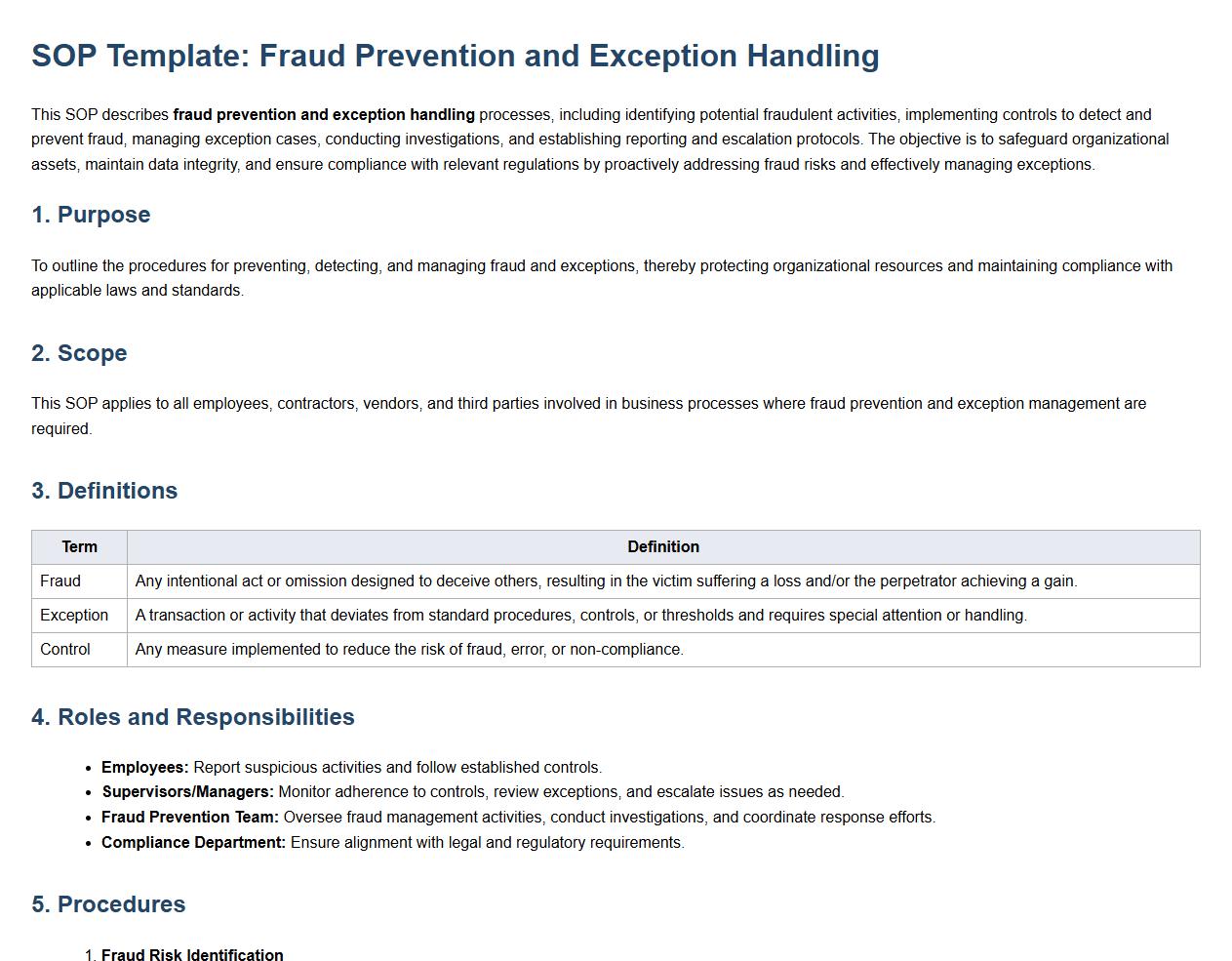
This SOP describes fraud prevention and exception handling processes, including identifying potential fraudulent activities, implementing controls to detect and prevent fraud, managing exception cases, conducting investigations, and establishing reporting and escalation protocols. The objective is to safeguard organizational assets, maintain data integrity, and ensure compliance with relevant regulations by proactively addressing fraud risks and effectively managing exceptions.
Reporting and record-keeping for returns and refunds.
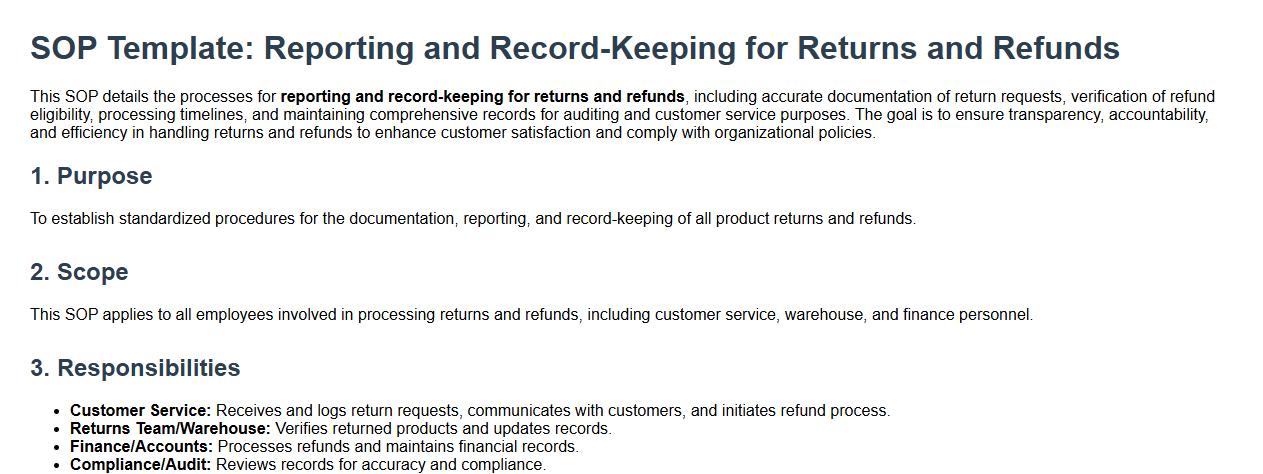
This SOP details the processes for reporting and record-keeping for returns and refunds, including accurate documentation of return requests, verification of refund eligibility, processing timelines, and maintaining comprehensive records for auditing and customer service purposes. The goal is to ensure transparency, accountability, and efficiency in handling returns and refunds to enhance customer satisfaction and comply with organizational policies.
What are the required steps for processing a retail return according to the SOP?
The first step in processing a retail return is to verify the customer's receipt and product condition. Next, the returned item must be inspected for eligibility based on the store's return policy criteria. Finally, staff must update the inventory system and initiate the refund or exchange process.
Which personnel are authorized to approve refunds as per the SOP guidelines?
The SOP specifies that only managers and senior supervisors have the authority to approve refunds. Frontline sales associates may process returns but require approval from these authorized personnel for refund issuance. This ensures control and accountability within the refund approval process.
How does the SOP define acceptable reasons for product returns?
The SOP outlines acceptable return reasons to include defective items, incorrect shipments, and dissatisfaction within a specified time frame. Products returned outside these conditions may be rejected unless approved by management. The policy aims to balance customer satisfaction with loss prevention.
What documentation must be completed and retained during the returns and refunds process?
Staff are required to complete a return authorization form and log the return in the electronic system. Copies of receipts and inspection reports must be retained to validate the transaction and audit trail. These documents support transparency and compliance with company policies.
What is the specified timeline for issuing refunds after a return is approved, as stated in the SOP?
The SOP mandates that refunds must be issued within 7 business days following return approval. Delays beyond this timeline require documented justification and management notification. This ensures timely customer service and adherence to internal refund processing standards.