

A SOP Template for Retail Pricing and Markdowns provides a clear framework to standardize pricing strategies and ensure consistent application of discounts across all retail locations. This template helps streamline decision-making processes, maintain profitability, and improve inventory turnover by outlining specific steps for setting prices and adjusting markdowns. Using a well-structured SOP enhances accuracy and transparency in managing retail pricing policies.
Retail price-setting procedures.
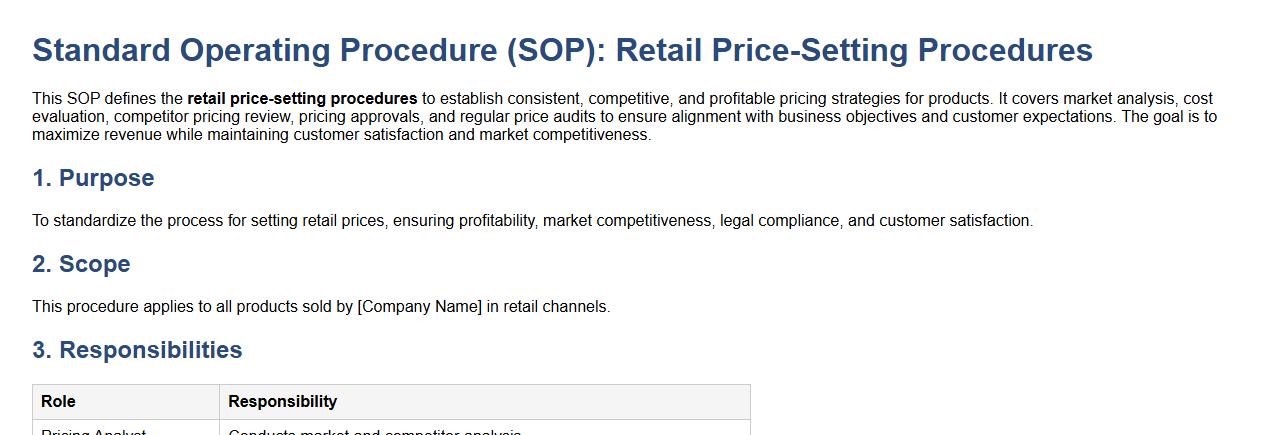
This SOP defines the retail price-setting procedures to establish consistent, competitive, and profitable pricing strategies for products. It covers market analysis, cost evaluation, competitor pricing review, pricing approvals, and regular price audits to ensure alignment with business objectives and customer expectations. The goal is to maximize revenue while maintaining customer satisfaction and market competitiveness.
Competitor price monitoring and analysis.
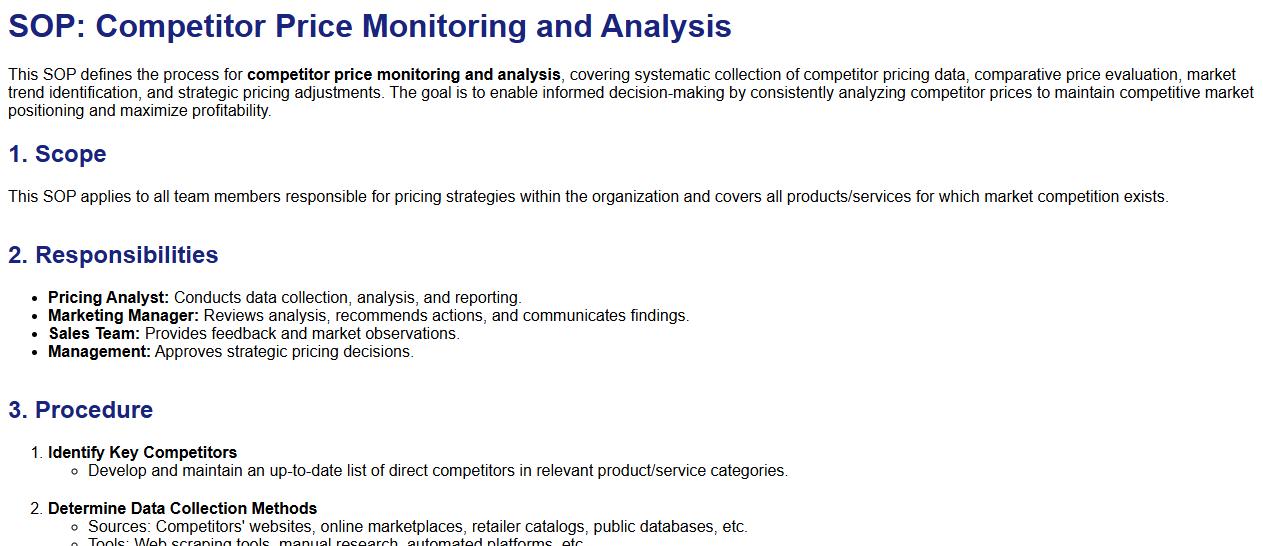
This SOP defines the process for competitor price monitoring and analysis, covering systematic collection of competitor pricing data, comparative price evaluation, market trend identification, and strategic pricing adjustments. The goal is to enable informed decision-making by consistently analyzing competitor prices to maintain competitive market positioning and maximize profitability.
Initial product pricing approval workflow.
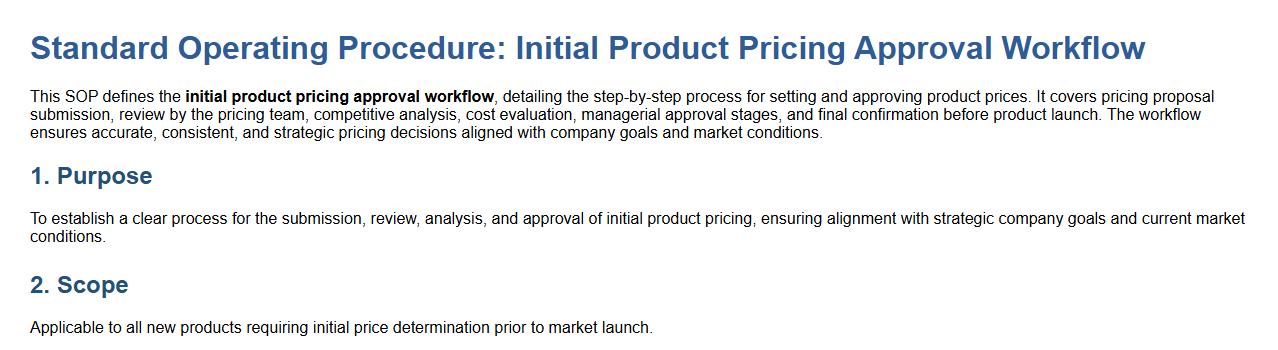
This SOP defines the initial product pricing approval workflow, detailing the step-by-step process for setting and approving product prices. It covers pricing proposal submission, review by the pricing team, competitive analysis, cost evaluation, managerial approval stages, and final confirmation before product launch. The workflow ensures accurate, consistent, and strategic pricing decisions aligned with company goals and market conditions.
Markdown approval and implementation steps.
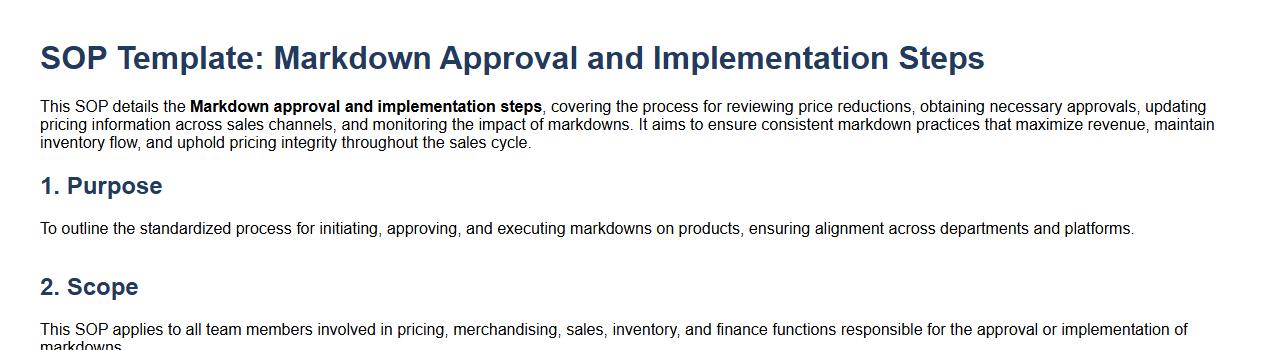
This SOP details the Markdown approval and implementation steps, covering the process for reviewing price reductions, obtaining necessary approvals, updating pricing information across sales channels, and monitoring the impact of markdowns. It aims to ensure consistent markdown practices that maximize revenue, maintain inventory flow, and uphold pricing integrity throughout the sales cycle.
Seasonal and promotional pricing strategies.
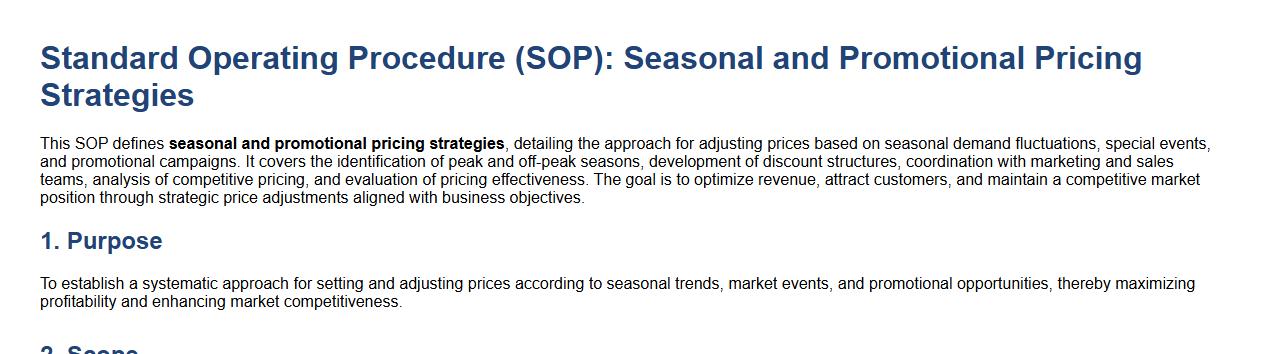
This SOP defines seasonal and promotional pricing strategies, detailing the approach for adjusting prices based on seasonal demand fluctuations, special events, and promotional campaigns. It covers the identification of peak and off-peak seasons, development of discount structures, coordination with marketing and sales teams, analysis of competitive pricing, and evaluation of pricing effectiveness. The goal is to optimize revenue, attract customers, and maintain a competitive market position through strategic price adjustments aligned with business objectives.
Process for updating POS and shelf pricing.
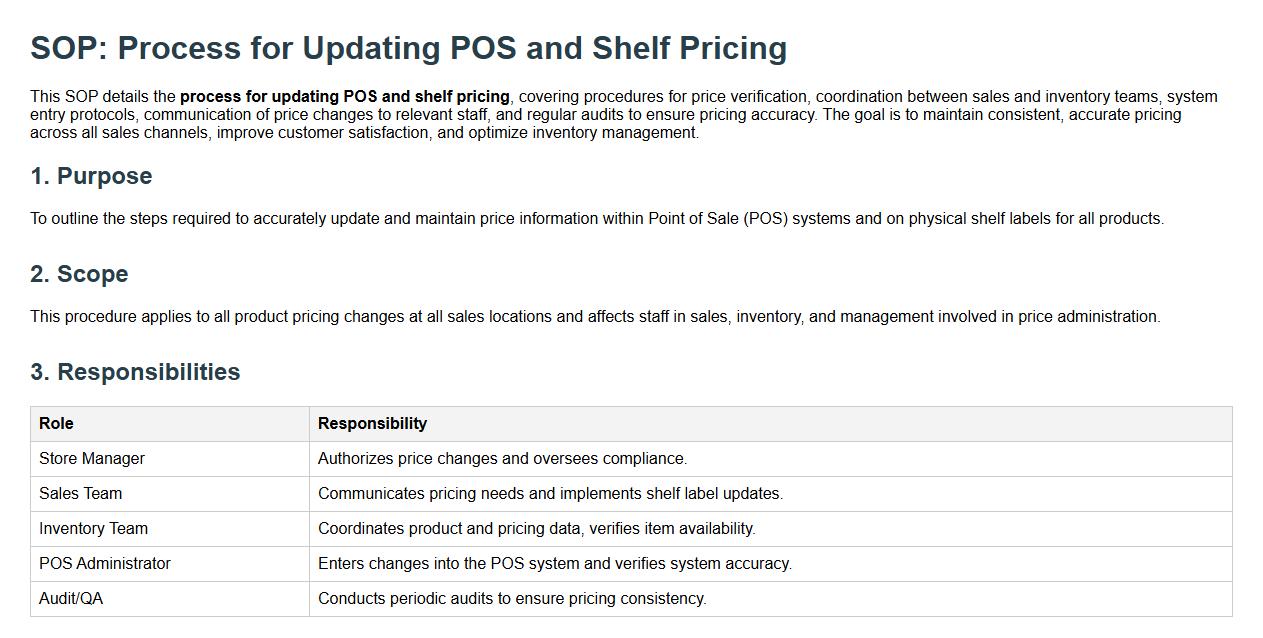
This SOP details the process for updating POS and shelf pricing, covering procedures for price verification, coordination between sales and inventory teams, system entry protocols, communication of price changes to relevant staff, and regular audits to ensure pricing accuracy. The goal is to maintain consistent, accurate pricing across all sales channels, improve customer satisfaction, and optimize inventory management.
Clearance item identification and tagging.
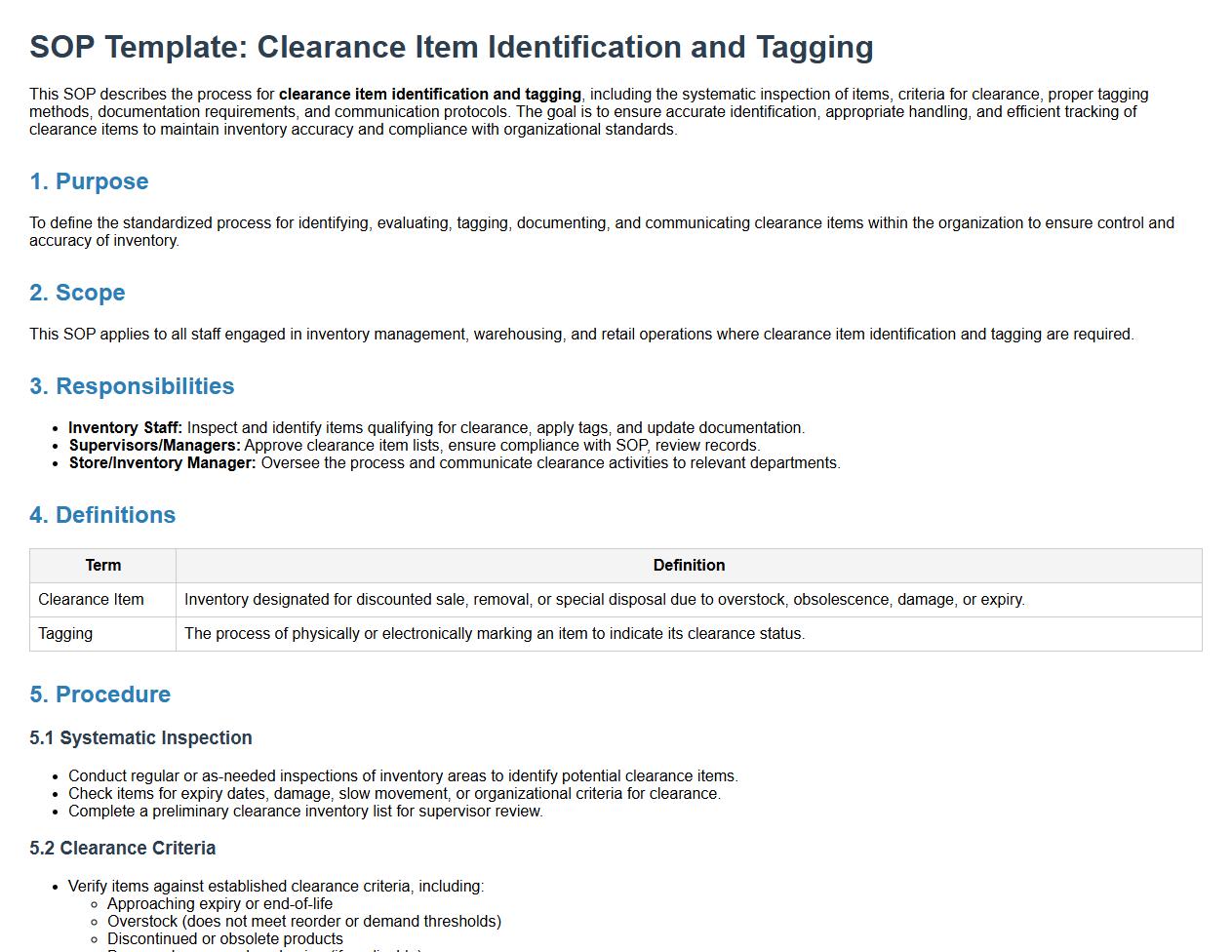
This SOP describes the process for clearance item identification and tagging, including the systematic inspection of items, criteria for clearance, proper tagging methods, documentation requirements, and communication protocols. The goal is to ensure accurate identification, appropriate handling, and efficient tracking of clearance items to maintain inventory accuracy and compliance with organizational standards.
Communication protocols for price changes.
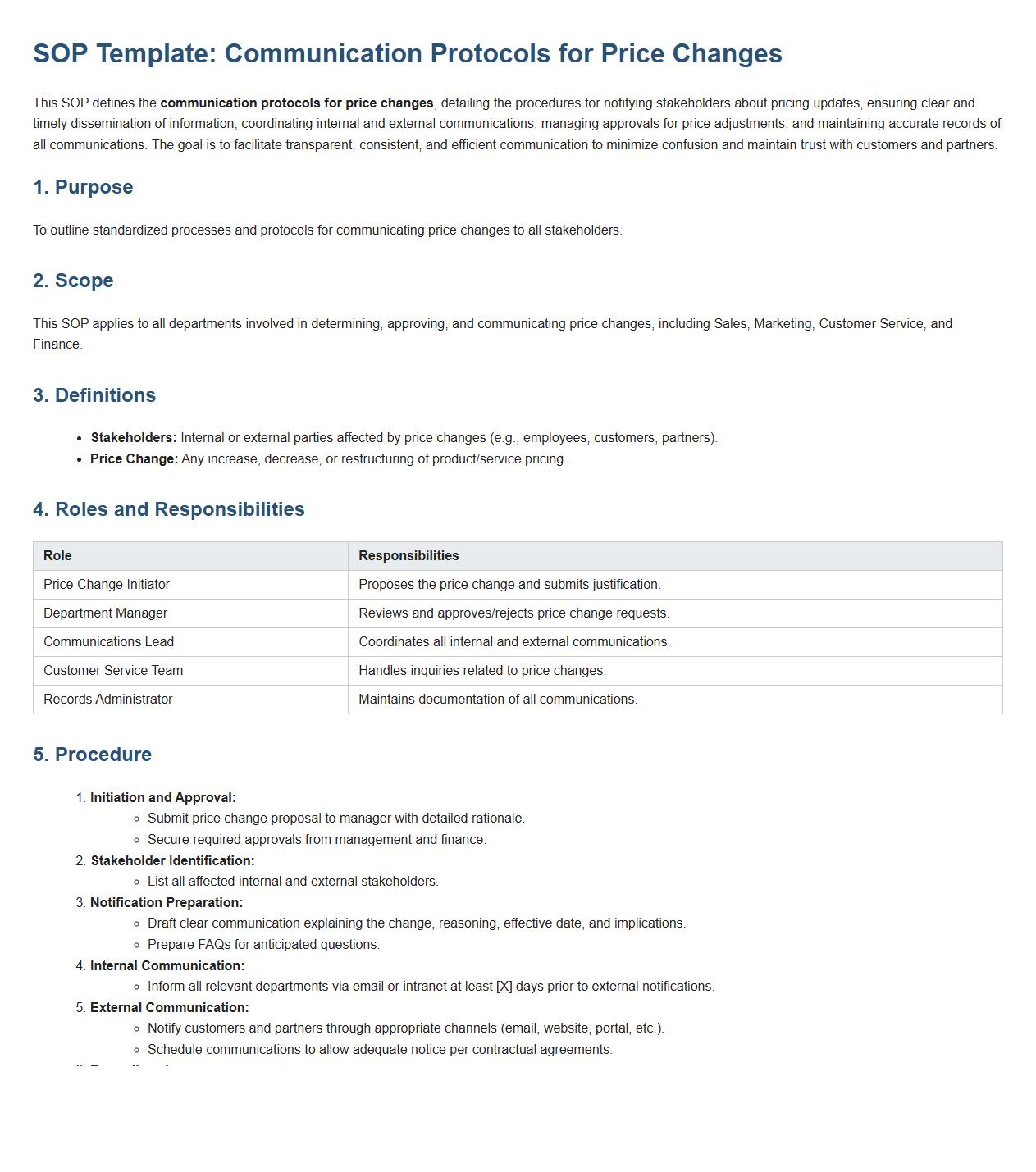
This SOP defines the communication protocols for price changes, detailing the procedures for notifying stakeholders about pricing updates, ensuring clear and timely dissemination of information, coordinating internal and external communications, managing approvals for price adjustments, and maintaining accurate records of all communications. The goal is to facilitate transparent, consistent, and efficient communication to minimize confusion and maintain trust with customers and partners.
Documentation and audit of pricing actions.
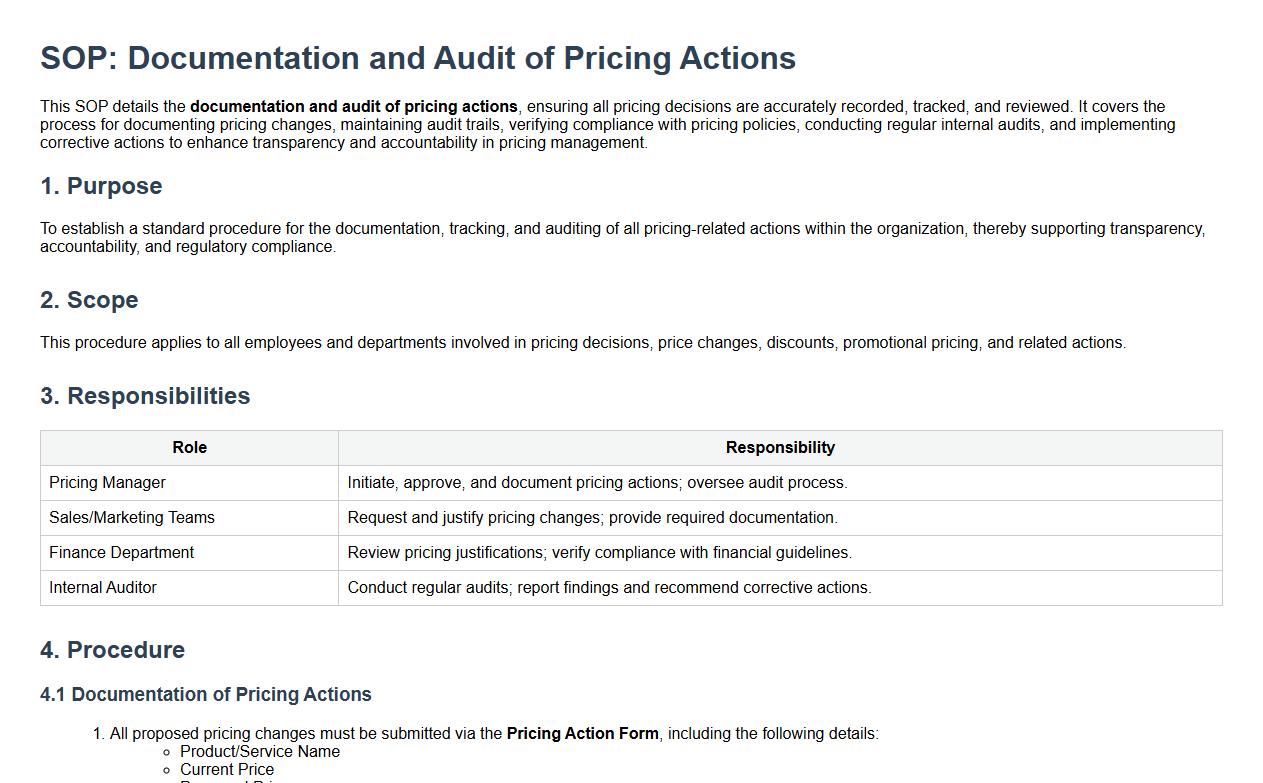
This SOP details the documentation and audit of pricing actions, ensuring all pricing decisions are accurately recorded, tracked, and reviewed. It covers the process for documenting pricing changes, maintaining audit trails, verifying compliance with pricing policies, conducting regular internal audits, and implementing corrective actions to enhance transparency and accountability in pricing management.
Customer notification and signage guidelines.
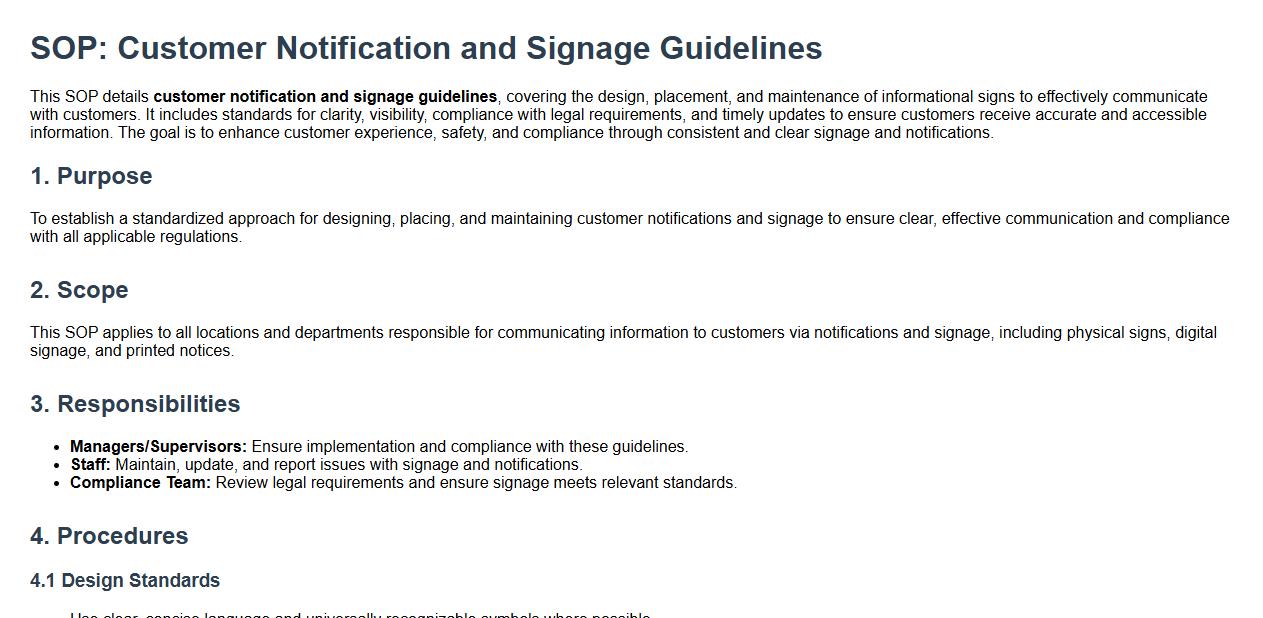
This SOP details customer notification and signage guidelines, covering the design, placement, and maintenance of informational signs to effectively communicate with customers. It includes standards for clarity, visibility, compliance with legal requirements, and timely updates to ensure customers receive accurate and accessible information. The goal is to enhance customer experience, safety, and compliance through consistent and clear signage and notifications.
What key criteria determine the timing and percentage of markdowns in the SOP for Retail Pricing and Markdowns?
The SOP specifies that the timing of markdowns is primarily determined by product lifecycle stage and inventory levels. It emphasizes the importance of aligning markdown percentages with sales velocity and market demand to optimize sell-through rates. Additionally, competitor pricing and seasonal trends play a crucial role in setting the appropriate markdown percentages.
How does the SOP define the process for regularly reviewing and updating product retail prices?
The SOP mandates a regular schedule for reviewing retail prices, typically on a monthly or quarterly basis. This process involves analyzing sales performance, market conditions, and cost changes to determine necessary adjustments. Continuous monitoring ensures prices remain competitive and aligned with overall business objectives.
What are the required steps for obtaining approval before implementing any price changes according to the SOP?
All price change proposals must be documented and submitted to the designated pricing committee or manager for review. The SOP requires a formal approval process, including an evaluation of financial impact and market positioning before any changes are implemented. Only after receiving explicit authorization can pricing updates be communicated to relevant teams and systems.
How are exceptions or deviations from standard pricing and markdown procedures managed in the SOP?
The SOP outlines a clear protocol for handling exceptions and deviations, requiring prior approval from senior management or a designated authority. These exceptions must be justified with documented rationale and potential impact assessments. This ensures transparency and controls are maintained even when special pricing actions occur.
What documentation and record-keeping requirements does the SOP specify for all pricing and markdown activities?
The SOP requires detailed documentation of all pricing decisions, including rationale, approvals, and effective dates. Records must be maintained in a centralized system to enable audit trails and facilitate performance analysis. Proper record-keeping ensures compliance with internal policies and regulatory standards.