

A SOP Template for Retail Safety Procedures provides a structured framework to ensure consistent implementation of safety protocols in retail environments. It outlines key steps for managing hazards, employee training, and emergency response plans to protect both staff and customers. This template helps retail businesses maintain compliance with safety regulations and minimize risk effectively.
Emergency evacuation procedures.
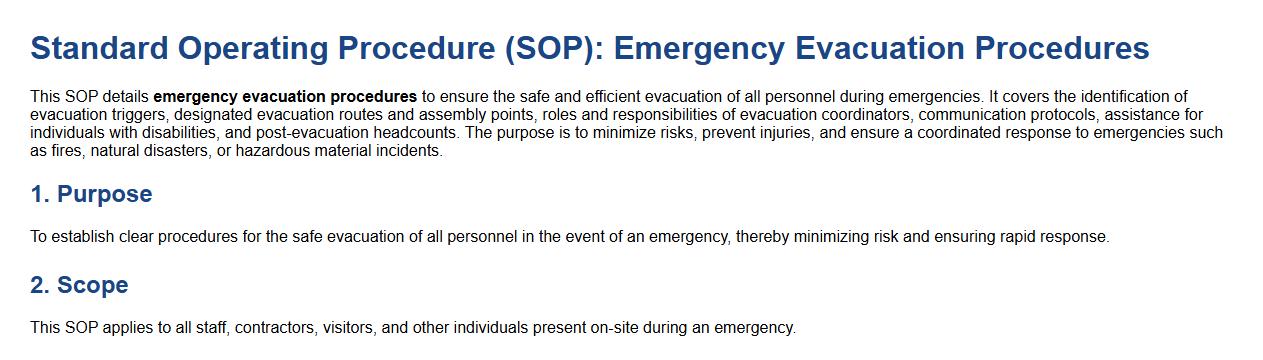
This SOP details emergency evacuation procedures to ensure the safe and efficient evacuation of all personnel during emergencies. It covers the identification of evacuation triggers, designated evacuation routes and assembly points, roles and responsibilities of evacuation coordinators, communication protocols, assistance for individuals with disabilities, and post-evacuation headcounts. The purpose is to minimize risks, prevent injuries, and ensure a coordinated response to emergencies such as fires, natural disasters, or hazardous material incidents.
Fire prevention and extinguisher usage.
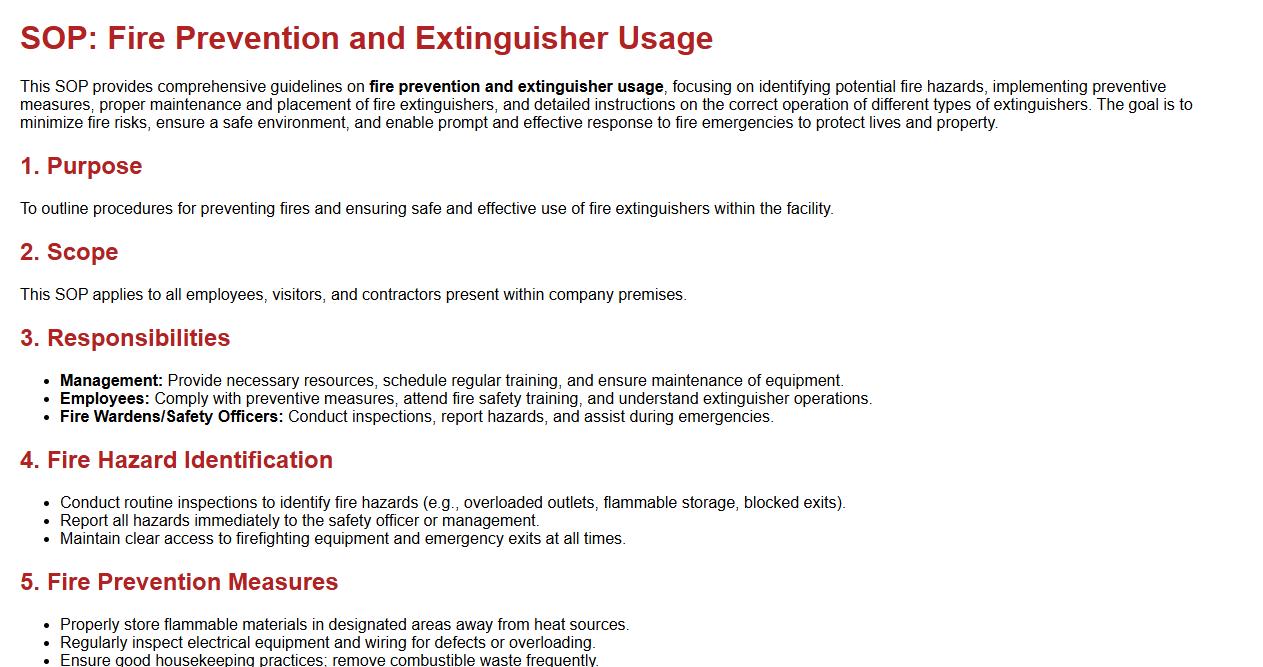
This SOP provides comprehensive guidelines on fire prevention and extinguisher usage, focusing on identifying potential fire hazards, implementing preventive measures, proper maintenance and placement of fire extinguishers, and detailed instructions on the correct operation of different types of extinguishers. The goal is to minimize fire risks, ensure a safe environment, and enable prompt and effective response to fire emergencies to protect lives and property.
Shoplifting prevention and response protocol.
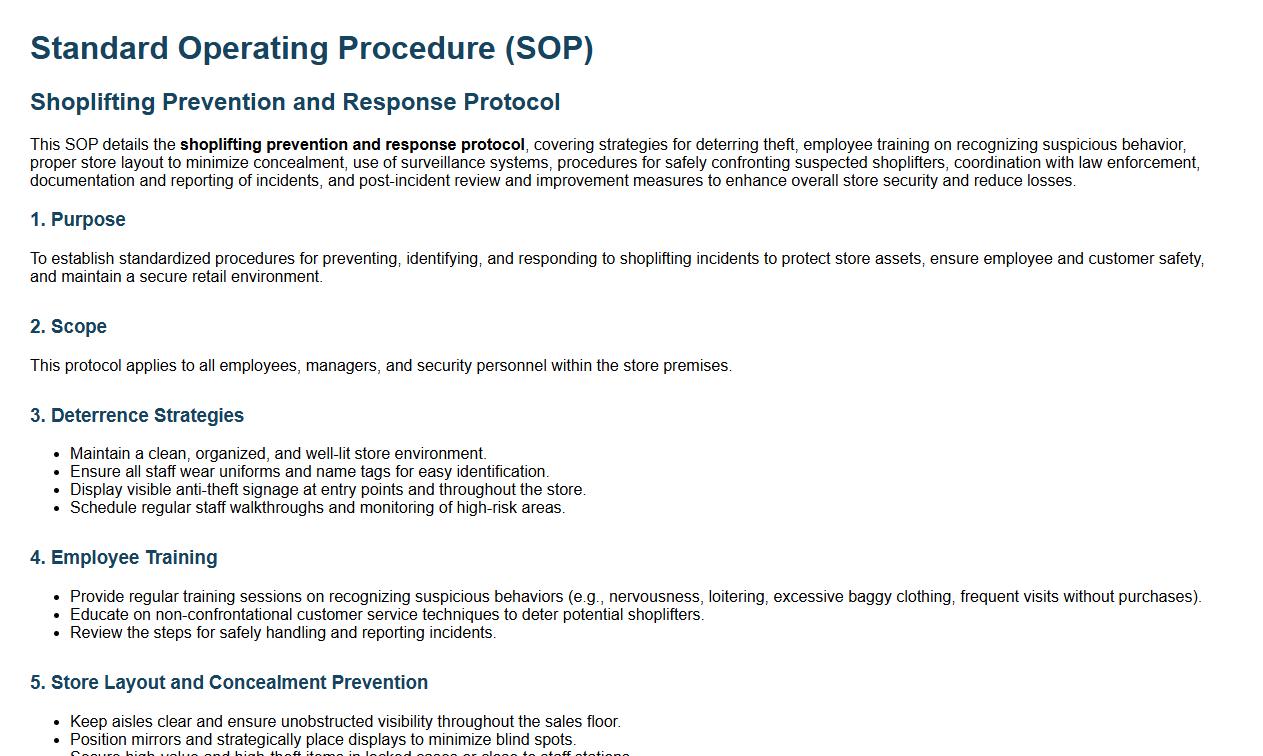
This SOP details the shoplifting prevention and response protocol, covering strategies for deterring theft, employee training on recognizing suspicious behavior, proper store layout to minimize concealment, use of surveillance systems, procedures for safely confronting suspected shoplifters, coordination with law enforcement, documentation and reporting of incidents, and post-incident review and improvement measures to enhance overall store security and reduce losses.
Slip, trip, and fall hazard inspections.
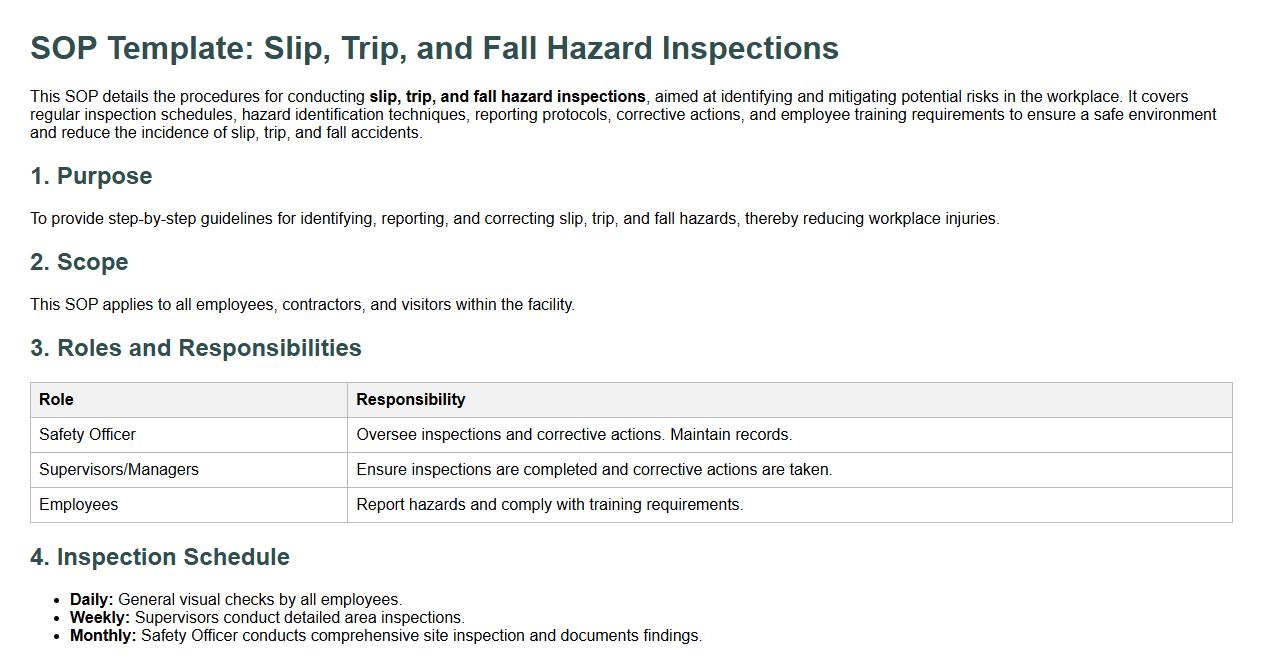
This SOP details the procedures for conducting slip, trip, and fall hazard inspections, aimed at identifying and mitigating potential risks in the workplace. It covers regular inspection schedules, hazard identification techniques, reporting protocols, corrective actions, and employee training requirements to ensure a safe environment and reduce the incidence of slip, trip, and fall accidents.
Cash handling and safe deposit procedures.
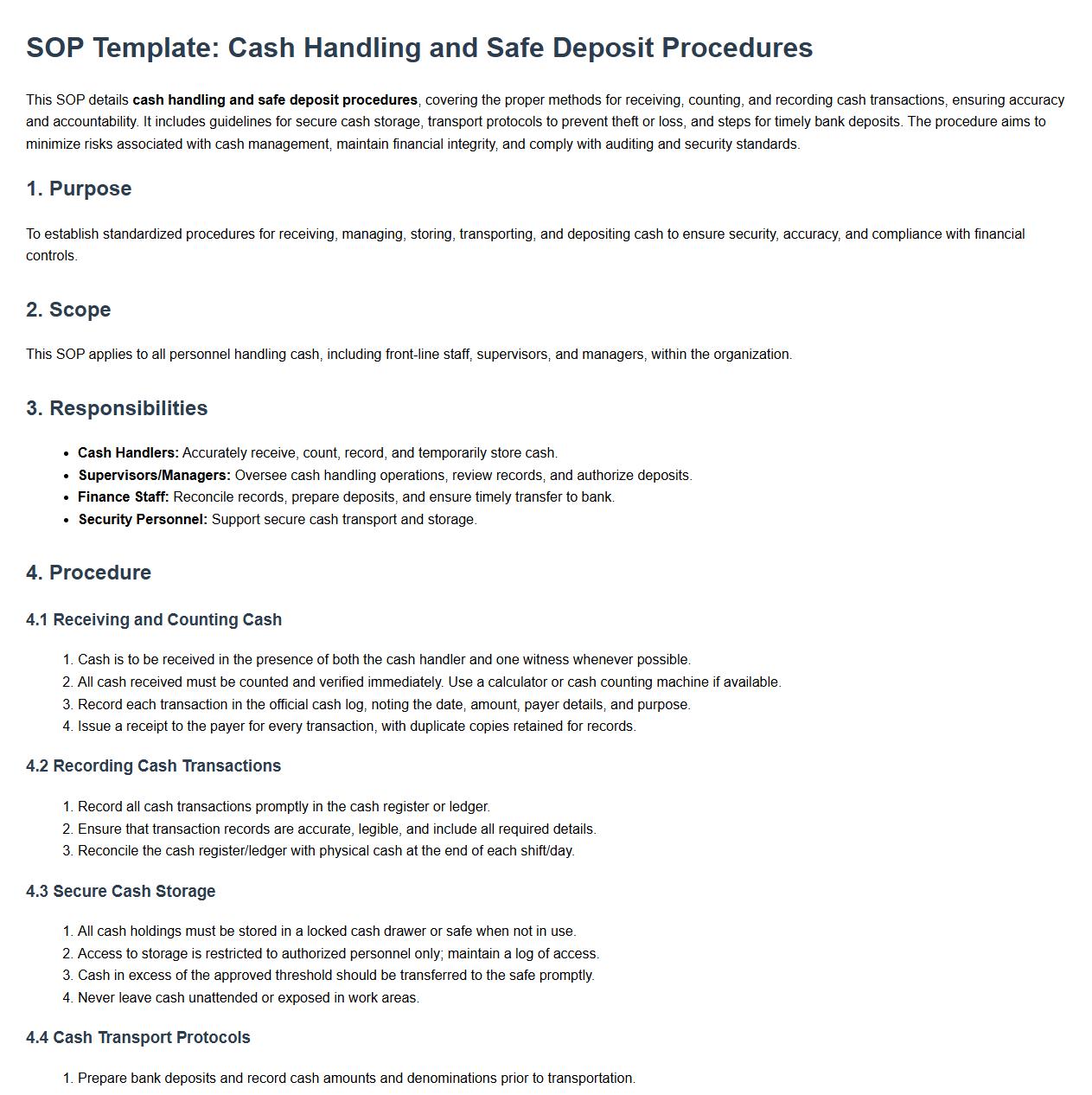
This SOP details cash handling and safe deposit procedures, covering the proper methods for receiving, counting, and recording cash transactions, ensuring accuracy and accountability. It includes guidelines for secure cash storage, transport protocols to prevent theft or loss, and steps for timely bank deposits. The procedure aims to minimize risks associated with cash management, maintain financial integrity, and comply with auditing and security standards.
Incident reporting and accident documentation.
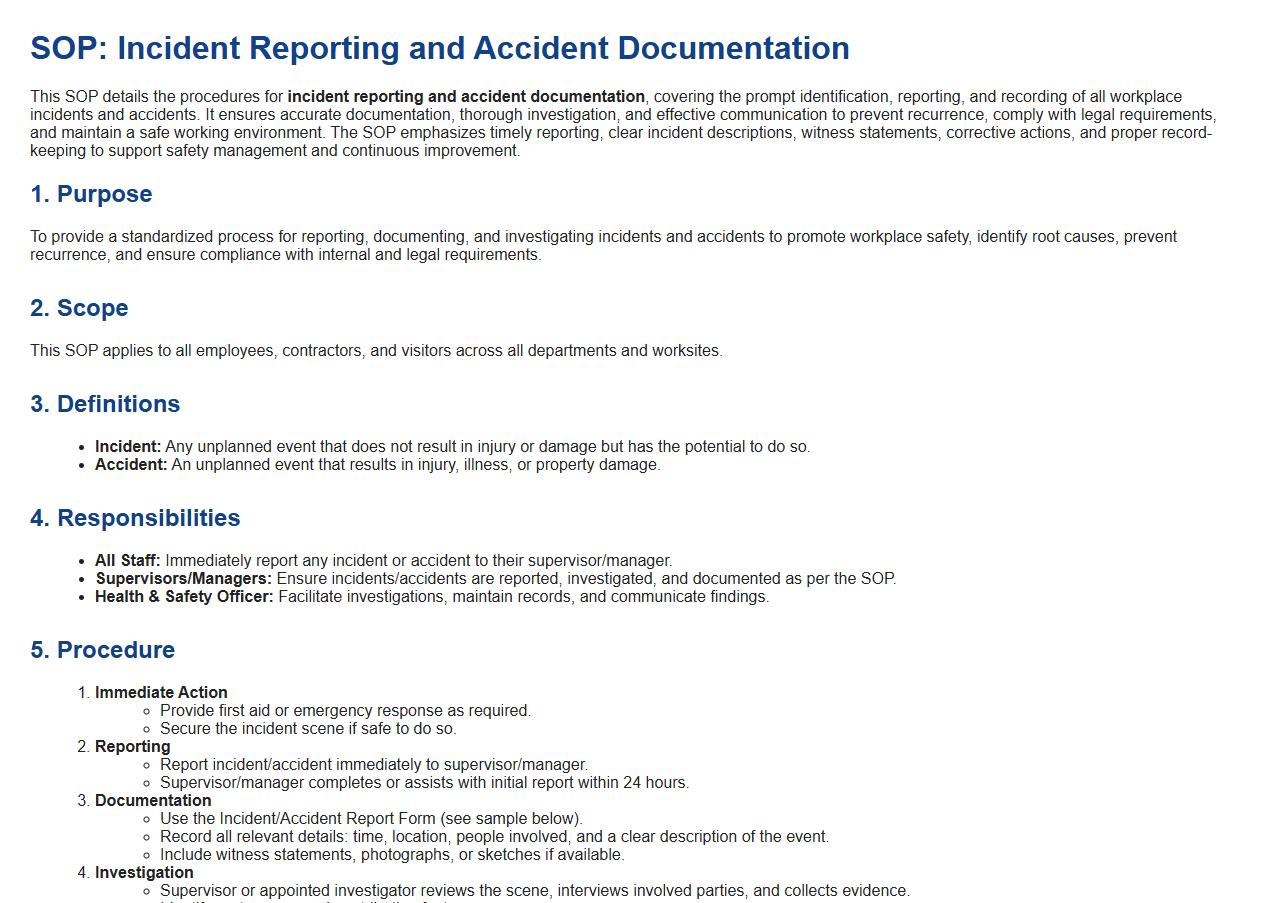
This SOP details the procedures for incident reporting and accident documentation, covering the prompt identification, reporting, and recording of all workplace incidents and accidents. It ensures accurate documentation, thorough investigation, and effective communication to prevent recurrence, comply with legal requirements, and maintain a safe working environment. The SOP emphasizes timely reporting, clear incident descriptions, witness statements, corrective actions, and proper record-keeping to support safety management and continuous improvement.
Personal protective equipment (PPE) guidelines.
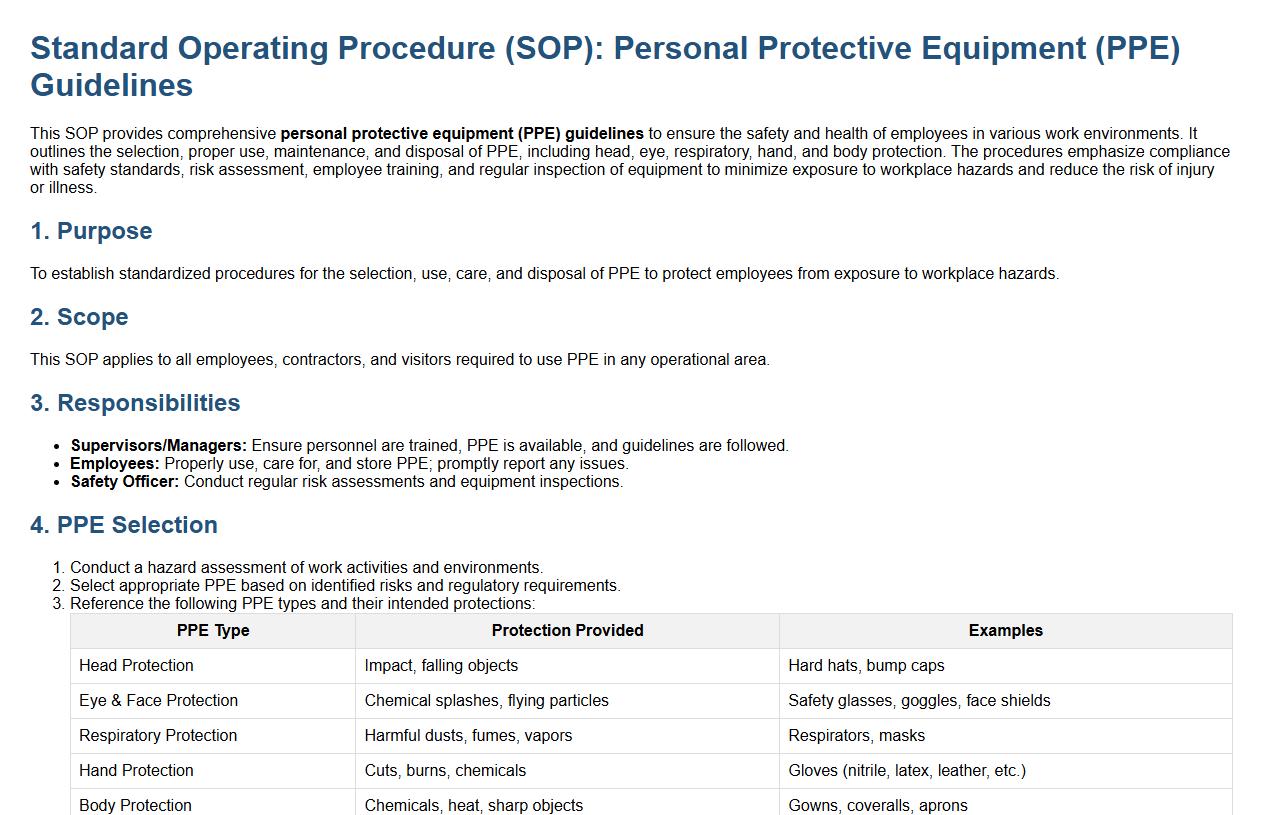
This SOP provides comprehensive personal protective equipment (PPE) guidelines to ensure the safety and health of employees in various work environments. It outlines the selection, proper use, maintenance, and disposal of PPE, including head, eye, respiratory, hand, and body protection. The procedures emphasize compliance with safety standards, risk assessment, employee training, and regular inspection of equipment to minimize exposure to workplace hazards and reduce the risk of injury or illness.
Hazardous material storage and handling.
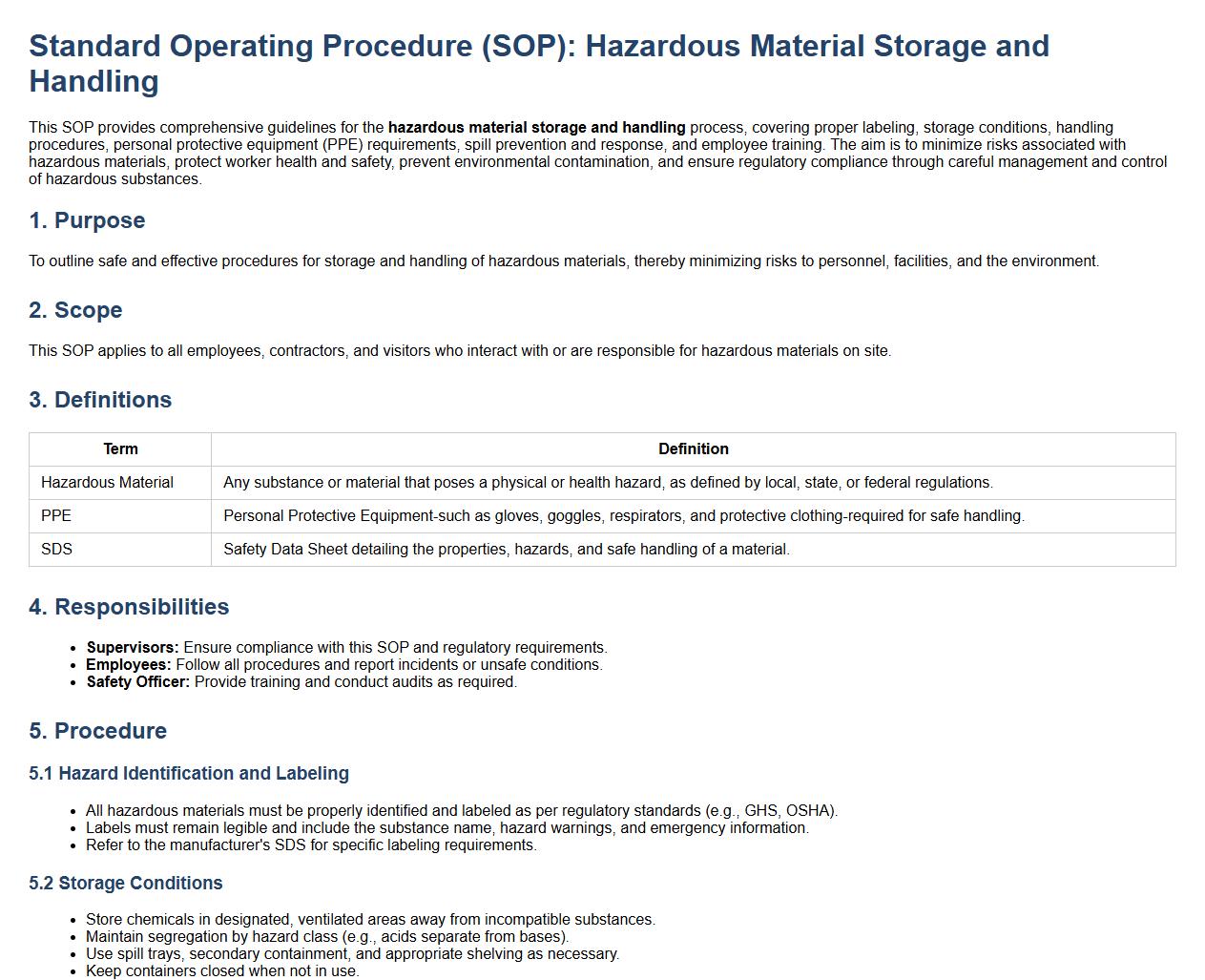
This SOP provides comprehensive guidelines for the hazardous material storage and handling process, covering proper labeling, storage conditions, handling procedures, personal protective equipment (PPE) requirements, spill prevention and response, and employee training. The aim is to minimize risks associated with hazardous materials, protect worker health and safety, prevent environmental contamination, and ensure regulatory compliance through careful management and control of hazardous substances.
Customer and staff first aid response.
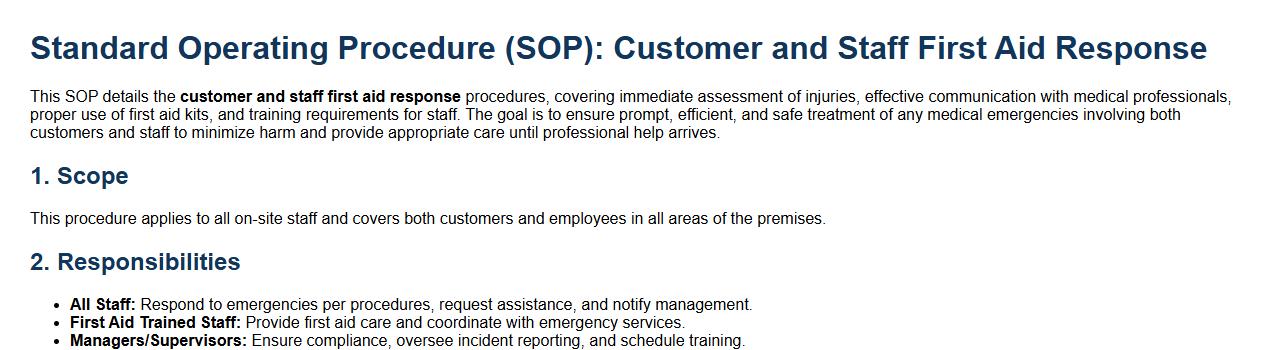
This SOP details the customer and staff first aid response procedures, covering immediate assessment of injuries, effective communication with medical professionals, proper use of first aid kits, and training requirements for staff. The goal is to ensure prompt, efficient, and safe treatment of any medical emergencies involving both customers and staff to minimize harm and provide appropriate care until professional help arrives.
Daily opening and closing safety checklist.
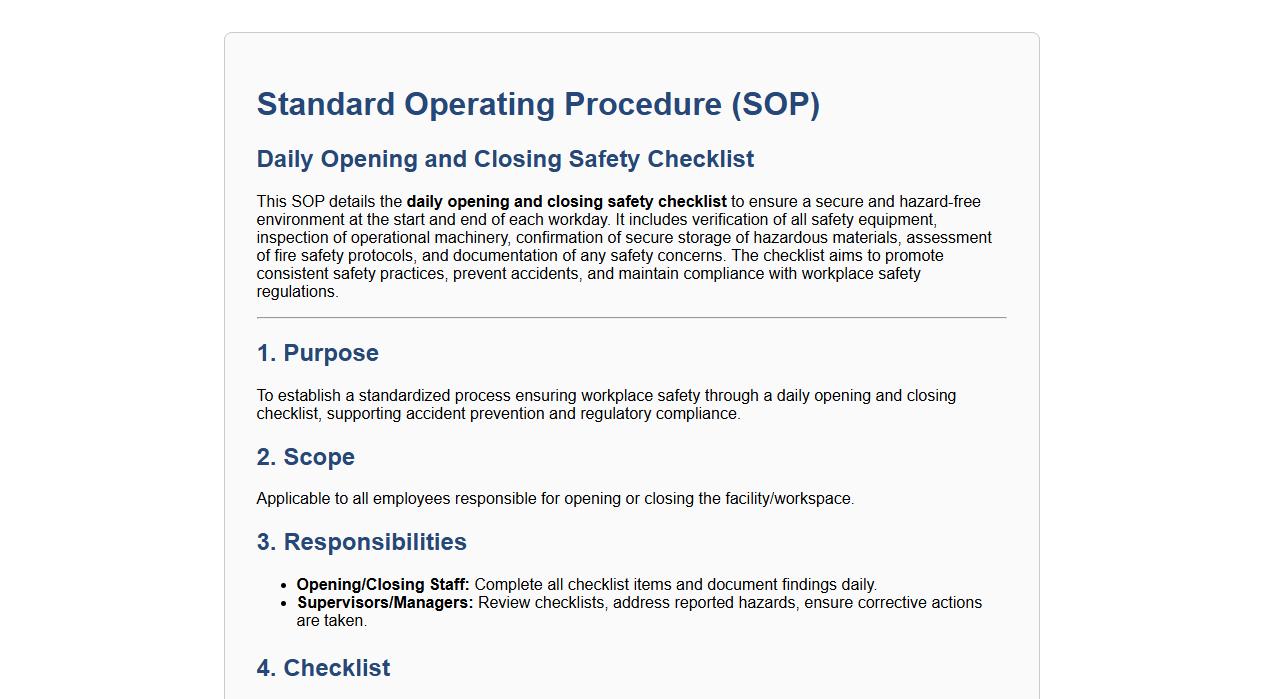
This SOP details the daily opening and closing safety checklist to ensure a secure and hazard-free environment at the start and end of each workday. It includes verification of all safety equipment, inspection of operational machinery, confirmation of secure storage of hazardous materials, assessment of fire safety protocols, and documentation of any safety concerns. The checklist aims to promote consistent safety practices, prevent accidents, and maintain compliance with workplace safety regulations.
What is the primary objective of the Retail Safety Procedures SOP?
The primary objective of the Retail Safety Procedures SOP is to establish a comprehensive framework that ensures a safe environment for both employees and customers. It aims to minimize risks and prevent accidents through standardized safety practices. By adhering to these procedures, retail operations can maintain compliance with regulatory requirements and enhance overall workplace safety.
Which employee roles are responsible for implementing the safety protocols outlined in the SOP?
All retail employees play a role in observing and following safety protocols; however, store managers and supervisors hold the primary responsibility for enforcement. These leadership roles are tasked with training staff, conducting safety audits, and ensuring compliance with the SOP. Additionally, designated safety officers may assist in monitoring adherence and facilitating continuous improvements.
What are the mandatory steps for reporting safety incidents according to the SOP?
The SOP mandates that all safety incidents be reported immediately to the store manager or designated safety officer. Employees must document the incident details using the prescribed incident report forms to ensure accurate record-keeping. Prompt reporting enables timely investigation and corrective actions to prevent future occurrences.
How frequently must safety inspections be conducted as per the Retail Safety Procedures SOP?
Safety inspections are required to be conducted on a weekly basis to identify potential hazards and ensure compliance with safety standards. These inspections should involve a thorough examination of the store environment, equipment, and procedures. Regular audits help maintain a proactive approach to workplace safety.
What personal protective equipment (PPE) requirements are specified in the SOP for retail staff?
The SOP specifies that retail staff must wear appropriate personal protective equipment (PPE) such as gloves, non-slip shoes, and high-visibility vests when performing certain tasks. PPE requirements are tailored to the nature of the work, particularly when handling hazardous materials or heavy inventory. Ensuring proper PPE use significantly reduces the risk of injury and promotes a culture of safety.