
A SOP Template for Retail Employee Training provides a structured framework to ensure consistent onboarding and skill development for staff. This template outlines step-by-step procedures, roles, and responsibilities to maintain high service standards and operational efficiency. Using a clear and standardized SOP helps retail businesses enhance employee performance and customer satisfaction.
New employee onboarding procedures.
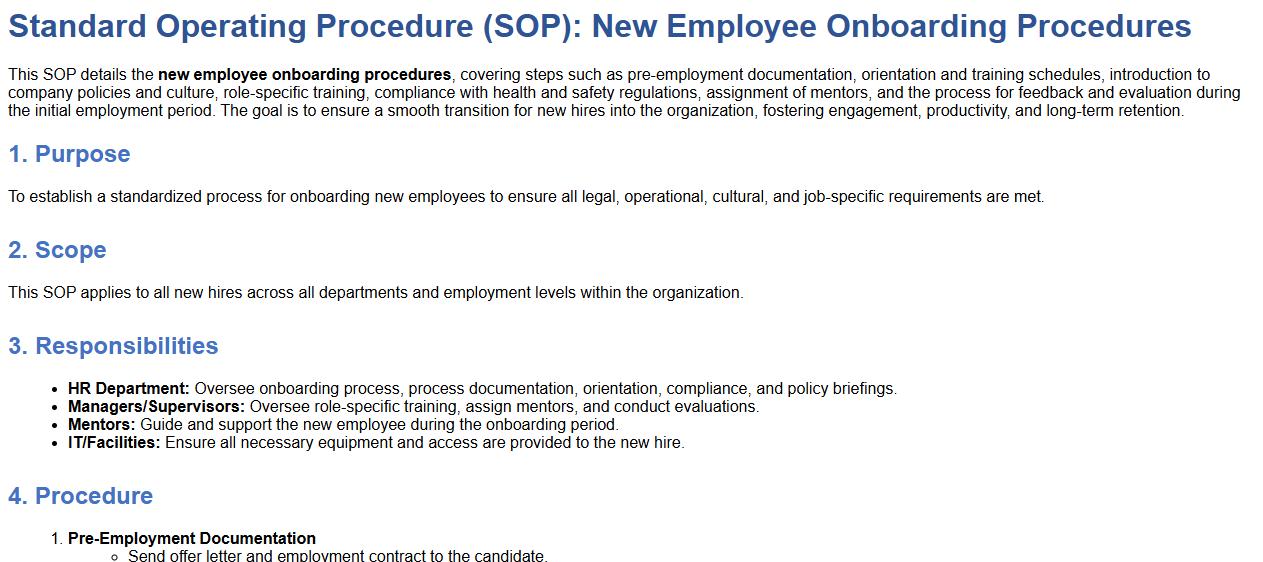
This SOP details the new employee onboarding procedures, covering steps such as pre-employment documentation, orientation and training schedules, introduction to company policies and culture, role-specific training, compliance with health and safety regulations, assignment of mentors, and the process for feedback and evaluation during the initial employment period. The goal is to ensure a smooth transition for new hires into the organization, fostering engagement, productivity, and long-term retention.
Customer service and interaction protocols.
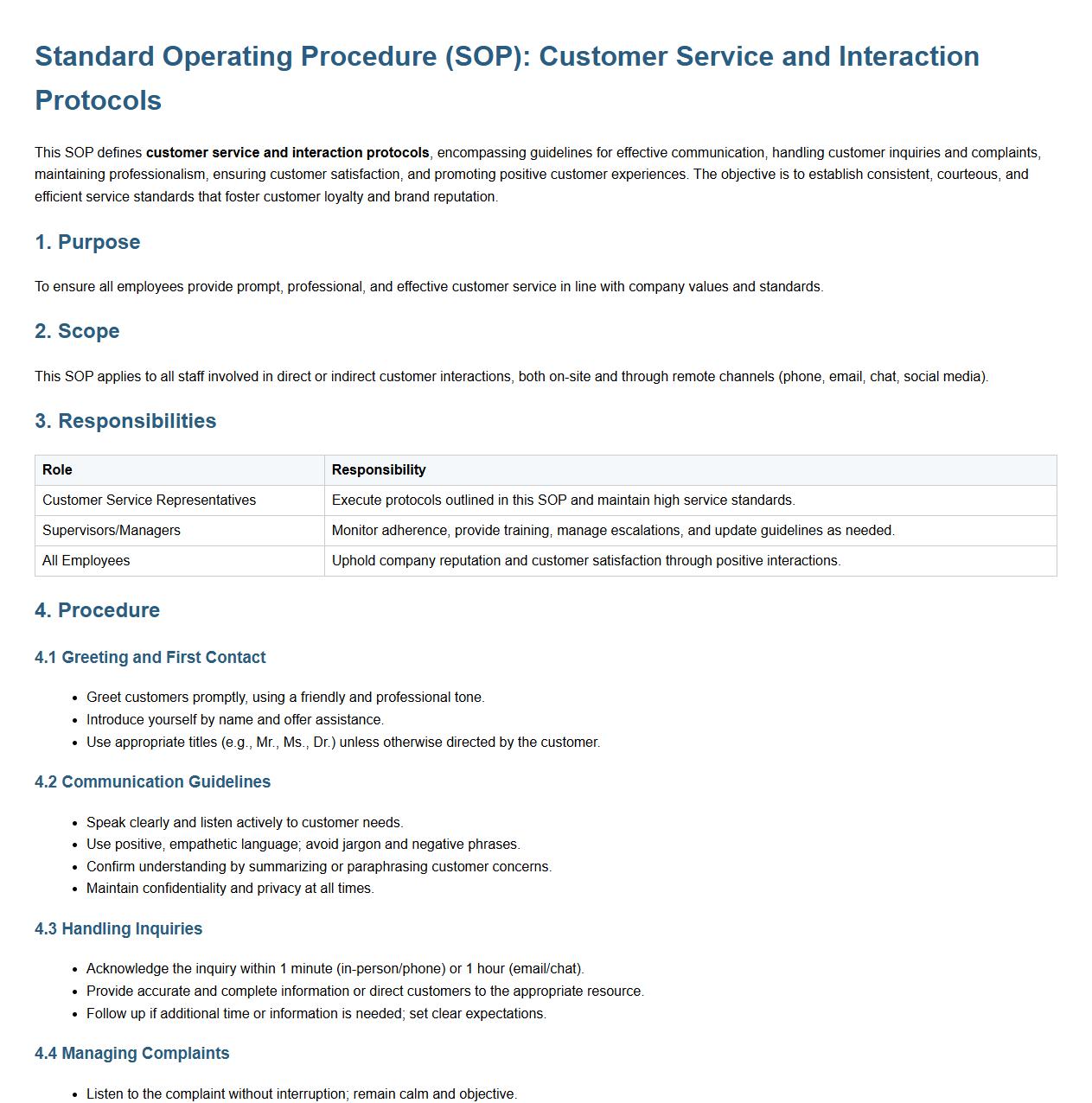
This SOP defines customer service and interaction protocols, encompassing guidelines for effective communication, handling customer inquiries and complaints, maintaining professionalism, ensuring customer satisfaction, and promoting positive customer experiences. The objective is to establish consistent, courteous, and efficient service standards that foster customer loyalty and brand reputation.
Store opening and closing routines.
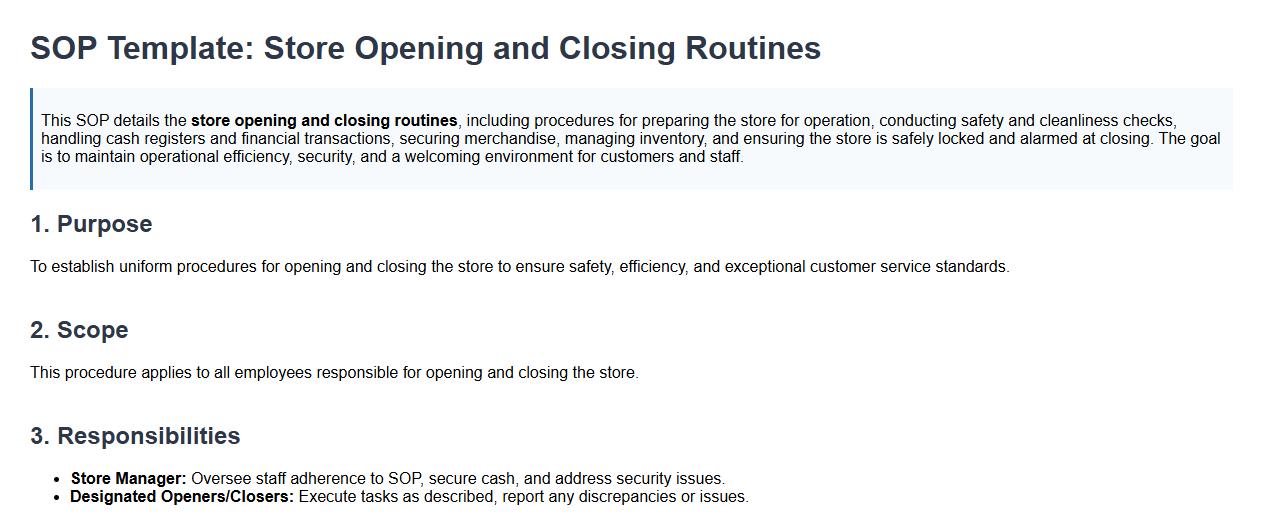
This SOP details the store opening and closing routines, including procedures for preparing the store for operation, conducting safety and cleanliness checks, handling cash registers and financial transactions, securing merchandise, managing inventory, and ensuring the store is safely locked and alarmed at closing. The goal is to maintain operational efficiency, security, and a welcoming environment for customers and staff.
Cash handling and register operations.
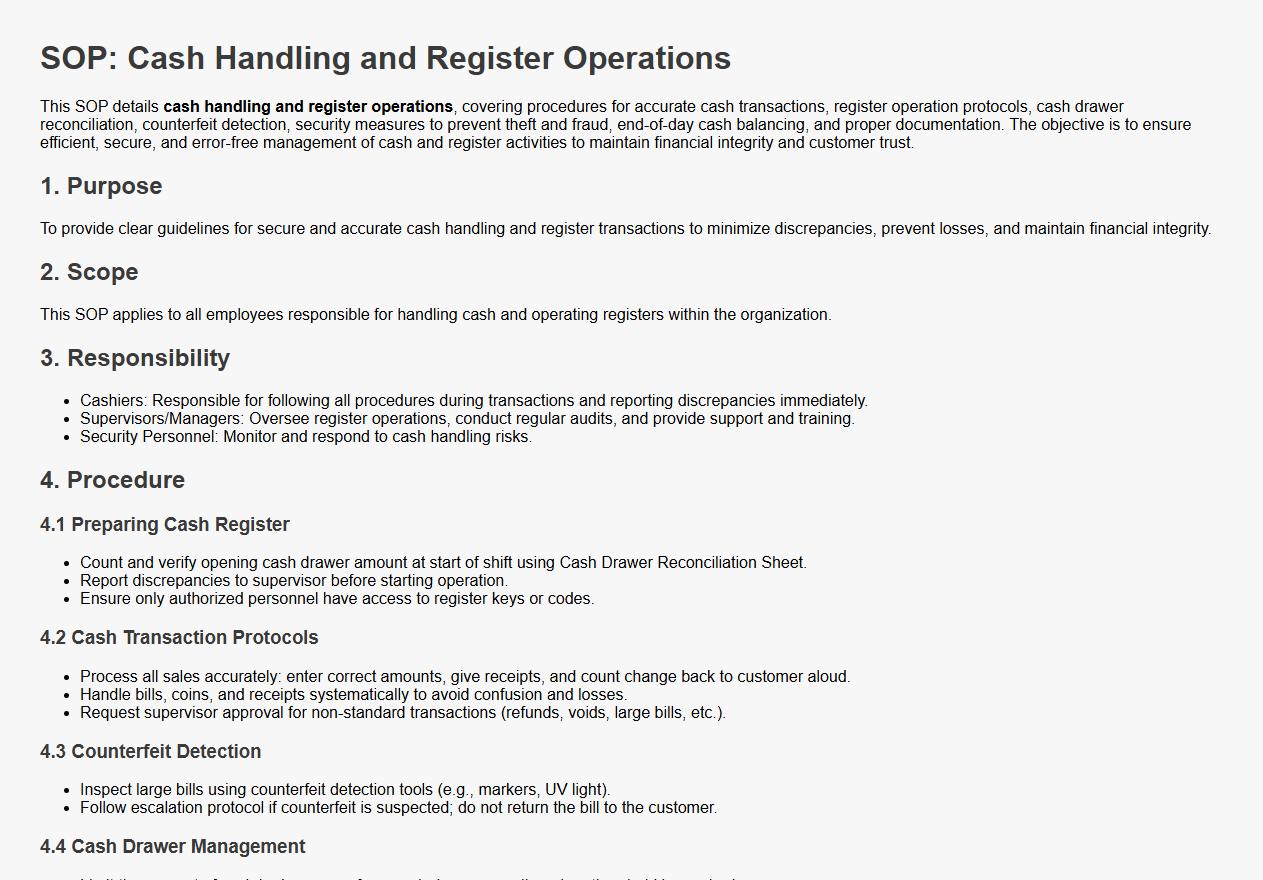
This SOP details cash handling and register operations, covering procedures for accurate cash transactions, register operation protocols, cash drawer reconciliation, counterfeit detection, security measures to prevent theft and fraud, end-of-day cash balancing, and proper documentation. The objective is to ensure efficient, secure, and error-free management of cash and register activities to maintain financial integrity and customer trust.
Product stocking and shelf arrangement standards.
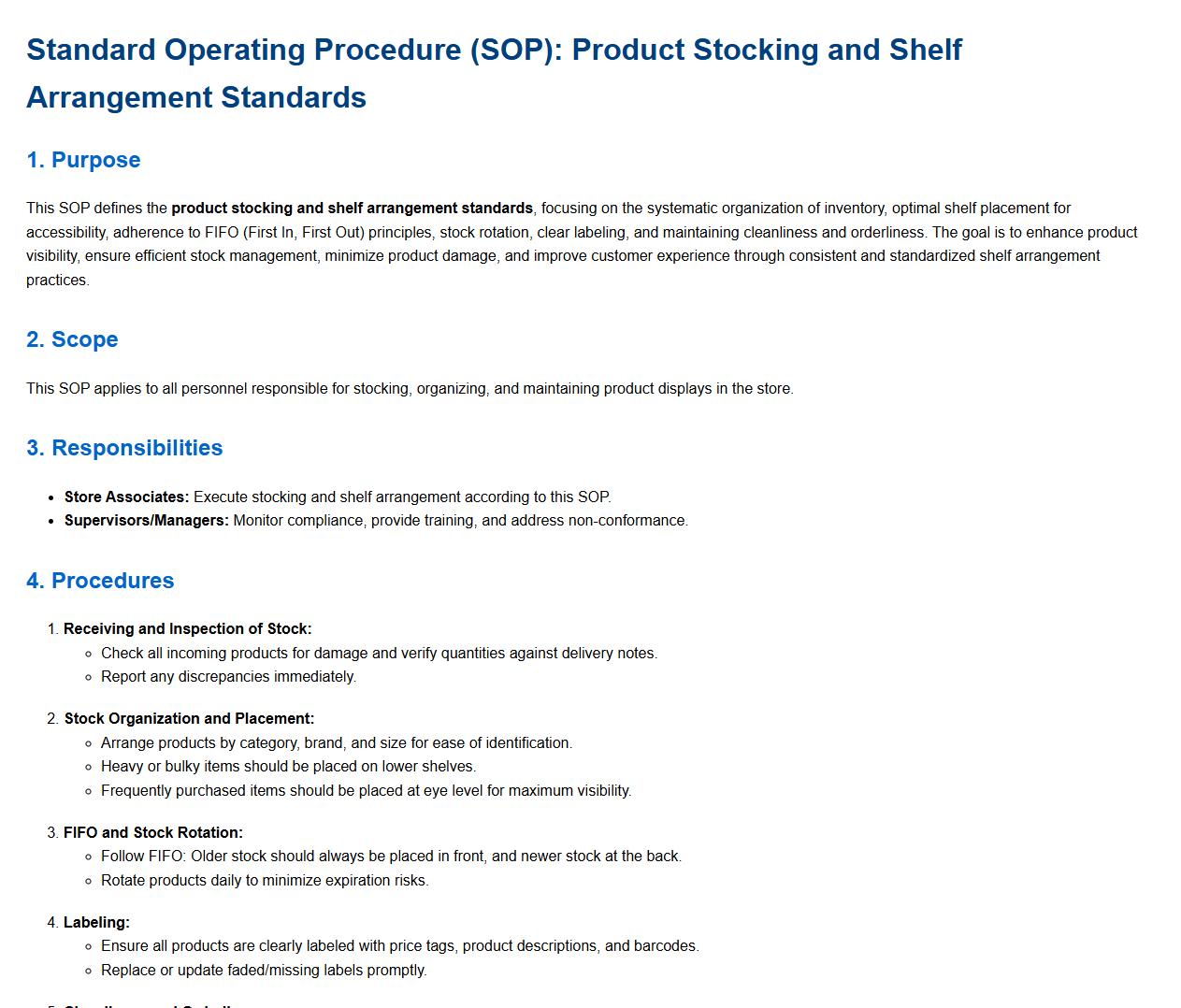
This SOP defines the product stocking and shelf arrangement standards, focusing on the systematic organization of inventory, optimal shelf placement for accessibility, adherence to FIFO (First In, First Out) principles, stock rotation, clear labeling, and maintaining cleanliness and orderliness. The goal is to enhance product visibility, ensure efficient stock management, minimize product damage, and improve customer experience through consistent and standardized shelf arrangement practices.
Cleanliness and store maintenance procedures.
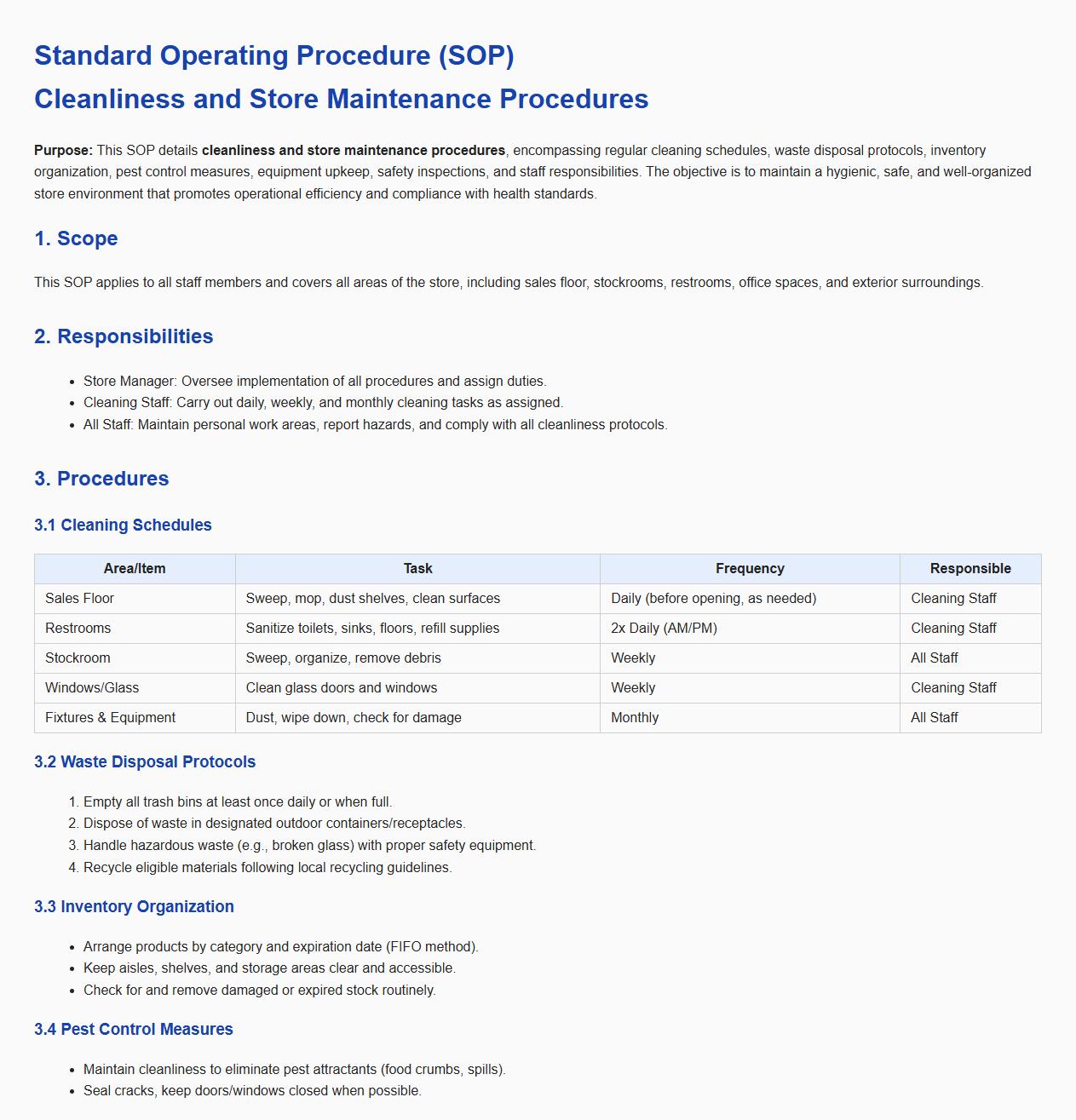
This SOP details cleanliness and store maintenance procedures, encompassing regular cleaning schedules, waste disposal protocols, inventory organization, pest control measures, equipment upkeep, safety inspections, and staff responsibilities. The objective is to maintain a hygienic, safe, and well-organized store environment that promotes operational efficiency and compliance with health standards.
Loss prevention and security measures.
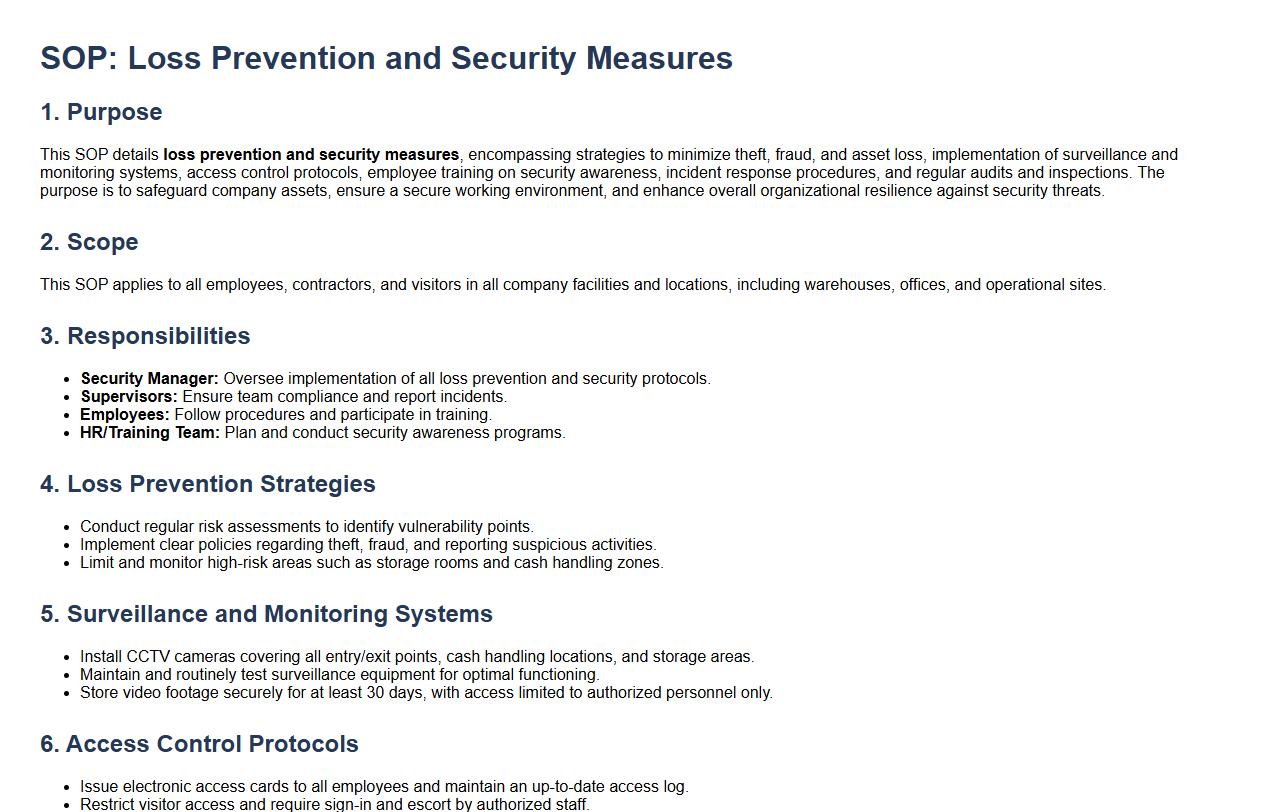
This SOP details loss prevention and security measures, encompassing strategies to minimize theft, fraud, and asset loss, implementation of surveillance and monitoring systems, access control protocols, employee training on security awareness, incident response procedures, and regular audits and inspections. The purpose is to safeguard company assets, ensure a secure working environment, and enhance overall organizational resilience against security threats.
Sales transaction processing guidelines.
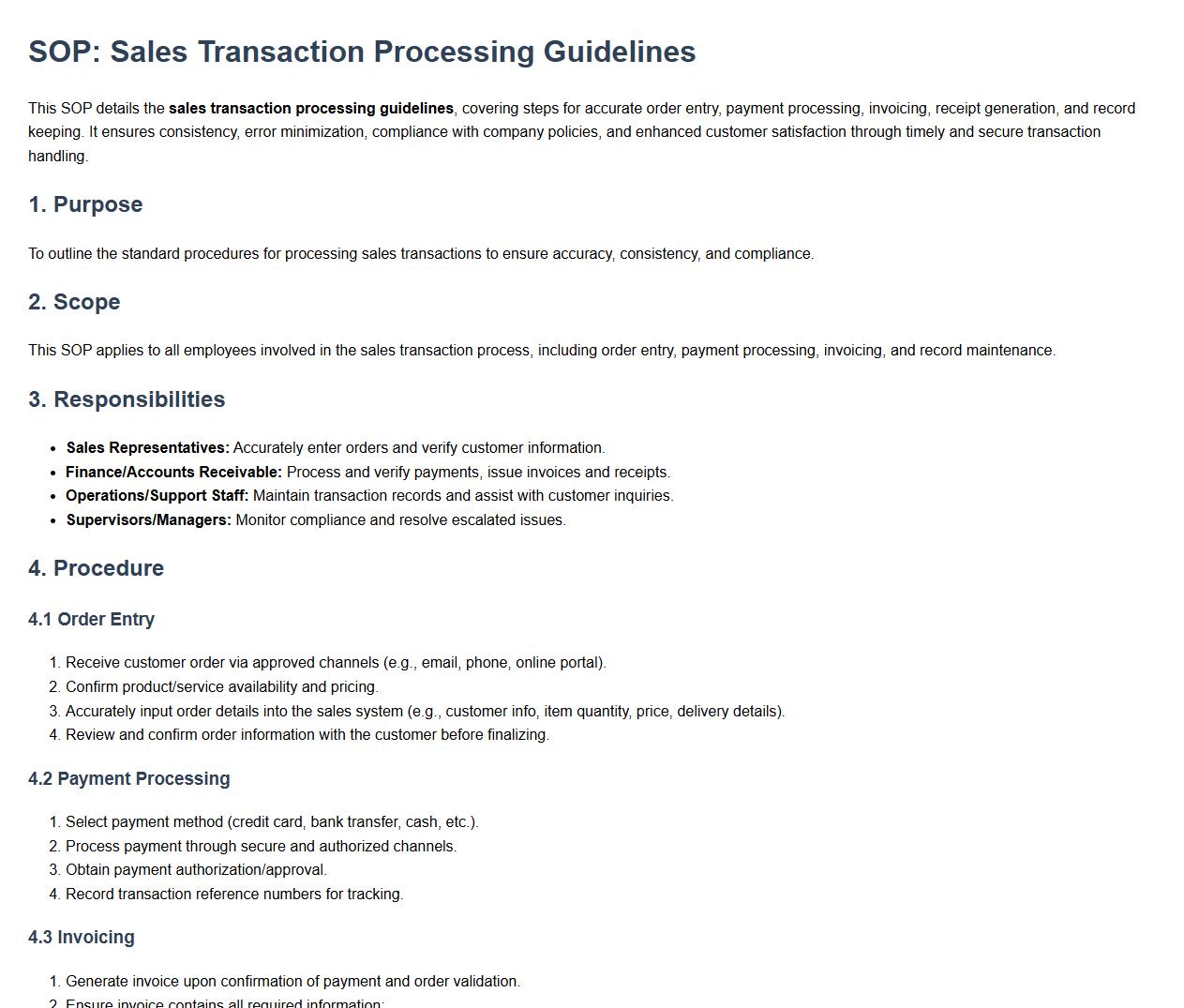
This SOP details the sales transaction processing guidelines, covering steps for accurate order entry, payment processing, invoicing, receipt generation, and record keeping. It ensures consistency, error minimization, compliance with company policies, and enhanced customer satisfaction through timely and secure transaction handling.
Returns, exchanges, and refund procedures.
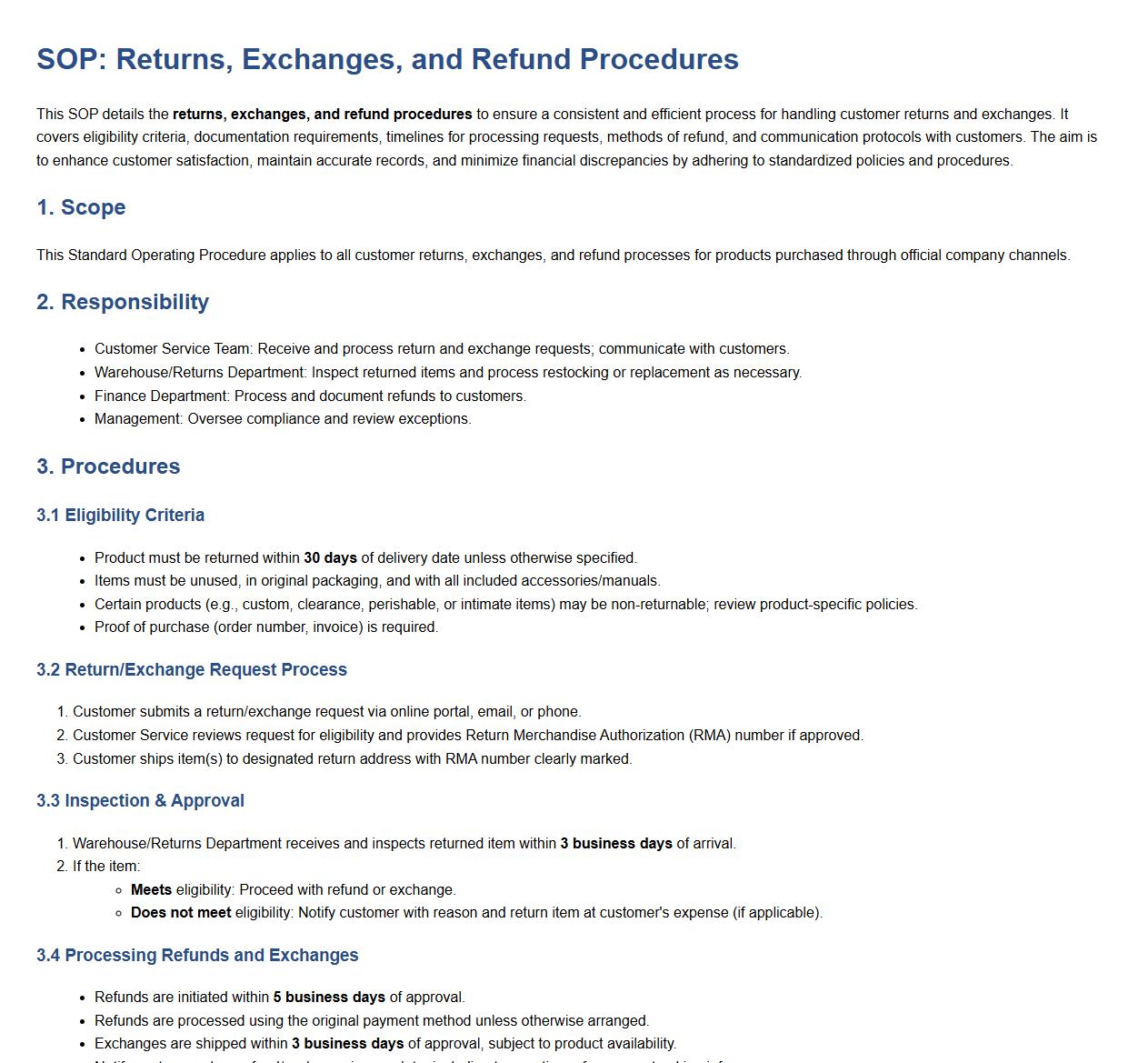
This SOP details the returns, exchanges, and refund procedures to ensure a consistent and efficient process for handling customer returns and exchanges. It covers eligibility criteria, documentation requirements, timelines for processing requests, methods of refund, and communication protocols with customers. The aim is to enhance customer satisfaction, maintain accurate records, and minimize financial discrepancies by adhering to standardized policies and procedures.
Emergency response and safety drills.
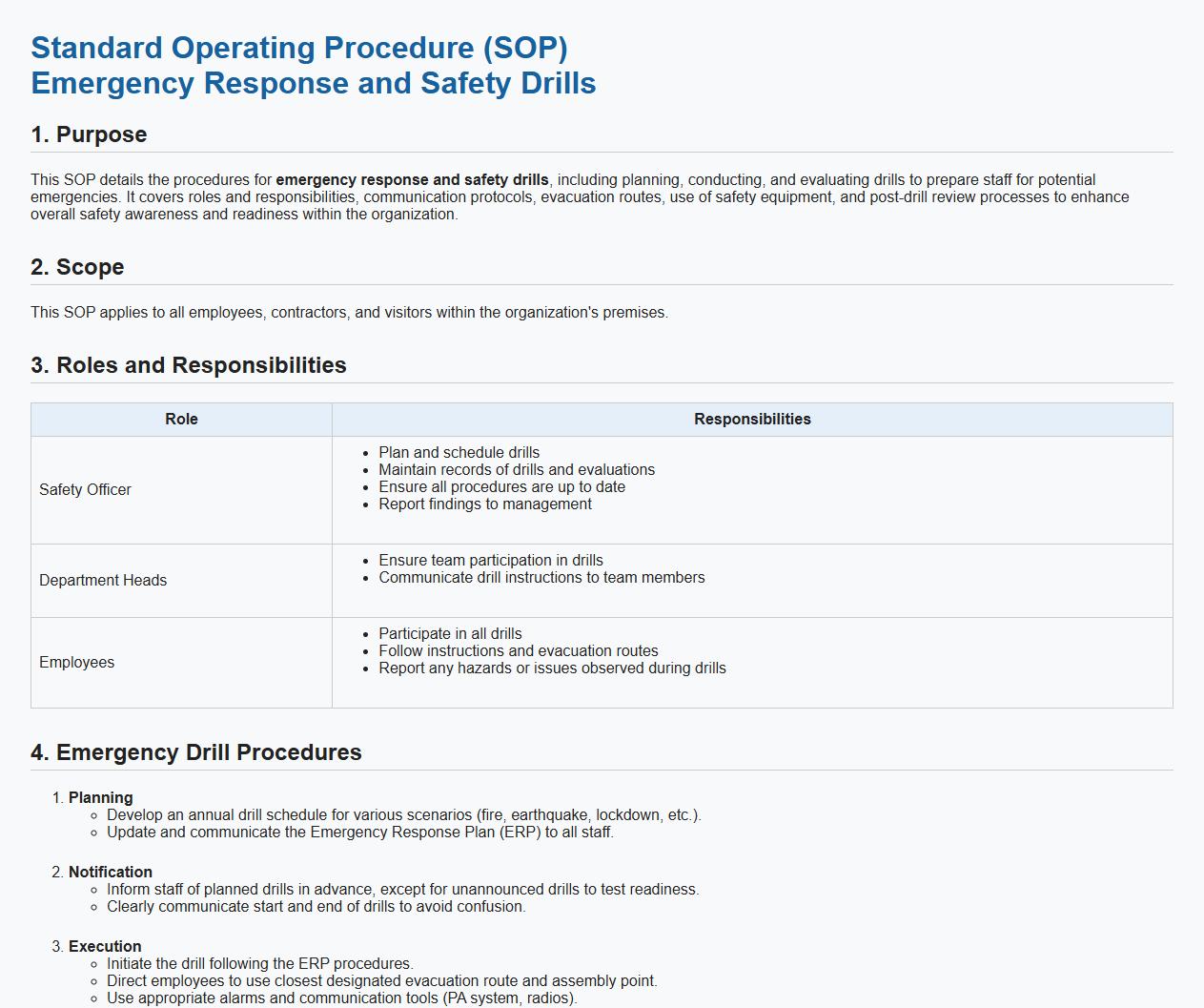
This SOP details the procedures for emergency response and safety drills, including planning, conducting, and evaluating drills to prepare staff for potential emergencies. It covers roles and responsibilities, communication protocols, evacuation routes, use of safety equipment, and post-drill review processes to enhance overall safety awareness and readiness within the organization.
What is the primary purpose of the Retail Employee Training SOP?
The primary purpose of the Retail Employee Training SOP is to ensure all retail staff are consistently trained to meet company standards. It provides a structured approach to onboarding and skill development, enhancing employee performance and customer satisfaction. The SOP aims to streamline training processes for effective and efficient knowledge transfer.
Which steps must employees follow during the onboarding training process?
Employees must first complete an orientation session that covers company policies and culture. Next, they engage in hands-on training modules tailored to their specific job roles. Lastly, employees participate in shadowing experienced staff to gain practical experience before independent work.
How should employees document completion of each training module as per the SOP?
Employees are required to sign off on each training module upon completion, using official training logs or digital tracking systems. This documentation serves as verification for management to track progress. Accurate recording maintains compliance and ensures accountability throughout the training process.
What are the required safety and compliance procedures detailed in the SOP?
The SOP mandates adherence to workplace safety guidelines, including proper equipment handling and emergency protocols. Employees must complete mandatory compliance training related to health regulations and company policies. Regular safety audits and refresher courses are also part of maintaining a safe working environment.
How does the SOP specify performance evaluation and feedback for trainees?
The SOP outlines scheduled performance reviews where supervisors assess trainee progress using standardized criteria. Constructive feedback sessions are conducted to identify strengths and areas for improvement. Continuous evaluation helps tailor further training and ensures trainees meet job competency standards.