
A SOP Template for Retail Store Operations provides a structured framework to standardize daily tasks and ensure consistency across all store activities. It outlines clear procedures for inventory management, customer service, and sales processes, enhancing overall efficiency and employee accountability. Implementing this template helps maintain operational standards and improves customer satisfaction in retail environments.
Daily store opening and closing procedures.
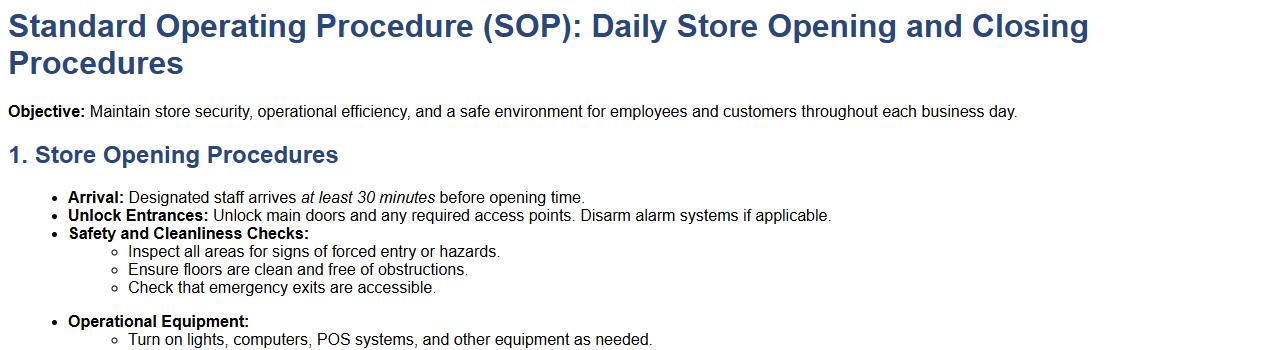
This SOP details the daily store opening and closing procedures, including tasks such as unlocking and securing entrances, conducting safety and cleanliness checks, starting and shutting down operational equipment, managing cash registers, updating inventory logs, and ensuring the store is prepared for daily business activities. The objective is to maintain store security, operational efficiency, and a safe environment for both employees and customers throughout each business day.
Cash handling and register reconciliation.
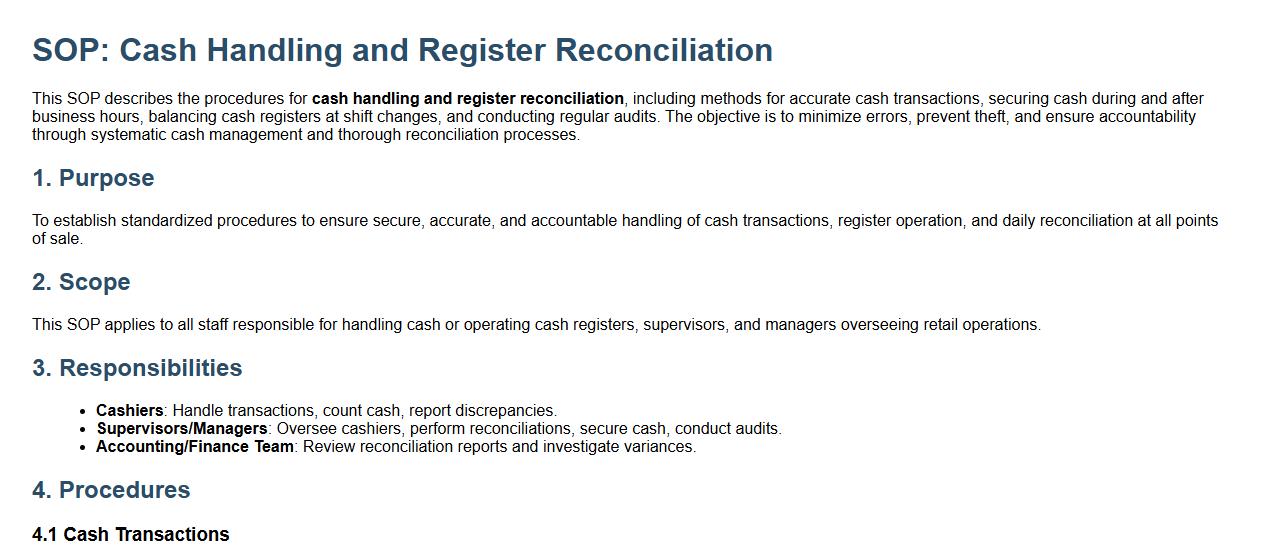
This SOP describes the procedures for cash handling and register reconciliation, including methods for accurate cash transactions, securing cash during and after business hours, balancing cash registers at shift changes, and conducting regular audits. The objective is to minimize errors, prevent theft, and ensure accountability through systematic cash management and thorough reconciliation processes.
Inventory receiving and stock management.
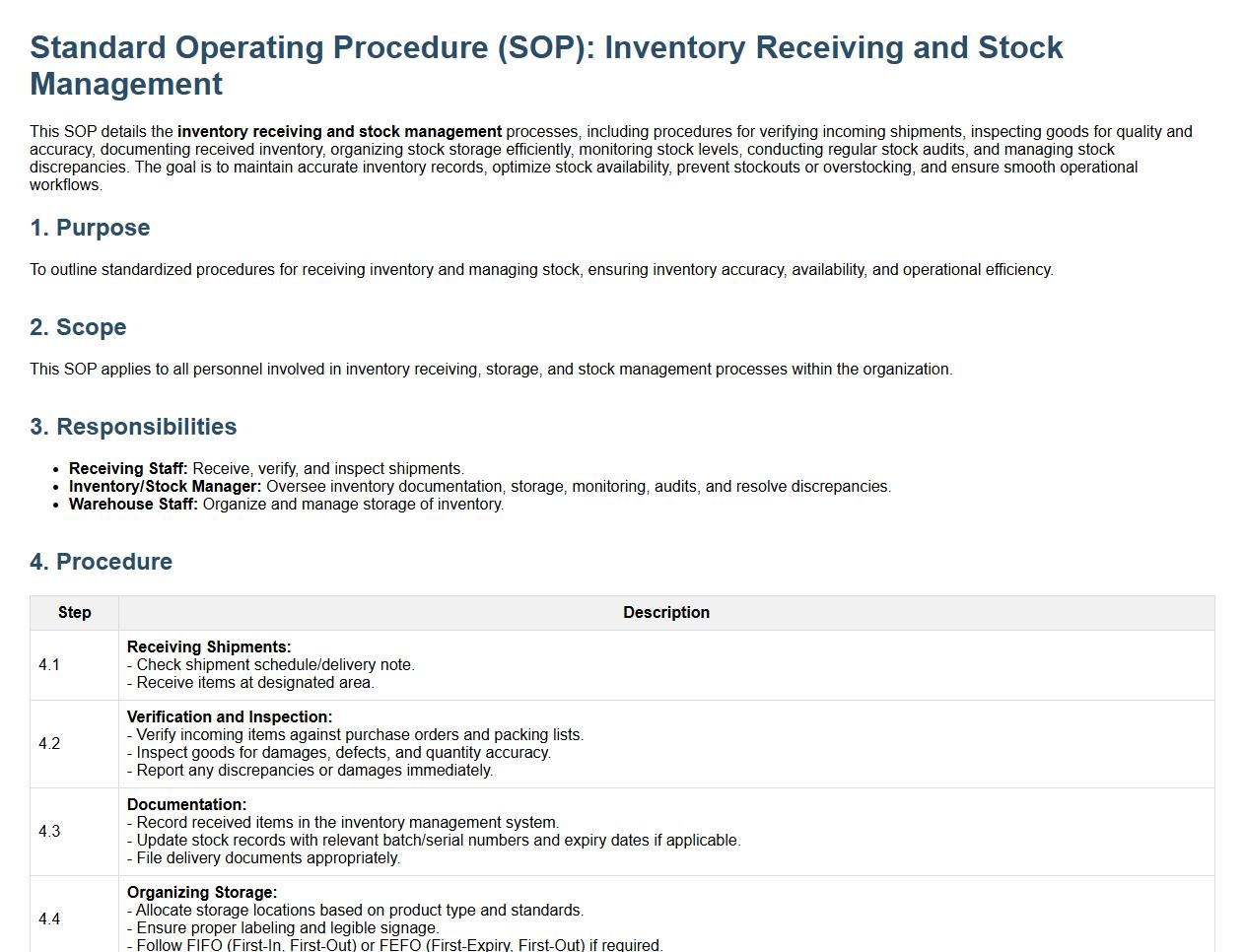
This SOP details the inventory receiving and stock management processes, including procedures for verifying incoming shipments, inspecting goods for quality and accuracy, documenting received inventory, organizing stock storage efficiently, monitoring stock levels, conducting regular stock audits, and managing stock discrepancies. The goal is to maintain accurate inventory records, optimize stock availability, prevent stockouts or overstocking, and ensure smooth operational workflows.
Customer service standards and complaint resolution.
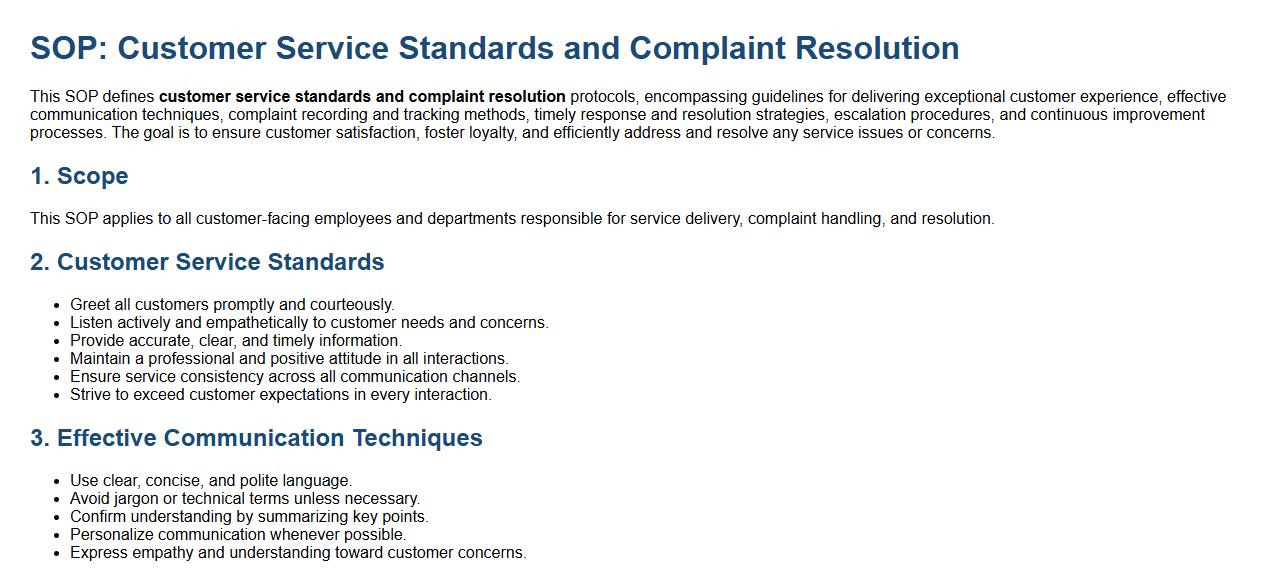
This SOP defines customer service standards and complaint resolution protocols, encompassing guidelines for delivering exceptional customer experience, effective communication techniques, complaint recording and tracking methods, timely response and resolution strategies, escalation procedures, and continuous improvement processes. The goal is to ensure customer satisfaction, foster loyalty, and efficiently address and resolve any service issues or concerns.
Visual merchandising and store layout guidelines.
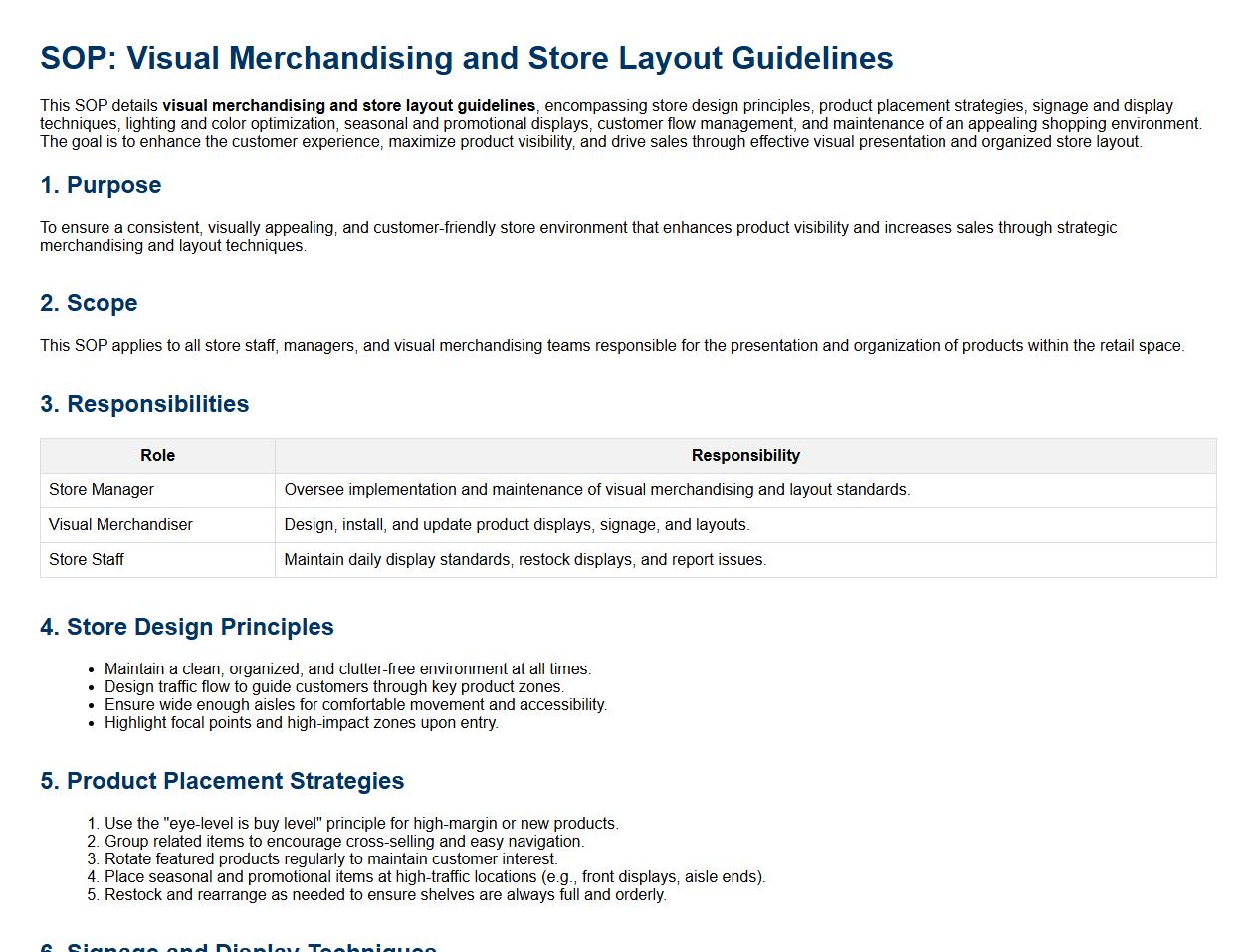
This SOP details visual merchandising and store layout guidelines, encompassing store design principles, product placement strategies, signage and display techniques, lighting and color optimization, seasonal and promotional displays, customer flow management, and maintenance of an appealing shopping environment. The goal is to enhance the customer experience, maximize product visibility, and drive sales through effective visual presentation and organized store layout.
Cleanliness, sanitation, and store maintenance.
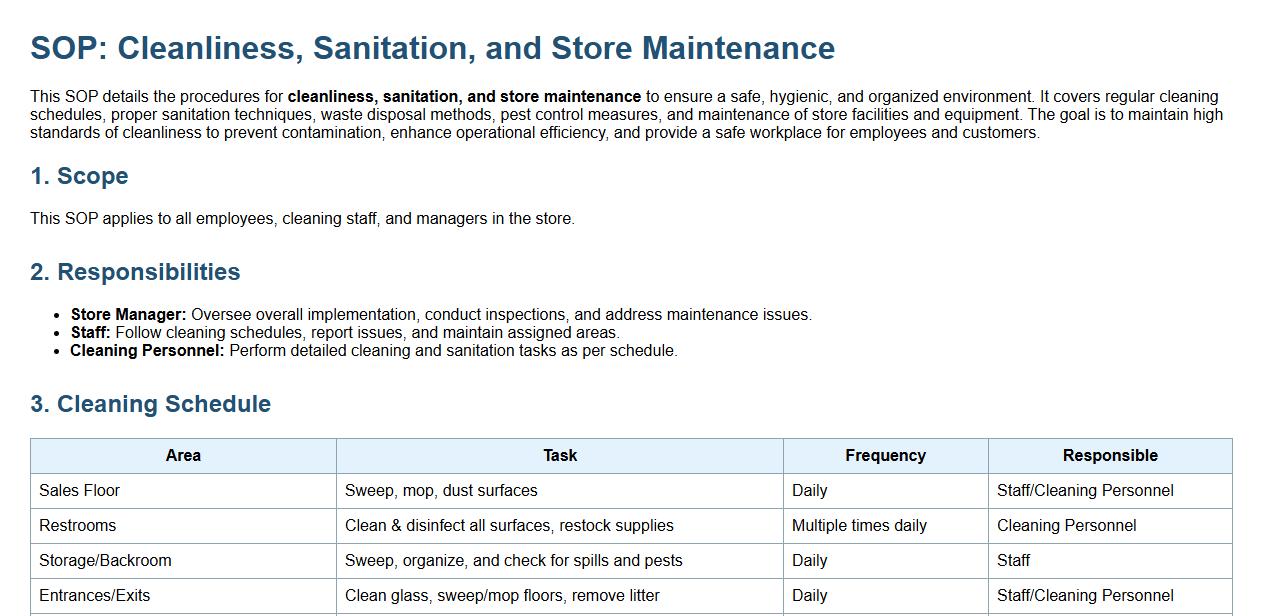
This SOP details the procedures for cleanliness, sanitation, and store maintenance to ensure a safe, hygienic, and organized environment. It covers regular cleaning schedules, proper sanitation techniques, waste disposal methods, pest control measures, and maintenance of store facilities and equipment. The goal is to maintain high standards of cleanliness to prevent contamination, enhance operational efficiency, and provide a safe workplace for employees and customers.
Staff scheduling, attendance, and shift handovers.
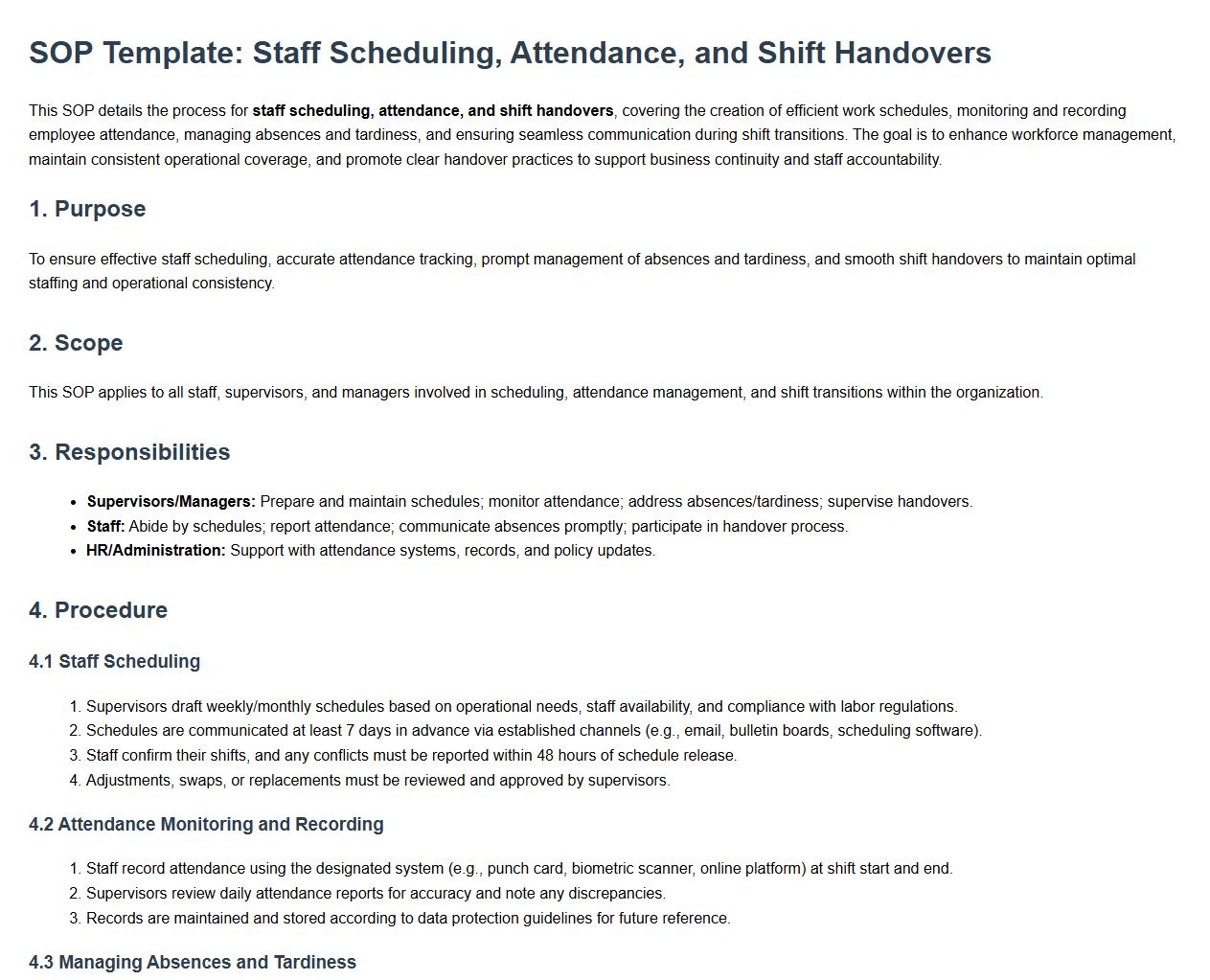
This SOP details the process for staff scheduling, attendance, and shift handovers, covering the creation of efficient work schedules, monitoring and recording employee attendance, managing absences and tardiness, and ensuring seamless communication during shift transitions. The goal is to enhance workforce management, maintain consistent operational coverage, and promote clear handover practices to support business continuity and staff accountability.
Product returns, exchanges, and refund policy.
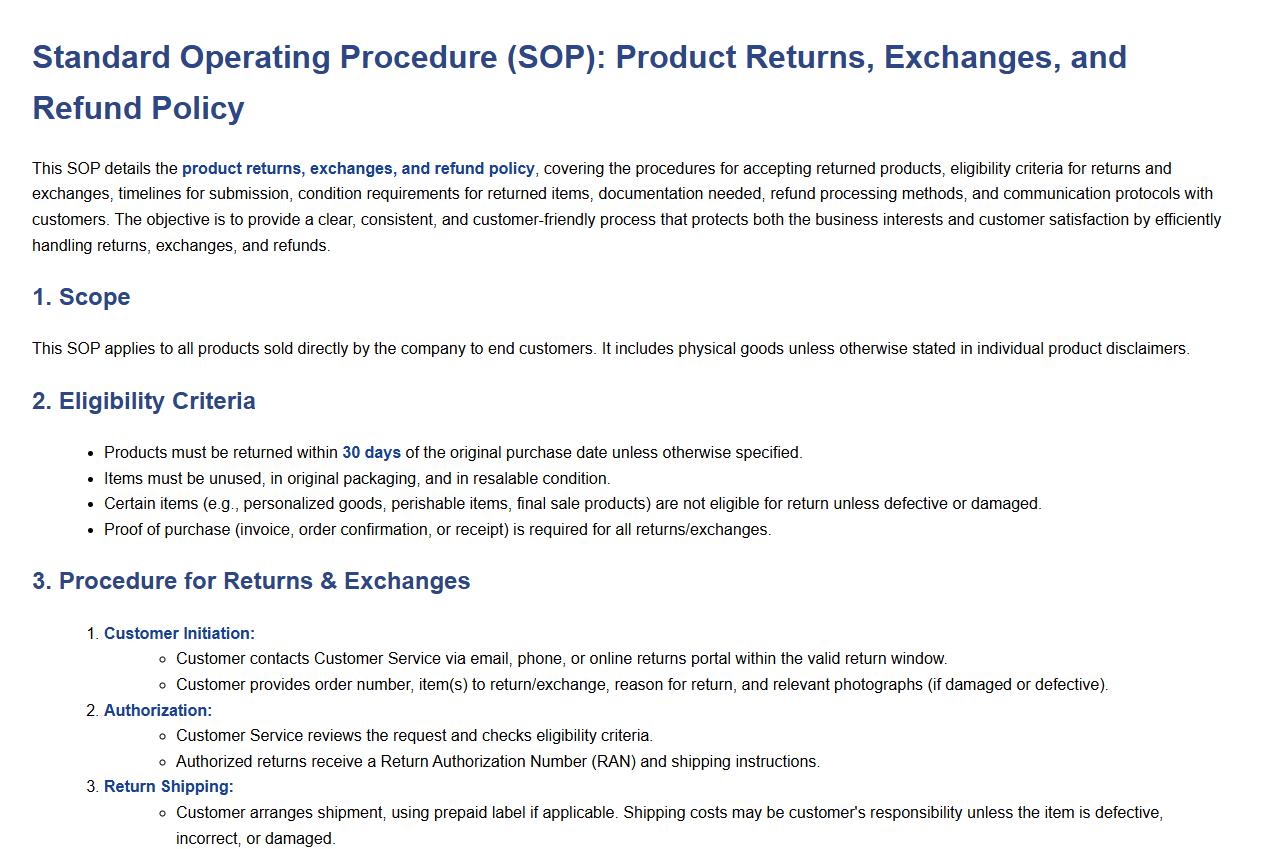
This SOP details the product returns, exchanges, and refund policy, covering the procedures for accepting returned products, eligibility criteria for returns and exchanges, timelines for submission, condition requirements for returned items, documentation needed, refund processing methods, and communication protocols with customers. The objective is to provide a clear, consistent, and customer-friendly process that protects both the business interests and customer satisfaction by efficiently handling returns, exchanges, and refunds.
Loss prevention and security protocols.
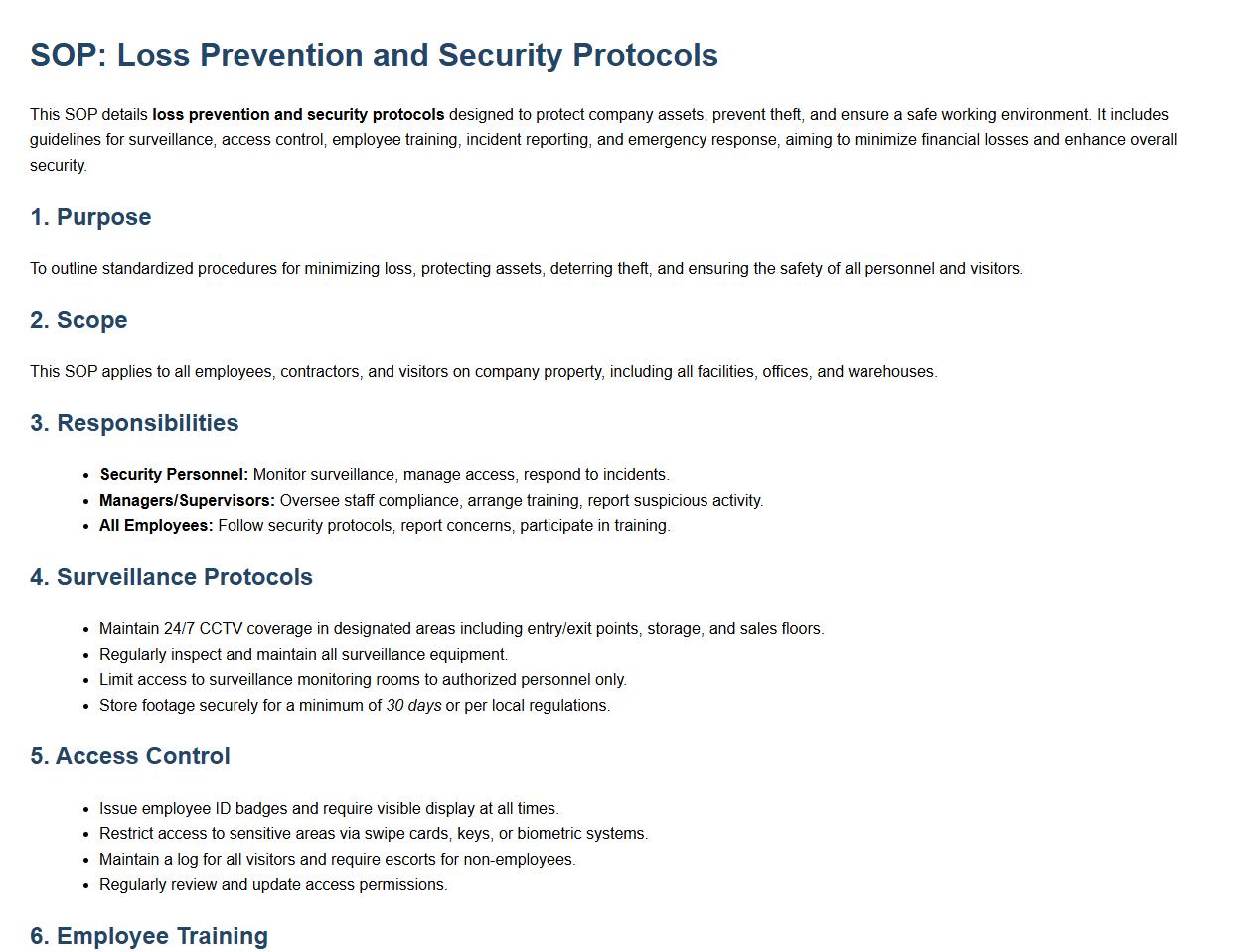
This SOP details loss prevention and security protocols designed to protect company assets, prevent theft, and ensure a safe working environment. It includes guidelines for surveillance, access control, employee training, incident reporting, and emergency response, aiming to minimize financial losses and enhance overall security.
Health, safety, and emergency procedures.
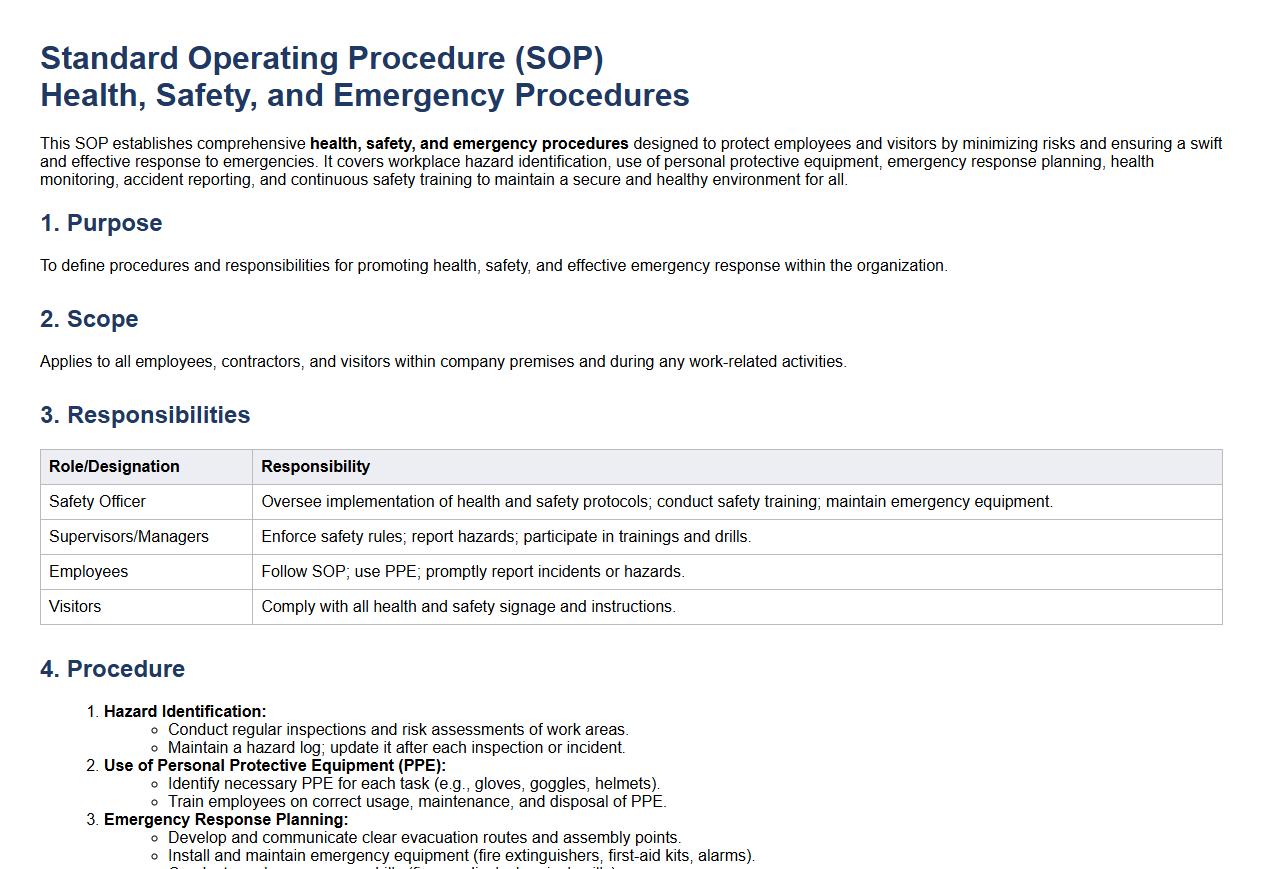
This SOP establishes comprehensive health, safety, and emergency procedures designed to protect employees and visitors by minimizing risks and ensuring a swift and effective response to emergencies. It covers workplace hazard identification, use of personal protective equipment, emergency response planning, health monitoring, accident reporting, and continuous safety training to maintain a secure and healthy environment for all.
What is the primary objective of the Standard Operating Procedure (SOP) for Retail Store Operations?
The primary objective of the SOP for Retail Store Operations is to establish consistent and efficient workflows across all store activities. It ensures all staff follow standardized guidelines to maintain operational excellence. Ultimately, the SOP enhances customer satisfaction and optimizes store performance.
Which key personnel are responsible for implementing SOP compliance in daily retail activities?
Store managers and assistant managers hold primary responsibility for ensuring SOP compliance during daily operations. They oversee front-line employees, monitor adherence, and provide ongoing training. Their leadership is crucial to maintaining high standards and operational consistency.
What are the mandatory procedures for cash handling and transaction documentation as outlined in the SOP?
The SOP mandates secure and accurate cash handling procedures to prevent discrepancies and fraud. Every transaction must be documented thoroughly using the prescribed logging system. Additionally, daily cash reconciliations are required to ensure accountability and transparency.
How does the SOP address inventory management and stock replenishment protocols?
Inventory management in the SOP involves regular stock audits and precise record-keeping to minimize shrinkage. The SOP outlines specific stock replenishment triggers and ordering procedures to avoid stockouts. Timely restocking ensures continuous product availability and smooth sales operations.
What are the defined steps in the SOP for handling customer complaints and returns?
The SOP prescribes a clear process for customer complaints, starting with attentive listening and prompt acknowledgment. Returns are processed only after verification against store policies, ensuring fairness and consistency. Follow-up actions are documented to improve service quality and customer trust.