
A SOP Template for Retail Fitting Room Management provides a clear framework to ensure consistent customer service and efficient operations in the fitting room area. It outlines step-by-step procedures for staff to manage customer flow, maintain cleanliness, and enforce store policies. This standardized approach enhances customer satisfaction and optimizes staff productivity.
Customer greeting and check-in procedure.
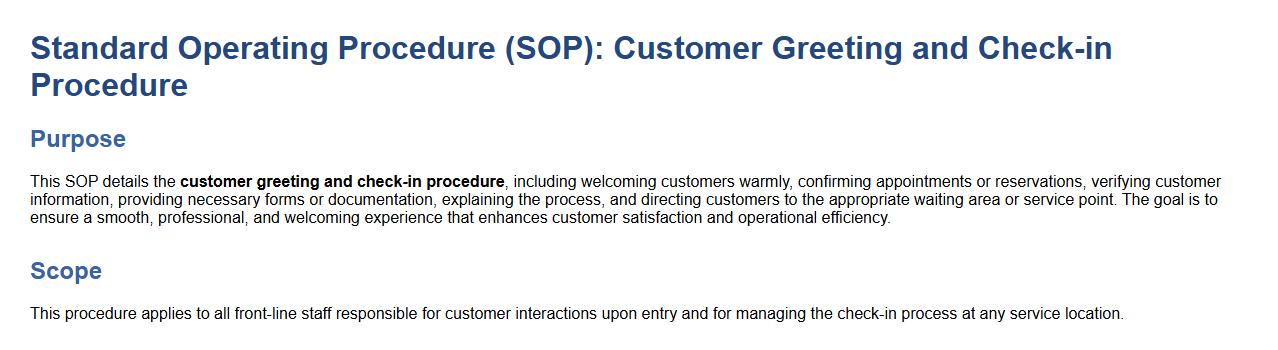
This SOP details the customer greeting and check-in procedure, including welcoming customers warmly, confirming appointments or reservations, verifying customer information, providing necessary forms or documentation, explaining the process, and directing customers to the appropriate waiting area or service point. The goal is to ensure a smooth, professional, and welcoming experience that enhances customer satisfaction and operational efficiency.
Item limit enforcement and tracking process.
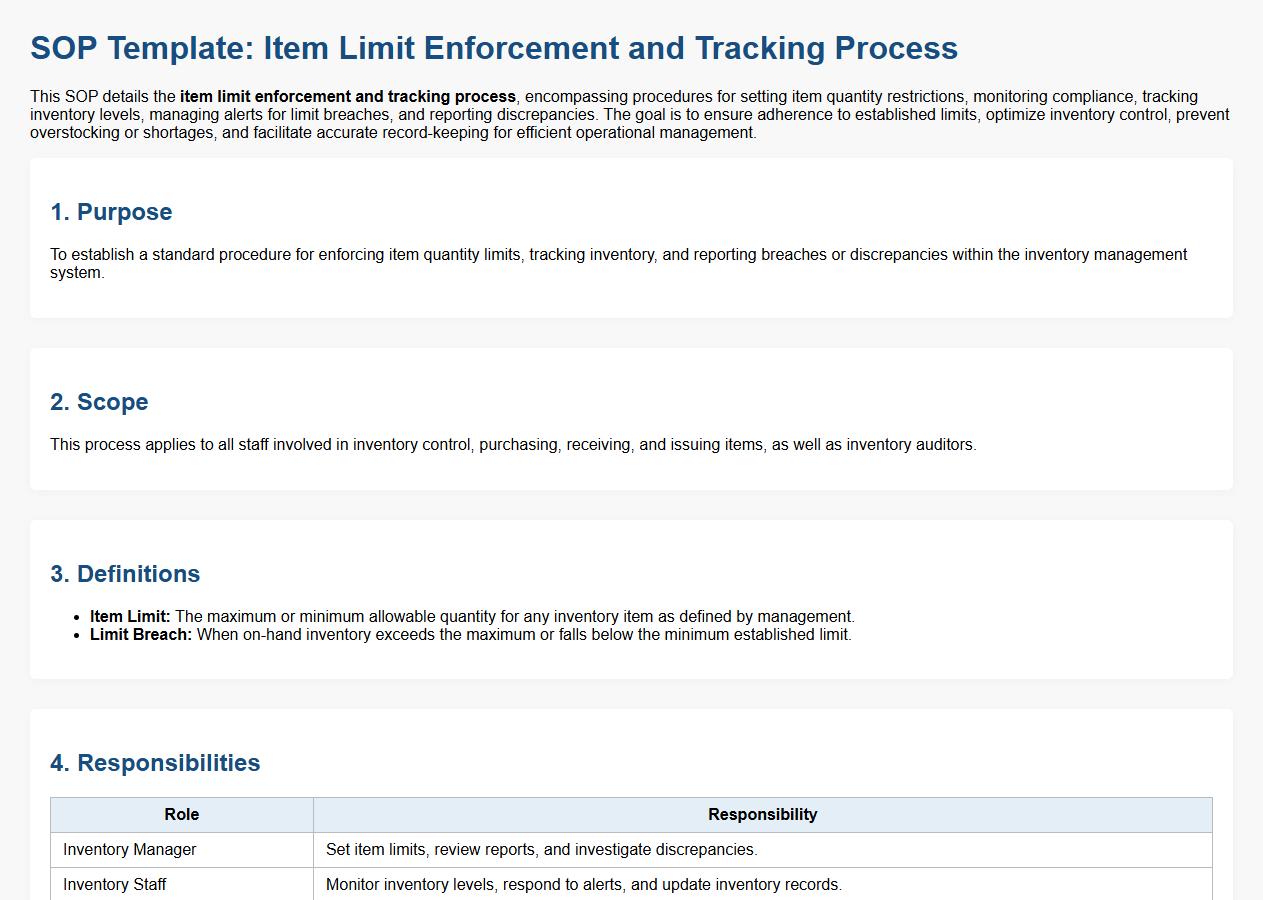
This SOP details the item limit enforcement and tracking process, encompassing procedures for setting item quantity restrictions, monitoring compliance, tracking inventory levels, managing alerts for limit breaches, and reporting discrepancies. The goal is to ensure adherence to established limits, optimize inventory control, prevent overstocking or shortages, and facilitate accurate record-keeping for efficient operational management.
Guidelines for item tagging and sensor deactivation.
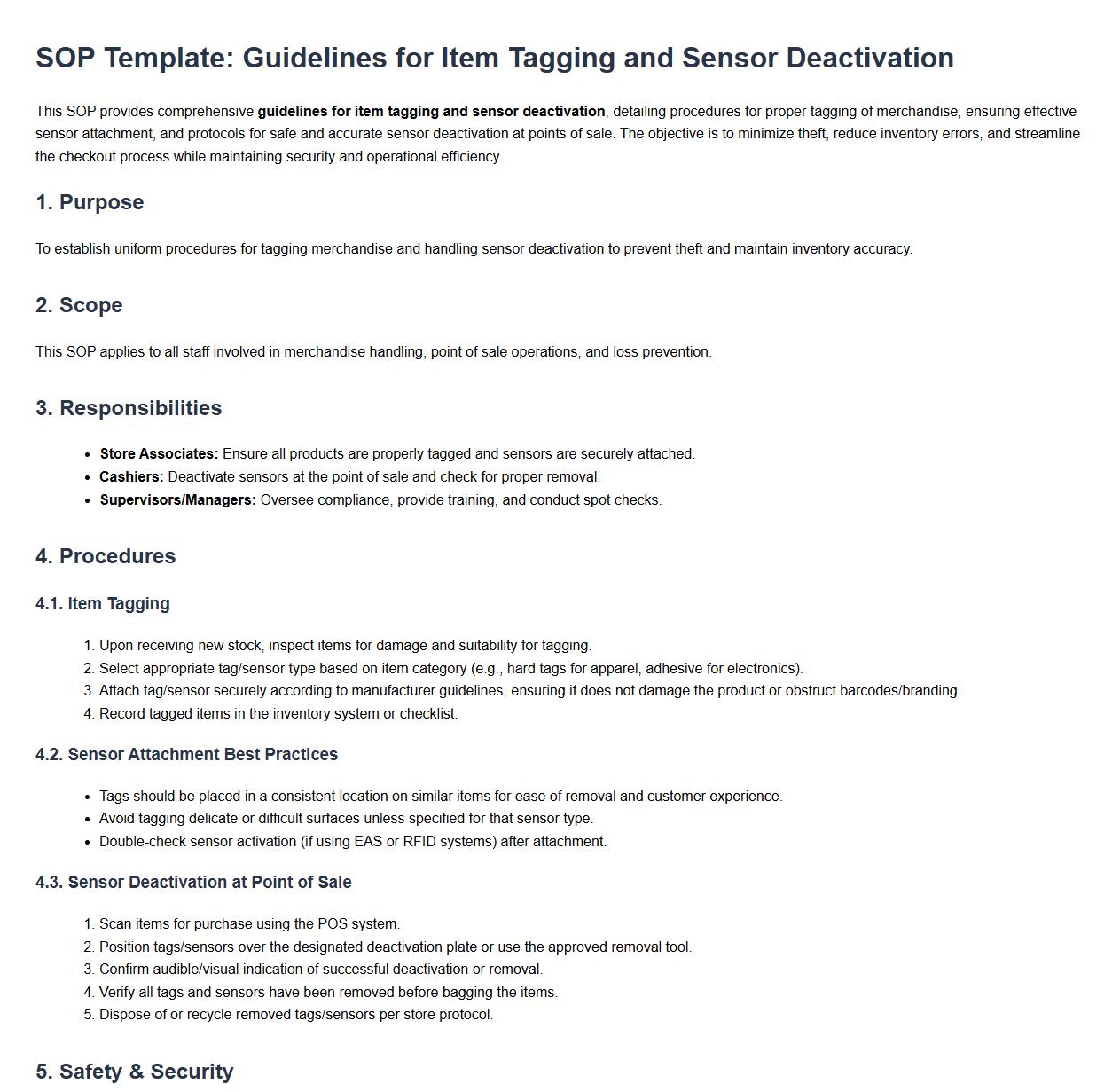
This SOP provides comprehensive guidelines for item tagging and sensor deactivation, detailing procedures for proper tagging of merchandise, ensuring effective sensor attachment, and protocols for safe and accurate sensor deactivation at points of sale. The objective is to minimize theft, reduce inventory errors, and streamline the checkout process while maintaining security and operational efficiency.
Cleanliness and sanitation checklist before and after use.
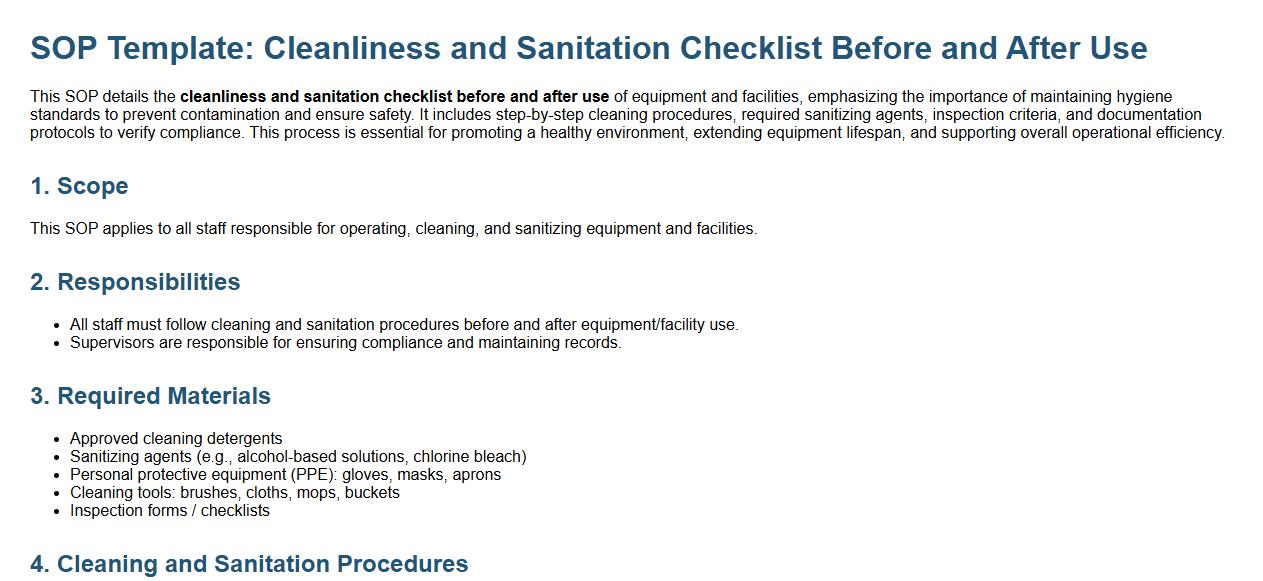
This SOP details the cleanliness and sanitation checklist before and after use of equipment and facilities, emphasizing the importance of maintaining hygiene standards to prevent contamination and ensure safety. It includes step-by-step cleaning procedures, required sanitizing agents, inspection criteria, and documentation protocols to verify compliance. This process is essential for promoting a healthy environment, extending equipment lifespan, and supporting overall operational efficiency.
Procedure for handling garments left behind or damaged.
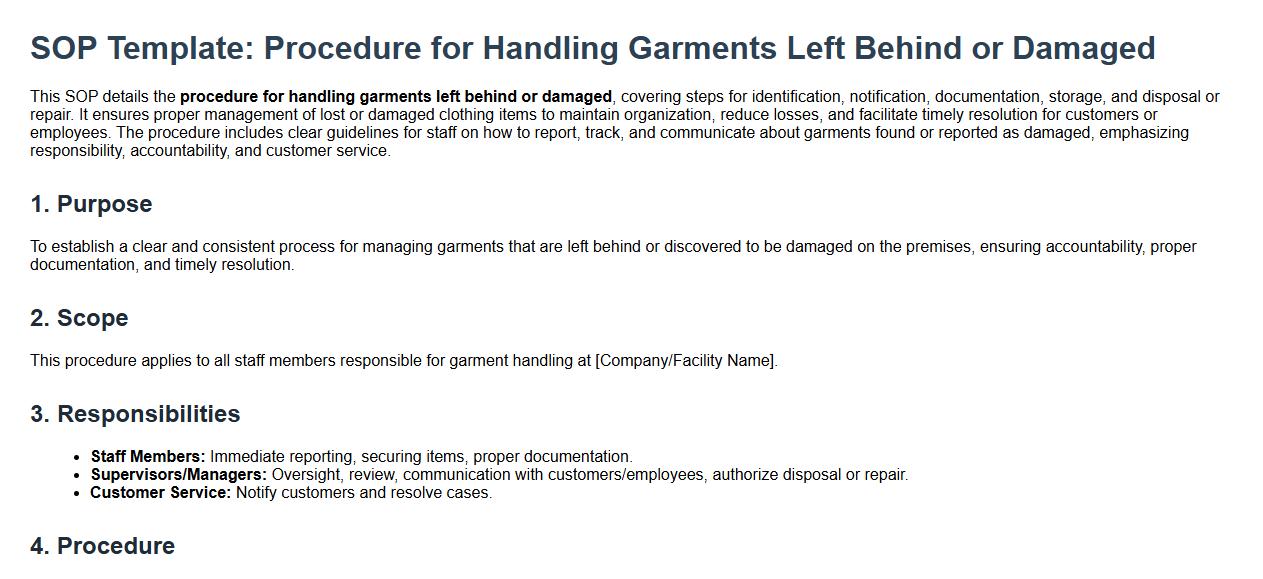
This SOP details the procedure for handling garments left behind or damaged, covering steps for identification, notification, documentation, storage, and disposal or repair. It ensures proper management of lost or damaged clothing items to maintain organization, reduce losses, and facilitate timely resolution for customers or employees. The procedure includes clear guidelines for staff on how to report, track, and communicate about garments found or reported as damaged, emphasizing responsibility, accountability, and customer service.
Lost and found protocol for customer belongings.
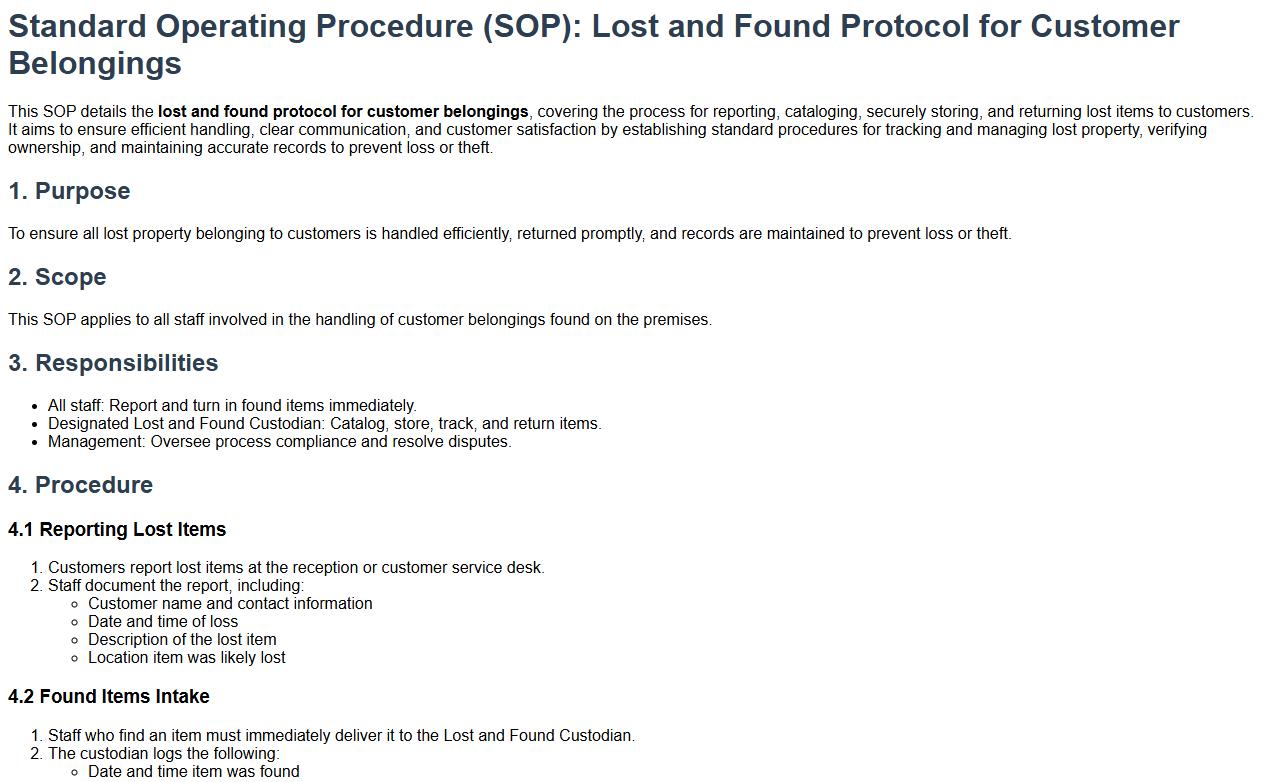
This SOP details the lost and found protocol for customer belongings, covering the process for reporting, cataloging, securely storing, and returning lost items to customers. It aims to ensure efficient handling, clear communication, and customer satisfaction by establishing standard procedures for tracking and managing lost property, verifying ownership, and maintaining accurate records to prevent loss or theft.
Assisting customers with size exchanges and requests.
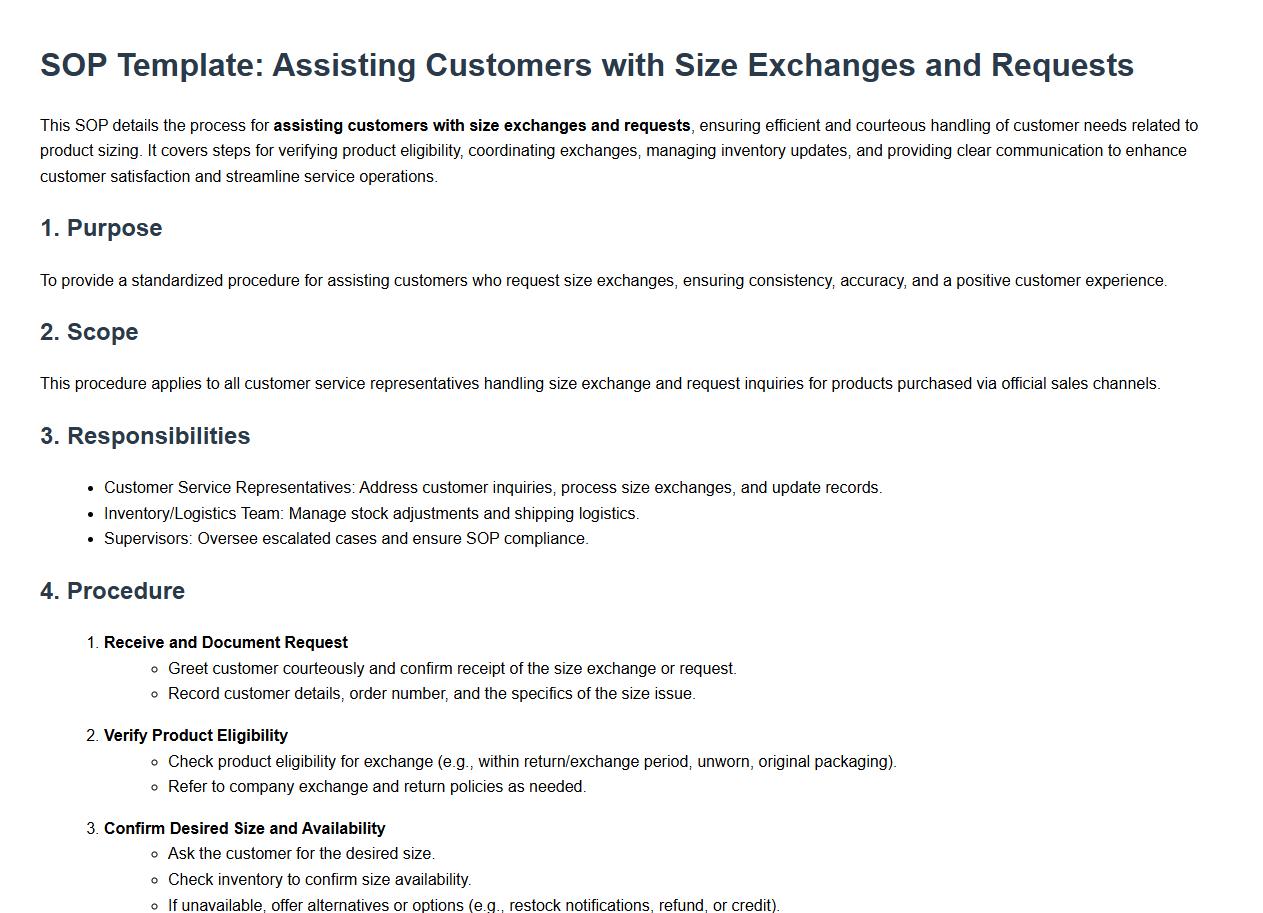
This SOP details the process for assisting customers with size exchanges and requests, ensuring efficient and courteous handling of customer needs related to product sizing. It covers steps for verifying product eligibility, coordinating exchanges, managing inventory updates, and providing clear communication to enhance customer satisfaction and streamline service operations.
Monitoring fitting room occupancy and safety checks.
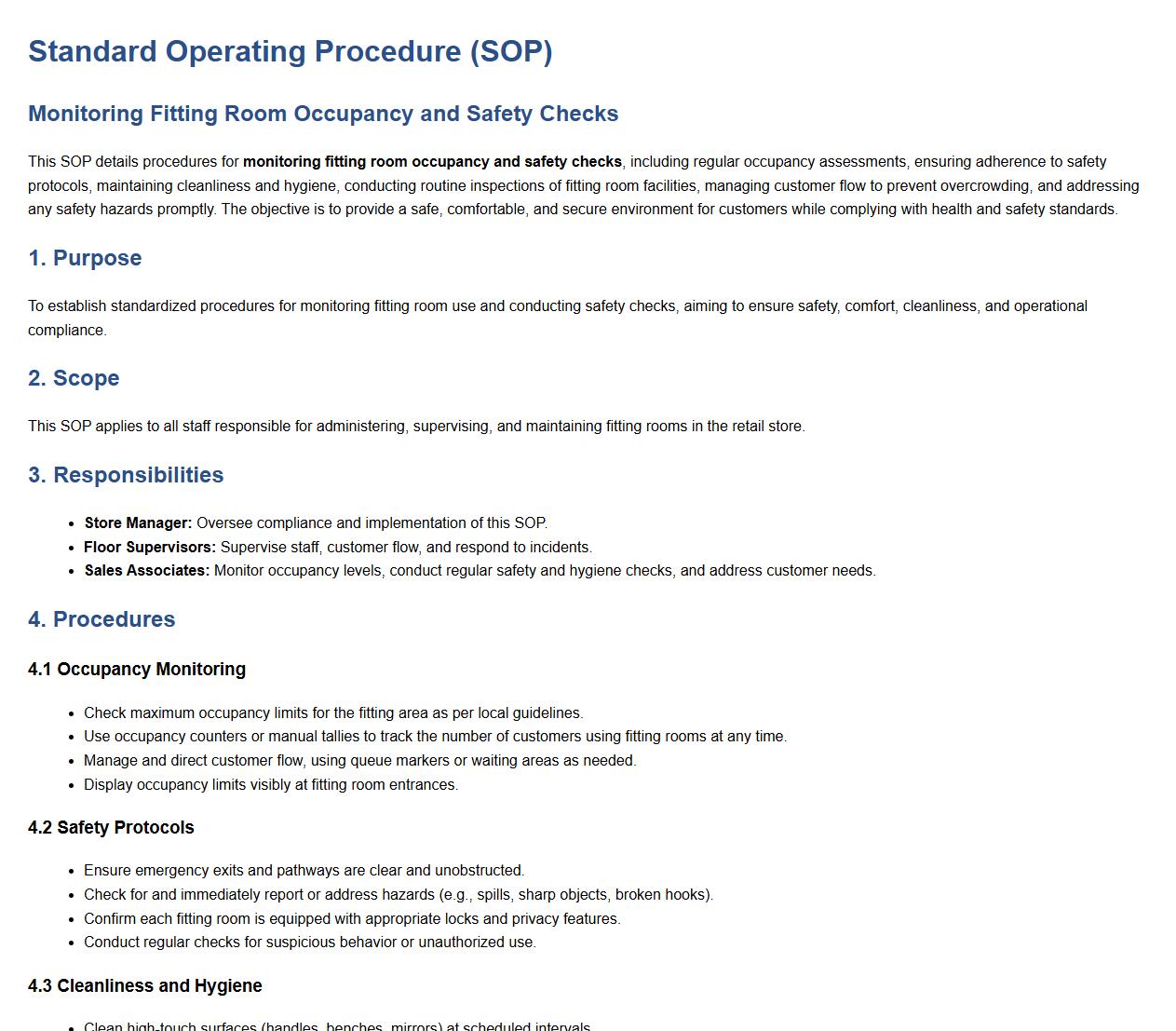
This SOP details procedures for monitoring fitting room occupancy and safety checks, including regular occupancy assessments, ensuring adherence to safety protocols, maintaining cleanliness and hygiene, conducting routine inspections of fitting room facilities, managing customer flow to prevent overcrowding, and addressing any safety hazards promptly. The objective is to provide a safe, comfortable, and secure environment for customers while complying with health and safety standards.
Shoplifting prevention and suspicious behavior reporting.
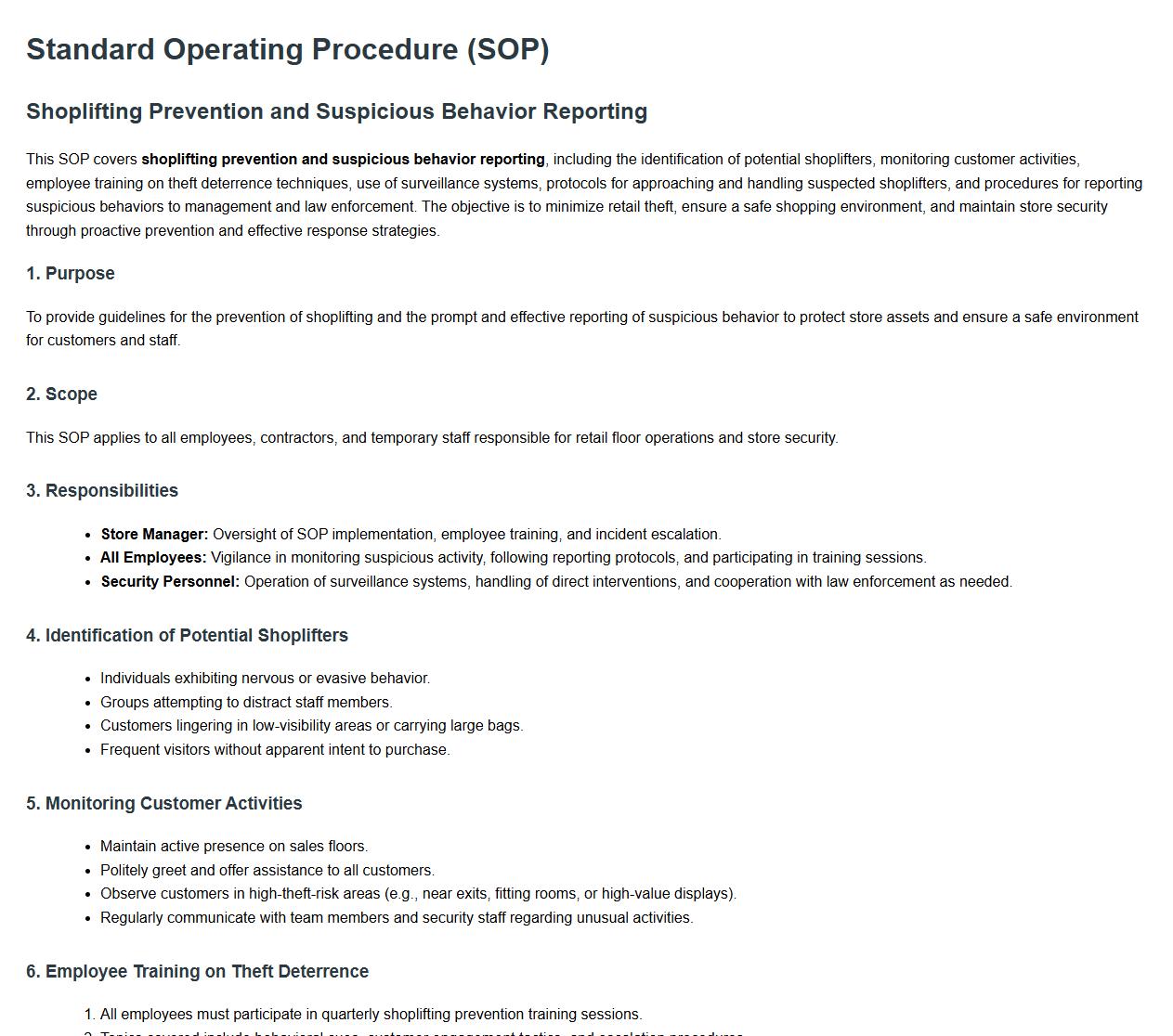
This SOP covers shoplifting prevention and suspicious behavior reporting, including the identification of potential shoplifters, monitoring customer activities, employee training on theft deterrence techniques, use of surveillance systems, protocols for approaching and handling suspected shoplifters, and procedures for reporting suspicious behaviors to management and law enforcement. The objective is to minimize retail theft, ensure a safe shopping environment, and maintain store security through proactive prevention and effective response strategies.
End-of-day fitting room closing and inventory reconciliation.
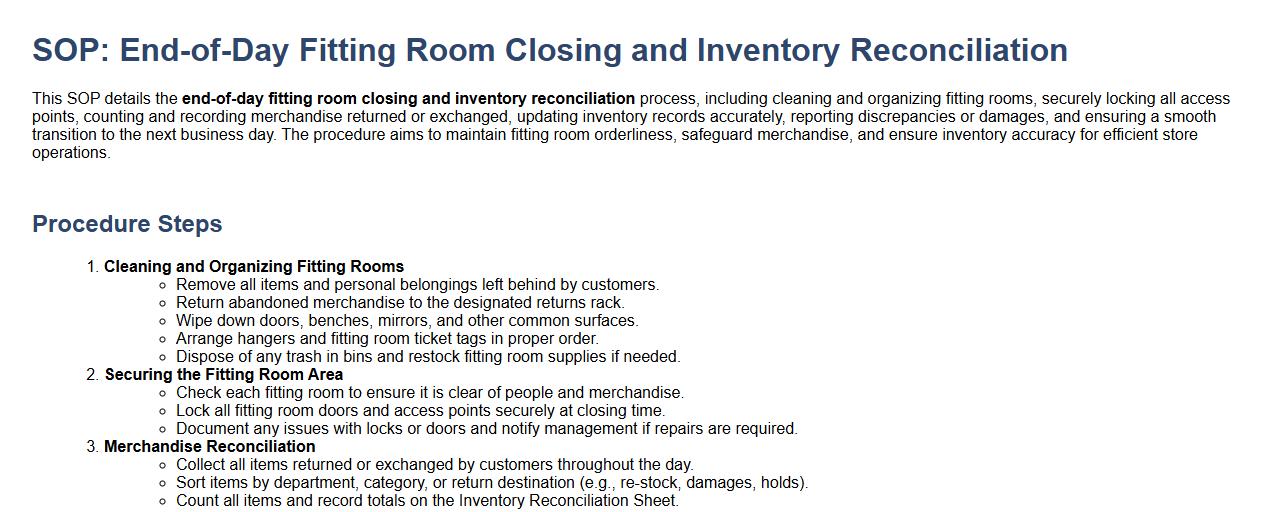
This SOP details the end-of-day fitting room closing and inventory reconciliation process, including cleaning and organizing fitting rooms, securely locking all access points, counting and recording merchandise returned or exchanged, updating inventory records accurately, reporting discrepancies or damages, and ensuring a smooth transition to the next business day. The procedure aims to maintain fitting room orderliness, safeguard merchandise, and ensure inventory accuracy for efficient store operations.
Key Steps for Preparing Fitting Rooms Before Store Opening
The SOP emphasizes thorough inspection of each fitting room to ensure cleanliness and functionality before store opening. Staff must restock accessories, such as hangers and sanitizers, to maintain customer convenience. Additionally, any damaged items or fixtures should be reported and addressed promptly to prepare fitting rooms for optimal use.
Staff Responsibilities for Monitoring Fitting Room Usage
The SOP assigns specific staff to monitor fitting room occupancy and assist customers efficiently. Employees are required to maintain a log of customers entering and exiting to prevent overcrowding and improve service. Constant vigilance is mandated to enhance both customer experience and store security.
Procedures for Handling Lost and Found Items in Fitting Rooms
The SOP requires staff to collect and document lost items found within fitting rooms immediately. All discovered belongings should be stored securely and logged with detailed descriptions. Customers must be informed promptly, and a standard protocol must be followed to facilitate item recovery.
Ensuring Customer Privacy and Security Within the Fitting Room Area
The SOP insists on implementing strict privacy measures such as functional locks and discreet surveillance outside fitting rooms. Staff must respect customer boundaries and refrain from unnecessary intrusion while maintaining safety protocols. Clear signage and policies are established to balance security with personal privacy effectively.
Cleaning and Maintenance Protocols for Fitting Room Upkeep
The SOP mandates daily cleaning routines that include sanitizing surfaces, mirrors, and door handles. Regular maintenance checks are scheduled to ensure lighting, hooks, and mirrors are in good condition. These protocols help maintain a clean, safe, and welcoming environment for all customers.