
A SOP Template for Filing System Setup provides a clear and structured guide to organize and maintain documents efficiently. It outlines step-by-step instructions for categorizing, labeling, and storing files to ensure easy retrieval and consistent management. Implementing this template enhances workflow productivity and minimizes the risk of misplaced or lost records.
Document categorization and labeling criteria.
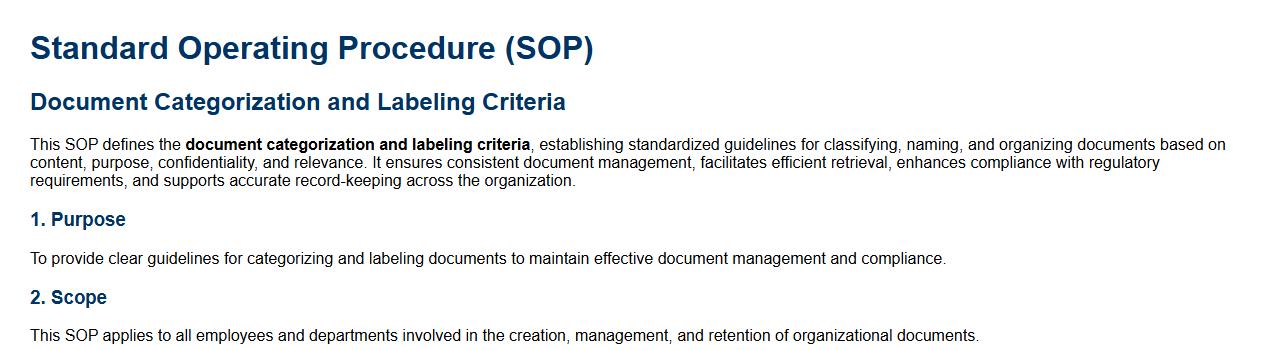
This SOP defines the document categorization and labeling criteria, establishing standardized guidelines for classifying, naming, and organizing documents based on content, purpose, confidentiality, and relevance. It ensures consistent document management, facilitates efficient retrieval, enhances compliance with regulatory requirements, and supports accurate record-keeping across the organization.
File naming conventions and version control.
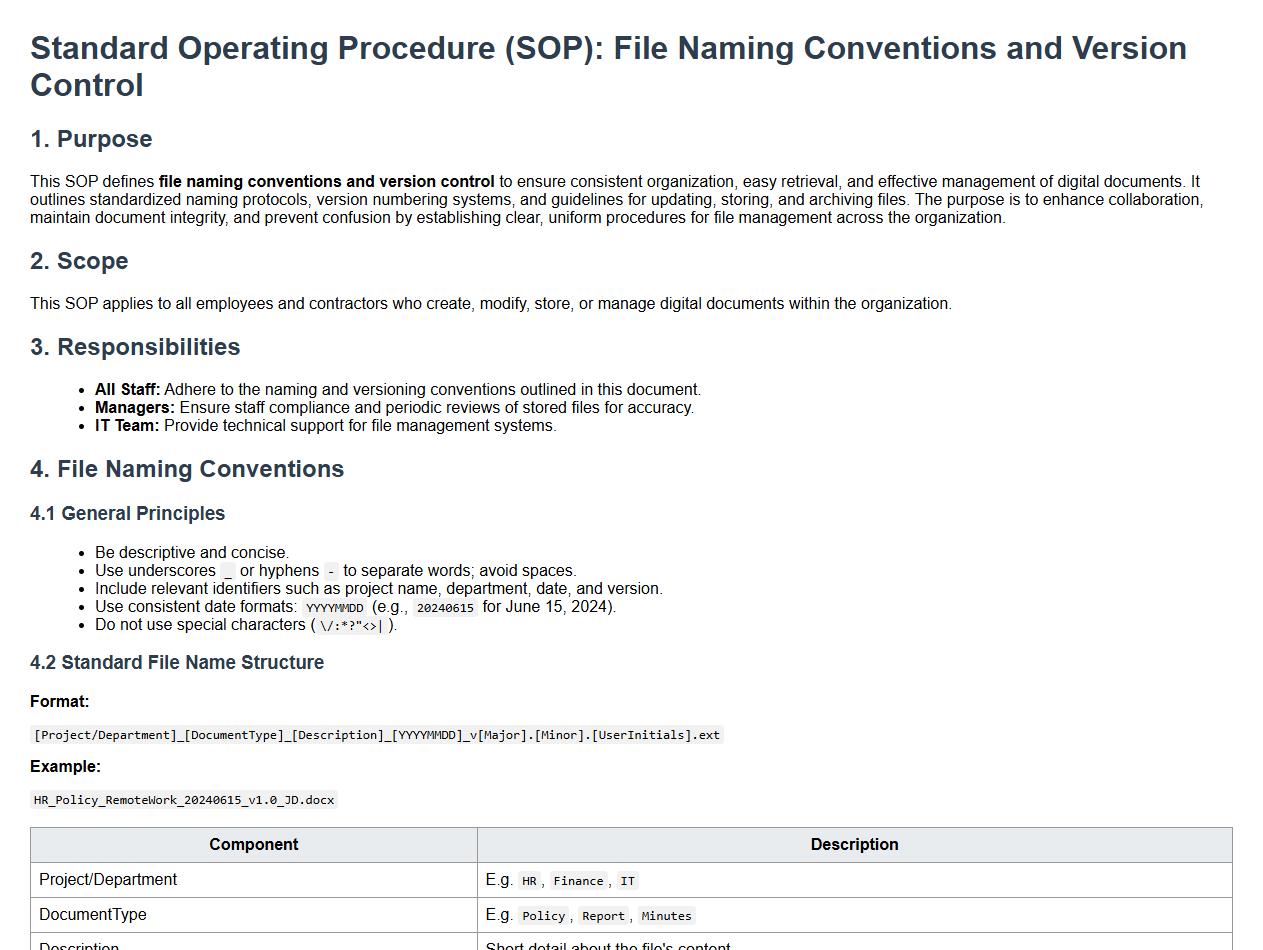
This SOP defines file naming conventions and version control to ensure consistent organization, easy retrieval, and effective management of digital documents. It outlines standardized naming protocols, version numbering systems, and guidelines for updating, storing, and archiving files. The purpose is to enhance collaboration, maintain document integrity, and prevent confusion by establishing clear, uniform procedures for file management across the organization.
Physical and digital file storage location guidelines.
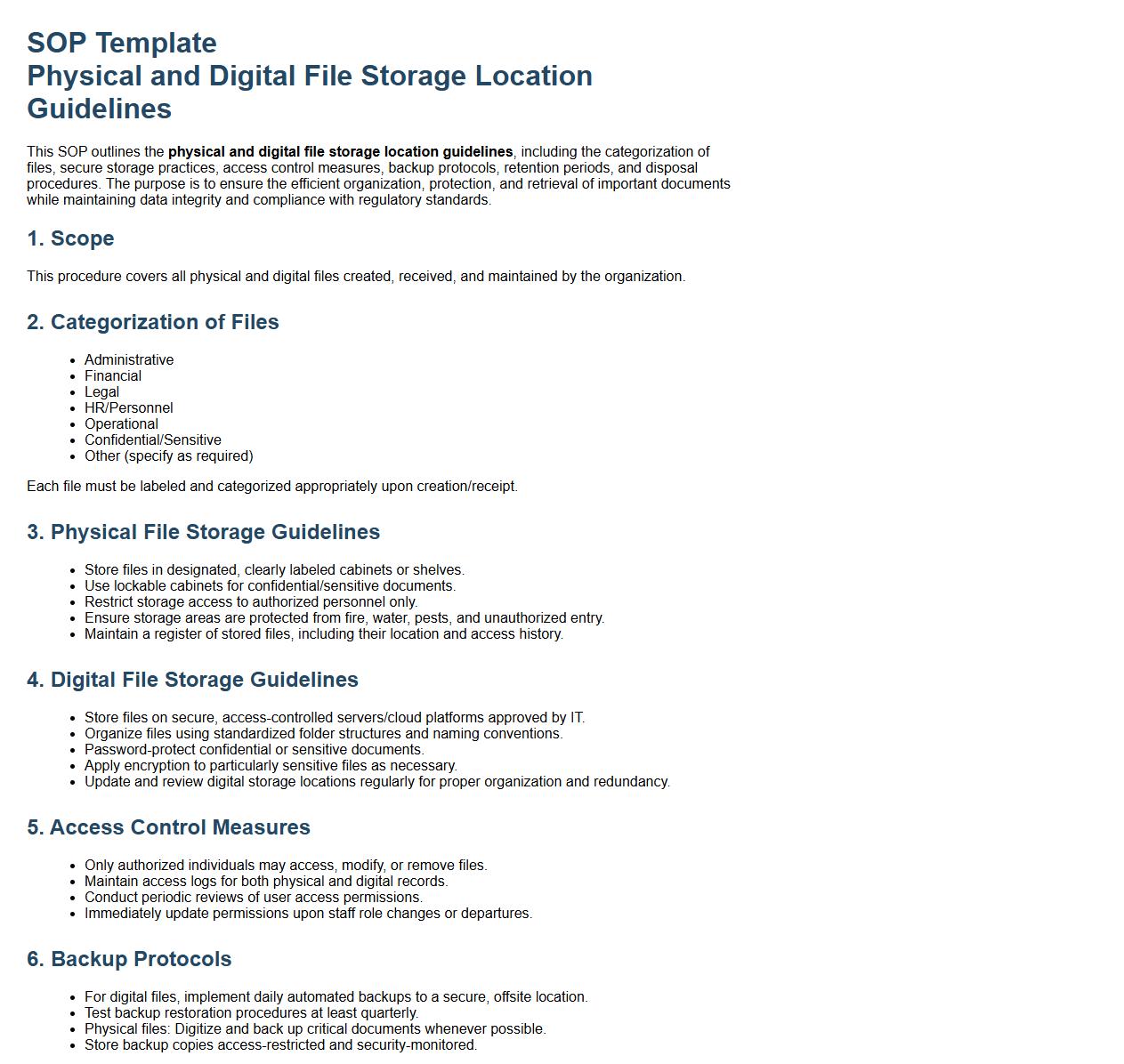
This SOP outlines the physical and digital file storage location guidelines, including the categorization of files, secure storage practices, access control measures, backup protocols, retention periods, and disposal procedures. The purpose is to ensure the efficient organization, protection, and retrieval of important documents while maintaining data integrity and compliance with regulatory standards.
Access control and user permissions specification.
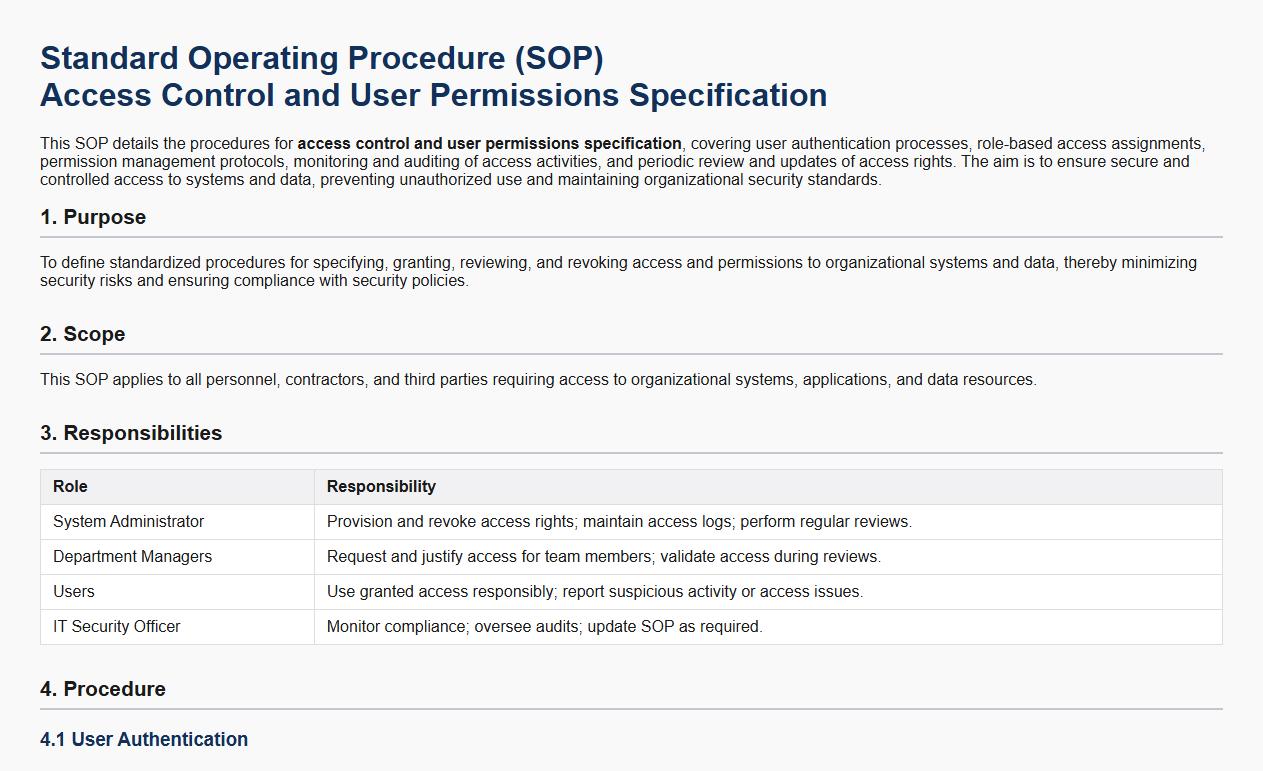
This SOP details the procedures for access control and user permissions specification, covering user authentication processes, role-based access assignments, permission management protocols, monitoring and auditing of access activities, and periodic review and updates of access rights. The aim is to ensure secure and controlled access to systems and data, preventing unauthorized use and maintaining organizational security standards.
Document check-in/check-out protocols.
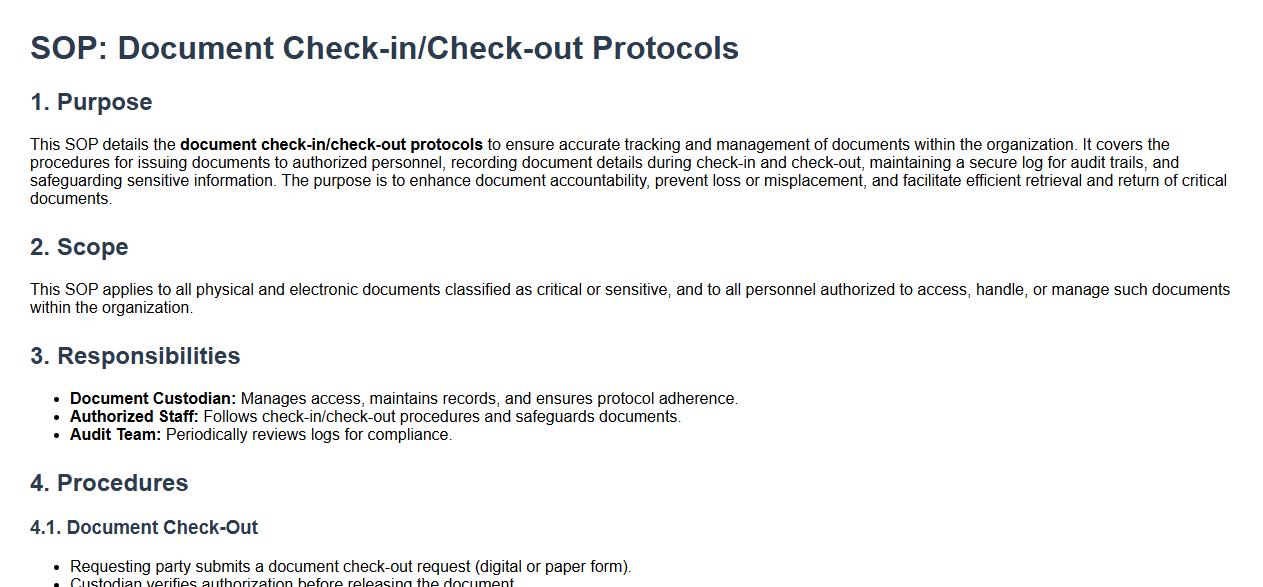
This SOP details the document check-in/check-out protocols to ensure accurate tracking and management of documents within the organization. It covers the procedures for issuing documents to authorized personnel, recording document details during check-in and check-out, maintaining a secure log for audit trails, and safeguarding sensitive information. The purpose is to enhance document accountability, prevent loss or misplacement, and facilitate efficient retrieval and return of critical documents.
Retention schedule and archiving procedures.
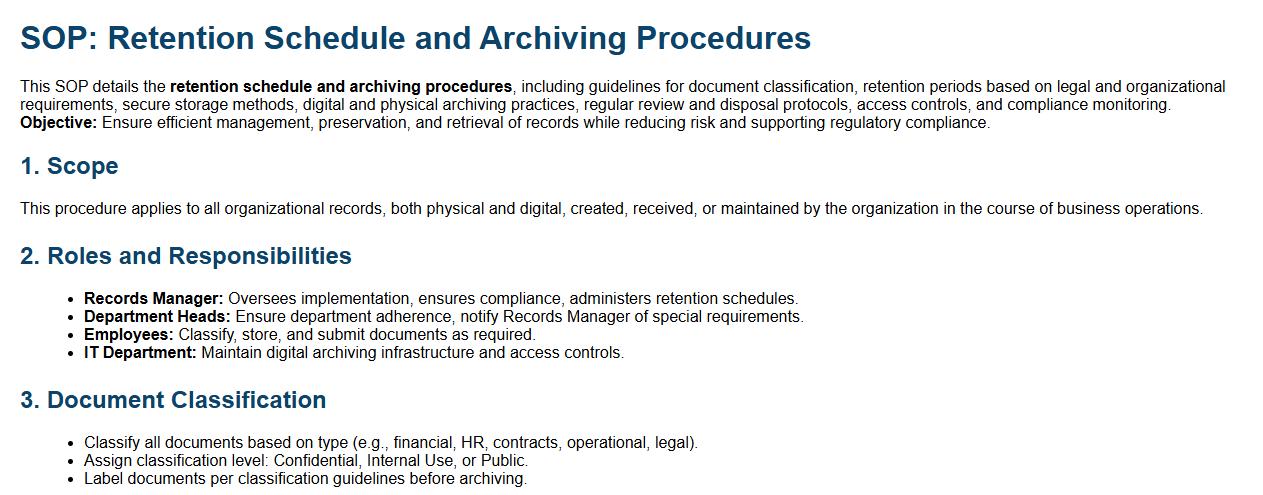
This SOP details the retention schedule and archiving procedures, including guidelines for document classification, retention periods based on legal and organizational requirements, secure storage methods, digital and physical archiving practices, regular review and disposal protocols, access controls, and compliance monitoring. The objective is to ensure efficient management, preservation, and retrieval of records while reducing risk and supporting regulatory compliance.
Periodic file audit and quality control process.
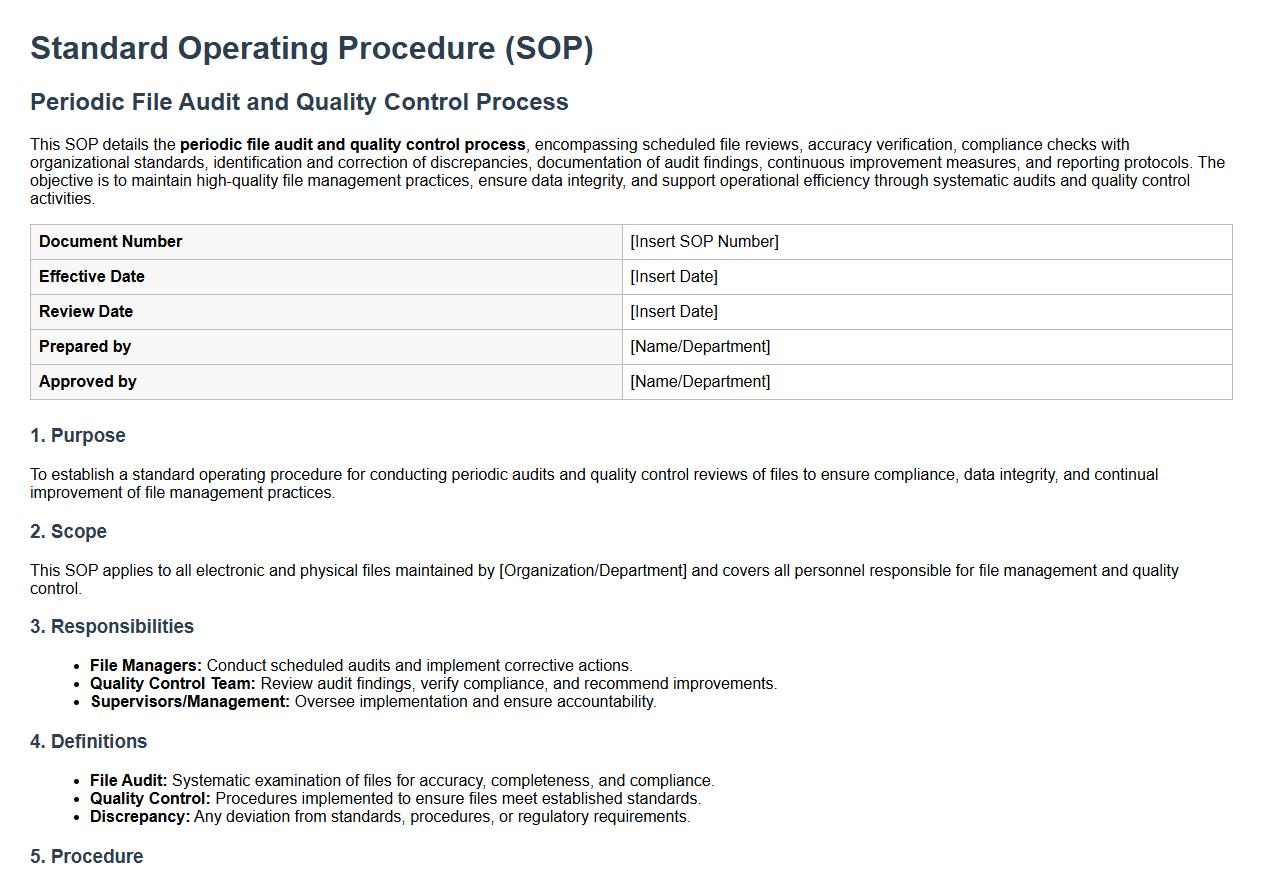
This SOP details the periodic file audit and quality control process, encompassing scheduled file reviews, accuracy verification, compliance checks with organizational standards, identification and correction of discrepancies, documentation of audit findings, continuous improvement measures, and reporting protocols. The objective is to maintain high-quality file management practices, ensure data integrity, and support operational efficiency through systematic audits and quality control activities.
Backup and disaster recovery instructions.
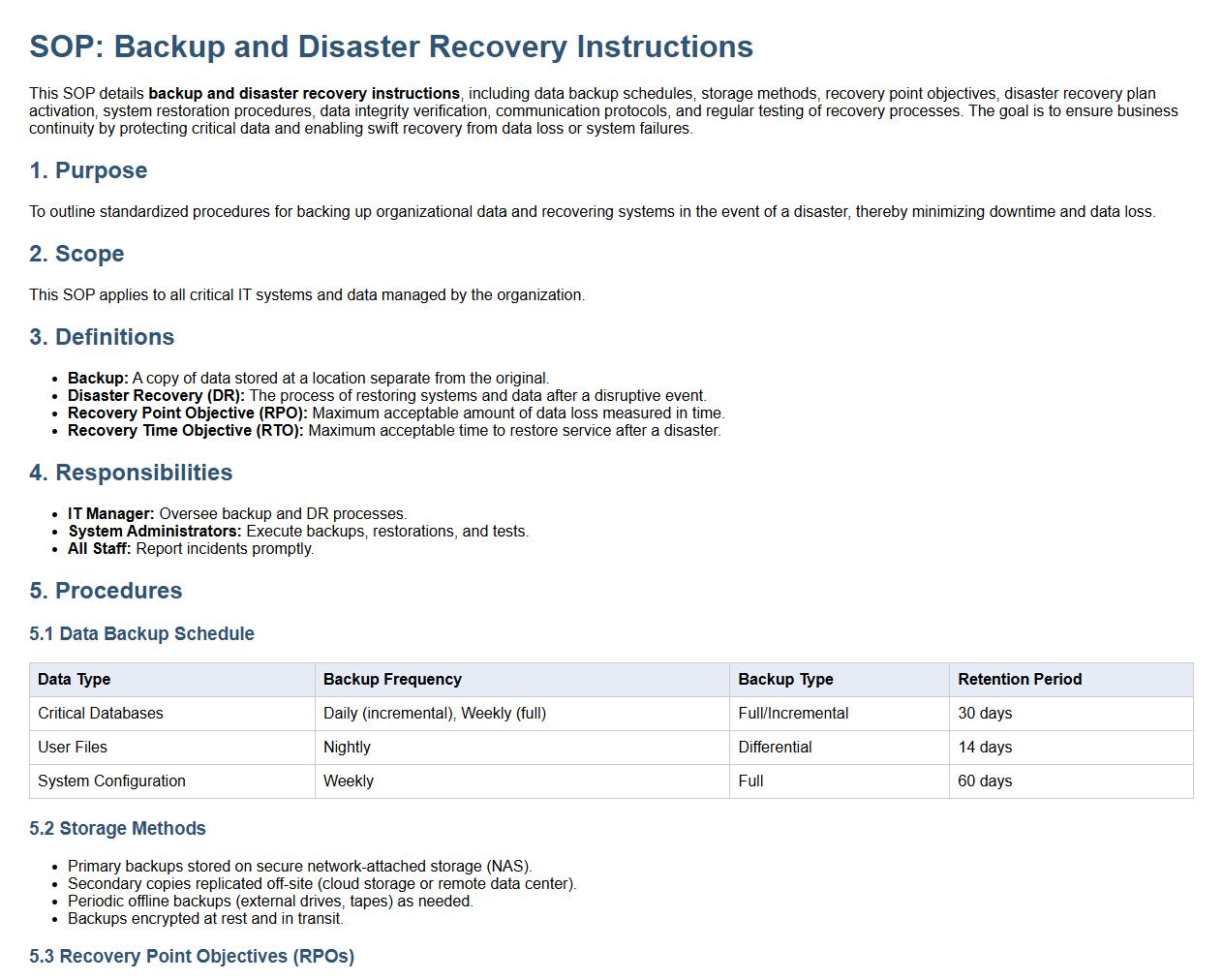
This SOP details backup and disaster recovery instructions, including data backup schedules, storage methods, recovery point objectives, disaster recovery plan activation, system restoration procedures, data integrity verification, communication protocols, and regular testing of recovery processes. The goal is to ensure business continuity by protecting critical data and enabling swift recovery from data loss or system failures.
Secure document disposal and shredding process.
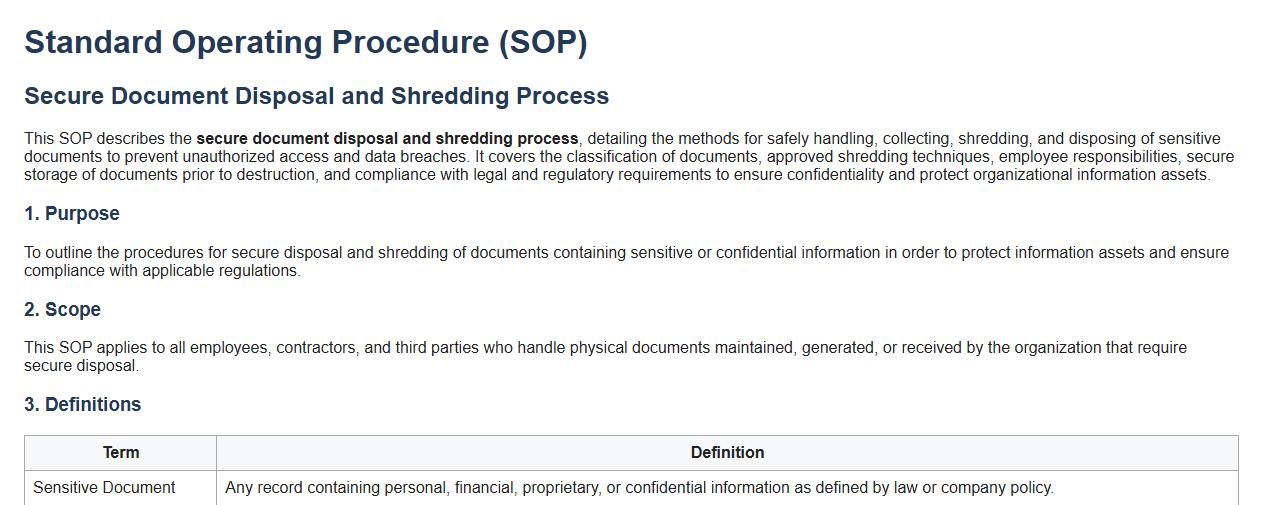
This SOP describes the secure document disposal and shredding process, detailing the methods for safely handling, collecting, shredding, and disposing of sensitive documents to prevent unauthorized access and data breaches. It covers the classification of documents, approved shredding techniques, employee responsibilities, secure storage of documents prior to destruction, and compliance with legal and regulatory requirements to ensure confidentiality and protect organizational information assets.
File retrieval and tracking procedures.
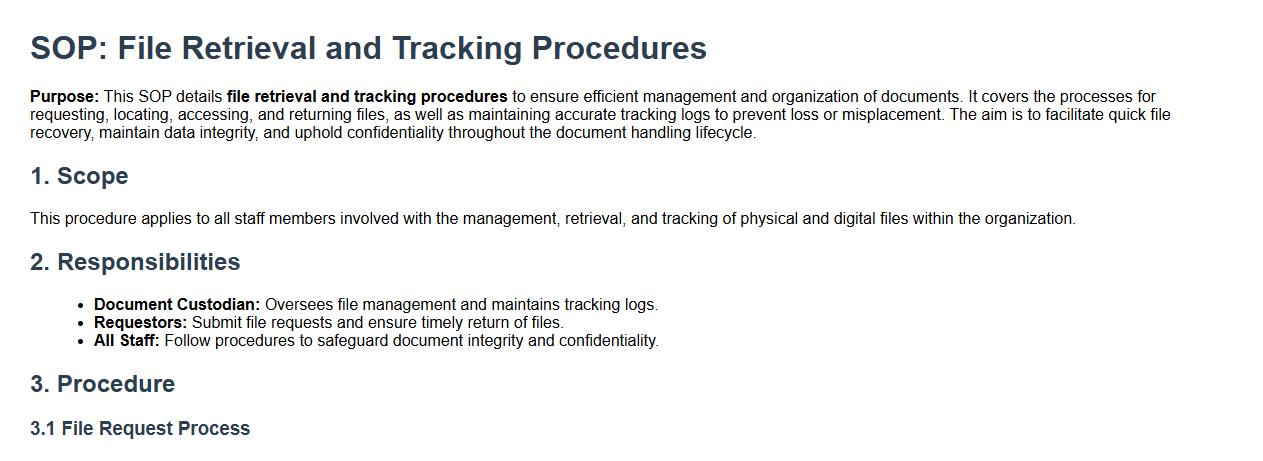
This SOP details file retrieval and tracking procedures to ensure efficient management and organization of documents. It covers the processes for requesting, locating, accessing, and returning files, as well as maintaining accurate tracking logs to prevent loss or misplacement. The aim is to facilitate quick file recovery, maintain data integrity, and uphold confidentiality throughout the document handling lifecycle.
Key Criteria for Folder Structure Hierarchy in the Filing System
The SOP emphasizes a logical and intuitive folder structure hierarchy to enhance accessibility and efficiency. It mandates organizing folders based on major categories like department, project, or document type. This structure ensures consistency and easy retrieval of files across the organization.
Naming Conventions for Files and Folders as Defined by the SOP
The SOP prescribes clear and standardized naming conventions to maintain uniformity and avoid confusion. File and folder names must include specific identifiers such as dates, project codes, and descriptive titles. This approach enables quick identification and reduces errors in document handling.
Protocols for Access Control and User Permissions in the Filing System
The SOP outlines strict protocols to manage access control and user permissions, safeguarding sensitive information. Access rights are assigned based on user roles and the principle of least privilege is enforced. Regular audits and permission reviews ensure ongoing compliance and security.
Procedures for Version Control and Document Updates as Prescribed by the SOP
The SOP establishes a systematic approach to version control, ensuring all document updates are tracked and documented. Each version should be clearly labeled with revision numbers and update dates to prevent confusion. This procedure promotes transparency and accountability in document management.
Archival and Retention Schedule for Documents in the Filing System
The SOP specifies a detailed archival and retention schedule to manage document lifecycle effectively. Documents must be retained for defined periods based on legal, regulatory, or business requirements before secure disposal. Proper archival ensures historical records are preserved while optimizing storage space.