

A SOP template for teacher performance evaluation provides a clear and structured process to assess educators' effectiveness and professional growth. It outlines criteria, evaluation methods, and documentation guidelines to ensure consistency and fairness. This template supports schools in enhancing teaching quality and student outcomes through systematic review.
Development of evaluation criteria and performance indicators.
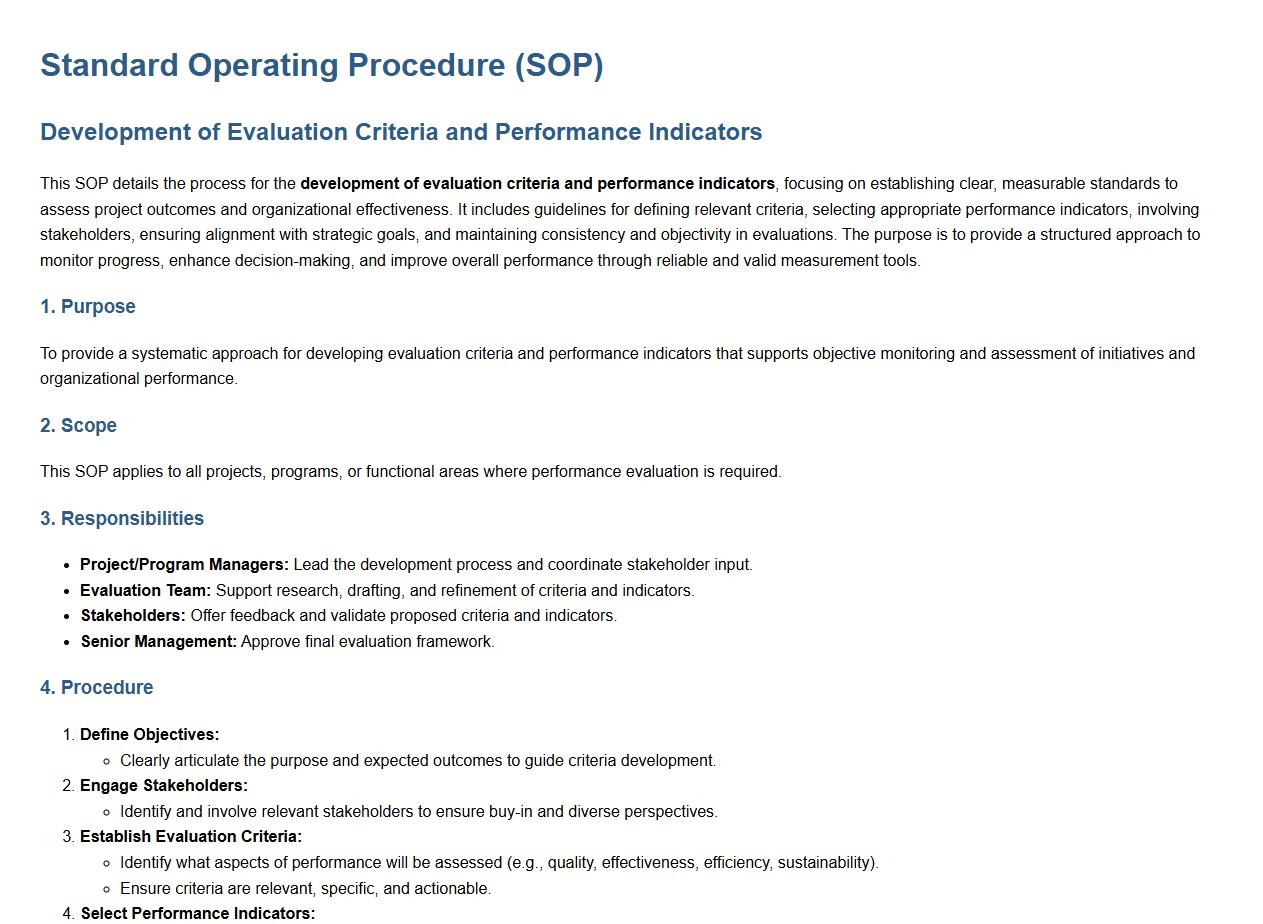
This SOP details the process for the development of evaluation criteria and performance indicators, focusing on establishing clear, measurable standards to assess project outcomes and organizational effectiveness. It includes guidelines for defining relevant criteria, selecting appropriate performance indicators, involving stakeholders, ensuring alignment with strategic goals, and maintaining consistency and objectivity in evaluations. The purpose is to provide a structured approach to monitor progress, enhance decision-making, and improve overall performance through reliable and valid measurement tools.
Scheduling and notification procedures for evaluation periods.
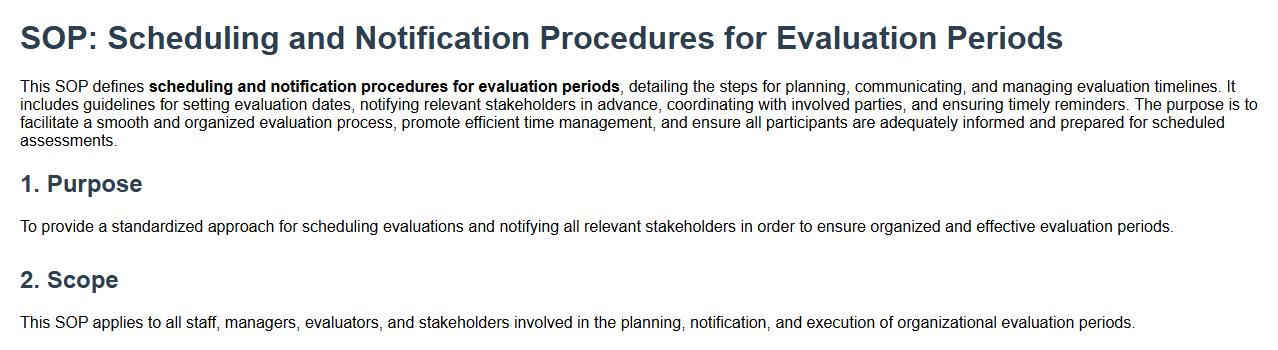
This SOP defines scheduling and notification procedures for evaluation periods, detailing the steps for planning, communicating, and managing evaluation timelines. It includes guidelines for setting evaluation dates, notifying relevant stakeholders in advance, coordinating with involved parties, and ensuring timely reminders. The purpose is to facilitate a smooth and organized evaluation process, promote efficient time management, and ensure all participants are adequately informed and prepared for scheduled assessments.
Classroom observation protocols and guidelines.
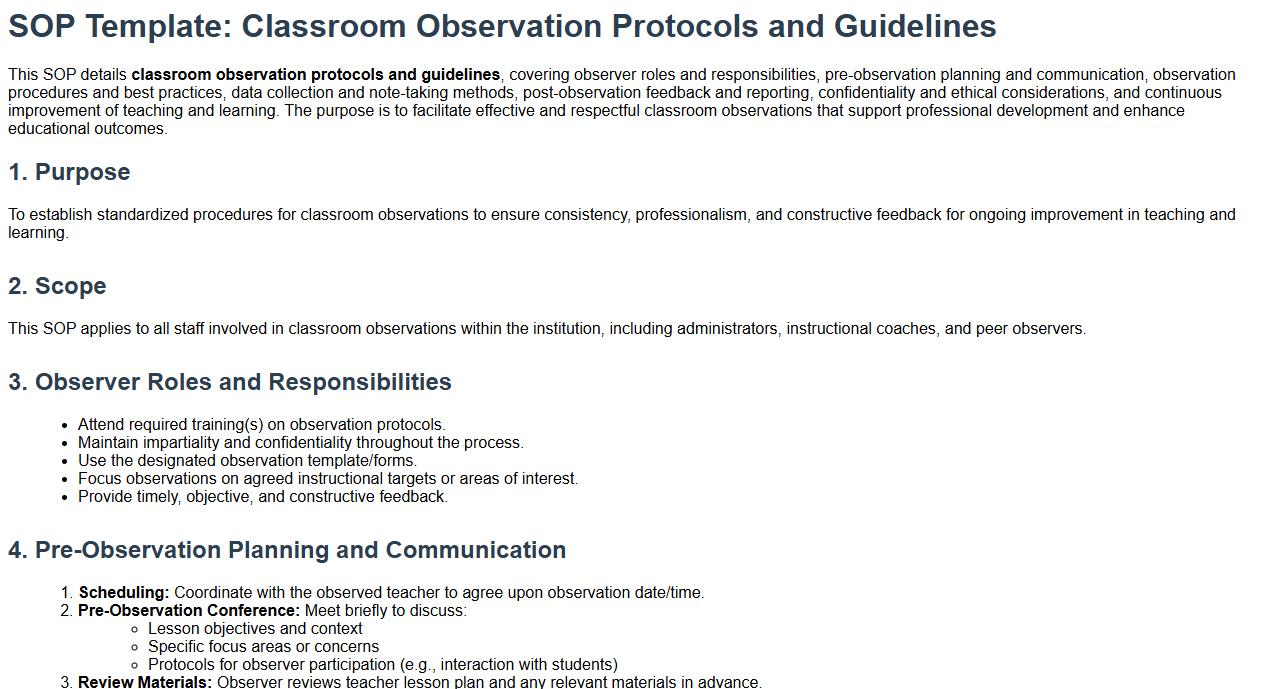
This SOP details classroom observation protocols and guidelines, covering observer roles and responsibilities, pre-observation planning and communication, observation procedures and best practices, data collection and note-taking methods, post-observation feedback and reporting, confidentiality and ethical considerations, and continuous improvement of teaching and learning. The purpose is to facilitate effective and respectful classroom observations that support professional development and enhance educational outcomes.
Self-assessment submission requirements for teachers.
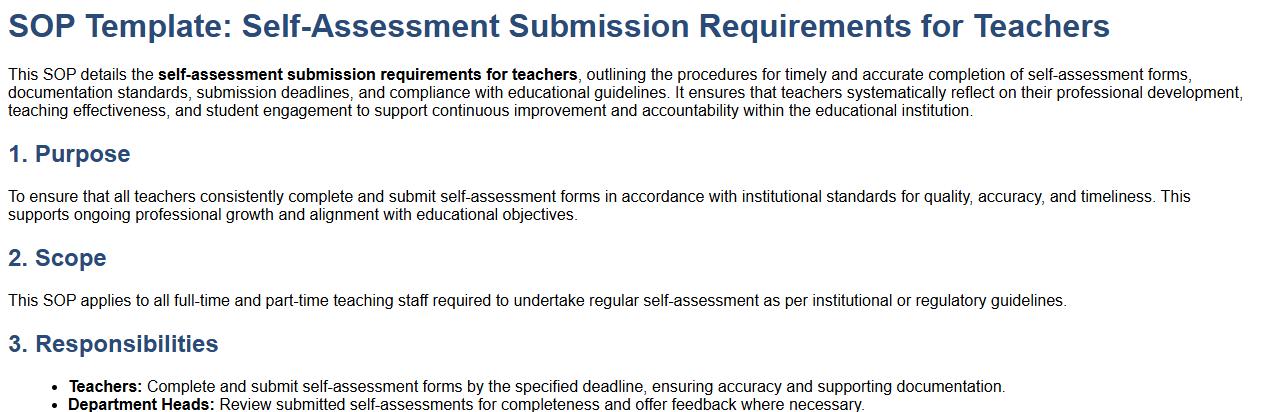
This SOP details the self-assessment submission requirements for teachers, outlining the procedures for timely and accurate completion of self-assessment forms, documentation standards, submission deadlines, and compliance with educational guidelines. It ensures that teachers systematically reflect on their professional development, teaching effectiveness, and student engagement to support continuous improvement and accountability within the educational institution.
Peer review procedures and confidentiality guidelines.
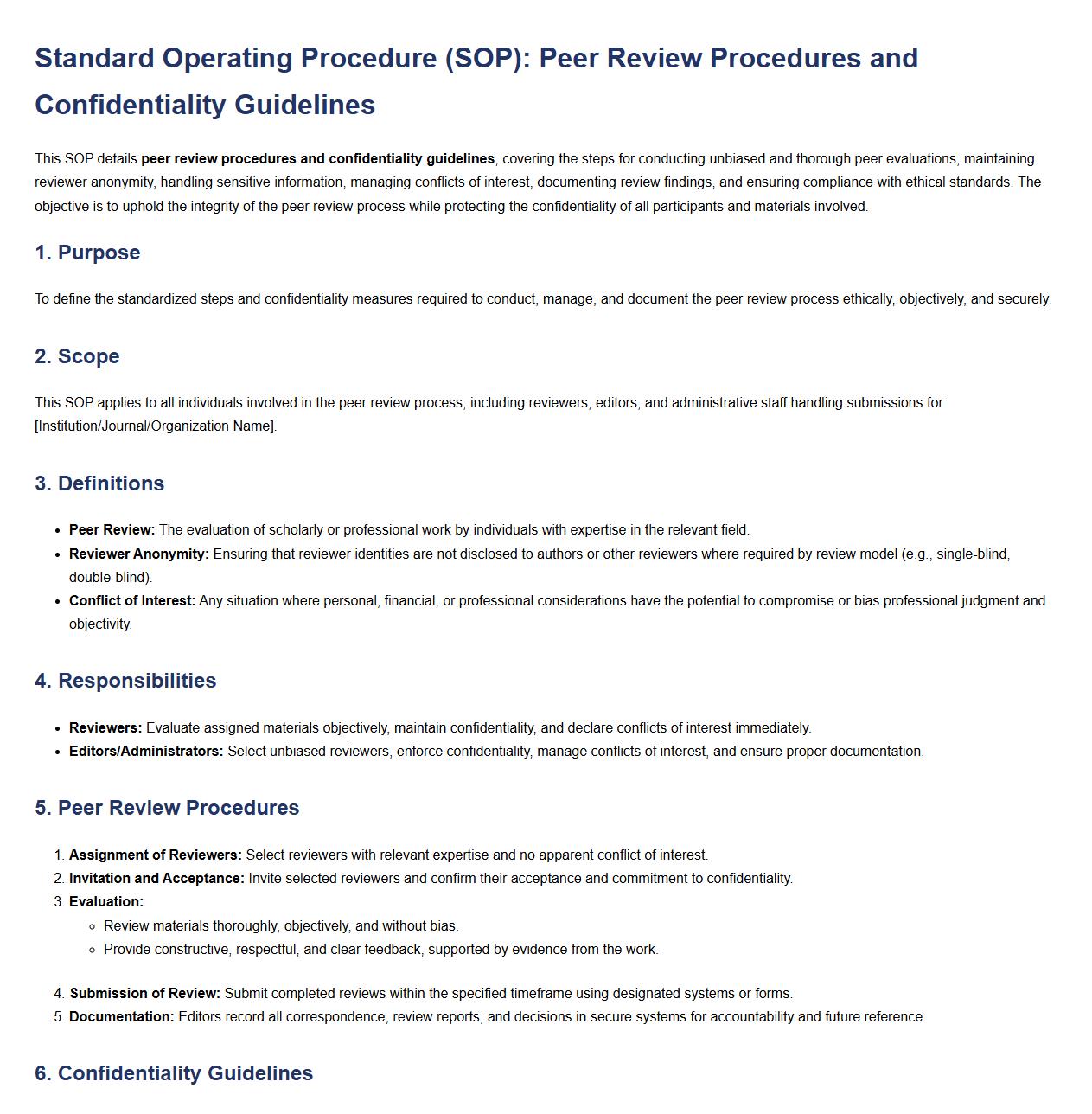
This SOP details peer review procedures and confidentiality guidelines, covering the steps for conducting unbiased and thorough peer evaluations, maintaining reviewer anonymity, handling sensitive information, managing conflicts of interest, documenting review findings, and ensuring compliance with ethical standards. The objective is to uphold the integrity of the peer review process while protecting the confidentiality of all participants and materials involved.
Student feedback collection methods and timelines.
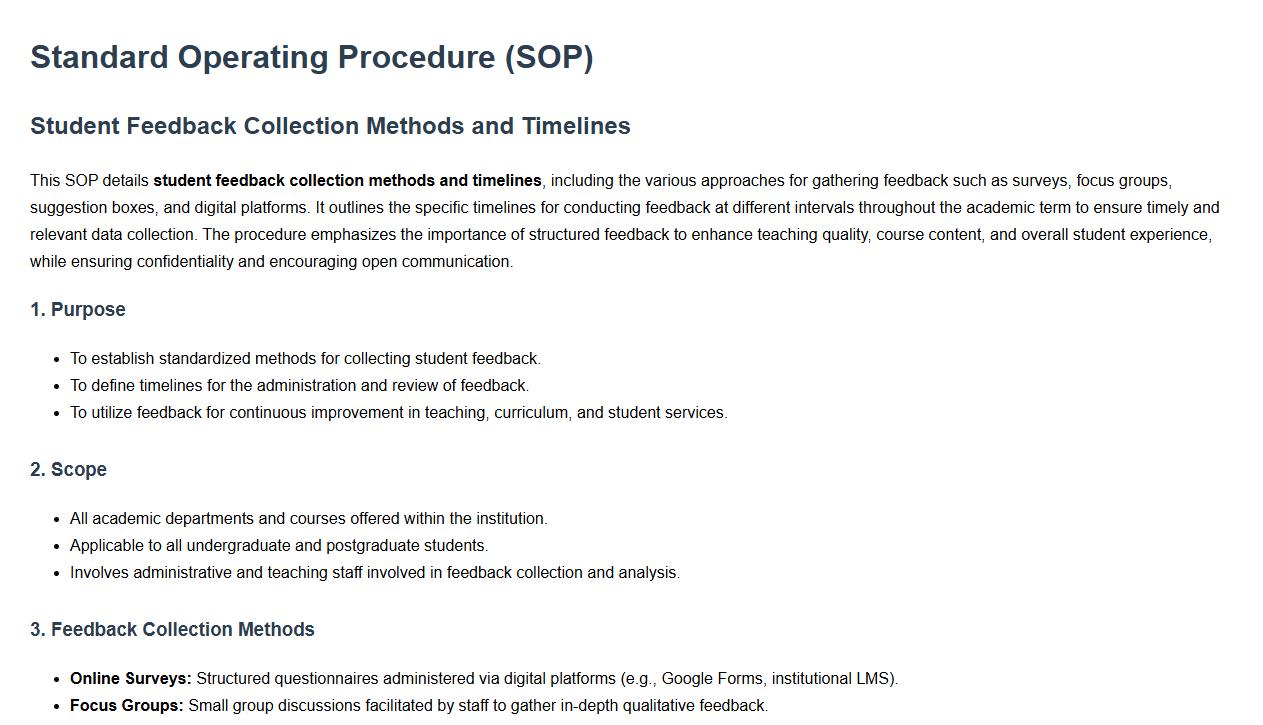
This SOP details student feedback collection methods and timelines, including the various approaches for gathering feedback such as surveys, focus groups, suggestion boxes, and digital platforms. It outlines the specific timelines for conducting feedback at different intervals throughout the academic term to ensure timely and relevant data collection. The procedure emphasizes the importance of structured feedback to enhance teaching quality, course content, and overall student experience, while ensuring confidentiality and encouraging open communication.
Documentation and evidence gathering processes.
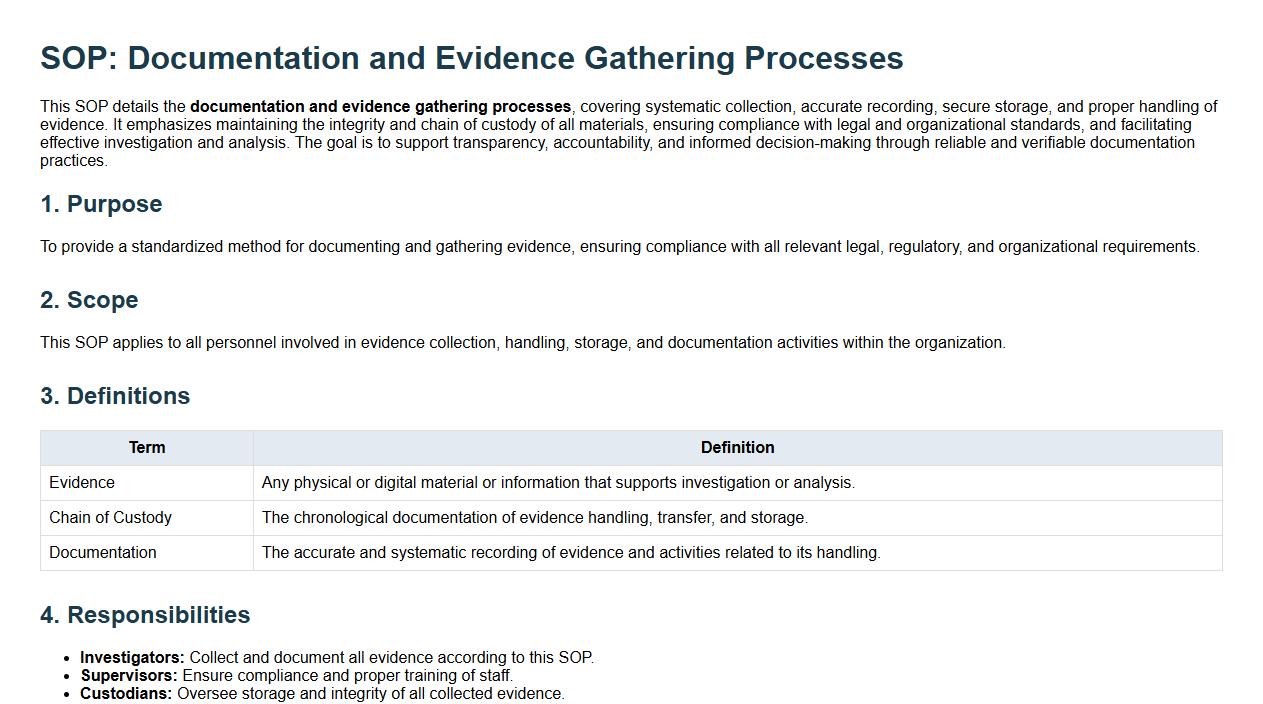
This SOP details the documentation and evidence gathering processes, covering systematic collection, accurate recording, secure storage, and proper handling of evidence. It emphasizes maintaining the integrity and chain of custody of all materials, ensuring compliance with legal and organizational standards, and facilitating effective investigation and analysis. The goal is to support transparency, accountability, and informed decision-making through reliable and verifiable documentation practices.
Evaluation meeting scheduling and discussion protocols.
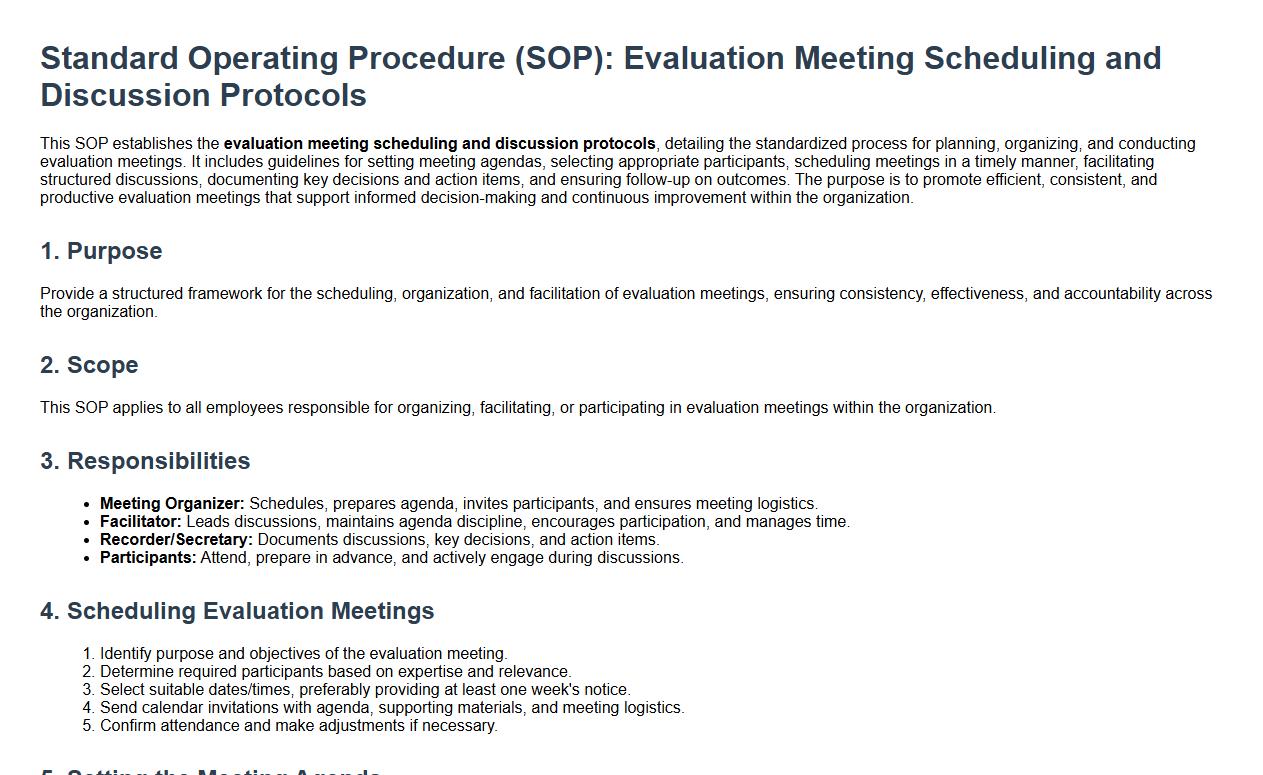
This SOP establishes the evaluation meeting scheduling and discussion protocols, detailing the standardized process for planning, organizing, and conducting evaluation meetings. It includes guidelines for setting meeting agendas, selecting appropriate participants, scheduling meetings in a timely manner, facilitating structured discussions, documenting key decisions and action items, and ensuring follow-up on outcomes. The purpose is to promote efficient, consistent, and productive evaluation meetings that support informed decision-making and continuous improvement within the organization.
Performance scoring, analysis, and rating procedures.
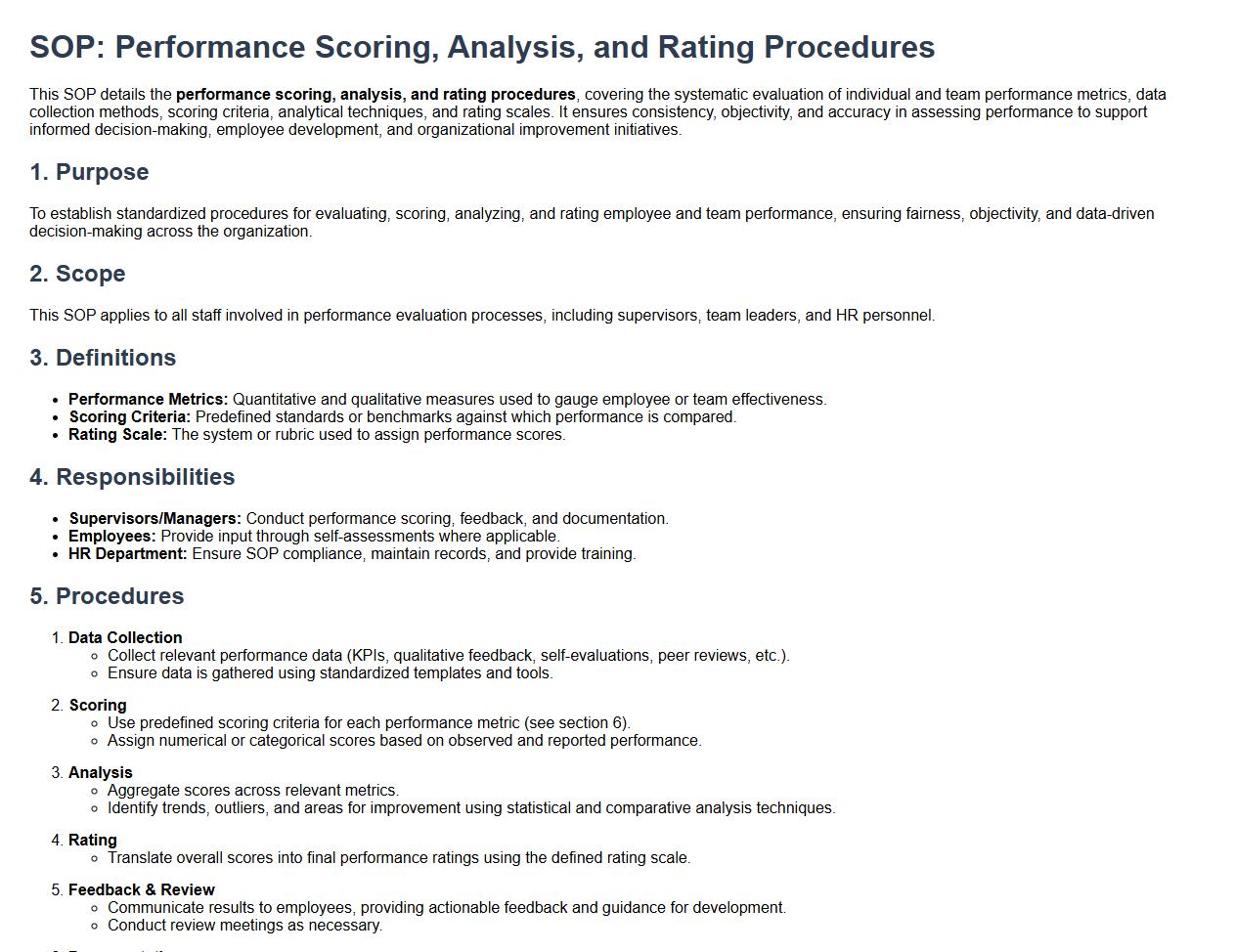
This SOP details the performance scoring, analysis, and rating procedures, covering the systematic evaluation of individual and team performance metrics, data collection methods, scoring criteria, analytical techniques, and rating scales. It ensures consistency, objectivity, and accuracy in assessing performance to support informed decision-making, employee development, and organizational improvement initiatives.
Feedback delivery, improvement plans, and follow-up actions.
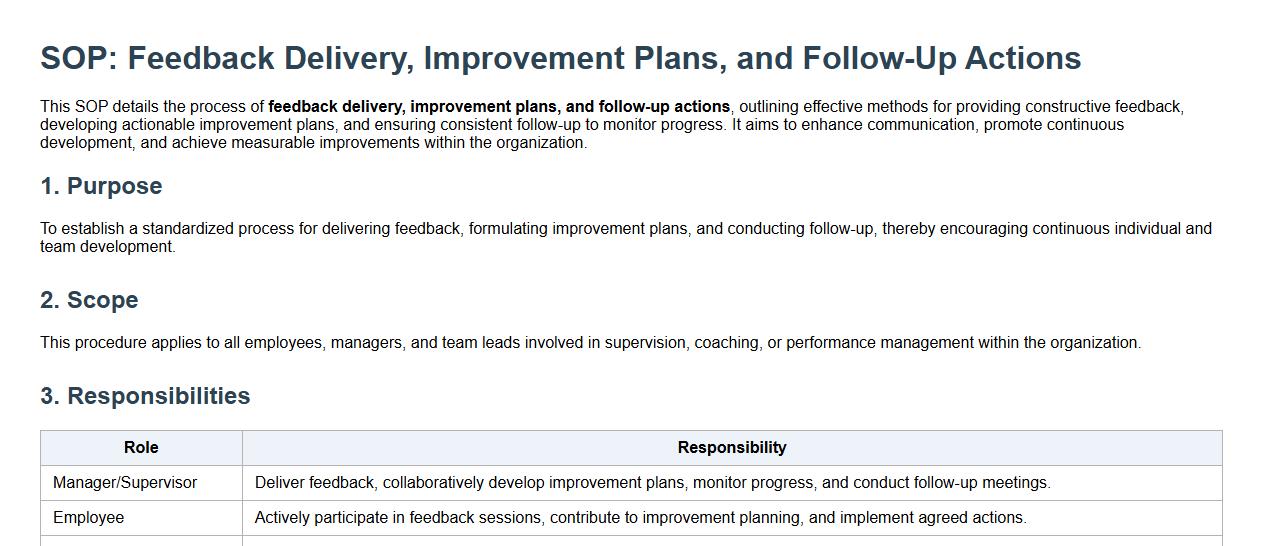
This SOP details the process of feedback delivery, improvement plans, and follow-up actions, outlining effective methods for providing constructive feedback, developing actionable improvement plans, and ensuring consistent follow-up to monitor progress. It aims to enhance communication, promote continuous development, and achieve measurable improvements within the organization.
What are the key performance indicators outlined in the SOP for evaluating teacher effectiveness?
The SOP highlights student engagement as a critical indicator of teacher effectiveness. It also emphasizes lesson planning quality and adherence to the curriculum as essential metrics. Additionally, the ability to foster positive classroom management is underscored.
How frequently does the SOP specify that teacher performance evaluations should be conducted?
The SOP mandates that teacher performance evaluations occur on a biannual basis to ensure timely feedback. This schedule promotes continuous professional growth and accountability. Interim reviews may be scheduled based on specific needs or concerns.
Which stakeholders are responsible according to the SOP for carrying out and reviewing teacher evaluations?
According to the SOP, school administrators hold primary responsibility for performing teacher evaluations. Additionally, department heads contribute insights and review findings. Teachers themselves also participate through self-assessment components.
What documentation and evidence are required by the SOP to support teacher performance assessments?
The SOP requires comprehensive documentation including lesson plans, student work samples, and observation reports. Digital portfolios may supplement physical evidence effectively. Accurate records of professional development activities are also essential.
What procedures does the SOP prescribe for feedback, follow-up, and improvement after teacher evaluations?
The SOP outlines a structured feedback session where evaluators share results and constructive criticism. It also includes developing a clear improvement plan with set timelines for follow-up. Continuous monitoring ensures that recommendations are implemented effectively.