

A SOP Template for Food Preparation ensures consistent and safe handling of ingredients, cooking processes, and hygiene standards in the kitchen. It outlines step-by-step procedures to maintain food quality, prevent contamination, and comply with health regulations. Using this template helps streamline operations and improve employee training in food safety practices.
Ingredient sourcing and quality inspection.
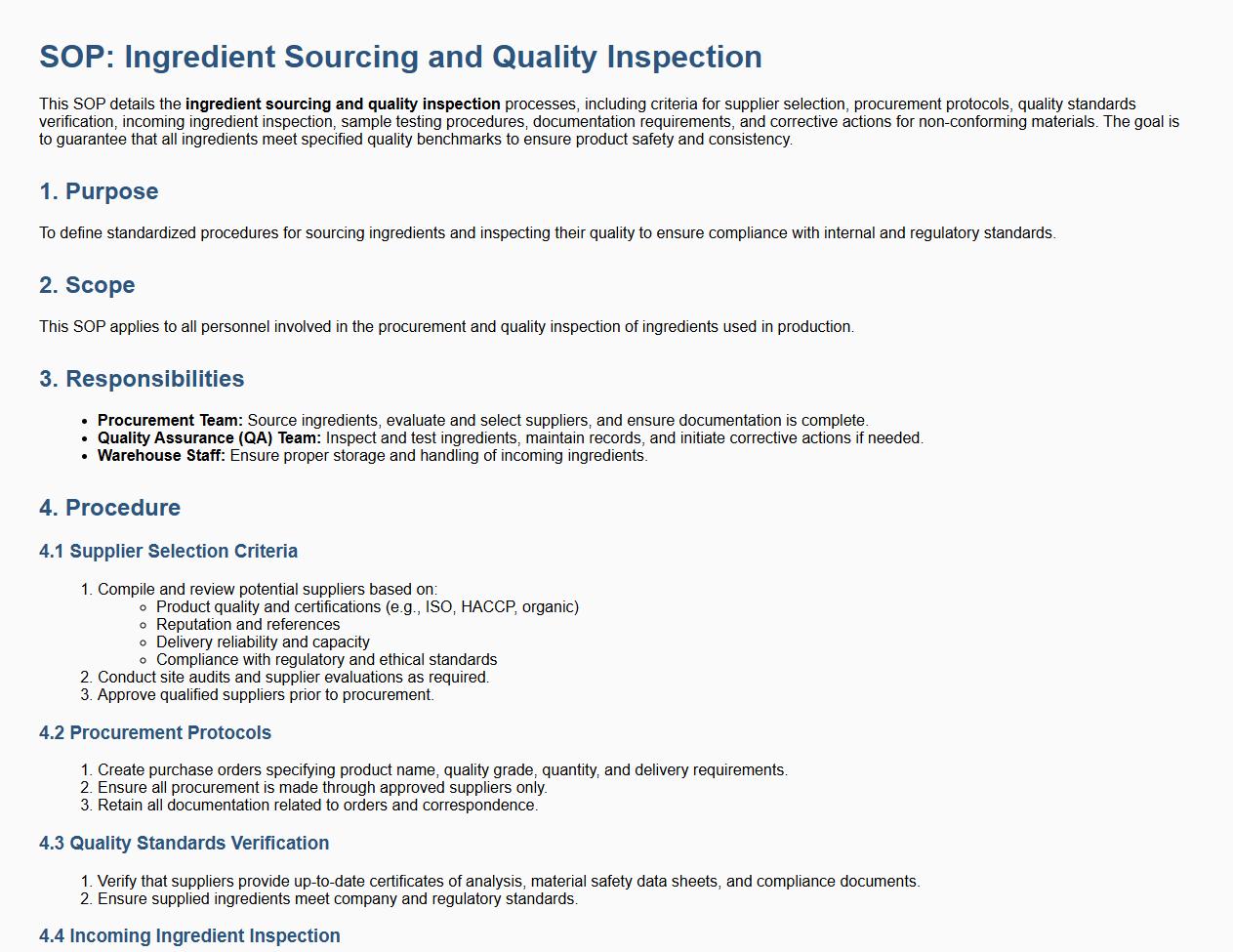
This SOP details the ingredient sourcing and quality inspection processes, including criteria for supplier selection, procurement protocols, quality standards verification, incoming ingredient inspection, sample testing procedures, documentation requirements, and corrective actions for non-conforming materials. The goal is to guarantee that all ingredients meet specified quality benchmarks to ensure product safety and consistency.
Receiving and storage of ingredients.
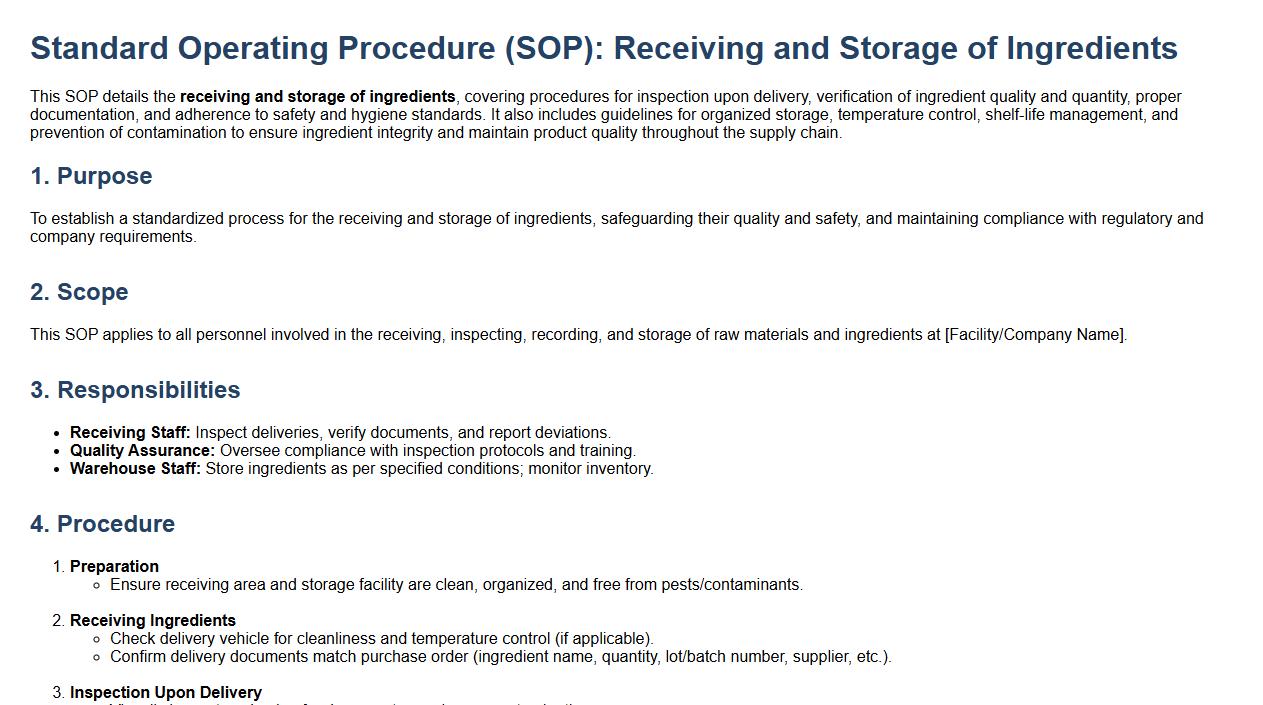
This SOP details the receiving and storage of ingredients, covering procedures for inspection upon delivery, verification of ingredient quality and quantity, proper documentation, and adherence to safety and hygiene standards. It also includes guidelines for organized storage, temperature control, shelf-life management, and prevention of contamination to ensure ingredient integrity and maintain product quality throughout the supply chain.
Personal hygiene and handwashing procedures.

This SOP details personal hygiene and handwashing procedures, emphasizing the importance of maintaining cleanliness to prevent the spread of infections. It covers proper handwashing techniques, the use of soap and sanitizers, recommended handwashing frequency, guidelines for nail care, and hygiene practices to be followed before and after specific tasks. The goal is to promote a healthy environment by ensuring all personnel adhere to consistent and effective hygiene standards.
Food preparation workstation setup and sanitation.
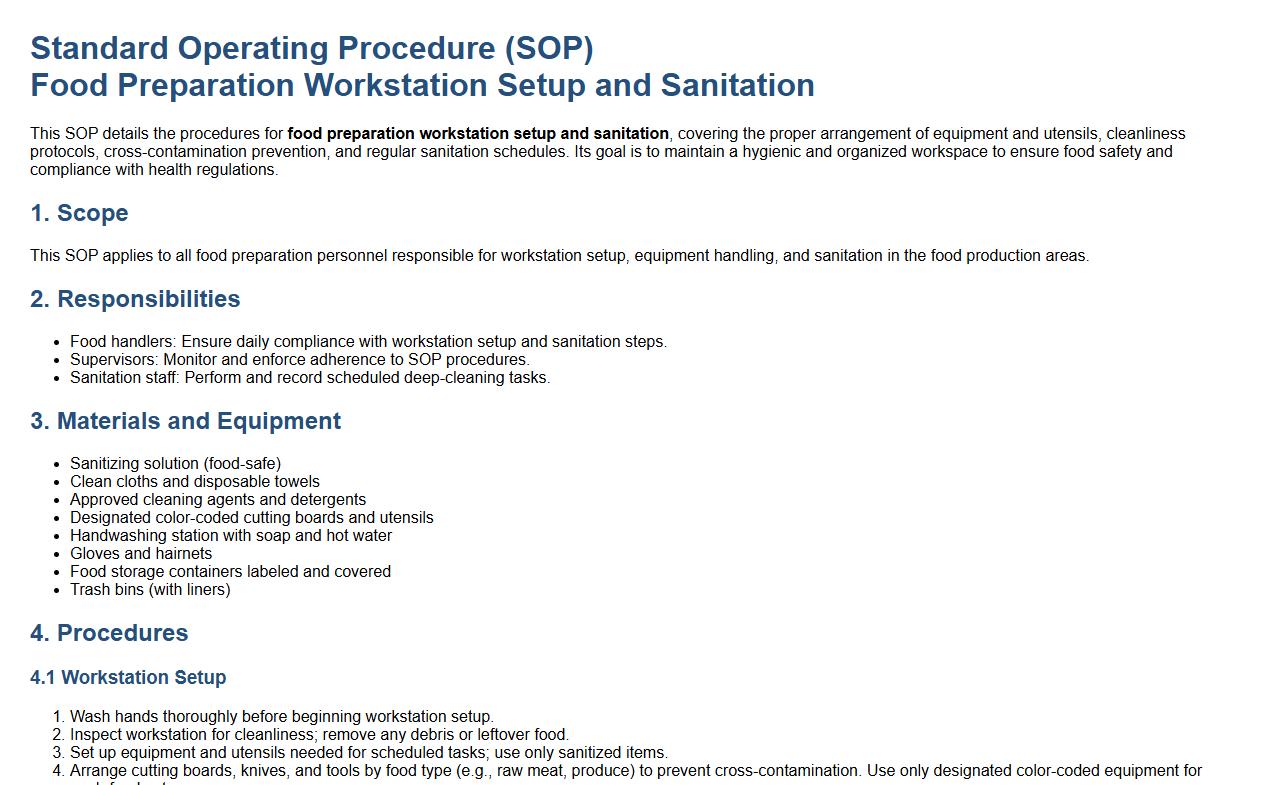
This SOP details the procedures for food preparation workstation setup and sanitation, covering the proper arrangement of equipment and utensils, cleanliness protocols, cross-contamination prevention, and regular sanitation schedules. Its goal is to maintain a hygienic and organized workspace to ensure food safety and compliance with health regulations.
Standardized recipe preparation and portion control.
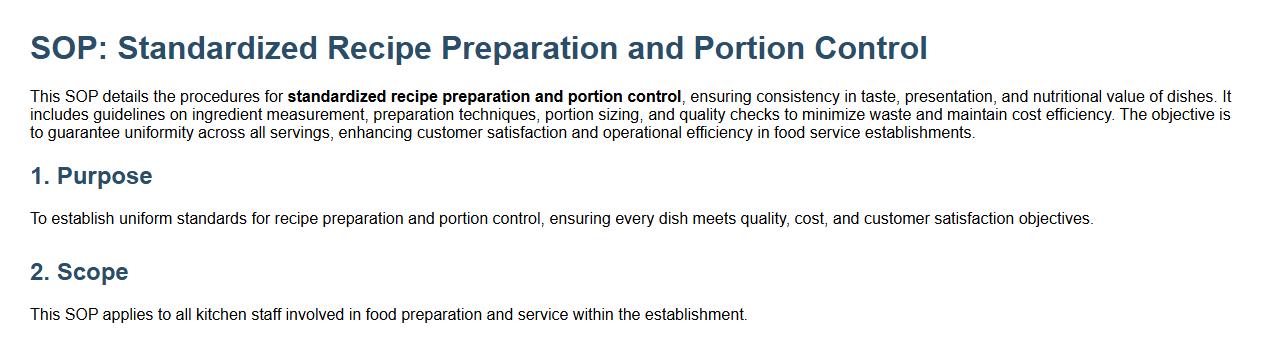
This SOP details the procedures for standardized recipe preparation and portion control, ensuring consistency in taste, presentation, and nutritional value of dishes. It includes guidelines on ingredient measurement, preparation techniques, portion sizing, and quality checks to minimize waste and maintain cost efficiency. The objective is to guarantee uniformity across all servings, enhancing customer satisfaction and operational efficiency in food service establishments.
Cooking time, temperature, and method guidelines.
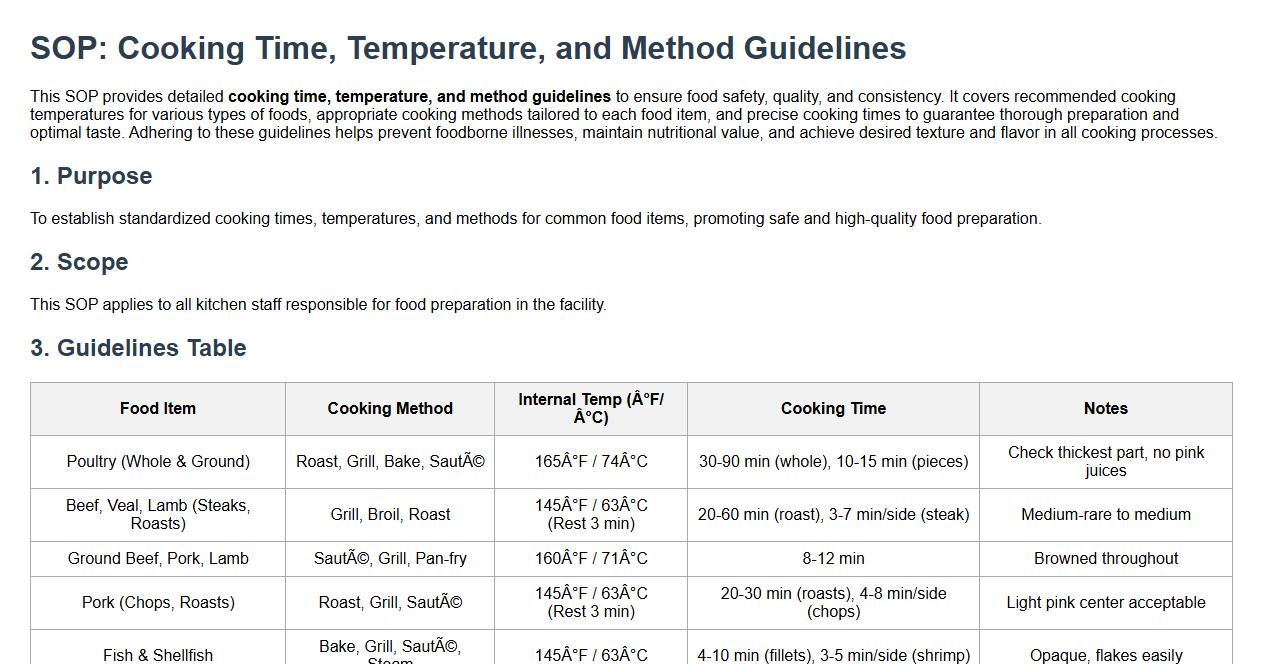
This SOP provides detailed cooking time, temperature, and method guidelines to ensure food safety, quality, and consistency. It covers recommended cooking temperatures for various types of foods, appropriate cooking methods tailored to each food item, and precise cooking times to guarantee thorough preparation and optimal taste. Adhering to these guidelines helps prevent foodborne illnesses, maintain nutritional value, and achieve desired texture and flavor in all cooking processes.
Cross-contamination prevention and allergen control.

This SOP details cross-contamination prevention and allergen control measures, including identification of allergenic ingredients, proper cleaning and sanitization protocols, segregation of allergen-containing products, employee training and hygiene practices, labeling and storage requirements, and monitoring and verification processes. The objective is to minimize the risk of allergen exposure and ensure product safety for consumers with food allergies or sensitivities.
Utensil, equipment, and surface cleaning protocol.
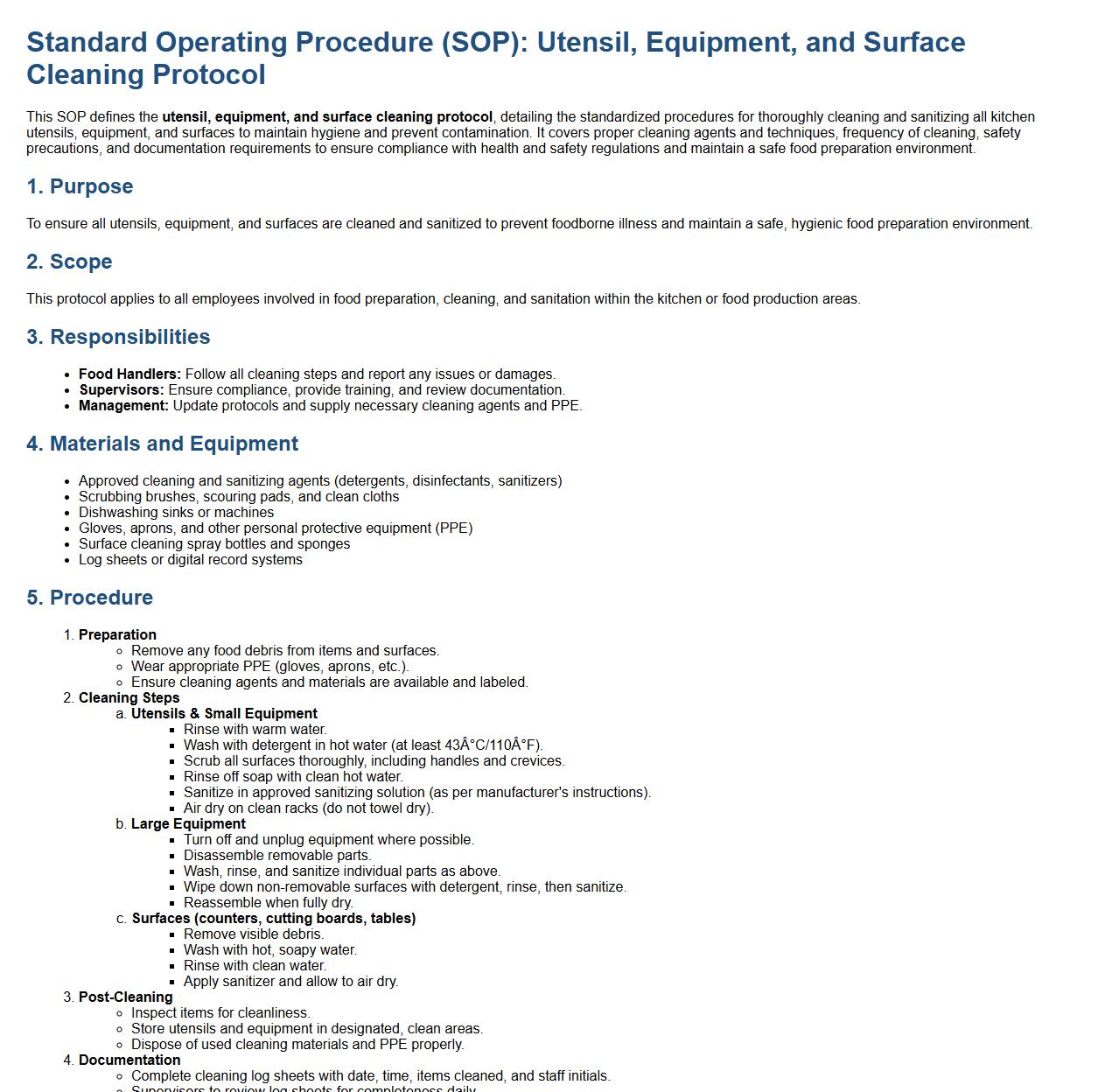
This SOP defines the utensil, equipment, and surface cleaning protocol, detailing the standardized procedures for thoroughly cleaning and sanitizing all kitchen utensils, equipment, and surfaces to maintain hygiene and prevent contamination. It covers proper cleaning agents and techniques, frequency of cleaning, safety precautions, and documentation requirements to ensure compliance with health and safety regulations and maintain a safe food preparation environment.
Food plating, presentation, and service standards.
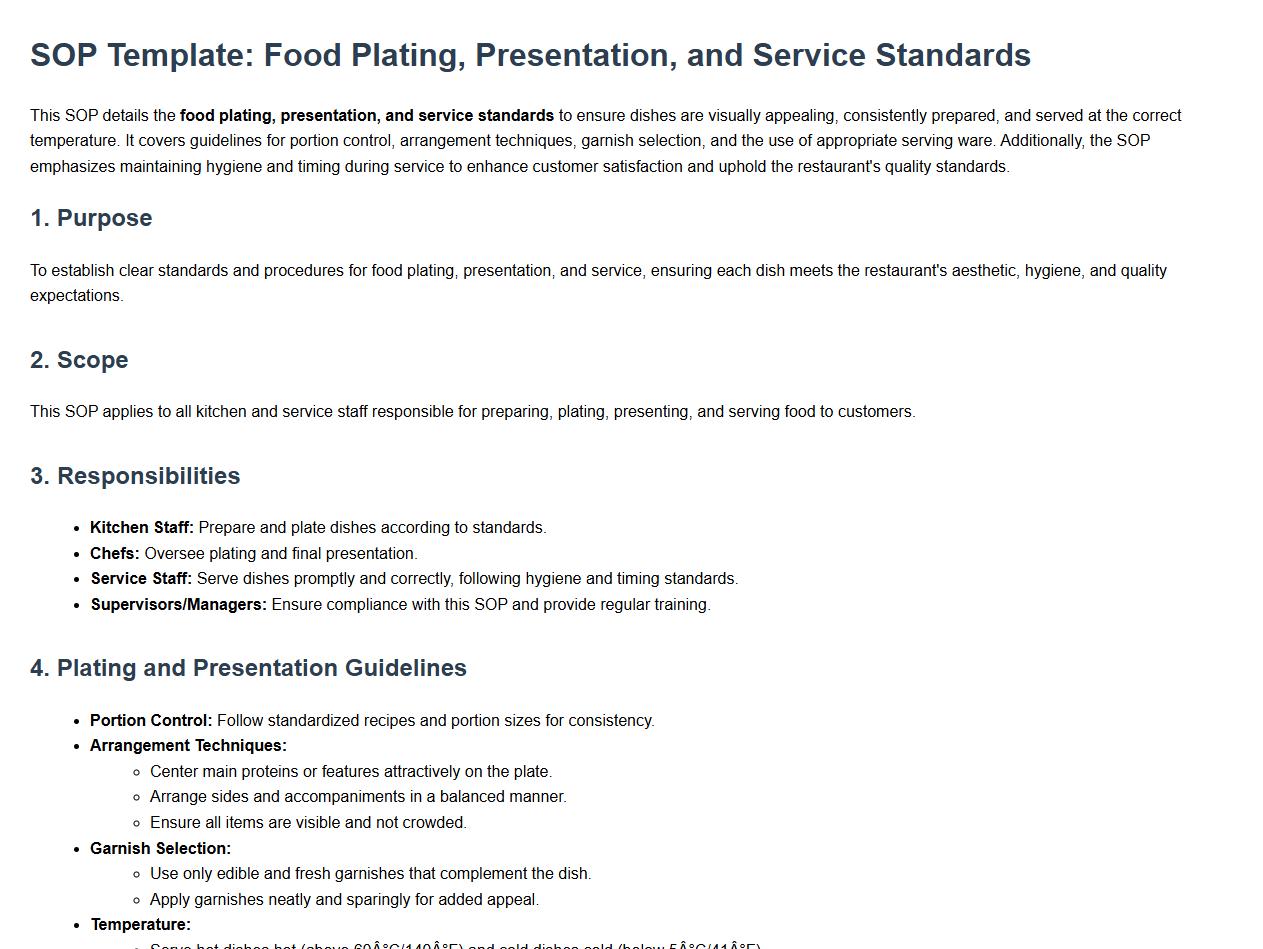
This SOP details the food plating, presentation, and service standards to ensure dishes are visually appealing, consistently prepared, and served at the correct temperature. It covers guidelines for portion control, arrangement techniques, garnish selection, and the use of appropriate serving ware. Additionally, the SOP emphasizes maintaining hygiene and timing during service to enhance customer satisfaction and uphold the restaurant's quality standards.
Waste disposal and post-preparation cleaning procedures.
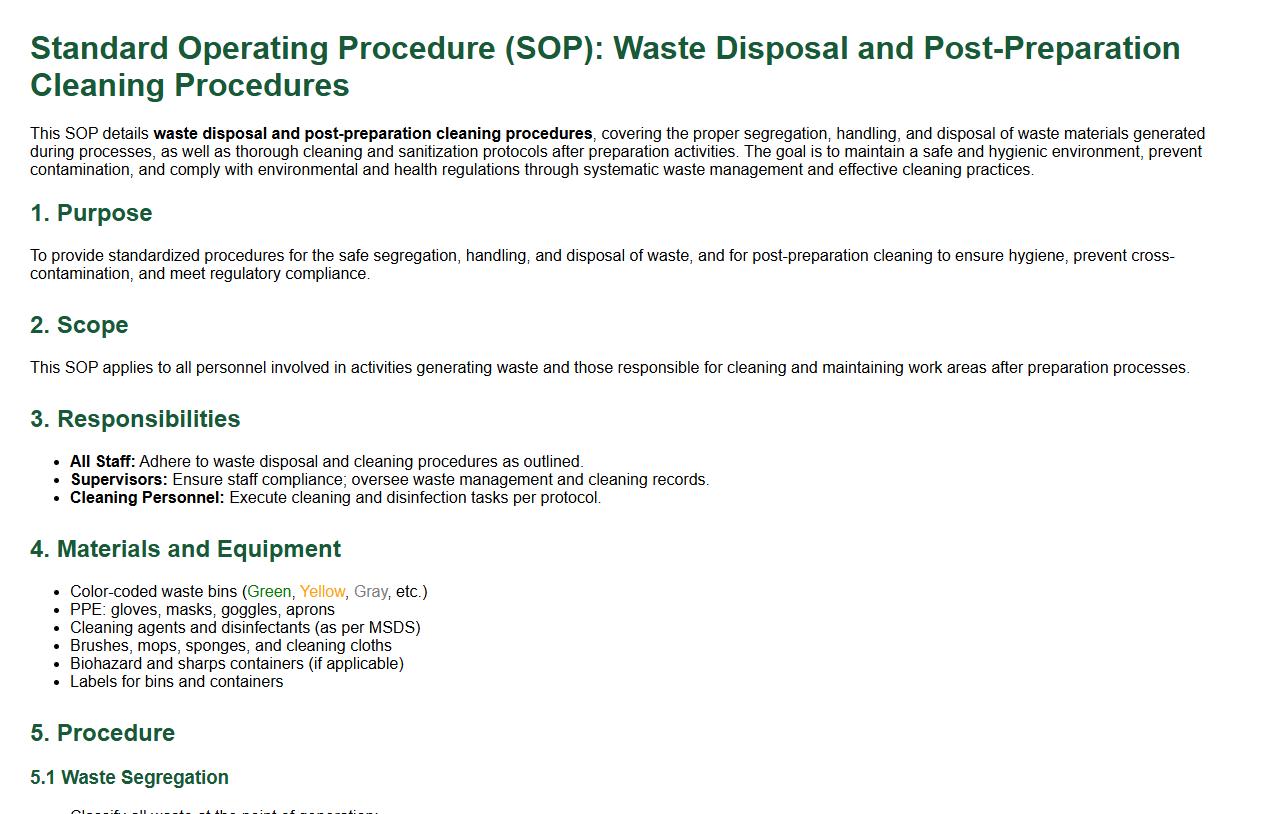
This SOP details waste disposal and post-preparation cleaning procedures, covering the proper segregation, handling, and disposal of waste materials generated during processes, as well as thorough cleaning and sanitization protocols after preparation activities. The goal is to maintain a safe and hygienic environment, prevent contamination, and comply with environmental and health regulations through systematic waste management and effective cleaning practices.
What are the critical hygiene practices outlined in the SOP for food preparation?
The SOP emphasizes handwashing as a vital hygiene practice before and after handling food. All staff must wear clean uniforms and use hair restraints to maintain cleanliness. Frequent sanitization of hands and use of disposable gloves are also mandated to prevent contamination.
How does the SOP specify handling and storage of perishable ingredients?
Perishable ingredients must be stored at appropriate temperatures, typically below 5degC, to prevent spoilage. The SOP requires clear labeling with use-by dates and proper rotation using the FIFO (First In, First Out) method. Handling perishable items carefully to avoid temperature abuse is critical for food safety.
Which steps in the SOP ensure prevention of cross-contamination during food preparation?
The SOP mandates the use of separate cutting boards and utensils for raw and cooked foods to avoid cross-contamination. There is a strict requirement to thoroughly clean and sanitize equipment between tasks. Staff training on avoiding cross-contact between allergens and different food types is also essential.
What temperature guidelines are mandated by the SOP for cooking and holding food?
The SOP requires cooking food to a minimum internal temperature of 75degC to eliminate harmful pathogens. Hot foods must be held at temperatures above 60degC to prevent bacterial growth. Cold foods, meanwhile, should be maintained below 5degC during storage and service hours.
How should equipment and surfaces be sanitized according to the SOP for food preparation?
All equipment and surfaces must be cleaned with approved detergents followed by sanitizers meeting health standards. The SOP specifies routine cleaning schedules, especially after handling raw food items. Proper drying of sanitized surfaces is necessary to maintain a hygienic food preparation environment.