
A SOP Template for Food Waste Management provides a structured framework to efficiently reduce, monitor, and handle food waste within an organization. It outlines specific procedures, roles, and responsibilities to ensure compliance with sustainability goals and regulatory standards. Implementing this template helps optimize resource use, minimize environmental impact, and improve overall operational efficiency.
Food waste segregation procedures.
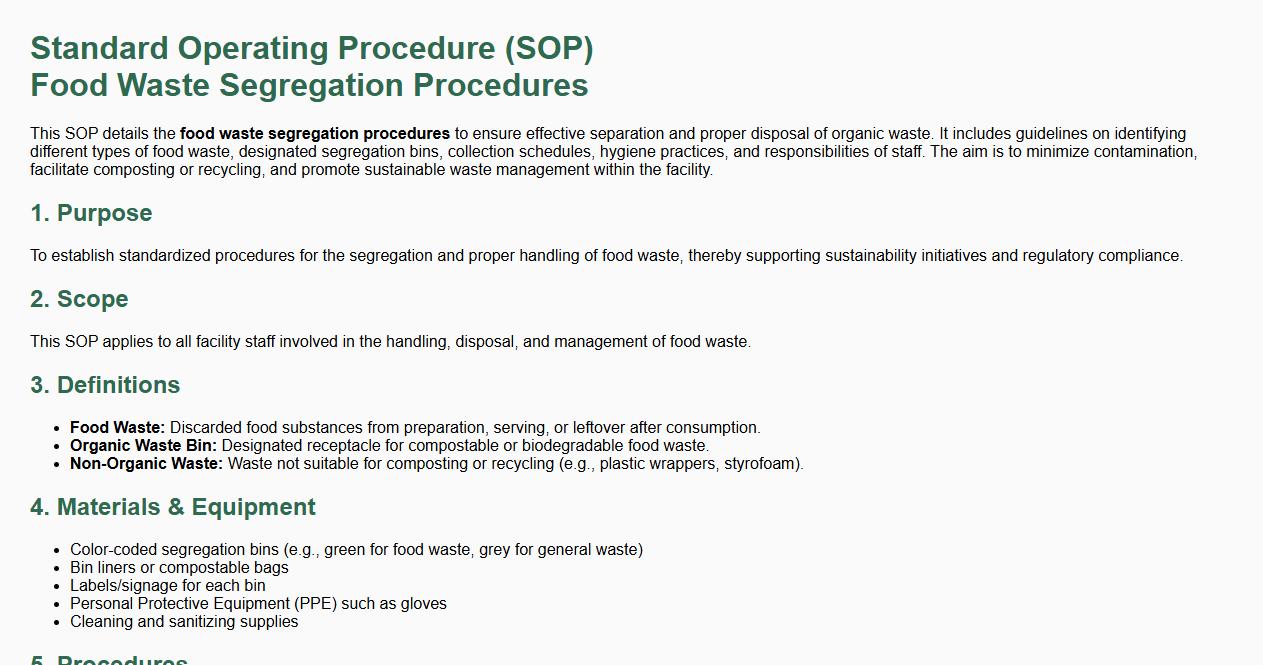
This SOP details the food waste segregation procedures to ensure effective separation and proper disposal of organic waste. It includes guidelines on identifying different types of food waste, designated segregation bins, collection schedules, hygiene practices, and responsibilities of staff. The aim is to minimize contamination, facilitate composting or recycling, and promote sustainable waste management within the facility.
Collection and storage of food waste.
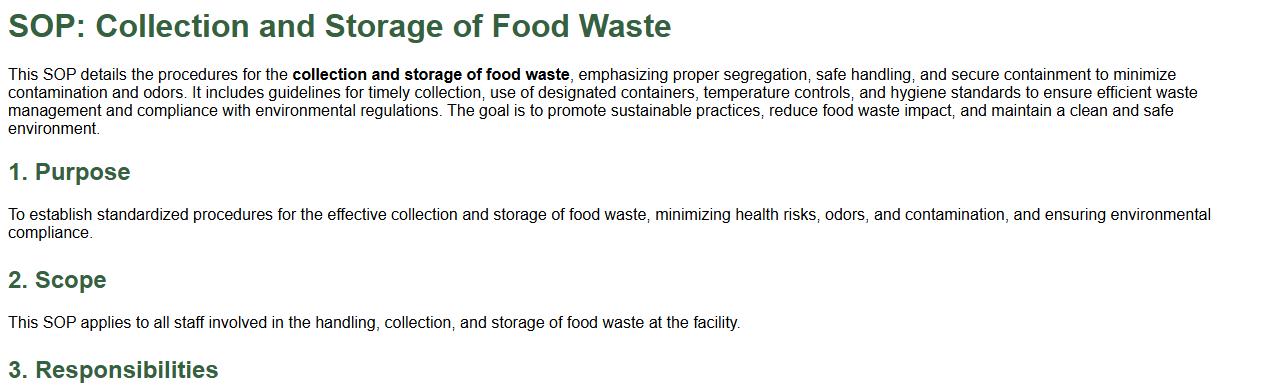
This SOP details the procedures for the collection and storage of food waste, emphasizing proper segregation, safe handling, and secure containment to minimize contamination and odors. It includes guidelines for timely collection, use of designated containers, temperature controls, and hygiene standards to ensure efficient waste management and compliance with environmental regulations. The goal is to promote sustainable practices, reduce food waste impact, and maintain a clean and safe environment.
Daily cleaning and sanitization of waste areas.
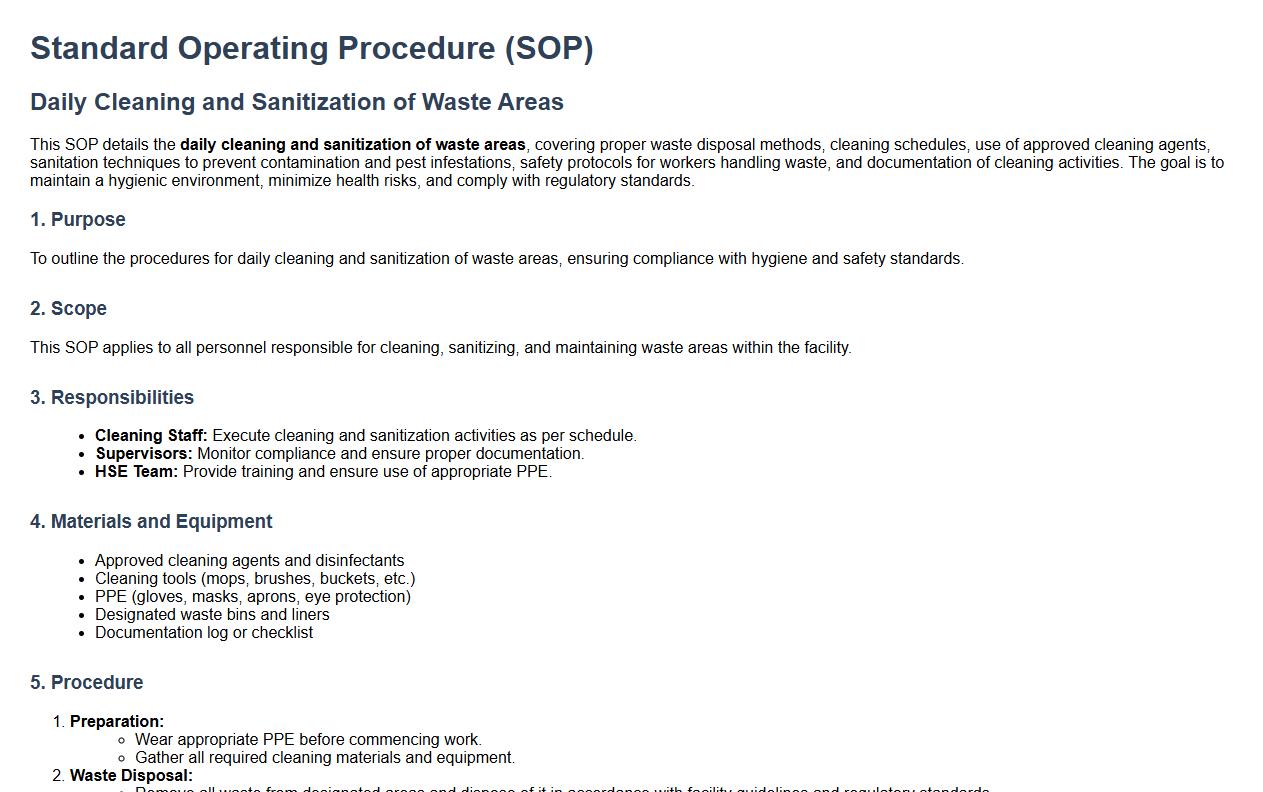
This SOP details the daily cleaning and sanitization of waste areas, covering proper waste disposal methods, cleaning schedules, use of approved cleaning agents, sanitation techniques to prevent contamination and pest infestations, safety protocols for workers handling waste, and documentation of cleaning activities. The goal is to maintain a hygienic environment, minimize health risks, and comply with regulatory standards.
Logistics for waste weighing and recordkeeping.
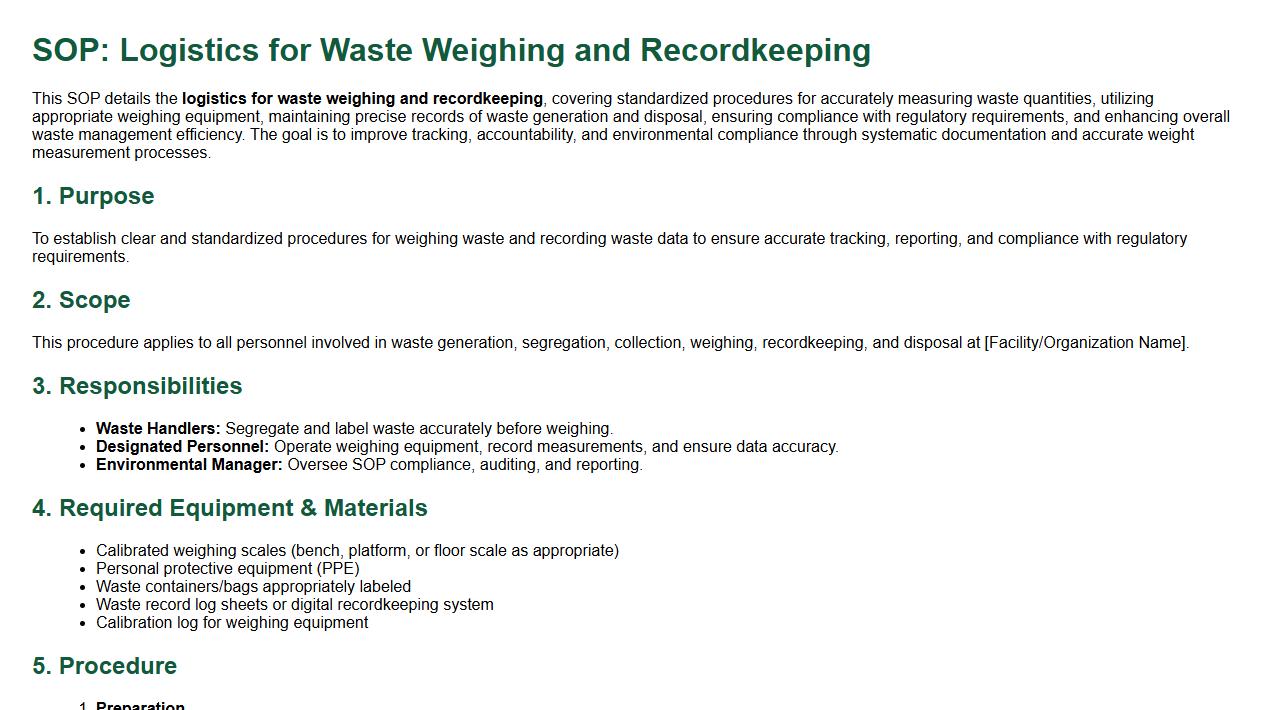
This SOP details the logistics for waste weighing and recordkeeping, covering standardized procedures for accurately measuring waste quantities, utilizing appropriate weighing equipment, maintaining precise records of waste generation and disposal, ensuring compliance with regulatory requirements, and enhancing overall waste management efficiency. The goal is to improve tracking, accountability, and environmental compliance through systematic documentation and accurate weight measurement processes.
Guidelines for safe food waste handling.
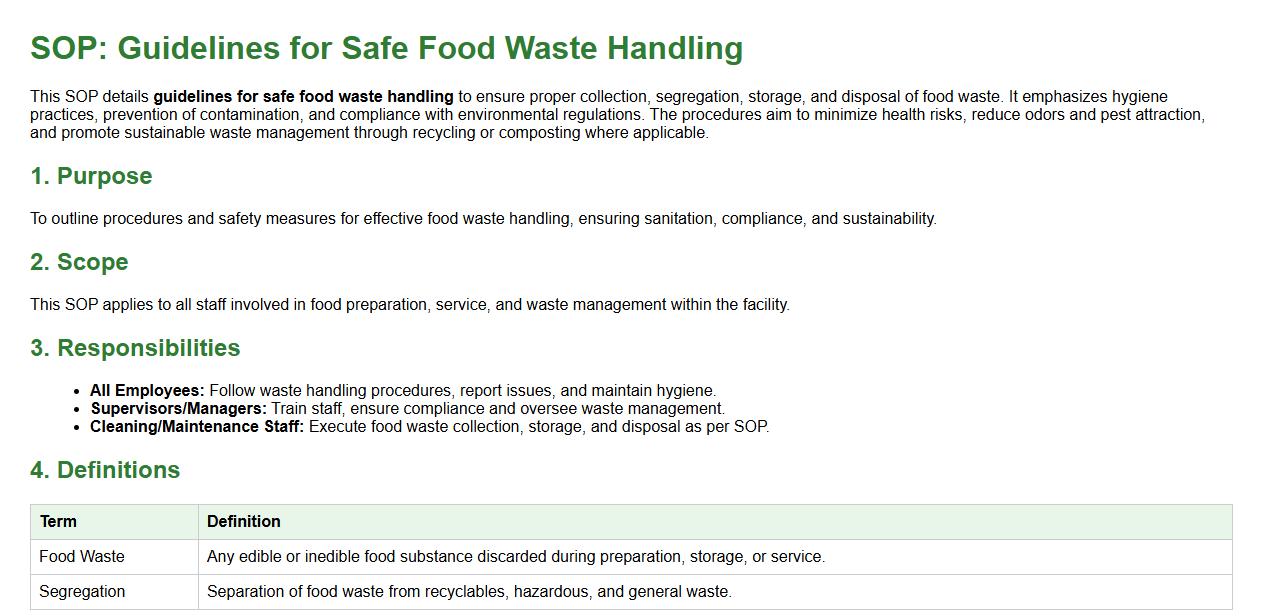
This SOP details guidelines for safe food waste handling to ensure proper collection, segregation, storage, and disposal of food waste. It emphasizes hygiene practices, prevention of contamination, and compliance with environmental regulations. The procedures aim to minimize health risks, reduce odors and pest attraction, and promote sustainable waste management through recycling or composting where applicable.
Instructions for composting food waste.
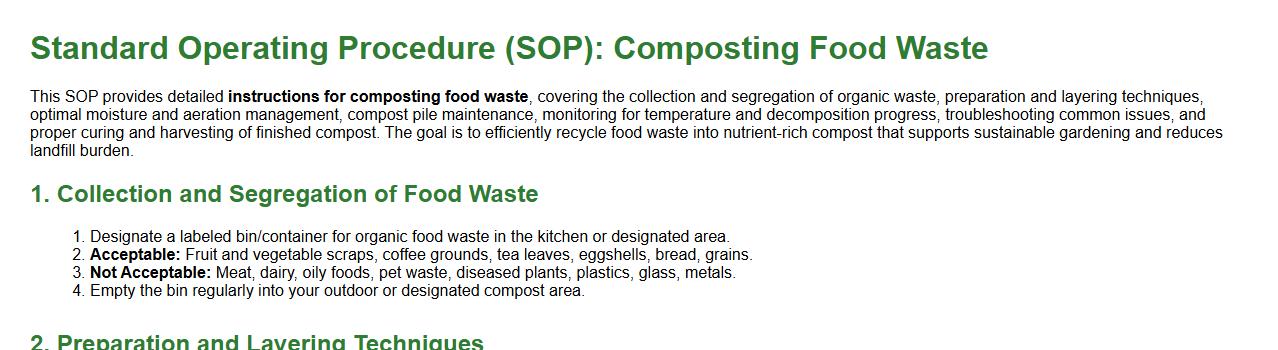
This SOP provides detailed instructions for composting food waste, covering the collection and segregation of organic waste, preparation and layering techniques, optimal moisture and aeration management, compost pile maintenance, monitoring for temperature and decomposition progress, troubleshooting common issues, and proper curing and harvesting of finished compost. The goal is to efficiently recycle food waste into nutrient-rich compost that supports sustainable gardening and reduces landfill burden.
Procedures for waste collection by authorized vendors.
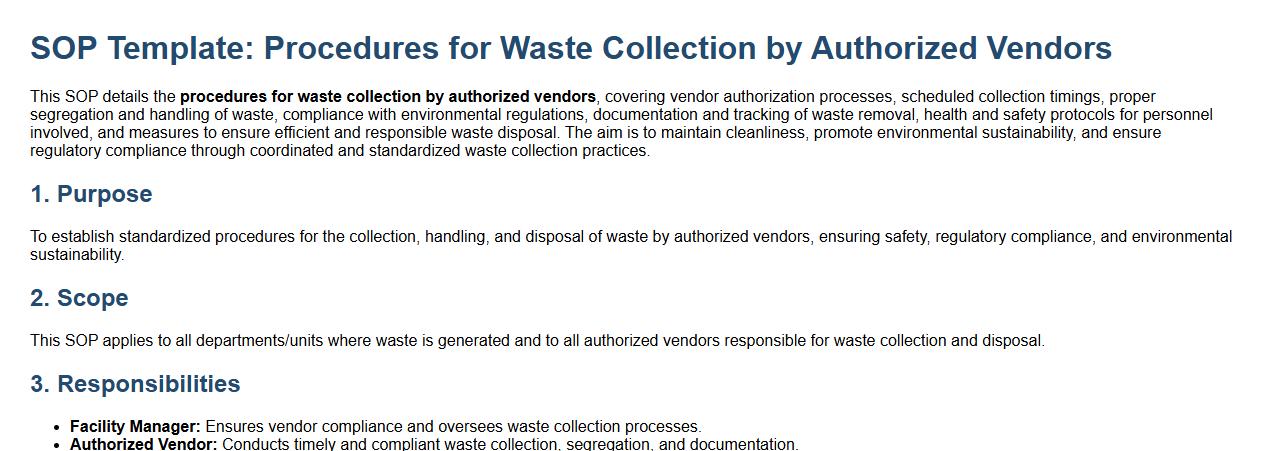
This SOP details the procedures for waste collection by authorized vendors, covering vendor authorization processes, scheduled collection timings, proper segregation and handling of waste, compliance with environmental regulations, documentation and tracking of waste removal, health and safety protocols for personnel involved, and measures to ensure efficient and responsible waste disposal. The aim is to maintain cleanliness, promote environmental sustainability, and ensure regulatory compliance through coordinated and standardized waste collection practices.
Monitoring and reporting waste reduction targets.
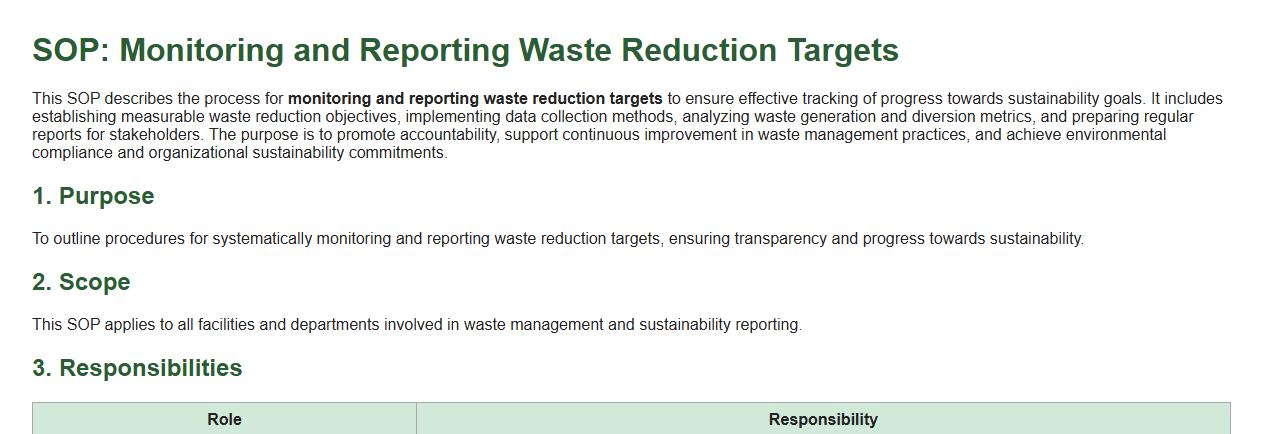
This SOP describes the process for monitoring and reporting waste reduction targets to ensure effective tracking of progress towards sustainability goals. It includes establishing measurable waste reduction objectives, implementing data collection methods, analyzing waste generation and diversion metrics, and preparing regular reports for stakeholders. The purpose is to promote accountability, support continuous improvement in waste management practices, and achieve environmental compliance and organizational sustainability commitments.
Staff training and awareness protocols.
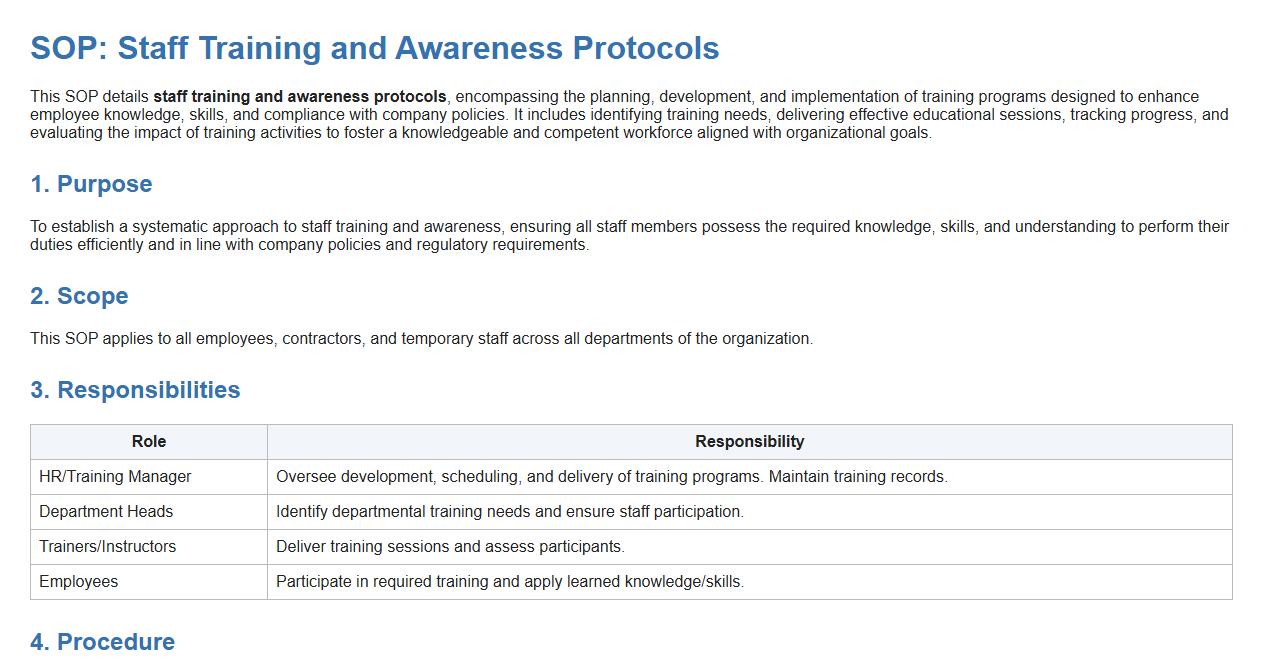
This SOP details staff training and awareness protocols, encompassing the planning, development, and implementation of training programs designed to enhance employee knowledge, skills, and compliance with company policies. It includes identifying training needs, delivering effective educational sessions, tracking progress, and evaluating the impact of training activities to foster a knowledgeable and competent workforce aligned with organizational goals.
Emergency response for spillage or contamination.
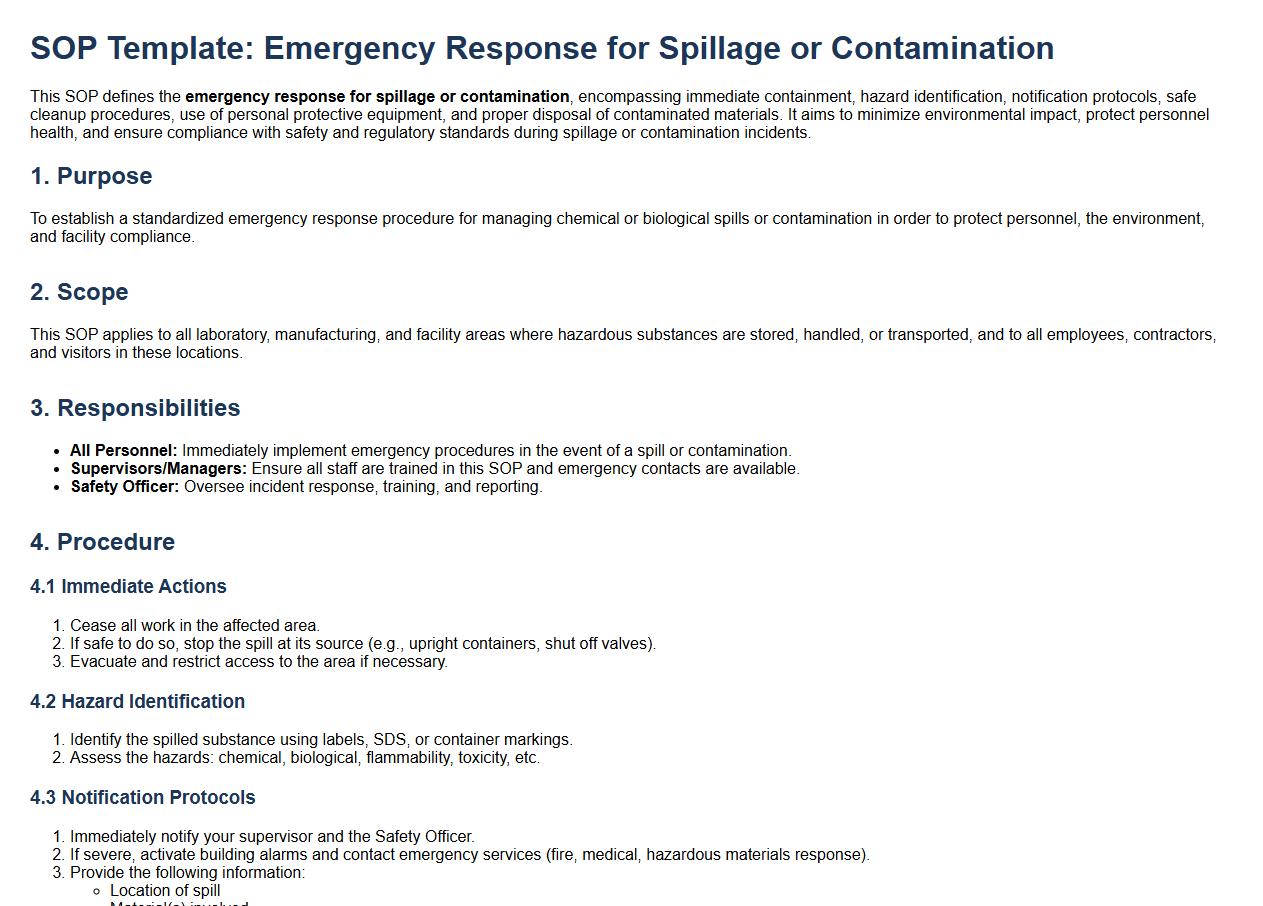
This SOP defines the emergency response for spillage or contamination, encompassing immediate containment, hazard identification, notification protocols, safe cleanup procedures, use of personal protective equipment, and proper disposal of contaminated materials. It aims to minimize environmental impact, protect personnel health, and ensure compliance with safety and regulatory standards during spillage or contamination incidents.
What are the key procedures outlined in the SOP for segregating food waste at the source?
The SOP emphasizes strict segregation of food waste at the point of generation to ensure efficient processing. It requires the use of color-coded bins labeled clearly for organic waste to prevent cross-contamination. Additionally, all staff must separate food scraps immediately, minimizing the risk of mixing with non-compostable materials.
Which documentation methods does the SOP require for tracking daily food waste quantities?
The SOP mandates maintaining a daily logbook to record the quantity and type of food waste generated. Digital tracking systems are recommended for real-time monitoring and data accuracy. Proper documentation ensures transparency and aids in compliance reporting for waste reduction goals.
What are the compliance standards specified in the SOP for disposal or treatment of food waste?
The SOP aligns with local and national waste management regulations to ensure environmentally responsible disposal of food waste. It stipulates the use of approved composting or anaerobic digestion methods to minimize landfill contributions. Regular audits are mandated to verify adherence to these compliance standards.
How does the SOP address staff responsibilities and training for food waste management?
The SOP defines clear roles and responsibilities for staff members involved in food waste handling. It requires periodic training sessions focusing on segregation techniques, safety protocols, and the environmental impact of food waste. Continuous education ensures staff competence and commitment to sustainable waste practices.
What corrective actions are mandated by the SOP in case of non-compliance with food waste protocols?
The SOP outlines specific corrective measures such as retraining, warning notices, and potential disciplinary action for repeated non-compliance. Immediate reporting and documentation of incidents are required to mitigate risks. These actions ensure accountability and continuous improvement in food waste management.