
A SOP Template for Restaurant Staff Training provides a clear, step-by-step guide to ensure consistent and efficient onboarding of new employees. It outlines standard procedures, safety protocols, and customer service best practices to maintain high-quality performance. Using this template helps streamline training processes and improve overall staff productivity.
New employee onboarding and orientation procedures.
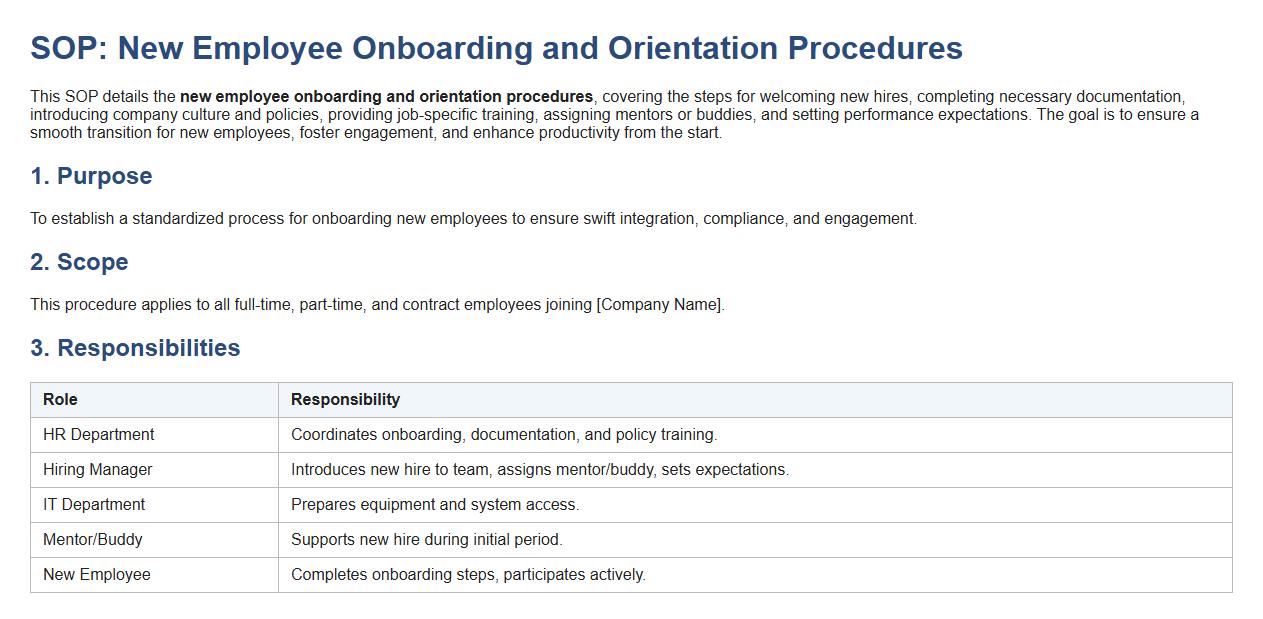
This SOP details the new employee onboarding and orientation procedures, covering the steps for welcoming new hires, completing necessary documentation, introducing company culture and policies, providing job-specific training, assigning mentors or buddies, and setting performance expectations. The goal is to ensure a smooth transition for new employees, foster engagement, and enhance productivity from the start.
Customer service standards and etiquette.
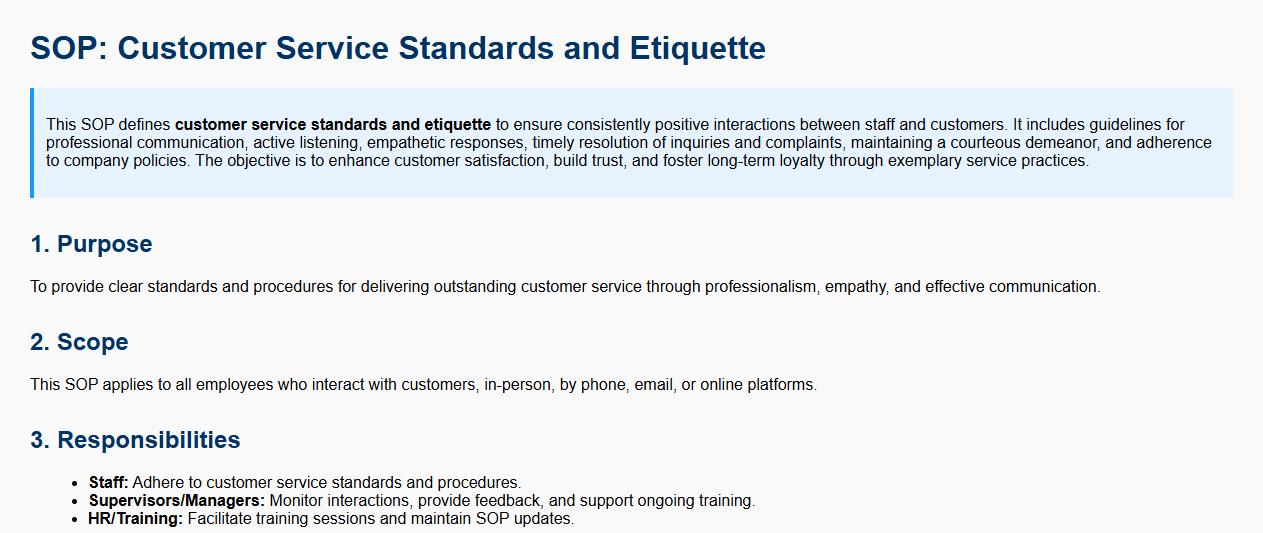
This SOP defines customer service standards and etiquette to ensure consistently positive interactions between staff and customers. It includes guidelines for professional communication, active listening, empathetic responses, timely resolution of inquiries and complaints, maintaining a courteous demeanor, and adherence to company policies. The objective is to enhance customer satisfaction, build trust, and foster long-term loyalty through exemplary service practices.
Food safety and hygiene practices.
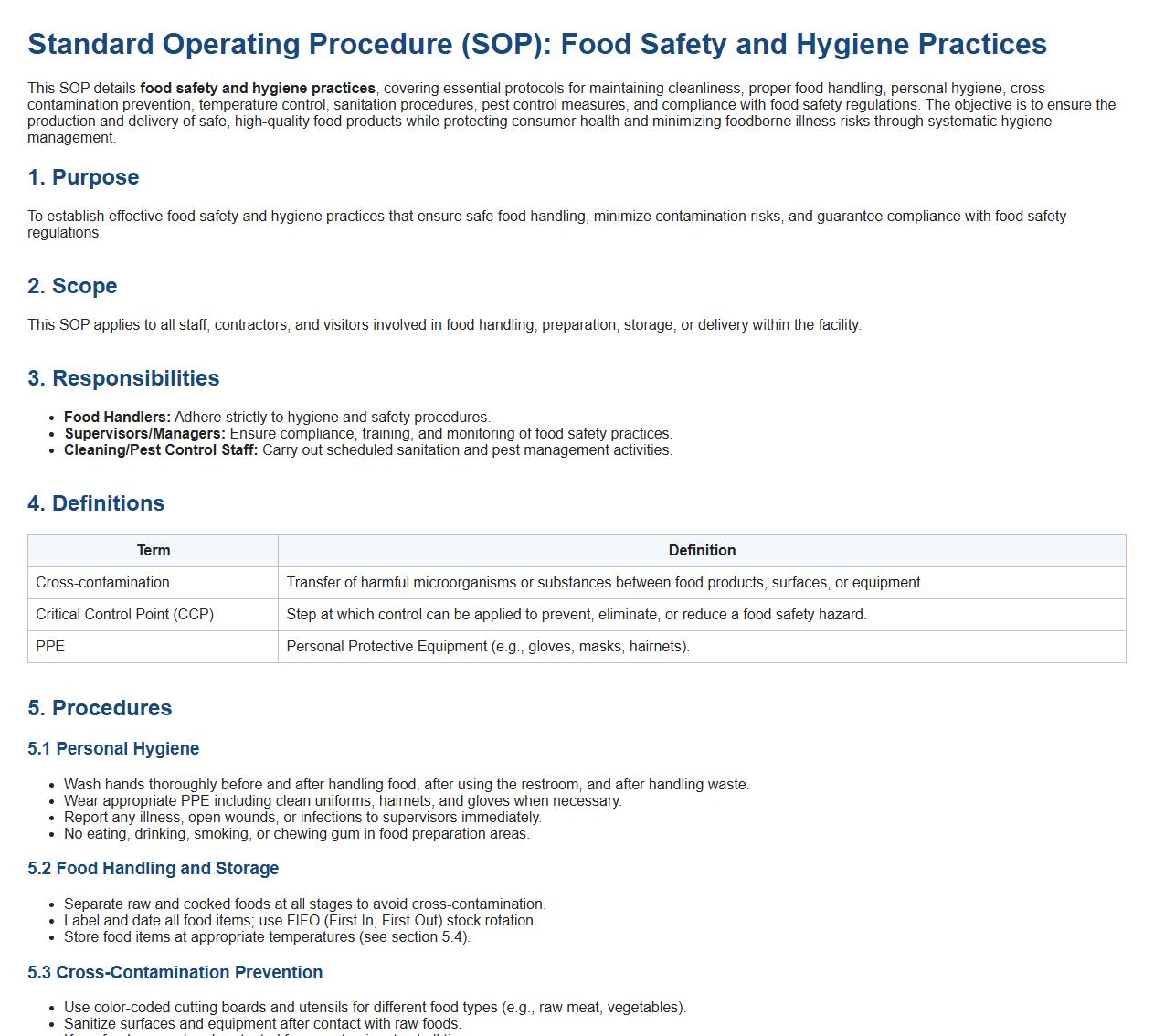
This SOP details food safety and hygiene practices, covering essential protocols for maintaining cleanliness, proper food handling, personal hygiene, cross-contamination prevention, temperature control, sanitation procedures, pest control measures, and compliance with food safety regulations. The objective is to ensure the production and delivery of safe, high-quality food products while protecting consumer health and minimizing foodborne illness risks through systematic hygiene management.
Kitchen equipment usage and maintenance guidelines.
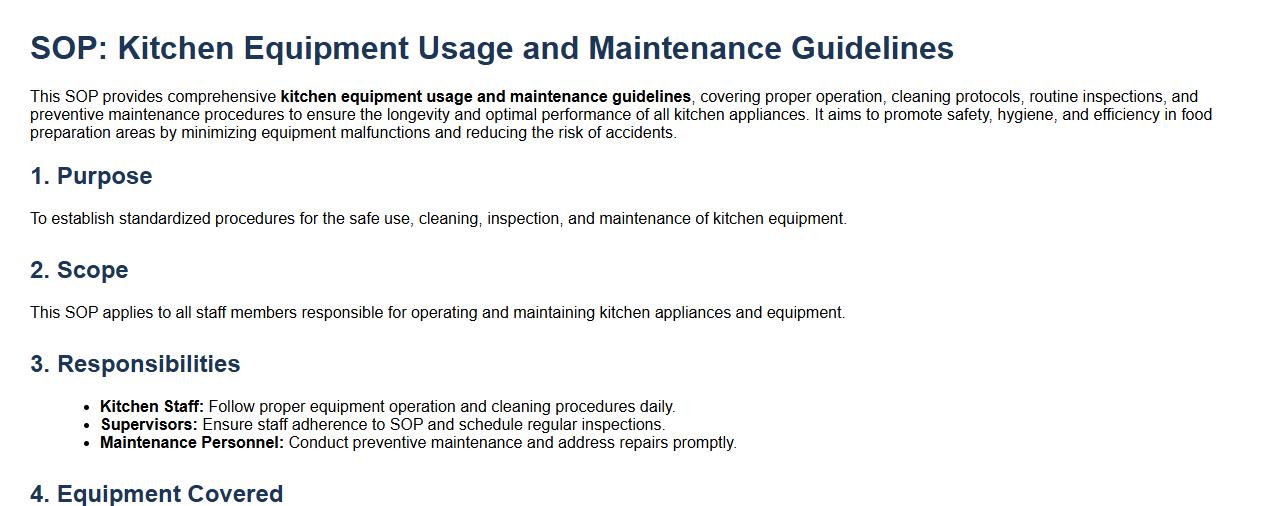
This SOP provides comprehensive kitchen equipment usage and maintenance guidelines, covering proper operation, cleaning protocols, routine inspections, and preventive maintenance procedures to ensure the longevity and optimal performance of all kitchen appliances. It aims to promote safety, hygiene, and efficiency in food preparation areas by minimizing equipment malfunctions and reducing the risk of accidents.
Order taking and POS system operation.
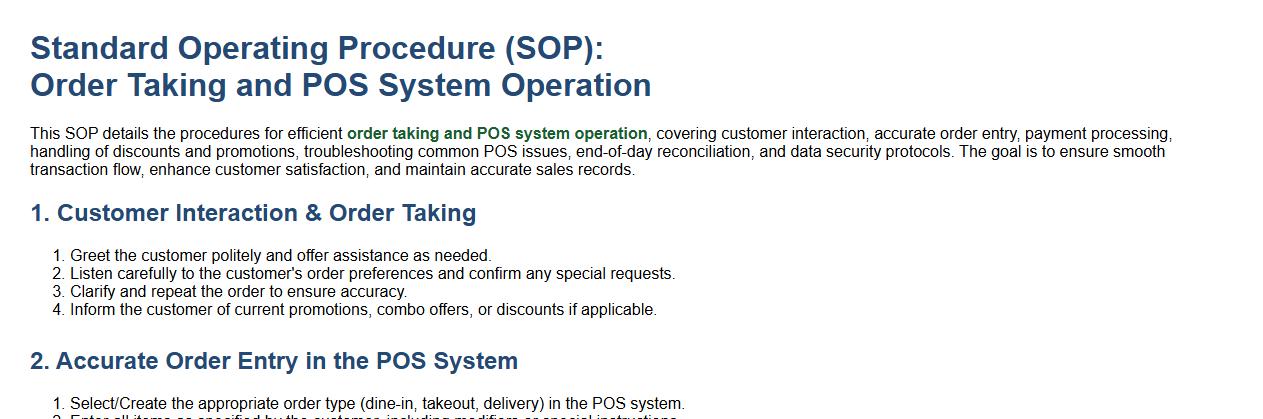
This SOP details the procedures for efficient order taking and POS system operation, covering customer interaction, accurate order entry, payment processing, handling of discounts and promotions, troubleshooting common POS issues, end-of-day reconciliation, and data security protocols. The goal is to ensure smooth transaction flow, enhance customer satisfaction, and maintain accurate sales records.
Table setting and dining area preparation procedures.
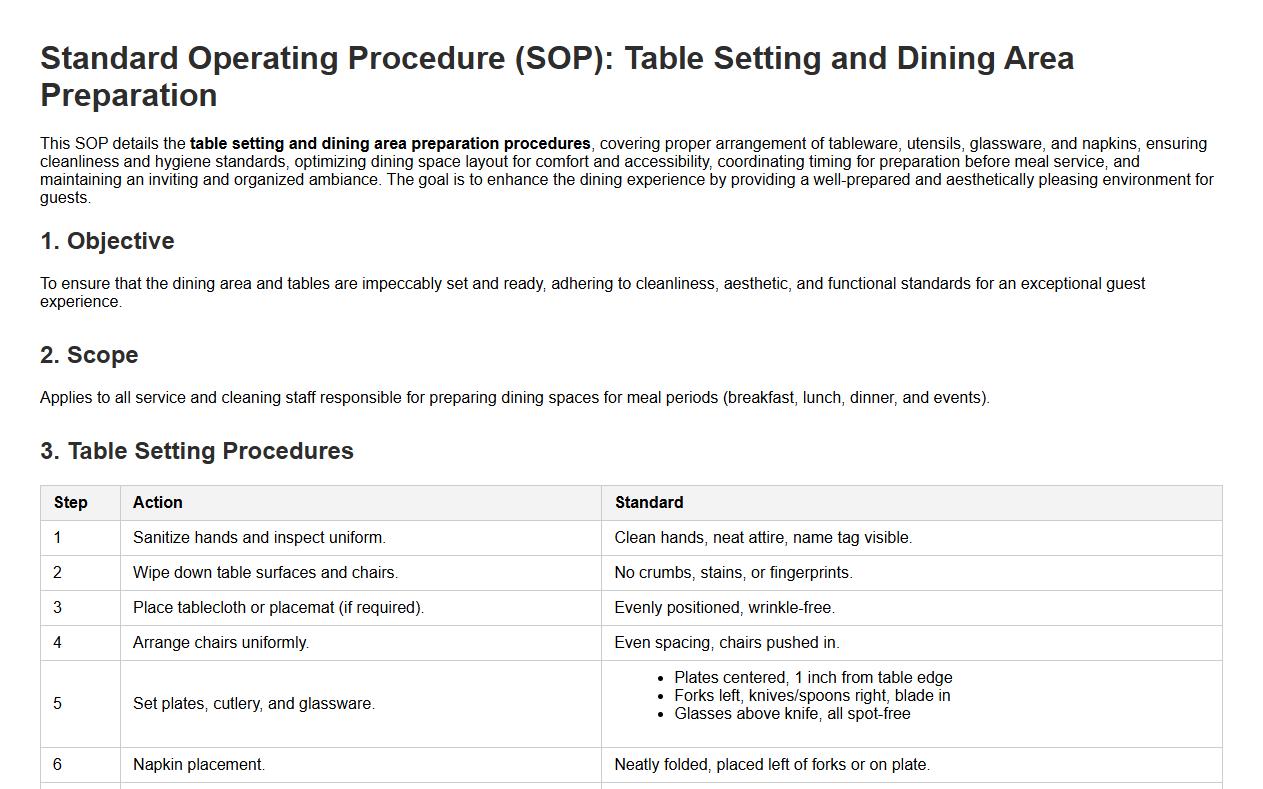
This SOP details the table setting and dining area preparation procedures, covering proper arrangement of tableware, utensils, glassware, and napkins, ensuring cleanliness and hygiene standards, optimizing dining space layout for comfort and accessibility, coordinating timing for preparation before meal service, and maintaining an inviting and organized ambiance. The goal is to enhance the dining experience by providing a well-prepared and aesthetically pleasing environment for guests.
Handling customer complaints and feedback.
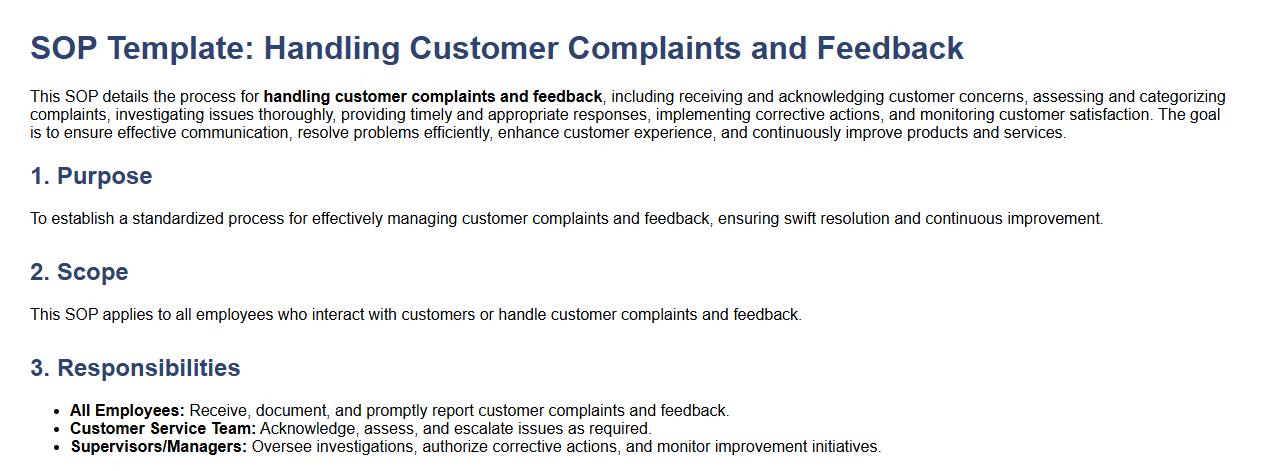
This SOP details the process for handling customer complaints and feedback, including receiving and acknowledging customer concerns, assessing and categorizing complaints, investigating issues thoroughly, providing timely and appropriate responses, implementing corrective actions, and monitoring customer satisfaction. The goal is to ensure effective communication, resolve problems efficiently, enhance customer experience, and continuously improve products and services.
Daily opening and closing checklist.
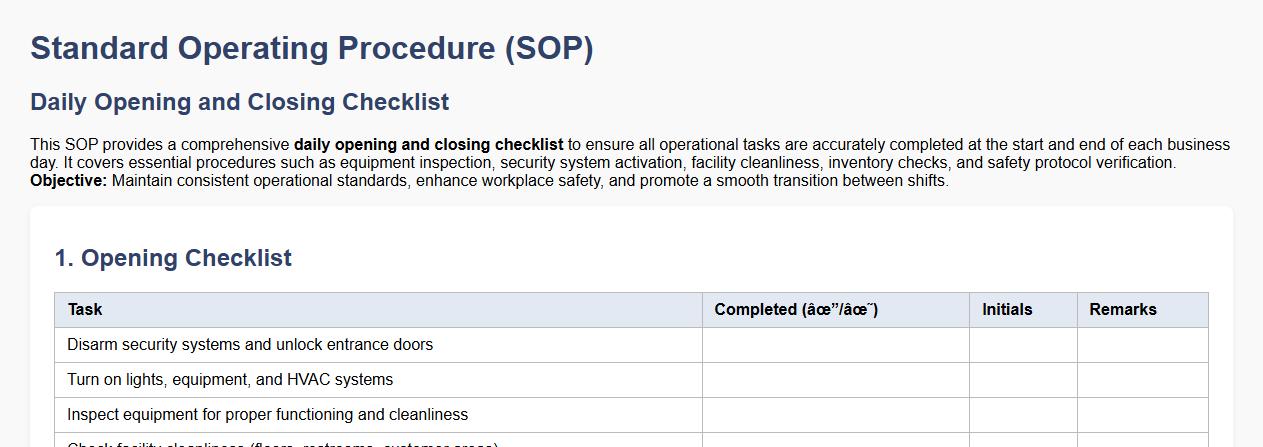
This SOP provides a comprehensive daily opening and closing checklist to ensure all operational tasks are accurately completed at the start and end of each business day. It covers essential procedures such as equipment inspection, security system activation, facility cleanliness, inventory checks, and safety protocol verification. The objective is to maintain consistent operational standards, enhance workplace safety, and promote a smooth transition between shifts.
Inventory and stock control processes.
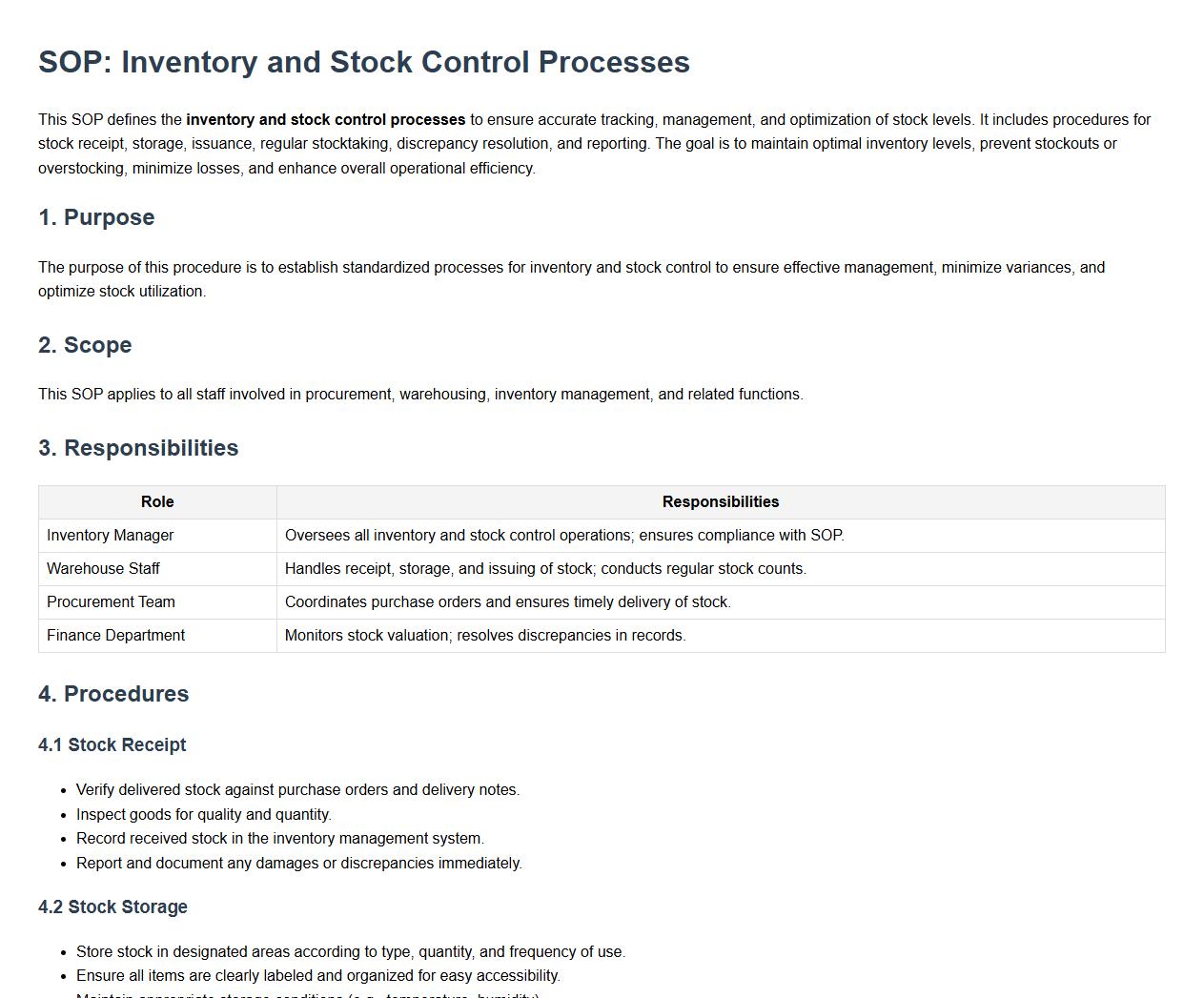
This SOP defines the inventory and stock control processes to ensure accurate tracking, management, and optimization of stock levels. It includes procedures for stock receipt, storage, issuance, regular stocktaking, discrepancy resolution, and reporting. The goal is to maintain optimal inventory levels, prevent stockouts or overstocking, minimize losses, and enhance overall operational efficiency.
Emergency and evacuation procedures.
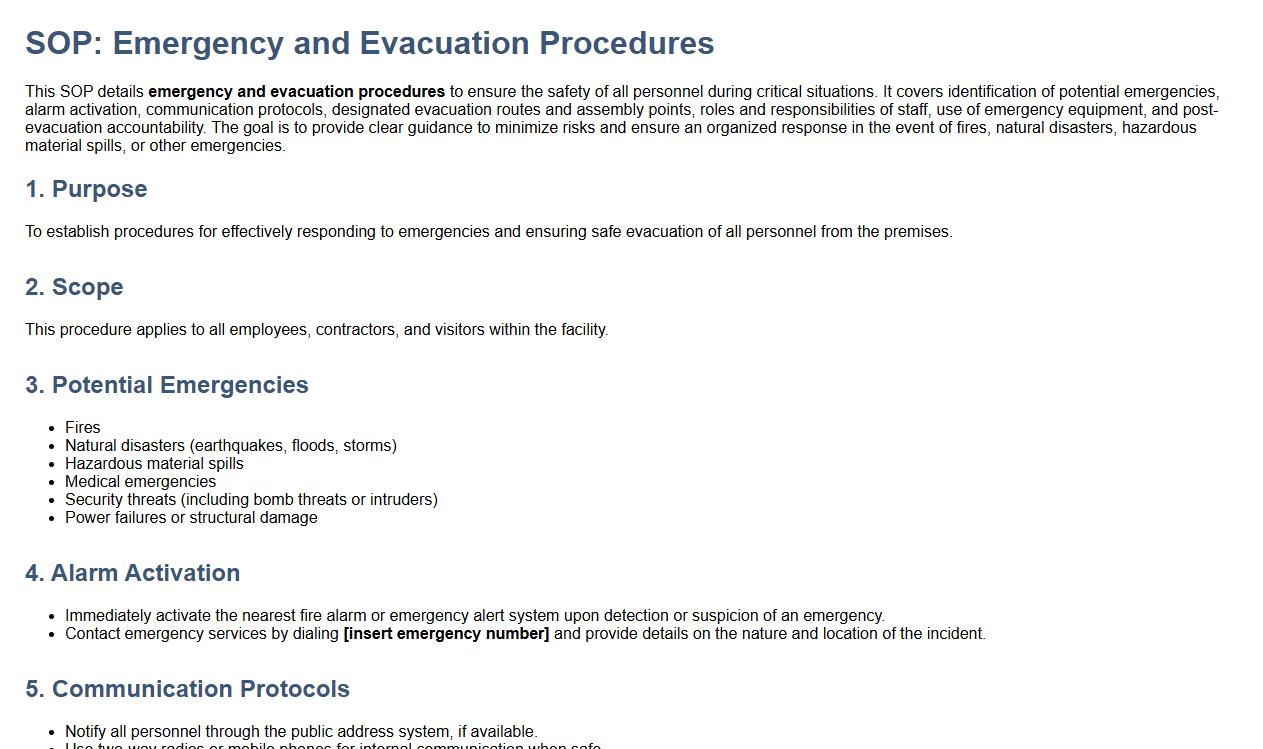
This SOP details emergency and evacuation procedures to ensure the safety of all personnel during critical situations. It covers identification of potential emergencies, alarm activation, communication protocols, designated evacuation routes and assembly points, roles and responsibilities of staff, use of emergency equipment, and post-evacuation accountability. The goal is to provide clear guidance to minimize risks and ensure an organized response in the event of fires, natural disasters, hazardous material spills, or other emergencies.
What are the key steps outlined in the SOP for onboarding new restaurant staff?
The SOP emphasizes a structured orientation process that familiarizes new hires with the restaurant's culture and policies. It includes comprehensive training sessions on operational procedures and customer service expectations. Regular performance evaluations are scheduled to ensure new staff adapt effectively and meet role requirements.
How does the SOP define proper hygiene and food safety practices for employees?
The SOP mandates strict adherence to personal hygiene standards, including regular handwashing and use of clean uniforms. It specifies protocols for safe food handling, such as proper storage, temperature control, and avoiding cross-contamination. Employees must complete mandatory food safety training to maintain a clean and safe kitchen environment.
Which procedures does the SOP specify for handling customer complaints or feedback?
The SOP instructs staff to listen attentively and acknowledge customer concerns promptly to ensure satisfaction. It requires documentation of all complaints in a designated log for follow-up and resolution tracking. Staff are trained to escalate unresolved issues to management quickly to maintain a positive dining experience.
What is the standard protocol in the SOP for managing daily opening and closing duties?
The SOP outlines a detailed checklist for opening duties, including equipment inspection, cleanliness verification, and preparation of service areas. Closing procedures involve thorough cleaning, inventory checks, and secure storage of all perishables and cash. These protocols ensure the restaurant operates efficiently and safely each day.
How does the SOP guide staff in maintaining service consistency and quality standards?
The SOP establishes standardized service procedures to provide a consistent customer experience across all shifts. Regular training and evaluations help maintain quality control in food preparation and presentation. Staff are encouraged to communicate effectively and collaborate to uphold the restaurant's reputation for excellence.