

A SOP Template for Intensive Care Unit Protocols provides a structured and standardized framework for managing critical patient care procedures. It ensures consistency, safety, and compliance with healthcare regulations by detailing step-by-step guidelines tailored to the ICU environment. This template enhances team coordination and improves overall patient outcomes in high-pressure situations.
Patient admission and initial assessment procedures.
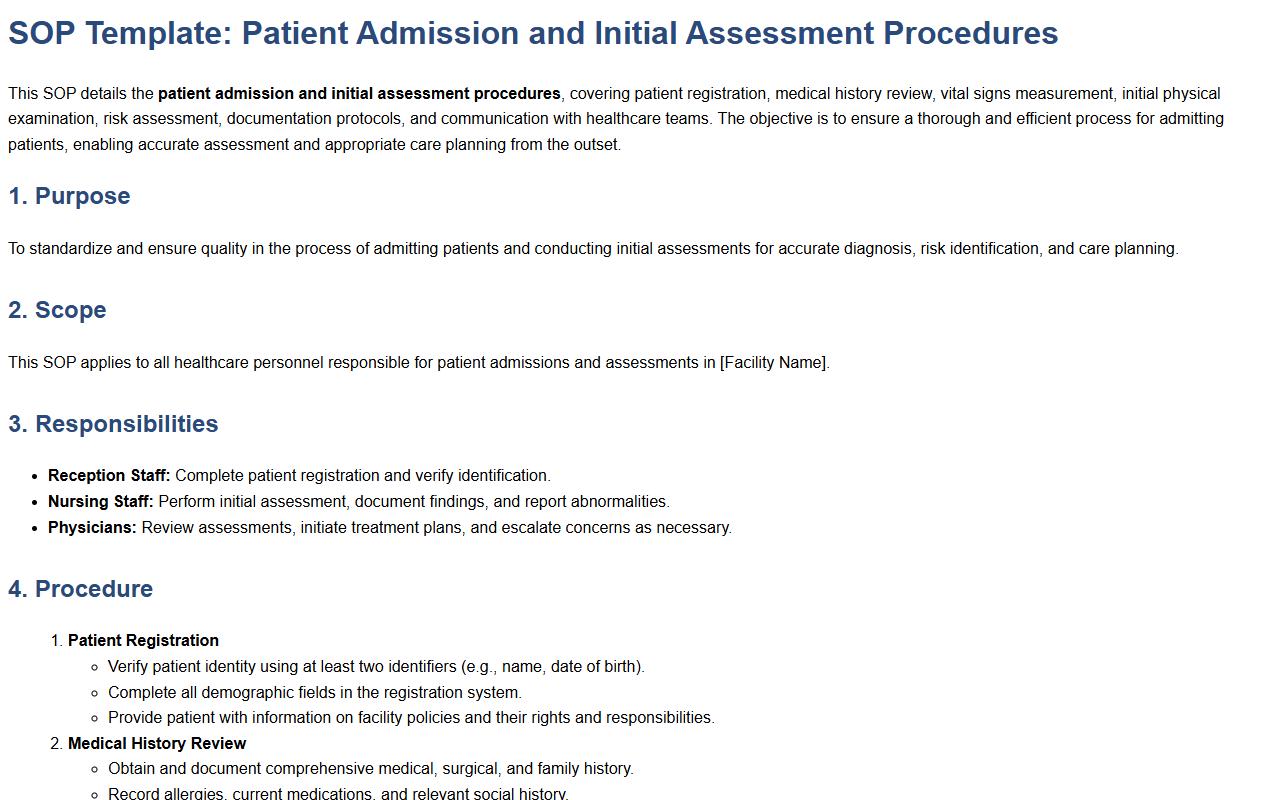
This SOP details the patient admission and initial assessment procedures, covering patient registration, medical history review, vital signs measurement, initial physical examination, risk assessment, documentation protocols, and communication with healthcare teams. The objective is to ensure a thorough and efficient process for admitting patients, enabling accurate assessment and appropriate care planning from the outset.
Standard hand hygiene and personal protective equipment guidelines.
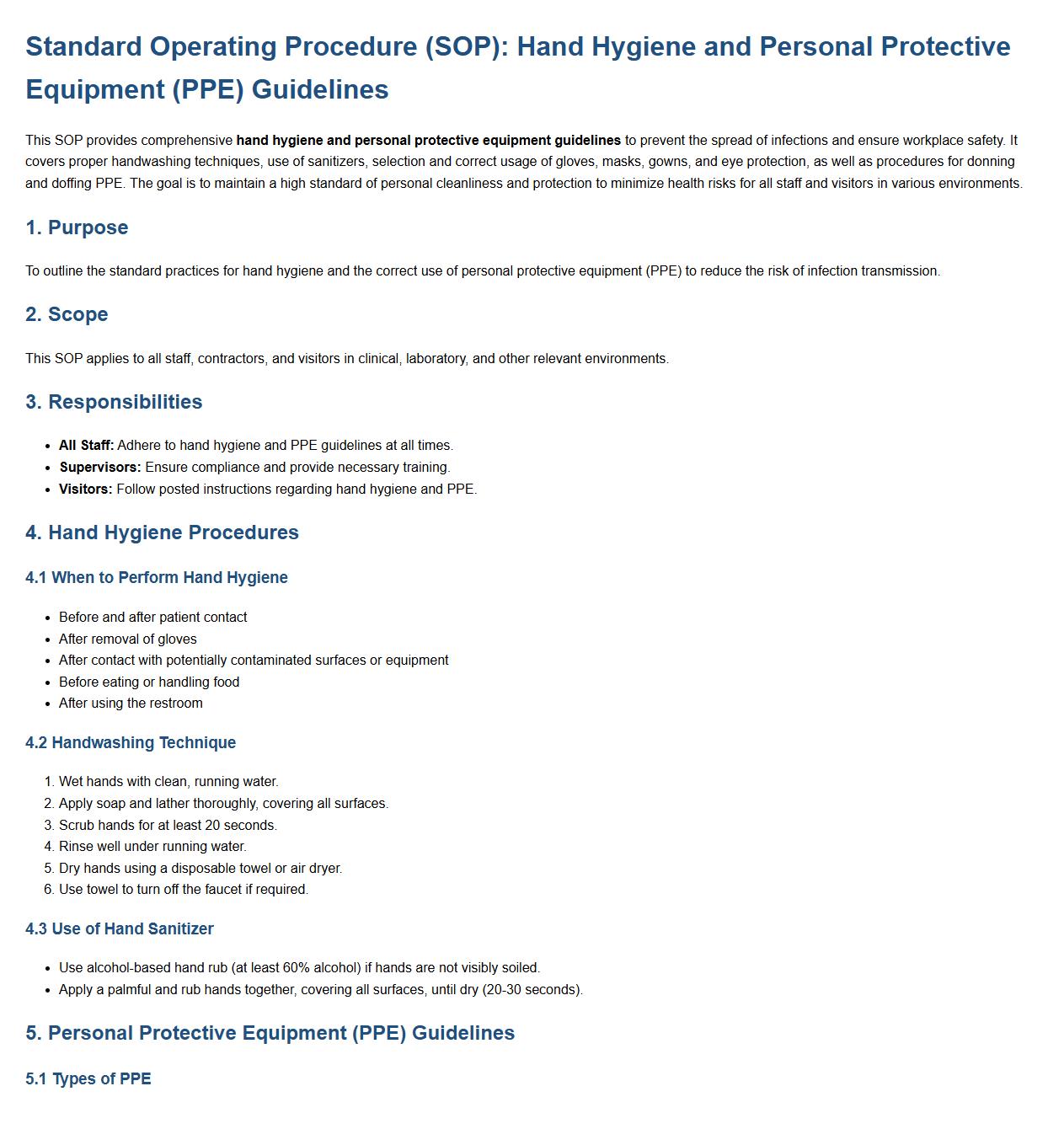
This SOP provides comprehensive hand hygiene and personal protective equipment guidelines to prevent the spread of infections and ensure workplace safety. It covers proper handwashing techniques, use of sanitizers, selection and correct usage of gloves, masks, gowns, and eye protection, as well as procedures for donning and doffing PPE. The goal is to maintain a high standard of personal cleanliness and protection to minimize health risks for all staff and visitors in various environments.
Vital signs monitoring and documentation protocols.
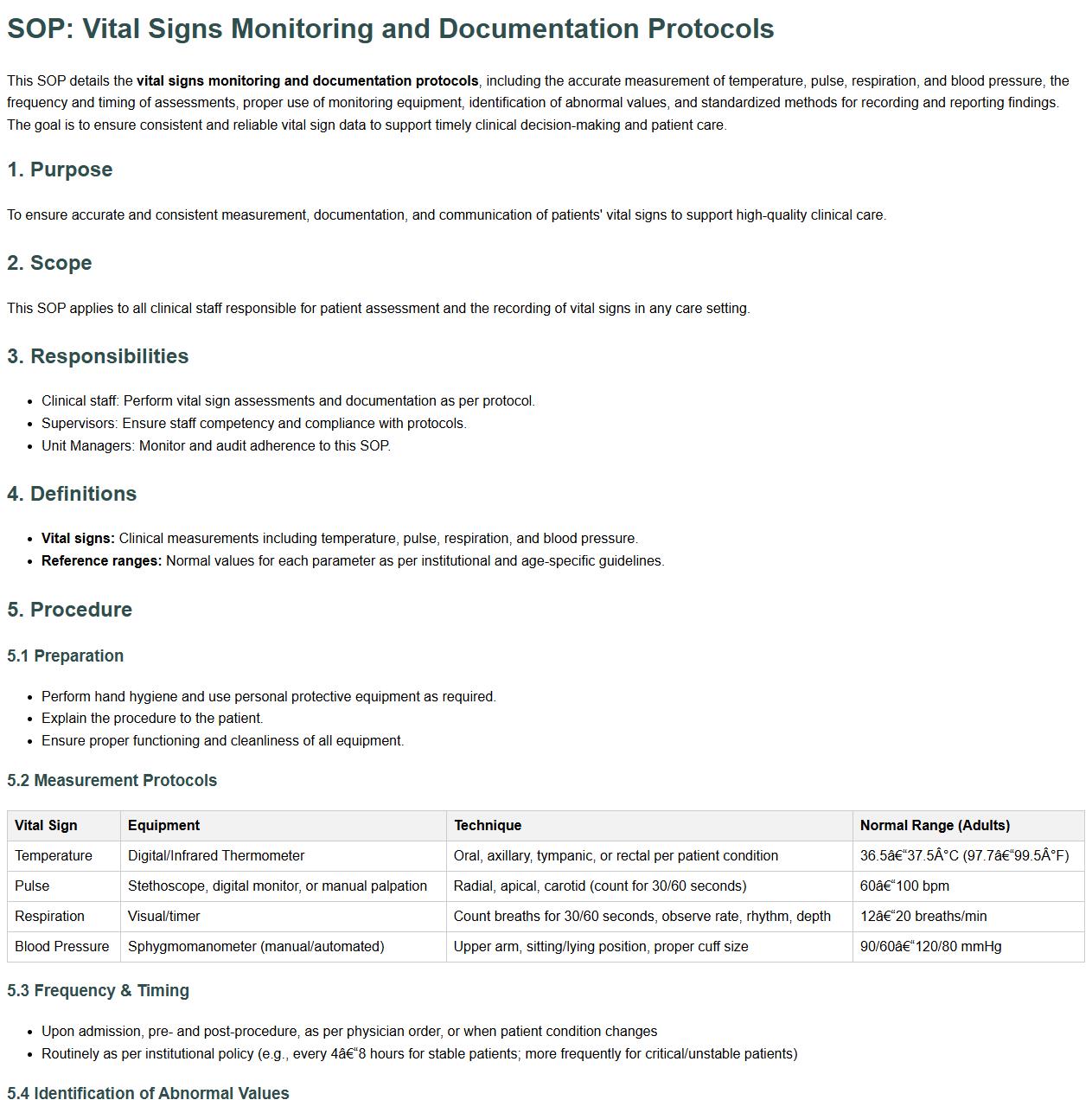
This SOP details the vital signs monitoring and documentation protocols, including the accurate measurement of temperature, pulse, respiration, and blood pressure, the frequency and timing of assessments, proper use of monitoring equipment, identification of abnormal values, and standardized methods for recording and reporting findings. The goal is to ensure consistent and reliable vital sign data to support timely clinical decision-making and patient care.
Medication administration and management processes.
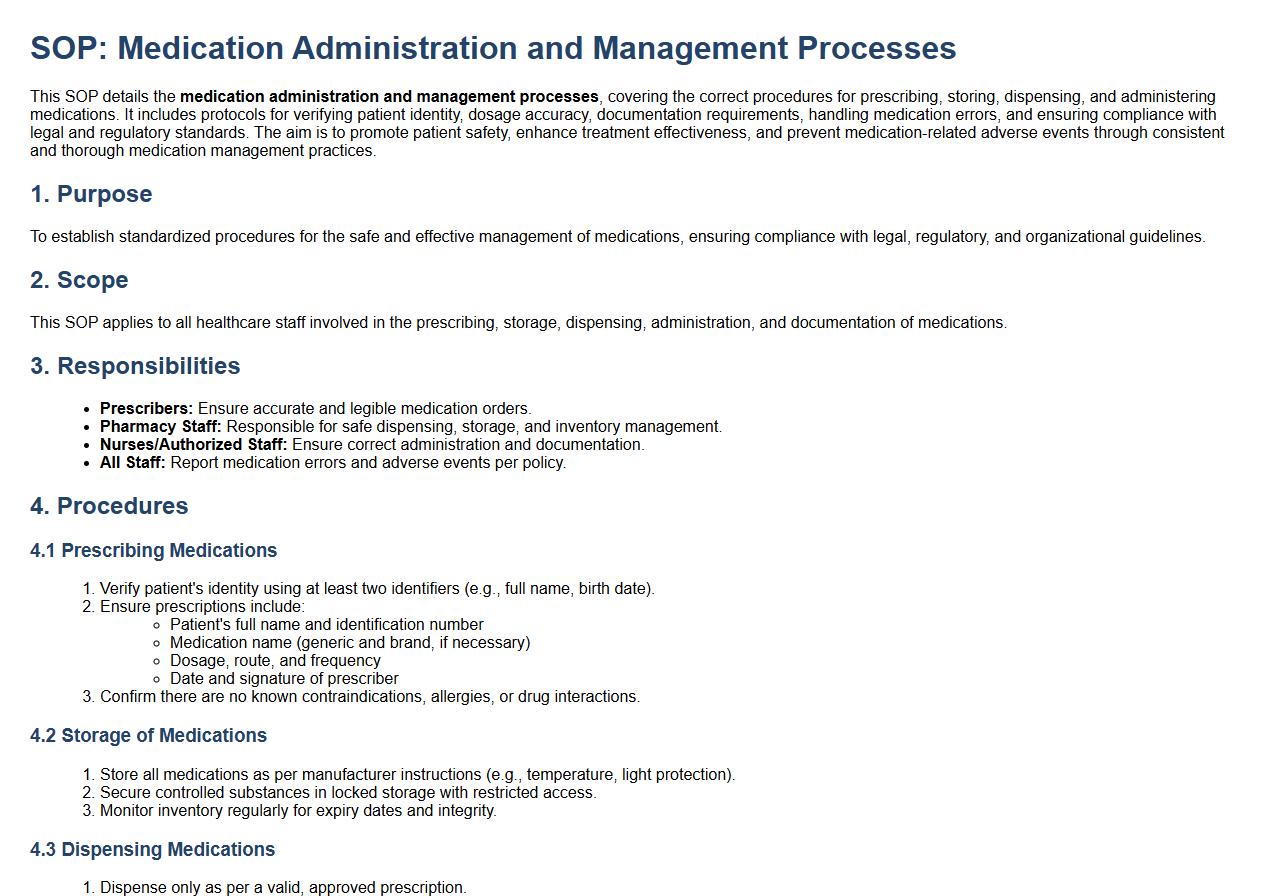
This SOP details the medication administration and management processes, covering the correct procedures for prescribing, storing, dispensing, and administering medications. It includes protocols for verifying patient identity, dosage accuracy, documentation requirements, handling medication errors, and ensuring compliance with legal and regulatory standards. The aim is to promote patient safety, enhance treatment effectiveness, and prevent medication-related adverse events through consistent and thorough medication management practices.
Ventilator setup, usage, and maintenance procedures.
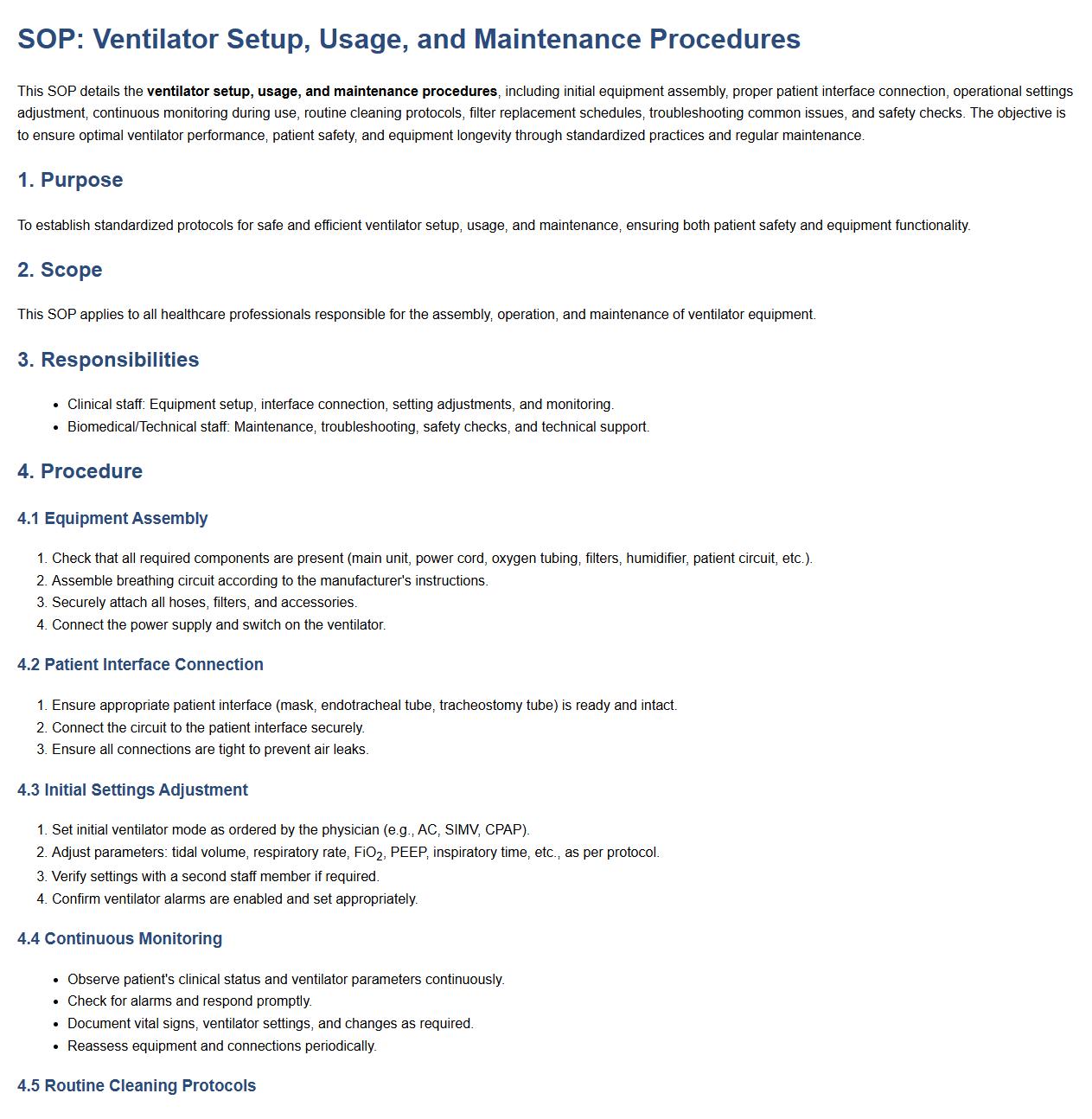
This SOP details the ventilator setup, usage, and maintenance procedures, including initial equipment assembly, proper patient interface connection, operational settings adjustment, continuous monitoring during use, routine cleaning protocols, filter replacement schedules, troubleshooting common issues, and safety checks. The objective is to ensure optimal ventilator performance, patient safety, and equipment longevity through standardized practices and regular maintenance.
Infection prevention and isolation techniques.
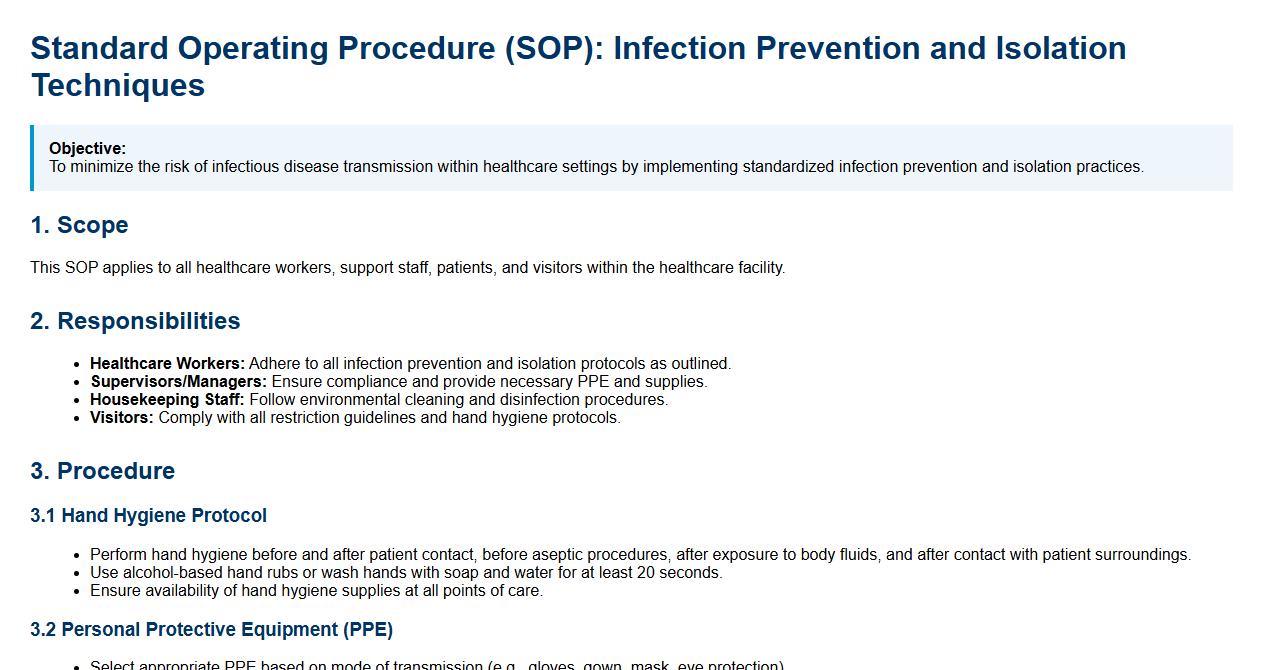
This SOP details infection prevention and isolation techniques, covering hand hygiene protocols, use of personal protective equipment (PPE), environmental cleaning and disinfection, patient isolation procedures, visitor restrictions, and waste management. The objective is to minimize the risk of infectious disease transmission within healthcare settings by implementing standardized prevention and isolation practices.
Central line and catheter care protocols.
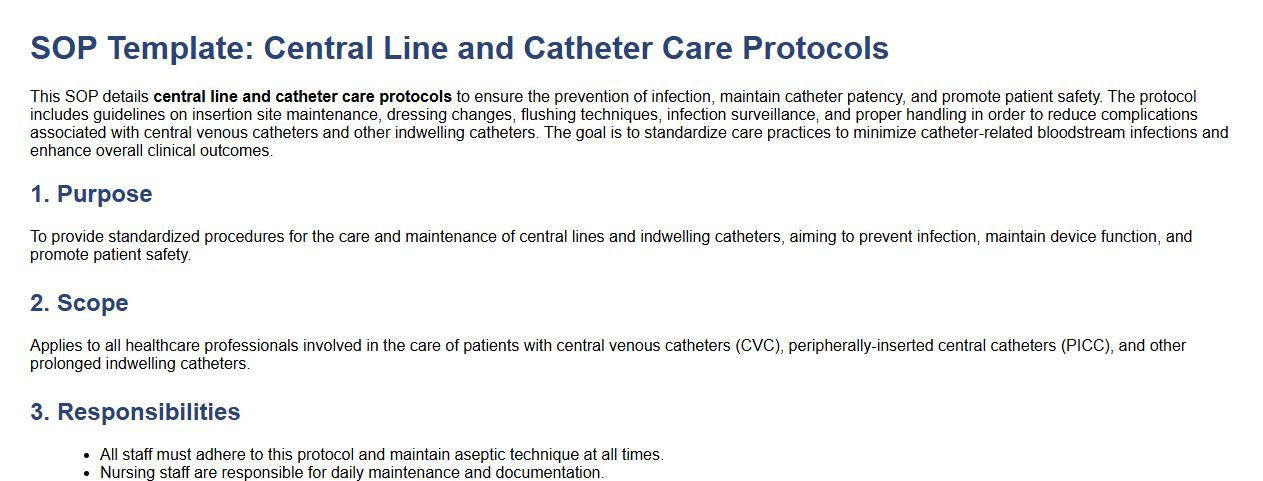
This SOP details central line and catheter care protocols to ensure the prevention of infection, maintain catheter patency, and promote patient safety. It includes guidelines on insertion site maintenance, dressing changes, flushing techniques, infection surveillance, and proper handling to reduce complications associated with central venous catheters and other indwelling catheters. The goal is to standardize care practices to minimize catheter-related bloodstream infections and enhance overall clinical outcomes.
Family communication and visitation guidelines.
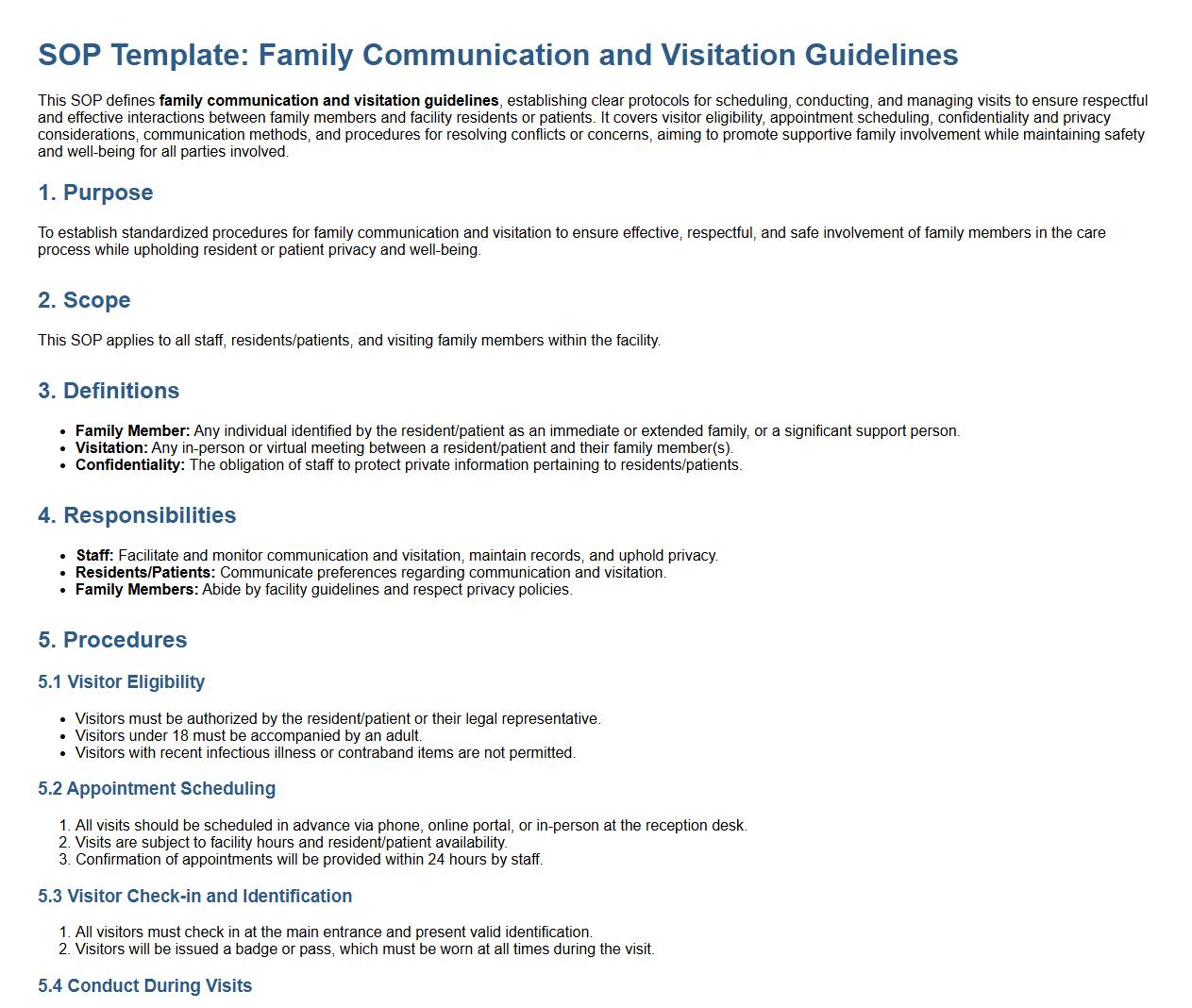
This SOP defines family communication and visitation guidelines, establishing clear protocols for scheduling, conducting, and managing visits to ensure respectful and effective interactions between family members and facility residents or patients. It covers visitor eligibility, appointment scheduling, confidentiality and privacy considerations, communication methods, and procedures for resolving conflicts or concerns, aiming to promote supportive family involvement while maintaining safety and well-being for all parties involved.
Emergency response and code blue activation steps.
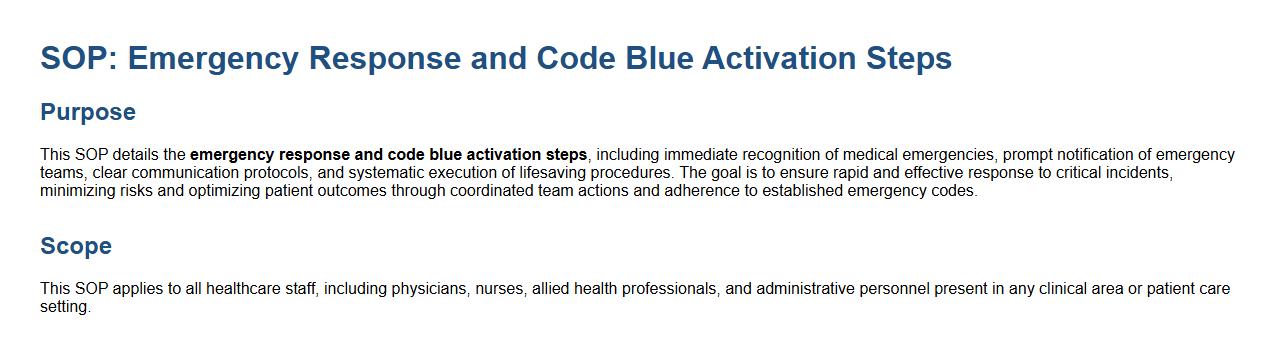
This SOP details the emergency response and code blue activation steps, including immediate recognition of medical emergencies, prompt notification of emergency teams, clear communication protocols, and systematic execution of lifesaving procedures. The goal is to ensure rapid and effective response to critical incidents, minimizing risks and optimizing patient outcomes through coordinated team actions and adherence to established emergency codes.
Daily multidisciplinary patient care rounds and reporting.
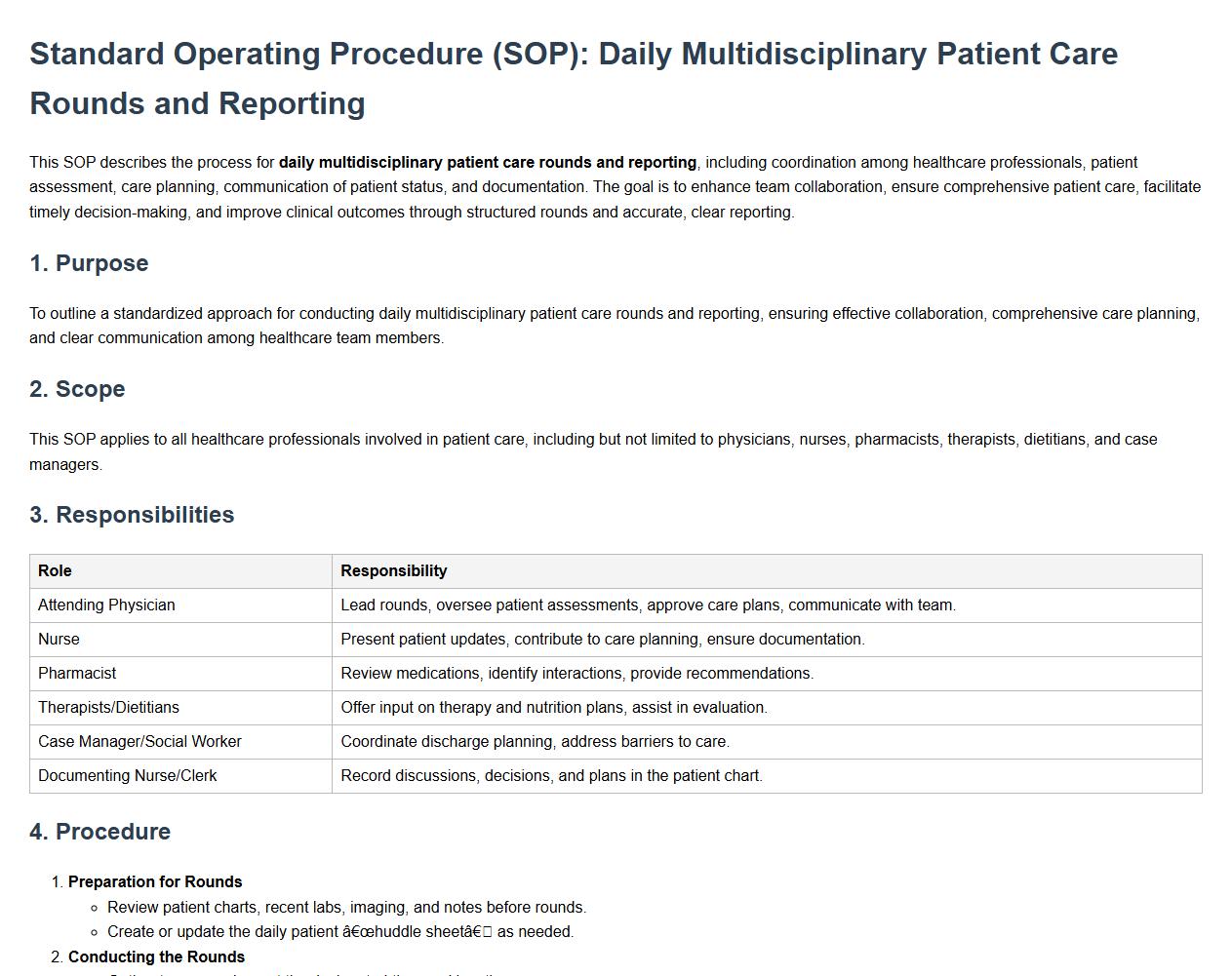
This SOP describes the process for daily multidisciplinary patient care rounds and reporting, including coordination among healthcare professionals, patient assessment, care planning, communication of patient status, and documentation. The goal is to enhance team collaboration, ensure comprehensive patient care, facilitate timely decision-making, and improve clinical outcomes through structured rounds and accurate, clear reporting.
Key Objectives Outlined in the Intensive Care Unit SOP Document
The primary objective of the Intensive Care Unit (ICU) SOP is to ensure consistent and high-quality patient care. It focuses on establishing standardized procedures that improve patient outcomes and safety. Additionally, the SOP aims to optimize resource utilization within the ICU setting.
Personnel Roles and Responsibilities Defined Within the ICU Protocol SOP
The ICU SOP clearly defines roles such as intensivists, nurses, and support staff, detailing their specific duties and scopes of practice. It ensures that each team member understands their responsibilities to maintain seamless patient care. Collaboration and accountability among all personnel are emphasized to enhance operational efficiency.
Procedures Specified for Patient Admission and Discharge in the ICU SOP
The SOP outlines a rigorous process for patient admission, including initial assessment, documentation, and triage criteria. For discharge, it prescribes comprehensive evaluations to ensure patient stability and appropriate handover to other departments. This minimizes risks and maximizes continuity of care.
Infection Control Measures Mandated by the ICU Standard Operation Protocol
The SOP mandates strict infection control protocols such as hand hygiene, sterilization of equipment, and isolation procedures. It includes guidelines for monitoring infection rates and implementing preventive strategies. These measures are critical to protecting both patients and healthcare workers.
Emergency Response Protocols Described in the ICU SOP Document
The ICU SOP details emergency response procedures to handle critical situations like cardiac arrests and respiratory failures. It emphasizes rapid communication, team coordination, and availability of life-saving equipment. Regular drills and training ensure preparedness among ICU staff.