

A SOP Template for Outpatient Department Operations provides a structured framework to standardize clinical and administrative procedures, ensuring consistent patient care and efficient workflow. It outlines critical steps for appointment scheduling, patient registration, consultation, and follow-up processes to enhance service quality. This template helps staff adhere to compliance standards and optimize resource management within the outpatient department.
Patient registration and appointment scheduling procedures.
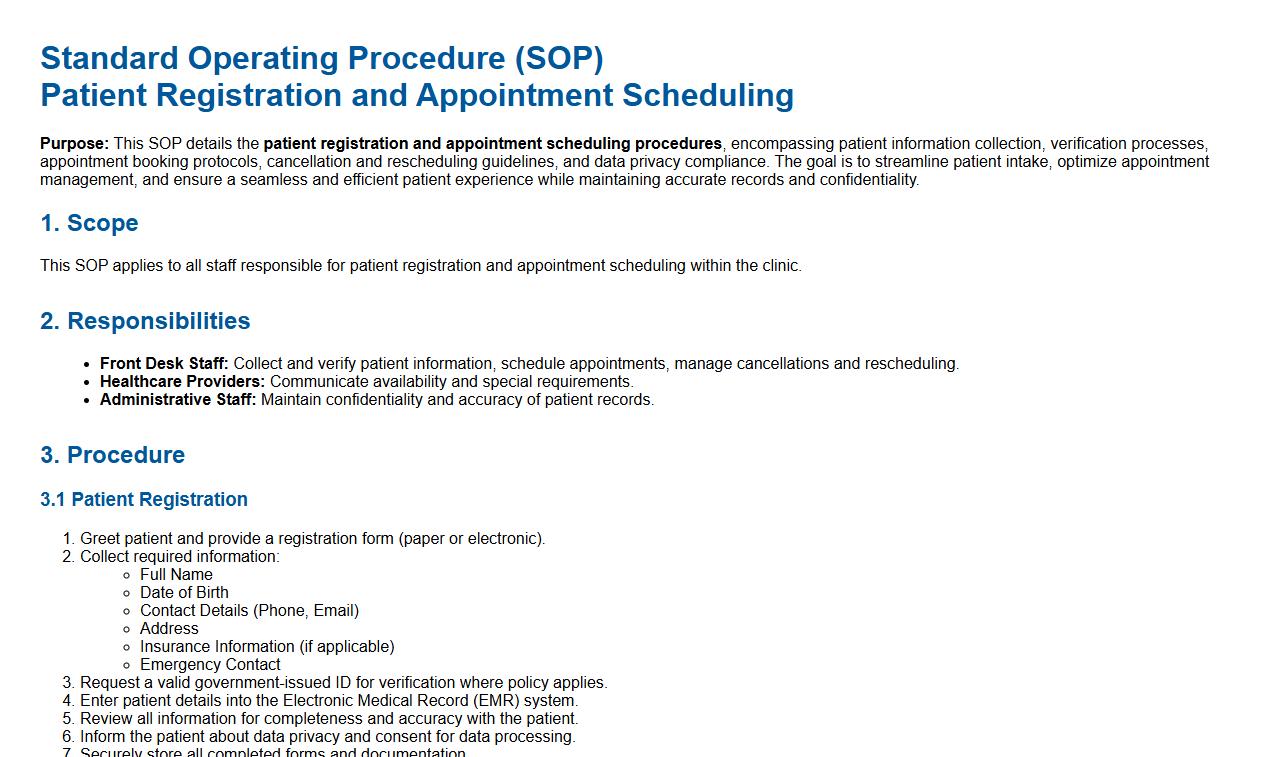
This SOP details the patient registration and appointment scheduling procedures, encompassing patient information collection, verification processes, appointment booking protocols, cancellation and rescheduling guidelines, and data privacy compliance. The goal is to streamline patient intake, optimize appointment management, and ensure a seamless and efficient patient experience while maintaining accurate records and confidentiality.
Patient triage and initial assessment protocols.
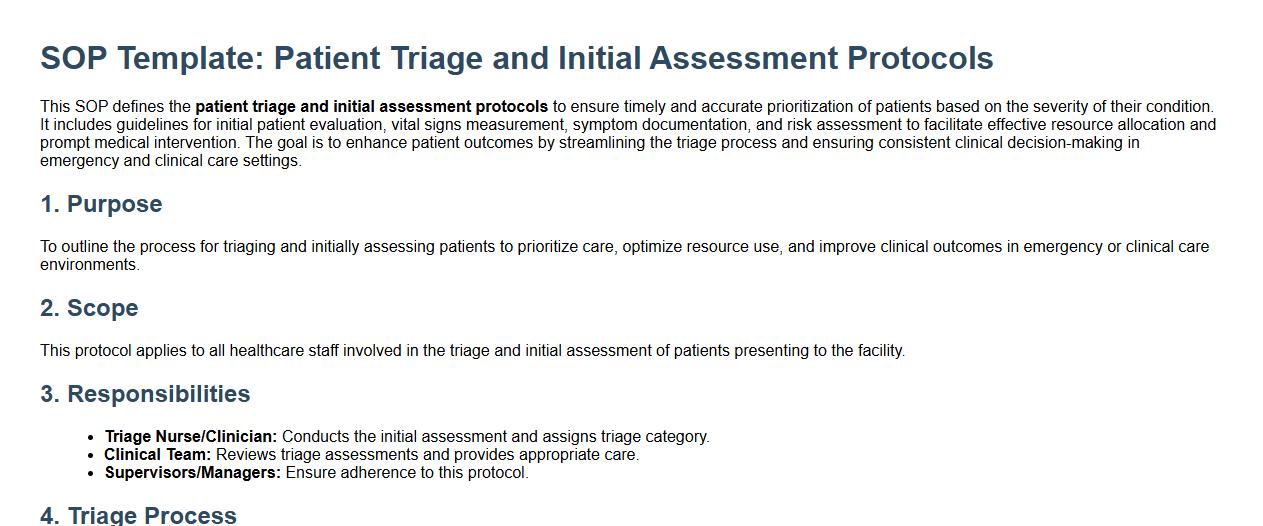
This SOP defines the patient triage and initial assessment protocols to ensure timely and accurate prioritization of patients based on the severity of their condition. It includes guidelines for initial patient evaluation, vital signs measurement, symptom documentation, and risk assessment to facilitate effective resource allocation and prompt medical intervention. The goal is to enhance patient outcomes by streamlining the triage process and ensuring consistent clinical decision-making in emergency and clinical care settings.
Consultation and examination room preparation guidelines.
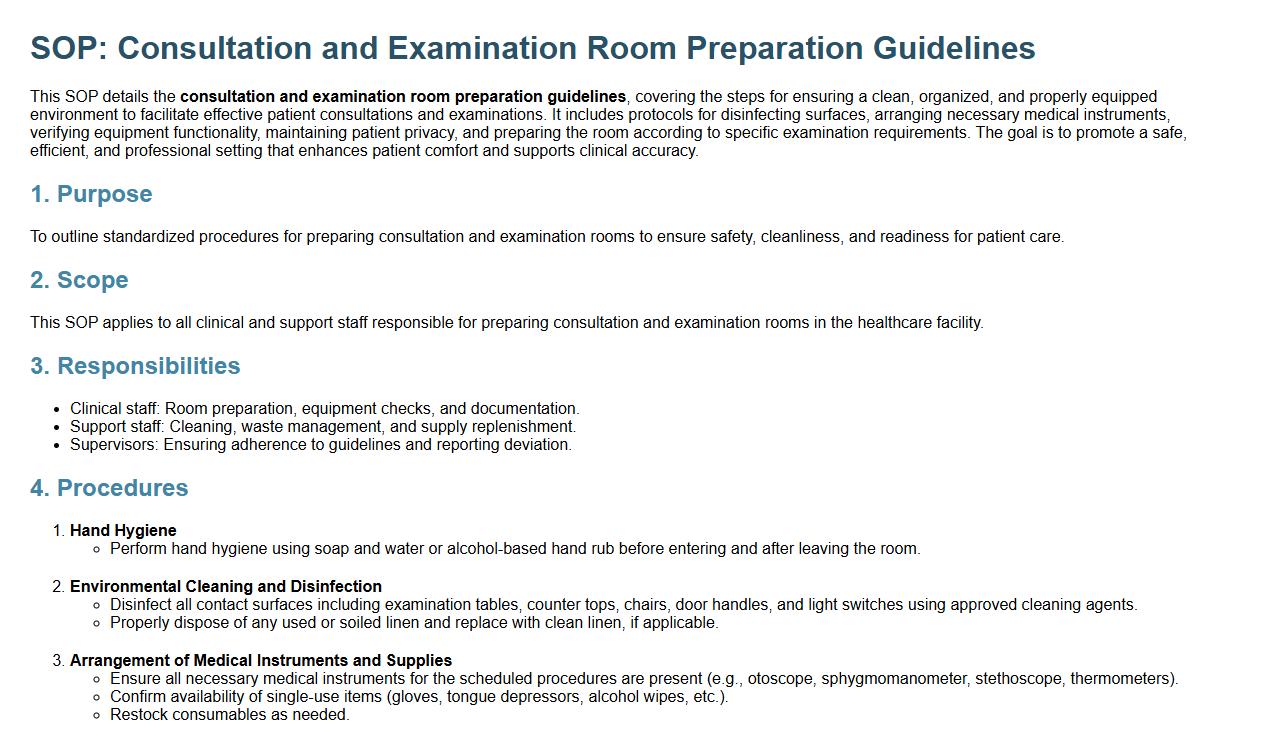
This SOP details the consultation and examination room preparation guidelines, covering the steps for ensuring a clean, organized, and properly equipped environment to facilitate effective patient consultations and examinations. It includes protocols for disinfecting surfaces, arranging necessary medical instruments, verifying equipment functionality, maintaining patient privacy, and preparing the room according to specific examination requirements. The goal is to promote a safe, efficient, and professional setting that enhances patient comfort and supports clinical accuracy.
Standard procedure for patient identification and verification.
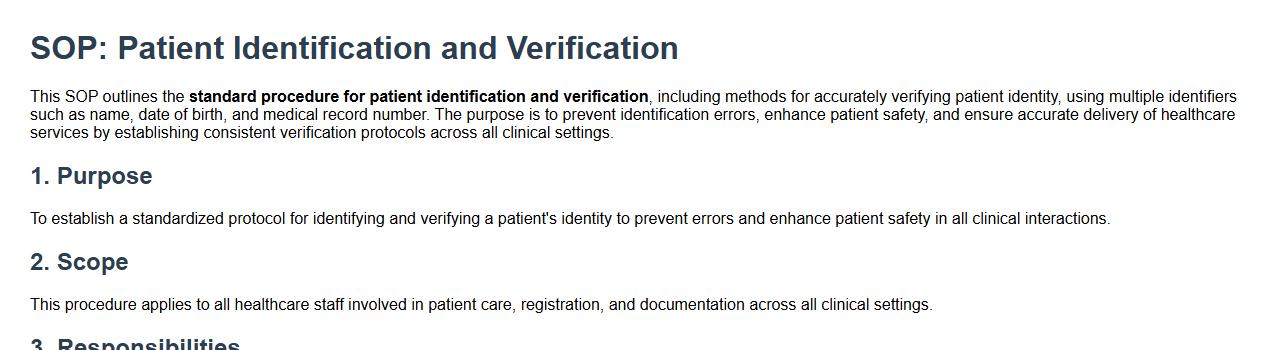
This SOP outlines the standard procedure for patient identification and verification, including methods for accurately verifying patient identity, using multiple identifiers such as name, date of birth, and medical record number. The purpose is to prevent identification errors, enhance patient safety, and ensure accurate delivery of healthcare services by establishing consistent verification protocols across all clinical settings.
Medical records management and confidentiality measures.
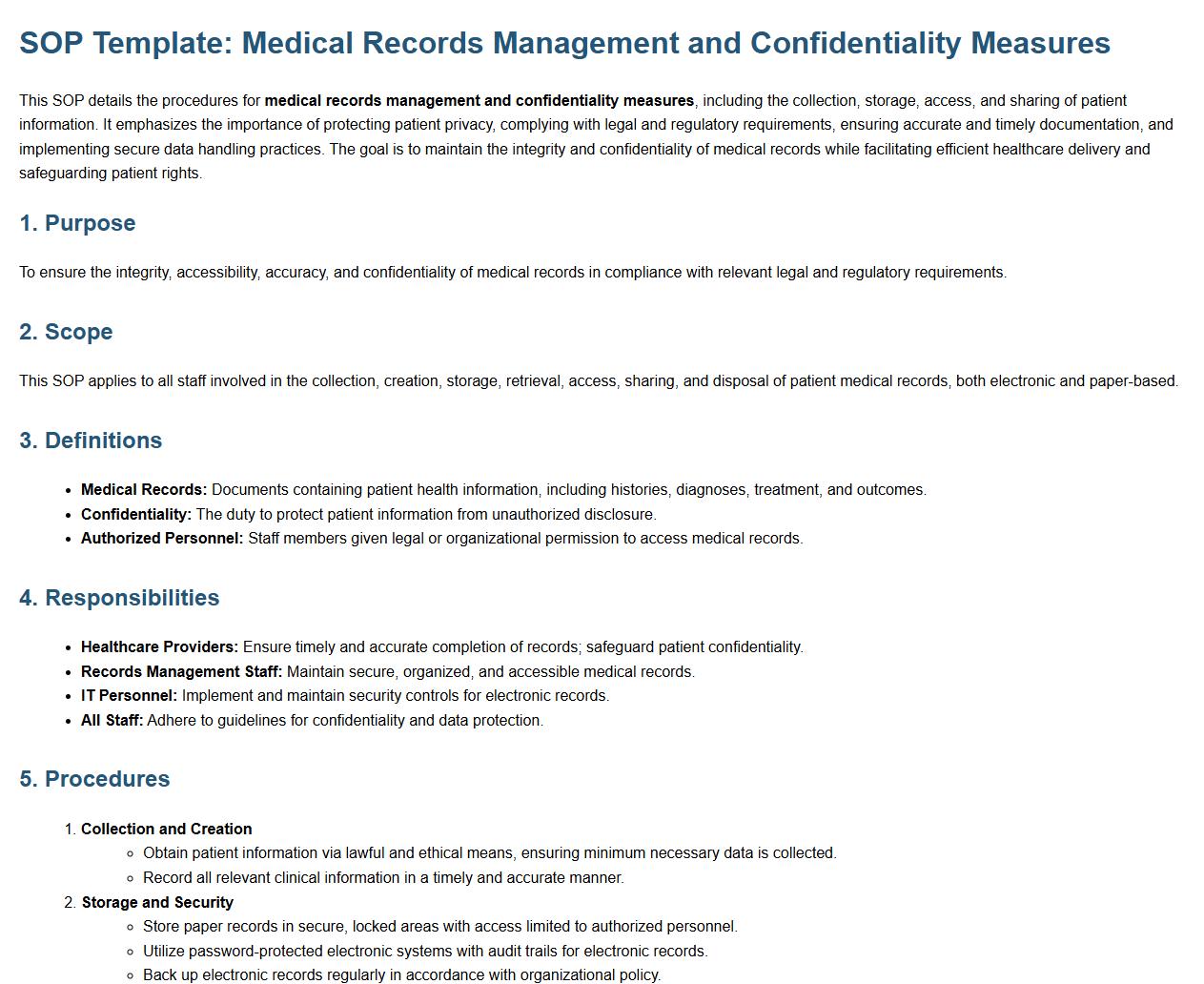
This SOP details the procedures for medical records management and confidentiality measures, including the collection, storage, access, and sharing of patient information. It emphasizes the importance of protecting patient privacy, complying with legal and regulatory requirements, ensuring accurate and timely documentation, and implementing secure data handling practices. The goal is to maintain the integrity and confidentiality of medical records while facilitating efficient healthcare delivery and safeguarding patient rights.
Medication dispensing and prescription handling processes.
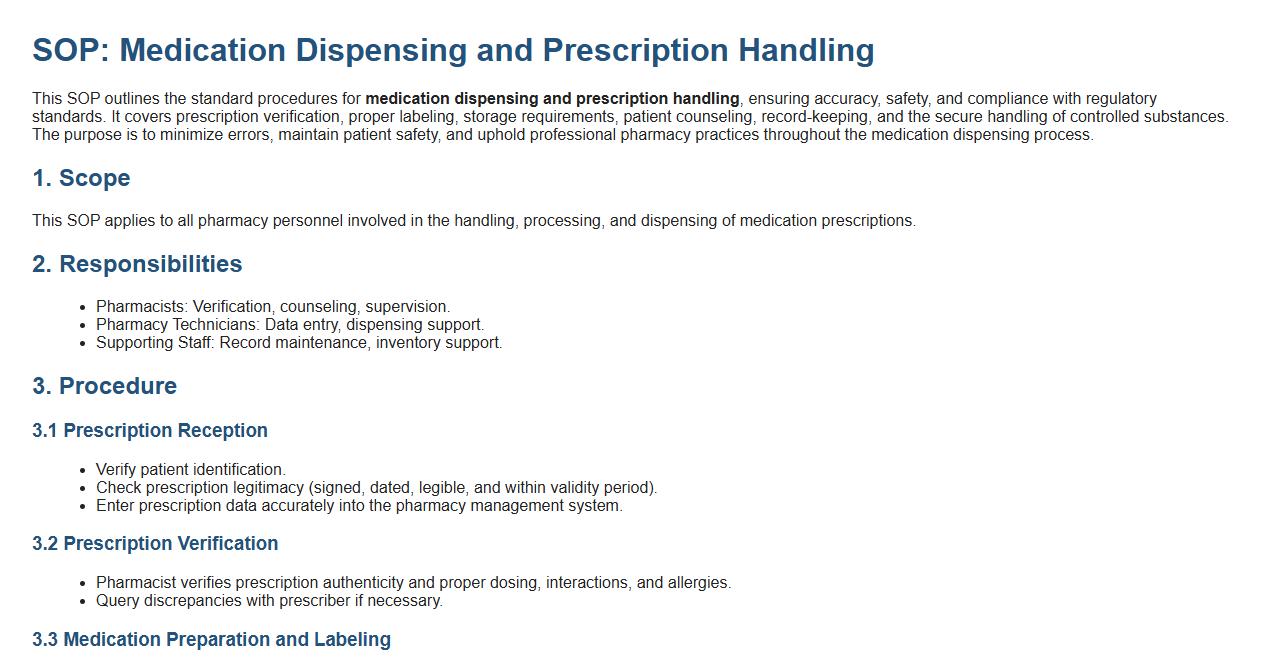
This SOP outlines the standard procedures for medication dispensing and prescription handling, ensuring accuracy, safety, and compliance with regulatory standards. It covers prescription verification, proper labeling, storage requirements, patient counseling, record-keeping, and the secure handling of controlled substances. The purpose is to minimize errors, maintain patient safety, and uphold professional pharmacy practices throughout the medication dispensing process.
Infection control and sanitation protocols.
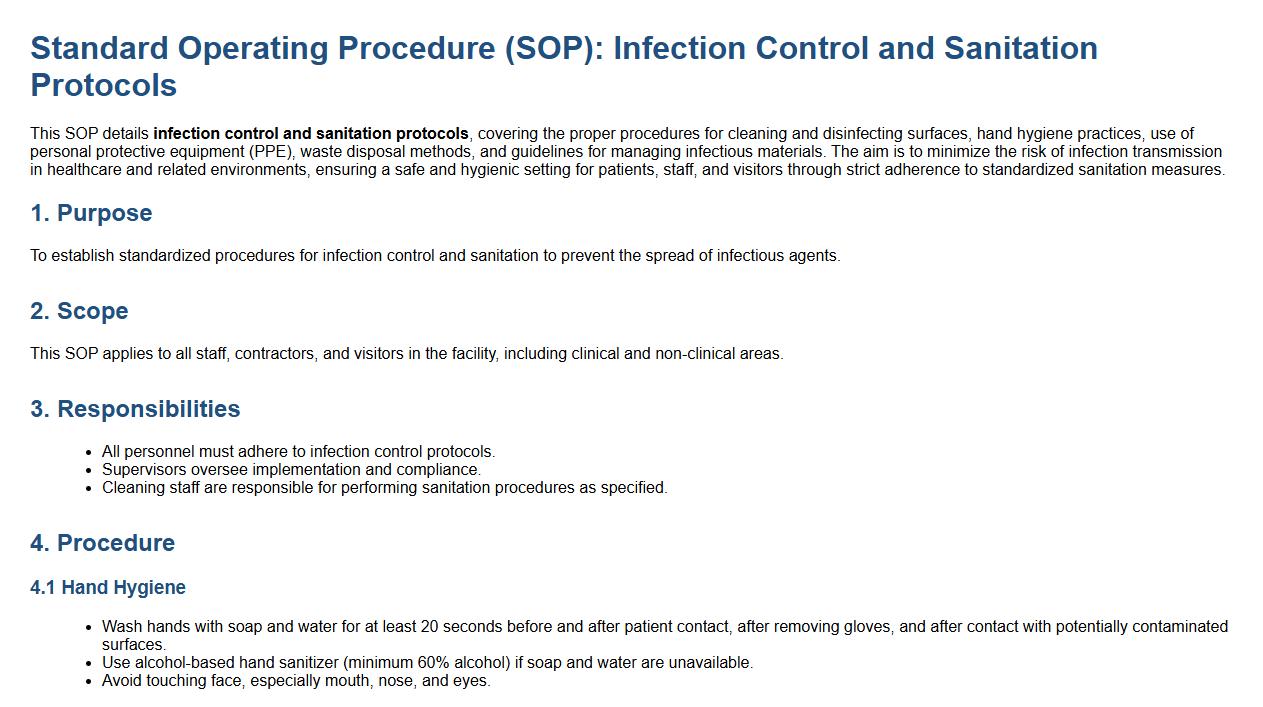
This SOP details infection control and sanitation protocols, covering the proper procedures for cleaning and disinfecting surfaces, hand hygiene practices, use of personal protective equipment (PPE), waste disposal methods, and guidelines for managing infectious materials. The aim is to minimize the risk of infection transmission in healthcare and related environments, ensuring a safe and hygienic setting for patients, staff, and visitors through strict adherence to standardized sanitation measures.
Patient discharge and follow-up scheduling steps.
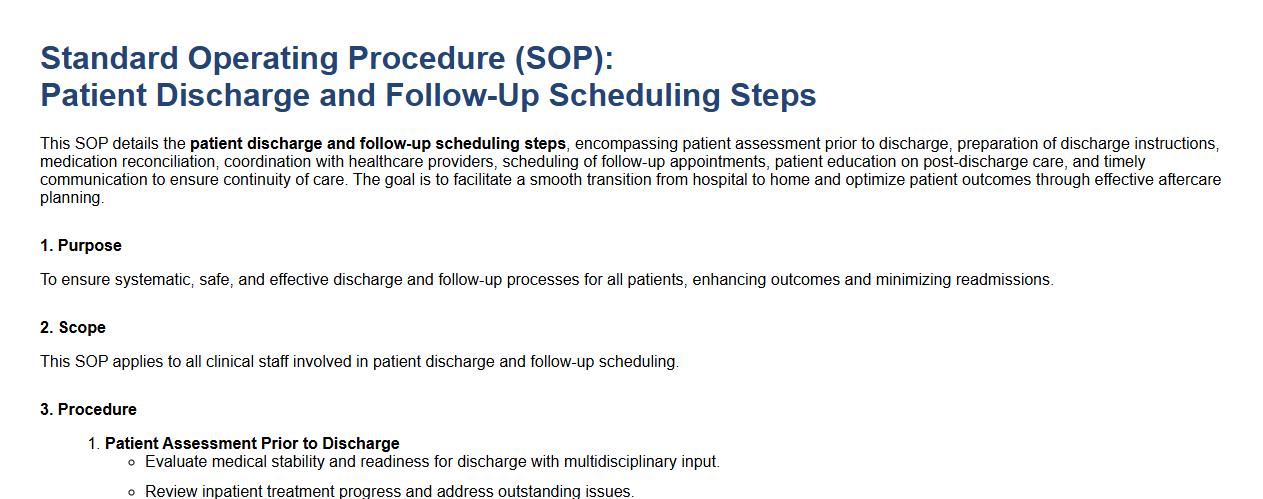
This SOP details the patient discharge and follow-up scheduling steps, encompassing patient assessment prior to discharge, preparation of discharge instructions, medication reconciliation, coordination with healthcare providers, scheduling of follow-up appointments, patient education on post-discharge care, and timely communication to ensure continuity of care. The goal is to facilitate a smooth transition from hospital to home and optimize patient outcomes through effective aftercare planning.
Emergency response and escalation procedures.
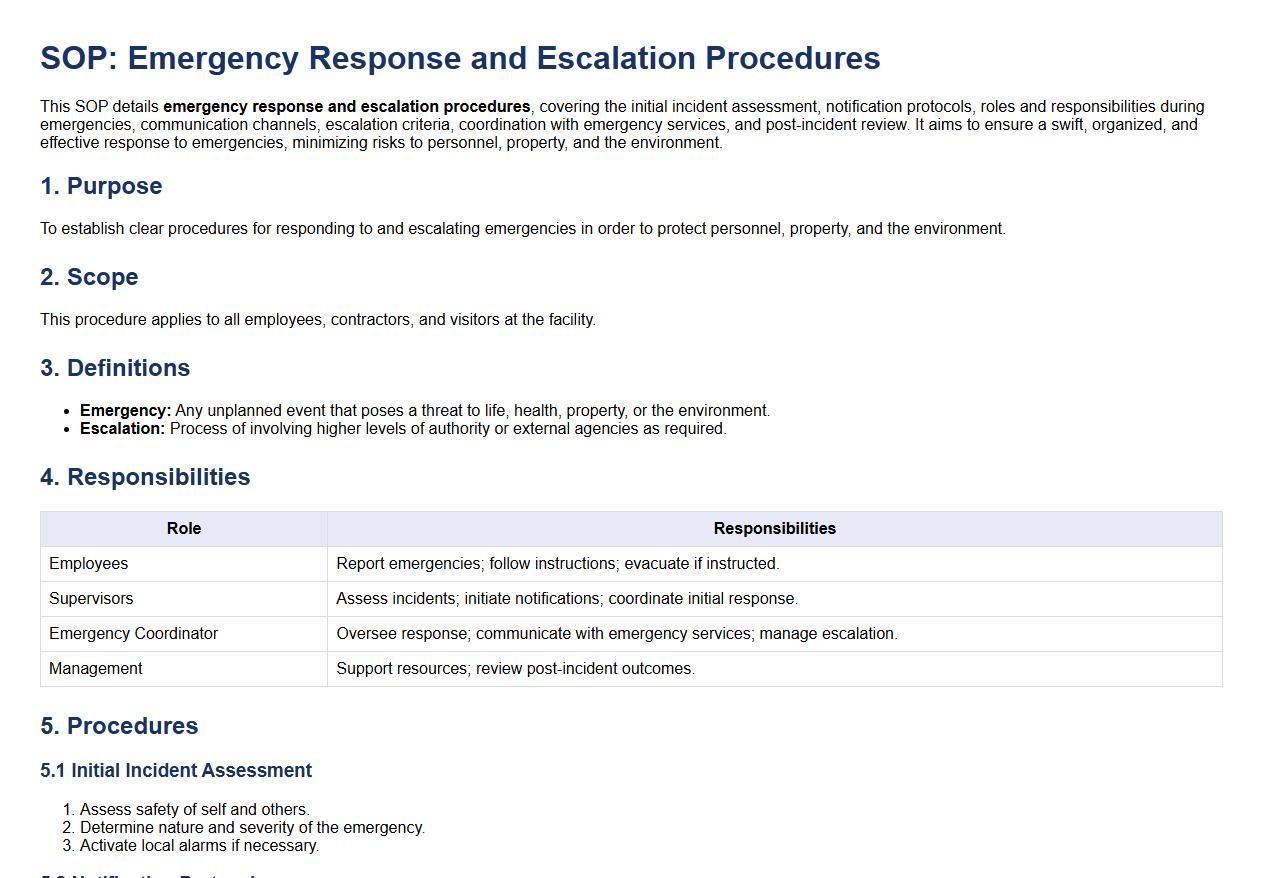
This SOP details emergency response and escalation procedures, covering the initial incident assessment, notification protocols, roles and responsibilities during emergencies, communication channels, escalation criteria, coordination with emergency services, and post-incident review. It aims to ensure a swift, organized, and effective response to emergencies, minimizing risks to personnel, property, and the environment.
Daily OPD cleanliness, maintenance, and waste disposal.
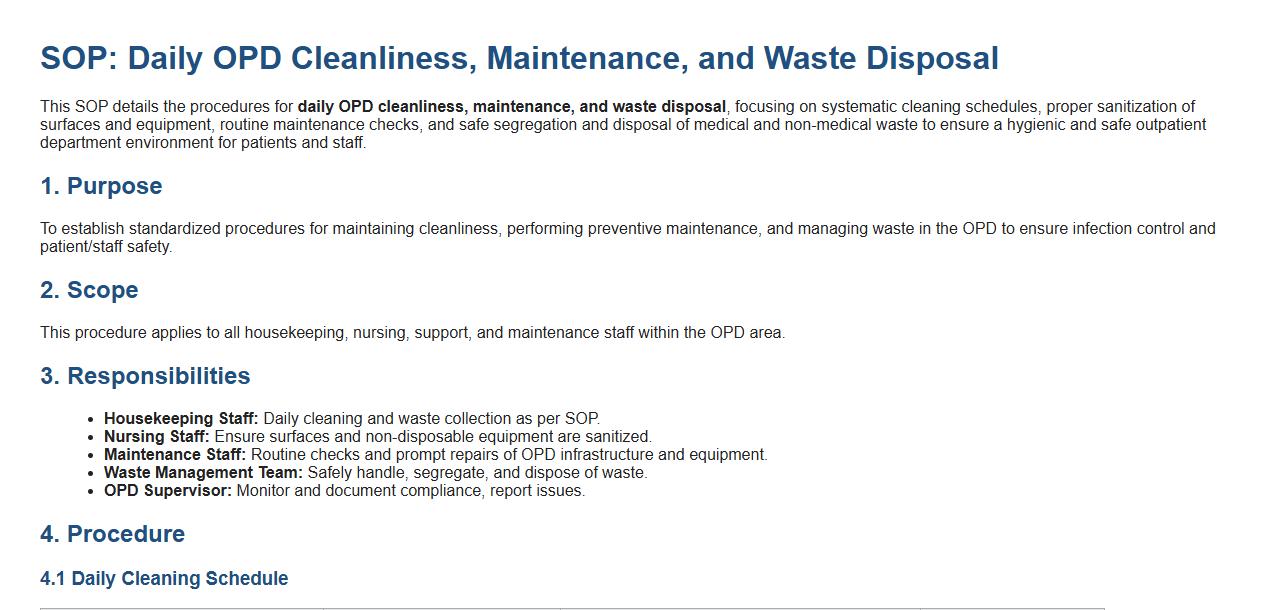
This SOP details the procedures for daily OPD cleanliness, maintenance, and waste disposal, focusing on systematic cleaning schedules, proper sanitization of surfaces and equipment, routine maintenance checks, and safe segregation and disposal of medical and non-medical waste to ensure a hygienic and safe outpatient department environment for patients and staff.
What key processes are outlined in the SOP for managing patient registration and appointment scheduling in the Outpatient Department?
The SOP details the step-by-step procedure for patient registration, ensuring accurate data capture at the point of entry. It includes verification of patient identity and insurance details to facilitate smooth appointment scheduling. Additionally, the SOP integrates electronic systems to optimize the booking process and minimize errors.
How does the SOP ensure consistent patient assessment and documentation across all outpatient visits?
The SOP mandates the use of standardized assessment forms to guarantee thorough and uniform patient evaluations. Clinicians are required to document findings immediately to maintain accurate and complete medical records. Regular audits are conducted to monitor compliance and improve documentation quality.
What protocols are specified for managing patient flow and reducing wait times in the Outpatient Department?
The SOP outlines a triage system to prioritize patients based on clinical urgency, enhancing efficiency. It incorporates timed appointment slots and real-time monitoring of patient status to minimize delays. Staff are trained to implement these protocols, ensuring a smoother patient flow and reduced waiting periods.
How does the SOP address infection control and patient safety within the outpatient clinical environment?
The SOP emphasizes strict adherence to hand hygiene and the use of personal protective equipment by all staff members. It specifies routine cleaning schedules and sterilization procedures for clinical instruments and surfaces. These measures collectively strengthen infection control and ensure a safe environment for patients.
What are the escalation procedures in the SOP for handling medical emergencies or critical incidents in the Outpatient Department?
The SOP requires immediate identification and notification of qualified emergency personnel upon recognizing a critical incident. It defines clear communication channels and roles to efficiently escalate situations. Documentation of the event and follow-up reviews are crucial components of the escalation process.