

A SOP Template for Emergency Response in Hospitals ensures a standardized and efficient approach to handling critical situations, minimizing confusion and delays. This template outlines clear roles, communication protocols, and procedures to optimize patient care and staff coordination during emergencies. Implementing this SOP enhances hospital preparedness and safety compliance across all departments.
Emergency code activation and notification procedures.
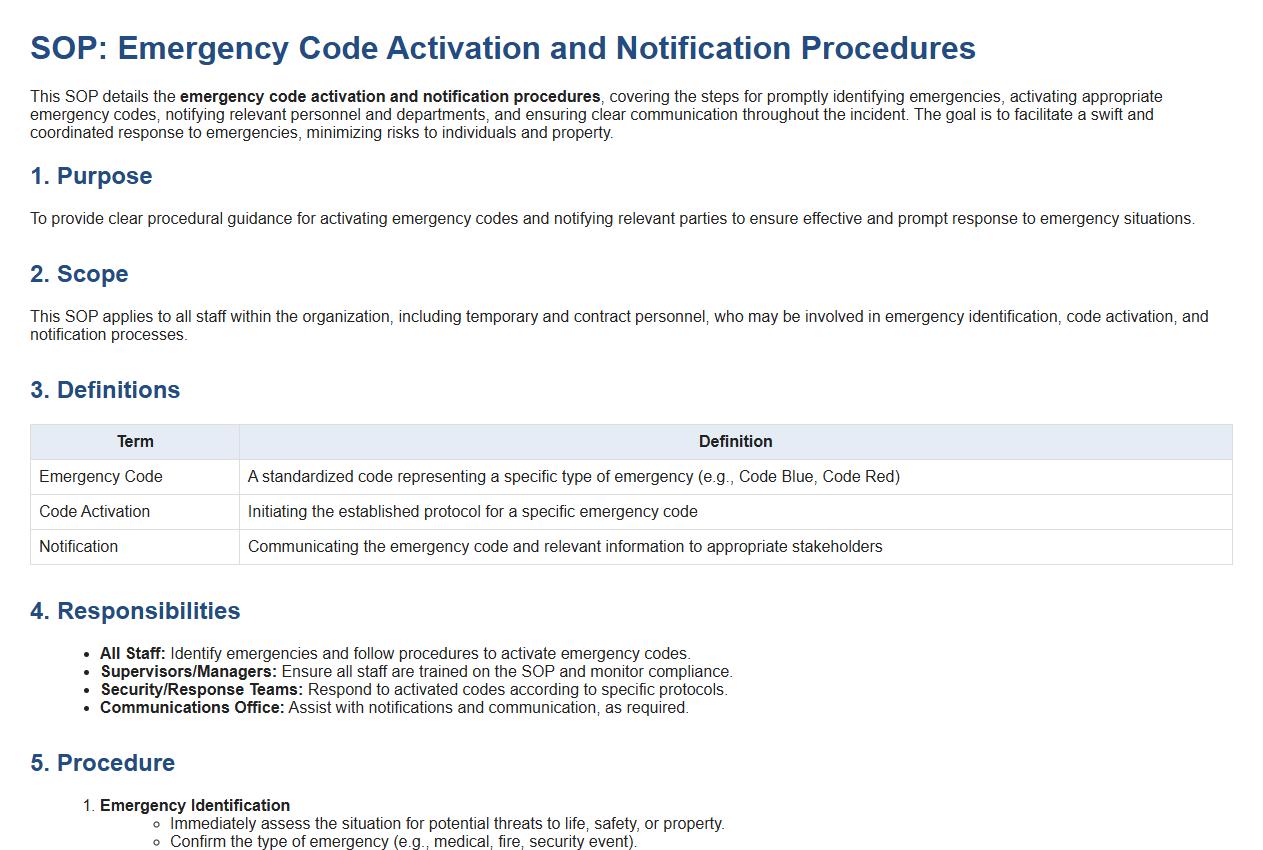
This SOP details the emergency code activation and notification procedures, covering the steps for promptly identifying emergencies, activating appropriate emergency codes, notifying relevant personnel and departments, and ensuring clear communication throughout the incident. The goal is to facilitate a swift and coordinated response to emergencies, minimizing risks to individuals and property.
Patient triage and prioritization protocols.
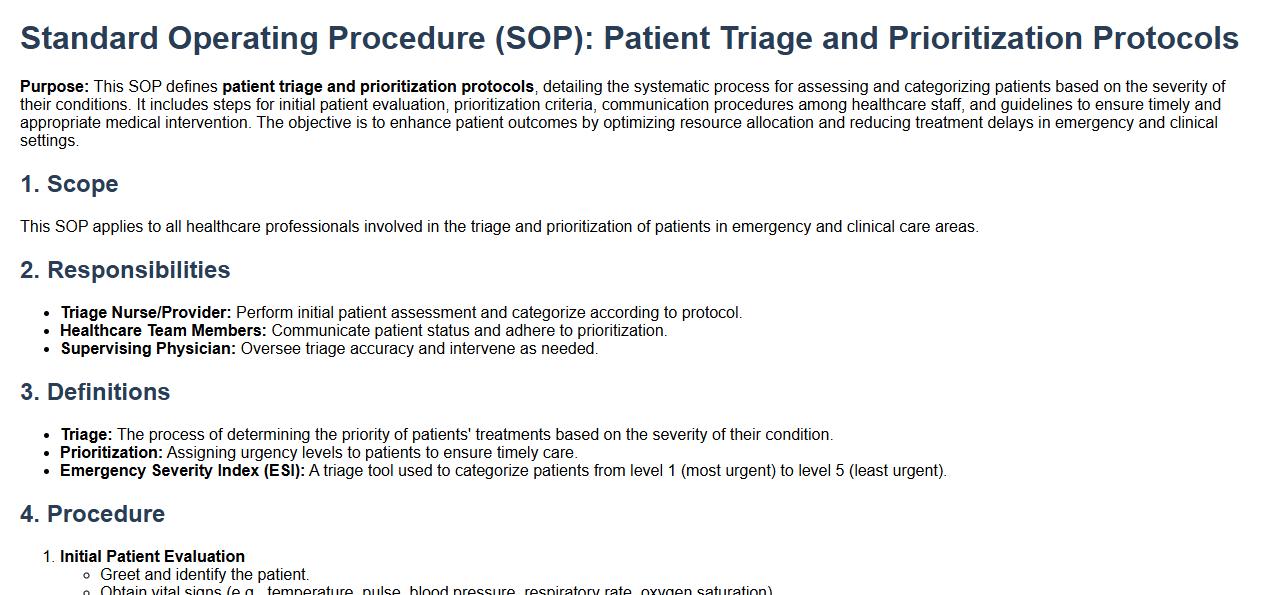
This SOP defines patient triage and prioritization protocols, detailing the systematic process for assessing and categorizing patients based on the severity of their conditions. It includes steps for initial patient evaluation, prioritization criteria, communication procedures among healthcare staff, and guidelines to ensure timely and appropriate medical intervention. The objective is to enhance patient outcomes by optimizing resource allocation and reducing treatment delays in emergency and clinical settings.
Emergency medical team mobilization steps.
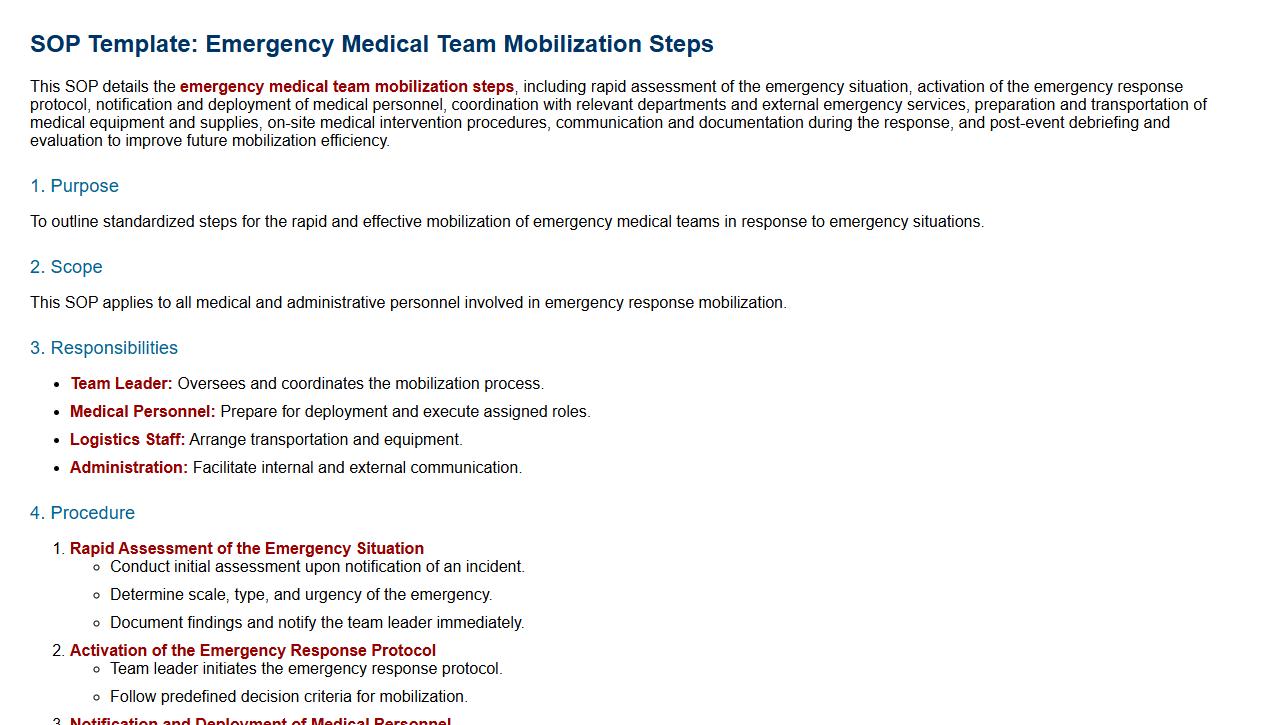
This SOP details the emergency medical team mobilization steps, including rapid assessment of the emergency situation, activation of the emergency response protocol, notification and deployment of medical personnel, coordination with relevant departments and external emergency services, preparation and transportation of medical equipment and supplies, on-site medical intervention procedures, communication and documentation during the response, and post-event debriefing and evaluation to improve future mobilization efficiency.
Clear roles and responsibilities assignment.
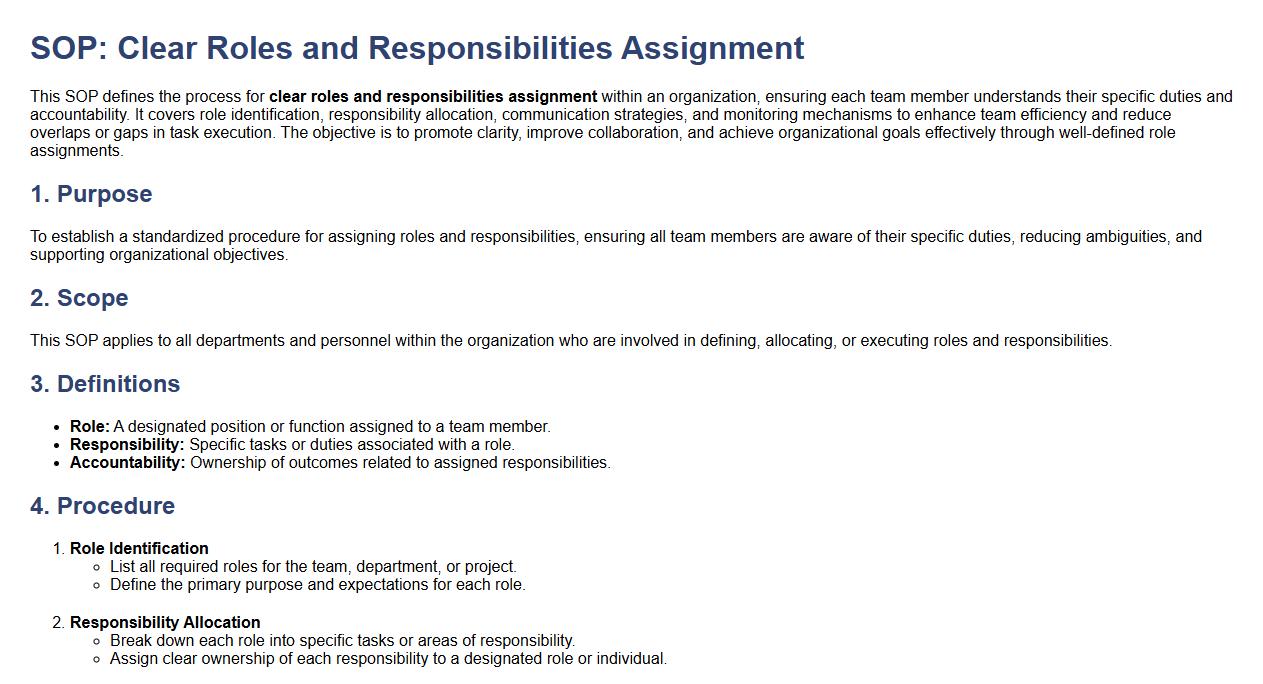
This SOP defines the process for clear roles and responsibilities assignment within an organization, ensuring each team member understands their specific duties and accountability. It covers role identification, responsibility allocation, communication strategies, and monitoring mechanisms to enhance team efficiency and reduce overlaps or gaps in task execution. The objective is to promote clarity, improve collaboration, and achieve organizational goals effectively through well-defined role assignments.
Communication plan for internal and external stakeholders.
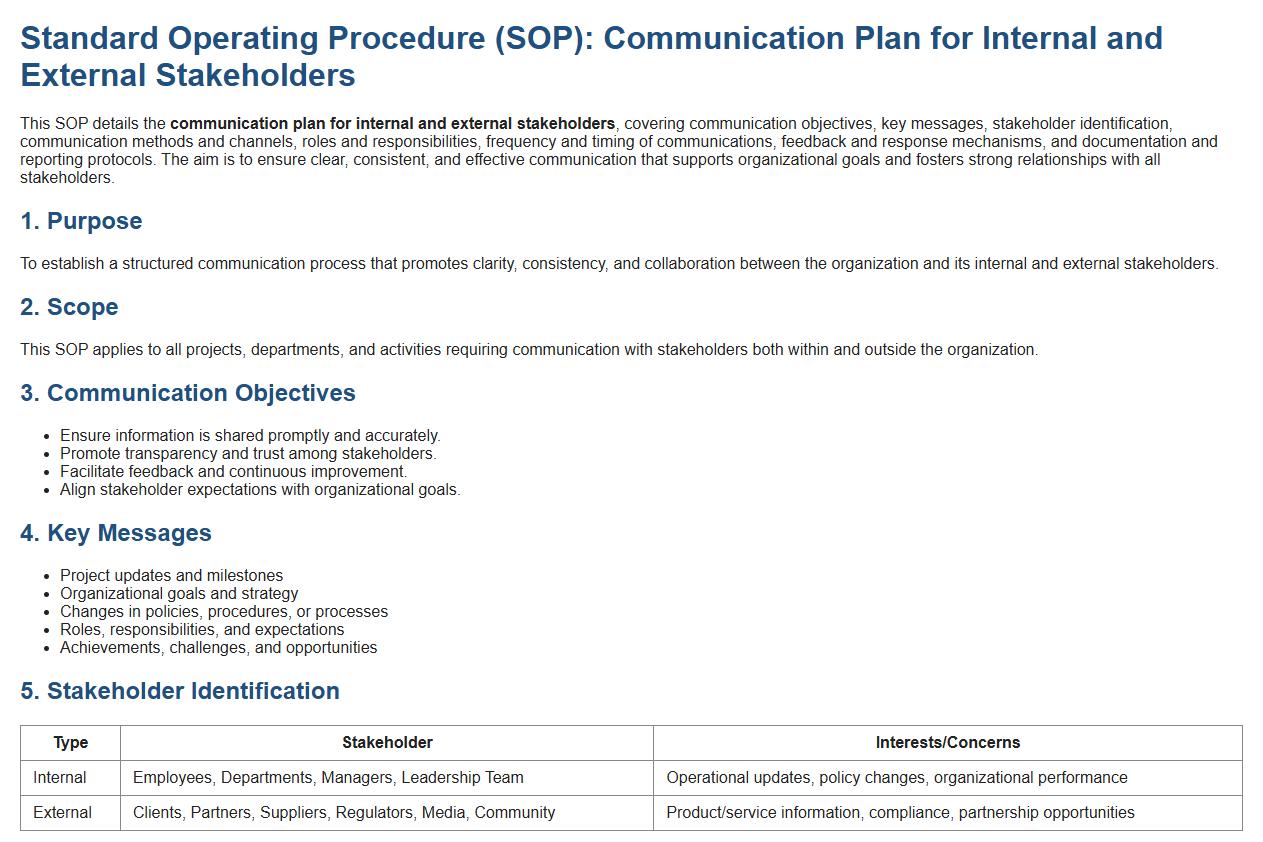
This SOP details the communication plan for internal and external stakeholders, covering communication objectives, key messages, stakeholder identification, communication methods and channels, roles and responsibilities, frequency and timing of communications, feedback and response mechanisms, and documentation and reporting protocols. The aim is to ensure clear, consistent, and effective communication that supports organizational goals and fosters strong relationships with all stakeholders.
Guidelines for evacuation or relocation of patients.
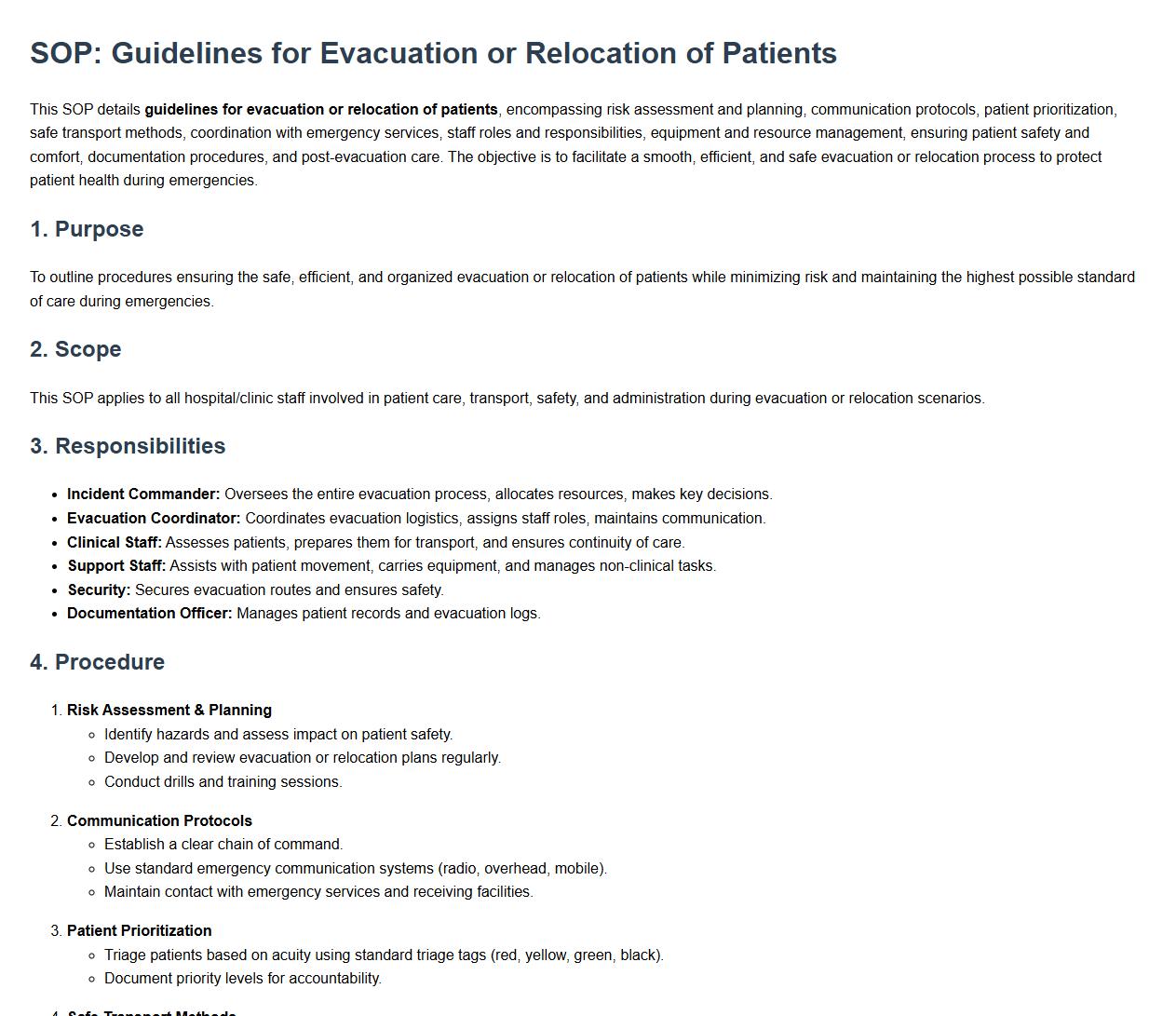
This SOP details guidelines for evacuation or relocation of patients, encompassing risk assessment and planning, communication protocols, patient prioritization, safe transport methods, coordination with emergency services, staff roles and responsibilities, equipment and resource management, ensuring patient safety and comfort, documentation procedures, and post-evacuation care. The objective is to facilitate a smooth, efficient, and safe evacuation or relocation process to protect patient health during emergencies.
Supply and equipment readiness checks.
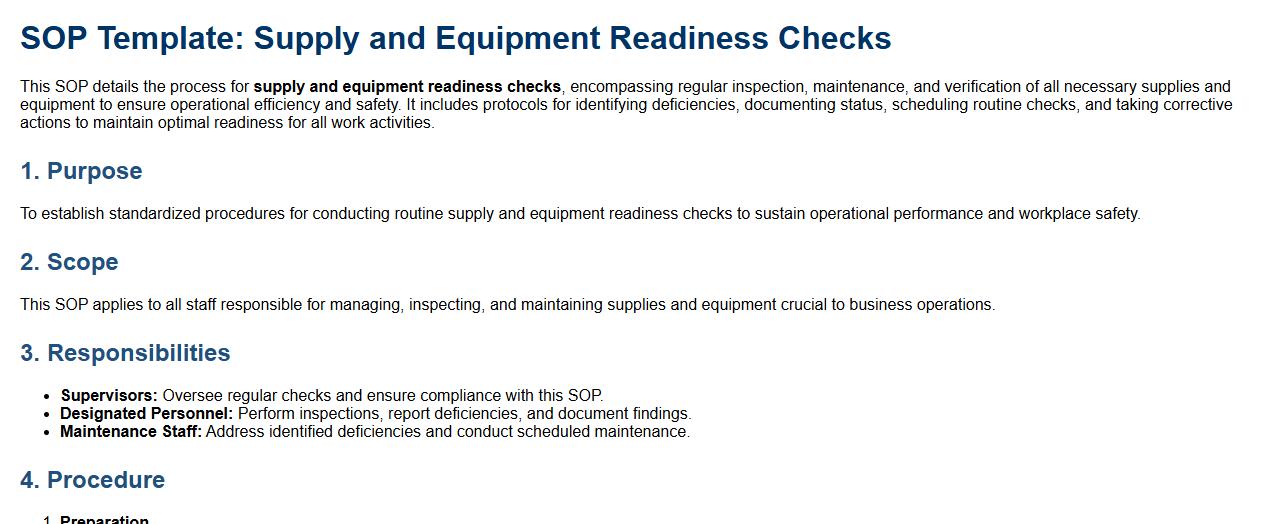
This SOP details the process for supply and equipment readiness checks, encompassing regular inspection, maintenance, and verification of all necessary supplies and equipment to ensure operational efficiency and safety. It includes protocols for identifying deficiencies, documenting status, scheduling routine checks, and taking corrective actions to maintain optimal readiness for all work activities.
Collaboration procedures with emergency services (EMS, fire, police).
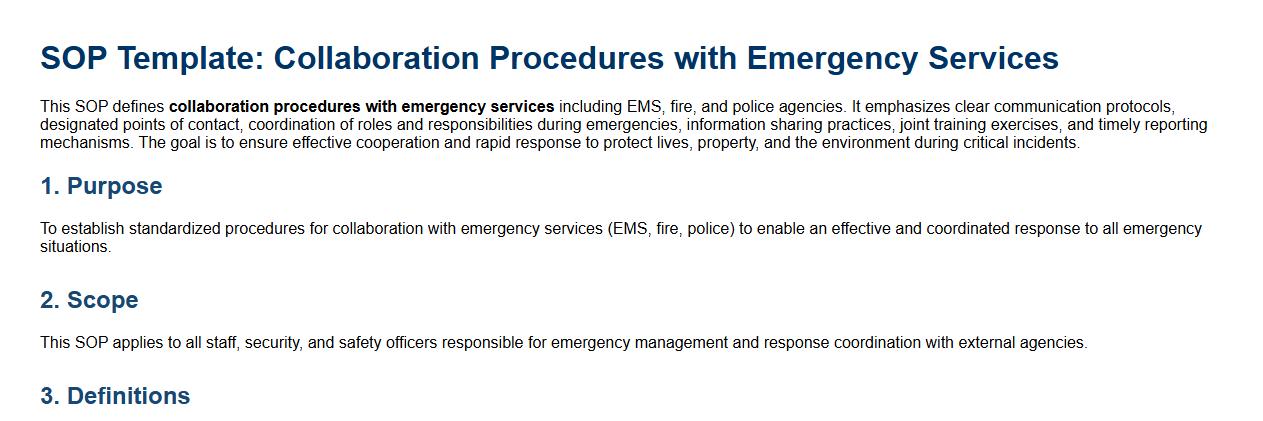
This SOP defines collaboration procedures with emergency services including EMS, fire, and police agencies. It emphasizes clear communication protocols, designated points of contact, coordination of roles and responsibilities during emergencies, information sharing practices, joint training exercises, and timely reporting mechanisms. The goal is to ensure effective cooperation and rapid response to protect lives, property, and the environment during critical incidents.
Post-incident debriefing and documentation requirements.
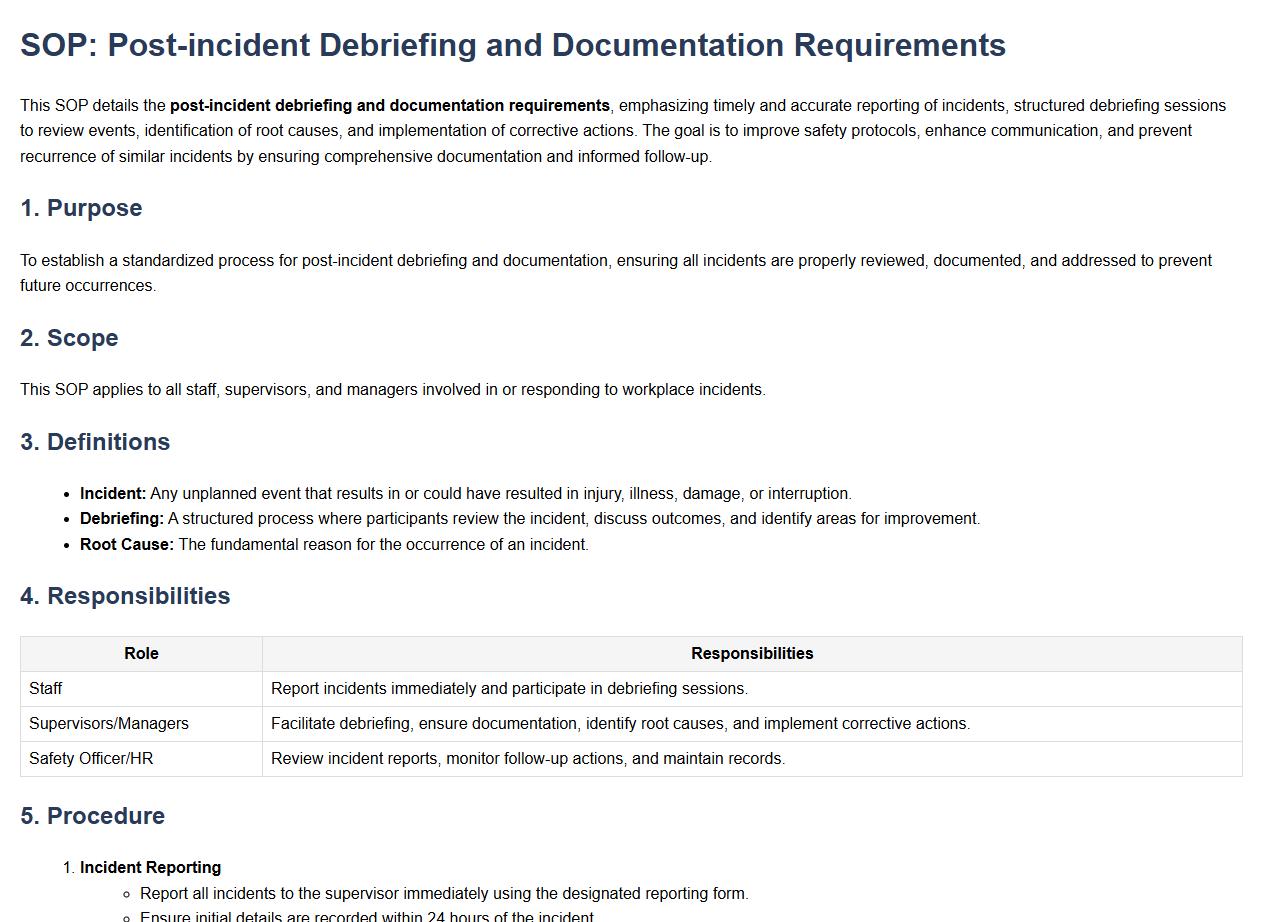
This SOP details the post-incident debriefing and documentation requirements, emphasizing timely and accurate reporting of incidents, structured debriefing sessions to review events, identification of root causes, and implementation of corrective actions. The goal is to improve safety protocols, enhance communication, and prevent recurrence of similar incidents by ensuring comprehensive documentation and informed follow-up.
Ongoing staff training and emergency drills schedule.
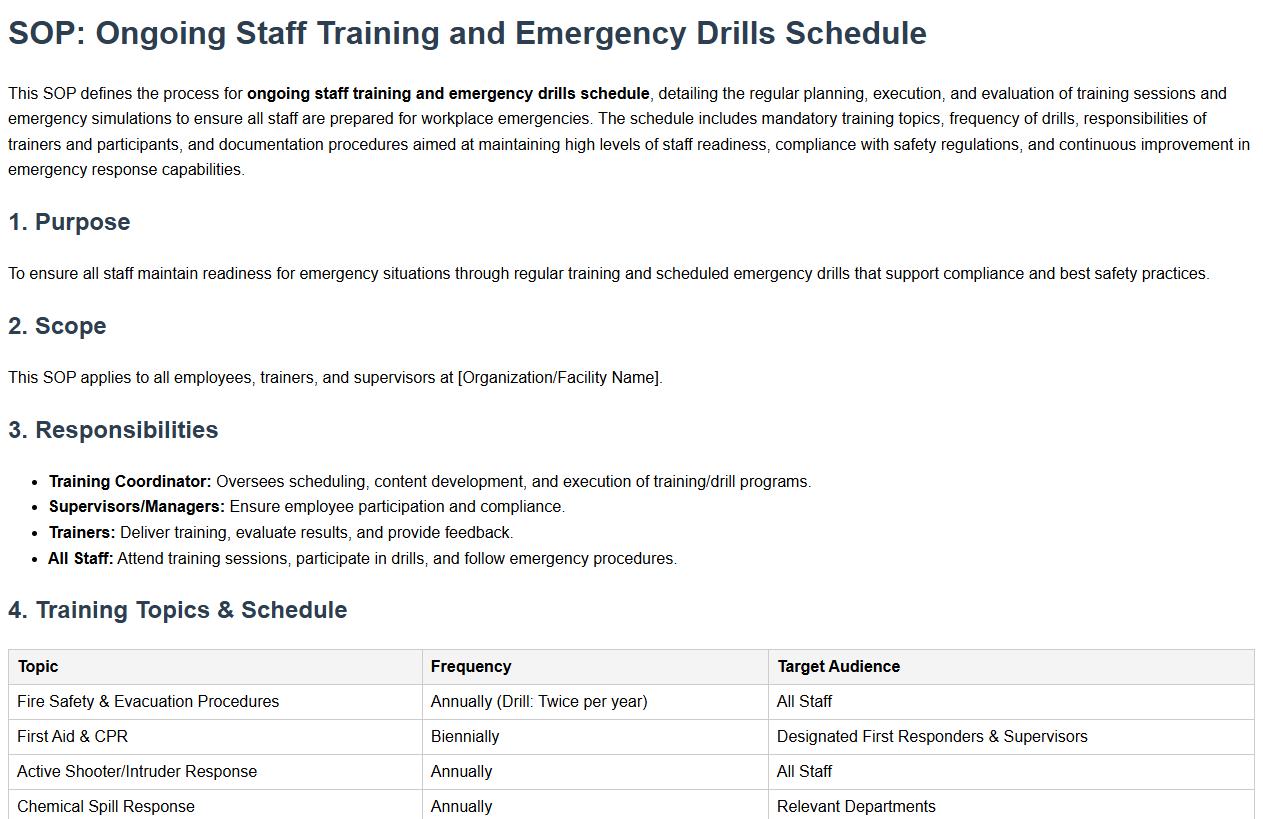
This SOP defines the process for ongoing staff training and emergency drills schedule, detailing the regular planning, execution, and evaluation of training sessions and emergency simulations to ensure all staff are prepared for workplace emergencies. The schedule includes mandatory training topics, frequency of drills, responsibilities of trainers and participants, and documentation procedures aimed at maintaining high levels of staff readiness, compliance with safety regulations, and continuous improvement in emergency response capabilities.
What are the primary objectives outlined in the hospital's Emergency Response SOP?
The primary objectives of the hospital's Emergency Response SOP focus on ensuring patient safety, minimizing risk, and maintaining operational continuity. It aims to establish clear protocols for rapid response during emergencies, enabling efficient coordination among staff. Another key goal is to ensure compliance with regulatory standards to protect both patients and hospital personnel.
Which roles and responsibilities are defined for staff during an emergency situation?
The SOP clearly defines the roles and responsibilities of each staff member, ensuring accountability and swift action during emergencies. It assigns specific duties such as incident command, communication management, and patient triage to designated personnel. This structured approach helps avoid confusion and enhances team coordination in high-pressure scenarios.
What standardized communication protocols are specified in the SOP for emergencies?
The SOP establishes standardized communication protocols to guarantee timely and accurate information flow during emergencies. It includes the use of designated communication channels, reporting hierarchies, and emergency notification systems. These protocols help prevent misinformation and ensure that all relevant stakeholders are kept informed.
How does the SOP address resource allocation and mobilization during a hospital emergency?
The SOP outlines detailed procedures for resource allocation and mobilization to optimize the hospital's response capacity. It prioritizes critical resources such as medical equipment, staff, and supplies based on the severity of the emergency. Efficient mobilization strategies are also included to ensure rapid deployment and effective utilization of resources.
What procedures are detailed in the SOP for post-emergency debrief and review?
The SOP specifies comprehensive post-emergency debrief and review procedures aimed at improving future responses. It mandates conducting structured debrief sessions involving all relevant personnel to discuss outcomes, challenges, and lessons learned. This process supports continuous improvement and strengthens the hospital's emergency preparedness over time.