

A SOP Template for Blood Sample Collection provides a standardized procedure to ensure accurate and safe collection of blood specimens. It outlines step-by-step instructions, including patient identification, proper use of equipment, and handling techniques to minimize contamination and sample degradation. This template helps maintain consistency, compliance with regulatory standards, and enhances overall laboratory efficiency.
Patient identification and verification procedures.
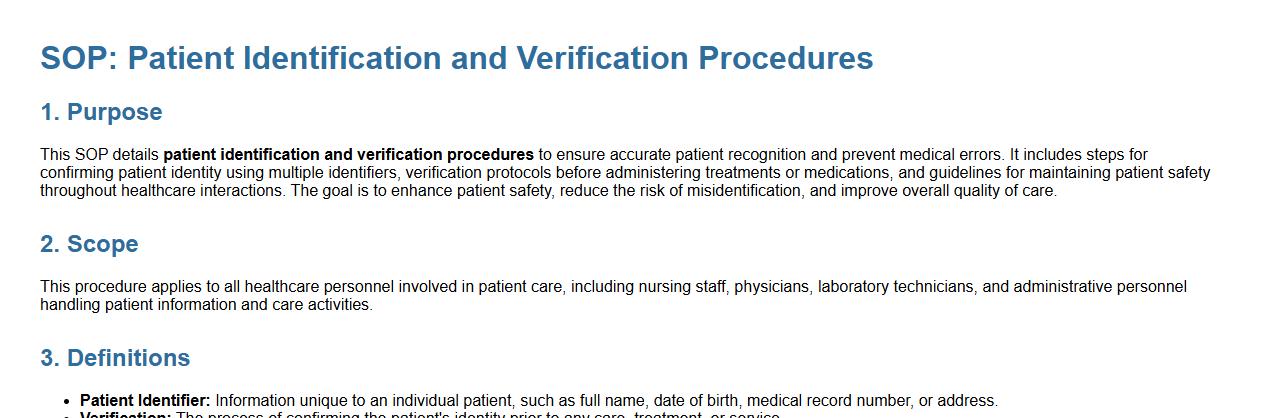
This SOP details patient identification and verification procedures to ensure accurate patient recognition and prevent medical errors. It includes steps for confirming patient identity using multiple identifiers, verification protocols before administering treatments or medications, and guidelines for maintaining patient safety throughout healthcare interactions. The goal is to enhance patient safety, reduce the risk of misidentification, and improve overall quality of care.
Preparation and labeling of blood sample collection tubes.
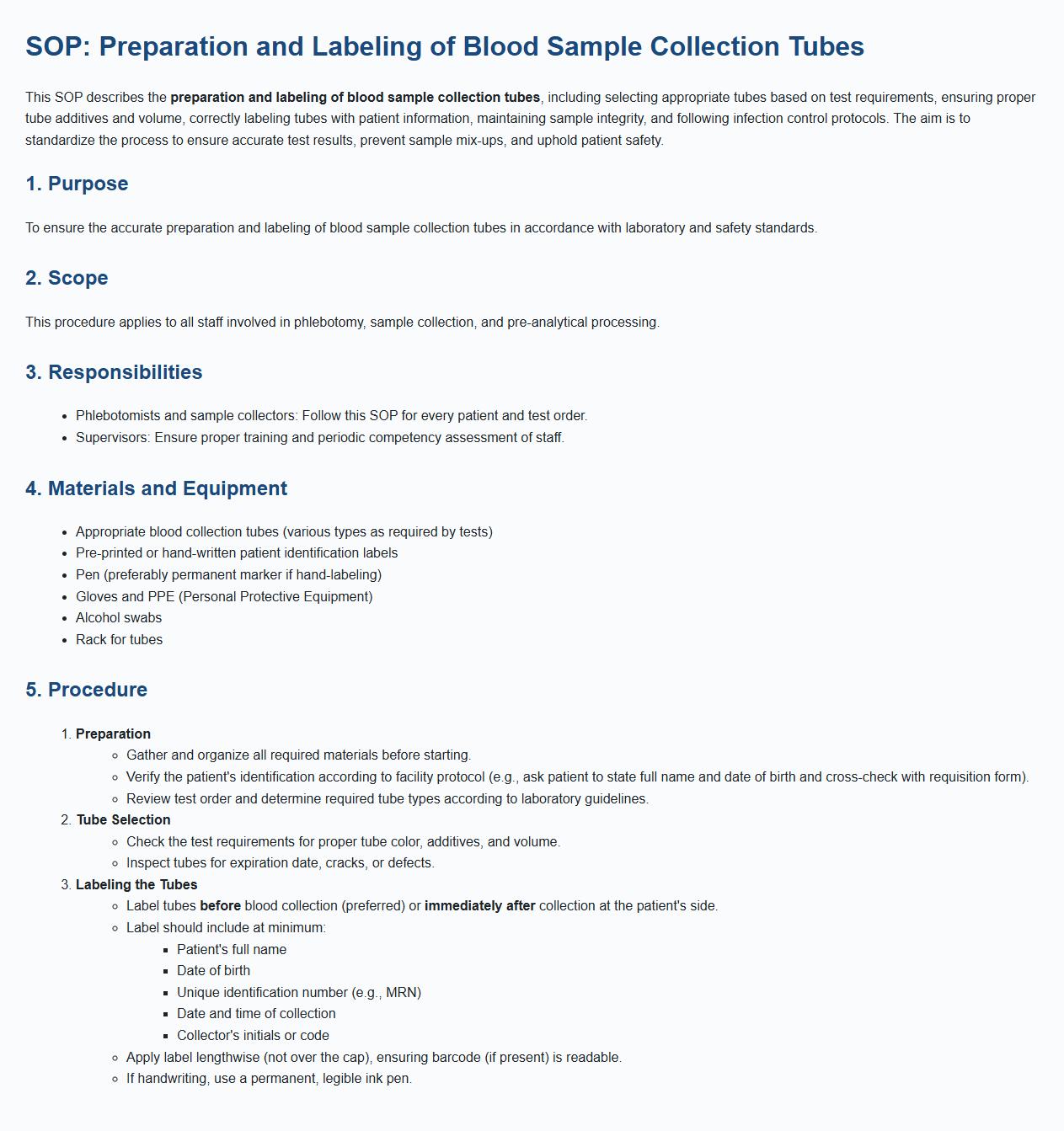
This SOP describes the preparation and labeling of blood sample collection tubes, including selecting appropriate tubes based on test requirements, ensuring proper tube additives and volume, correctly labeling tubes with patient information, maintaining sample integrity, and following infection control protocols. The aim is to standardize the process to ensure accurate test results, prevent sample mix-ups, and uphold patient safety.
Hand hygiene and use of personal protective equipment (PPE).
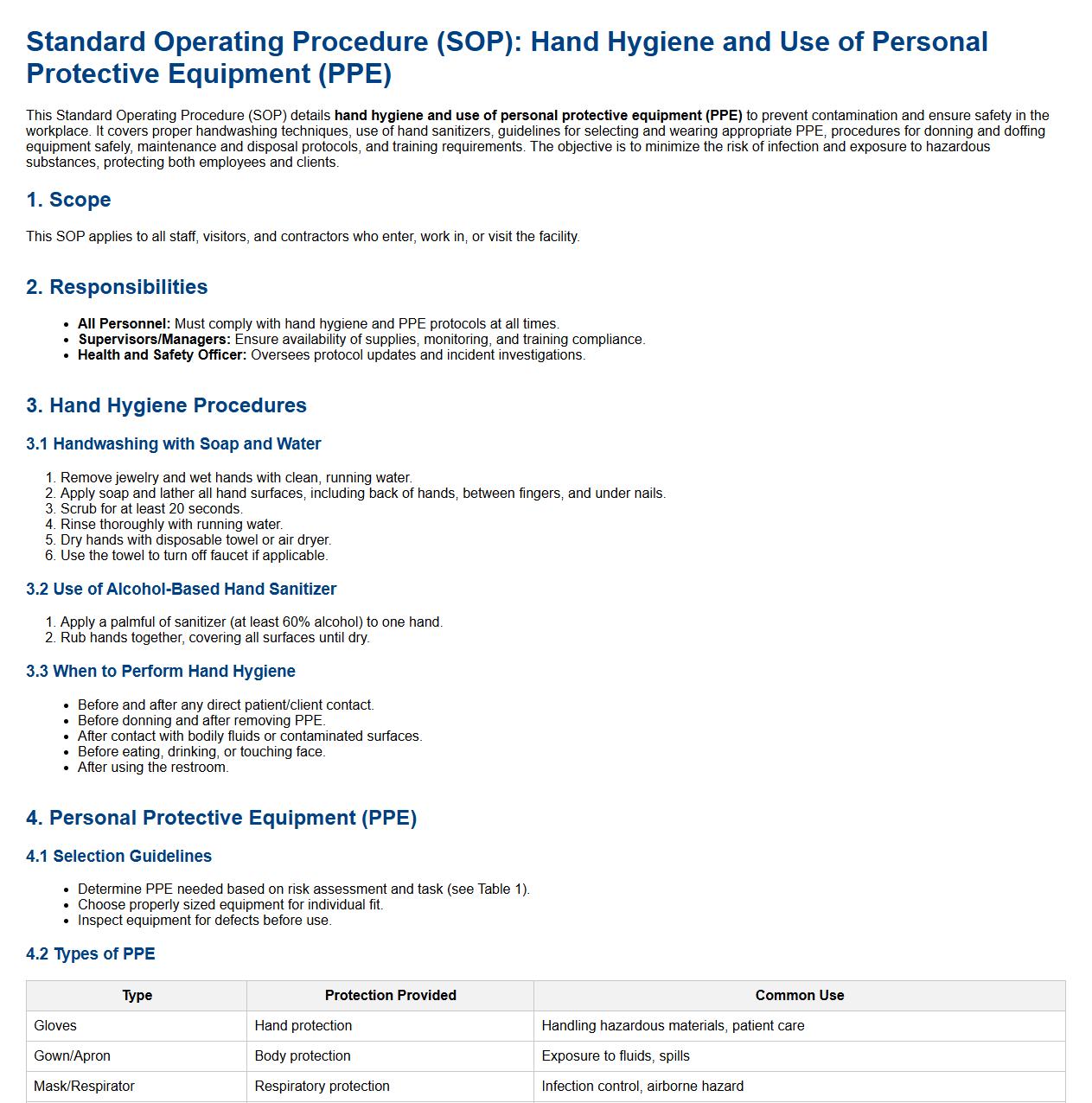
This Standard Operating Procedure (SOP) details hand hygiene and use of personal protective equipment (PPE) to prevent contamination and ensure safety in the workplace. It covers proper handwashing techniques, use of hand sanitizers, guidelines for selecting and wearing appropriate PPE, procedures for donning and doffing equipment safely, maintenance and disposal protocols, and training requirements. The objective is to minimize the risk of infection and exposure to hazardous substances, protecting both employees and clients.
Selection and preparation of blood collection site.
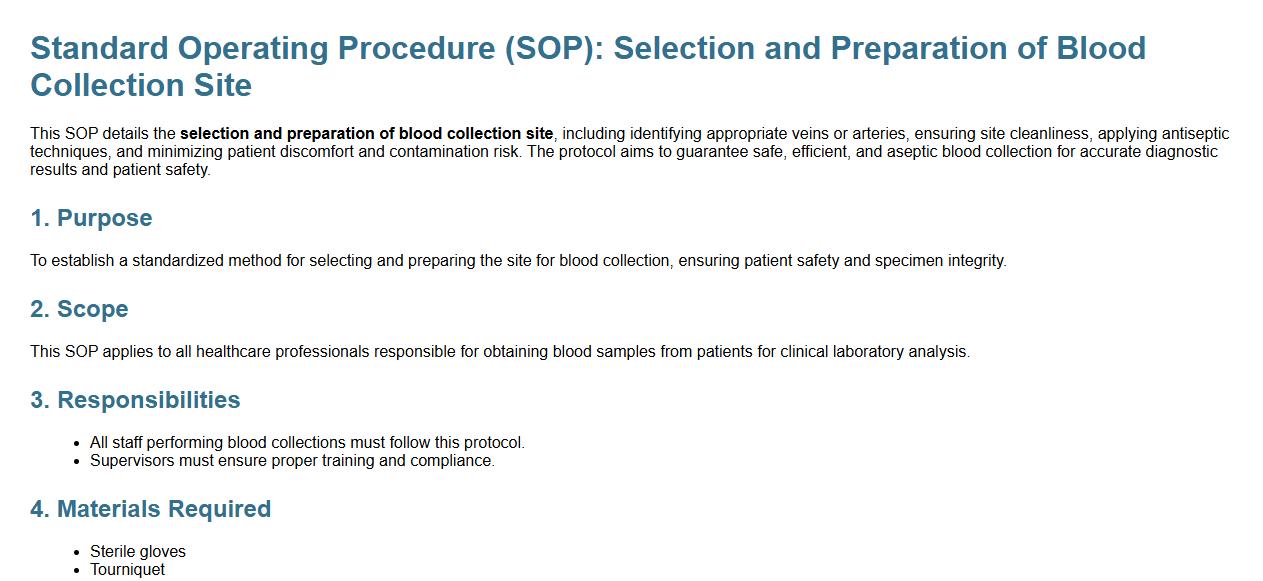
This SOP details the selection and preparation of blood collection site, including identifying appropriate veins or arteries, ensuring site cleanliness, applying antiseptic techniques, and minimizing patient discomfort and contamination risk. The protocol aims to guarantee safe, efficient, and aseptic blood collection for accurate diagnostic results and patient safety.
Application of tourniquet and vein palpation techniques.
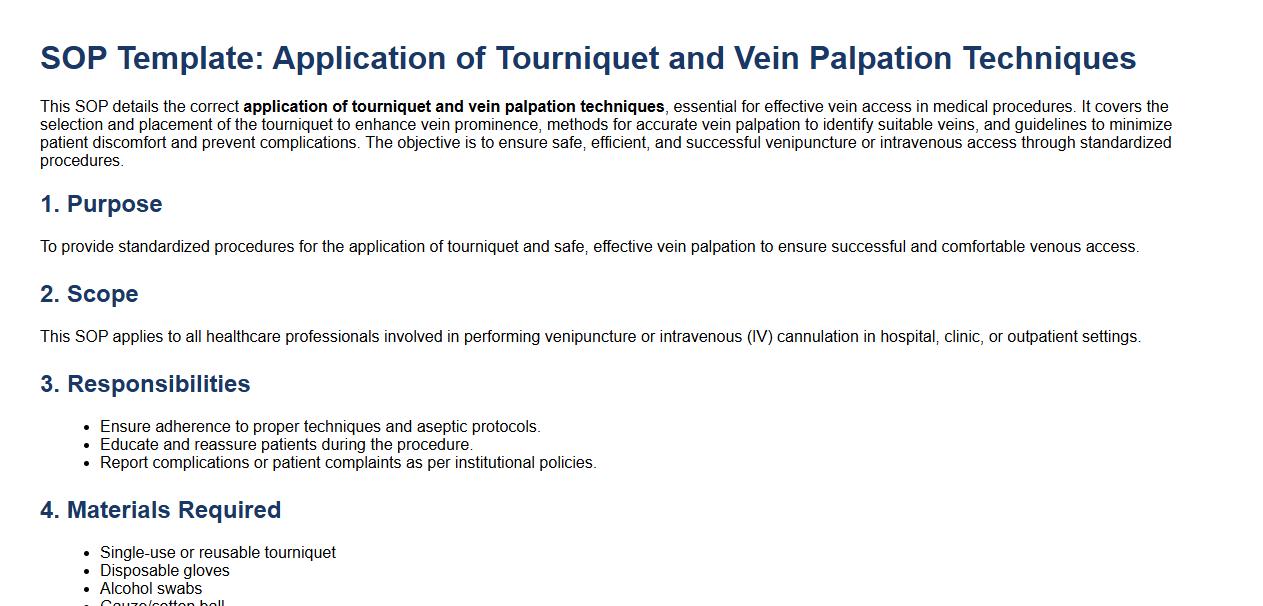
This SOP details the correct application of tourniquet and vein palpation techniques, essential for effective vein access in medical procedures. It covers the selection and placement of the tourniquet to enhance vein prominence, methods for accurate vein palpation to identify suitable veins, and guidelines to minimize patient discomfort and prevent complications. The objective is to ensure safe, efficient, and successful venipuncture or intravenous access through standardized procedures.
Sterile technique for needle insertion and blood withdrawal.
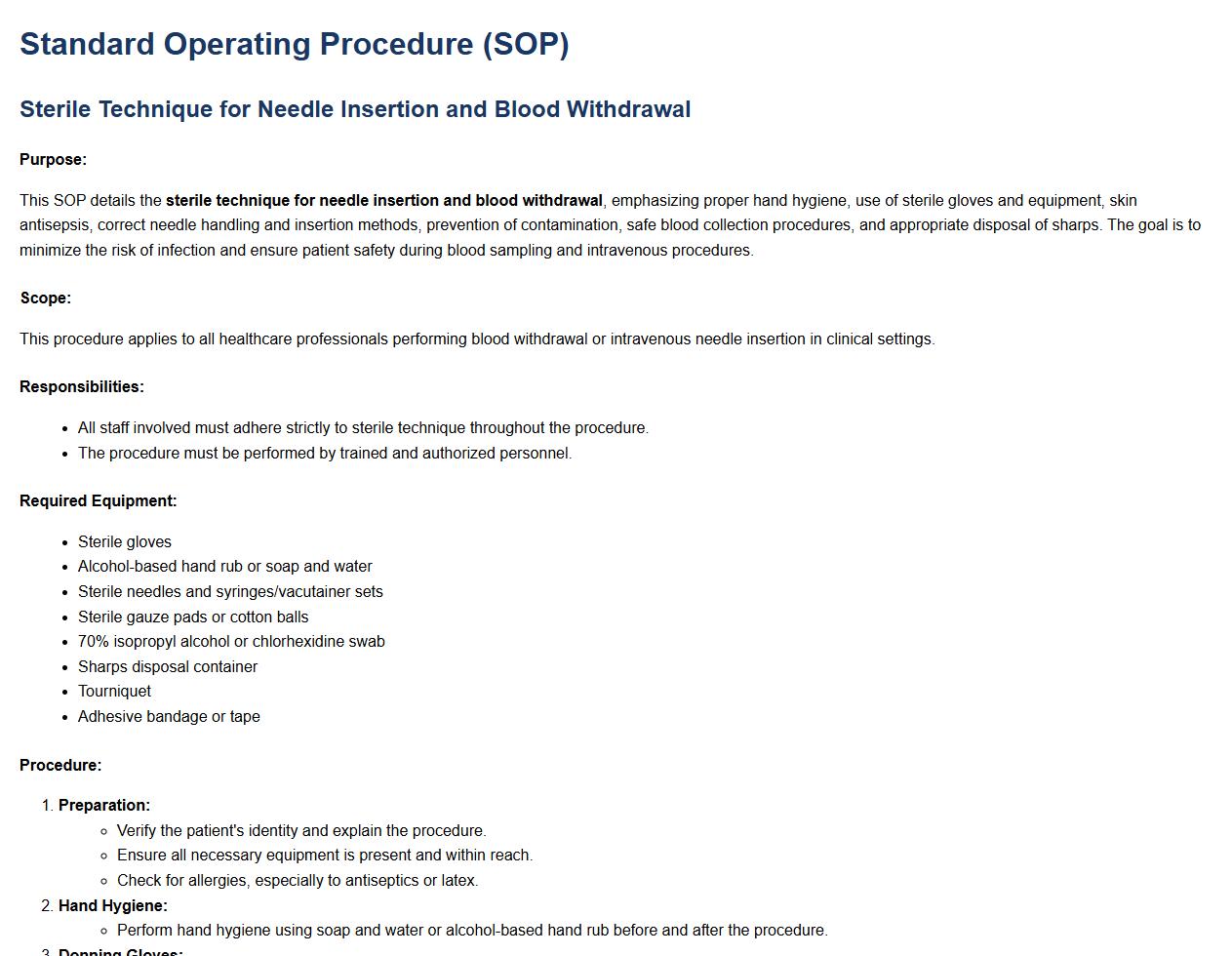
This SOP details the sterile technique for needle insertion and blood withdrawal, emphasizing proper hand hygiene, use of sterile gloves and equipment, skin antisepsis, correct needle handling and insertion methods, prevention of contamination, safe blood collection procedures, and appropriate disposal of sharps. The goal is to minimize the risk of infection and ensure patient safety during blood sampling and intravenous procedures.
Proper order of blood draw for multiple sample collection.
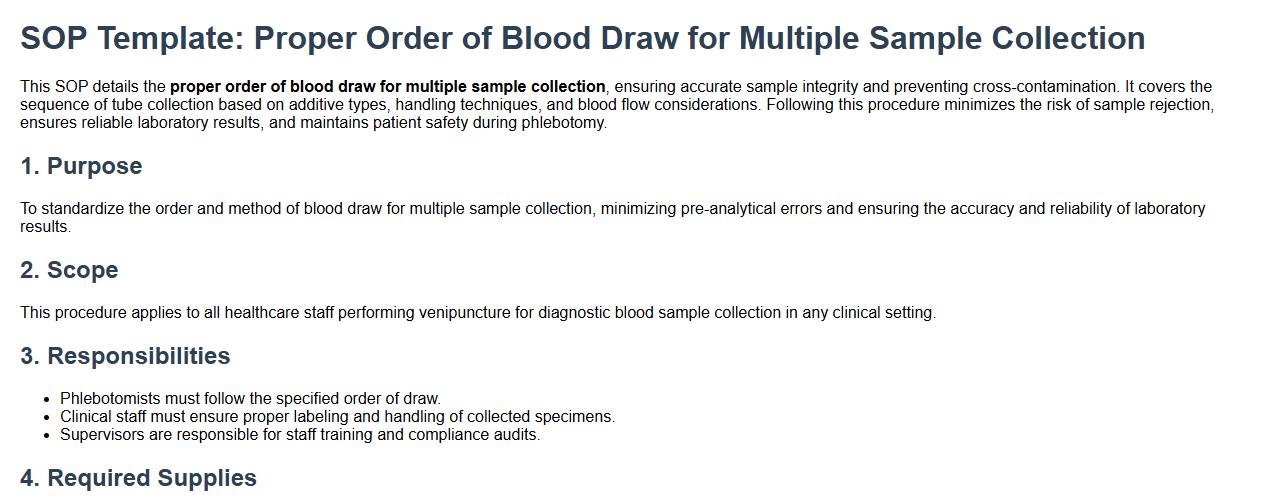
This SOP details the proper order of blood draw for multiple sample collection, ensuring accurate sample integrity and preventing cross-contamination. It covers the sequence of tube collection based on additive types, handling techniques, and blood flow considerations. Following this procedure minimizes the risk of sample rejection, ensures reliable laboratory results, and maintains patient safety during phlebotomy.
Safe removal of needle and immediate post-collection care.
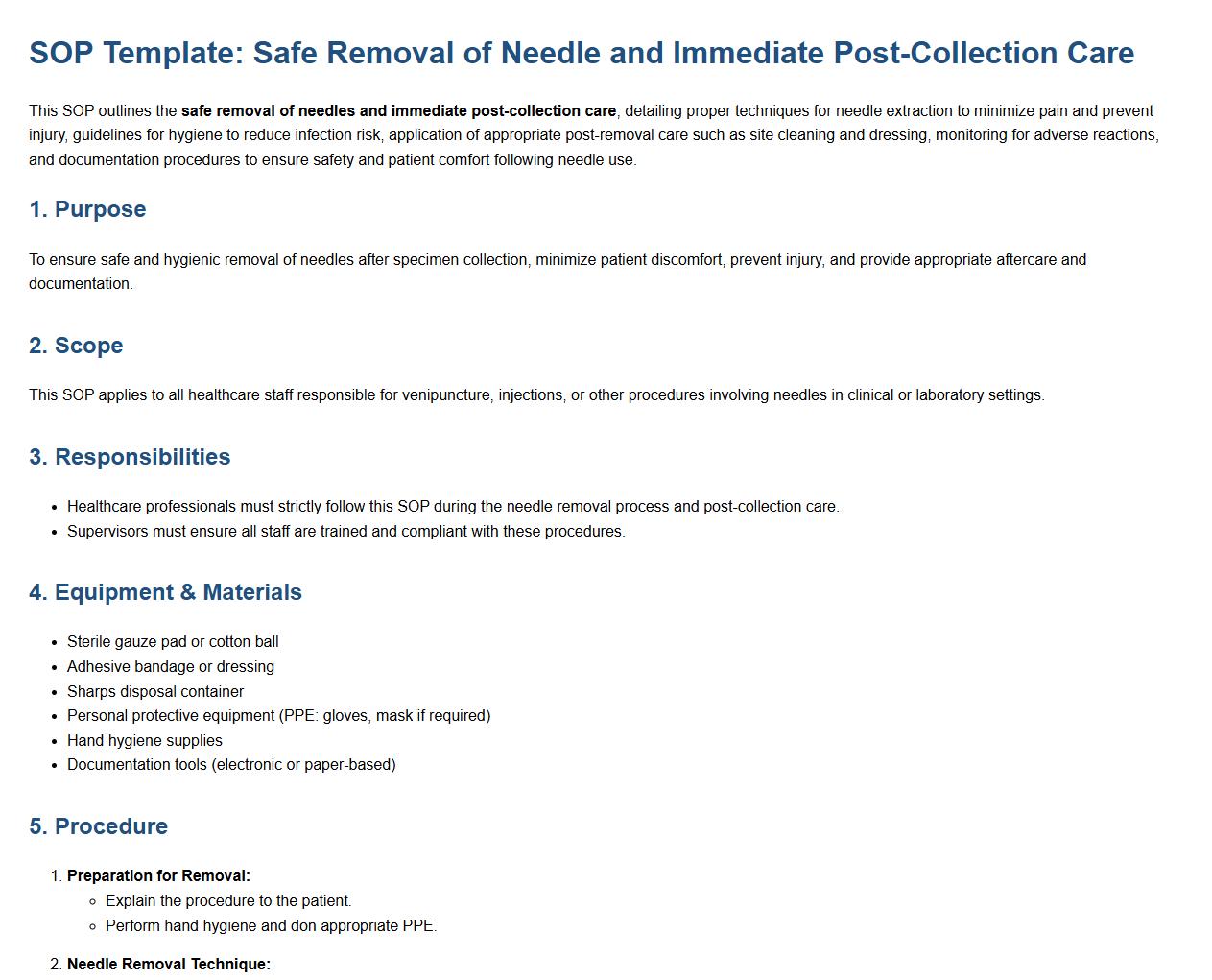
This SOP outlines the safe removal of needles and immediate post-collection care, detailing proper techniques for needle extraction to minimize pain and prevent injury, guidelines for hygiene to reduce infection risk, application of appropriate post-removal care such as site cleaning and dressing, monitoring for adverse reactions, and documentation procedures to ensure safety and patient comfort following needle use.
Sample handling, mixing, and storage requirements.
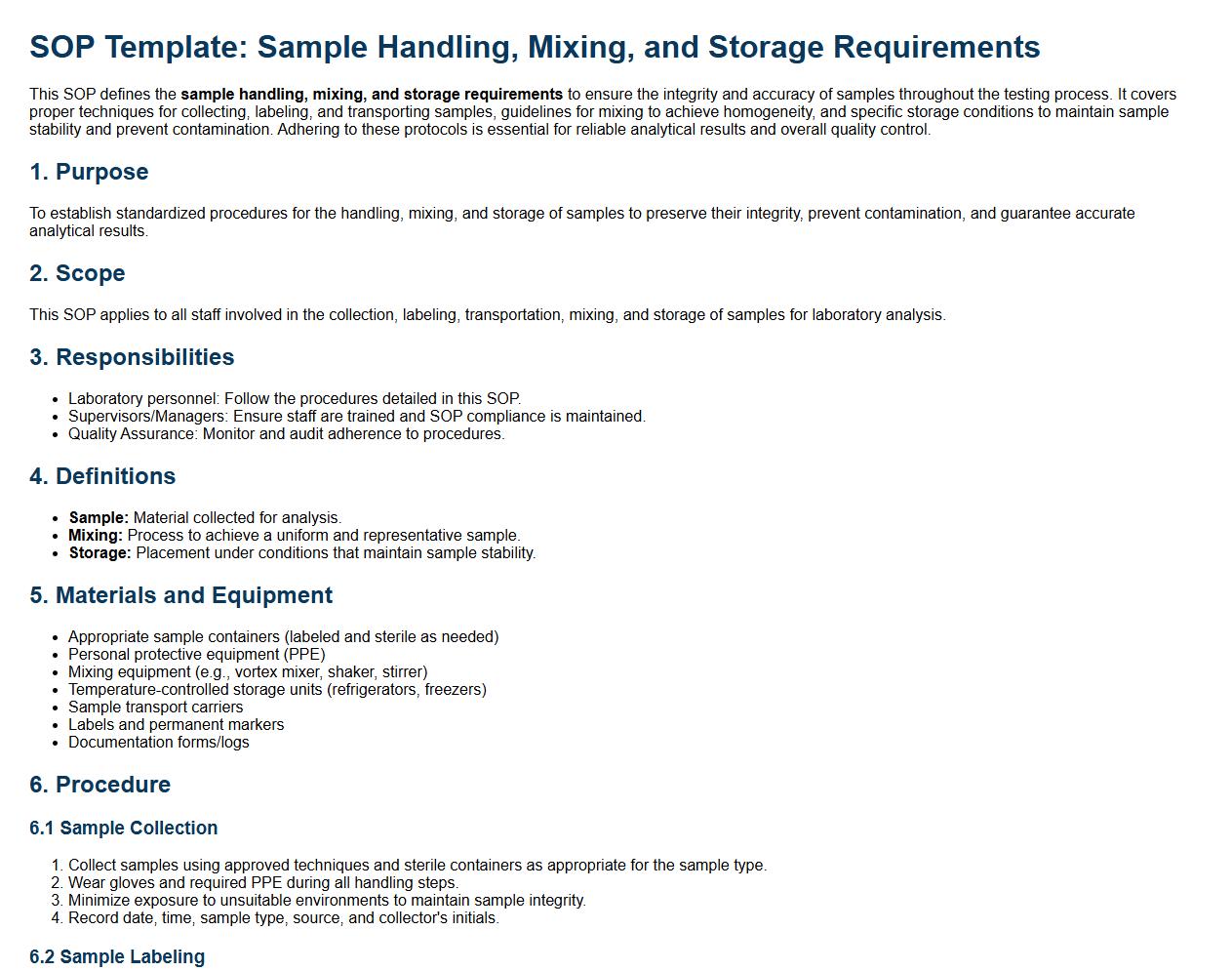
This SOP defines the sample handling, mixing, and storage requirements to ensure the integrity and accuracy of samples throughout the testing process. It covers proper techniques for collecting, labeling, and transporting samples, guidelines for mixing to achieve homogeneity, and specific storage conditions to maintain sample stability and prevent contamination. Adhering to these protocols is essential for reliable analytical results and overall quality control.
Documentation and transport of blood samples to laboratory.
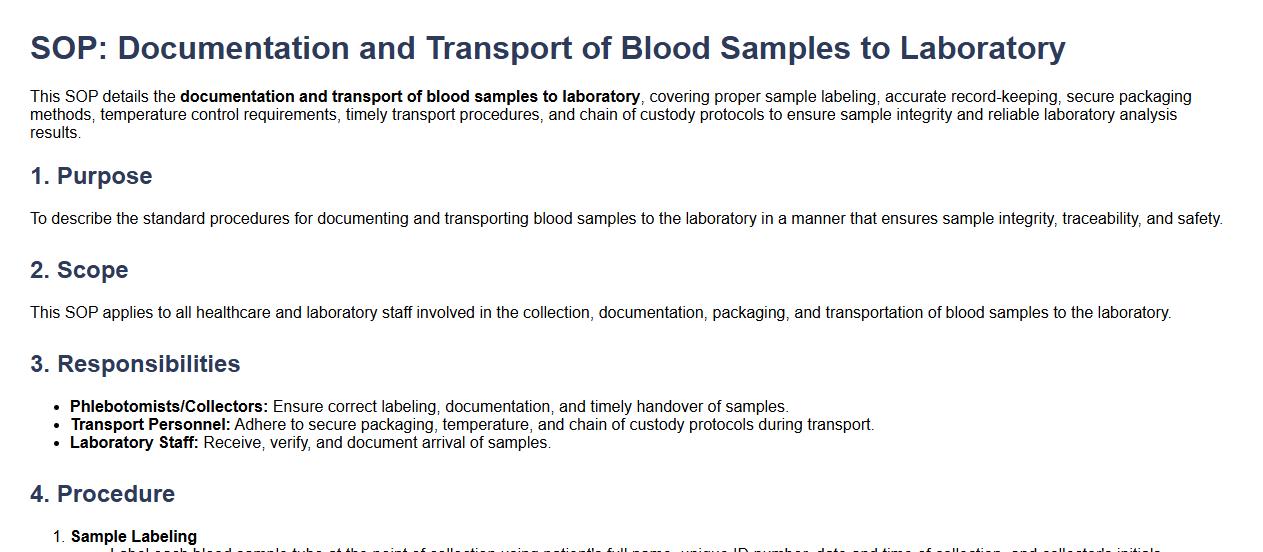
This SOP details the documentation and transport of blood samples to laboratory, covering proper sample labeling, accurate record-keeping, secure packaging methods, temperature control requirements, timely transport procedures, and chain of custody protocols to ensure sample integrity and reliable laboratory analysis results.
Essential Personal Protective Equipment (PPE) Requirements in Blood Sample Collection SOP
The SOP mandates the use of gloves to prevent contamination and exposure to bloodborne pathogens. Additionally, wearing a lab coat and protective eyewear is required to protect against splashes. Proper PPE ensures the safety of both healthcare workers and patients during blood sample collection.
Mandatory Patient Identification Steps Before Blood Sample Collection
The SOP requires verifying the patient's identity using at least two identifiers, such as full name and date of birth. This verification process is crucial to ensure the correct patient is sampled, reducing errors. Confirming the identity directly with the patient or their identification wristband is emphasized.
Sample Labeling and Documentation Procedures for Traceability
The SOP specifies that every blood sample must be labeled immediately with the patient's name, unique ID, date, and time of collection. Documentation must also include the collector's initials and the collection site. This process guarantees accurate traceability and prevents sample mix-ups.
Standard Protocols for Handling and Transporting Blood Samples
Collected samples must be placed in appropriate sealed containers and stored under specified temperature conditions. The SOP outlines timely transport to the laboratory to maintain sample integrity. Proper handling reduces the risk of degradation and ensures accurate test results.
Required Actions for Blood Sample Spillage or Exposure Incidents
In case of spillage, the SOP instructs immediate containment and disinfection using appropriate biohazard cleaning agents. Exposed personnel must follow established protocols for decontamination and seek medical evaluation. Prompt reporting and documentation of the incident are mandatory for safety compliance.