

A SOP Template for Blood Transfusion Procedure ensures standardized and safe administration of blood products by outlining detailed steps and critical precautions. It includes patient identification, blood compatibility verification, monitoring during transfusion, and documentation requirements. This template promotes compliance with healthcare regulations and minimizes transfusion-related risks.
Patient identification and verification.
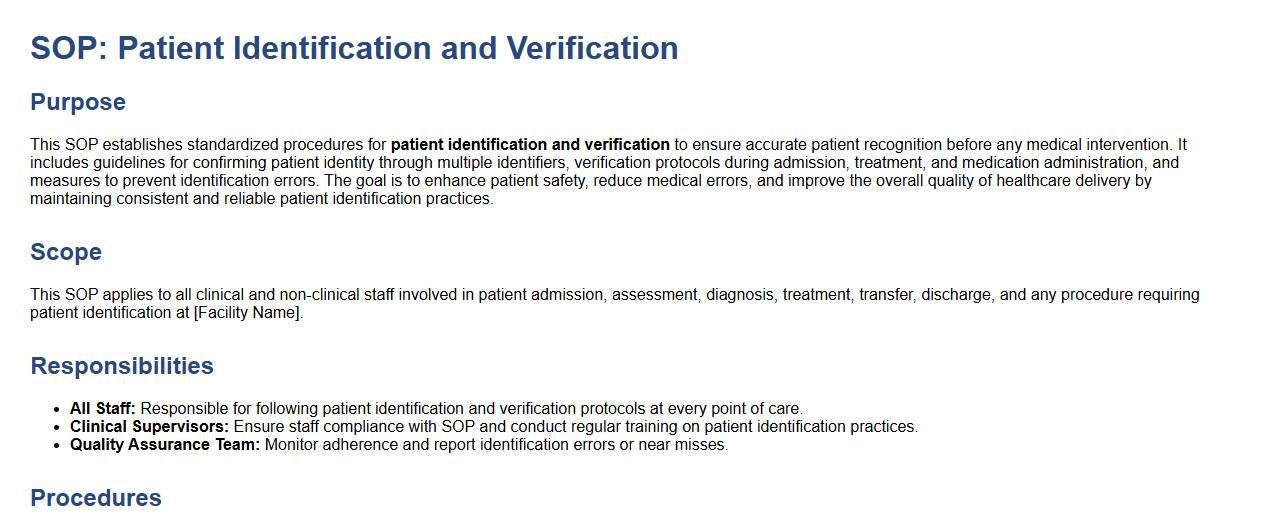
This SOP establishes standardized procedures for patient identification and verification to ensure accurate patient recognition before any medical intervention. It includes guidelines for confirming patient identity through multiple identifiers, verification protocols during admission, treatment, and medication administration, and measures to prevent identification errors. The goal is to enhance patient safety, reduce medical errors, and improve the overall quality of healthcare delivery by maintaining consistent and reliable patient identification practices.
Pre-transfusion compatibility testing and cross-matching.
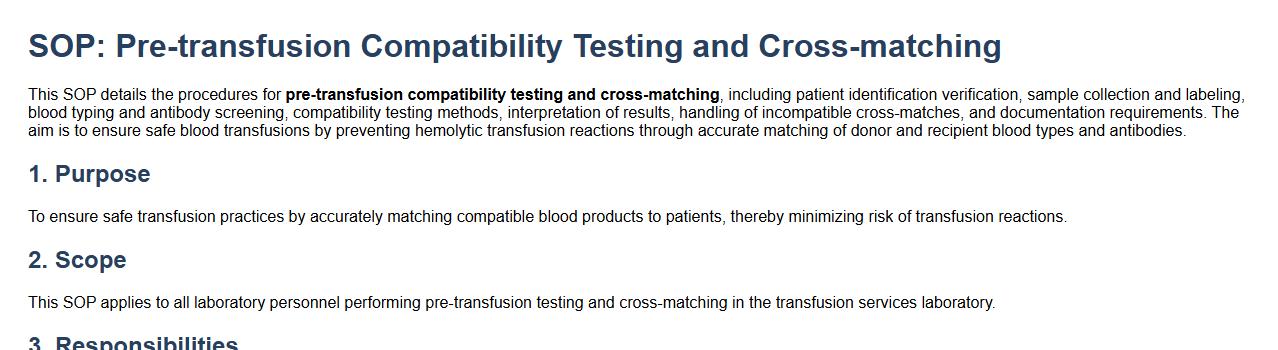
This SOP details the procedures for pre-transfusion compatibility testing and cross-matching, including patient identification verification, sample collection and labeling, blood typing and antibody screening, compatibility testing methods, interpretation of results, handling of incompatible cross-matches, and documentation requirements. The aim is to ensure safe blood transfusions by preventing hemolytic transfusion reactions through accurate matching of donor and recipient blood types and antibodies.
Blood product selection, verification, and preparation.
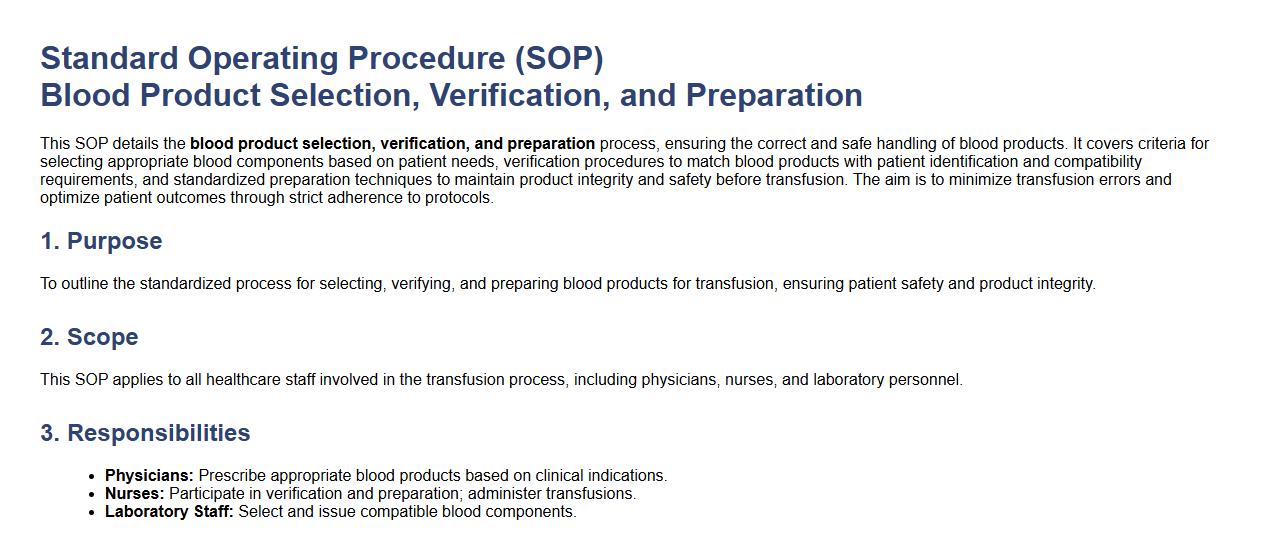
This SOP details the blood product selection, verification, and preparation process, ensuring the correct and safe handling of blood products. It covers criteria for selecting appropriate blood components based on patient needs, verification procedures to match blood products with patient identification and compatibility requirements, and standardized preparation techniques to maintain product integrity and safety before transfusion. The aim is to minimize transfusion errors and optimize patient outcomes through strict adherence to protocols.
Consent acquisition and documentation.
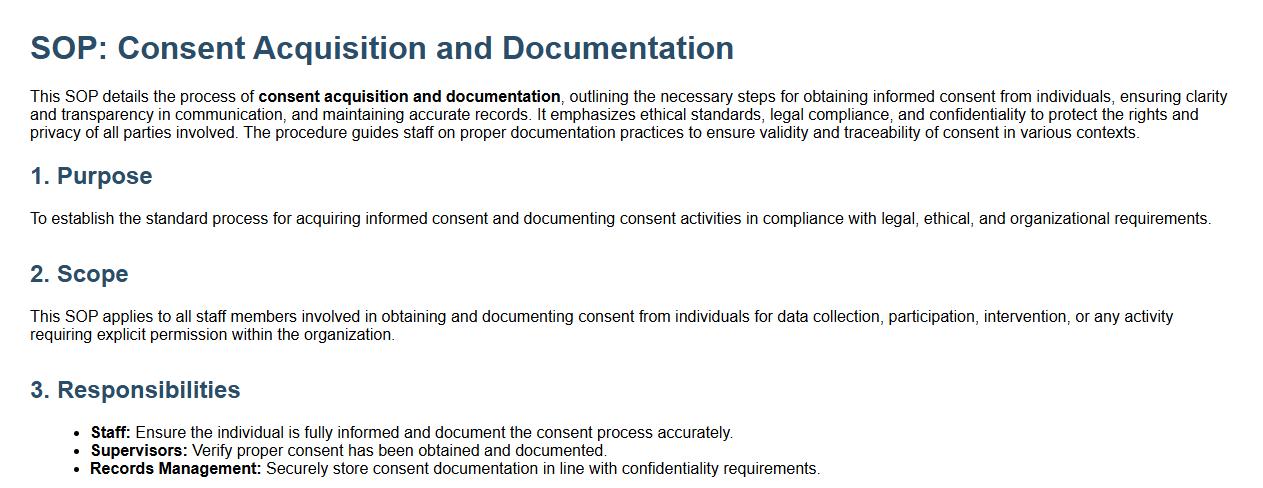
This SOP details the process of consent acquisition and documentation, outlining the necessary steps for obtaining informed consent from individuals, ensuring clarity and transparency in communication, and maintaining accurate records. It emphasizes ethical standards, legal compliance, and confidentiality to protect the rights and privacy of all parties involved. The procedure guides staff on proper documentation practices to ensure validity and traceability of consent in various contexts.
Pre-transfusion patient assessment and vital signs documentation.
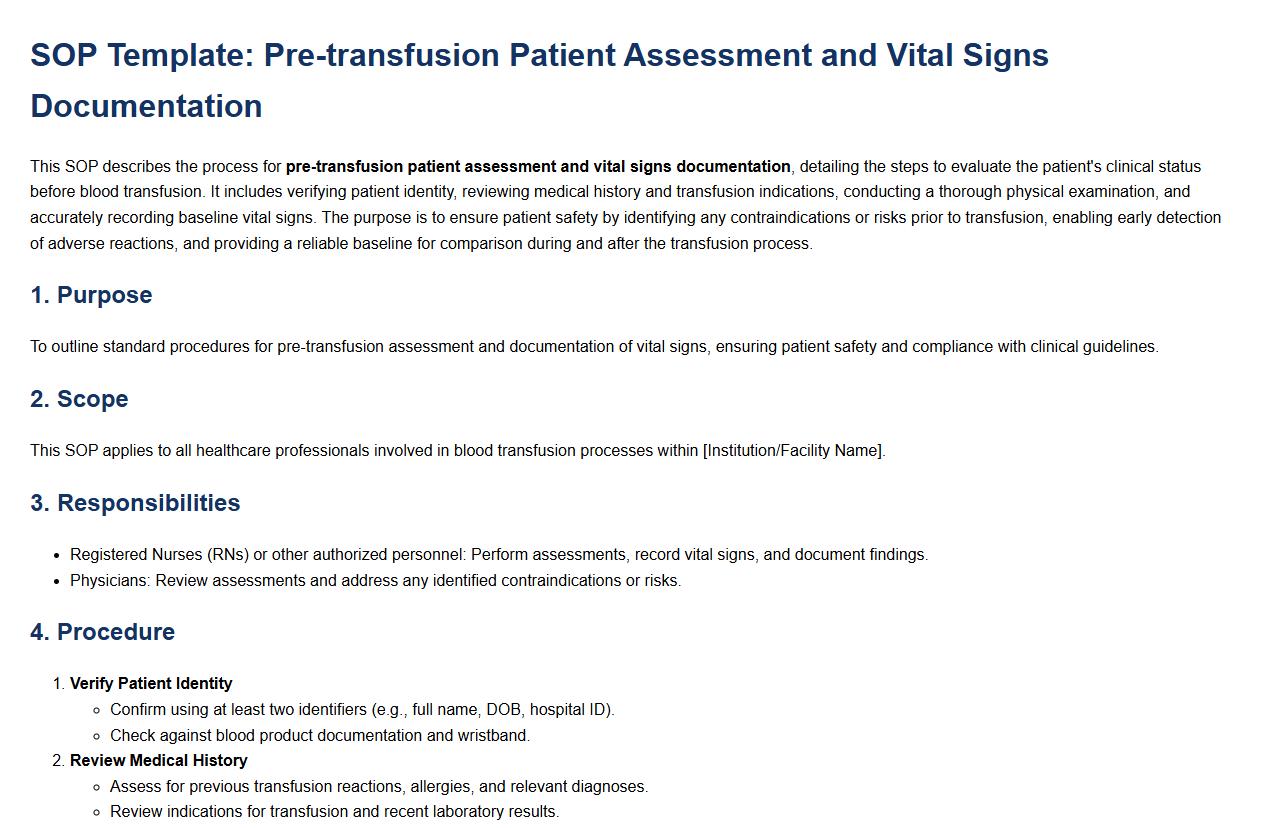
This SOP describes the process for pre-transfusion patient assessment and vital signs documentation, detailing the steps to evaluate the patient's clinical status before blood transfusion. It includes verifying patient identity, reviewing medical history and transfusion indications, conducting a thorough physical examination, and accurately recording baseline vital signs. The purpose is to ensure patient safety by identifying any contraindications or risks prior to transfusion, enabling early detection of adverse reactions, and providing a reliable baseline for comparison during and after the transfusion process.
Proper technique for blood product administration.
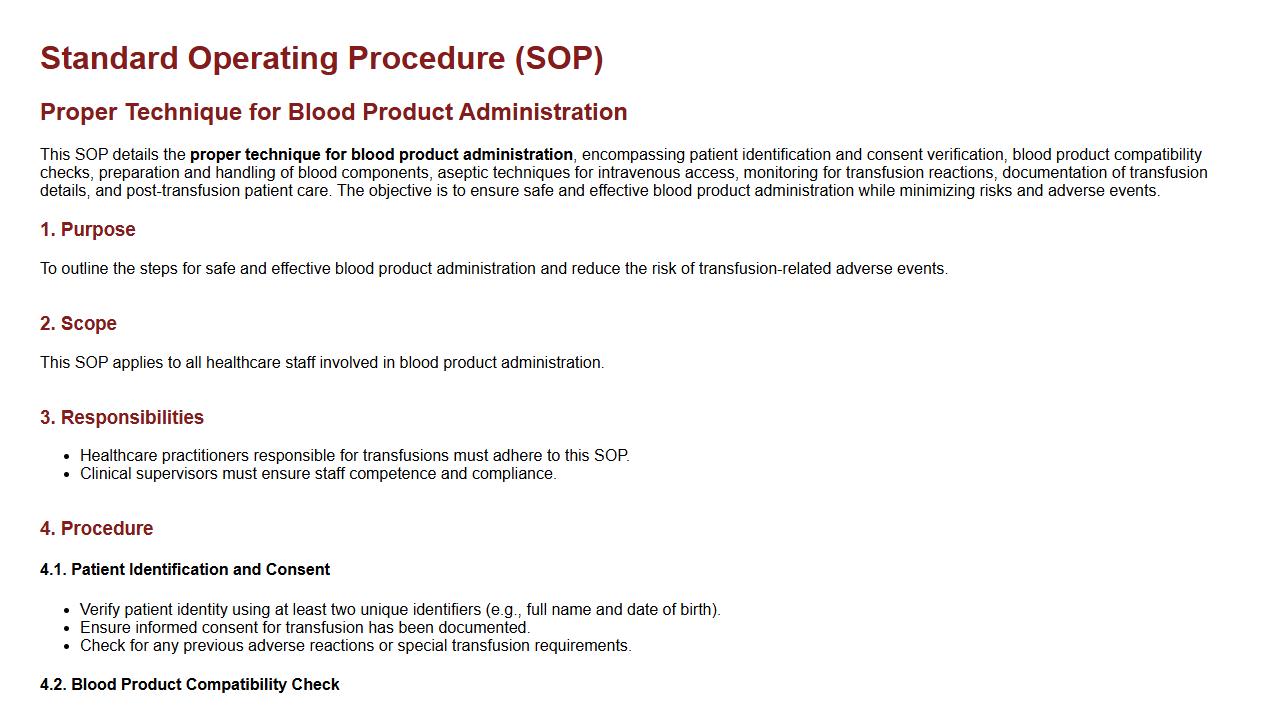
This SOP details the proper technique for blood product administration, encompassing patient identification and consent verification, blood product compatibility checks, preparation and handling of blood components, aseptic techniques for intravenous access, monitoring for transfusion reactions, documentation of transfusion details, and post-transfusion patient care. The objective is to ensure safe and effective blood product administration while minimizing risks and adverse events.
Monitoring and recording vital signs during transfusion.
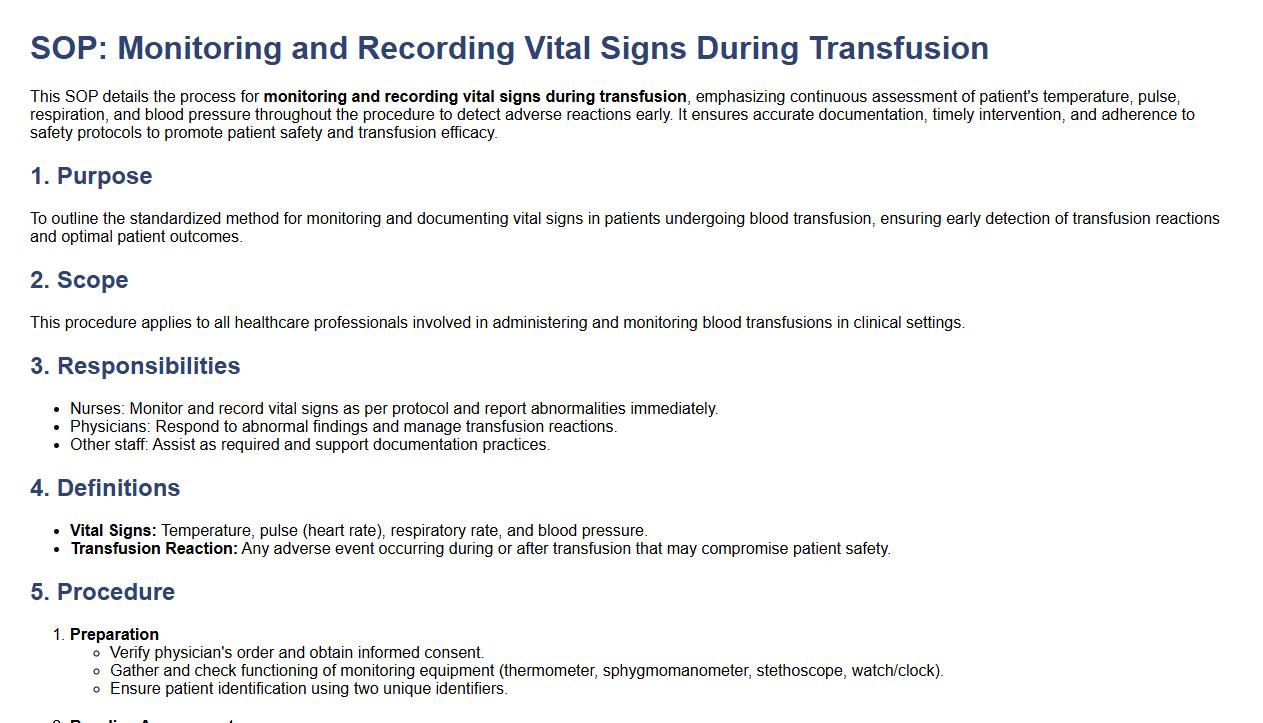
This SOP details the process for monitoring and recording vital signs during transfusion, emphasizing continuous assessment of patient's temperature, pulse, respiration, and blood pressure throughout the procedure to detect adverse reactions early. It ensures accurate documentation, timely intervention, and adherence to safety protocols to promote patient safety and transfusion efficacy.
Recognition and management of transfusion reactions.
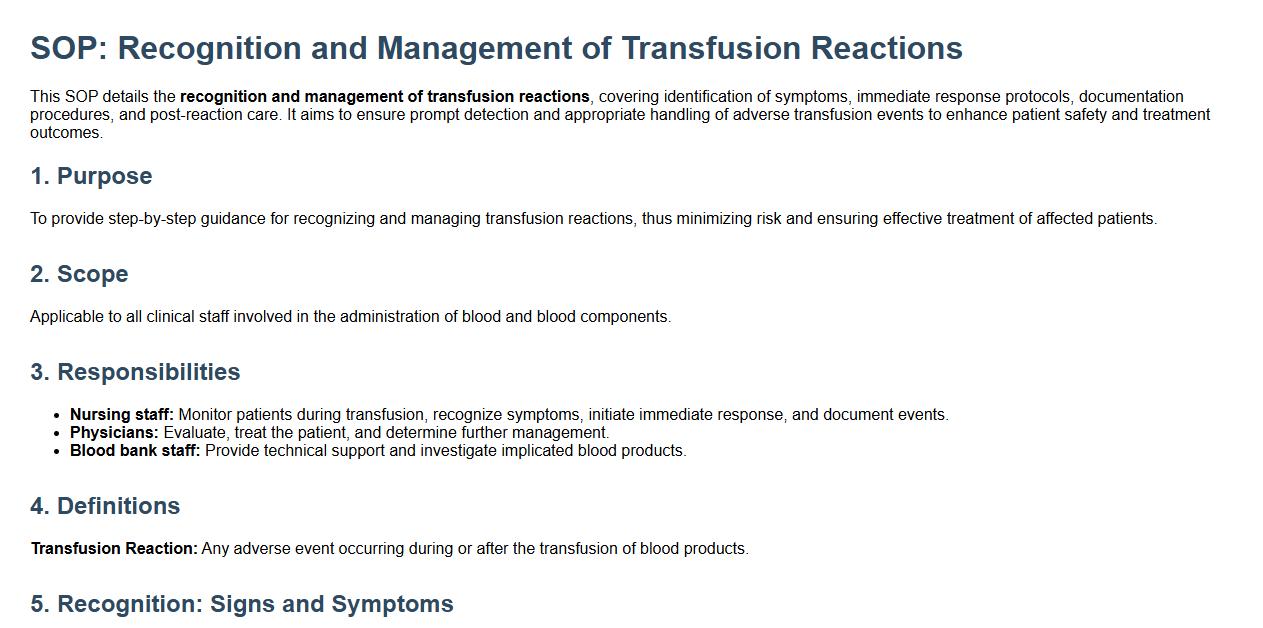
This SOP details the recognition and management of transfusion reactions, covering identification of symptoms, immediate response protocols, documentation procedures, and post-reaction care. It aims to ensure prompt detection and appropriate handling of adverse transfusion events to enhance patient safety and treatment outcomes.
Post-transfusion patient assessment and completion documentation.
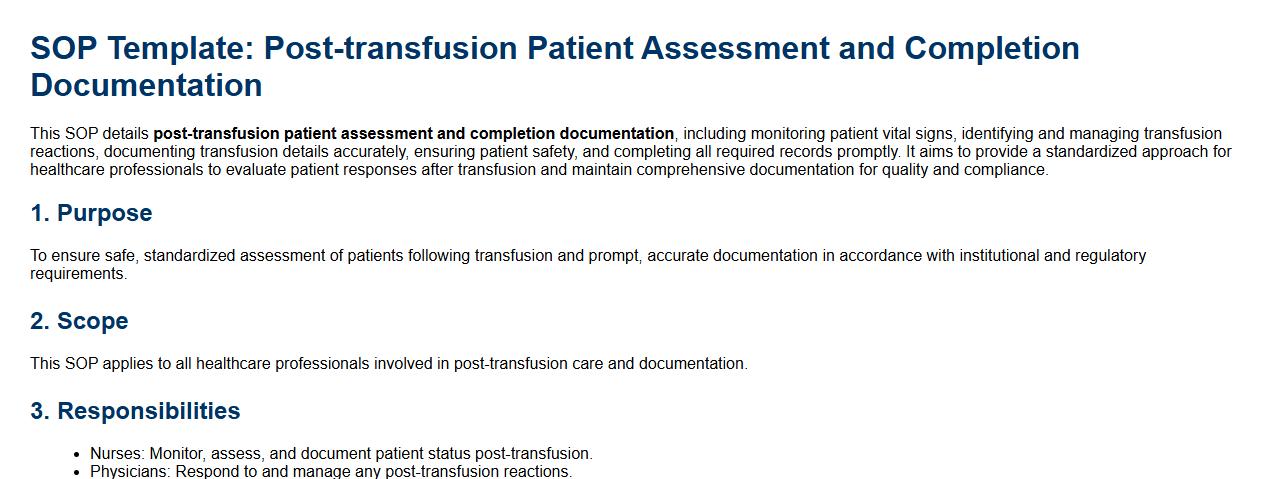
This SOP details post-transfusion patient assessment and completion documentation, including monitoring patient vital signs, identifying and managing transfusion reactions, documenting transfusion details accurately, ensuring patient safety, and completing all required records promptly. It aims to provide a standardized approach for healthcare professionals to evaluate patient responses after transfusion and maintain comprehensive documentation for quality and compliance.
Blood product traceability and proper disposal of used materials.
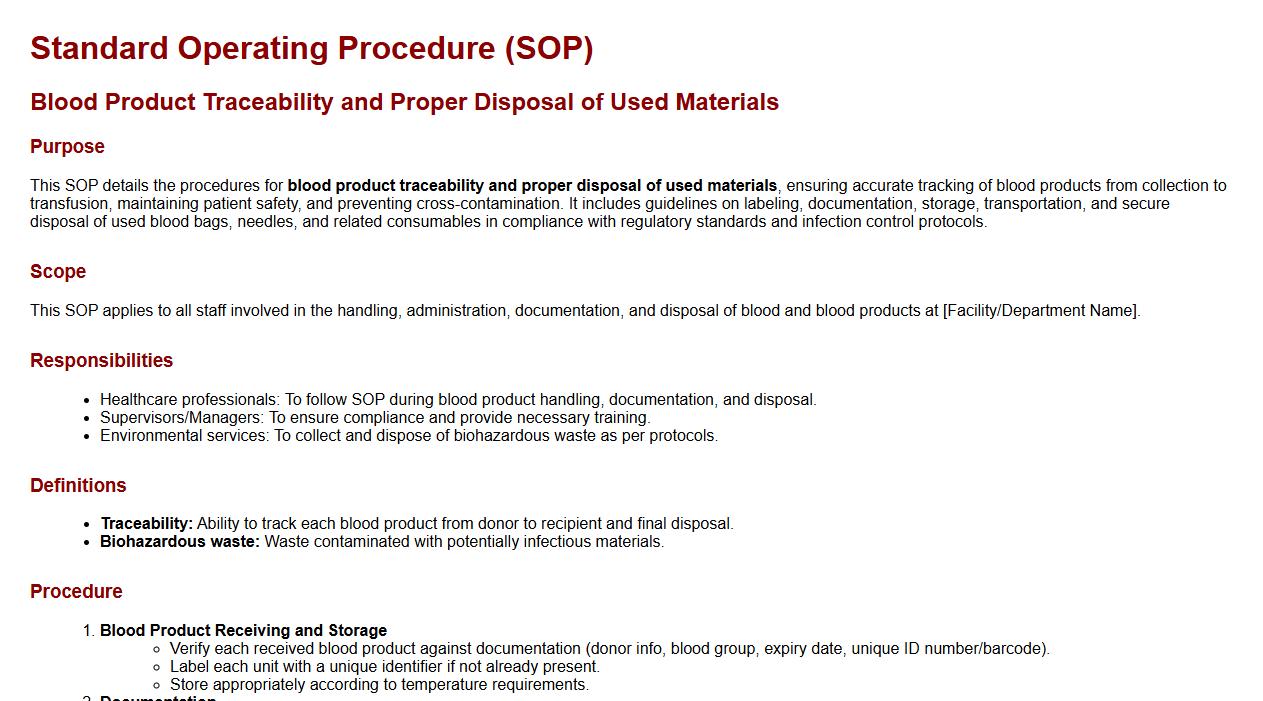
This SOP details the procedures for blood product traceability and proper disposal of used materials, ensuring accurate tracking of blood products from collection to transfusion, maintaining patient safety, and preventing cross-contamination. It includes guidelines on labeling, documentation, storage, transportation, and secure disposal of used blood bags, needles, and related consumables in compliance with regulatory standards and infection control protocols.
Essential Steps for Patient Identification Before Blood Transfusion
The SOP emphasizes verifying patient identity through at least two unique identifiers such as name and date of birth. It mandates cross-checking these identifiers against the blood product label and accompanying documents. These steps ensure accurate matching to prevent transfusion errors.
Pre-Transfusion Checks to be Documented
The SOP requires documentation of key pre-transfusion checks including patient vital signs, blood product compatibility, and verification of consent. Recording the integrity of the blood bag and expiry date is also essential. Complete documentation establishes a clear safety record prior to administering blood products.
Management of Adverse Transfusion Reactions
The SOP specifies immediate cessation of transfusion upon signs of an adverse reaction and prompt notification of the medical team. It directs close monitoring of the patient's symptoms and initiation of appropriate treatment protocols. Comprehensive documentation of the event and actions taken is critical for patient safety and review.
Protocols for Handling and Storing Blood Components
According to the SOP, blood components must be stored at specified temperatures and transported under controlled conditions to preserve product viability. Handling procedures include minimizing exposure to light and agitation. Ensuring proper storage prevents deterioration and reduces transfusion risks.
Post-Transfusion Monitoring and Documentation
The SOP outlines ongoing monitoring of patient vital signs and clinical status during and after transfusion. It mandates recording any adverse reactions and the volume transfused in the patient's medical record. Detailed documentation supports continuous patient evaluation and quality assurance.