
A SOP Template for Ambulance Service Protocols provides a structured guideline to ensure consistent and efficient emergency medical response. It outlines procedures for patient assessment, communication, and transport, enhancing safety and compliance with regulatory standards. This template supports ambulance teams in delivering high-quality care while maintaining operational coordination.
Emergency call intake and triage procedures.
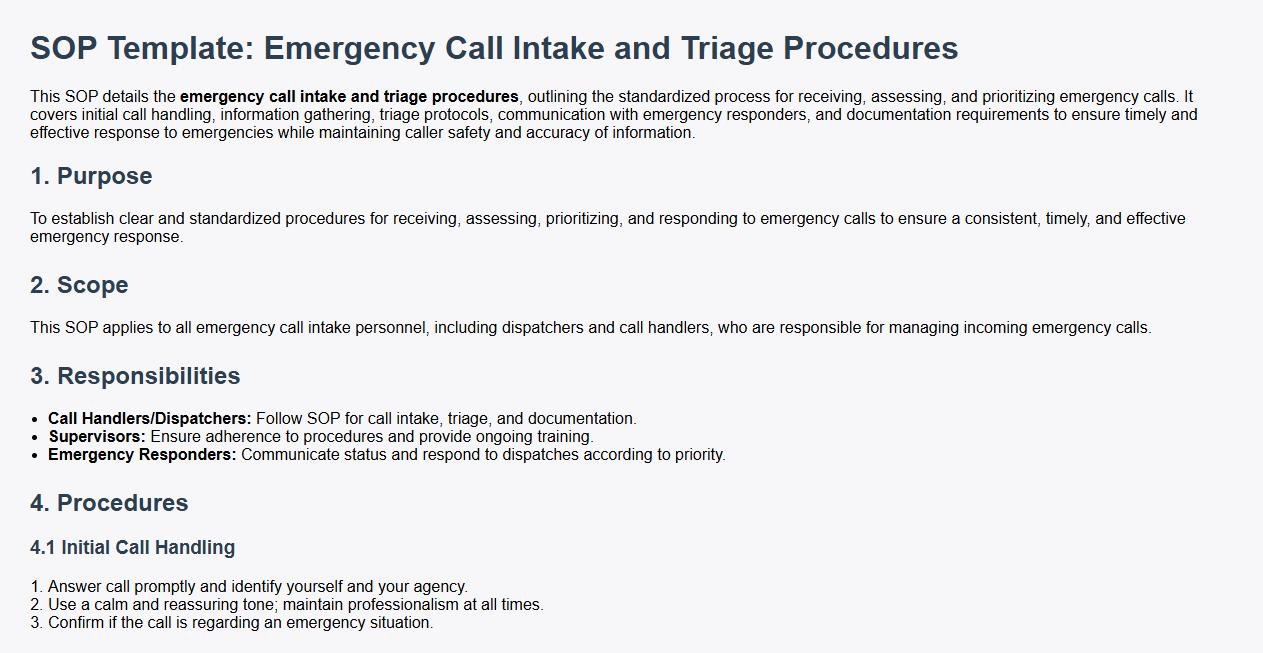
This SOP details the emergency call intake and triage procedures, outlining the standardized process for receiving, assessing, and prioritizing emergency calls. It covers initial call handling, information gathering, triage protocols, communication with emergency responders, and documentation requirements to ensure timely and effective response to emergencies while maintaining caller safety and accuracy of information.
Ambulance vehicle inspection and pre-shift checklist.
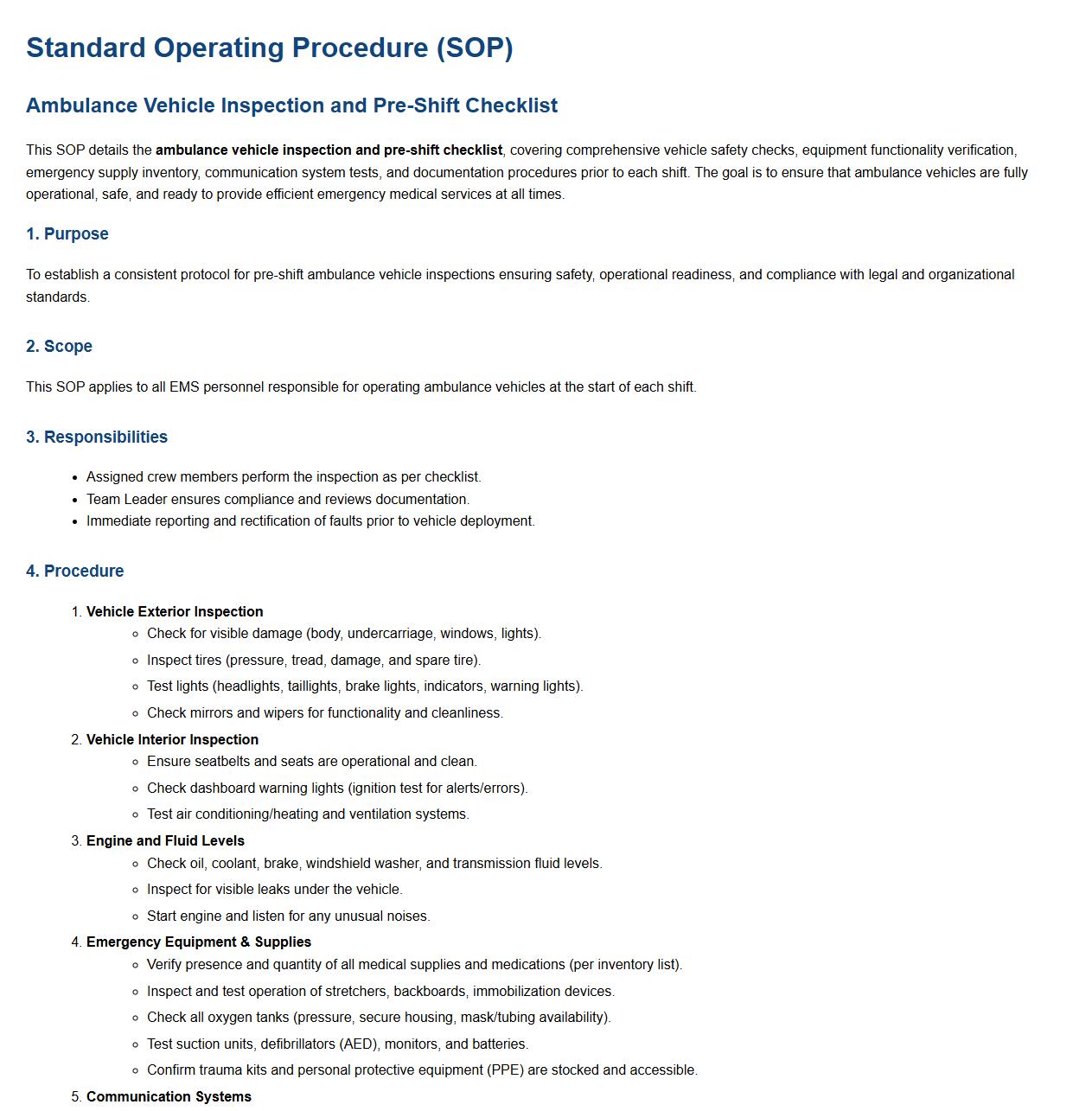
This SOP details the ambulance vehicle inspection and pre-shift checklist, covering comprehensive vehicle safety checks, equipment functionality verification, emergency supply inventory, communication system tests, and documentation procedures prior to each shift. The goal is to ensure that ambulance vehicles are fully operational, safe, and ready to provide efficient emergency medical services at all times.
Personal protective equipment (PPE) usage guidelines.
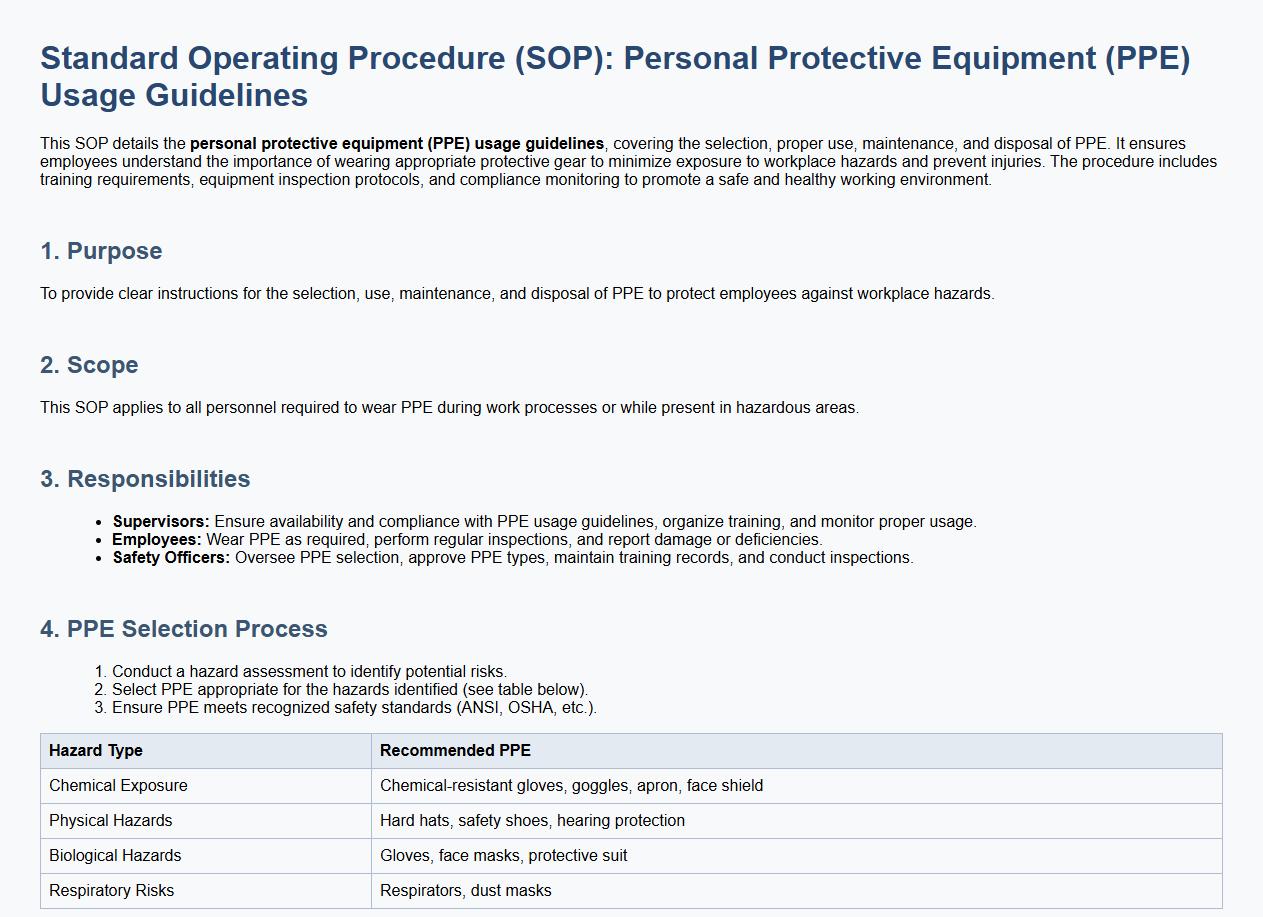
This SOP details the personal protective equipment (PPE) usage guidelines, covering the selection, proper use, maintenance, and disposal of PPE. It ensures employees understand the importance of wearing appropriate protective gear to minimize exposure to workplace hazards and prevent injuries. The procedure includes training requirements, equipment inspection protocols, and compliance monitoring to promote a safe and healthy working environment.
Patient assessment and vital sign documentation.
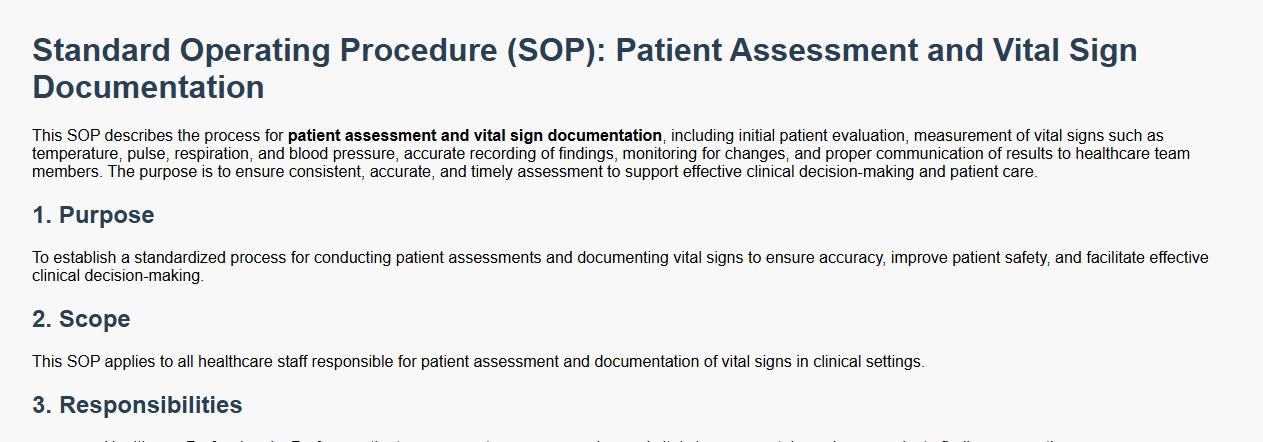
This SOP describes the process for patient assessment and vital sign documentation, including initial patient evaluation, measurement of vital signs such as temperature, pulse, respiration, and blood pressure, accurate recording of findings, monitoring for changes, and proper communication of results to healthcare team members. The purpose is to ensure consistent, accurate, and timely assessment to support effective clinical decision-making and patient care.
Patient transport protocols and securing procedures.
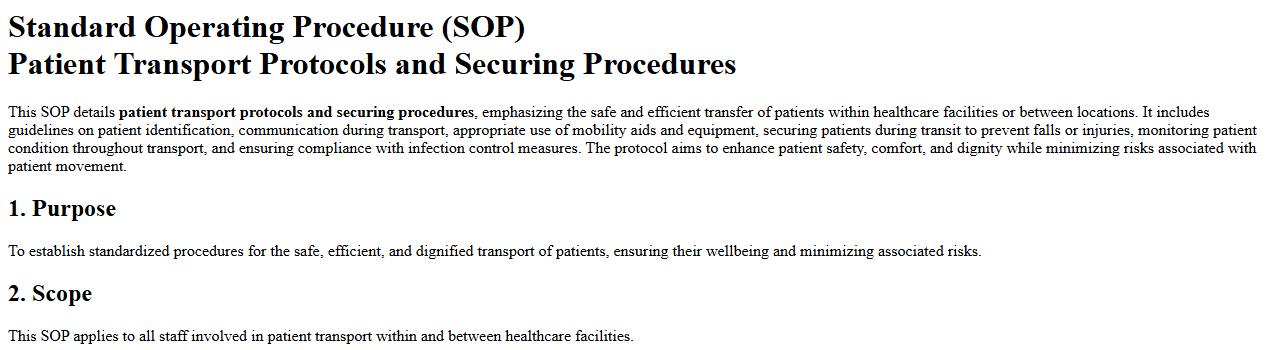
This SOP details patient transport protocols and securing procedures, emphasizing the safe and efficient transfer of patients within healthcare facilities or between locations. It includes guidelines on patient identification, communication during transport, appropriate use of mobility aids and equipment, securing patients during transit to prevent falls or injuries, monitoring patient condition throughout transport, and ensuring compliance with infection control measures. The protocol aims to enhance patient safety, comfort, and dignity while minimizing risks associated with patient movement.
Infection control and decontamination processes.
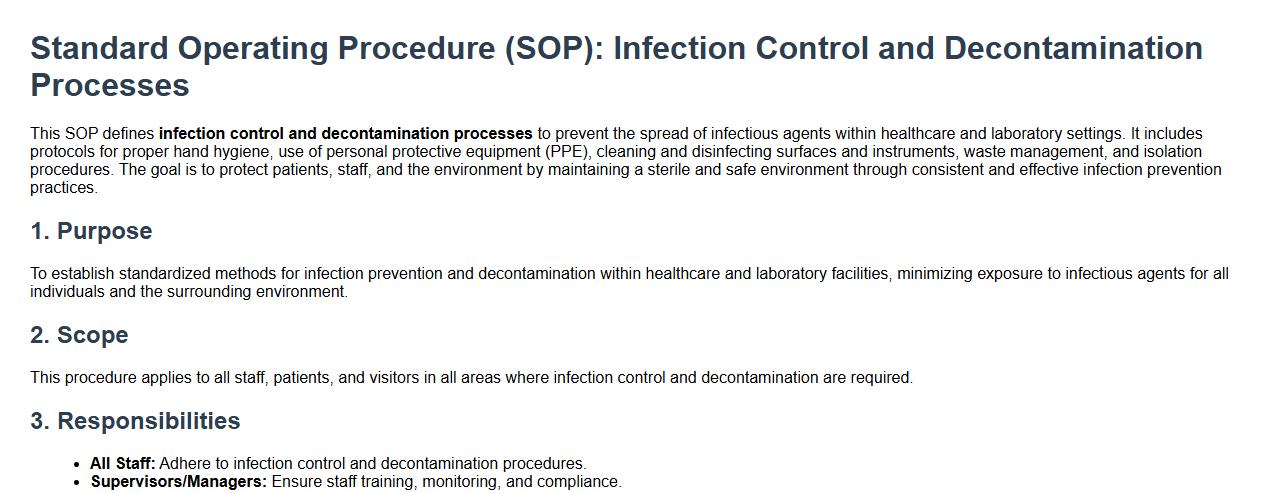
This SOP defines infection control and decontamination processes to prevent the spread of infectious agents within healthcare and laboratory settings. It includes protocols for proper hand hygiene, use of personal protective equipment (PPE), cleaning and disinfecting surfaces and instruments, waste management, and isolation procedures. The goal is to protect patients, staff, and the environment by maintaining a sterile and safe environment through consistent and effective infection prevention practices.
Medication administration and controlled substances handling.
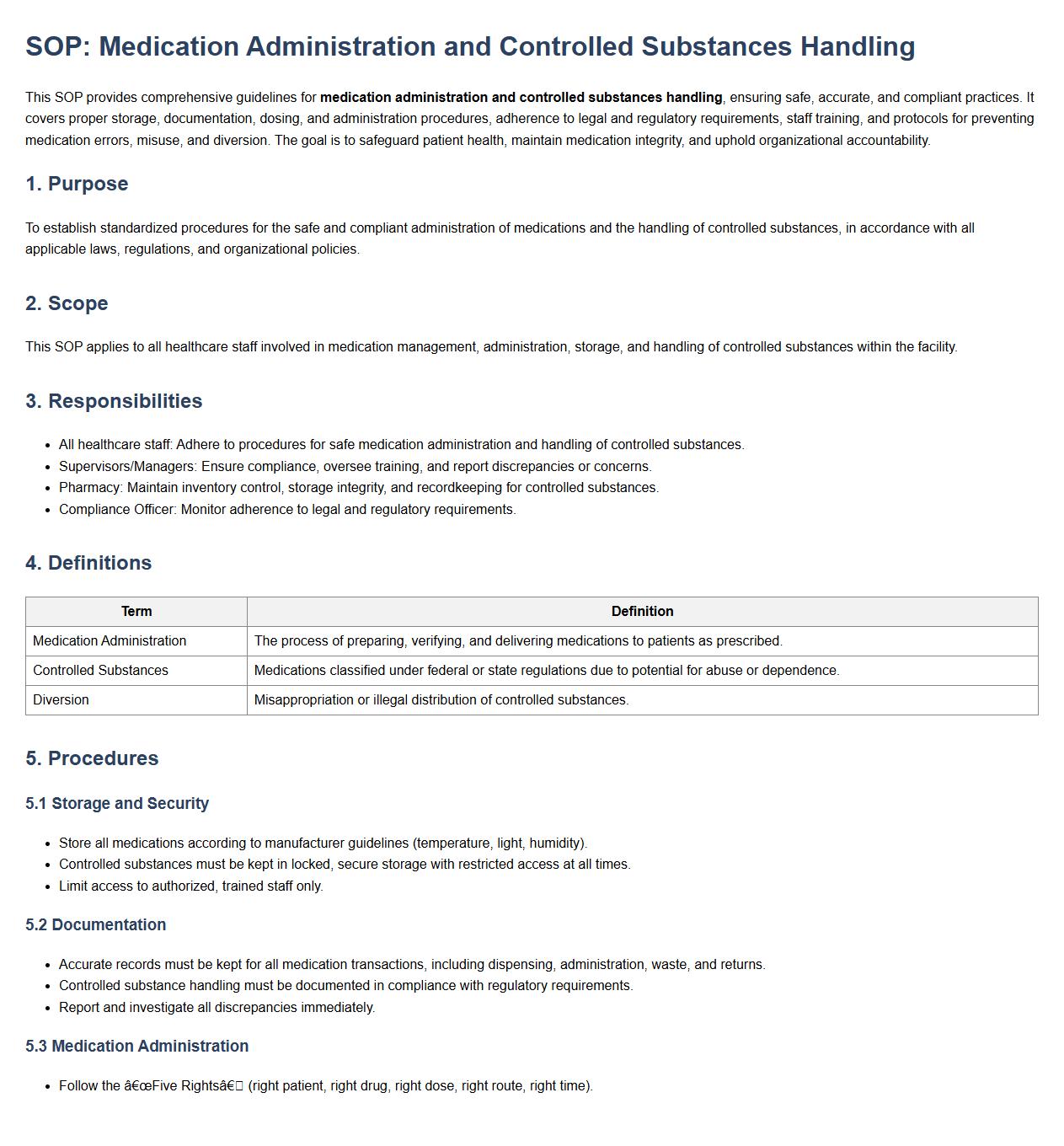
This SOP provides comprehensive guidelines for medication administration and controlled substances handling, ensuring safe, accurate, and compliant practices. It covers proper storage, documentation, dosing, and administration procedures, adherence to legal and regulatory requirements, staff training, and protocols for preventing medication errors, misuse, and diversion. The goal is to safeguard patient health, maintain medication integrity, and uphold organizational accountability.
Communication protocols with hospitals and dispatch.
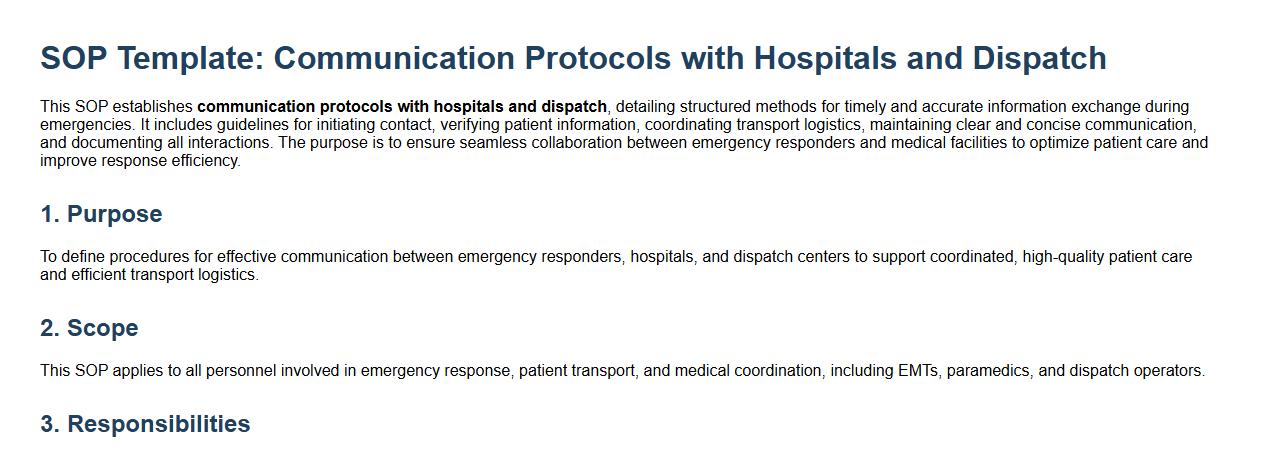
This SOP establishes communication protocols with hospitals and dispatch, detailing structured methods for timely and accurate information exchange during emergencies. It includes guidelines for initiating contact, verifying patient information, coordinating transport logistics, maintaining clear and concise communication, and documenting all interactions. The purpose is to ensure seamless collaboration between emergency responders and medical facilities to optimize patient care and improve response efficiency.
Incident reporting and documentation standards.
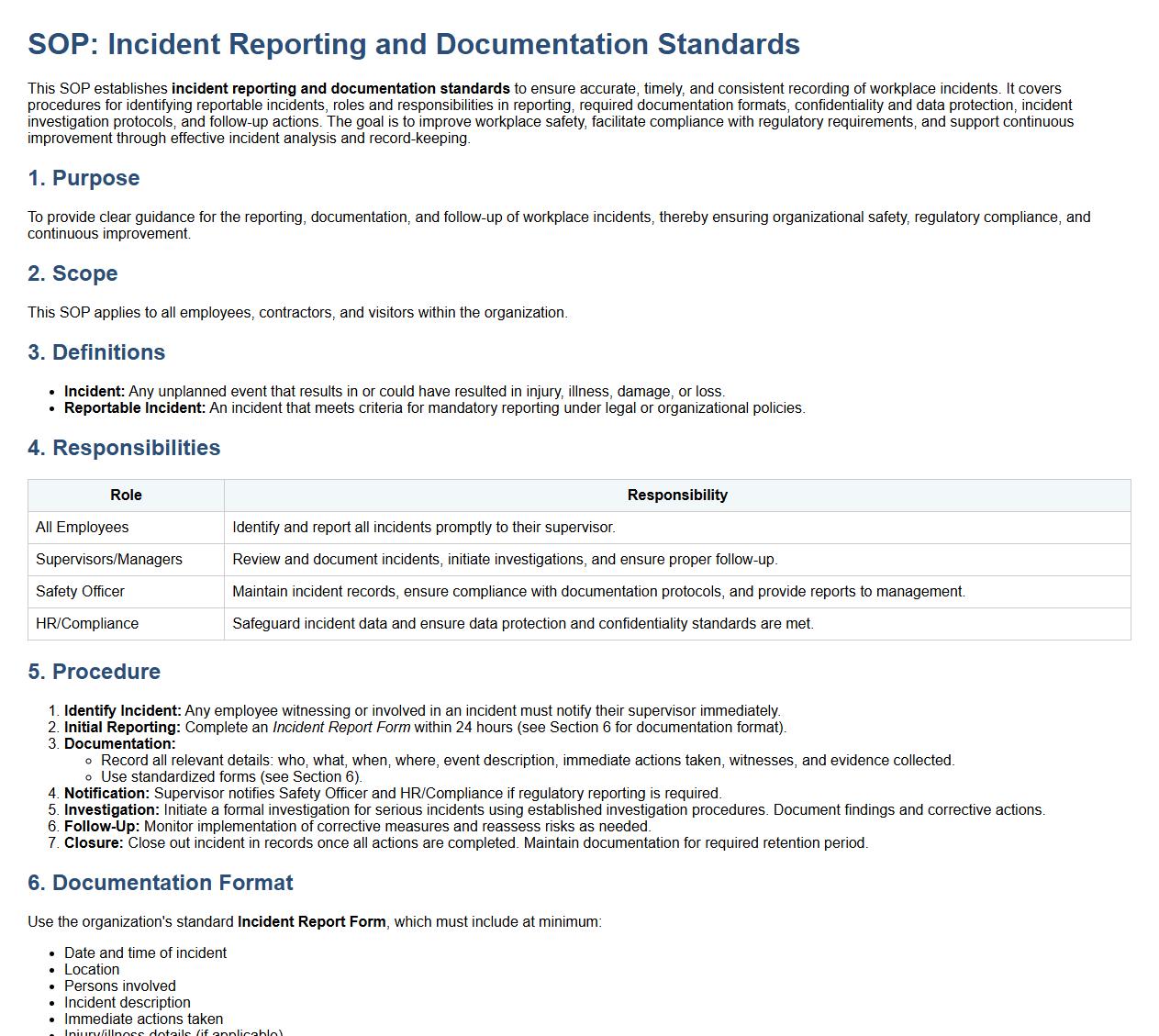
This SOP establishes incident reporting and documentation standards to ensure accurate, timely, and consistent recording of workplace incidents. It covers procedures for identifying reportable incidents, roles and responsibilities in reporting, required documentation formats, confidentiality and data protection, incident investigation protocols, and follow-up actions. The goal is to improve workplace safety, facilitate compliance with regulatory requirements, and support continuous improvement through effective incident analysis and record-keeping.
Post-run ambulance cleaning and restocking procedures.
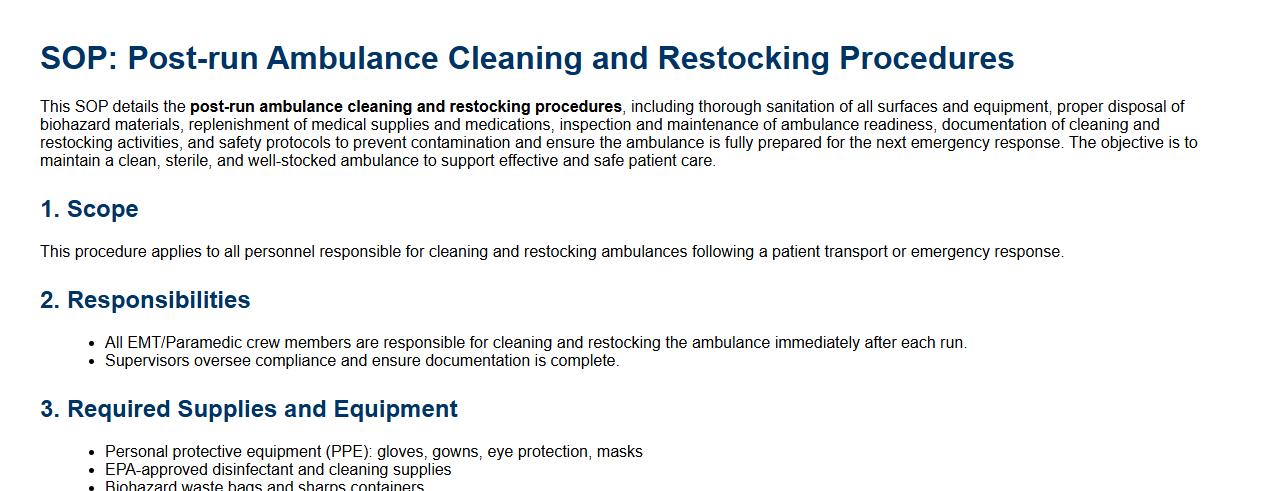
This SOP details the post-run ambulance cleaning and restocking procedures, including thorough sanitation of all surfaces and equipment, proper disposal of biohazard materials, replenishment of medical supplies and medications, inspection and maintenance of ambulance readiness, documentation of cleaning and restocking activities, and safety protocols to prevent contamination and ensure the ambulance is fully prepared for the next emergency response. The objective is to maintain a clean, sterile, and well-stocked ambulance to support effective and safe patient care.
Mandatory Steps for Emergency Dispatch in Ambulance Service Protocols
The SOP mandates a rapid and accurate assessment of the emergency call details to ensure appropriate resource allocation. Dispatchers must immediately notify the nearest available ambulance to the incident location. Additionally, continuous monitoring and updating of the call status are required to maintain real-time response efficiency.
Roles and Responsibilities of Ambulance Crew Members During Patient Transport
The SOP clearly defines that the ambulance crew must prioritize patient safety and care throughout transport. The driver is responsible for safe navigation, while medical personnel provide necessary treatment and monitor vital signs. Both members are expected to maintain constant communication and collaborate to ensure a smooth transfer to healthcare facilities.
Infection Control and Patient Safety Procedures Specified for Ambulance Operations
The SOP emphasizes strict adherence to infection control protocols, including the use of personal protective equipment (PPE) and regular disinfection of the ambulance. Patient safety is ensured by following standardized procedures for equipment sterilization and waste disposal. Crew members are also trained to handle potential biohazards to prevent cross-contamination.
Documentation and Reporting Requirements Detailed in the Ambulance Service SOP
The SOP requires comprehensive documentation of all patient care activities, including assessments, treatments, and transport details. Incident reports must be completed promptly to support clinical and operational review. Accurate record-keeping ensures accountability and facilitates continuous quality improvement in ambulance services.
Communication Protocols Between Ambulance Staff and Receiving Healthcare Facilities
The SOP outlines a structured communication process to provide timely and clear patient information to receiving facilities. Ambulance personnel must relay patient condition, interventions performed, and estimated time of arrival. This protocol ensures preparedness and continuity of care upon patient handover.