

A SOP Template for Patient Record Management ensures consistent and accurate handling of sensitive medical information. It outlines step-by-step procedures for creating, updating, and securely storing patient records to maintain data integrity and comply with healthcare regulations. This template enhances operational efficiency and minimizes the risk of errors in patient documentation.
Patient intake and registration procedure.
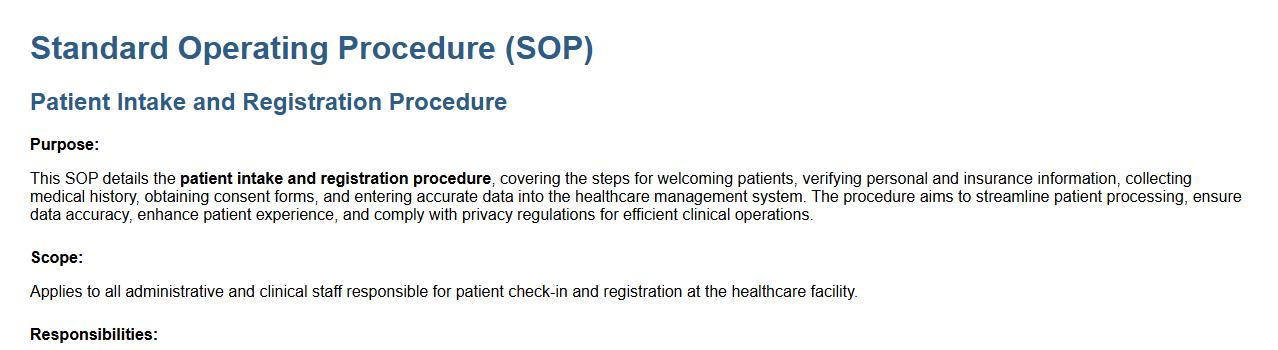
This SOP details the patient intake and registration procedure, covering the steps for welcoming patients, verifying personal and insurance information, collecting medical history, obtaining consent forms, and entering accurate data into the healthcare management system. The procedure aims to streamline patient processing, ensure data accuracy, enhance patient experience, and comply with privacy regulations for efficient clinical operations.
Patient identification and verification process.
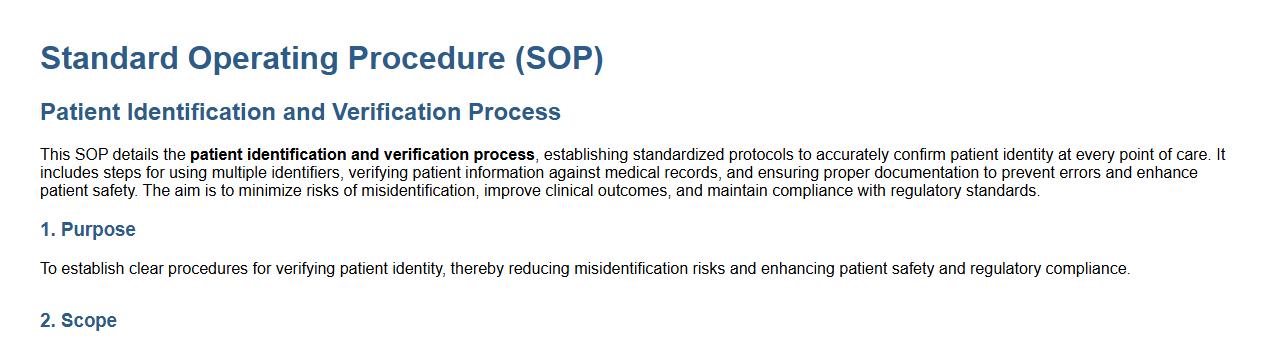
This SOP details the patient identification and verification process, establishing standardized protocols to accurately confirm patient identity at every point of care. It includes steps for using multiple identifiers, verifying patient information against medical records, and ensuring proper documentation to prevent errors and enhance patient safety. The aim is to minimize risks of misidentification, improve clinical outcomes, and maintain compliance with regulatory standards.
Medical history and consent form collection.
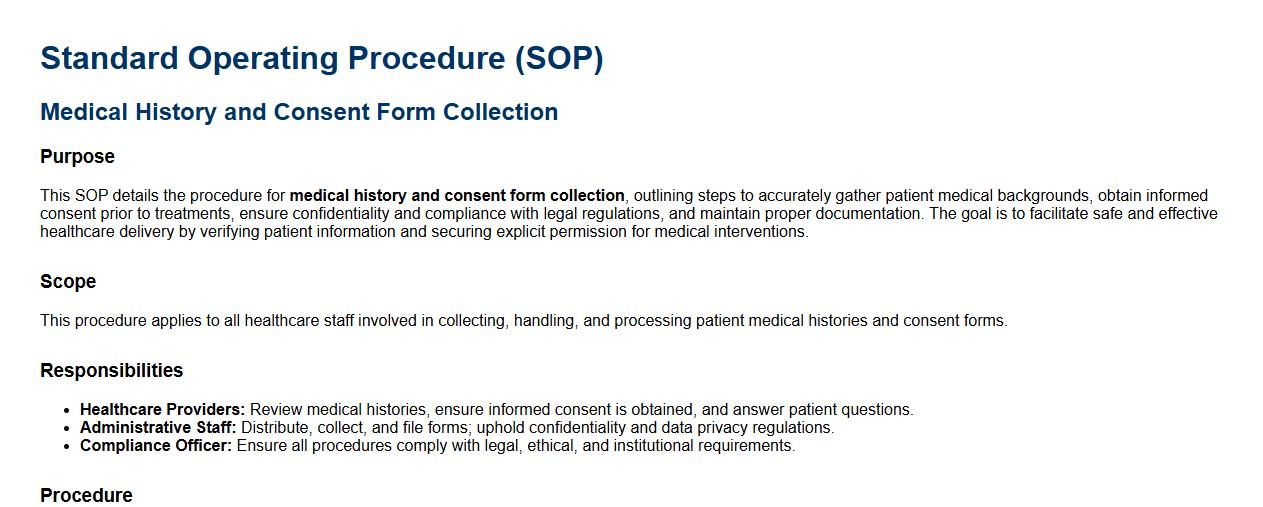
This SOP details the procedure for medical history and consent form collection, outlining steps to accurately gather patient medical backgrounds, obtain informed consent prior to treatments, ensure confidentiality and compliance with legal regulations, and maintain proper documentation. The goal is to facilitate safe and effective healthcare delivery by verifying patient information and securing explicit permission for medical interventions.
Electronic health record (EHR) data entry guidelines.
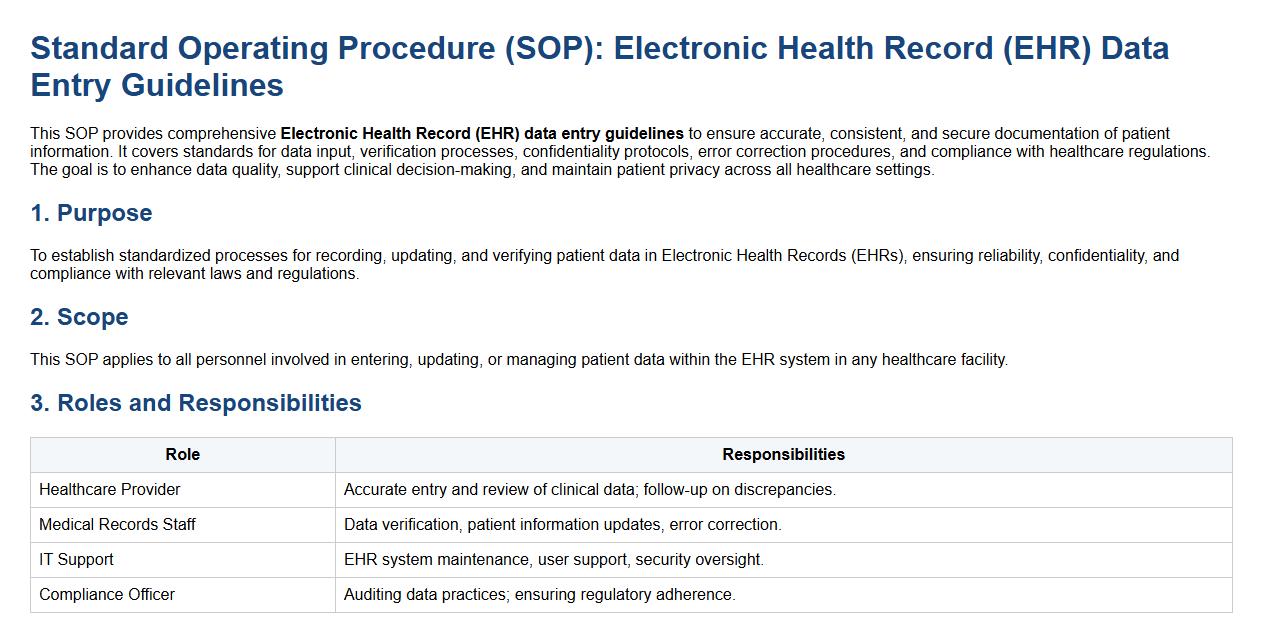
This SOP provides comprehensive Electronic Health Record (EHR) data entry guidelines to ensure accurate, consistent, and secure documentation of patient information. It covers standards for data input, verification processes, confidentiality protocols, error correction procedures, and compliance with healthcare regulations. The goal is to enhance data quality, support clinical decision-making, and maintain patient privacy across all healthcare settings.
Patient file organization and document indexing.
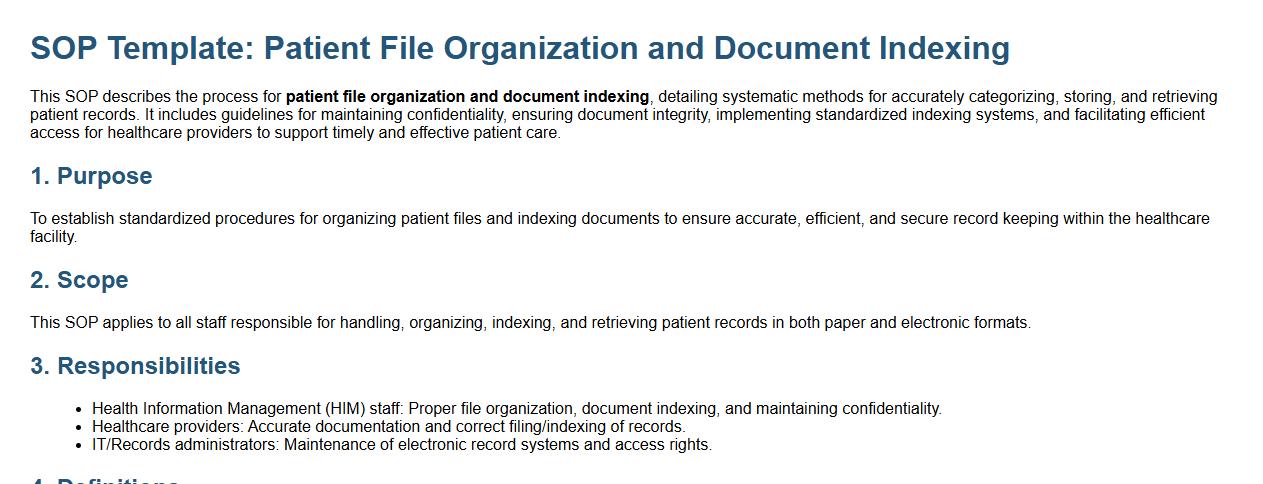
This SOP describes the process for patient file organization and document indexing, detailing systematic methods for accurately categorizing, storing, and retrieving patient records. It includes guidelines for maintaining confidentiality, ensuring document integrity, implementing standardized indexing systems, and facilitating efficient access for healthcare providers to support timely and effective patient care.
Procedures for updating and amending patient records.
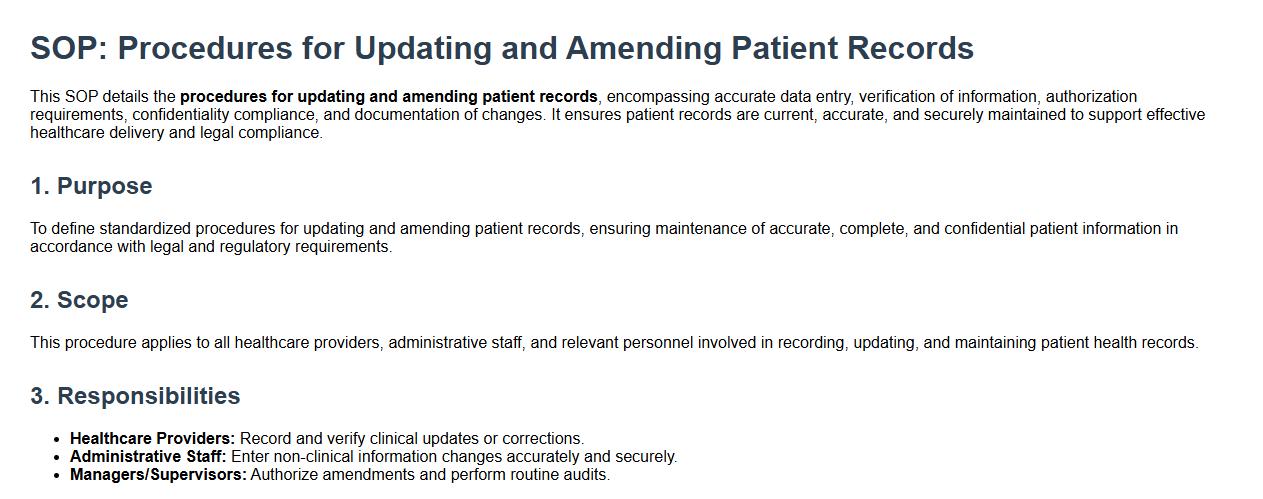
This SOP details the procedures for updating and amending patient records, encompassing accurate data entry, verification of information, authorization requirements, confidentiality compliance, and documentation of changes. It ensures patient records are current, accurate, and securely maintained to support effective healthcare delivery and legal compliance.
Record confidentiality and access authorization protocols.
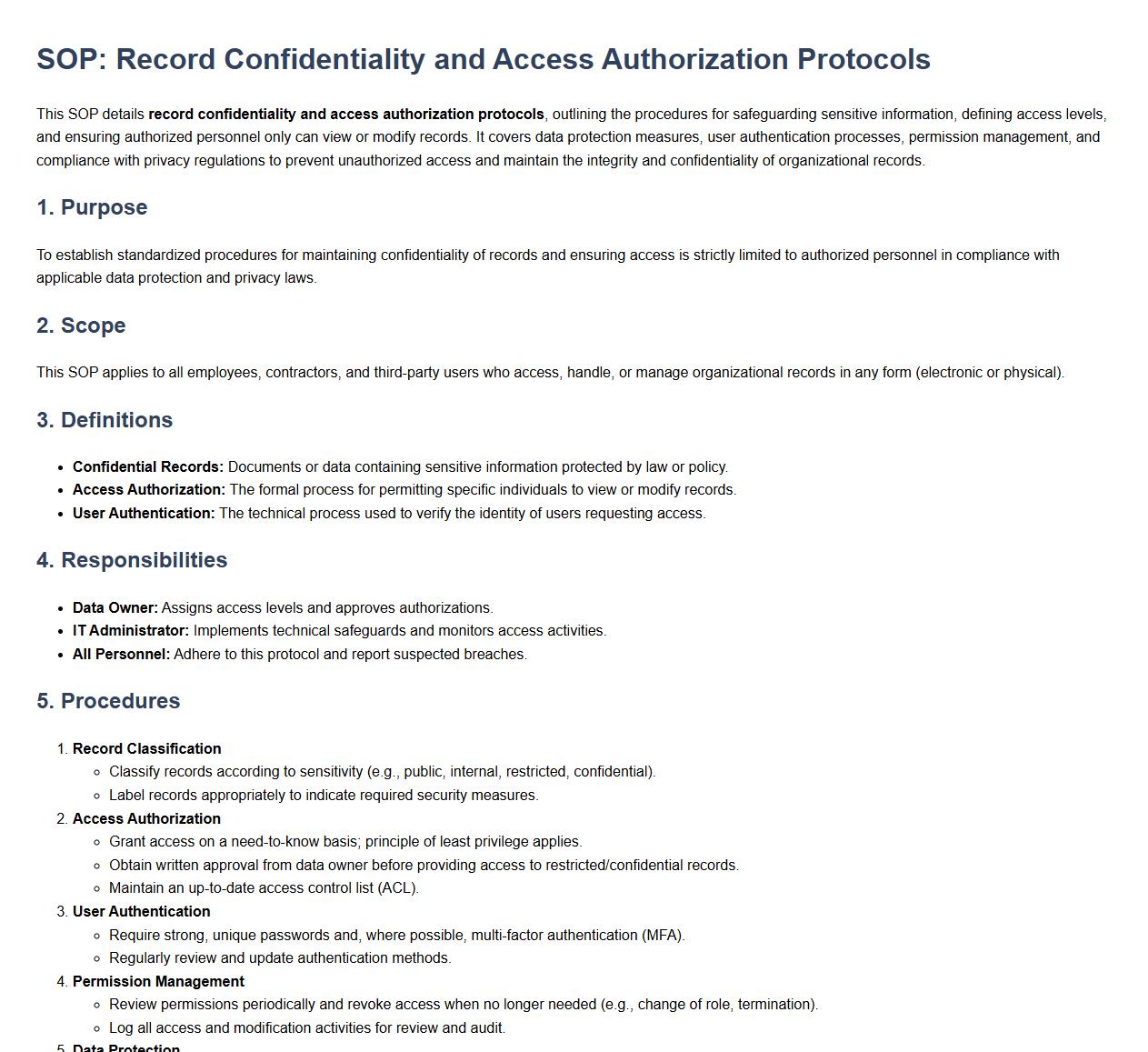
This SOP details record confidentiality and access authorization protocols, outlining the procedures for safeguarding sensitive information, defining access levels, and ensuring authorized personnel only can view or modify records. It covers data protection measures, user authentication processes, permission management, and compliance with privacy regulations to prevent unauthorized access and maintain the integrity and confidentiality of organizational records.
Transfer and release of patient records procedure.
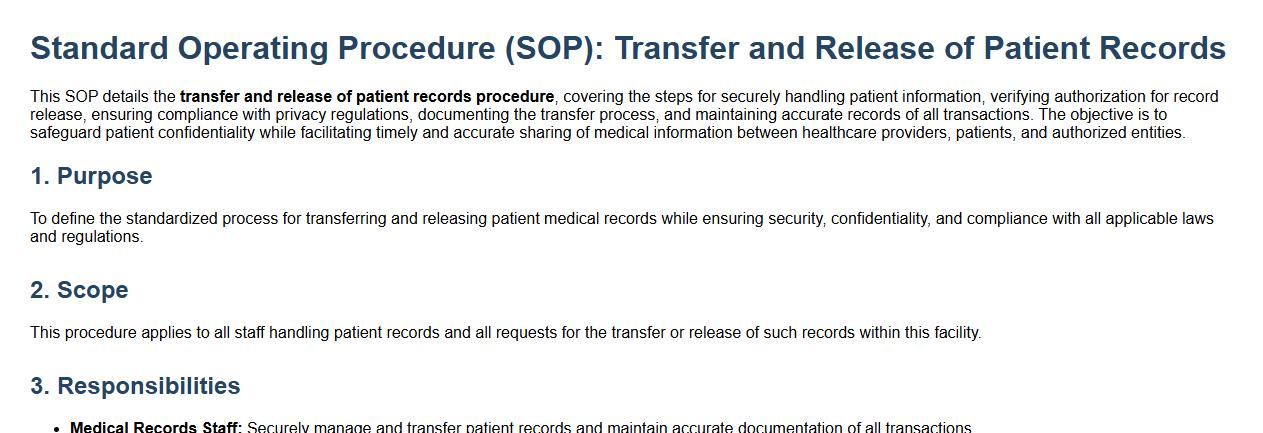
This SOP details the transfer and release of patient records procedure, covering the steps for securely handling patient information, verifying authorization for record release, ensuring compliance with privacy regulations, documenting the transfer process, and maintaining accurate records of all transactions. The objective is to safeguard patient confidentiality while facilitating timely and accurate sharing of medical information between healthcare providers, patients, and authorized entities.
Retention and secure archiving of patient records.
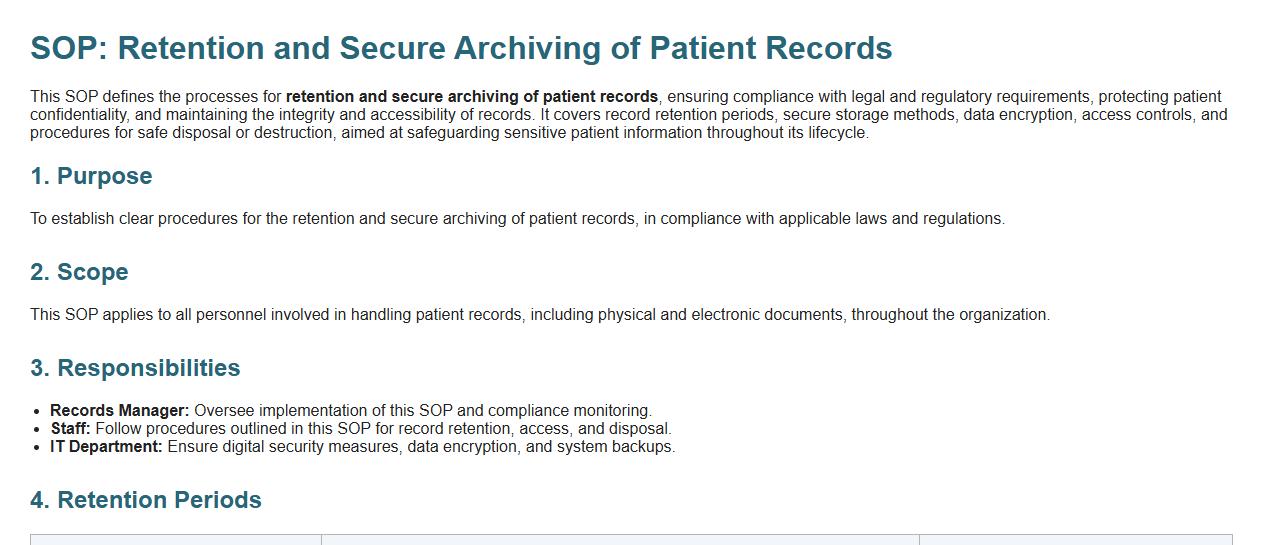
This SOP defines the processes for retention and secure archiving of patient records, ensuring compliance with legal and regulatory requirements, protecting patient confidentiality, and maintaining the integrity and accessibility of records. It covers record retention periods, secure storage methods, data encryption, access controls, and procedures for safe disposal or destruction, aimed at safeguarding sensitive patient information throughout its lifecycle.
Patient record disposal and destruction process.
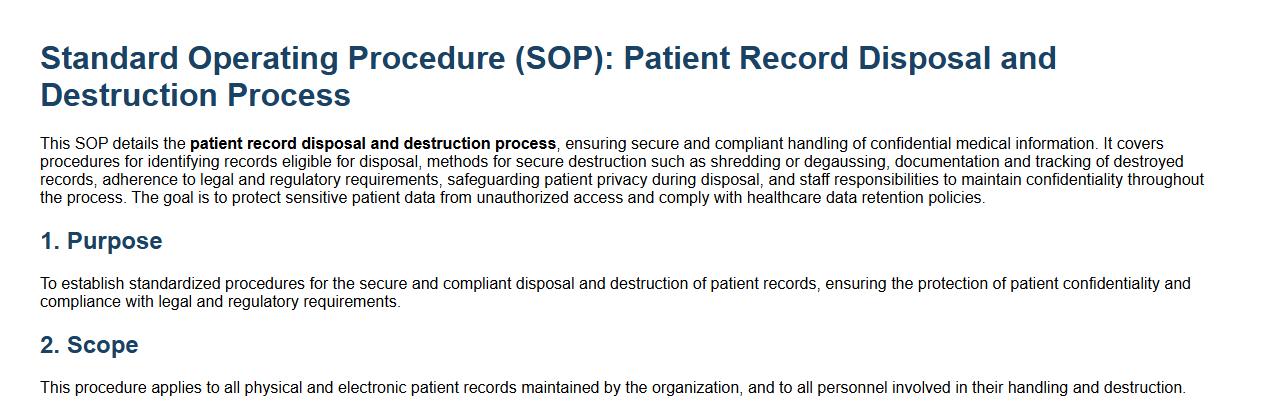
This SOP details the patient record disposal and destruction process, ensuring secure and compliant handling of confidential medical information. It covers procedures for identifying records eligible for disposal, methods for secure destruction such as shredding or degaussing, documentation and tracking of destroyed records, adherence to legal and regulatory requirements, safeguarding patient privacy during disposal, and staff responsibilities to maintain confidentiality throughout the process. The goal is to protect sensitive patient data from unauthorized access and comply with healthcare data retention policies.
Key Data Fields in Every Patient Record
According to the SOP, every patient record must include personal identification information, medical history, and current treatment details. This ensures a comprehensive overview of the patient's health status. Accurate and complete data fields are essential for effective patient care and clinical decision-making.
Roles and Responsibilities for Record Access and Updates
The SOP clearly defines roles and responsibilities by specifying who can access and update patient records. Only authorized healthcare professionals are permitted to make changes, maintaining data integrity. This strict role assignment helps prevent unauthorized access and data tampering.
Procedures for Secure Storage and Confidentiality
The SOP mandates that patient records must be stored using secure electronic systems or locked physical cabinets. Access controls, encryption, and regular audits ensure confidentiality. These measures protect sensitive patient information from breaches and unauthorized exposure.
Requirements for Record Retention, Archival, and Disposal
The SOP specifies retention periods based on legal and organizational standards, after which records are archived securely. Controlled disposal methods are applied once records are no longer required, ensuring data is irreversibly destroyed. Proper timelines help maintain compliance and manage data lifecycle efficiently.
Compliance with Legal and Regulatory Standards
The SOP incorporates specific guidelines to adhere to legal and regulatory standards such as HIPAA or GDPR. Regular training and audits are conducted to ensure ongoing compliance. This framework safeguards patient rights and minimizes organizational risk.