

A SOP Template for Patient Privacy and Confidentiality provides a structured framework to ensure healthcare providers consistently protect sensitive patient information. This template outlines specific procedures for handling, storing, and sharing medical records in compliance with legal and ethical standards. Following this SOP helps maintain trust, prevent unauthorized access, and uphold regulatory requirements such as HIPAA.
Patient information access control procedures.
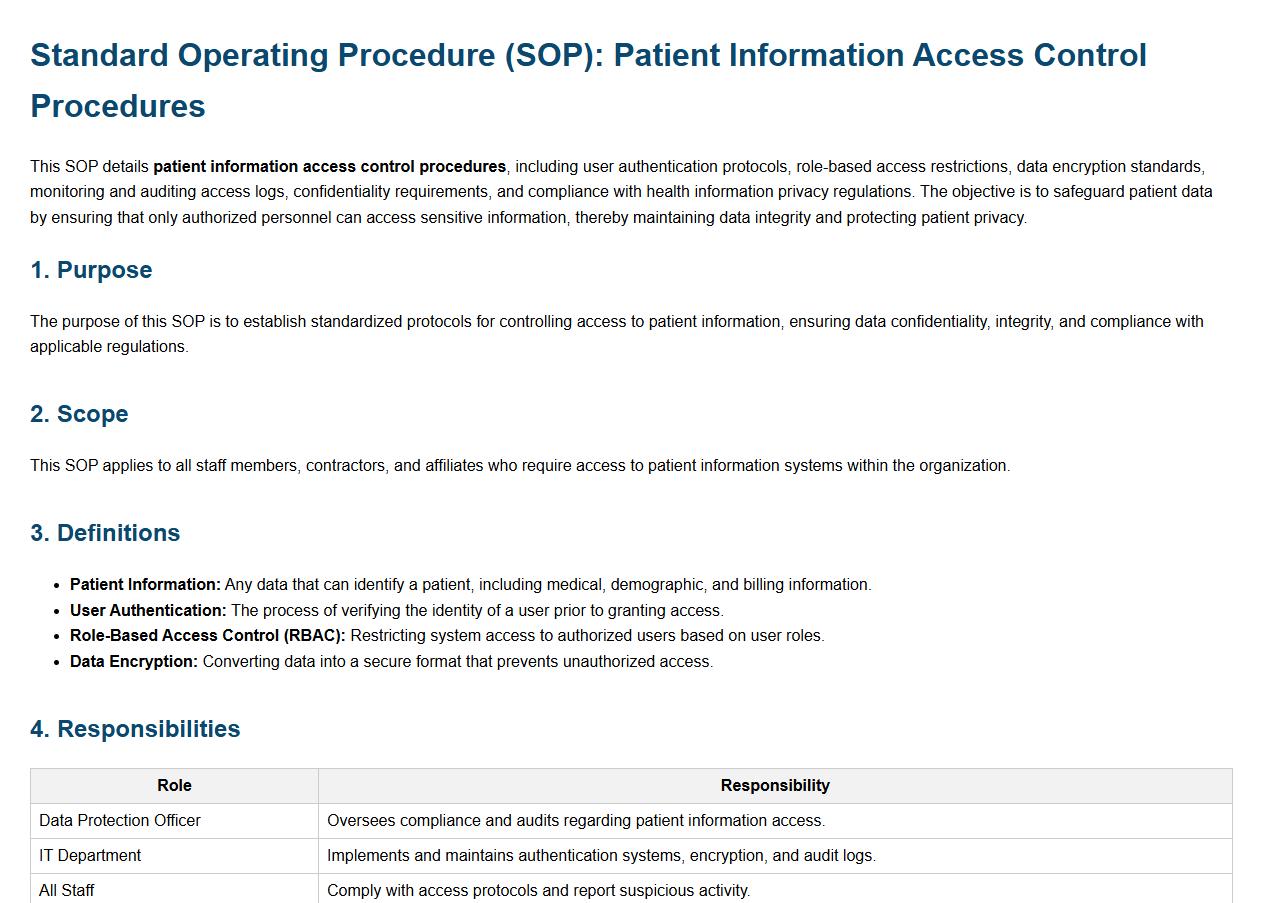
This SOP details patient information access control procedures, including user authentication protocols, role-based access restrictions, data encryption standards, monitoring and auditing access logs, confidentiality requirements, and compliance with health information privacy regulations. The objective is to safeguard patient data by ensuring that only authorized personnel can access sensitive information, thereby maintaining data integrity and protecting patient privacy.
Patient consent and authorization protocols.
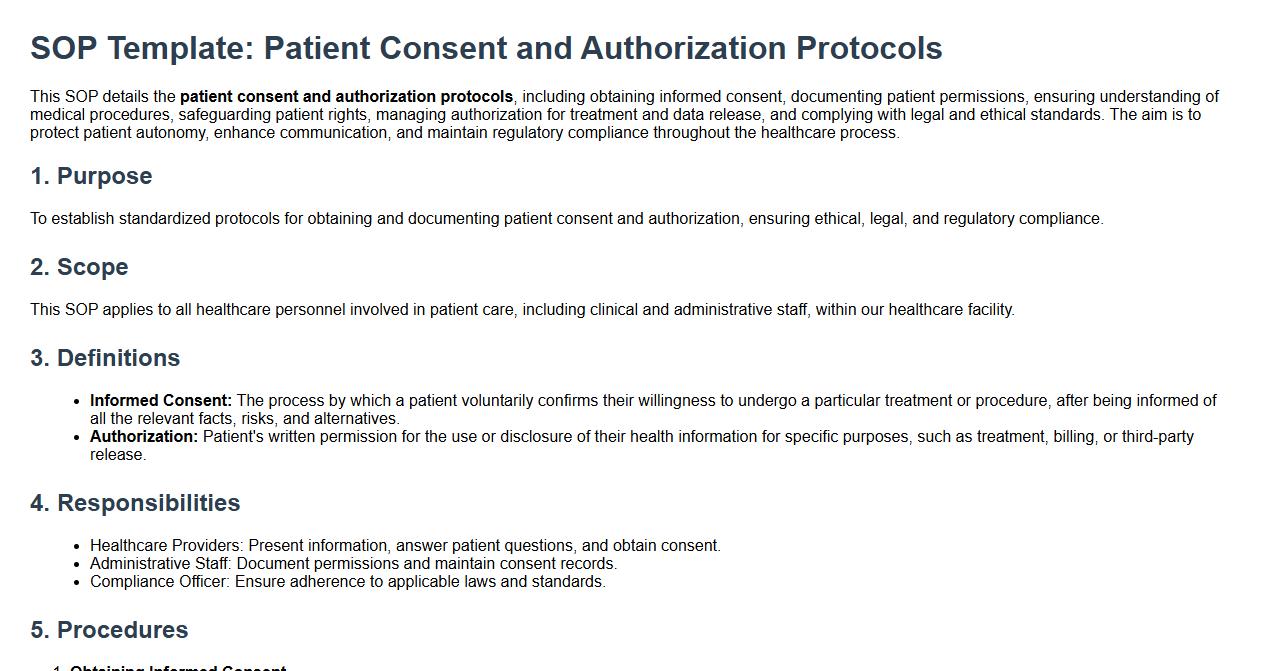
This SOP details the patient consent and authorization protocols, including obtaining informed consent, documenting patient permissions, ensuring understanding of medical procedures, safeguarding patient rights, managing authorization for treatment and data release, and complying with legal and ethical standards. The aim is to protect patient autonomy, enhance communication, and maintain regulatory compliance throughout the healthcare process.
Secure handling and storage of medical records.
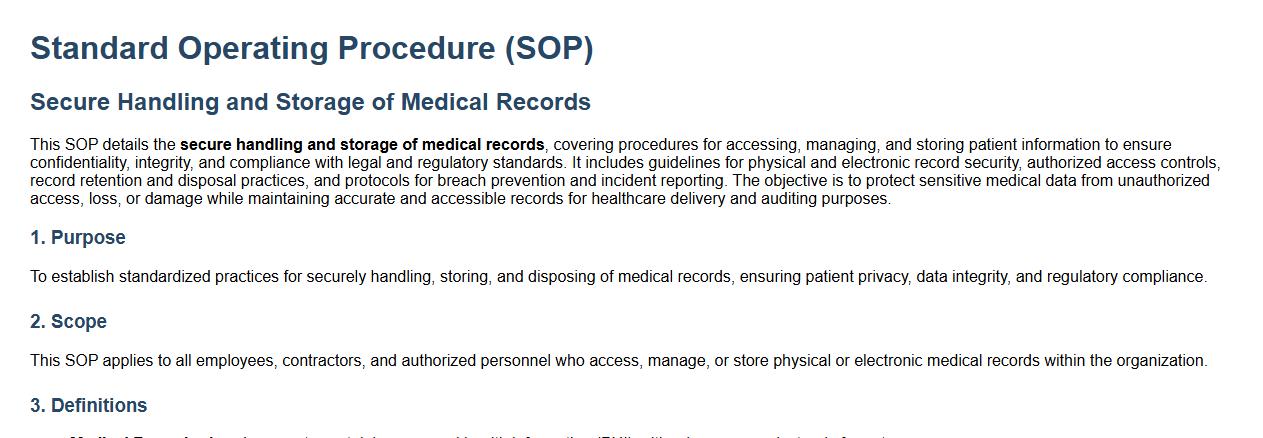
This SOP details the secure handling and storage of medical records, covering procedures for accessing, managing, and storing patient information to ensure confidentiality, integrity, and compliance with legal and regulatory standards. It includes guidelines for physical and electronic record security, authorized access controls, record retention and disposal practices, and protocols for breach prevention and incident reporting. The objective is to protect sensitive medical data from unauthorized access, loss, or damage while maintaining accurate and accessible records for healthcare delivery and auditing purposes.
Guidelines for sharing patient information with third parties.
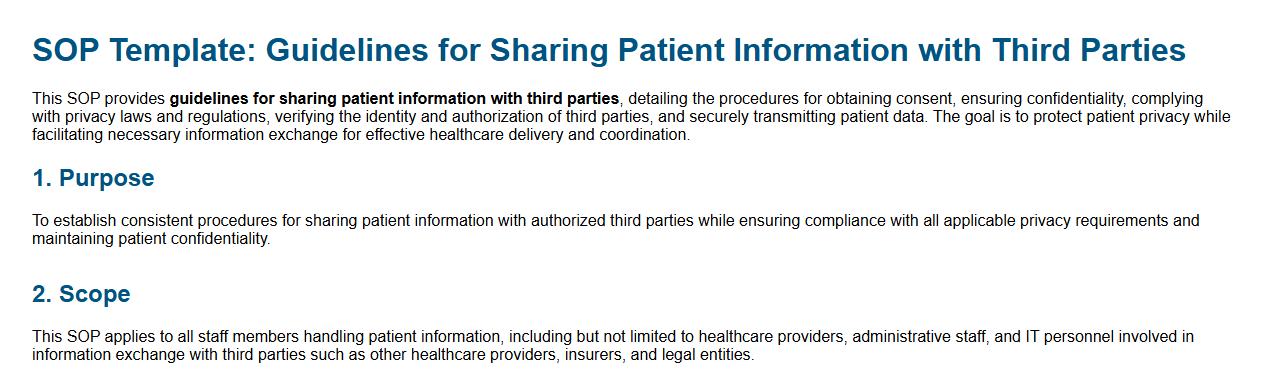
This SOP provides guidelines for sharing patient information with third parties, detailing the procedures for obtaining consent, ensuring confidentiality, complying with privacy laws and regulations, verifying the identity and authorization of third parties, and securely transmitting patient data. The goal is to protect patient privacy while facilitating necessary information exchange for effective healthcare delivery and coordination.
Staff training on privacy regulations (e.g., HIPAA).
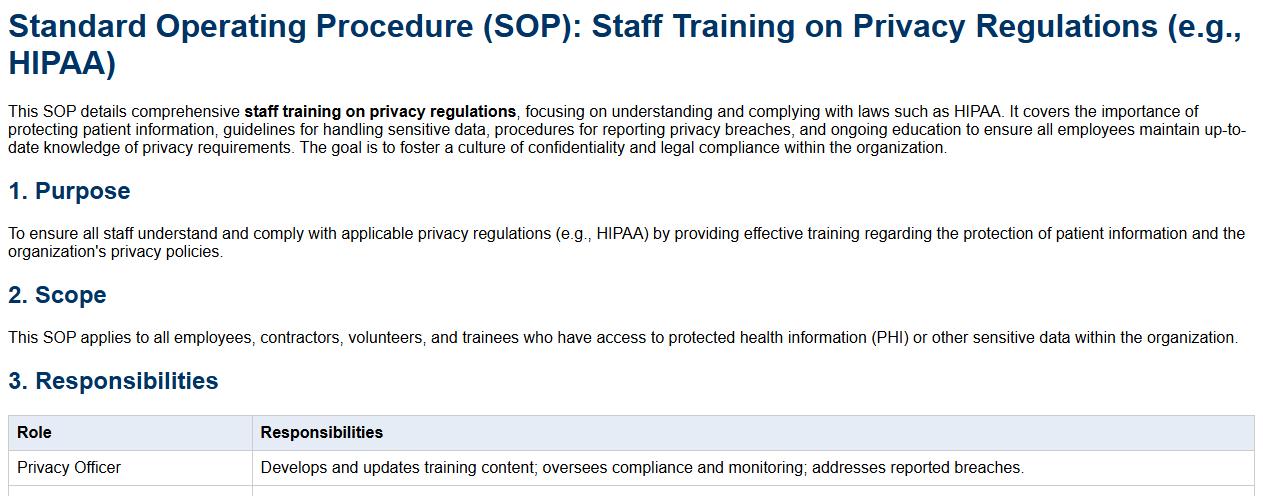
This SOP details comprehensive staff training on privacy regulations, focusing on understanding and complying with laws such as HIPAA. It covers the importance of protecting patient information, guidelines for handling sensitive data, procedures for reporting privacy breaches, and ongoing education to ensure all employees maintain up-to-date knowledge of privacy requirements. The goal is to foster a culture of confidentiality and legal compliance within the organization.
Electronic Health Records (EHR) security measures.
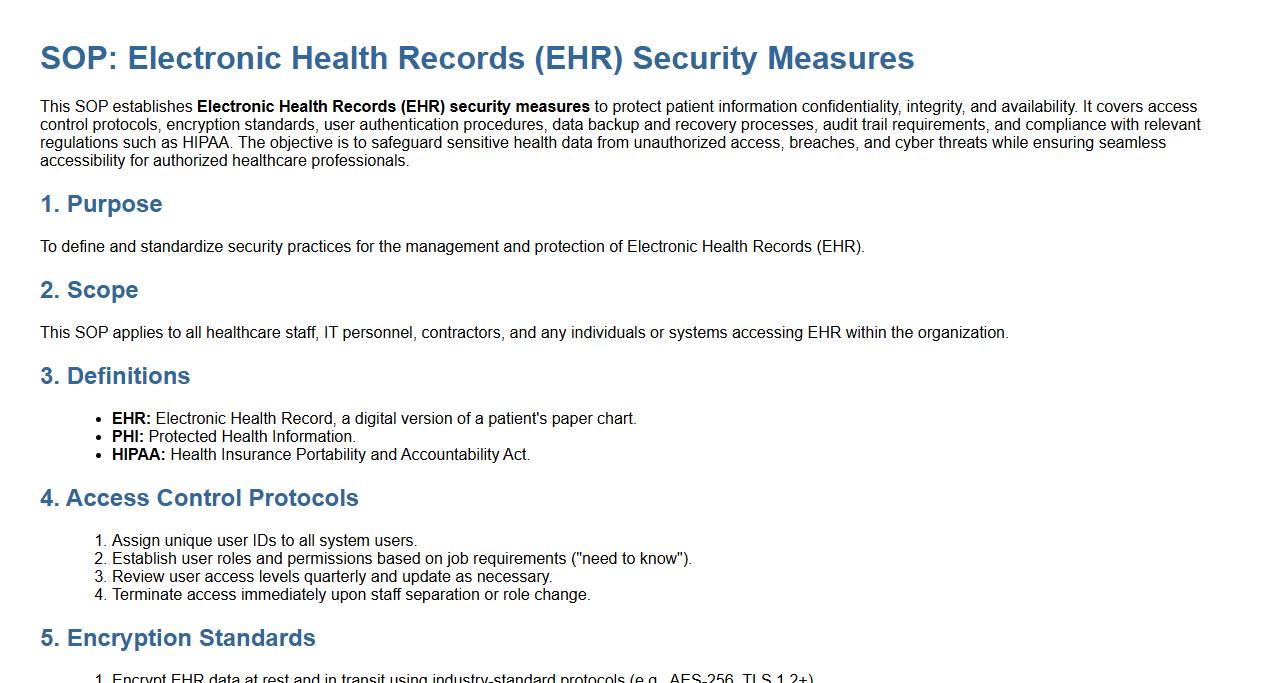
This SOP establishes Electronic Health Records (EHR) security measures to protect patient information confidentiality, integrity, and availability. It covers access control protocols, encryption standards, user authentication procedures, data backup and recovery processes, audit trail requirements, and compliance with relevant regulations such as HIPAA. The objective is to safeguard sensitive health data from unauthorized access, breaches, and cyber threats while ensuring seamless accessibility for authorized healthcare professionals.
Reporting and managing privacy breaches or violations.
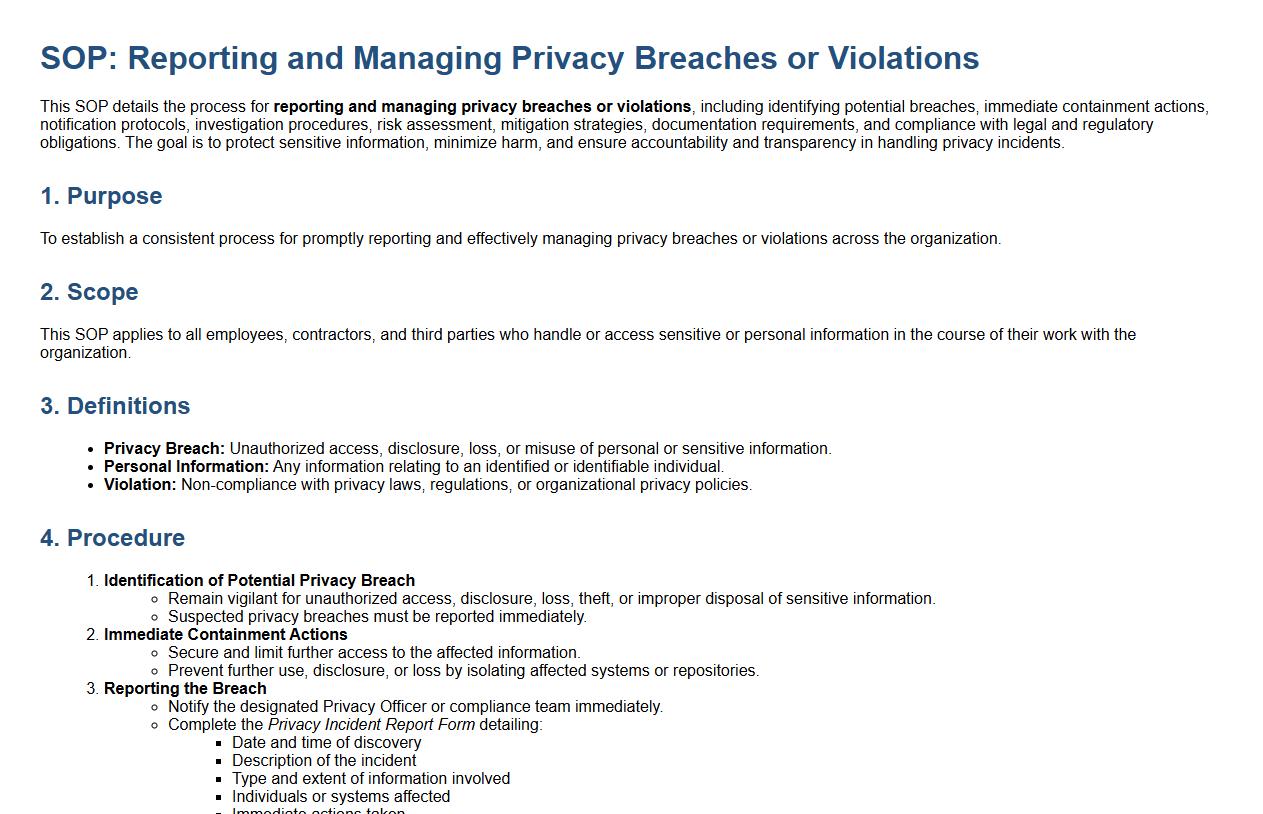
This SOP details the process for reporting and managing privacy breaches or violations, including identifying potential breaches, immediate containment actions, notification protocols, investigation procedures, risk assessment, mitigation strategies, documentation requirements, and compliance with legal and regulatory obligations. The goal is to protect sensitive information, minimize harm, and ensure accountability and transparency in handling privacy incidents.
Procedures for patient requests to access or amend records.
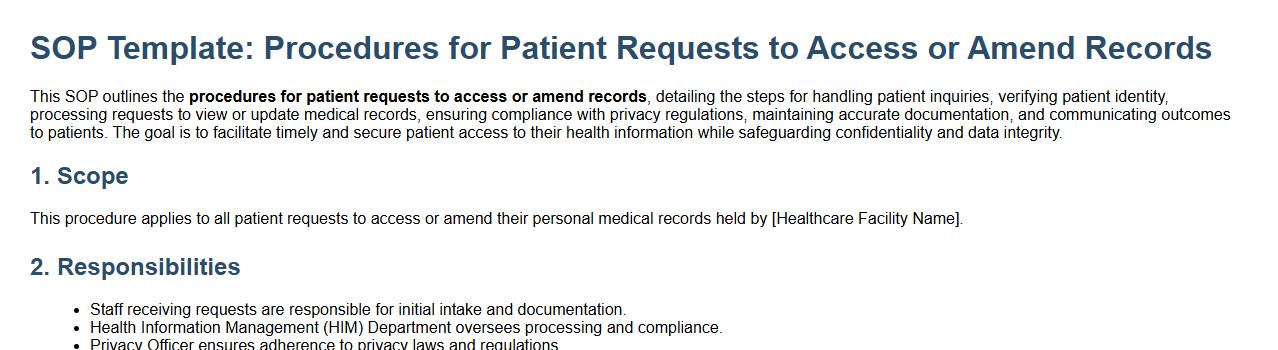
This SOP outlines the procedures for patient requests to access or amend records, detailing the steps for handling patient inquiries, verifying patient identity, processing requests to view or update medical records, ensuring compliance with privacy regulations, maintaining accurate documentation, and communicating outcomes to patients. The goal is to facilitate timely and secure patient access to their health information while safeguarding confidentiality and data integrity.
Disposal and destruction of confidential patient information.
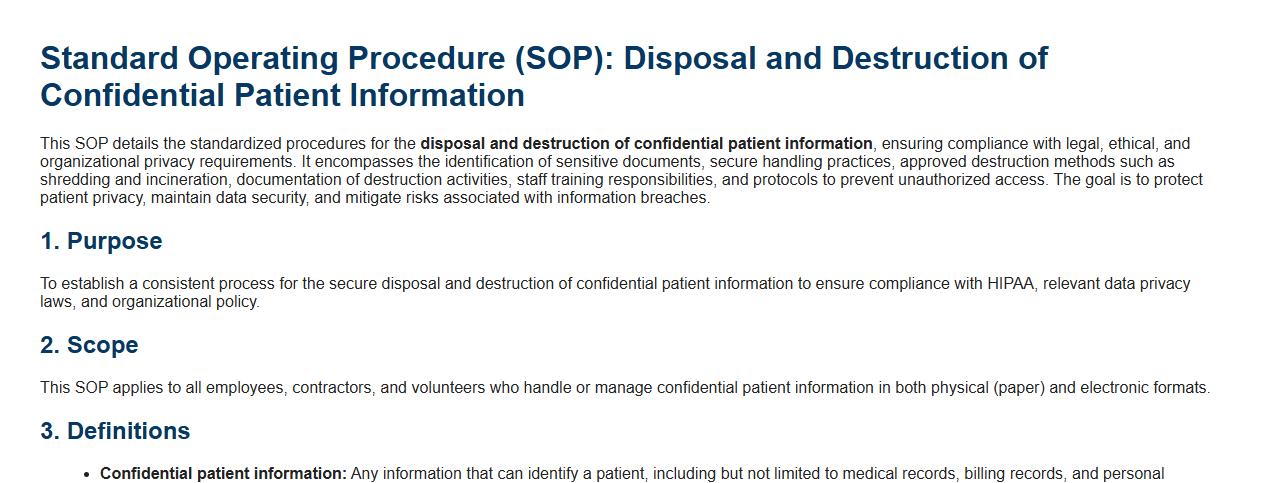
This SOP details the standardized procedures for the disposal and destruction of confidential patient information, ensuring compliance with legal, ethical, and organizational privacy requirements. It encompasses the identification of sensitive documents, secure handling practices, approved destruction methods such as shredding and incineration, documentation of destruction activities, staff training responsibilities, and protocols to prevent unauthorized access. The goal is to protect patient privacy, maintain data security, and mitigate risks associated with information breaches.
Auditing and monitoring of patient data access.
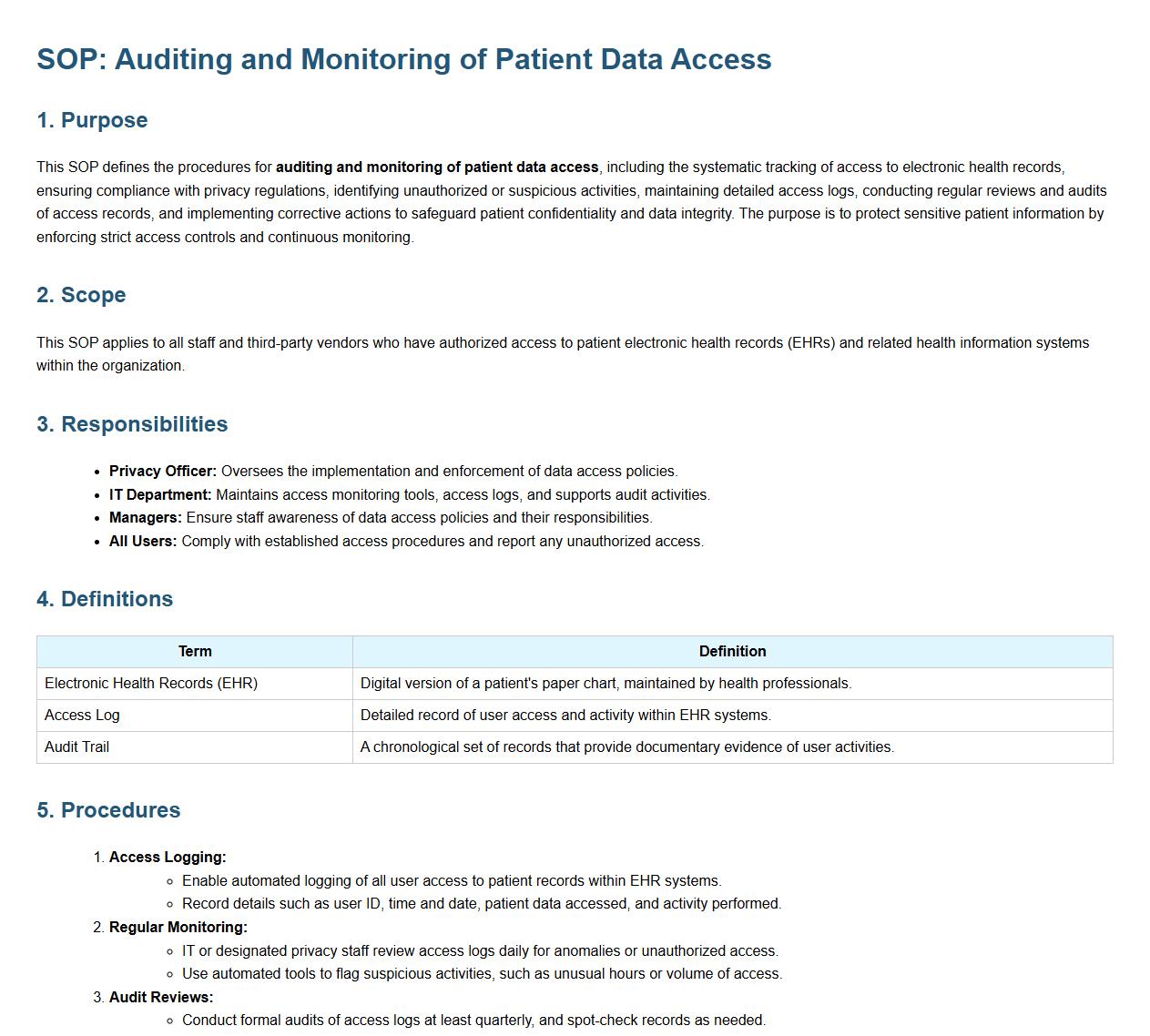
This SOP defines the procedures for auditing and monitoring of patient data access, including the systematic tracking of access to electronic health records, ensuring compliance with privacy regulations, identifying unauthorized or suspicious activities, maintaining detailed access logs, conducting regular reviews and audits of access records, and implementing corrective actions to safeguard patient confidentiality and data integrity. The purpose is to protect sensitive patient information by enforcing strict access controls and continuous monitoring.
Key Principles for Patient Privacy and Confidentiality
Adhering to patient privacy involves strict compliance with confidentiality standards that protect personal health information. The SOP emphasizes the importance of respecting patient rights and limiting information access to authorized personnel only. Maintaining trust requires consistent application of these principles to prevent unauthorized data exposure.
Storage and Transmission of Patient Information
Patient data must be stored using secure encryption methods to ensure confidentiality during transmission and storage. The SOP mandates the use of authorized secure servers and compliance with legal standards like HIPAA or GDPR. Regular audits and system checks help maintain the integrity of patient information.
Handling Unauthorized Disclosure or Breach
The SOP outlines immediate reporting protocols for any unauthorized disclosure or data breach incident. Incident response teams must be activated promptly to mitigate risks and notify affected patients in accordance with regulatory requirements. Comprehensive investigation and corrective action plans are essential to prevent future breaches.
Authorization and Verification of Patient Record Access
Access to patient records is limited to authorized healthcare professionals who have undergone verification procedures such as identity confirmation and role validation. Multi-factor authentication and access logs are used to enforce stringent control over sensitive information. The SOP ensures a clear audit trail to monitor access activities.
Protocols for Obtaining Patient Consent
Obtaining informed patient consent prior to sharing personal health information is a critical component of the SOP. Consent forms must be clearly explained, documented, and stored securely, with patients informed of their rights and how their data will be used. The process emphasizes transparency and respect for patient autonomy throughout data sharing interactions.