
A SOP Template for Healthcare Waste Management provides a standardized framework to ensure the safe handling, segregation, and disposal of medical waste. This template enhances compliance with regulatory requirements and minimizes environmental and health risks associated with hazardous materials. Proper implementation of the SOP promotes a consistent approach to waste management across healthcare facilities.
Healthcare waste segregation and classification.
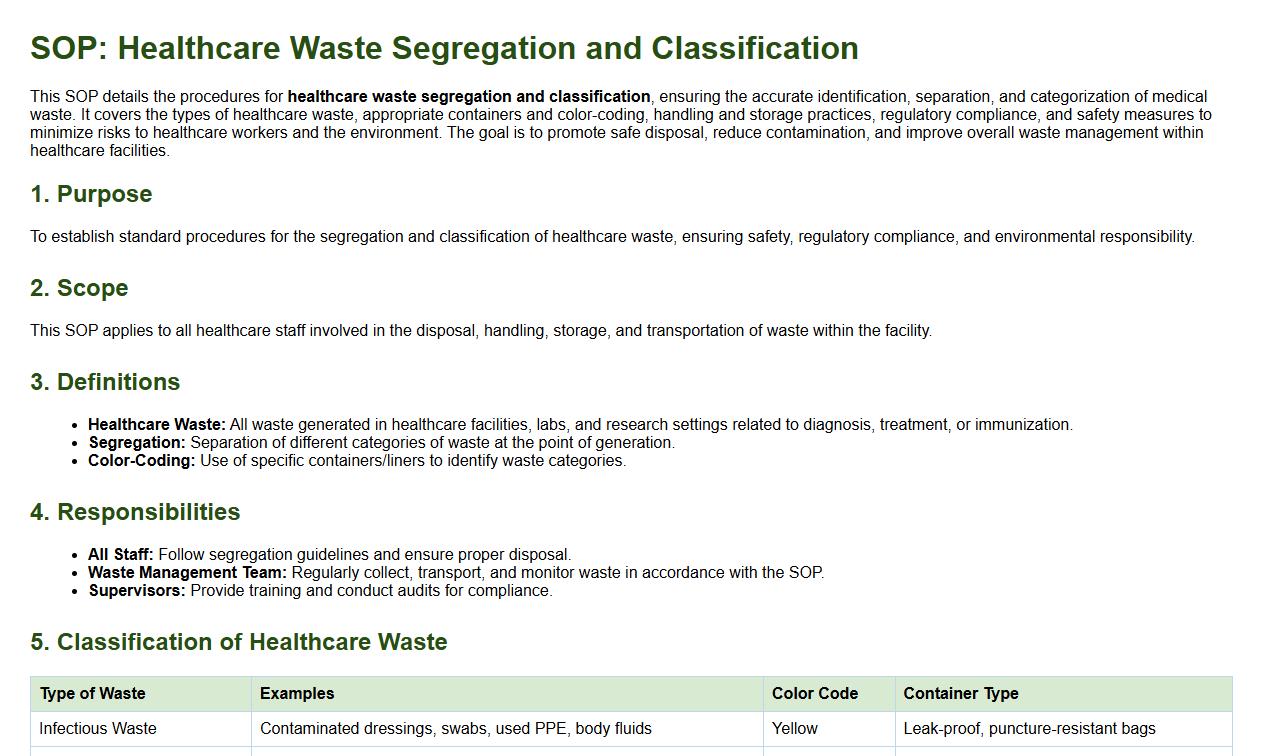
This SOP details the procedures for healthcare waste segregation and classification, ensuring the accurate identification, separation, and categorization of medical waste. It covers the types of healthcare waste, appropriate containers and color-coding, handling and storage practices, regulatory compliance, and safety measures to minimize risks to healthcare workers and the environment. The goal is to promote safe disposal, reduce contamination, and improve overall waste management within healthcare facilities.
Proper waste collection and container labeling procedures.
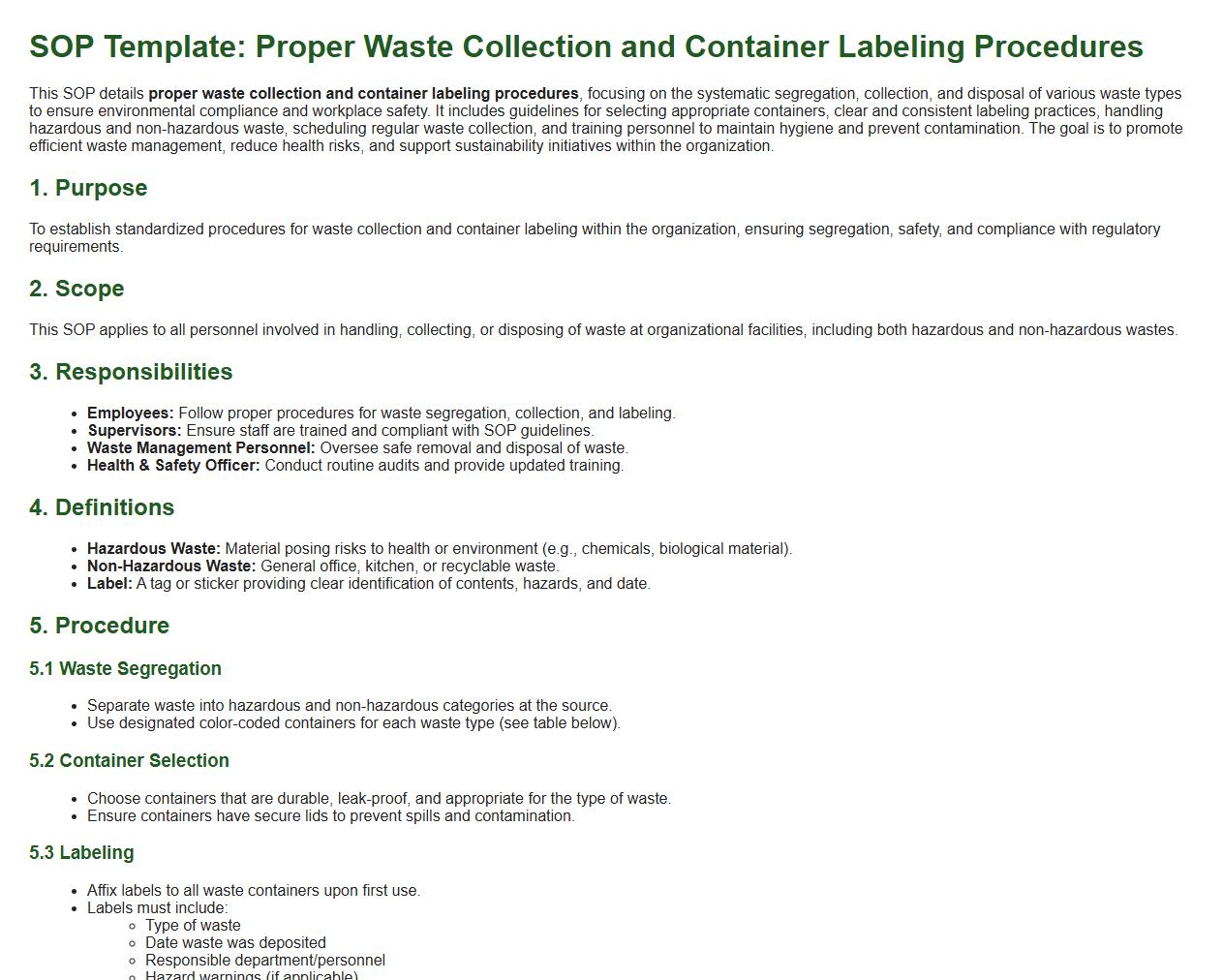
This SOP details proper waste collection and container labeling procedures, focusing on the systematic segregation, collection, and disposal of various waste types to ensure environmental compliance and workplace safety. It includes guidelines for selecting appropriate containers, clear and consistent labeling practices, handling hazardous and non-hazardous waste, scheduling regular waste collection, and training personnel to maintain hygiene and prevent contamination. The goal is to promote efficient waste management, reduce health risks, and support sustainability initiatives within the organization.
Safe internal transport of healthcare waste.
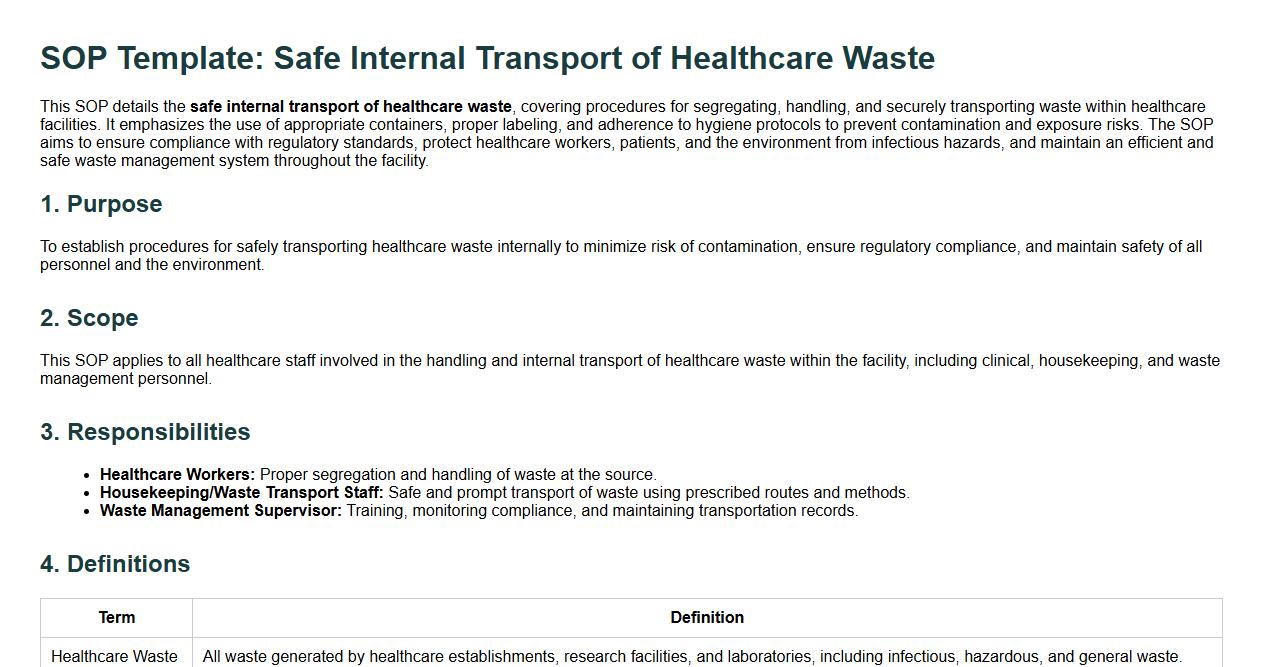
This SOP details the safe internal transport of healthcare waste, covering procedures for segregating, handling, and securely transporting waste within healthcare facilities. It emphasizes the use of appropriate containers, proper labeling, and adherence to hygiene protocols to prevent contamination and exposure risks. The SOP aims to ensure compliance with regulatory standards, protect healthcare workers, patients, and the environment from infectious hazards, and maintain an efficient and safe waste management system throughout the facility.
Temporary storage guidelines for healthcare waste.
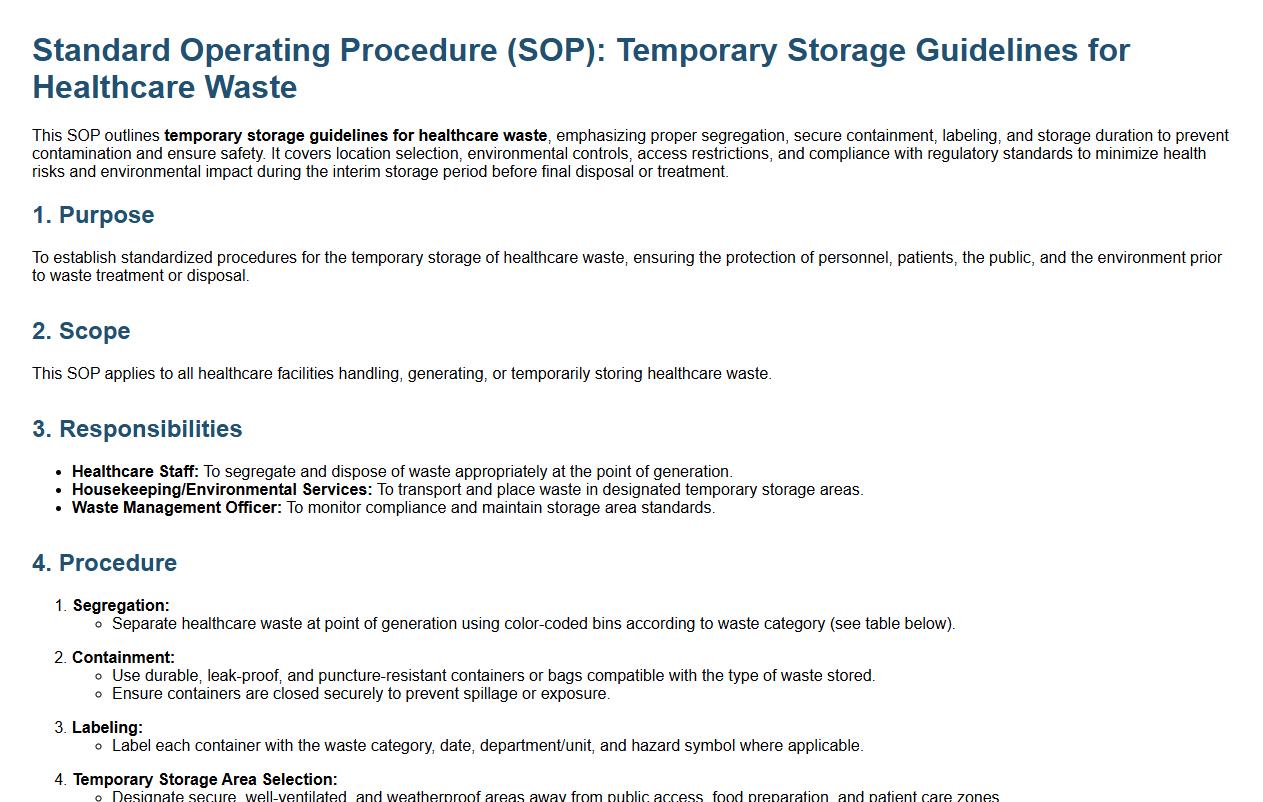
This SOP outlines temporary storage guidelines for healthcare waste, emphasizing proper segregation, secure containment, labeling, and storage duration to prevent contamination and ensure safety. It covers location selection, environmental controls, access restrictions, and compliance with regulatory standards to minimize health risks and environmental impact during the interim storage period before final disposal or treatment.
Personal protective equipment (PPE) use for waste handlers.
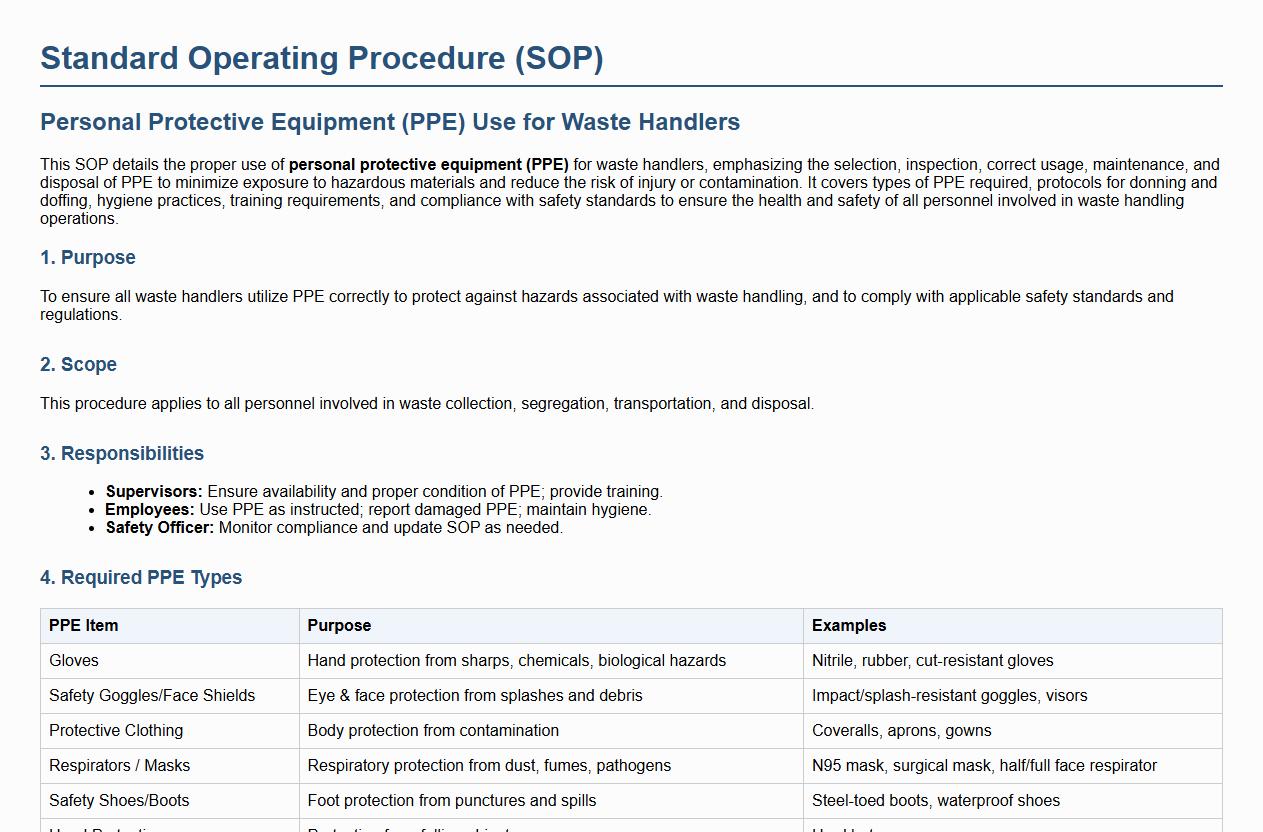
This SOP details the proper use of personal protective equipment (PPE) for waste handlers, emphasizing the selection, inspection, correct usage, maintenance, and disposal of PPE to minimize exposure to hazardous materials and reduce the risk of injury or contamination. It covers types of PPE required, protocols for donning and doffing, hygiene practices, training requirements, and compliance with safety standards to ensure the health and safety of all personnel involved in waste handling operations.
Disinfection and cleaning protocols.
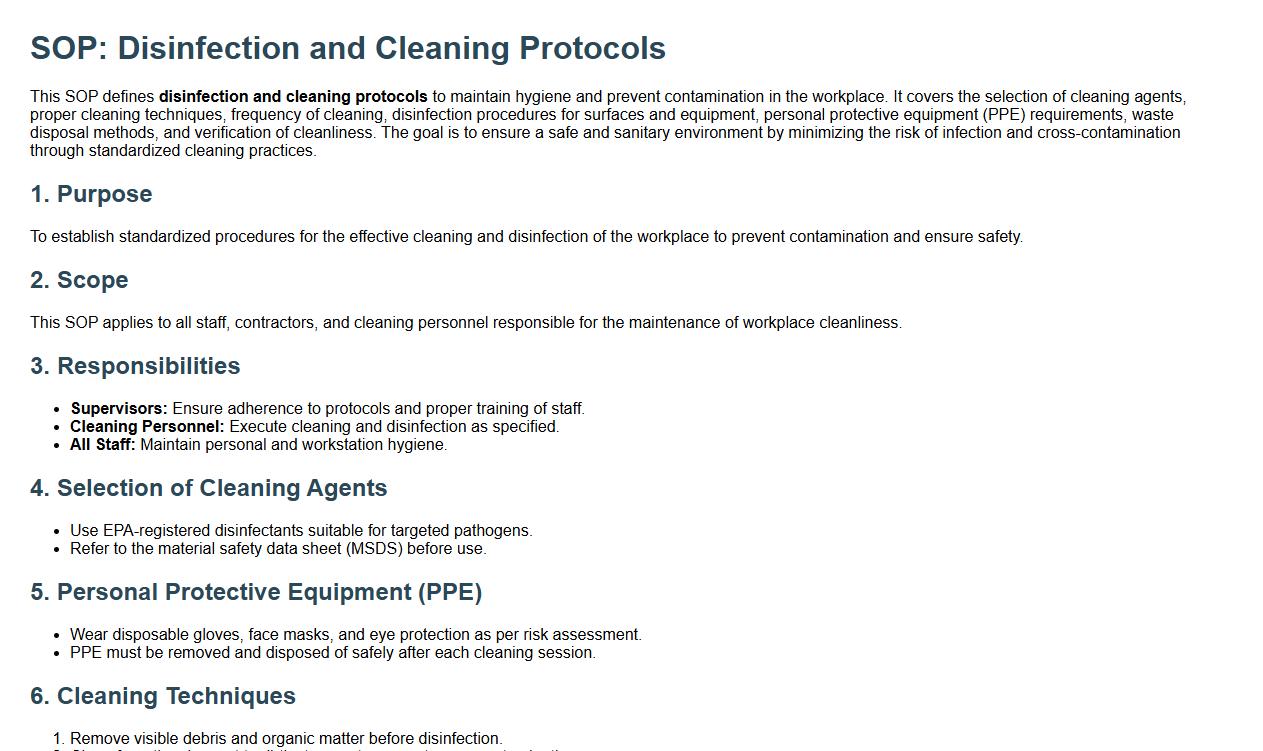
This SOP defines disinfection and cleaning protocols to maintain hygiene and prevent contamination in the workplace. It covers the selection of cleaning agents, proper cleaning techniques, frequency of cleaning, disinfection procedures for surfaces and equipment, personal protective equipment (PPE) requirements, waste disposal methods, and verification of cleanliness. The goal is to ensure a safe and sanitary environment by minimizing the risk of infection and cross-contamination through standardized cleaning practices.
Sharps handling and disposal procedures.
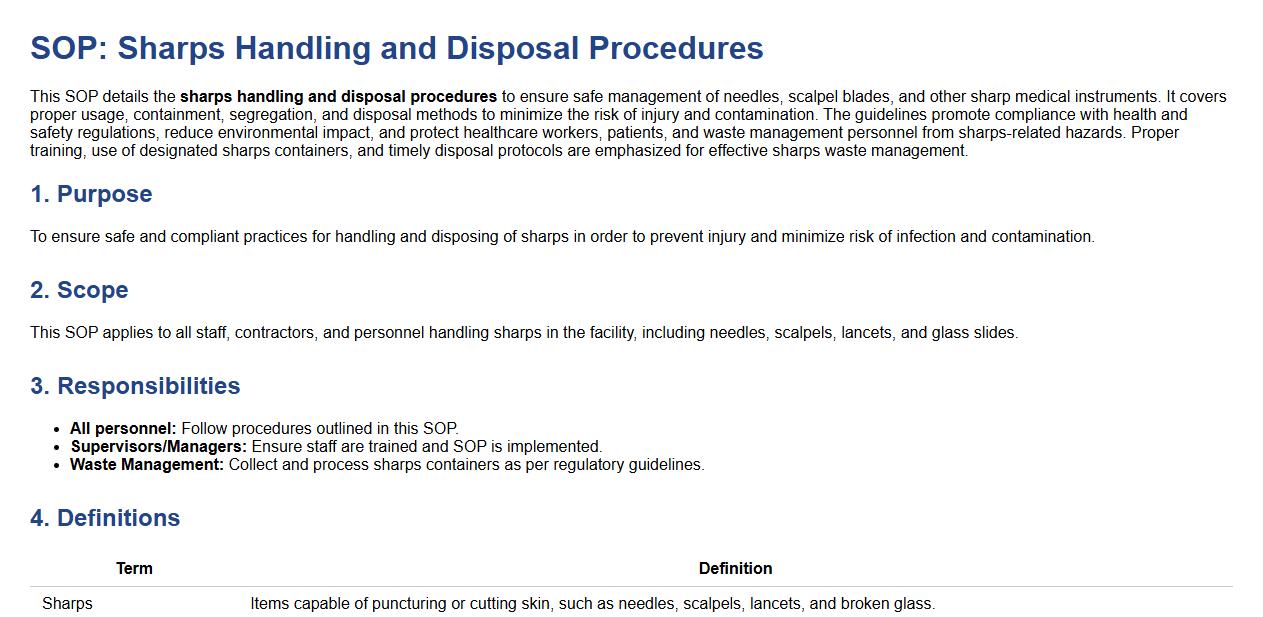
This SOP details the sharps handling and disposal procedures to ensure safe management of needles, scalpel blades, and other sharp medical instruments. It covers proper usage, containment, segregation, and disposal methods to minimize the risk of injury and contamination. The guidelines promote compliance with health and safety regulations, reduce environmental impact, and protect healthcare workers, patients, and waste management personnel from sharps-related hazards. Proper training, use of designated sharps containers, and timely disposal protocols are emphasized for effective sharps waste management.
Waste treatment: incineration and autoclaving processes.
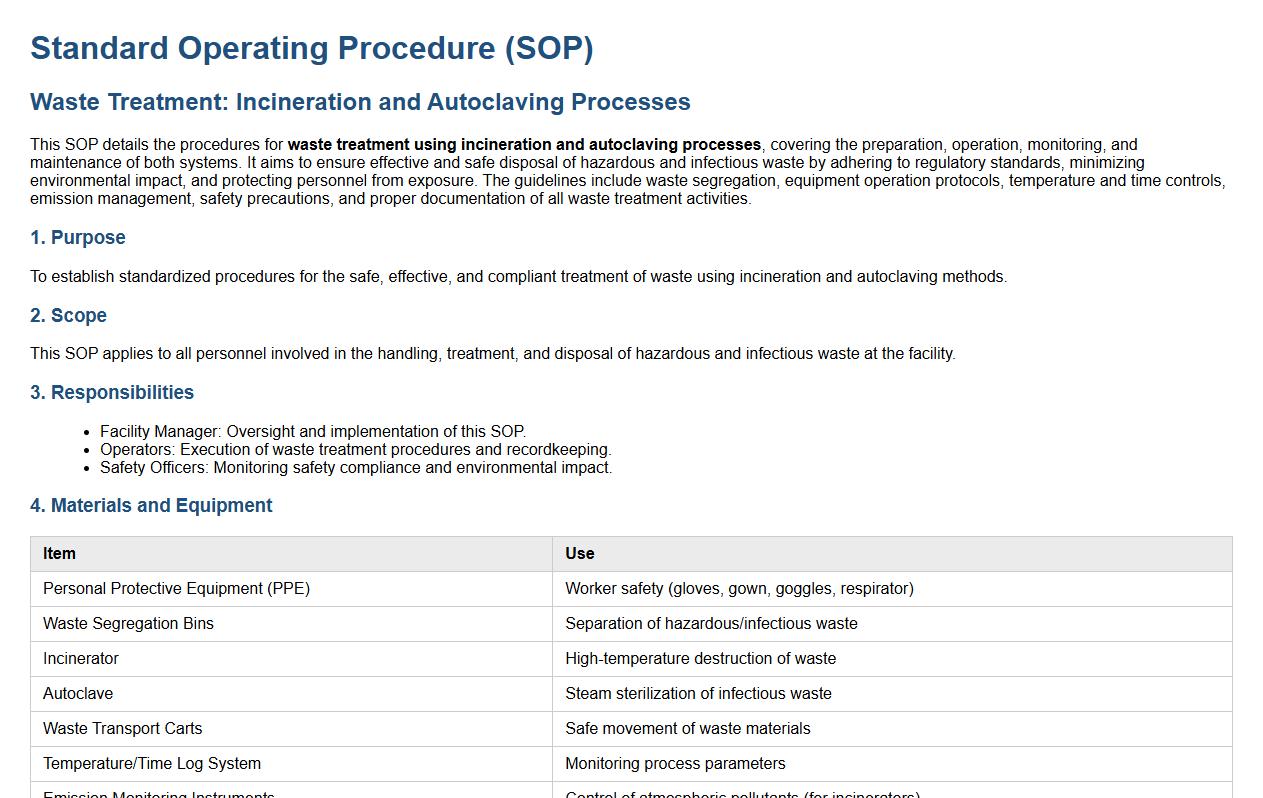
This SOP details the procedures for waste treatment using incineration and autoclaving processes, covering the preparation, operation, monitoring, and maintenance of both systems. It aims to ensure the effective and safe disposal of hazardous and infectious waste by adhering to regulatory standards, minimizing environmental impact, and protecting personnel from exposure. The guidelines include waste segregation, equipment operation protocols, temperature and time controls, emission management, safety precautions, and proper documentation of all waste treatment activities.
External transport and handover to authorized disposal facilities.
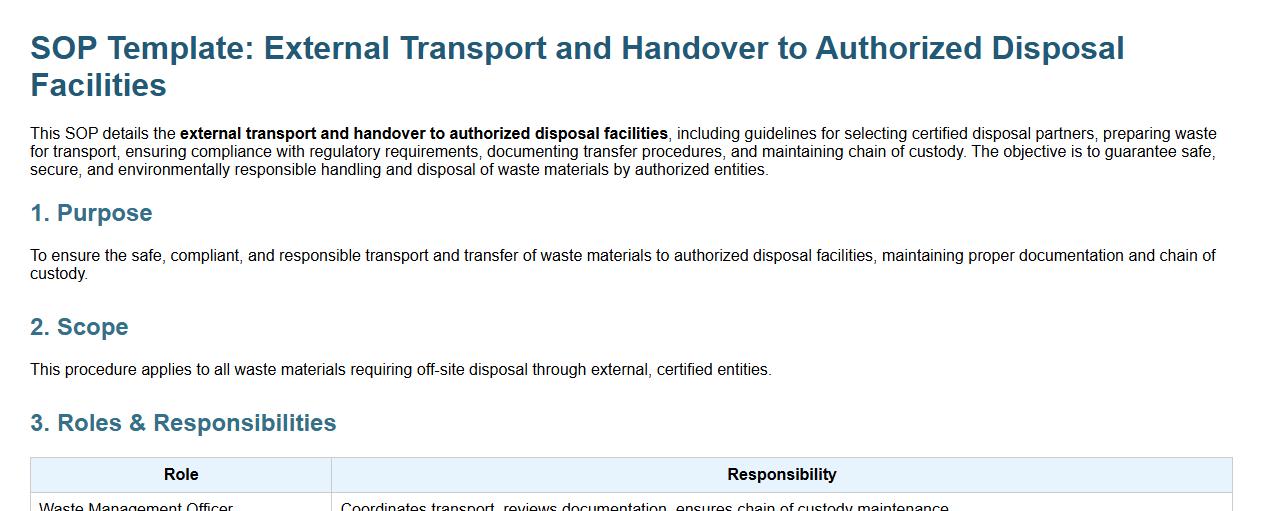
This SOP details the external transport and handover to authorized disposal facilities, including guidelines for selecting certified disposal partners, preparing waste for transport, ensuring compliance with regulatory requirements, documenting transfer procedures, and maintaining chain of custody. The objective is to guarantee safe, secure, and environmentally responsible handling and disposal of waste materials by authorized entities.
Documentation and record-keeping of waste management activities.
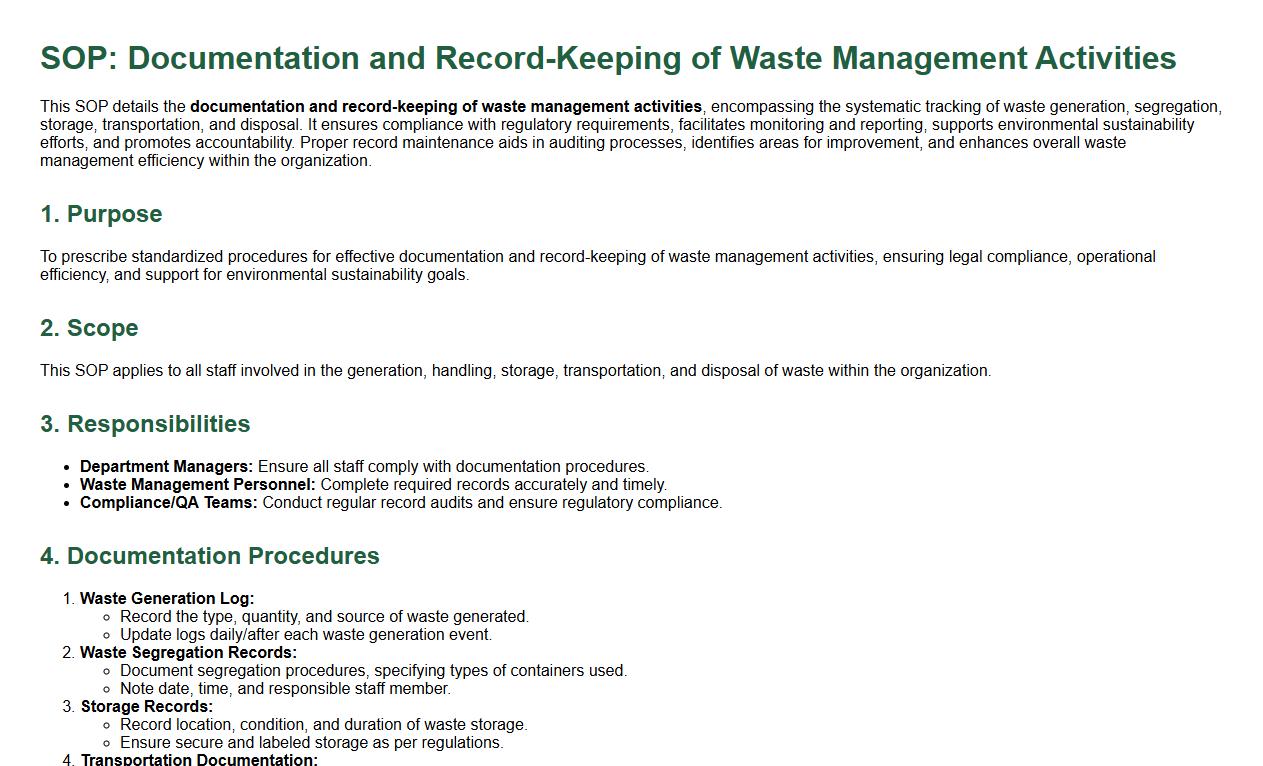
This SOP details the documentation and record-keeping of waste management activities, encompassing the systematic tracking of waste generation, segregation, storage, transportation, and disposal. It ensures compliance with regulatory requirements, facilitates monitoring and reporting, supports environmental sustainability efforts, and promotes accountability. Proper record maintenance aids in auditing processes, identifies areas for improvement, and enhances overall waste management efficiency within the organization.
What are the key classifications of healthcare waste outlined in the SOP for Healthcare Waste Management?
The SOP classifies healthcare waste into infectious, pathological, pharmaceutical, chemical, sharps, and general waste. Each category requires specific handling to minimize health risks and environmental impact. Proper classification is essential to ensure compliance with regulatory standards and promote safe waste management.
Which procedures are specified for segregating and labeling different types of healthcare waste?
The SOP mandates segregation at the point of generation using color-coded containers and clearly labeled bags to prevent cross-contamination. Segregation must be done immediately to maintain safety and ease downstream processing. Accurate labeling helps in identifying the waste type for appropriate treatment and disposal methods.
What are the recommended steps for safe storage and internal transport of infectious waste in the SOP?
Infectious waste should be stored in secure, leak-proof containers in designated areas away from public access and food storage. The SOP requires that internal transport is conducted using dedicated trolleys to prevent spillage and exposure. Timely removal from storage minimizes the risk of contamination and infectious outbreaks.
How does the SOP address the use and disposal of personal protective equipment during waste handling?
The SOP emphasizes the use of appropriate personal protective equipment (PPE) such as gloves, masks, and gowns during waste handling. After use, PPE must be disposed of as infectious waste to avoid cross-contamination. Training on correct PPE usage and disposal ensures the safety of healthcare workers and waste handlers.
What are the required protocols for final treatment and disposal methods as per the SOP for Healthcare Waste Management?
The SOP outlines final treatment methods like incineration, autoclaving, chemical disinfection, and secure landfill disposal based on waste category. It stresses on ensuring complete destruction of pathogens and minimizing environmental pollution. Proper documentation and monitoring of treatment processes are mandated to maintain compliance and safety standards.