
A SOP Template for Infection Control Procedures provides a structured framework to ensure consistent and effective infection prevention measures are followed in healthcare settings. This template outlines key steps such as hand hygiene, use of personal protective equipment, and proper disinfection techniques to minimize the risk of contamination and spread of infections. Implementing a standardized SOP helps maintain compliance with health regulations and promotes patient and staff safety.
Hand hygiene protocols and frequency schedules.
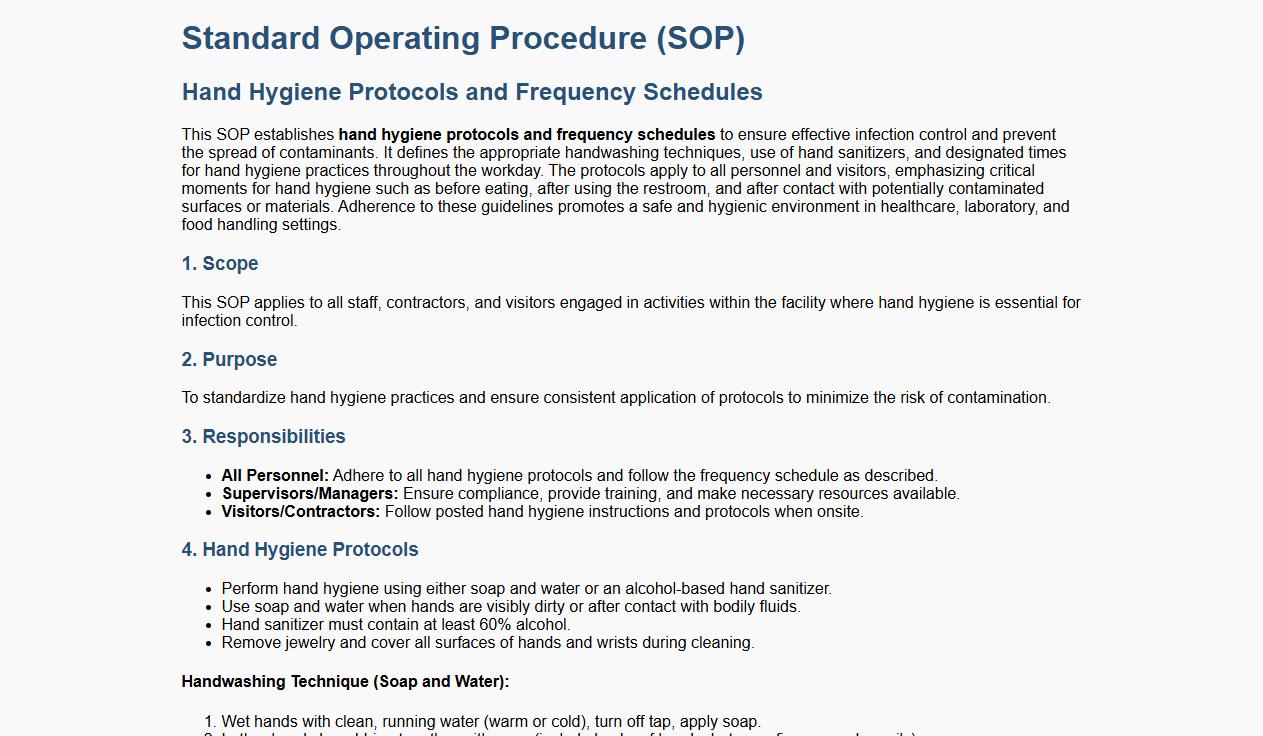
This SOP establishes hand hygiene protocols and frequency schedules to ensure effective infection control and prevent the spread of contaminants. It defines the appropriate handwashing techniques, use of hand sanitizers, and designated times for hand hygiene practices throughout the workday. The protocols apply to all personnel and visitors, emphasizing critical moments for hand hygiene such as before eating, after using the restroom, and after contact with potentially contaminated surfaces or materials. Adherence to these guidelines promotes a safe and hygienic environment in healthcare, laboratory, and food handling settings.
Personal protective equipment (PPE) usage and disposal guidelines.
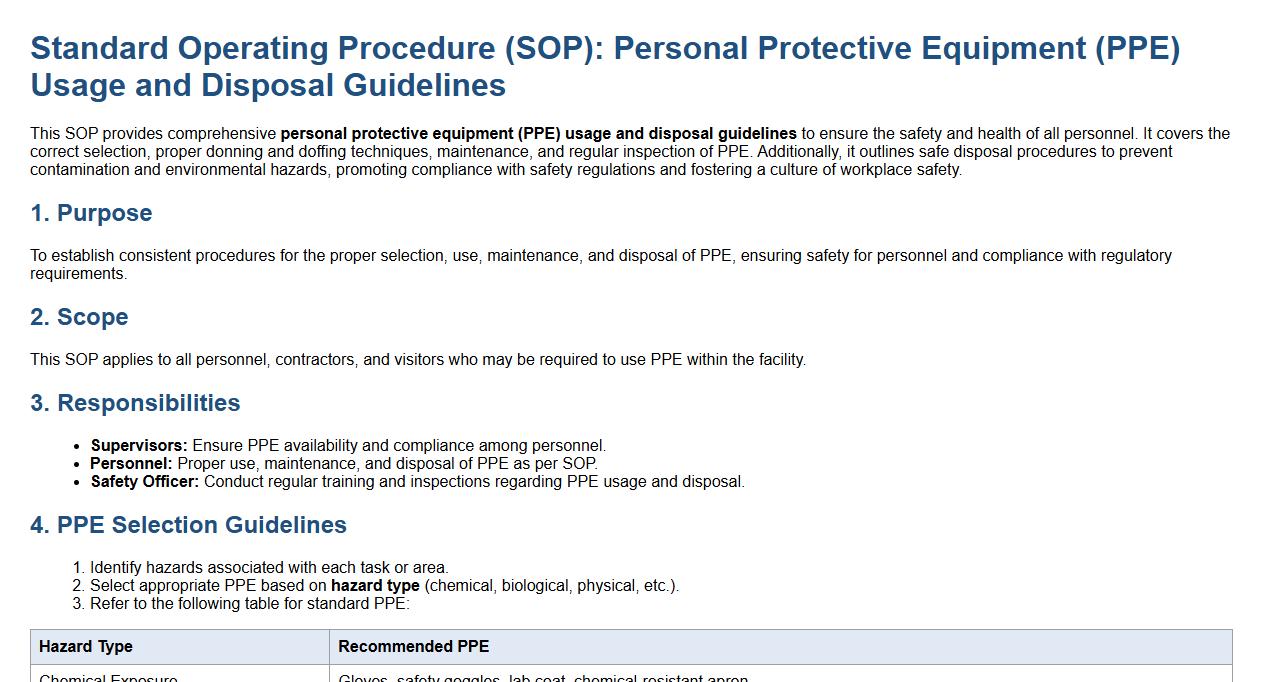
This SOP provides comprehensive personal protective equipment (PPE) usage and disposal guidelines to ensure the safety and health of all personnel. It covers the correct selection, proper donning and doffing techniques, maintenance, and regular inspection of PPE. Additionally, it outlines safe disposal procedures to prevent contamination and environmental hazards, promoting compliance with safety regulations and fostering a culture of workplace safety.
Environmental cleaning and disinfection procedures.
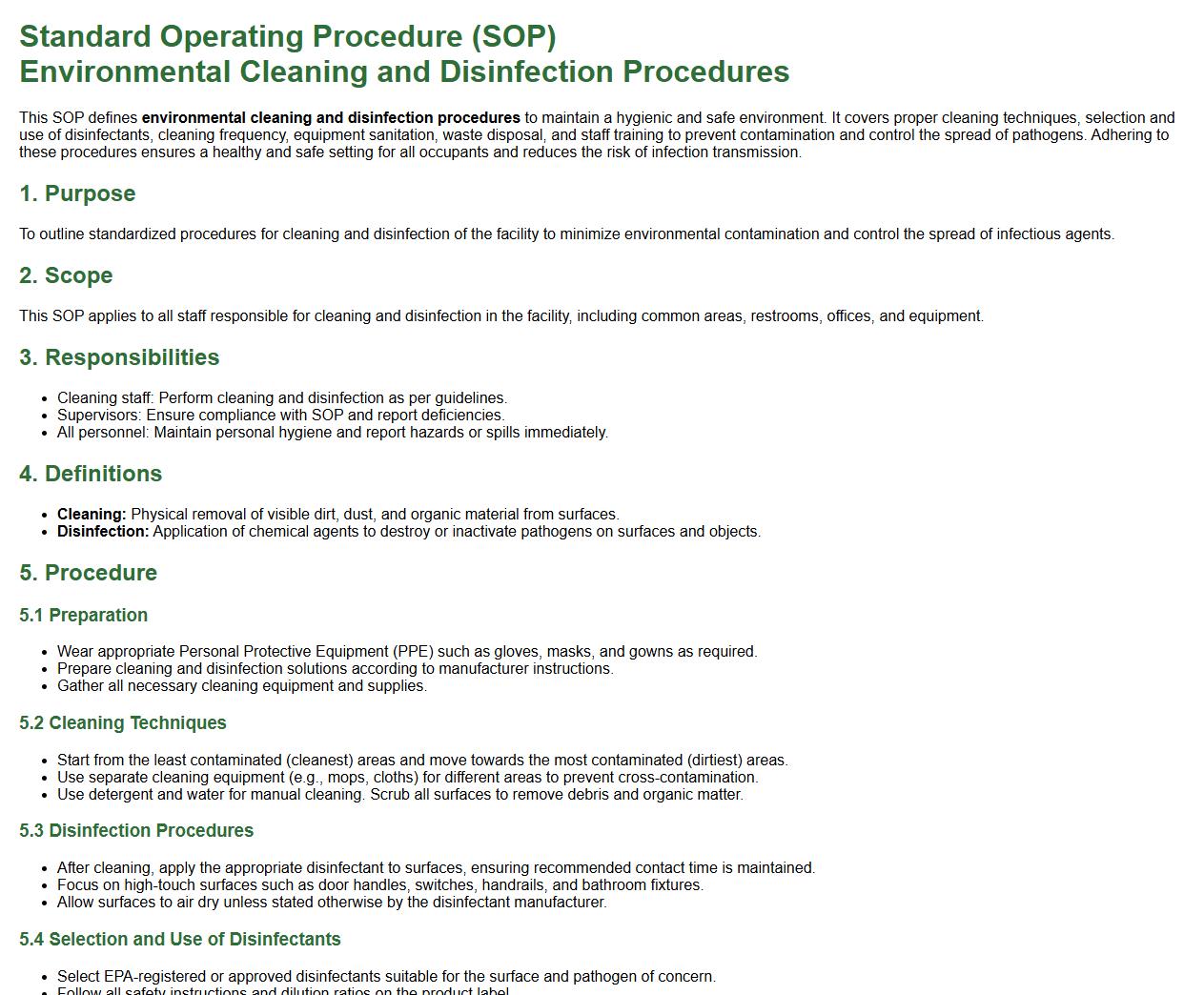
This SOP defines environmental cleaning and disinfection procedures to maintain a hygienic and safe environment. It covers proper cleaning techniques, selection and use of disinfectants, cleaning frequency, equipment sanitation, waste disposal, and staff training to prevent contamination and control the spread of pathogens. Adhering to these procedures ensures a healthy and safe setting for all occupants and reduces the risk of infection transmission.
Patient screening and isolation procedures.
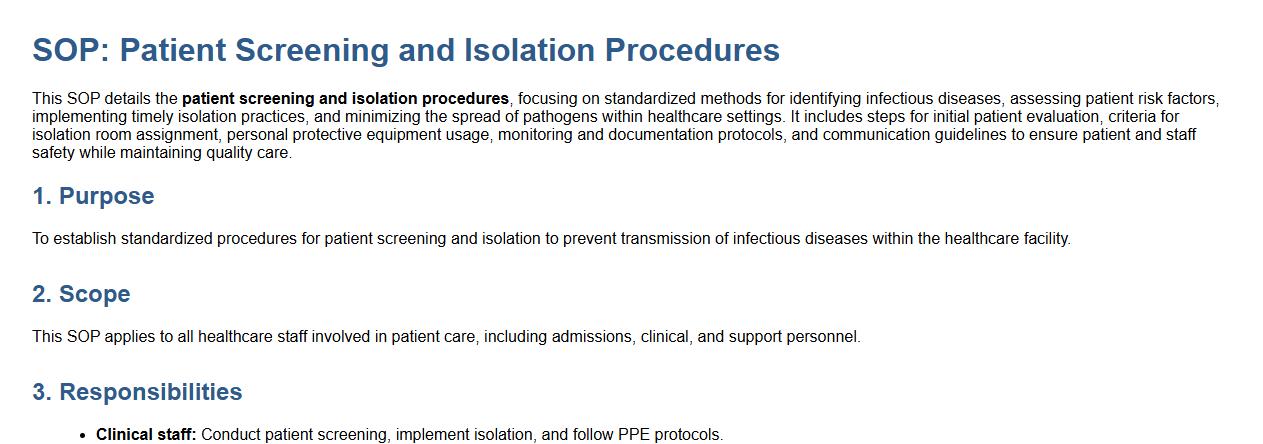
This SOP details the patient screening and isolation procedures, focusing on standardized methods for identifying infectious diseases, assessing patient risk factors, implementing timely isolation practices, and minimizing the spread of pathogens within healthcare settings. It includes steps for initial patient evaluation, criteria for isolation room assignment, personal protective equipment usage, monitoring and documentation protocols, and communication guidelines to ensure patient and staff safety while maintaining quality care.
Waste management and disposal protocols.
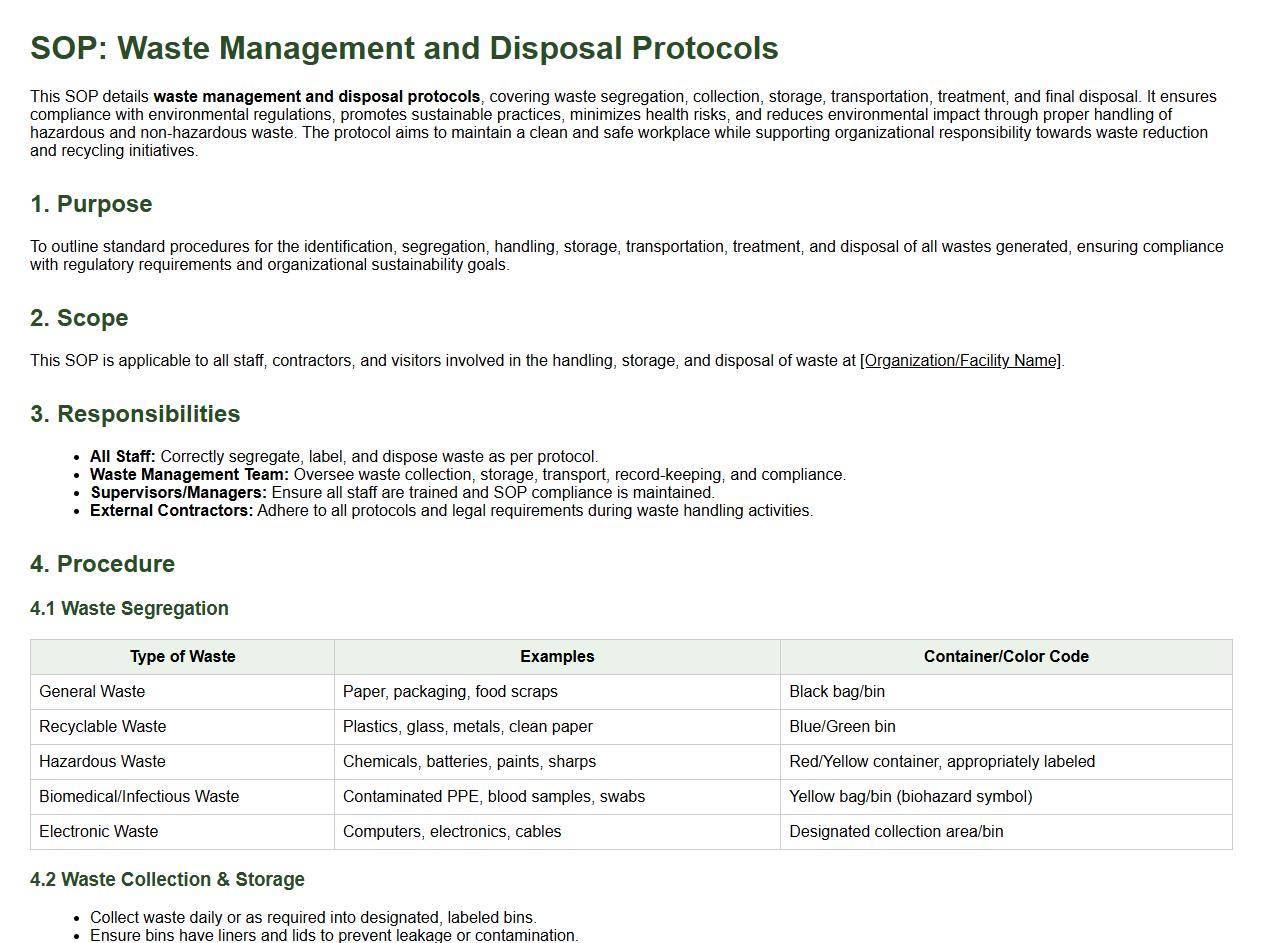
This SOP details waste management and disposal protocols, covering waste segregation, collection, storage, transportation, treatment, and final disposal. It ensures compliance with environmental regulations, promotes sustainable practices, minimizes health risks, and reduces environmental impact through proper handling of hazardous and non-hazardous waste. The protocol aims to maintain a clean and safe workplace while supporting organizational responsibility towards waste reduction and recycling initiatives.
Sterilization of instruments and medical equipment.
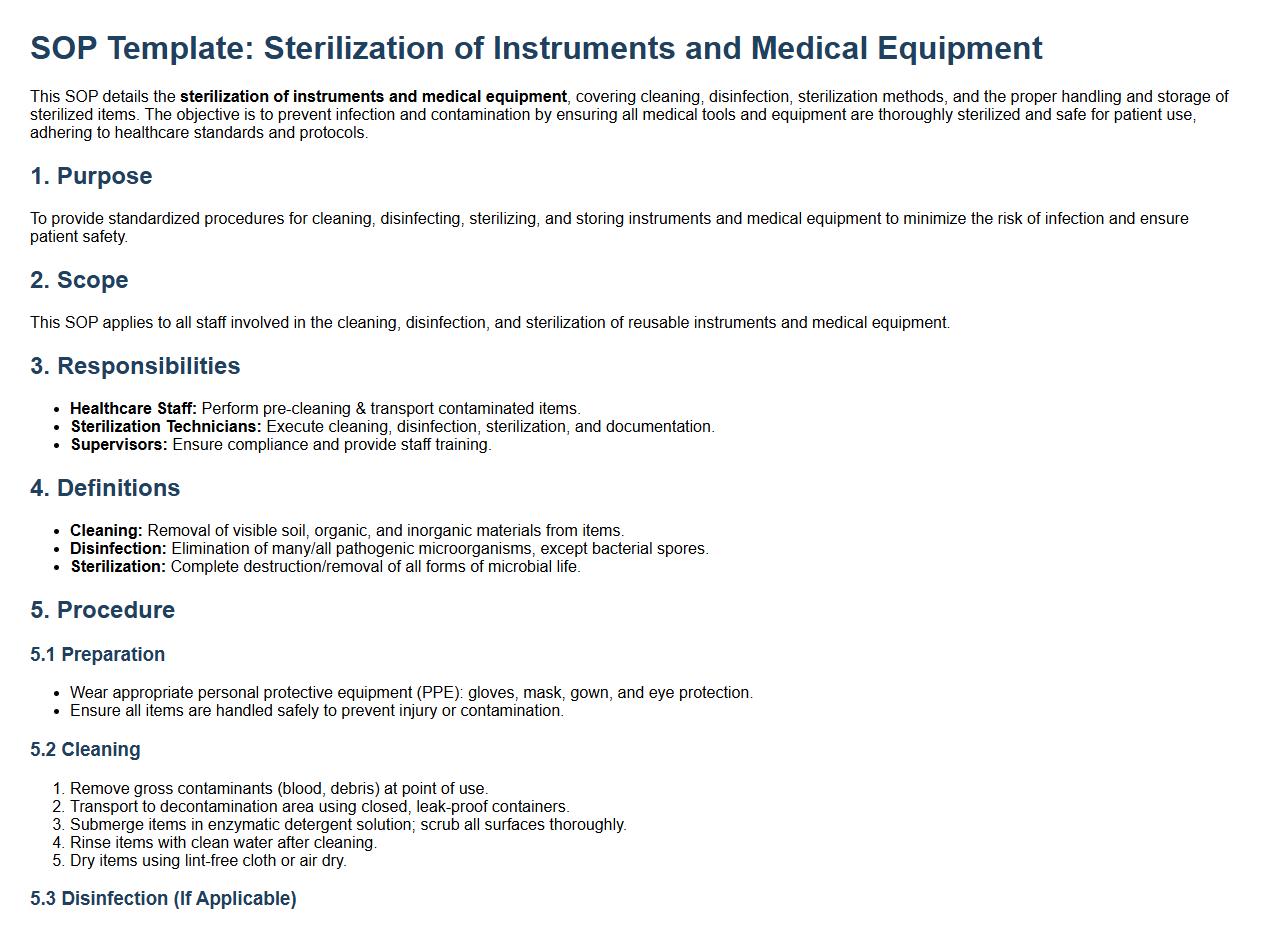
This SOP details the sterilization of instruments and medical equipment, covering cleaning, disinfection, sterilization methods, and the proper handling and storage of sterilized items. The objective is to prevent infection and contamination by ensuring all medical tools and equipment are thoroughly sterilized and safe for patient use, adhering to healthcare standards and protocols.
Protocol for handling exposure to infectious materials.
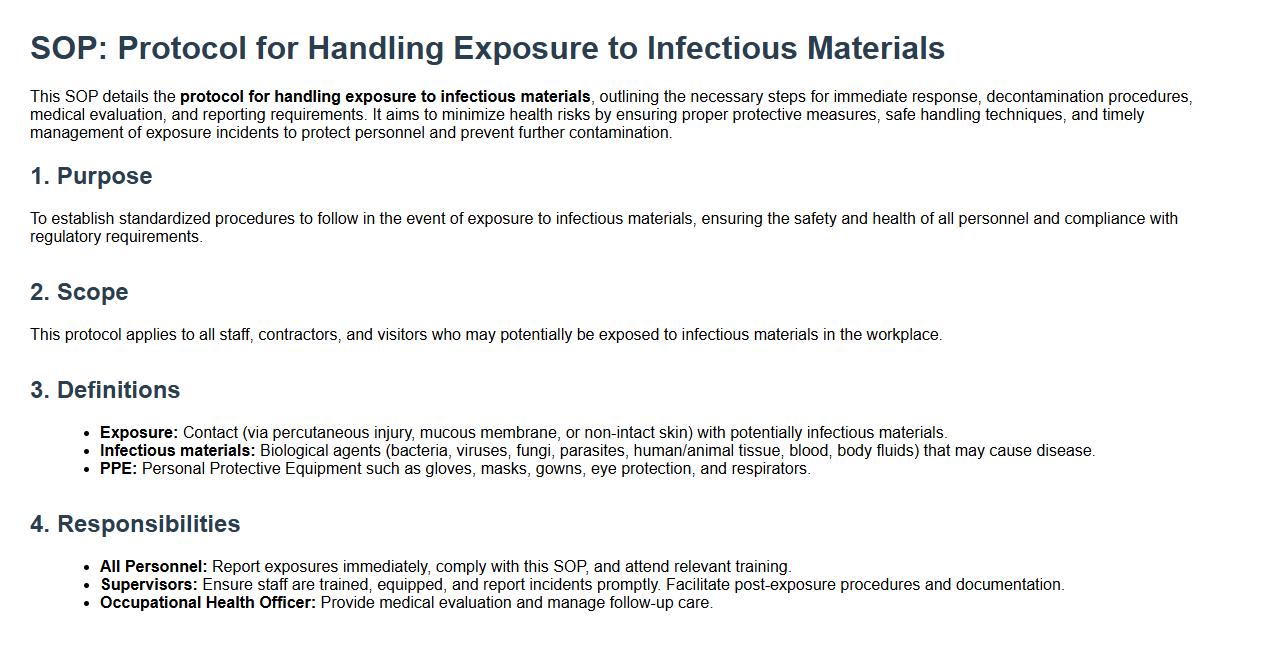
This SOP details the protocol for handling exposure to infectious materials, outlining the necessary steps for immediate response, decontamination procedures, medical evaluation, and reporting requirements. It aims to minimize health risks by ensuring proper protective measures, safe handling techniques, and timely management of exposure incidents to protect personnel and prevent further contamination.
Visitor and staff movement restrictions and management.
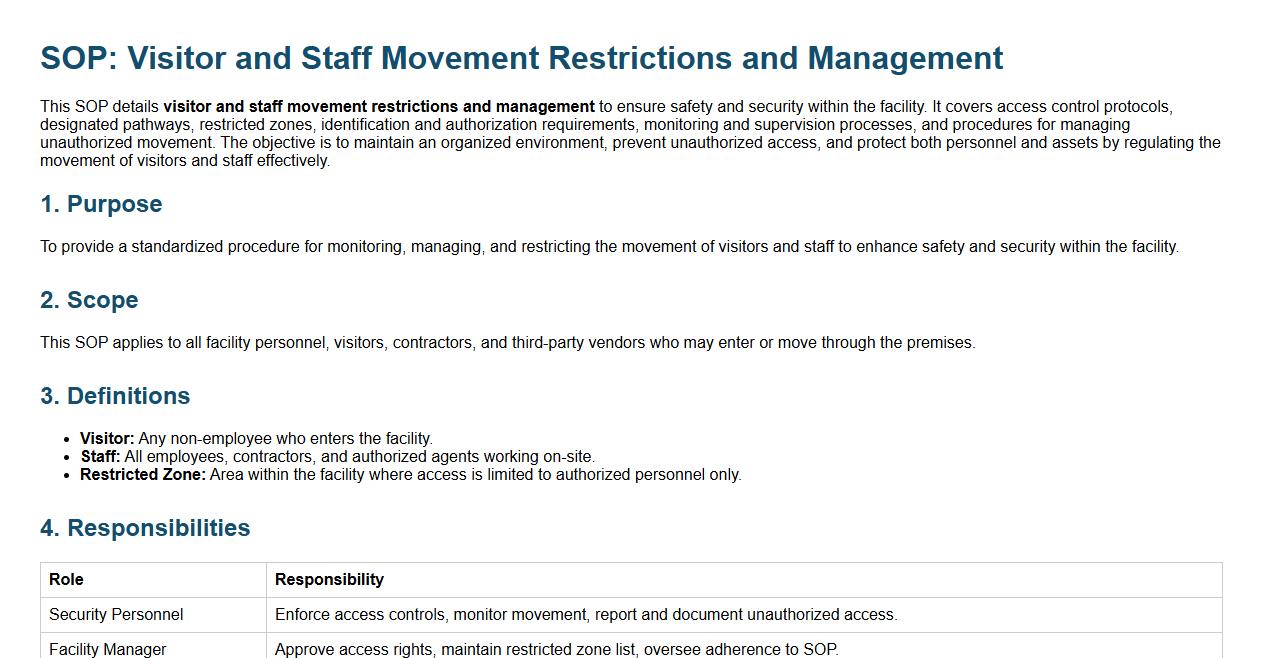
This SOP details visitor and staff movement restrictions and management to ensure safety and security within the facility. It covers access control protocols, designated pathways, restricted zones, identification and authorization requirements, monitoring and supervision processes, and procedures for managing unauthorized movement. The objective is to maintain an organized environment, prevent unauthorized access, and protect both personnel and assets by regulating the movement of visitors and staff effectively.
Laundry and linen handling procedures.
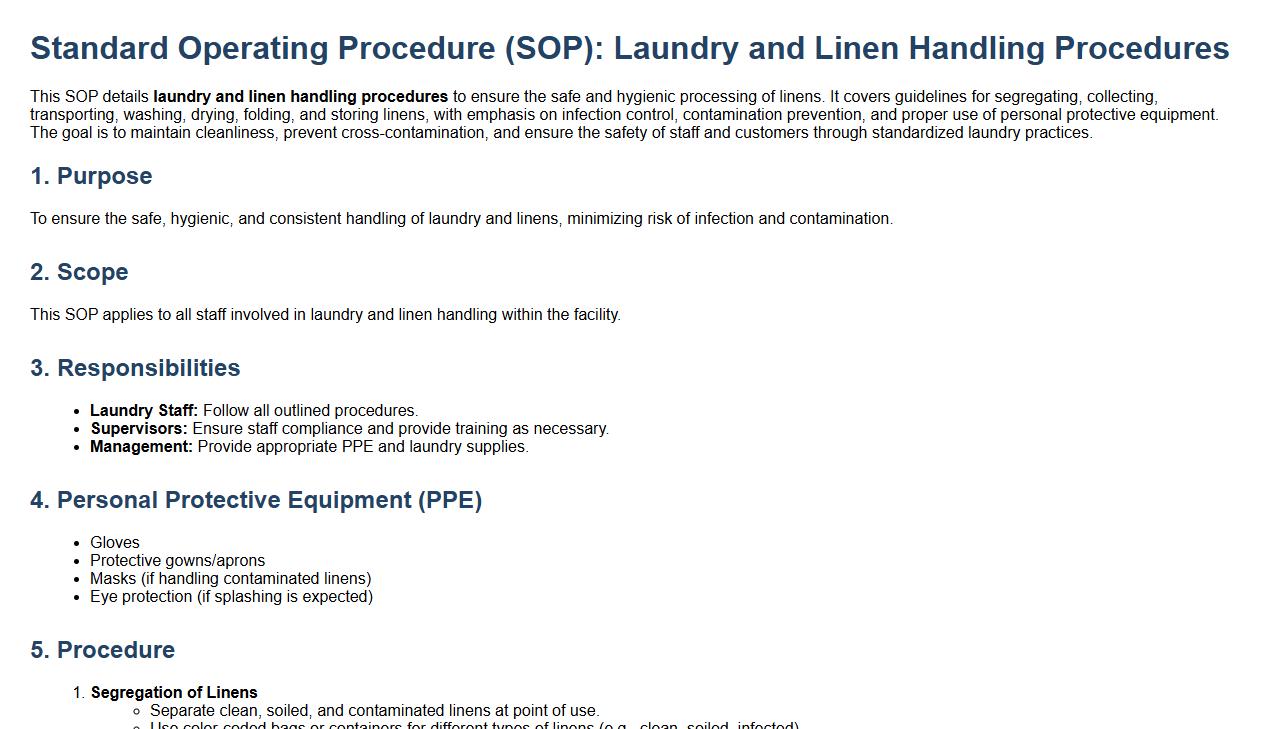
This SOP details laundry and linen handling procedures to ensure the safe and hygienic processing of linens. It covers guidelines for segregating, collecting, transporting, washing, drying, folding, and storing linens, with emphasis on infection control, contamination prevention, and proper use of personal protective equipment. The goal is to maintain cleanliness, prevent cross-contamination, and ensure the safety of staff and customers through standardized laundry practices.
Incident reporting and documentation for infection control breaches.
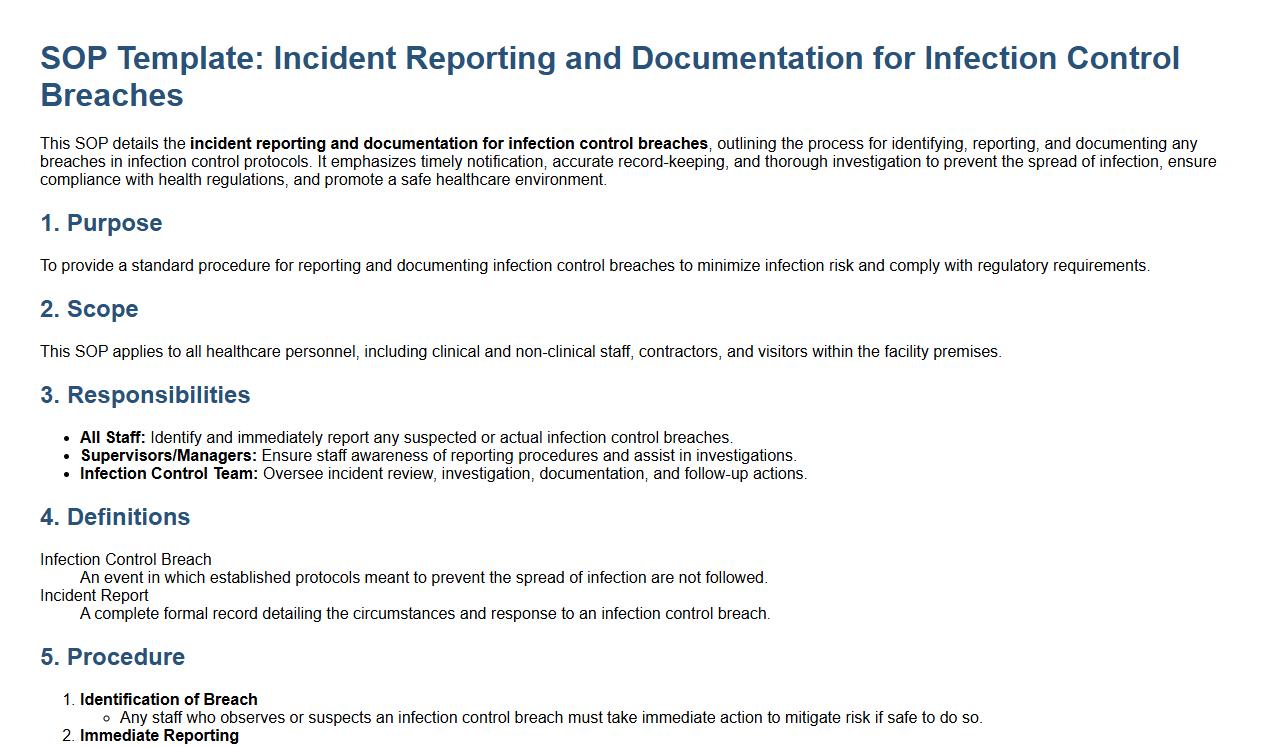
This SOP details the incident reporting and documentation for infection control breaches, outlining the process for identifying, reporting, and documenting any breaches in infection control protocols. It emphasizes timely notification, accurate record-keeping, and thorough investigation to prevent the spread of infection, ensure compliance with health regulations, and promote a safe healthcare environment.
Key Steps for Proper Hand Hygiene
The SOP emphasizes the importance of hand hygiene as a primary infection control measure. It outlines proper handwashing techniques using soap and water for at least 20 seconds. Additionally, the use of alcohol-based hand sanitizers is recommended when hands are not visibly soiled.
PPE Requirements for Different Risk Levels
The SOP specifies various personal protective equipment (PPE) based on exposure risk. For low-risk tasks, standard gloves and masks are mandatory, while high-risk procedures require enhanced PPE, including gowns, face shields, and respirators. Proper donning and doffing techniques are also highlighted to prevent contamination.
Procedures for Cleaning and Disinfecting Equipment
The SOP provides clear procedures for thorough cleaning and disinfecting of medical equipment and surfaces. It mandates the use of approved disinfectants and regular cleaning schedules based on usage frequency and contamination risk. Special attention is given to high-touch surfaces to minimize pathogen transmission.
Protocols for Reporting and Managing Exposure Incidents
The SOP outlines immediate actions for reporting and managing exposure incidents involving infectious materials. It requires prompt notification to supervisors and initiation of post-exposure prophylaxis if applicable. Documentation and follow-up evaluations are critical components of the exposure management process.
Guidelines for Handling Biohazardous Waste
The SOP details strict guidelines on the handling, transport, and disposal of biohazardous waste to ensure safety. It specifies using designated containers, proper labeling, and timely removal to prevent contamination. Training for staff on waste management protocols is mandatory for compliance and infection control.