

A SOP Template for Dietary Services in Hospitals provides a standardized framework to ensure consistent and safe food preparation and delivery tailored to patient nutritional needs. It outlines clear procedures for dietary assessment, meal planning, and hygiene compliance, promoting optimal patient care and regulatory adherence. This template helps improve communication among healthcare staff and enhances overall efficiency in hospital dietary operations.
Menu planning and nutritional analysis procedures.
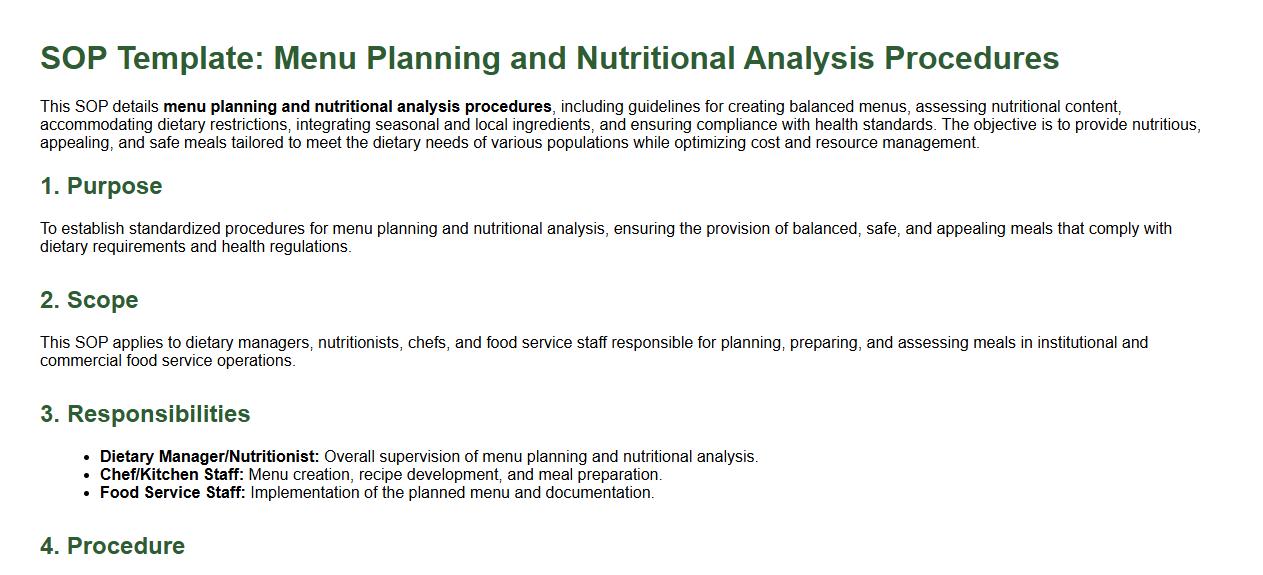
This SOP details menu planning and nutritional analysis procedures, including guidelines for creating balanced menus, assessing nutritional content, accommodating dietary restrictions, integrating seasonal and local ingredients, and ensuring compliance with health standards. The objective is to provide nutritious, appealing, and safe meals tailored to meet the dietary needs of various populations while optimizing cost and resource management.
Patient diet order management and verification.
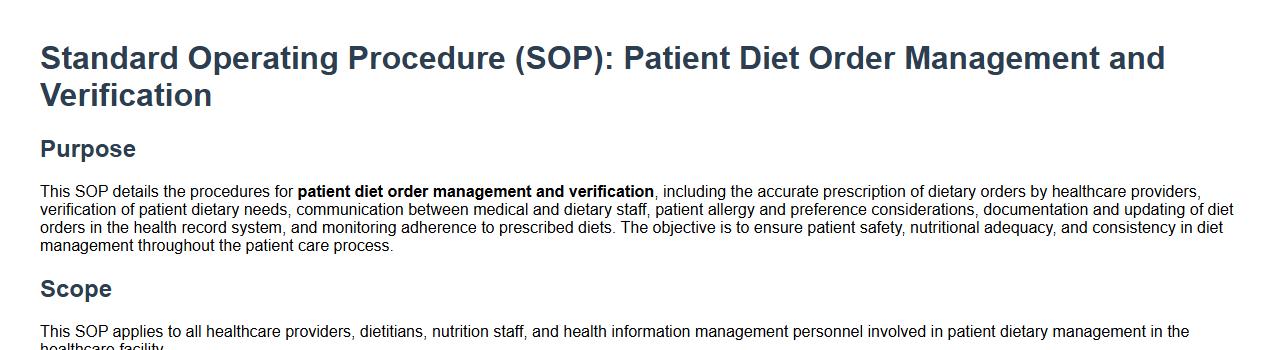
This SOP details the procedures for patient diet order management and verification, including the accurate prescription of dietary orders by healthcare providers, verification of patient dietary needs, communication between medical and dietary staff, patient allergy and preference considerations, documentation and updating of diet orders in the health record system, and monitoring adherence to prescribed diets. The objective is to ensure patient safety, nutritional adequacy, and consistency in diet management throughout the patient care process.
Meal preparation and portion control guidelines.
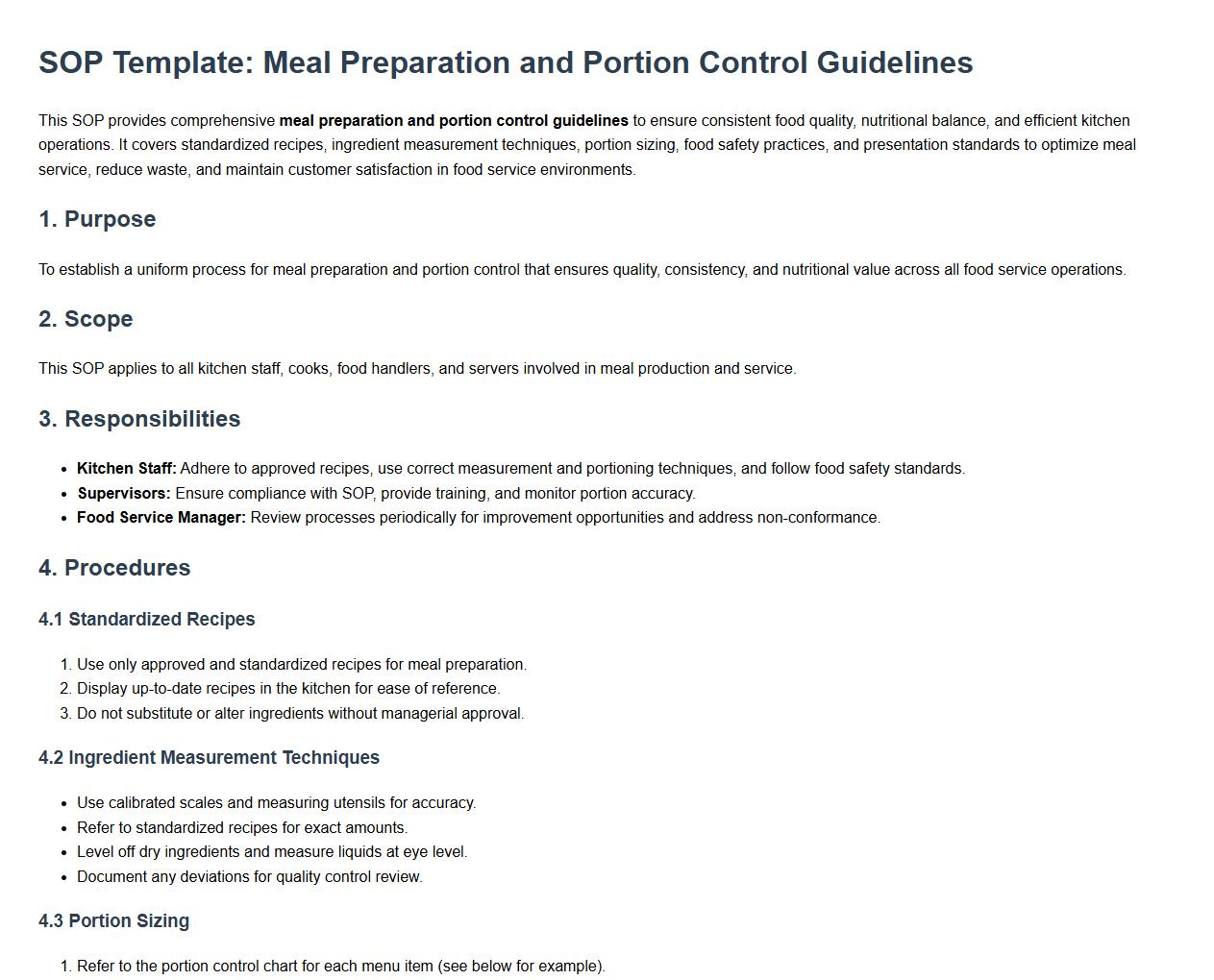
This SOP provides comprehensive meal preparation and portion control guidelines to ensure consistent food quality, nutritional balance, and efficient kitchen operations. It covers standardized recipes, ingredient measurement techniques, portion sizing, food safety practices, and presentation standards to optimize meal service, reduce waste, and maintain customer satisfaction in food service environments.
Food safety, hygiene, and sanitation protocols.
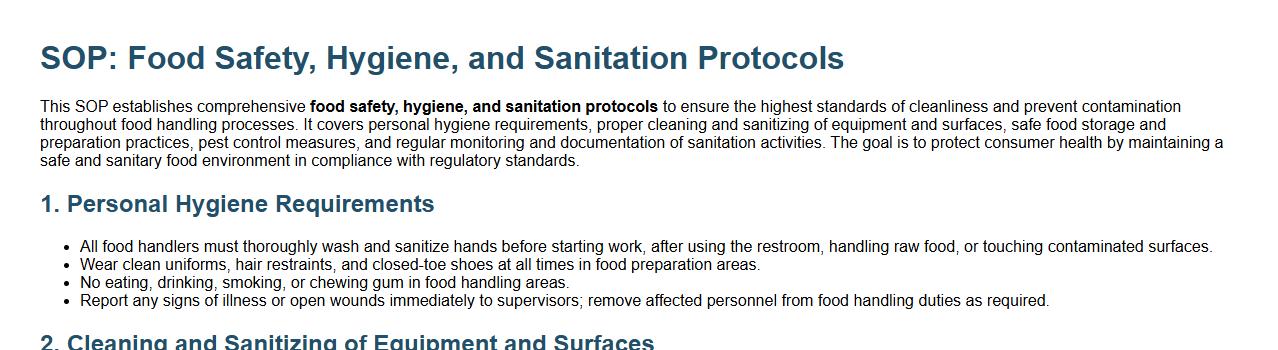
This SOP establishes comprehensive food safety, hygiene, and sanitation protocols to ensure the highest standards of cleanliness and prevent contamination throughout food handling processes. It covers personal hygiene requirements, proper cleaning and sanitizing of equipment and surfaces, safe food storage and preparation practices, pest control measures, and regular monitoring and documentation of sanitation activities. The goal is to protect consumer health by maintaining a safe and sanitary food environment in compliance with regulatory standards.
Tray assembly and delivery to patient areas.
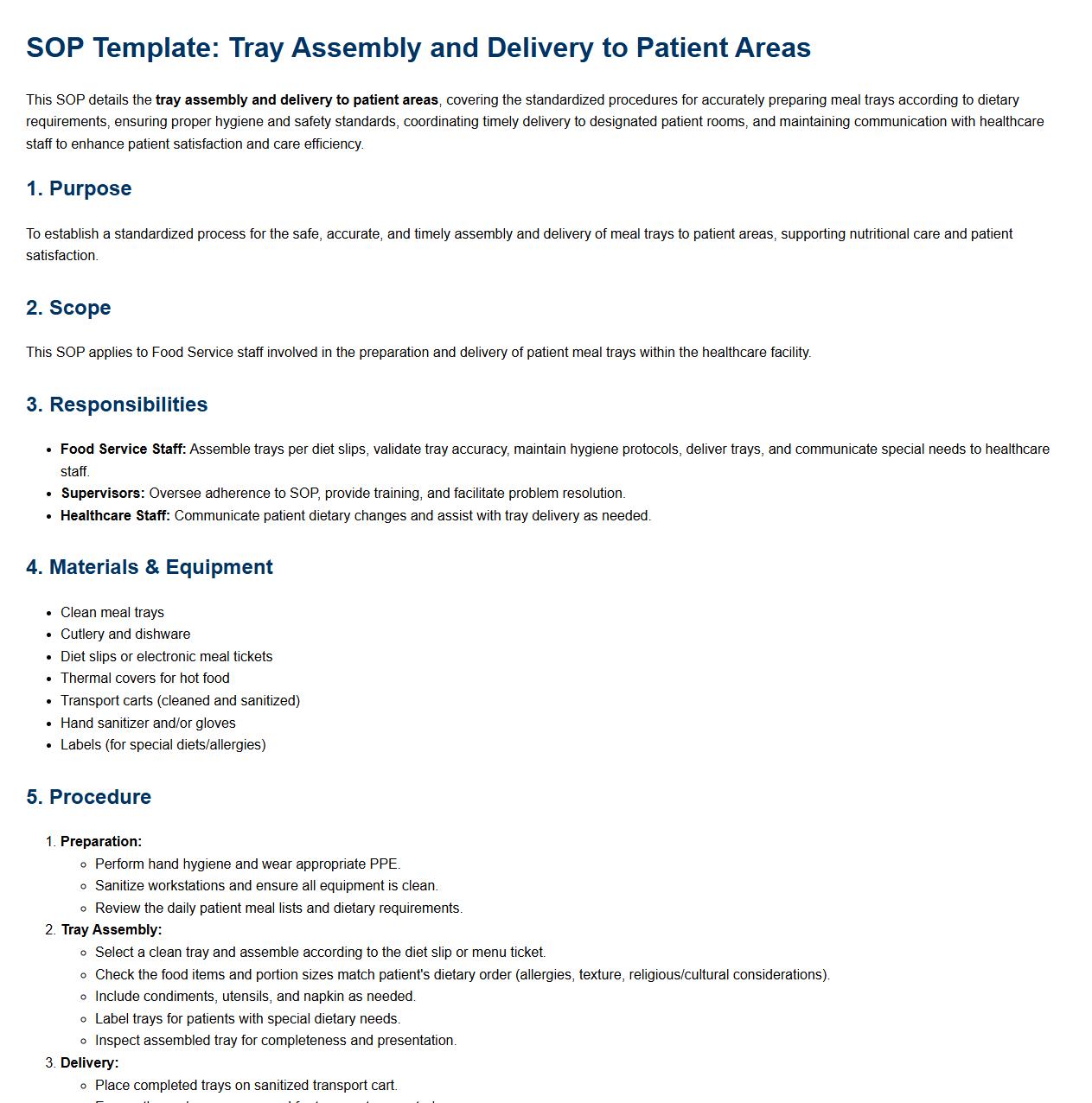
This SOP details the tray assembly and delivery to patient areas, covering the standardized procedures for accurately preparing meal trays according to dietary requirements, ensuring proper hygiene and safety standards, coordinating timely delivery to designated patient rooms, and maintaining communication with healthcare staff to enhance patient satisfaction and care efficiency.
Special diet accommodation and allergen management.
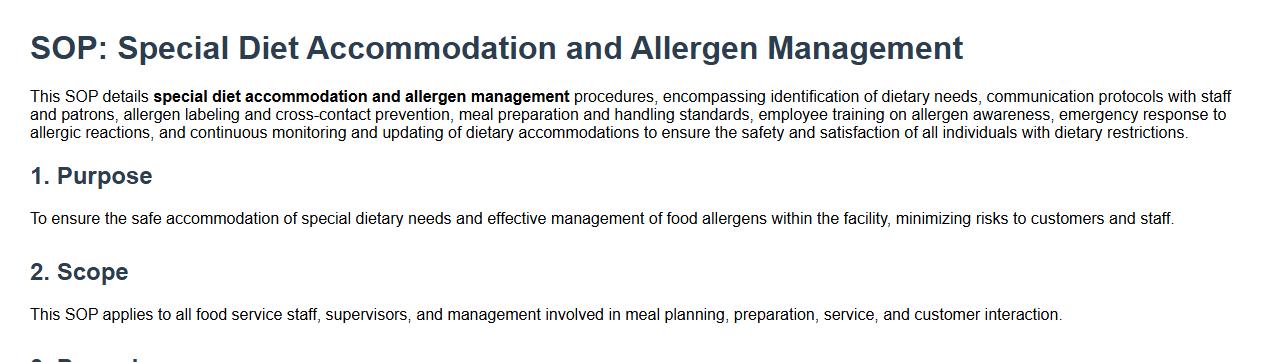
This SOP details special diet accommodation and allergen management procedures, encompassing identification of dietary needs, communication protocols with staff and patrons, allergen labeling and cross-contact prevention, meal preparation and handling standards, employee training on allergen awareness, emergency response to allergic reactions, and continuous monitoring and updating of dietary accommodations to ensure the safety and satisfaction of all individuals with dietary restrictions.
Inventory management of food supplies and equipment.
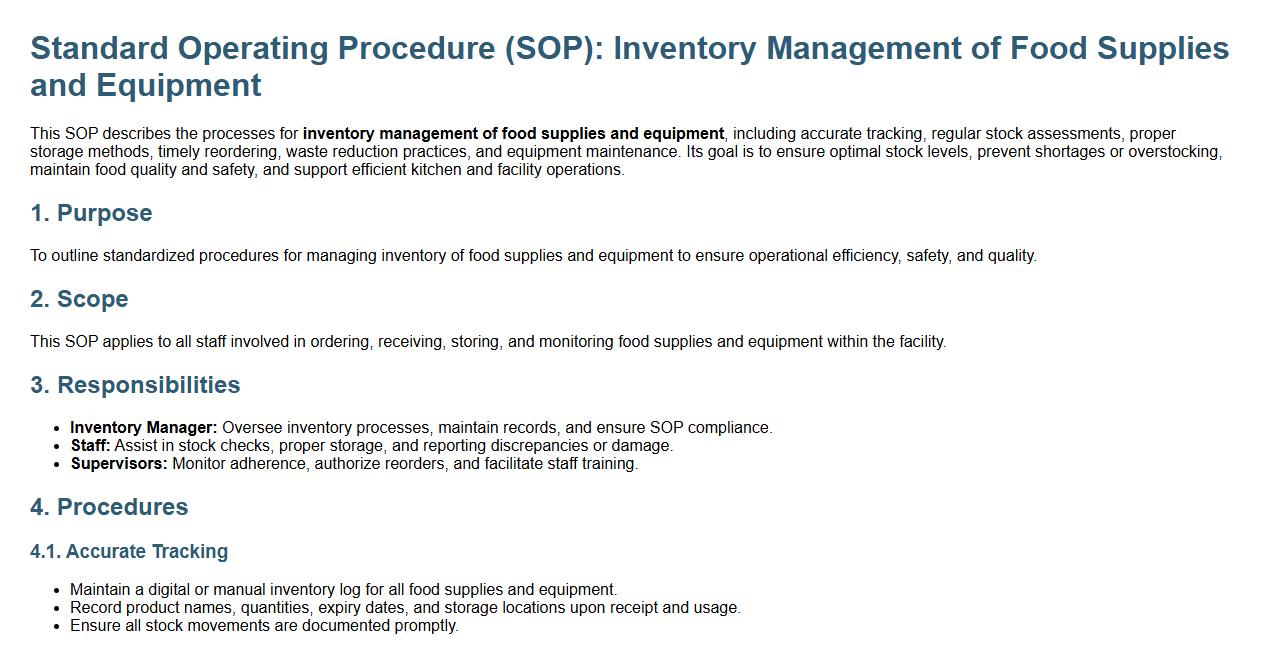
This SOP describes the processes for inventory management of food supplies and equipment, including accurate tracking, regular stock assessments, proper storage methods, timely reordering, waste reduction practices, and equipment maintenance. Its goal is to ensure optimal stock levels, prevent shortages or overstocking, maintain food quality and safety, and support efficient kitchen and facility operations.
Staff training and competency assessment procedures.
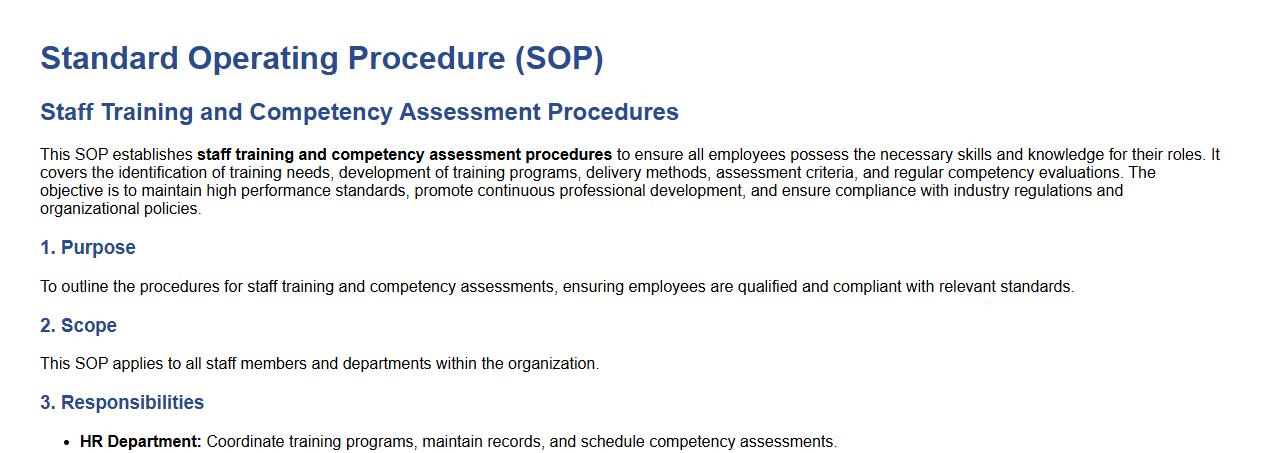
This SOP establishes staff training and competency assessment procedures to ensure all employees possess the necessary skills and knowledge for their roles. It covers the identification of training needs, development of training programs, delivery methods, assessment criteria, and regular competency evaluations. The objective is to maintain high performance standards, promote continuous professional development, and ensure compliance with industry regulations and organizational policies.
Equipment cleaning, maintenance, and storage protocols.
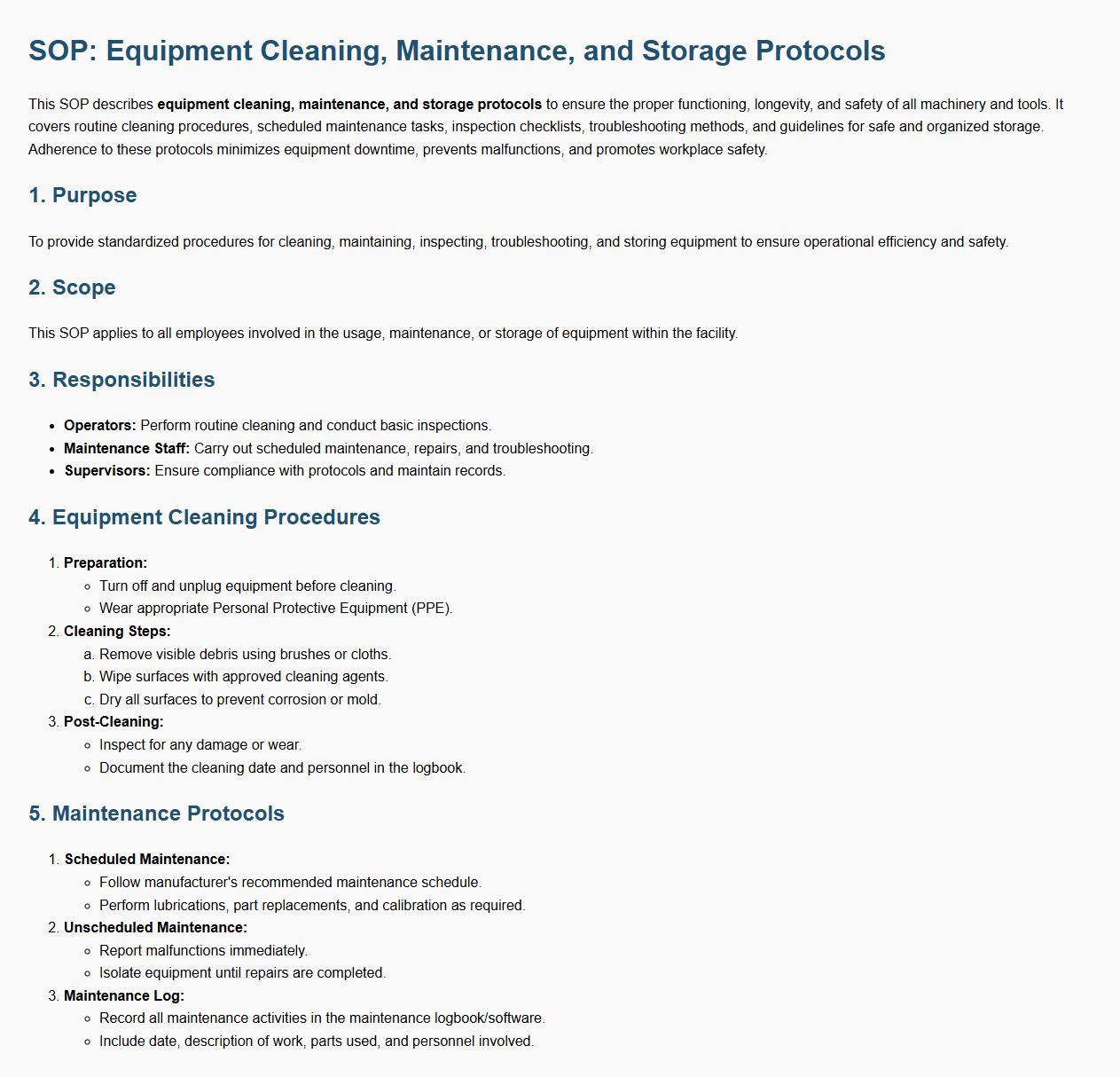
This SOP describes equipment cleaning, maintenance, and storage protocols to ensure the proper functioning, longevity, and safety of all machinery and tools. It covers routine cleaning procedures, scheduled maintenance tasks, inspection checklists, troubleshooting methods, and guidelines for safe and organized storage. Adherence to these protocols minimizes equipment downtime, prevents malfunctions, and promotes workplace safety.
Complaint handling and quality assurance procedures.
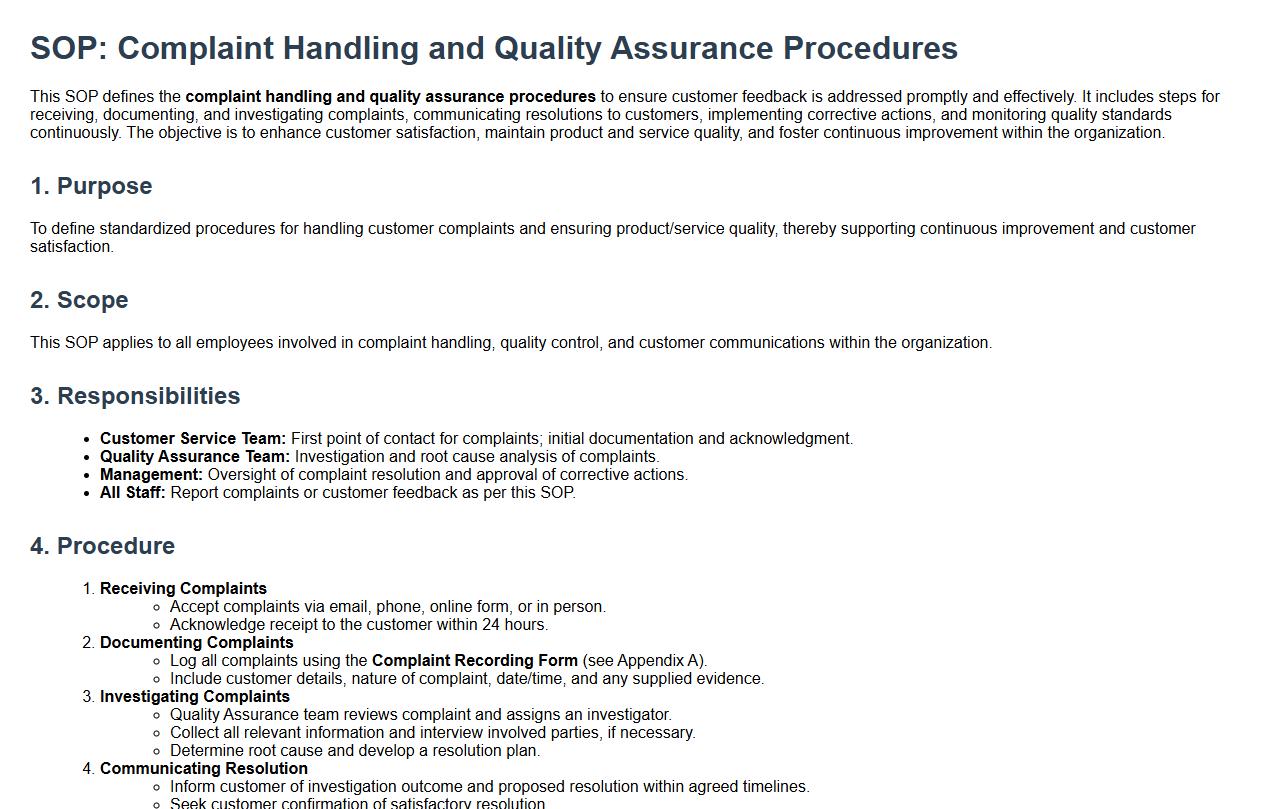
This SOP defines the complaint handling and quality assurance procedures to ensure customer feedback is addressed promptly and effectively. It includes steps for receiving, documenting, and investigating complaints, communicating resolutions to customers, implementing corrective actions, and monitoring quality standards continuously. The objective is to enhance customer satisfaction, maintain product and service quality, and foster continuous improvement within the organization.
What are the key objectives of the SOP for Dietary Services in Hospitals?
The key objectives of the SOP for Dietary Services focus on ensuring the provision of safe, nutritious, and quality meals tailored to patient needs. It aims to standardize food preparation, handling, and distribution processes to minimize risks of contamination. Additionally, the SOP seeks to enhance patient satisfaction and support clinical outcomes through well-planned dietary interventions.
Which personnel are responsible for implementing and monitoring the dietary SOP?
The responsibility for implementing and monitoring the dietary SOP lies primarily with the hospital's dietary manager and nutritionists. Support staff, including dietitians, kitchen personnel, and food service workers, also play crucial roles in following the established guidelines. Furthermore, healthcare professionals coordinate to ensure dietary standards align with overall patient care plans.
How does the SOP ensure patient-specific dietary needs and restrictions are addressed?
The SOP mandates comprehensive patient assessments to identify individual dietary requirements and allergies. Dietary plans are then customized by registered dietitians to cater to these specific needs, with continuous updates based on patient progress. Communication between medical teams and dietary services ensures adherence to restrictions and timely adjustments.
What are the procedures for food safety and hygiene as outlined in the SOP?
The SOP includes strict food safety and hygiene protocols such as proper handwashing, sanitization of equipment, and temperature control during cooking and storage. It requires routine training for staff to maintain cleanliness and prevent cross-contamination risks. Regular inspections and adherence to regulatory standards are also integral to maintaining high hygiene levels.
How is compliance with the dietary service SOP documented and reviewed?
Compliance is documented through detailed records of food preparation, delivery, and patient feedback as specified in the SOP. Regular audits and performance reviews are conducted to evaluate adherence and identify improvement areas. The dietary committee or hospital administration oversees these reviews to ensure continuous quality enhancement.