

A SOP template for retail staff scheduling streamlines employee shift planning, ensuring consistent coverage and efficient workforce management. It outlines step-by-step procedures for creating, approving, and distributing schedules while addressing shift swaps and time-off requests. This template helps retail managers maintain optimal staffing levels, improve communication, and enhance operational productivity.
Employee availability collection and documentation.
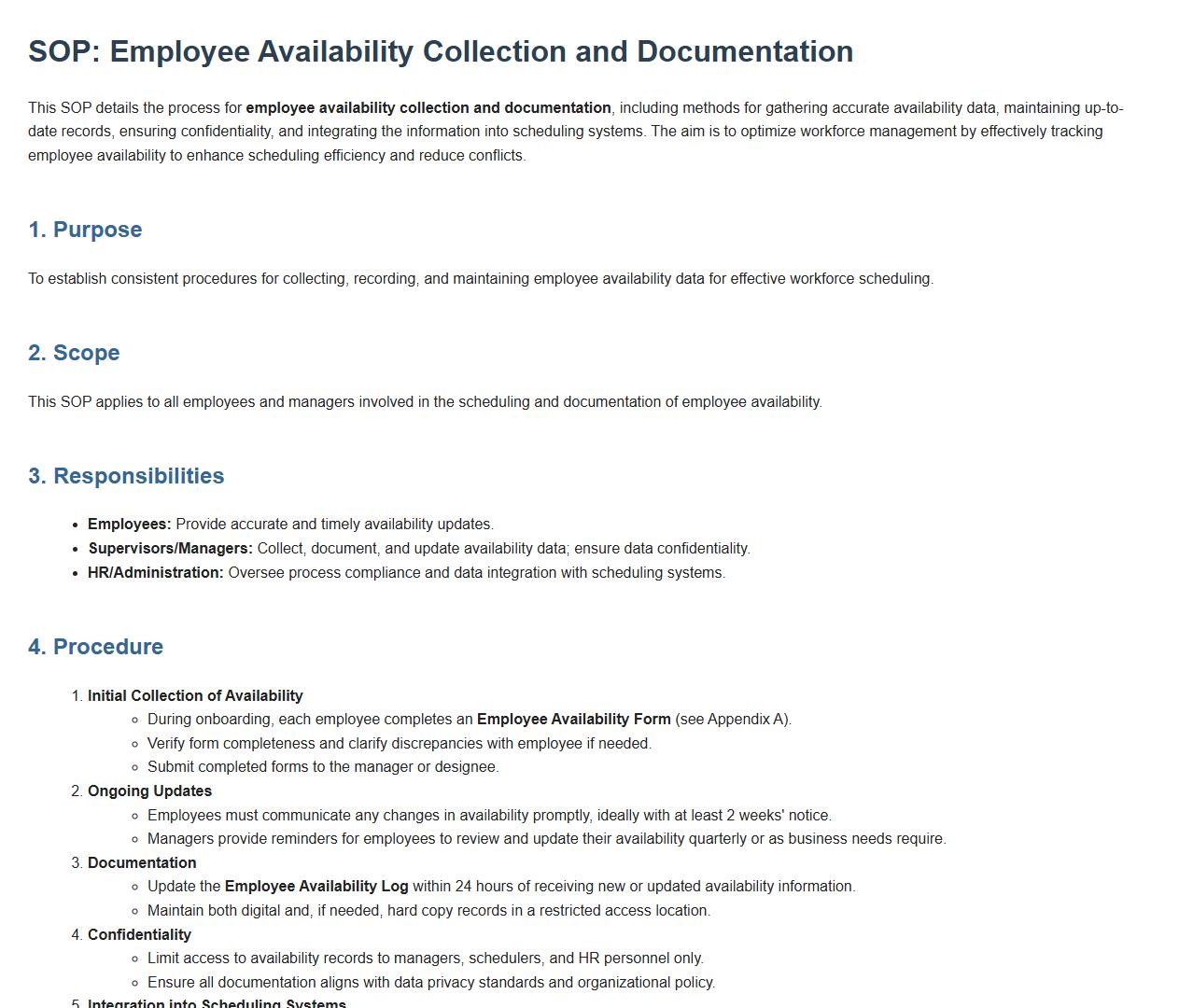
This SOP details the process for employee availability collection and documentation, including methods for gathering accurate availability data, maintaining up-to-date records, ensuring confidentiality, and integrating the information into scheduling systems. The aim is to optimize workforce management by effectively tracking employee availability to enhance scheduling efficiency and reduce conflicts.
Shift planning and roster creation procedures.
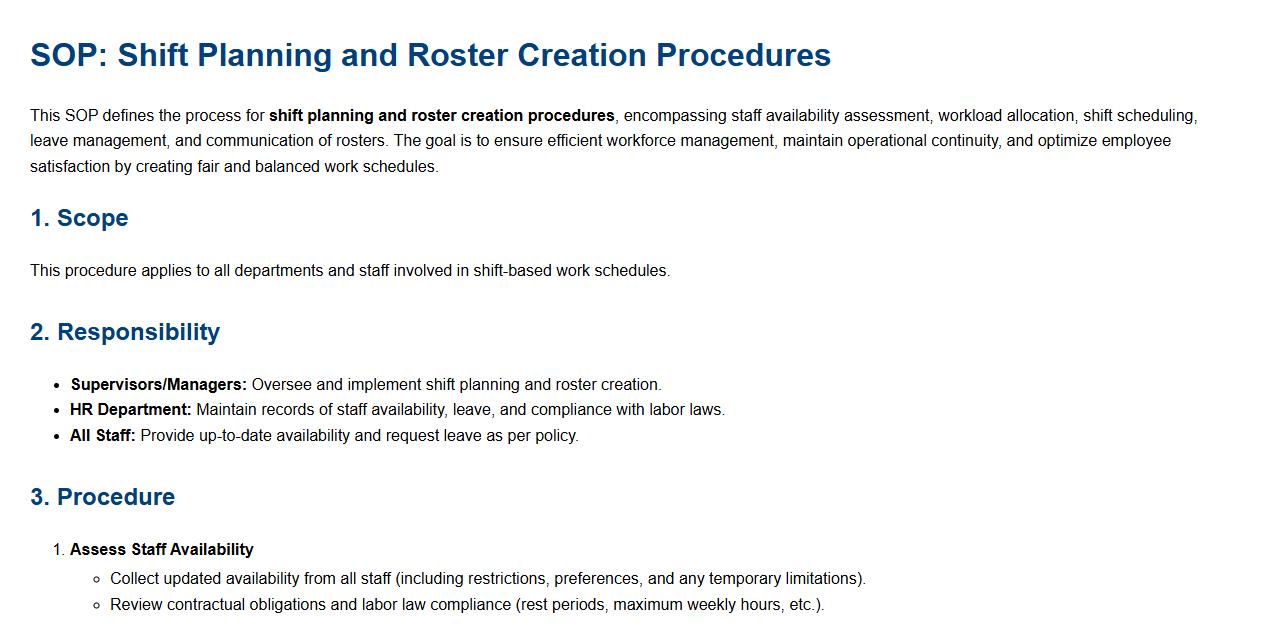
This SOP defines the process for shift planning and roster creation procedures, encompassing staff availability assessment, workload allocation, shift scheduling, leave management, and communication of rosters. The goal is to ensure efficient workforce management, maintain operational continuity, and optimize employee satisfaction by creating fair and balanced work schedules.
Guidelines for fair shift allocation and rotation.
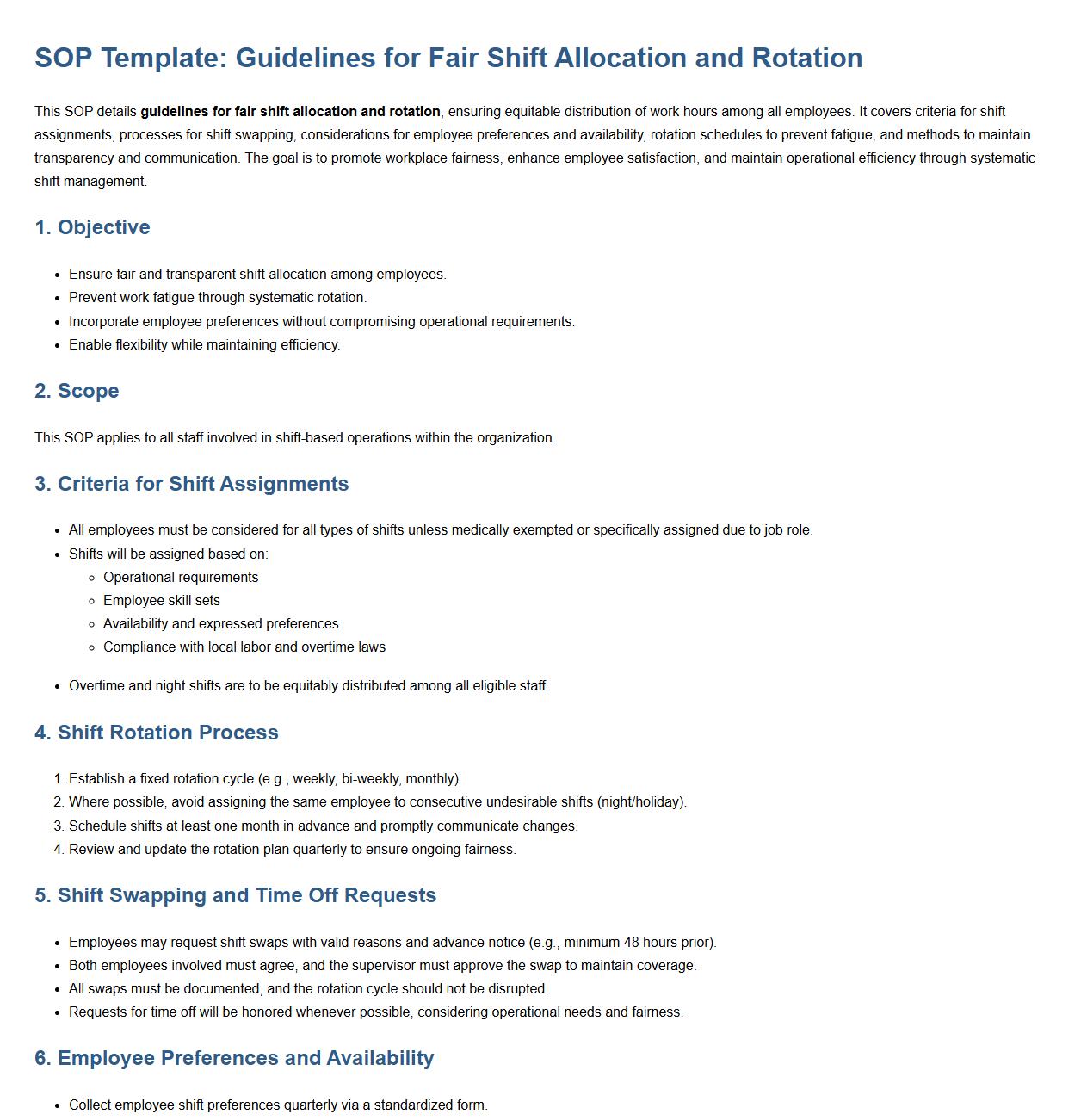
This SOP details guidelines for fair shift allocation and rotation, ensuring equitable distribution of work hours among all employees. It covers criteria for shift assignments, processes for shift swapping, considerations for employee preferences and availability, rotation schedules to prevent fatigue, and methods to maintain transparency and communication. The goal is to promote workplace fairness, enhance employee satisfaction, and maintain operational efficiency through systematic shift management.
Procedures for handling shift swaps and absence requests.

This SOP defines the procedures for handling shift swaps and absence requests, covering the process for requesting shift changes, approvals, communication protocols, documentation requirements, and management responsibilities. It aims to ensure smooth scheduling, maintain operational efficiency, and support workforce flexibility by establishing clear guidelines for employees and supervisors.
Daily shift confirmation and staff notification process.
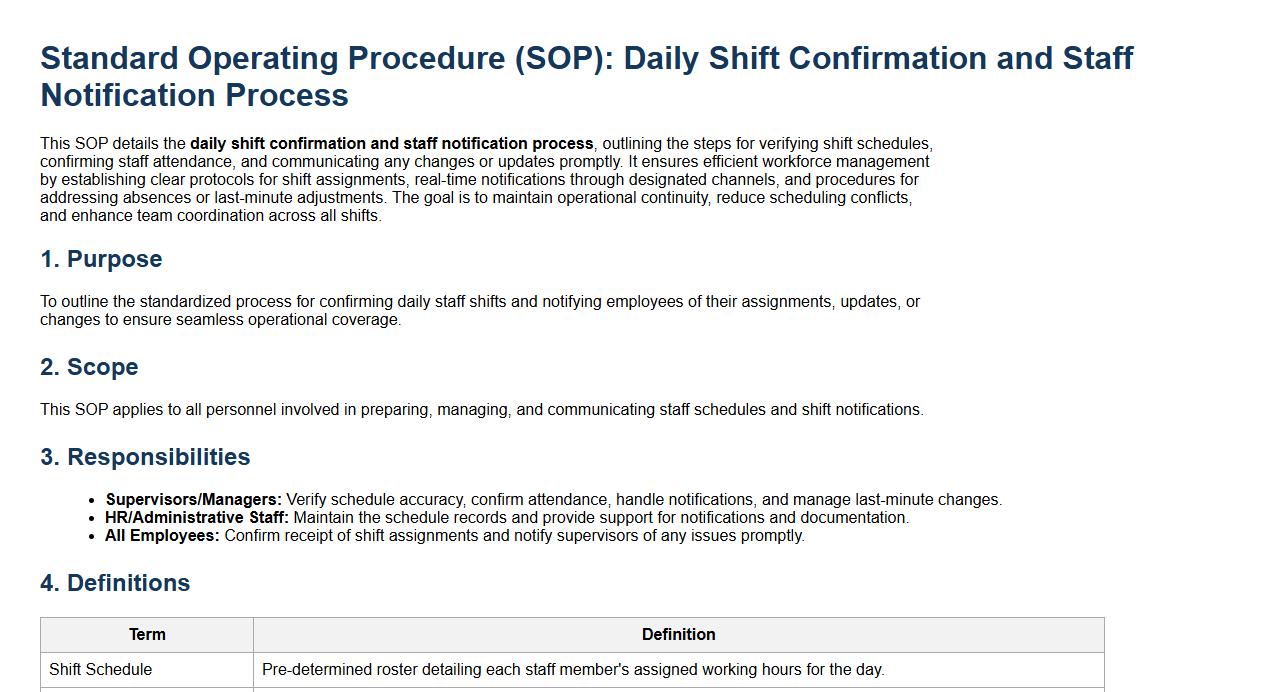
This SOP details the daily shift confirmation and staff notification process, outlining the steps for verifying shift schedules, confirming staff attendance, and communicating any changes or updates promptly. It ensures efficient workforce management by establishing clear protocols for shift assignments, real-time notifications through designated channels, and procedures for addressing absences or last-minute adjustments. The goal is to maintain operational continuity, reduce scheduling conflicts, and enhance team coordination across all shifts.
Protocol for updating and distributing the final schedule.
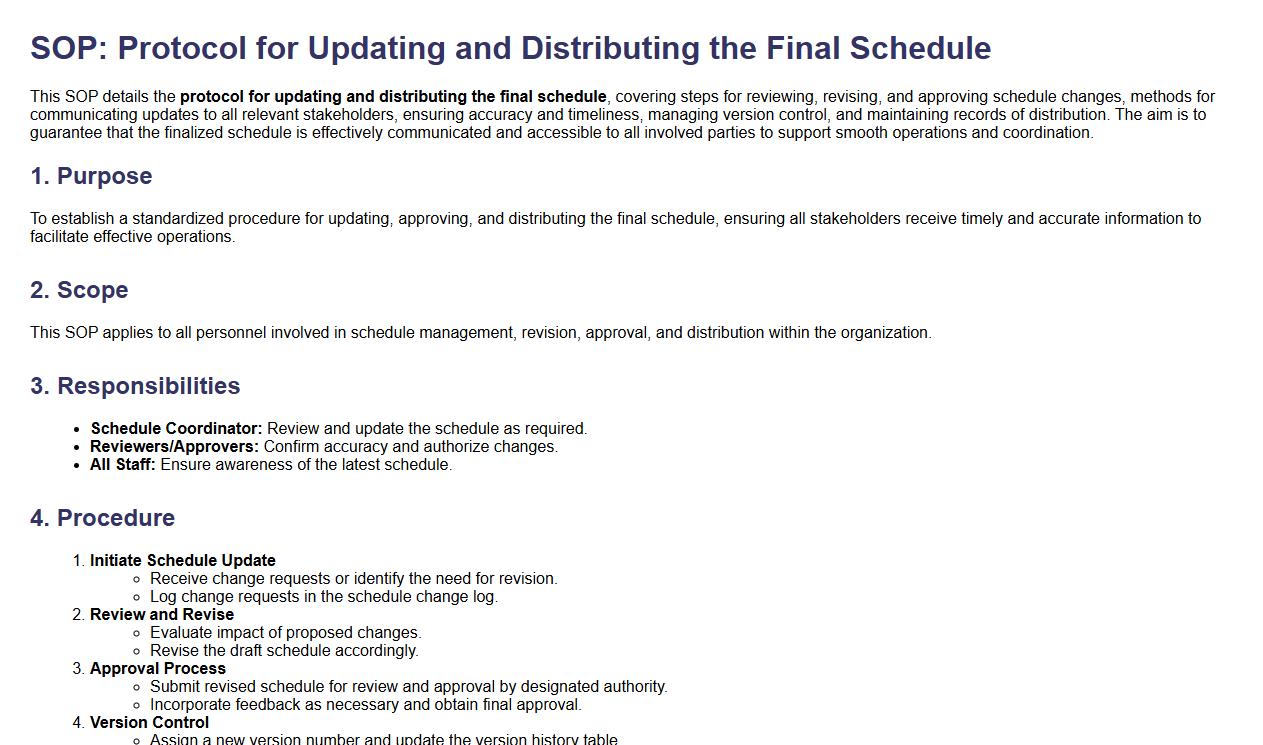
This SOP details the protocol for updating and distributing the final schedule, covering steps for reviewing, revising, and approving schedule changes, methods for communicating updates to all relevant stakeholders, ensuring accuracy and timeliness, managing version control, and maintaining records of distribution. The aim is to guarantee that the finalized schedule is effectively communicated and accessible to all involved parties to support smooth operations and coordination.
Documentation and approval of overtime assignments.
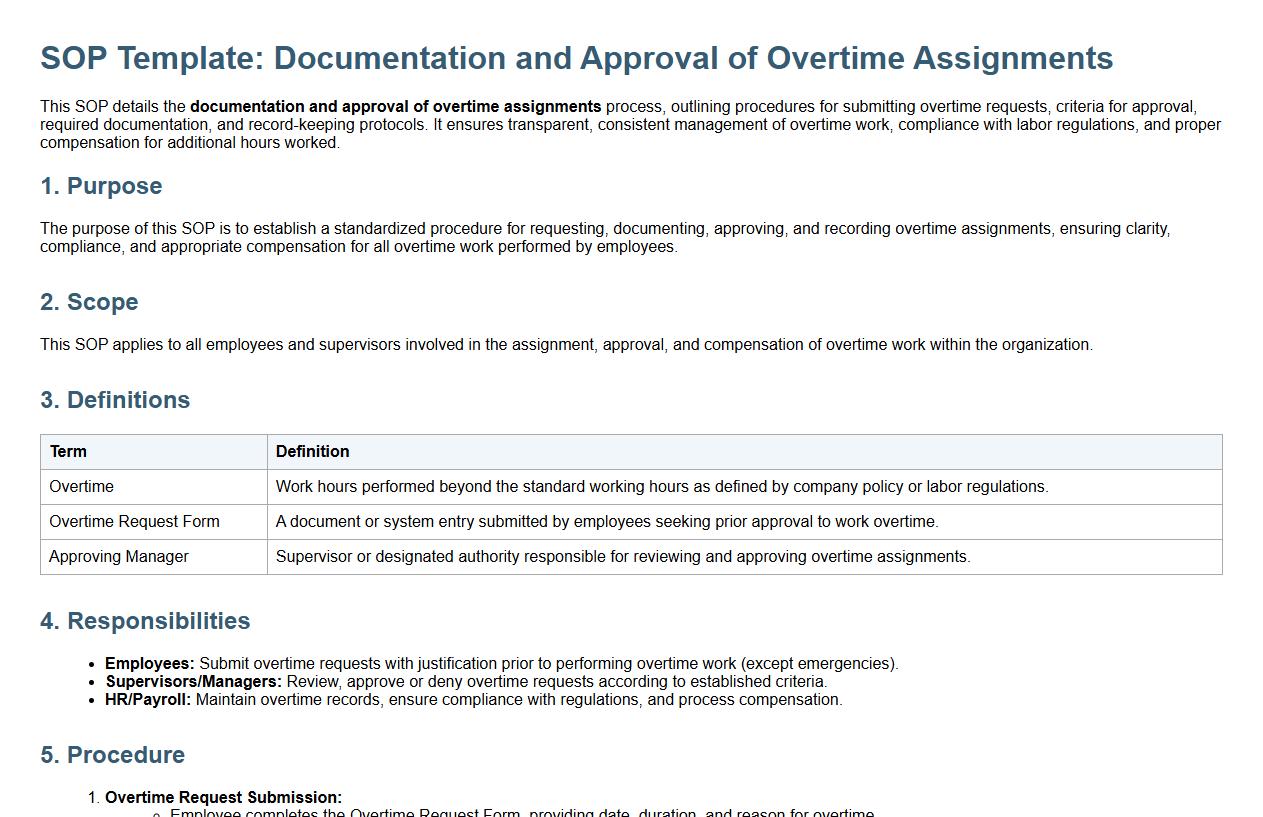
This SOP details the documentation and approval of overtime assignments process, outlining procedures for submitting overtime requests, criteria for approval, required documentation, and record-keeping protocols. It ensures transparent, consistent management of overtime work, compliance with labor regulations, and proper compensation for additional hours worked.
Contingency plan for last-minute staffing shortages.

This SOP details a contingency plan for last-minute staffing shortages, including identification of critical roles, procedures for rapid internal reassignment, activation of on-call personnel, coordination with temporary staffing agencies, communication protocols with affected departments, and documentation requirements. The goal is to maintain operational continuity by swiftly addressing unexpected workforce gaps through structured and effective response strategies.
Staff performance tracking and attendance recording.

This SOP details the process for staff performance tracking and attendance recording, covering methods for monitoring employee productivity, maintaining accurate attendance records, utilizing performance evaluation tools, ensuring punctuality and compliance with work schedules, and implementing corrective actions when necessary. The goal is to enhance workforce management, improve employee accountability, and support organizational efficiency through reliable performance and attendance data.
Schedule review, feedback, and continuous improvement process.

This SOP details the schedule review, feedback, and continuous improvement process, covering regular evaluation of schedules, collection and analysis of stakeholder feedback, identification of inefficiencies, implementation of corrective actions, and ongoing monitoring to enhance productivity and effectiveness. The goal is to maintain and improve operational workflows through systematic review and iterative enhancements.
What is the objective of the SOP for Retail Staff Scheduling?
The primary objective of the SOP for Retail Staff Scheduling is to ensure efficient and effective allocation of staff resources. This helps maintain optimal store operations while meeting customer service standards. It also aims to minimize scheduling conflicts and improve employee satisfaction.
Which key roles are responsible for schedule creation and approval?
Schedule creation is typically managed by the store manager or the scheduling coordinator. These roles ensure the schedule aligns with business needs and staffing requirements. Approval is often required from the store manager or district manager to finalize the schedule.
What criteria are used to determine staff shift assignments?
Staff shift assignments are determined based on employee availability, skill levels, and store demand patterns. Consideration is also given to labor laws and internal policies to maintain compliance. The goal is to match staff strengths with peak business hours for optimal performance.
How should scheduling conflicts or staff availability issues be addressed?
Scheduling conflicts should be resolved promptly through communication between the manager and affected employees. Flexibility and willingness to swap shifts are encouraged to maintain smooth operations. In cases of persistent issues, management may need to intervene with alternative solutions.
What is the process for communicating finalized schedules to retail employees?
Once the schedule is finalized, it should be distributed through official channels such as email, employee scheduling apps, or physical notice boards. Clear communication ensures employees are informed and prepared for their shifts. Regular reminders and updates help in reducing absenteeism and confusion.