

A SOP Template for Retail Point of Sale Operations ensures consistent and efficient handling of transactions at the checkout counter. This template outlines step-by-step procedures for cash handling, customer service, and register reconciliation to minimize errors and enhance accuracy. Following a standardized SOP template improves staff training and maintains operational quality across all retail locations.
Customer greeting and service protocols.
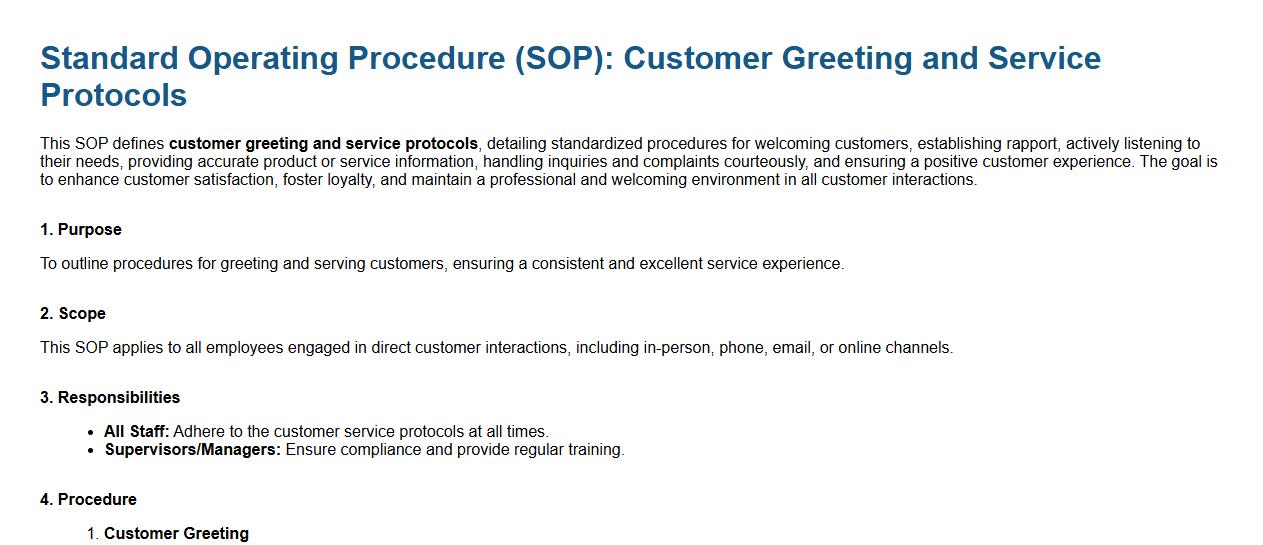
This SOP defines customer greeting and service protocols, detailing standardized procedures for welcoming customers, establishing rapport, actively listening to their needs, providing accurate product or service information, handling inquiries and complaints courteously, and ensuring a positive customer experience. The goal is to enhance customer satisfaction, foster loyalty, and maintain a professional and welcoming environment in all customer interactions.
Cash register opening and closing procedures.
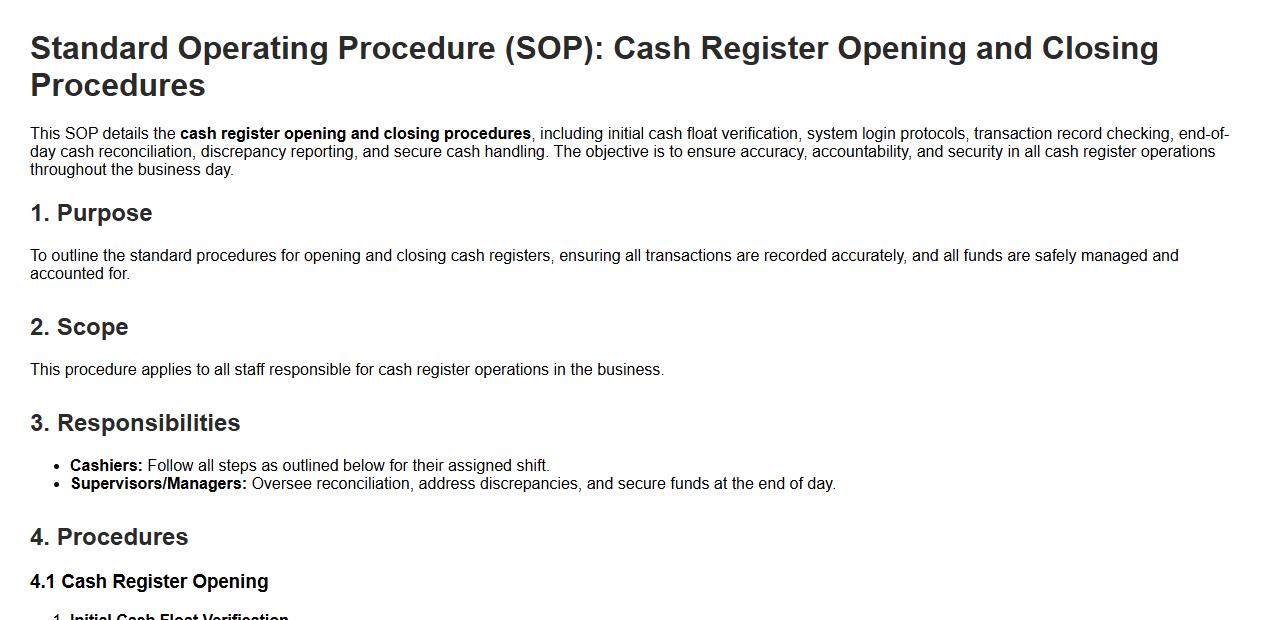
This SOP details the cash register opening and closing procedures, including initial cash float verification, system login protocols, transaction record checking, end-of-day cash reconciliation, discrepancy reporting, and secure cash handling. The objective is to ensure accuracy, accountability, and security in all cash register operations throughout the business day.
Product scanning and checkout process.
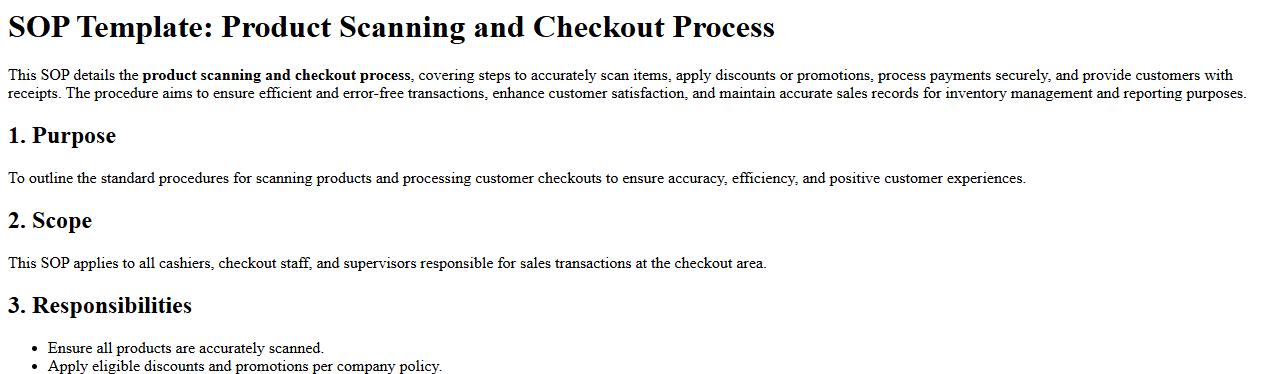
This SOP details the product scanning and checkout process, covering steps to accurately scan items, apply discounts or promotions, process payments securely, and provide customers with receipts. The procedure aims to ensure efficient and error-free transactions, enhance customer satisfaction, and maintain accurate sales records for inventory management and reporting purposes.
Cash handling and transaction reconciliation.
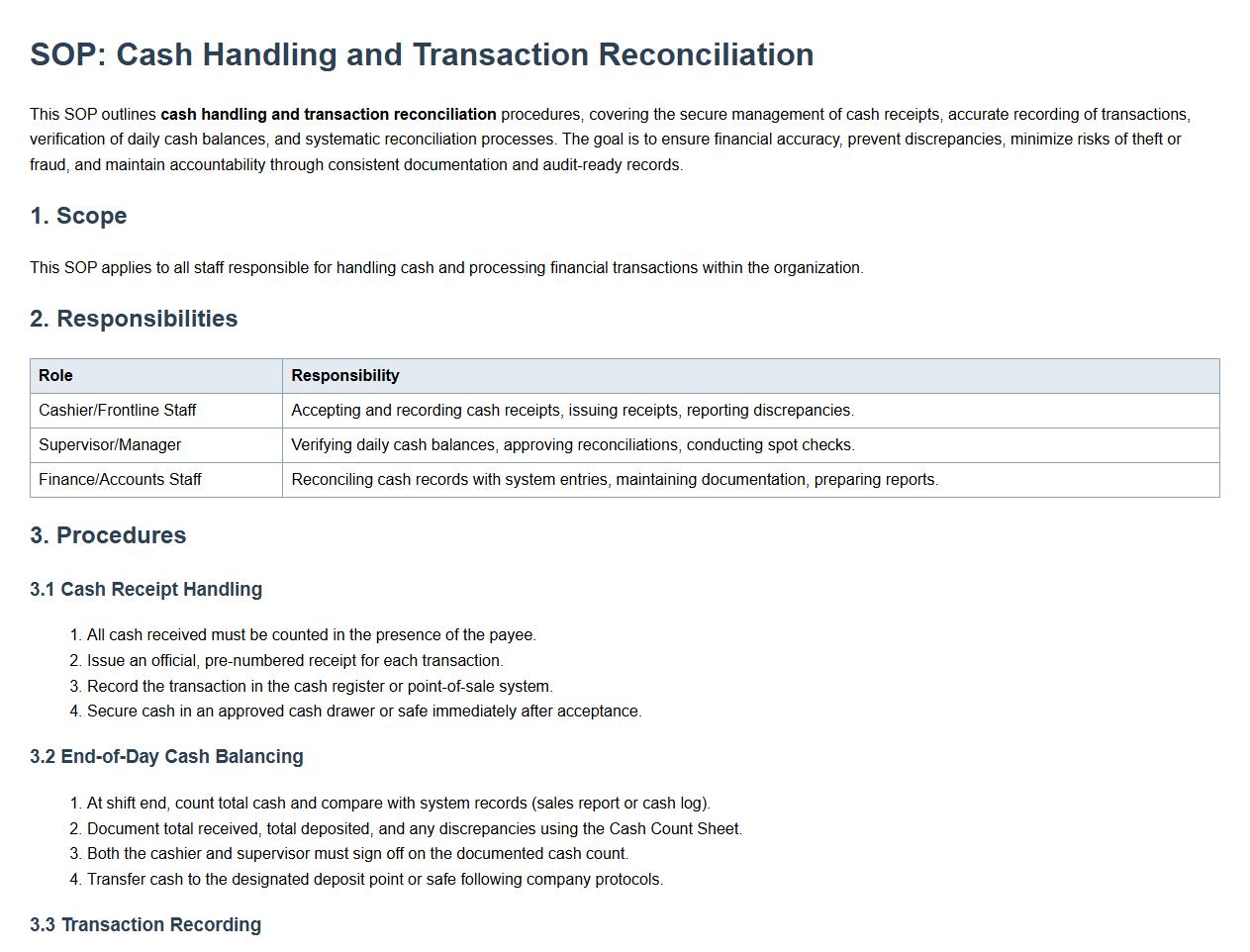
This SOP outlines cash handling and transaction reconciliation procedures, covering the secure management of cash receipts, accurate recording of transactions, verification of daily cash balances, and systematic reconciliation processes. The goal is to ensure financial accuracy, prevent discrepancies, minimize risks of theft or fraud, and maintain accountability through consistent documentation and audit-ready records.
Returns, exchanges, and refund procedures.
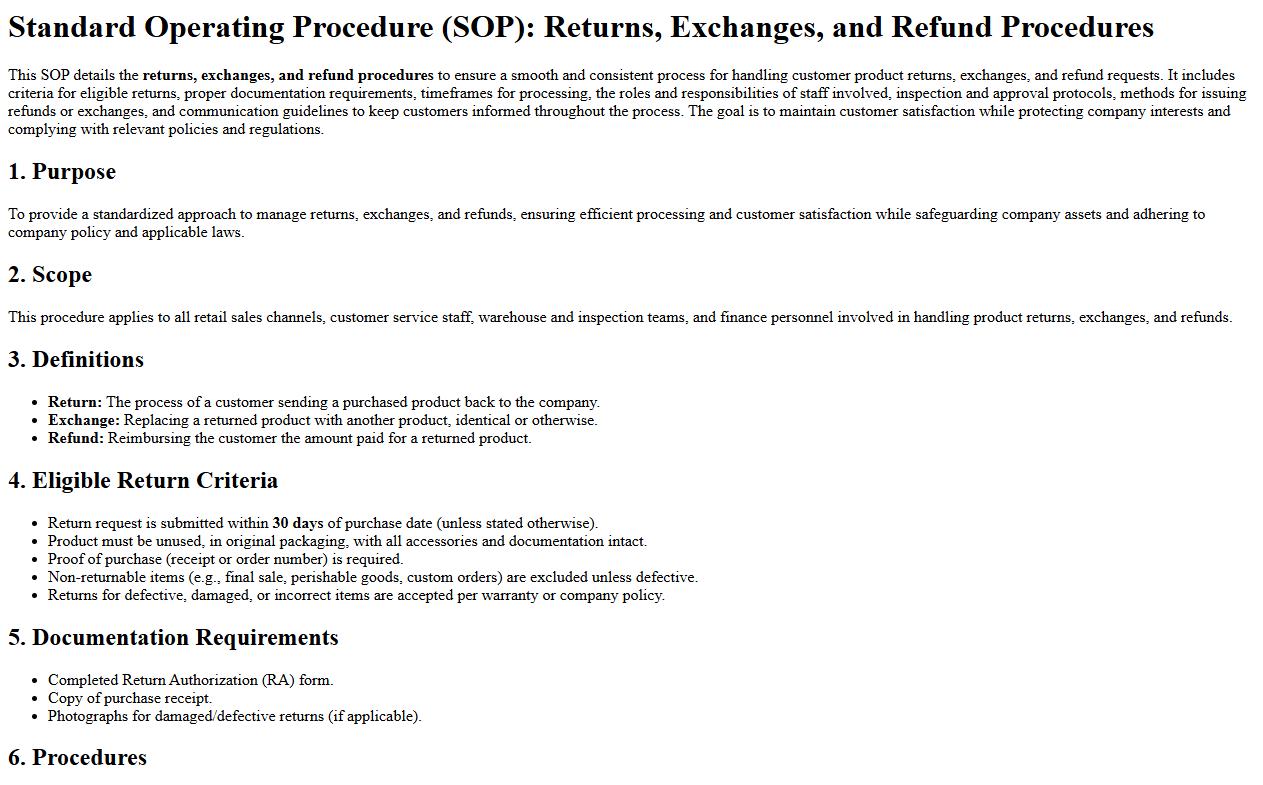
This SOP details the returns, exchanges, and refund procedures to ensure a smooth and consistent process for handling customer product returns, exchanges, and refund requests. It includes criteria for eligible returns, proper documentation requirements, timeframes for processing, the roles and responsibilities of staff involved, inspection and approval protocols, methods for issuing refunds or exchanges, and communication guidelines to keep customers informed throughout the process. The goal is to maintain customer satisfaction while protecting company interests and complying with relevant policies and regulations.
Stocking and restocking merchandise guidelines.
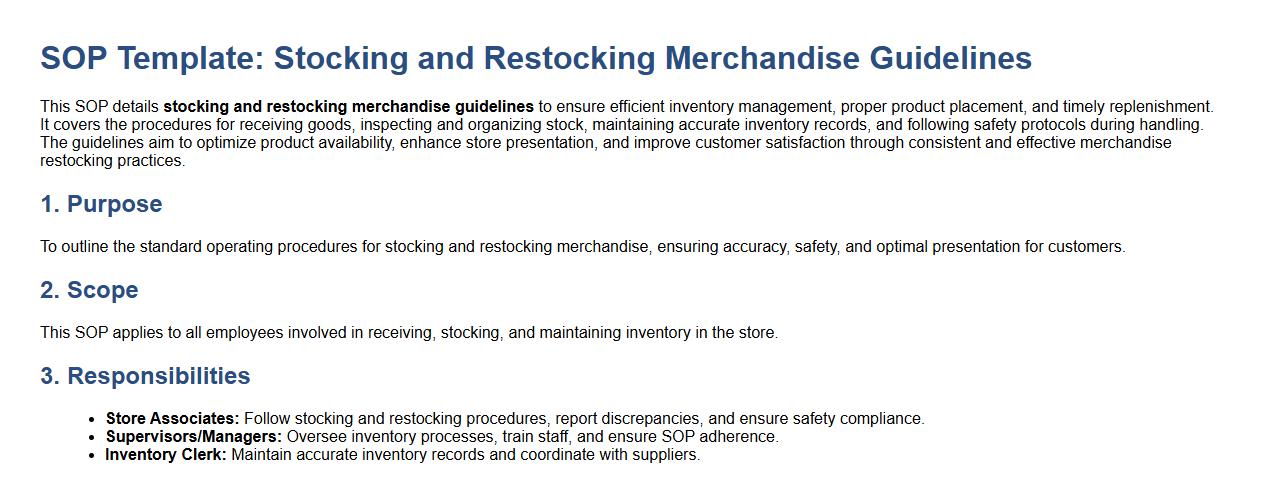
This SOP details stocking and restocking merchandise guidelines to ensure efficient inventory management, proper product placement, and timely replenishment. It covers the procedures for receiving goods, inspecting and organizing stock, maintaining accurate inventory records, and following safety protocols during handling. The guidelines aim to optimize product availability, enhance store presentation, and improve customer satisfaction through consistent and effective merchandise restocking practices.
Point-of-sale (POS) system troubleshooting steps.
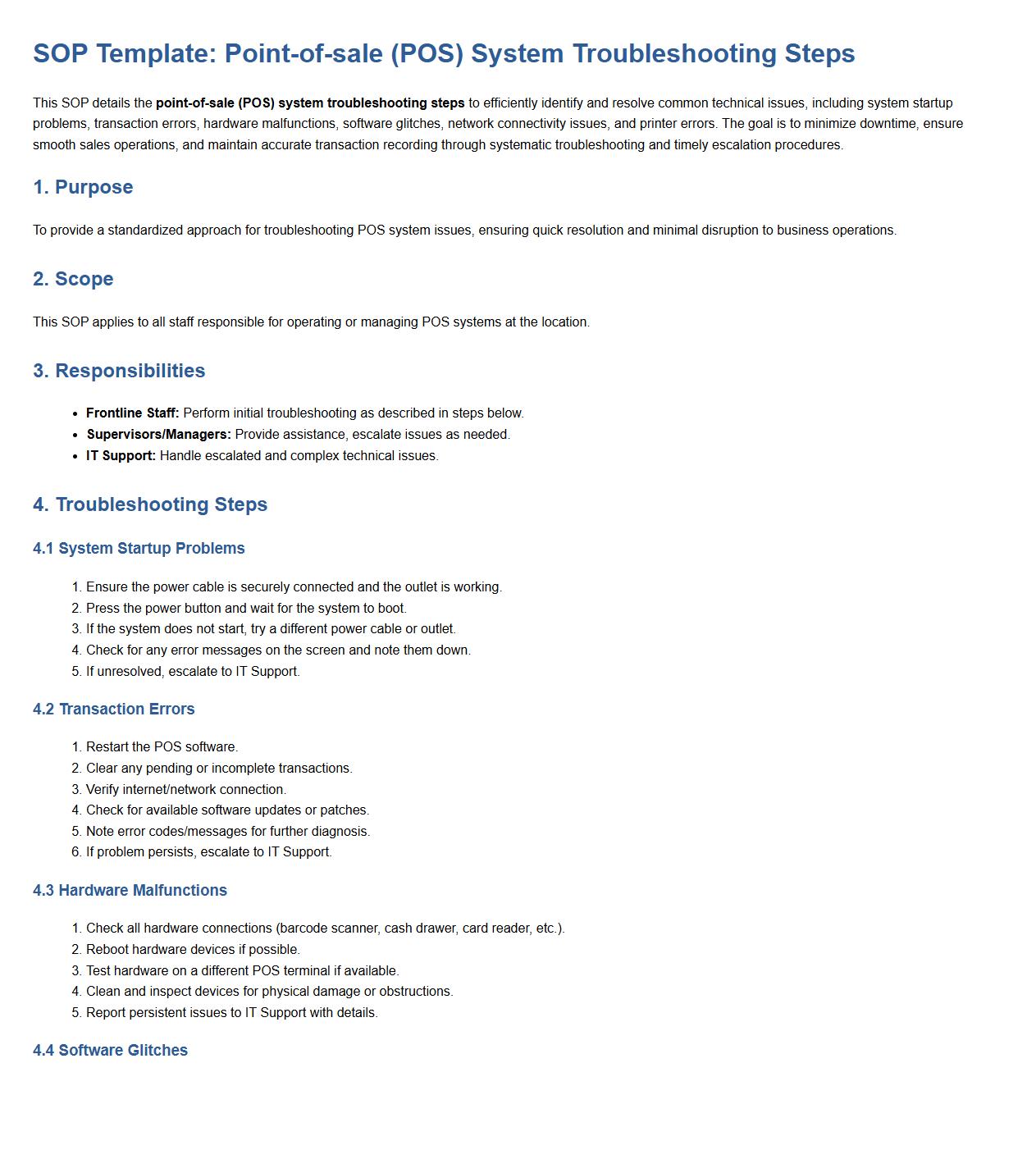
This SOP details the point-of-sale (POS) system troubleshooting steps to efficiently identify and resolve common technical issues, including system startup problems, transaction errors, hardware malfunctions, software glitches, network connectivity issues, and printer errors. The goal is to minimize downtime, ensure smooth sales operations, and maintain accurate transaction recording through systematic troubleshooting and timely escalation procedures.
Security and loss prevention measures.
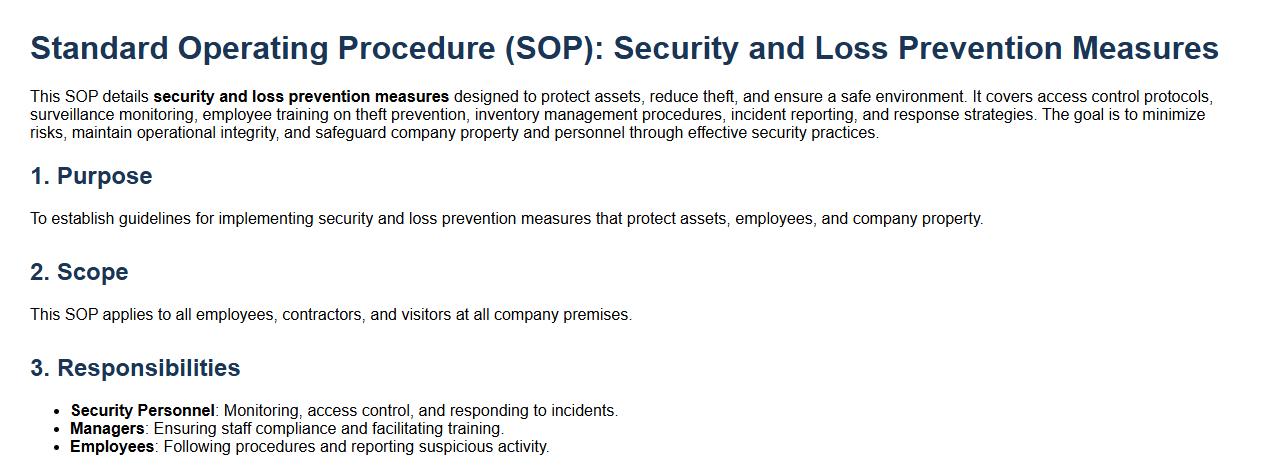
This SOP details security and loss prevention measures designed to protect assets, reduce theft, and ensure a safe environment. It covers access control protocols, surveillance monitoring, employee training on theft prevention, inventory management procedures, incident reporting, and response strategies. The goal is to minimize risks, maintain operational integrity, and safeguard company property and personnel through effective security practices.
End-of-day sales reporting and reconciliation.
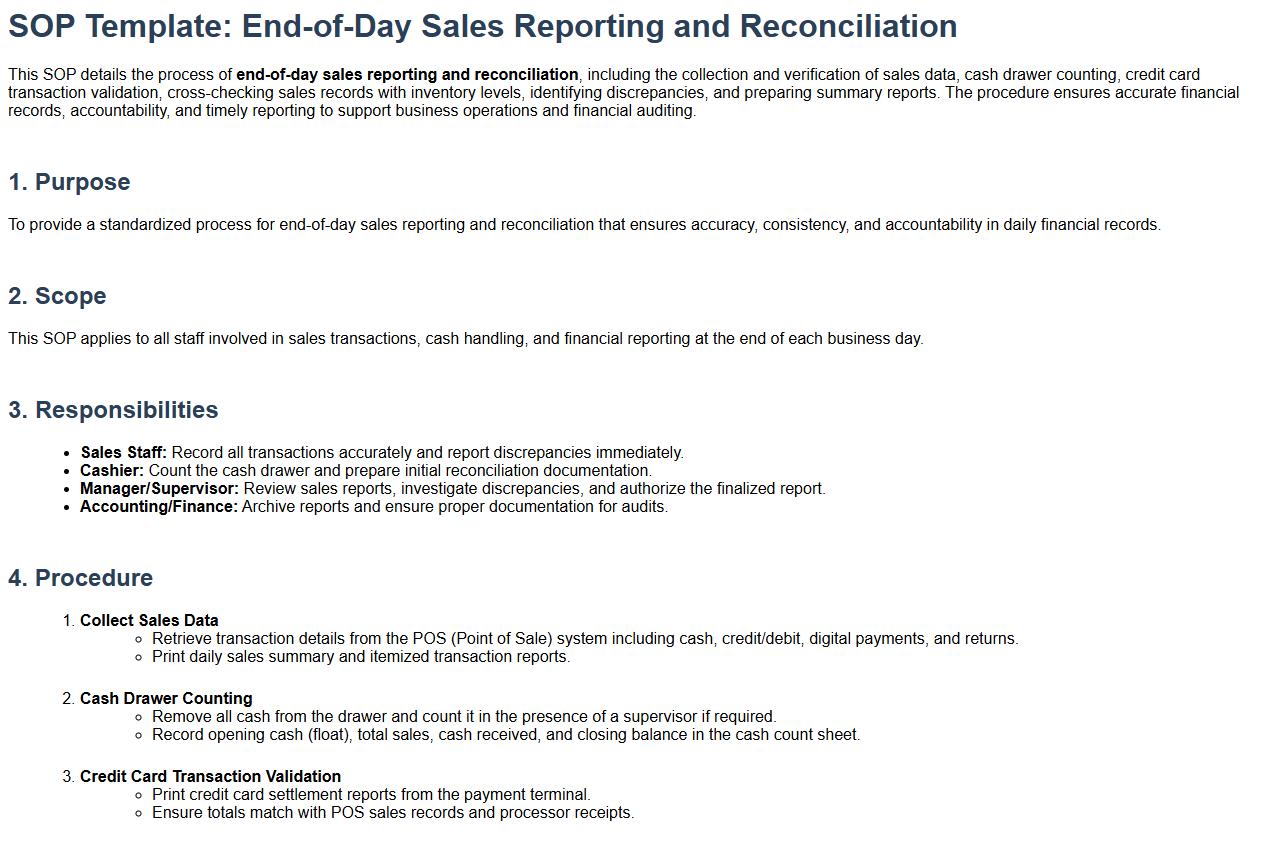
This SOP details the process of end-of-day sales reporting and reconciliation, including the collection and verification of sales data, cash drawer counting, credit card transaction validation, cross-checking sales records with inventory levels, identifying discrepancies, and preparing summary reports. The procedure ensures accurate financial records, accountability, and timely reporting to support business operations and financial auditing.
Health, safety, and cleanliness standards.
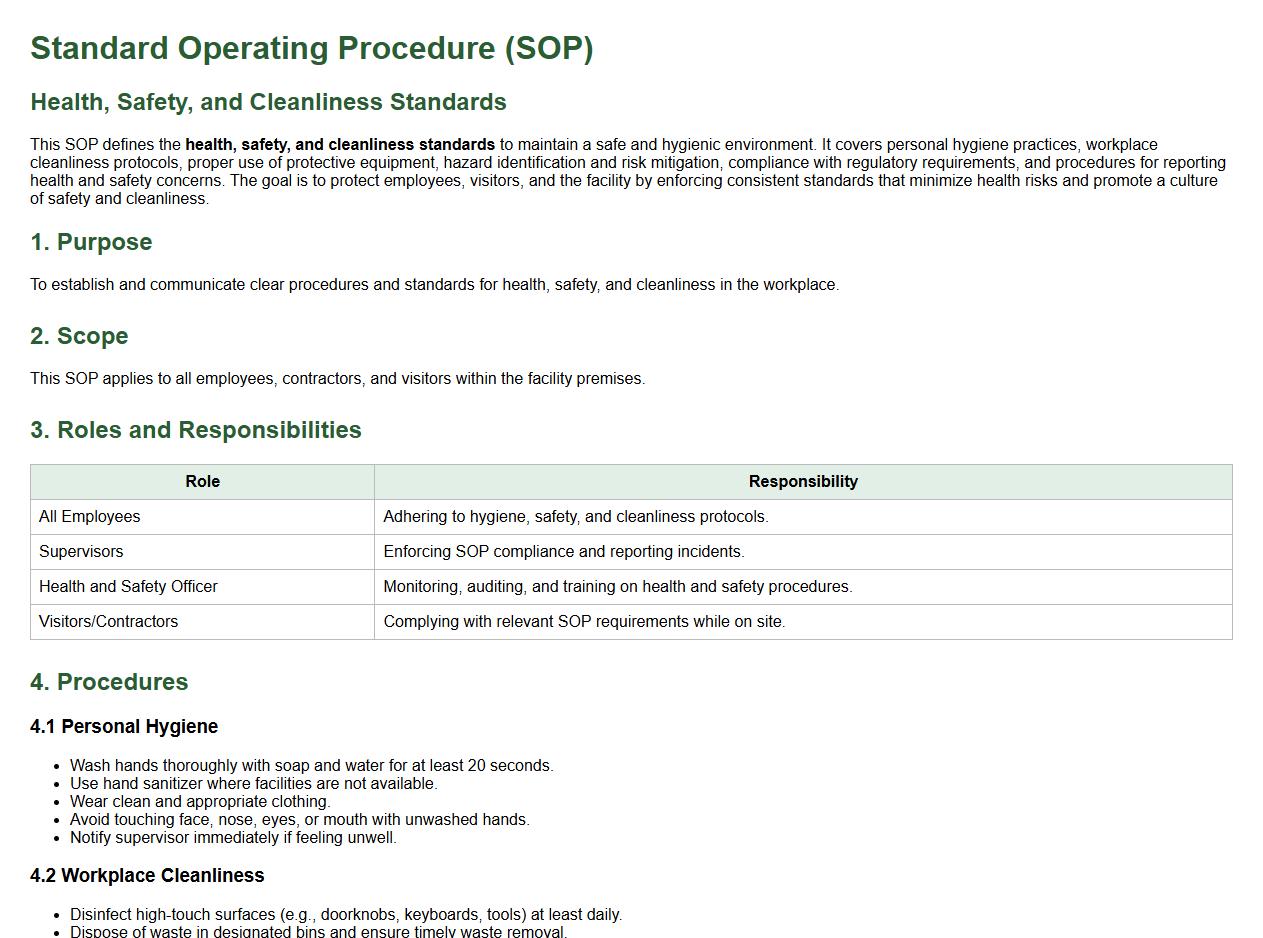
This SOP defines the health, safety, and cleanliness standards to maintain a safe and hygienic environment. It covers personal hygiene practices, workplace cleanliness protocols, proper use of protective equipment, hazard identification and risk mitigation, compliance with regulatory requirements, and procedures for reporting health and safety concerns. The goal is to protect employees, visitors, and the facility by enforcing consistent standards that minimize health risks and promote a culture of safety and cleanliness.
What key procedures must staff follow during daily opening and closing of the POS system as outlined in the SOP?
Staff must follow a strict opening checklist that includes system boot-up, cash drawer verification, and ensuring all hardware is functional. At closing, employees are required to complete a cash count and reconcile it with sales reports. The SOP emphasizes logging out and securely shutting down the POS system to maintain data integrity and security.
Which steps must be taken to handle and report discrepancies in POS cash reconciliation according to the SOP?
Any discrepancies identified during the cash reconciliation process must be immediately reported to a supervisor for investigation. Staff are instructed to document the discrepancy details in a designated log for accountability. The SOP mandates a thorough review of transactions and suggests preventive measures to avoid future inconsistencies.
What customer transaction protocols are specified in the SOP for returns, exchanges, and refunds at the POS?
The SOP requires verification of the original purchase through a receipt or transaction record before processing any returns, exchanges, or refunds. Staff must obtain managerial approval for refunds exceeding a specified amount. These protocols ensure compliance, protect against fraud, and enhance the customer service experience.
How does the SOP detail the process for managing and authorizing discounts or promotional offers at the POS?
Discounts and promotional offers must be applied using pre-approved codes or system functions to ensure consistency and accuracy. The SOP specifies that only authorized personnel can approve exceptions or special discounts beyond established policies. This controlled process helps maintain pricing integrity and limits unauthorized reductions.
What security measures and user access controls are mandated for POS system usage in the SOP?
The SOP mandates unique user logins with strong passwords to ensure accountability for each POS transaction. Access to sensitive functions is limited by role-based permissions to prevent unauthorized activity. Regular audits and system updates are required to maintain the security and integrity of the POS environment.