

A SOP Template for Retail Shelf Stocking provides clear, step-by-step instructions to ensure consistent and efficient restocking of products. It helps maintain inventory accuracy, optimize shelf organization, and enhance customer experience by keeping shelves fully stocked and visually appealing. This template is essential for training staff and standardizing retail operations.
Product receiving and verification procedures.
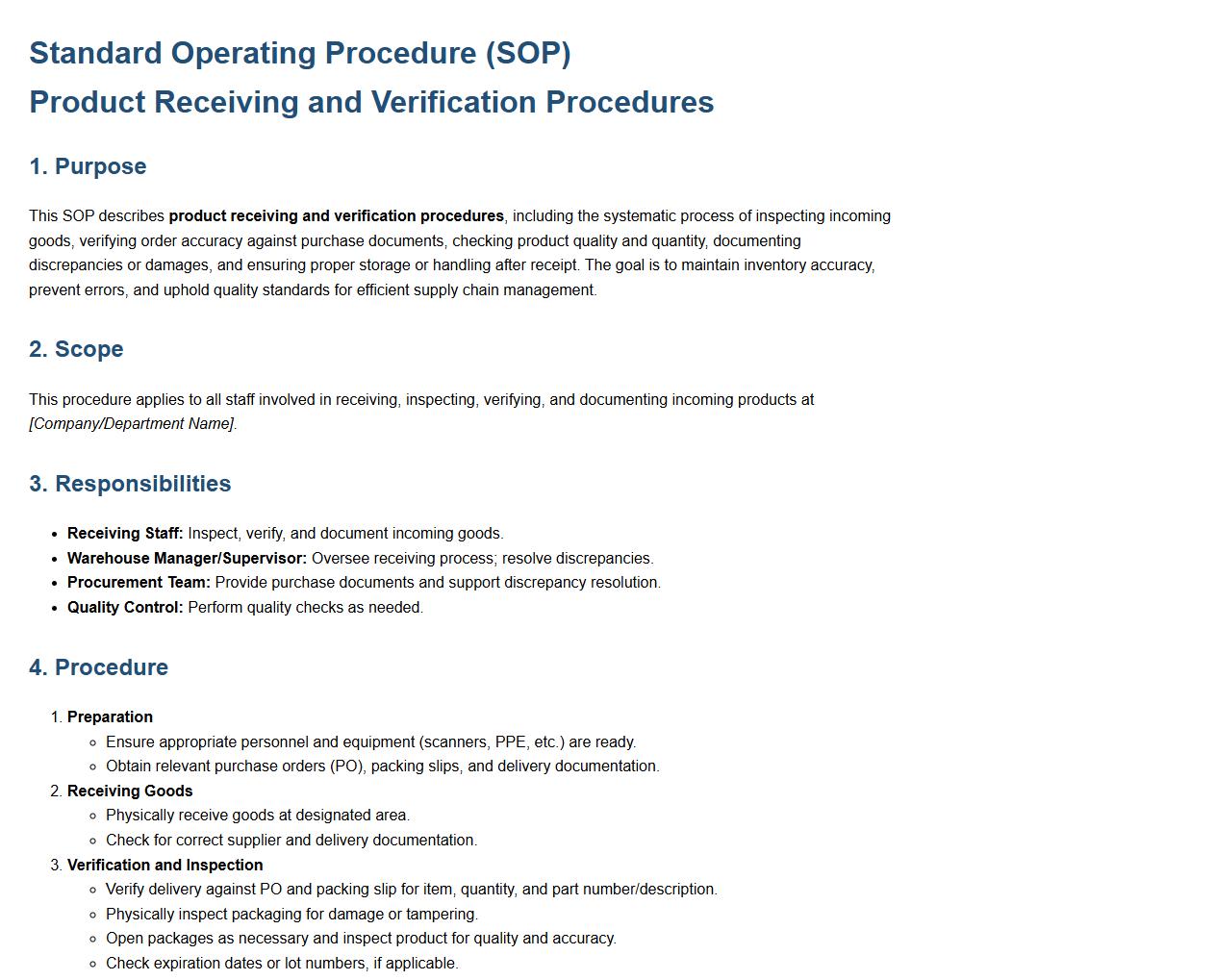
This SOP describes product receiving and verification procedures, including the systematic process of inspecting incoming goods, verifying order accuracy against purchase documents, checking product quality and quantity, documenting discrepancies or damages, and ensuring proper storage or handling after receipt. The goal is to maintain inventory accuracy, prevent errors, and uphold quality standards for efficient supply chain management.
Product inspection for quality and expiration dates.
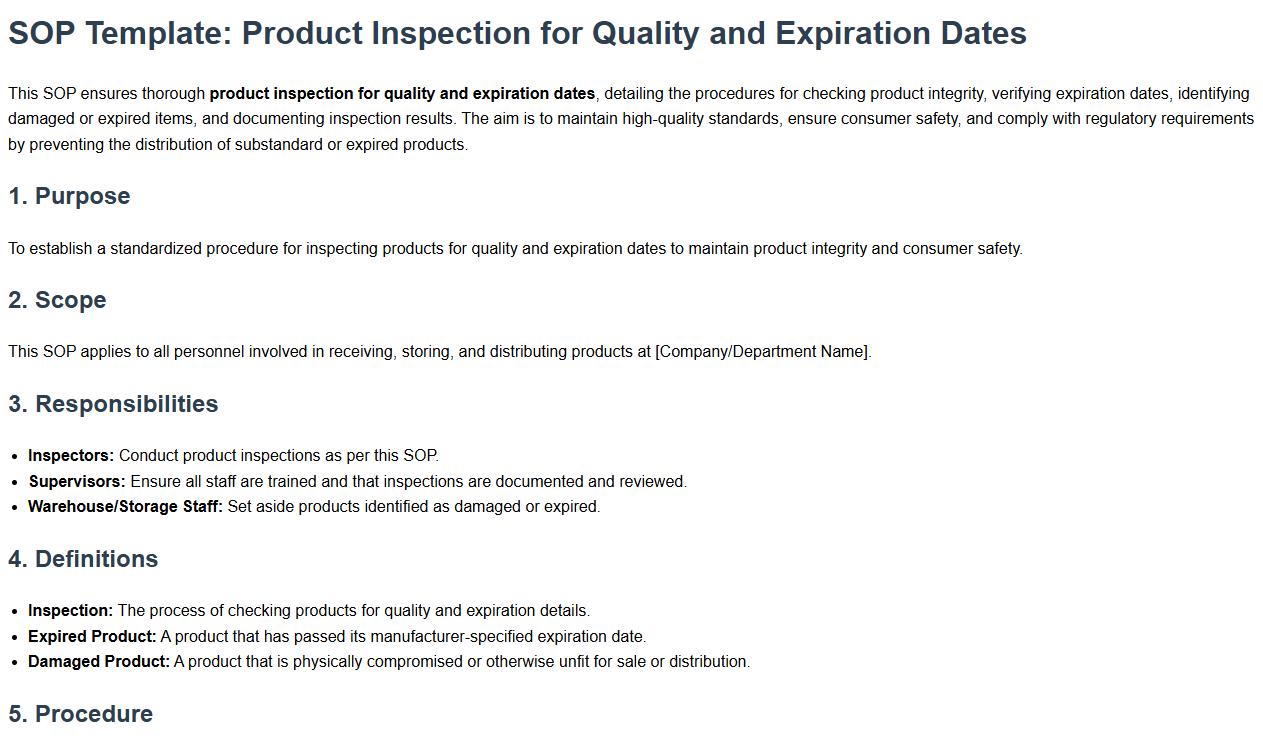
This SOP ensures thorough product inspection for quality and expiration dates, detailing the procedures for checking product integrity, verifying expiration dates, identifying damaged or expired items, and documenting inspection results. The aim is to maintain high-quality standards, ensure consumer safety, and comply with regulatory requirements by preventing the distribution of substandard or expired products.
Organizing storage and backroom inventory.
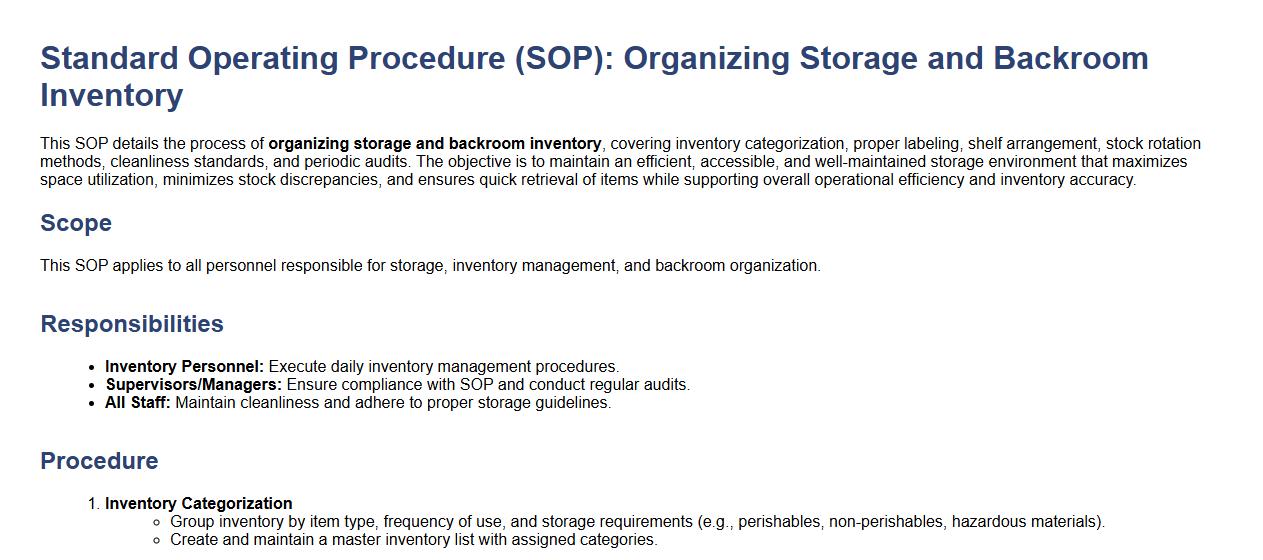
This SOP details the process of organizing storage and backroom inventory, covering inventory categorization, proper labeling, shelf arrangement, stock rotation methods, cleanliness standards, and periodic audits. The objective is to maintain an efficient, accessible, and well-maintained storage environment that maximizes space utilization, minimizes stock discrepancies, and ensures quick retrieval of items while supporting overall operational efficiency and inventory accuracy.
Shelf restocking frequency and timing guidelines.
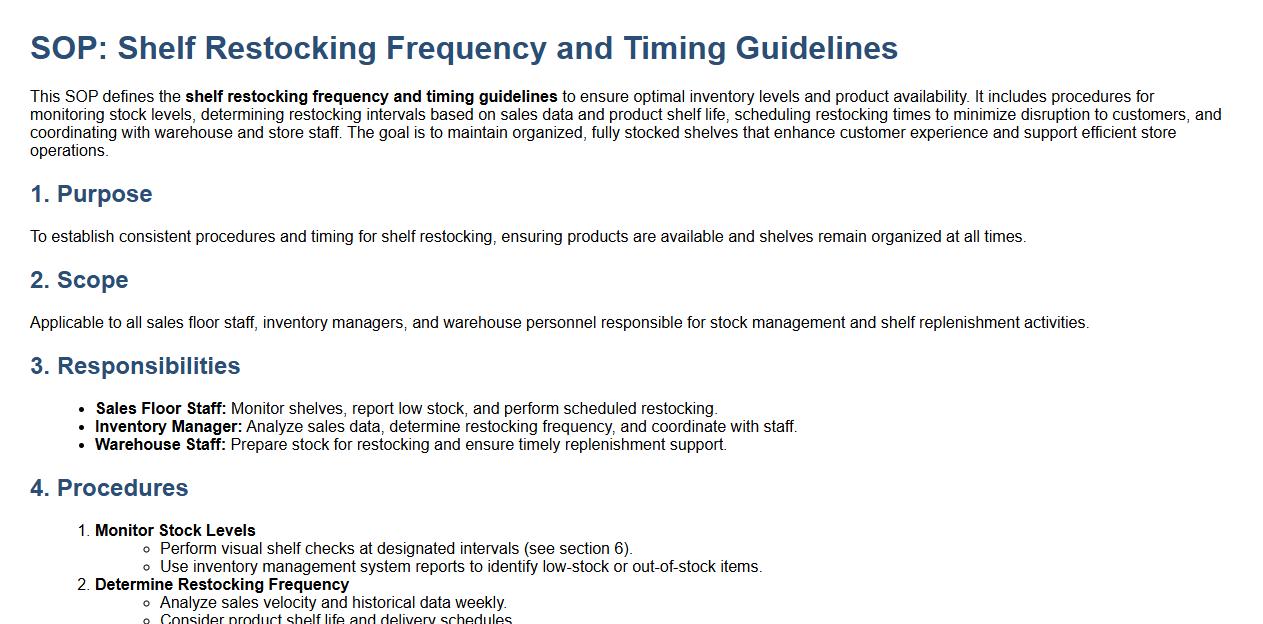
This SOP defines the shelf restocking frequency and timing guidelines to ensure optimal inventory levels and product availability. It includes procedures for monitoring stock levels, determining restocking intervals based on sales data and product shelf life, scheduling restocking times to minimize disruption to customers, and coordinating with warehouse and store staff. The goal is to maintain organized, fully stocked shelves that enhance customer experience and support efficient store operations.
Product rotation following FIFO (First-In-First-Out) principles.
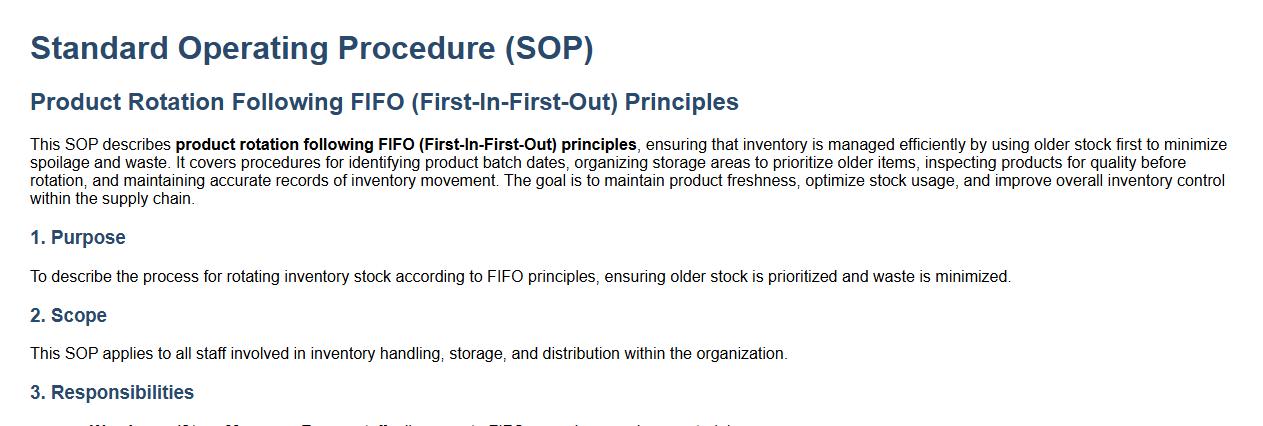
This SOP describes product rotation following FIFO (First-In-First-Out) principles, ensuring that inventory is managed efficiently by using older stock first to minimize spoilage and waste. It covers procedures for identifying product batch dates, organizing storage areas to prioritize older items, inspecting products for quality before rotation, and maintaining accurate records of inventory movement. The goal is to maintain product freshness, optimize stock usage, and improve overall inventory control within the supply chain.
Shelf arrangement and product facing standards.
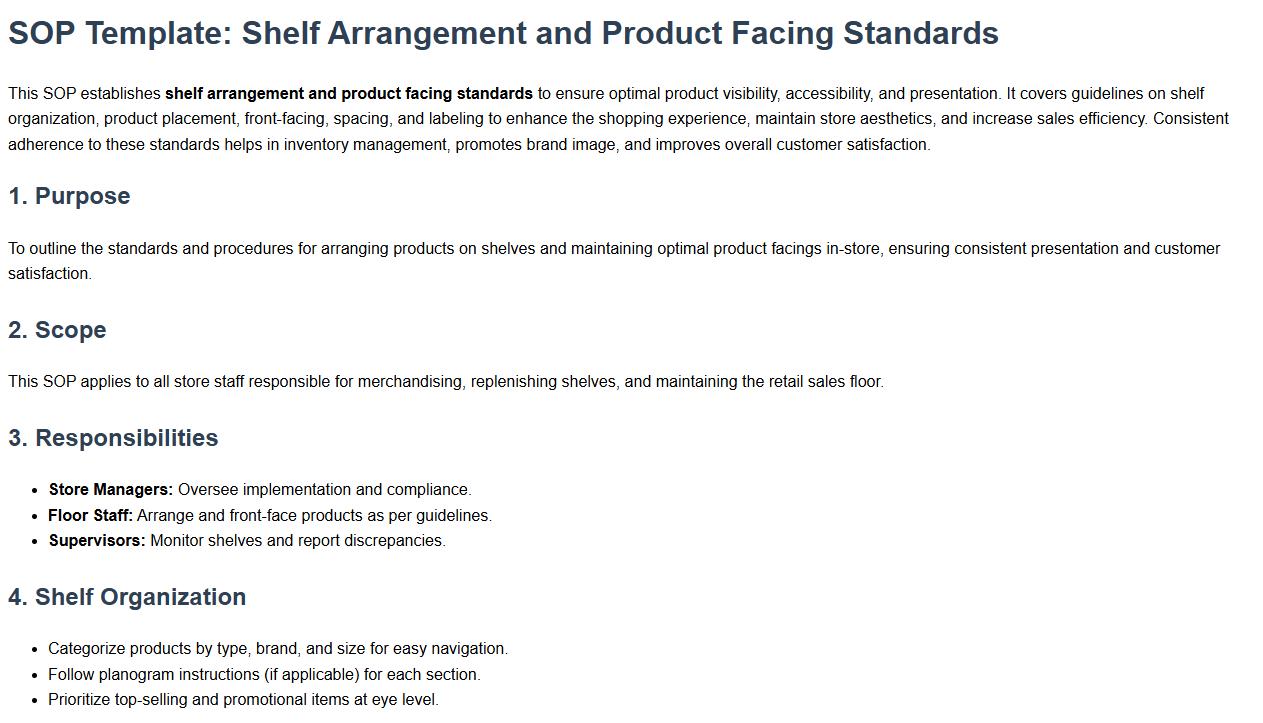
This SOP establishes shelf arrangement and product facing standards to ensure optimal product visibility, accessibility, and presentation. It covers guidelines on shelf organization, product placement, front-facing, spacing, and labeling to enhance the shopping experience, maintain store aesthetics, and increase sales efficiency. Consistent adherence to these standards helps in inventory management, promotes brand image, and improves overall customer satisfaction.
Labeling and price tag placement protocols.
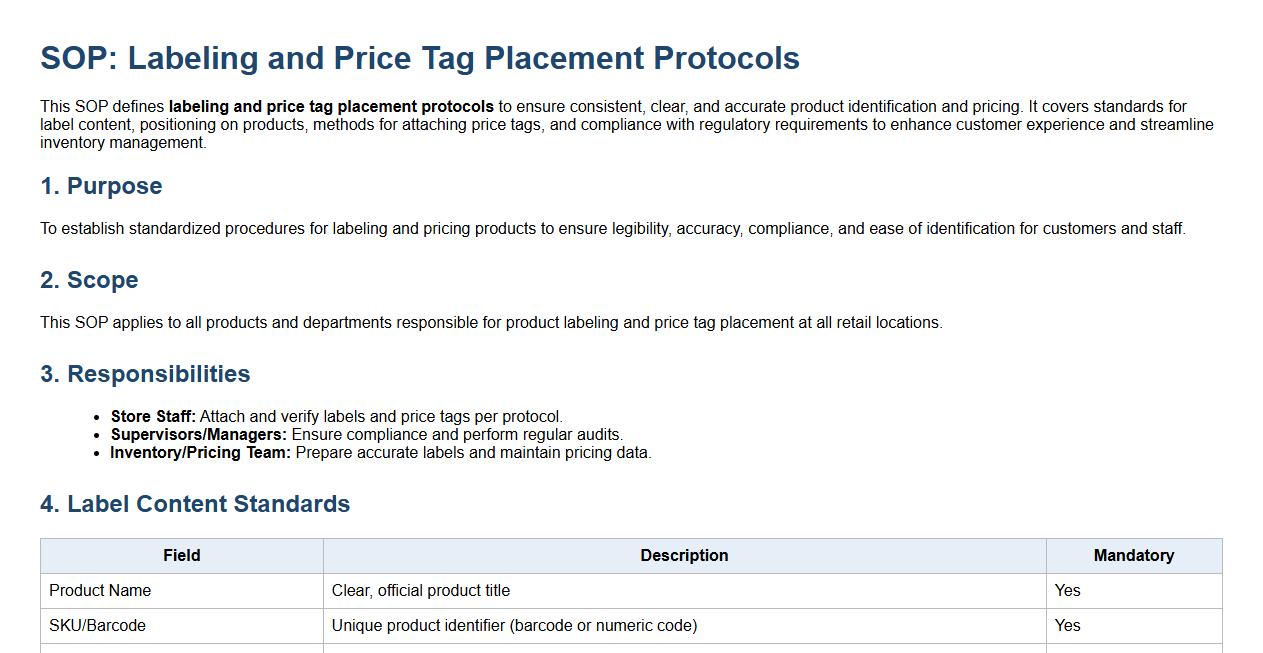
This SOP defines labeling and price tag placement protocols to ensure consistent, clear, and accurate product identification and pricing. It covers standards for label content, positioning on products, methods for attaching price tags, and compliance with regulatory requirements to enhance customer experience and streamline inventory management.
Recording and reporting of inventory discrepancies.
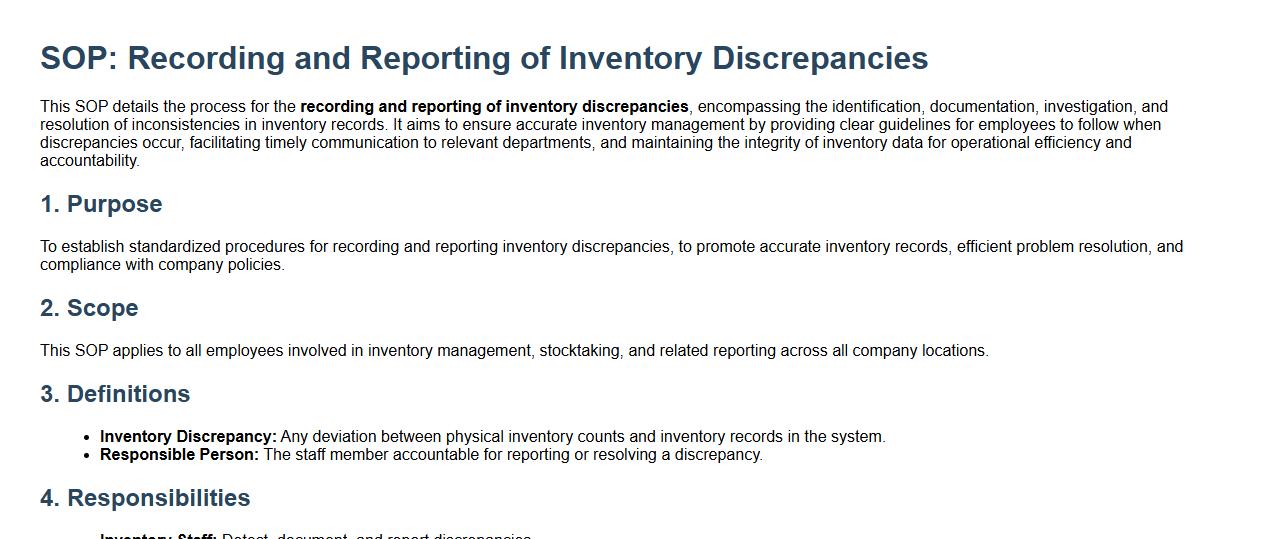
This SOP details the process for the recording and reporting of inventory discrepancies, encompassing the identification, documentation, investigation, and resolution of inconsistencies in inventory records. It aims to ensure accurate inventory management by providing clear guidelines for employees to follow when discrepancies occur, facilitating timely communication to relevant departments, and maintaining the integrity of inventory data for operational efficiency and accountability.
Cleaning and tidying of shelves during and after stocking.
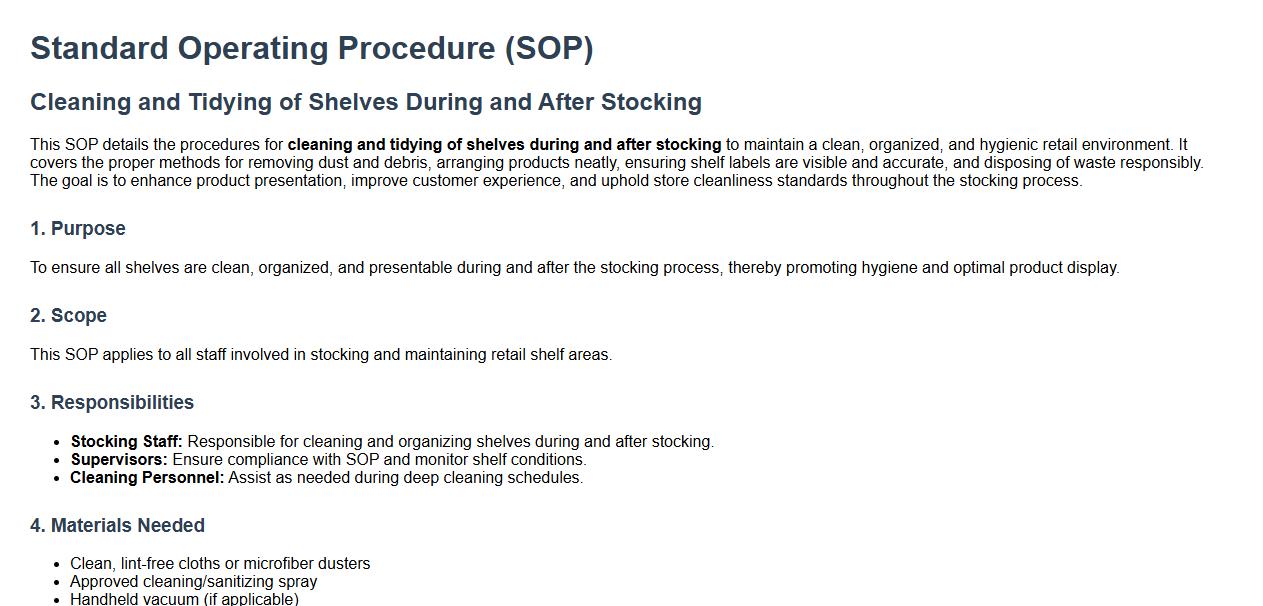
This SOP details the procedures for cleaning and tidying of shelves during and after stocking to maintain a clean, organized, and hygienic retail environment. It covers the proper methods for removing dust and debris, arranging products neatly, ensuring shelf labels are visible and accurate, and disposing of waste responsibly. The goal is to enhance product presentation, improve customer experience, and uphold store cleanliness standards throughout the stocking process.
Handling damaged or expired products procedure.
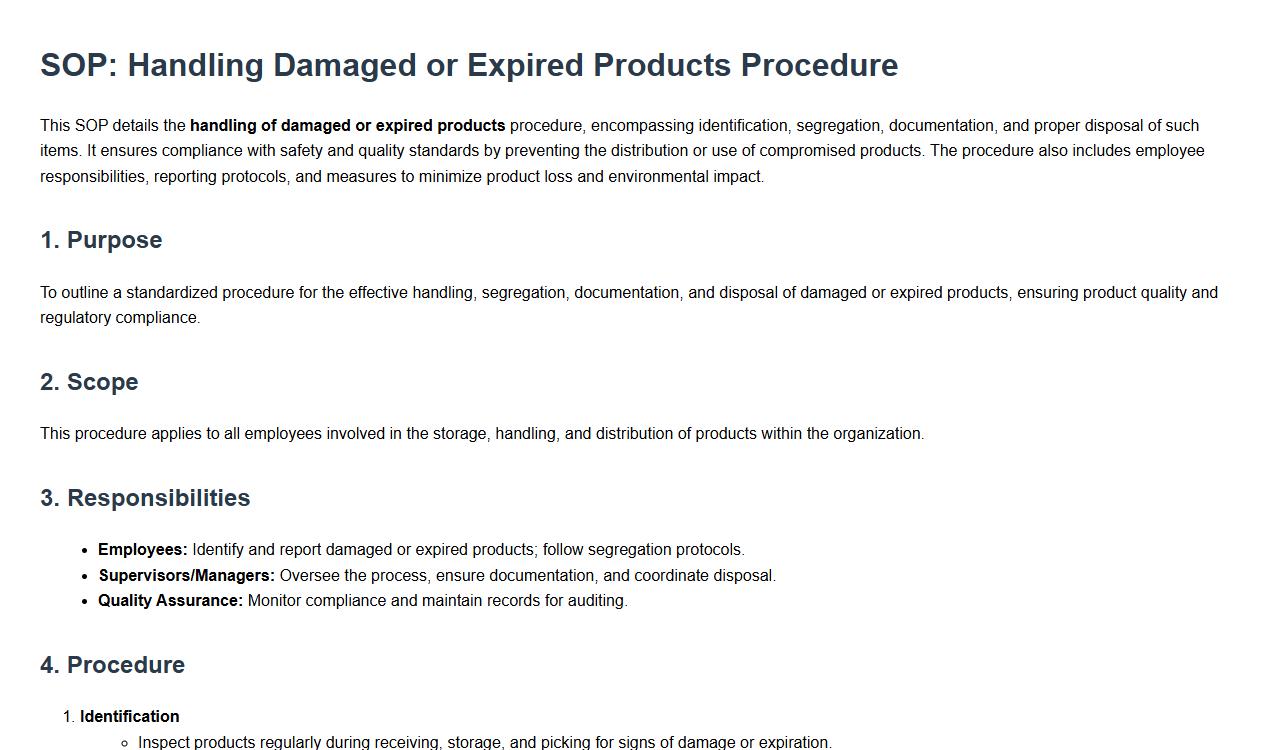
This SOP details the handling of damaged or expired products procedure, encompassing identification, segregation, documentation, and proper disposal of such items. It ensures compliance with safety and quality standards by preventing the distribution or use of compromised products. The procedure also includes employee responsibilities, reporting protocols, and measures to minimize product loss and environmental impact.
What are the essential steps outlined in the SOP for restocking shelves in the retail environment?
The SOP begins with verifying stock levels to identify items needing restocking. Staff must retrieve products from the storage area, ensuring correct quantities are gathered. Finally, shelves are replenished following a first-in, first-out system and proper product placement guidelines.
How does the SOP specify the handling and rotation of perishable versus non-perishable stock?
The SOP mandates that perishable goods be handled with extra care, including temperature monitoring and expiration date checks. These items must be rotated frequently using a first-expired, first-out method to minimize spoilage. Non-perishable stock requires less frequent rotation but should still be organized to facilitate easy access and inventory management.
What safety and cleanliness procedures are mandated by the SOP during shelf stocking?
The SOP requires staff to wear appropriate personal protective equipment while handling products. Shelving areas must be kept clean and free of debris to ensure a safe shopping environment. Regular cleaning schedules and immediate spill response protocols are emphasized to prevent accidents and contamination.
How does the SOP address the reporting and management of damaged or expired products on shelves?
The SOP instructs staff to remove damaged or expired products promptly from shelves. These items must be reported to the inventory management team for proper disposal or return procedures. Clear documentation and communication channels are established to prevent these products from reaching customers.
What are the documentation and record-keeping requirements detailed in the SOP for retail shelf stocking activities?
The SOP requires accurate recording of restocked quantities and shelf adjustments in inventory management systems. Staff must document any discrepancies or issues encountered during shelving. These records ensure traceability and assist in maintaining optimal stock levels for efficient store operations.