
A SOP Template for Retail Visual Merchandising provides a structured guideline to ensure consistent and effective product displays that enhance customer experience and drive sales. It outlines step-by-step procedures for arranging merchandise, maintaining store aesthetics, and implementing seasonal themes. This template helps retail teams maintain brand standards while optimizing visual appeal across all locations.
Window display setup procedure.
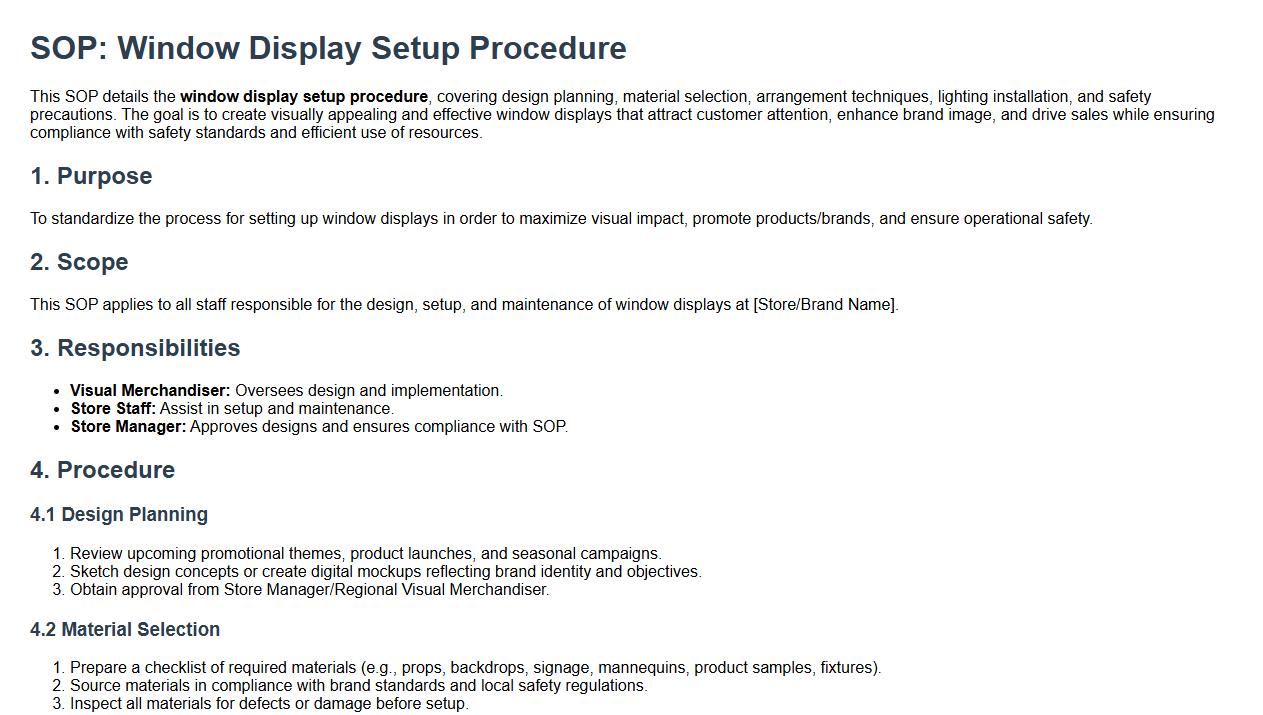
This SOP details the window display setup procedure, covering design planning, material selection, arrangement techniques, lighting installation, and safety precautions. The goal is to create visually appealing and effective window displays that attract customer attention, enhance brand image, and drive sales while ensuring compliance with safety standards and efficient use of resources.
In-store product display and rotation standards.
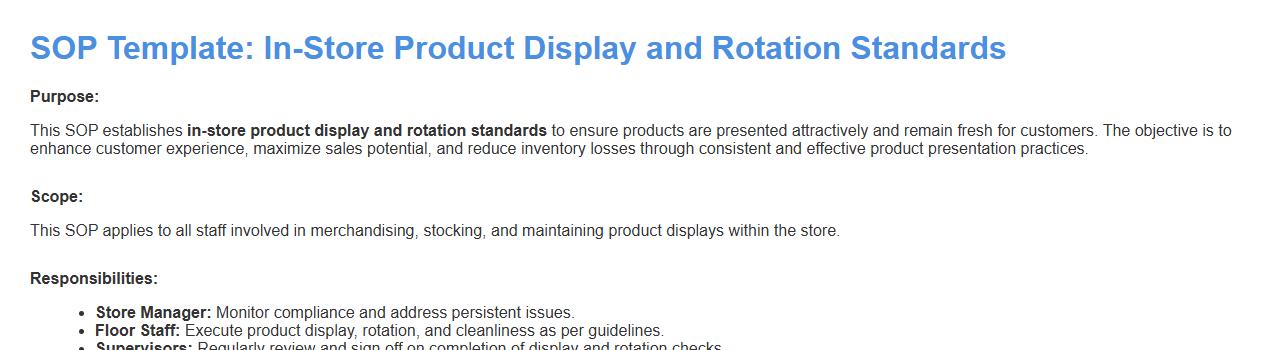
This SOP establishes in-store product display and rotation standards to ensure products are presented attractively and remain fresh for customers. It includes guidelines for organizing merchandise by category, maintaining clean and appealing displays, ensuring optimal product visibility, implementing first-in-first-out (FIFO) rotation to minimize spoilage, regularly checking expiration dates, and promptly removing damaged or expired items. The objective is to enhance customer experience, maximize sales potential, and reduce inventory losses through consistent and effective product presentation practices.
Mannequin dressing and styling guidelines.
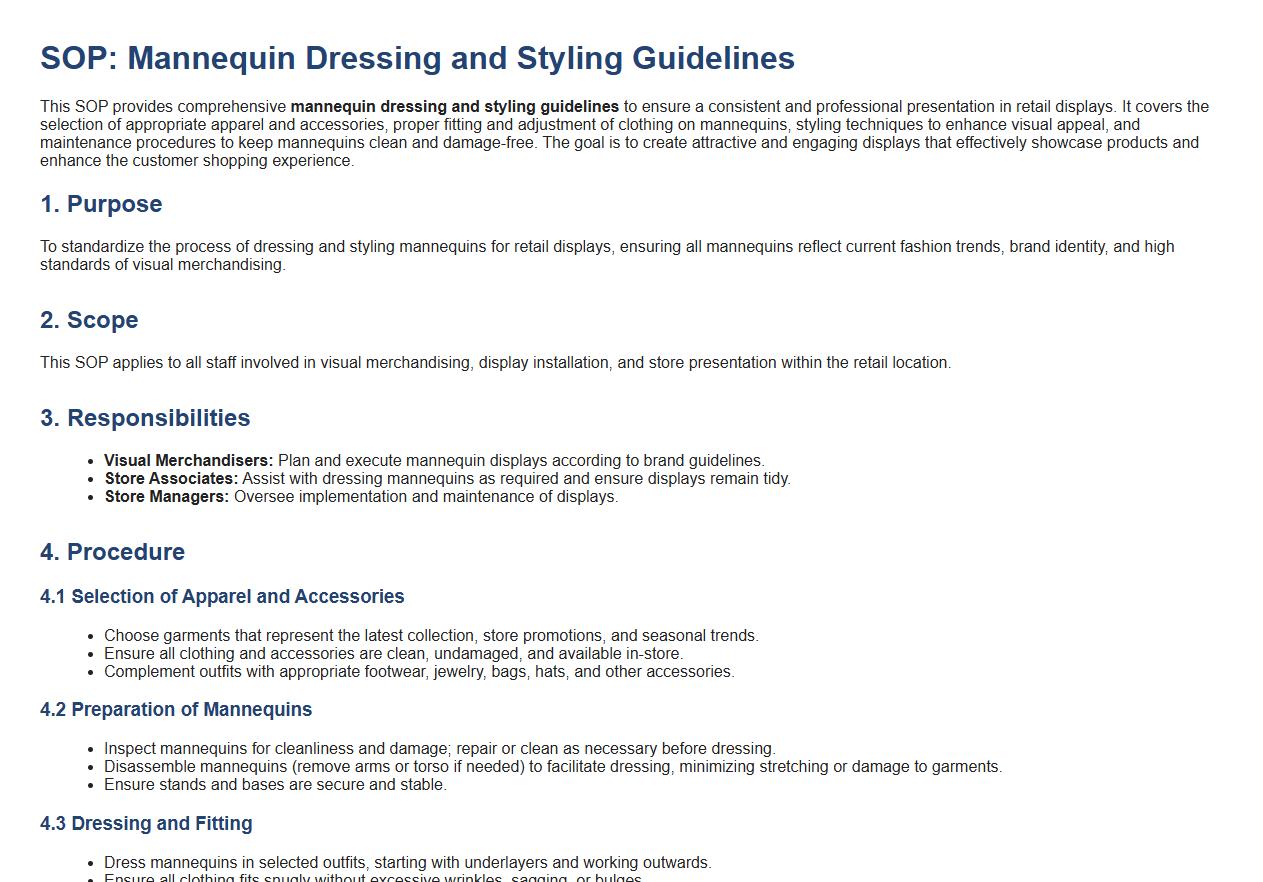
This SOP provides comprehensive mannequin dressing and styling guidelines to ensure a consistent and professional presentation in retail displays. It covers the selection of appropriate apparel and accessories, proper fitting and adjustment of clothing on mannequins, styling techniques to enhance visual appeal, and maintenance procedures to keep mannequins clean and damage-free. The goal is to create attractive and engaging displays that effectively showcase products and enhance the customer shopping experience.
Product signage and price ticket placement protocol.
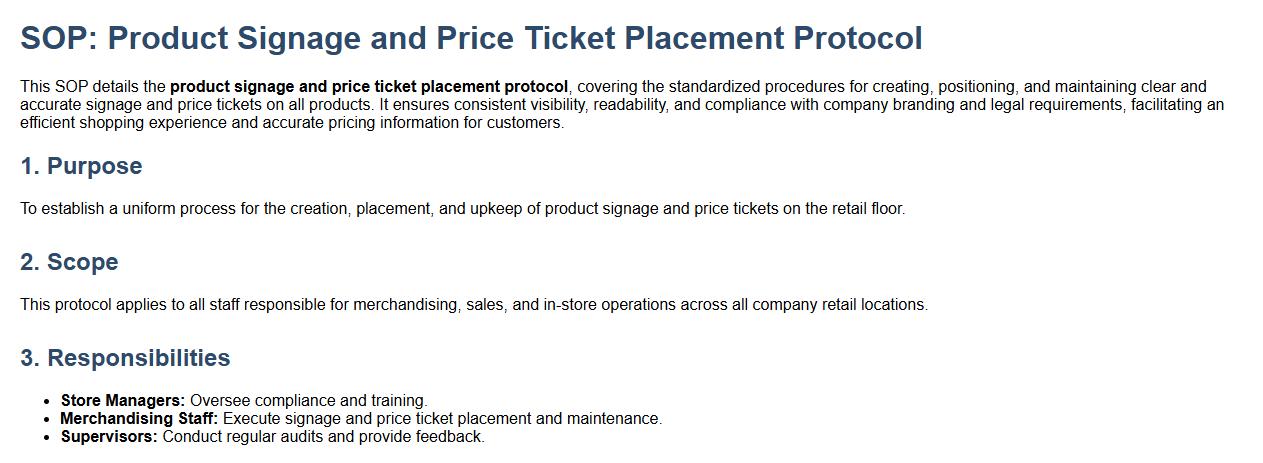
This SOP details the product signage and price ticket placement protocol, covering the standardized procedures for creating, positioning, and maintaining clear and accurate signage and price tickets on all products. It ensures consistent visibility, readability, and compliance with company branding and legal requirements, facilitating an efficient shopping experience and accurate pricing information for customers.
Planogram adherence and floor layout instructions.
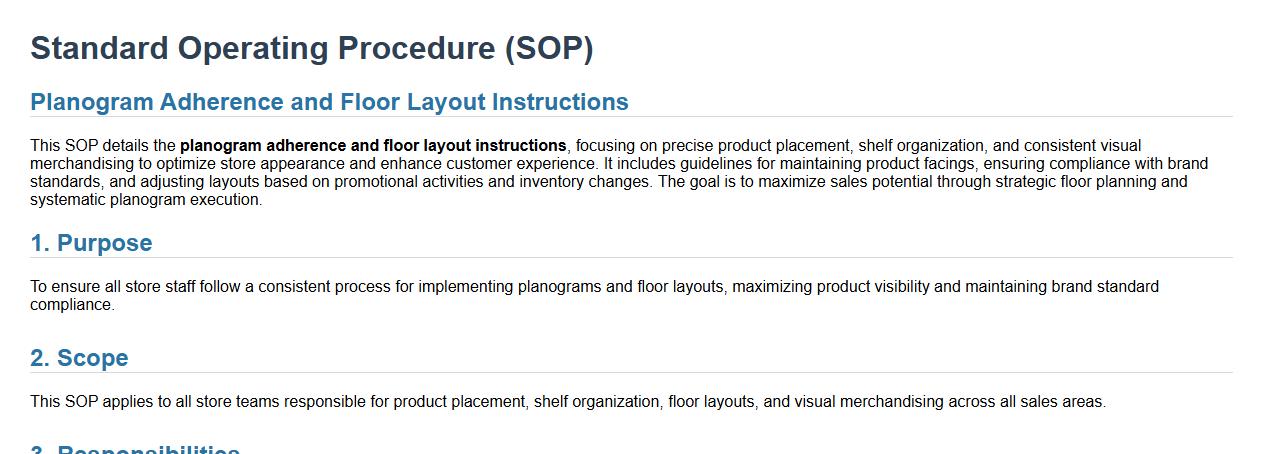
This SOP details the planogram adherence and floor layout instructions, focusing on precise product placement, shelf organization, and consistent visual merchandising to optimize store appearance and enhance customer experience. It includes guidelines for maintaining product facings, ensuring compliance with brand standards, and adjusting layouts based on promotional activities and inventory changes. The goal is to maximize sales potential through strategic floor planning and systematic planogram execution.
Daily store walk-through and visual inspection checklist.

This SOP details the process for conducting a daily store walk-through and visual inspection checklist, ensuring all areas of the store are regularly monitored for cleanliness, safety, and operational efficiency. It covers inspection of shelves, product displays, equipment functionality, hazard identification, and overall store appearance to maintain a safe and welcoming environment for customers and staff. The procedure helps in early detection of issues, promoting prompt resolution and continuous improvement in store standards.
Seasonal and promotional campaign roll-out process.
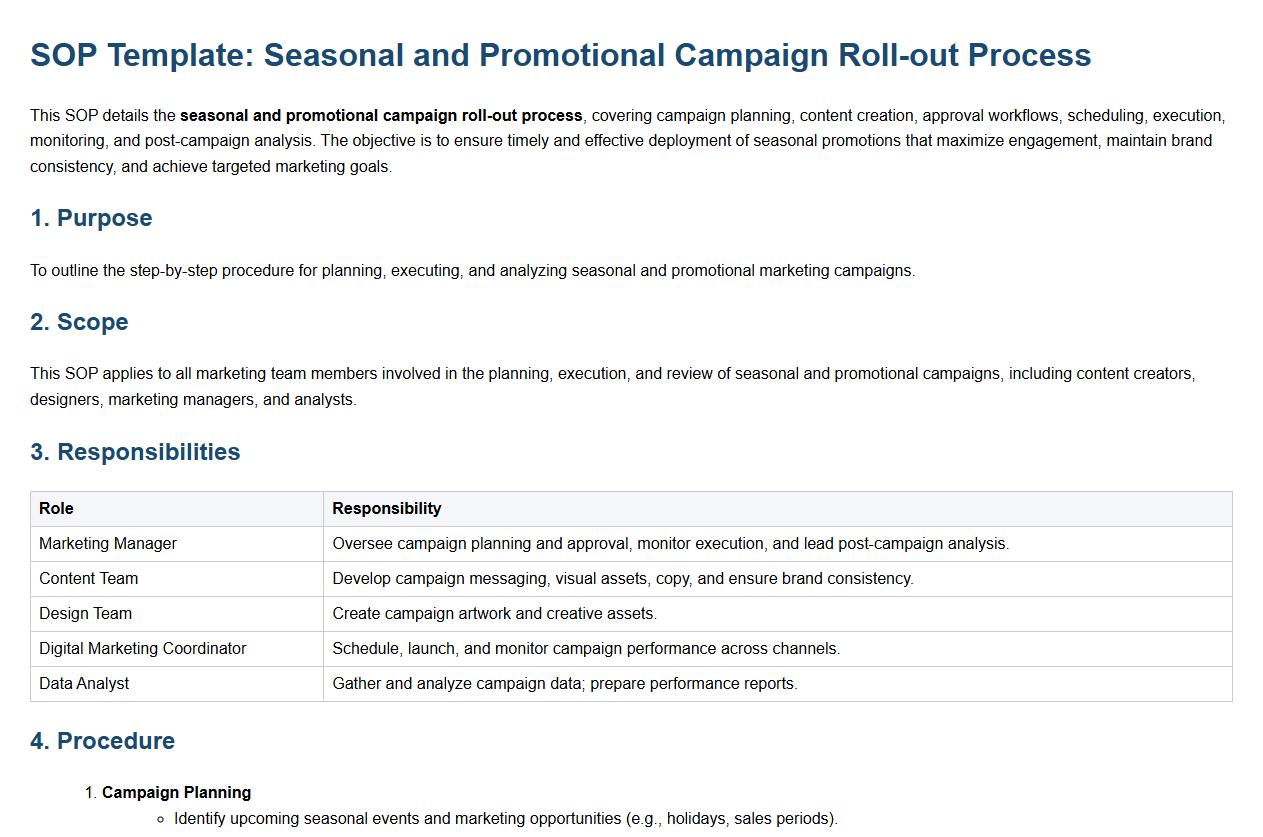
This SOP details the seasonal and promotional campaign roll-out process, covering campaign planning, content creation, approval workflows, scheduling, execution, monitoring, and post-campaign analysis. The objective is to ensure timely and effective deployment of seasonal promotions that maximize engagement, maintain brand consistency, and achieve targeted marketing goals.
Fixture and prop maintenance procedures.
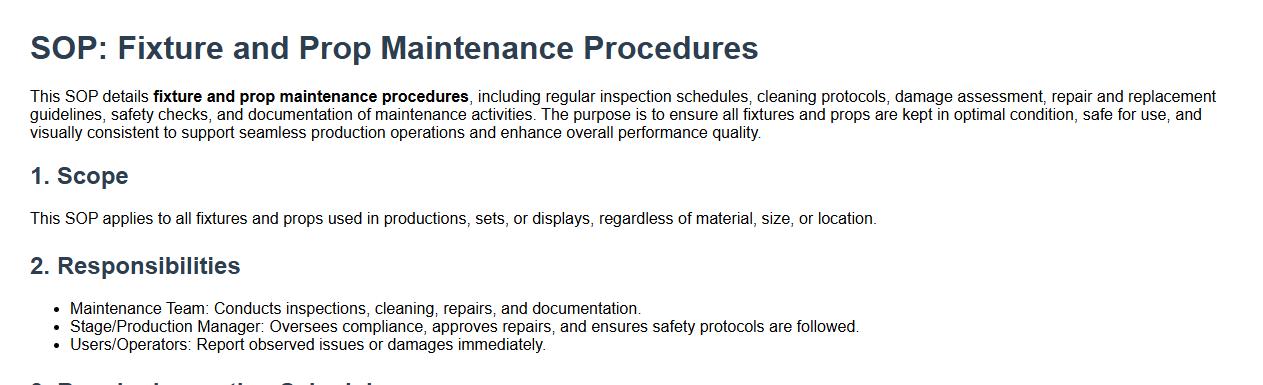
This SOP details fixture and prop maintenance procedures, including regular inspection schedules, cleaning protocols, damage assessment, repair and replacement guidelines, safety checks, and documentation of maintenance activities. The purpose is to ensure all fixtures and props are kept in optimal condition, safe for use, and visually consistent to support seamless production operations and enhance overall performance quality.
Merchandise replenishment and stock rotation standards.
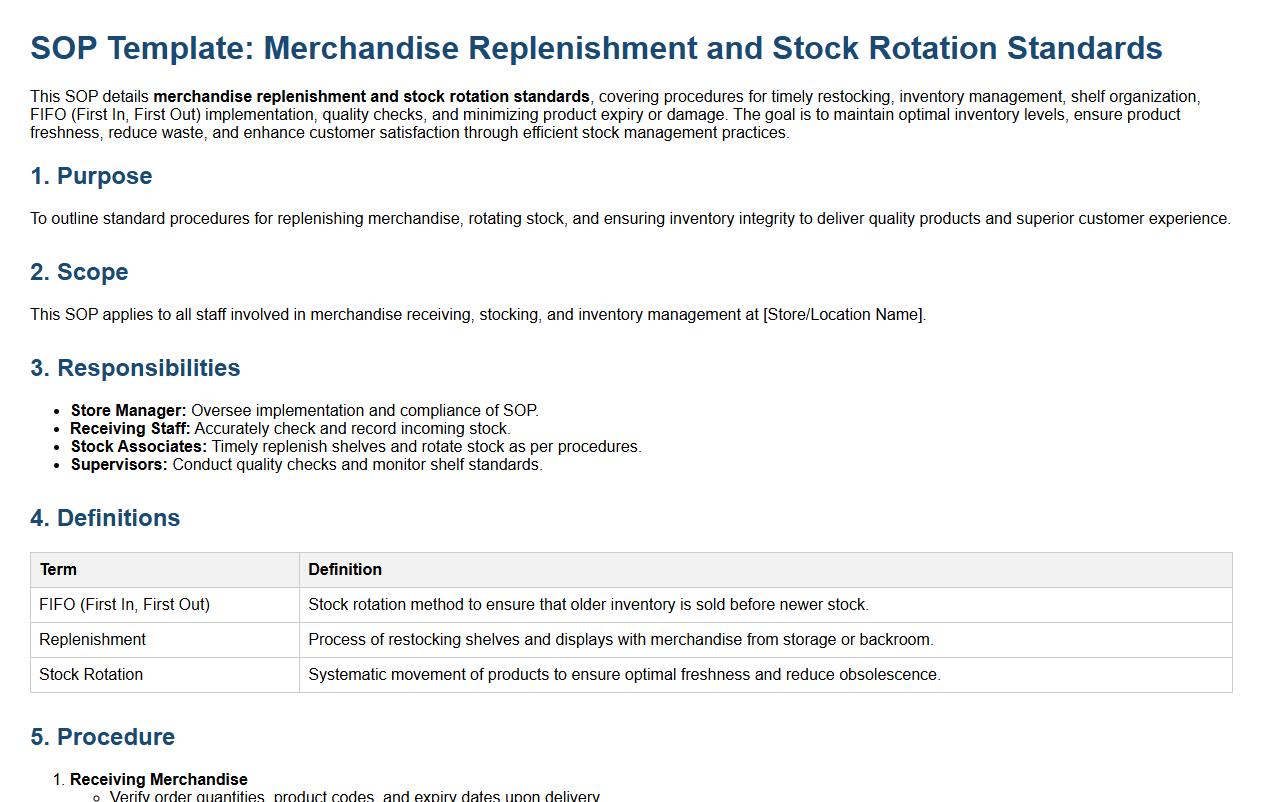
This SOP details merchandise replenishment and stock rotation standards, covering procedures for timely restocking, inventory management, shelf organization, FIFO (First In, First Out) implementation, quality checks, and minimizing product expiry or damage. The goal is to maintain optimal inventory levels, ensure product freshness, reduce waste, and enhance customer satisfaction through efficient stock management practices.
End-of-day visual reset and store recovery steps.
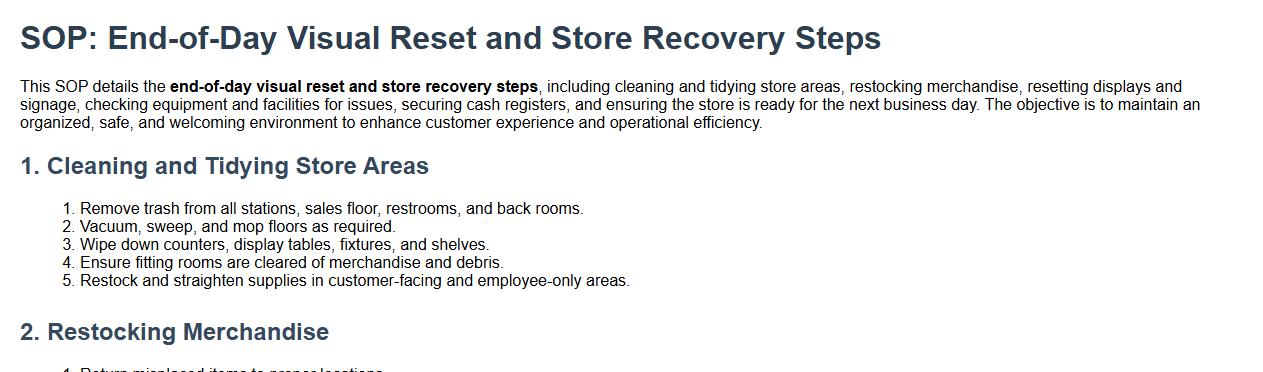
This SOP details the end-of-day visual reset and store recovery steps, including cleaning and tidying store areas, restocking merchandise, resetting displays and signage, checking equipment and facilities for issues, securing cash registers, and ensuring the store is ready for the next business day. The objective is to maintain an organized, safe, and welcoming environment to enhance customer experience and operational efficiency.
What are the key objectives outlined in the SOP for Retail Visual Merchandising?
The SOP for Retail Visual Merchandising primarily aims to enhance customer engagement through appealing store visuals. It focuses on maximizing product visibility and creating a cohesive brand identity. Ensuring a consistent shopping experience across all outlets is also a fundamental objective.
Which standard procedures must be followed for store layout and display setup according to the SOP?
The SOP mandates specific guidelines for store layout optimization to improve traffic flow and product accessibility. Display setups must adhere to brand standards, emphasizing neatness and attractiveness. It requires regular updates and maintenance of displays to align with current marketing campaigns.
How does the SOP define the process for seasonal or promotional visual changes?
The SOP specifies a structured timeline for implementing seasonal and promotional displays, ensuring timely transitions. It includes detailed instructions for display adjustments that reflect seasonal themes or promotional messages. Coordination with marketing teams is essential to maintain consistency and impact.
What quality control measures are specified in the SOP to ensure visual merchandising consistency?
Quality control measures include regular audits and inspections to verify compliance with the visual merchandising standards. The SOP outlines specific criteria for evaluating display quality, arrangement accuracy, and overall store aesthetics. Feedback loops and corrective actions are integral to maintaining high standards.
Who is responsible for monitoring and maintaining compliance with the Retail Visual Merchandising SOP?
Store managers hold primary responsibility for ensuring SOP compliance within their locations. Visual merchandisers and regional supervisors also play key roles in monitoring and supporting adherence. The SOP encourages collaborative efforts across teams to sustain consistent visual merchandising practices.