

A SOP Template for Retail Returns and Exchanges provides a clear, step-by-step process for handling customer returns and product exchanges efficiently. This template ensures consistency in service, minimizes errors, and maintains customer satisfaction by outlining specific guidelines and responsibilities. Retail staff can follow the standardized procedures to streamline operations and reduce disputes.
Return and Exchange Eligibility Criteria.
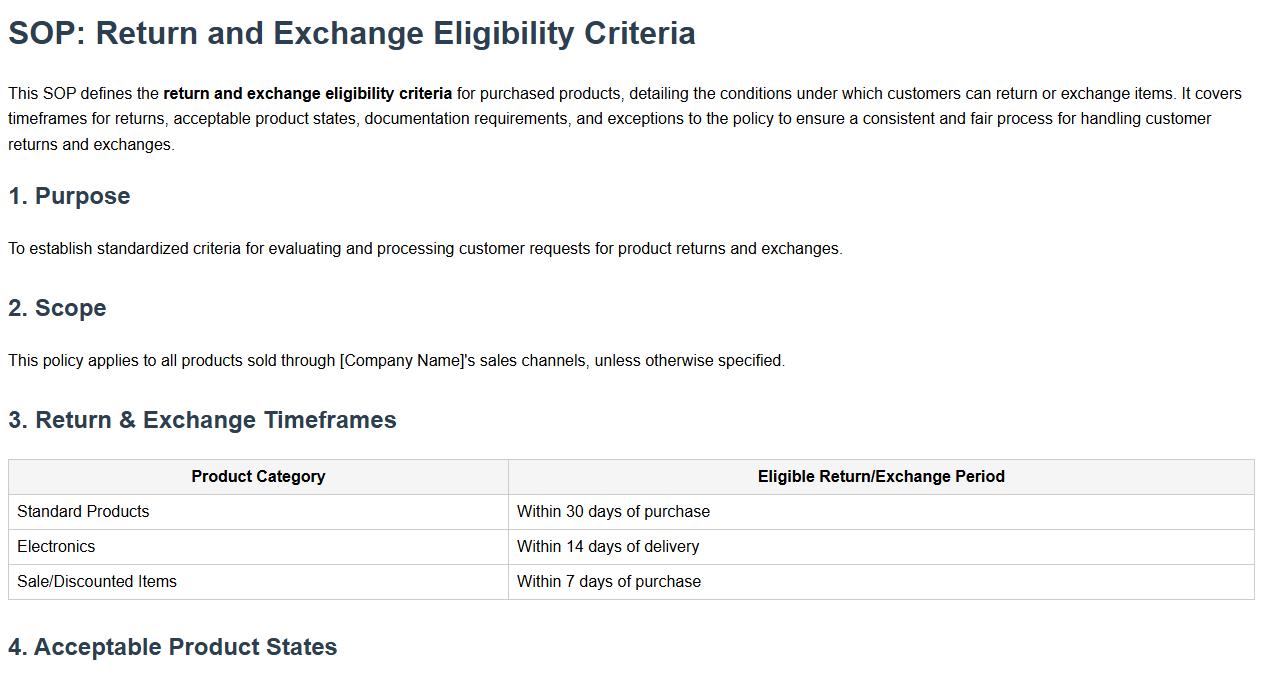
This SOP defines the return and exchange eligibility criteria for purchased products, detailing the conditions under which customers can return or exchange items. It covers timeframes for returns, acceptable product states, documentation requirements, and exceptions to the policy to ensure a consistent and fair process for handling customer returns and exchanges.
Customer Return and Exchange Request Process.
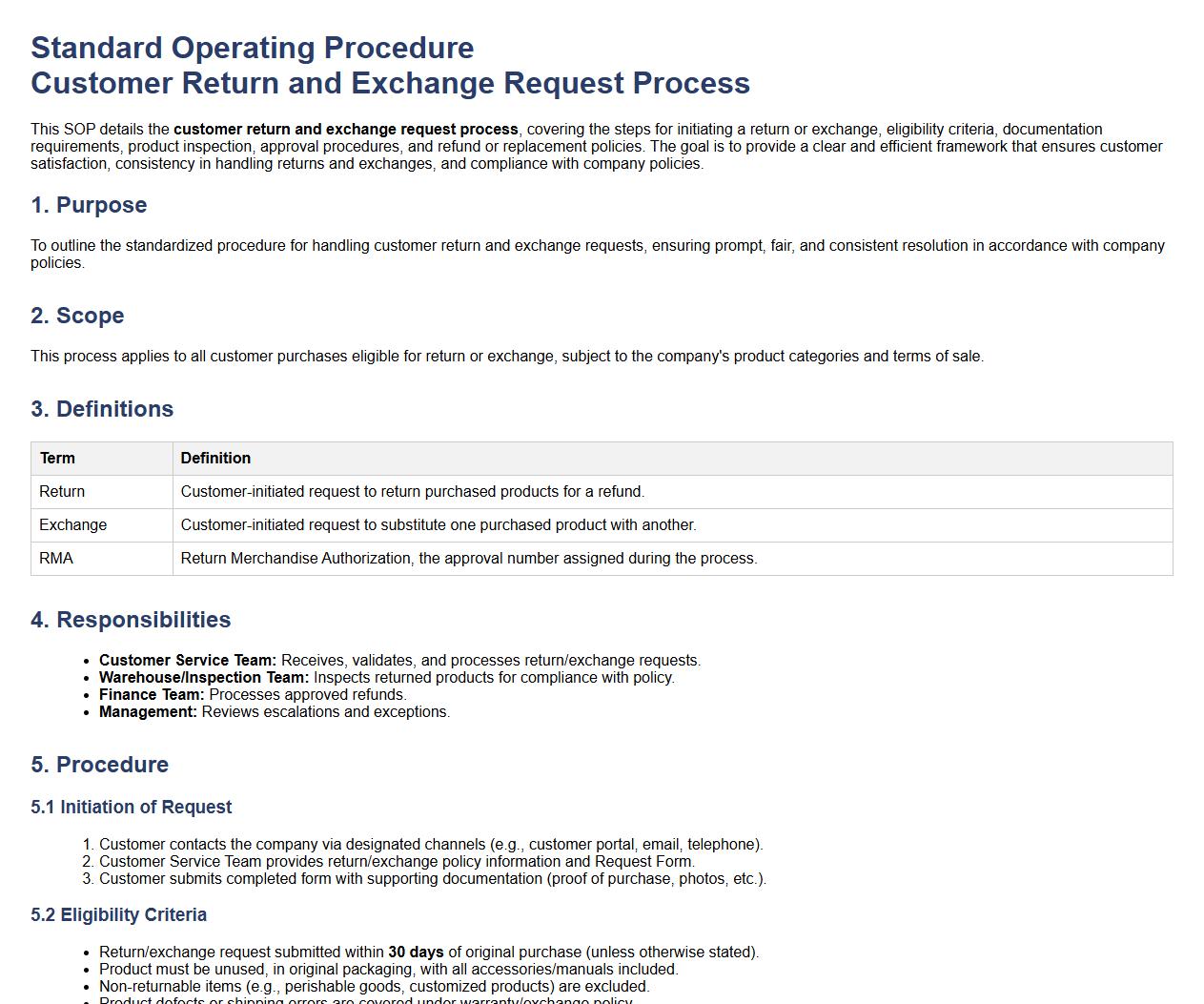
This SOP details the customer return and exchange request process, covering the steps for initiating a return or exchange, eligibility criteria, documentation requirements, product inspection, approval procedures, and refund or replacement policies. The goal is to provide a clear and efficient framework that ensures customer satisfaction, consistency in handling returns and exchanges, and compliance with company policies.
Item Inspection and Condition Assessment Guidelines.
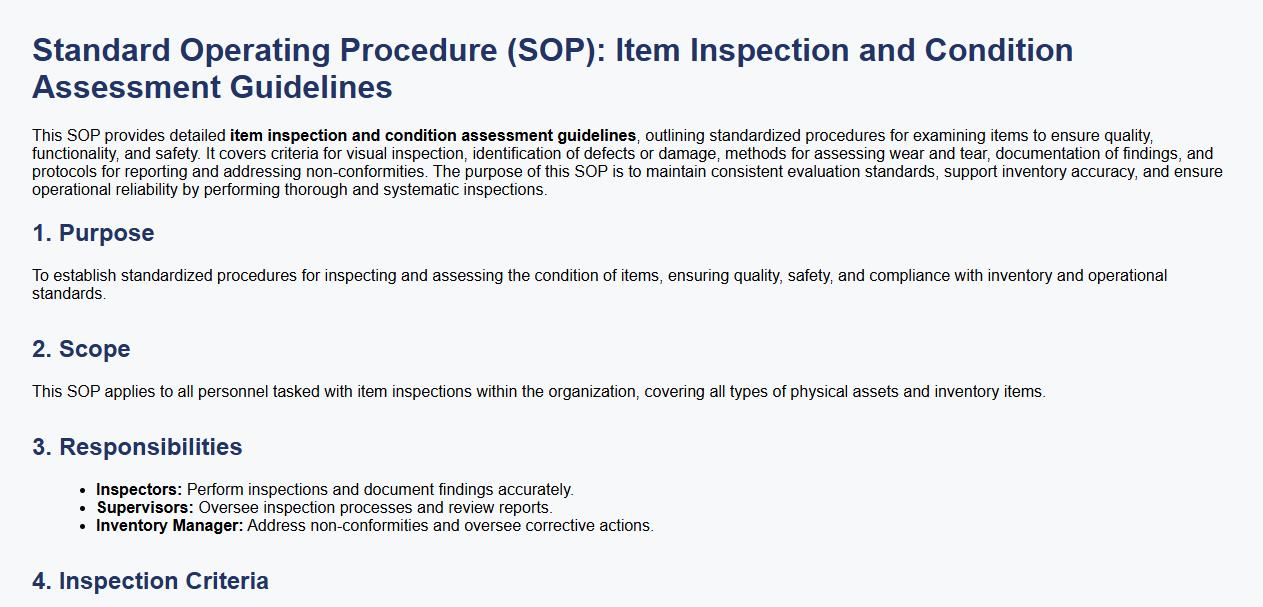
This SOP provides detailed item inspection and condition assessment guidelines, outlining standardized procedures for examining items to ensure quality, functionality, and safety. It covers criteria for visual inspection, identification of defects or damage, methods for assessing wear and tear, documentation of findings, and protocols for reporting and addressing non-conformities. The purpose of this SOP is to maintain consistent evaluation standards, support inventory accuracy, and ensure operational reliability by performing thorough and systematic inspections.
Approval and Authorization Procedures for Returns/Exchanges.
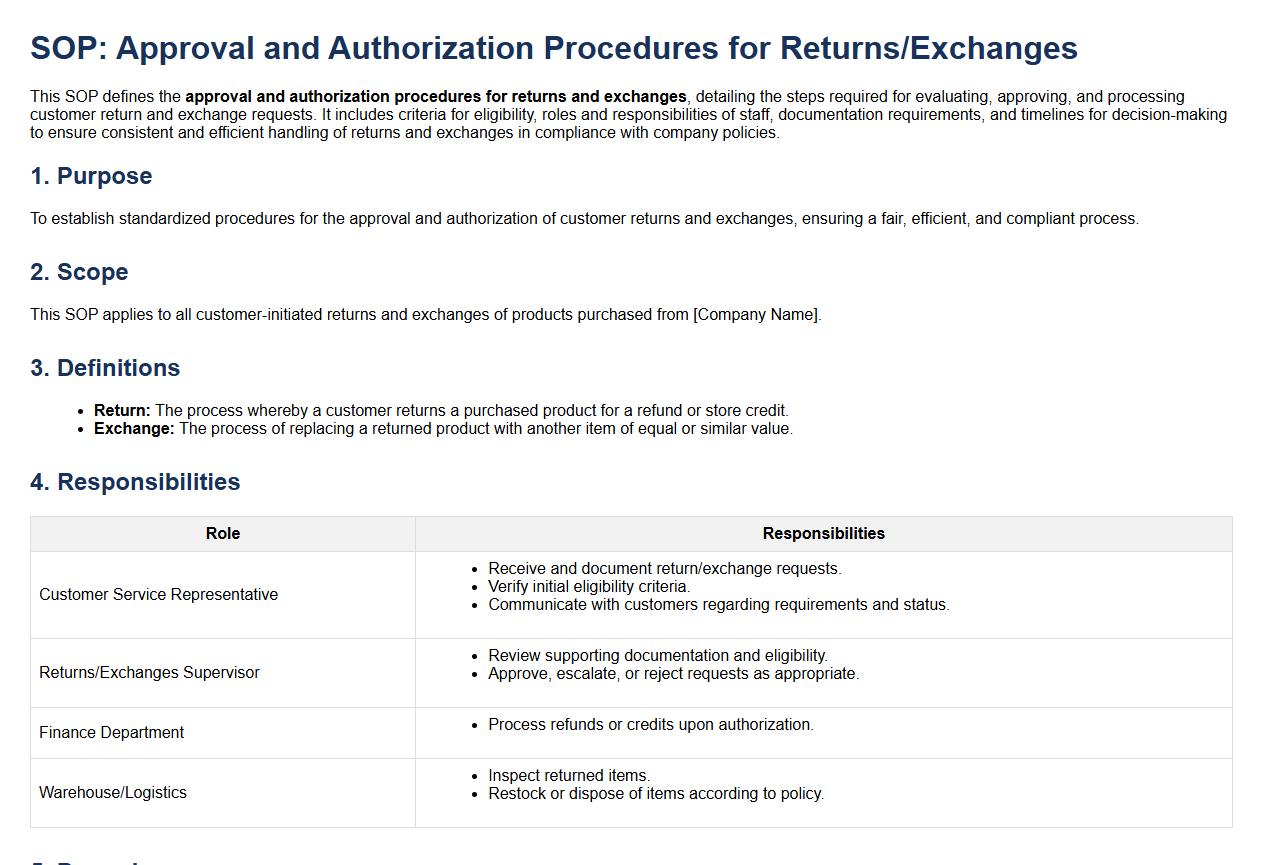
This SOP defines the approval and authorization procedures for returns and exchanges, detailing the steps required for evaluating, approving, and processing customer return and exchange requests. It includes criteria for eligibility, roles and responsibilities of staff, documentation requirements, and timelines for decision-making to ensure consistent and efficient handling of returns and exchanges in compliance with company policies.
Refund, Exchange, or Store Credit Issuance Protocols.
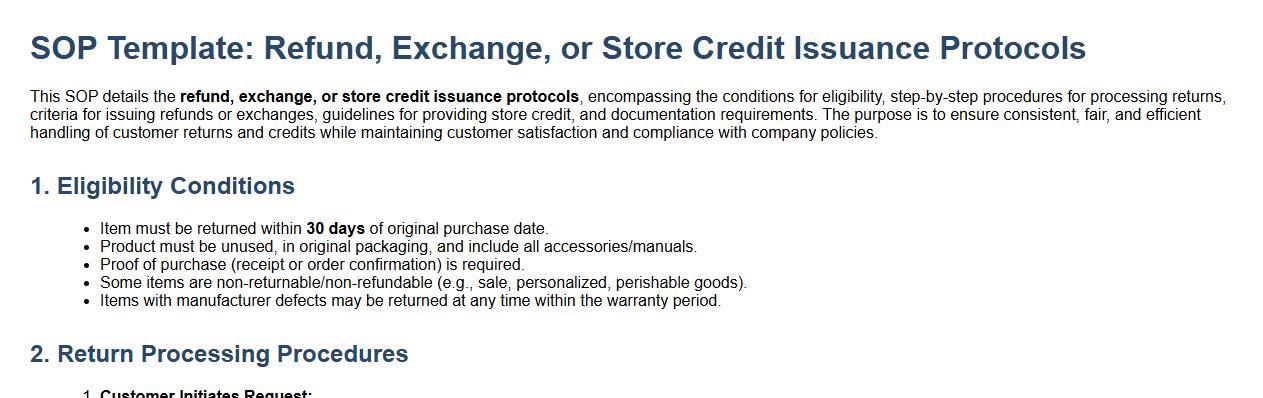
This SOP details the refund, exchange, or store credit issuance protocols, encompassing the conditions for eligibility, step-by-step procedures for processing returns, criteria for issuing refunds or exchanges, guidelines for providing store credit, and documentation requirements. The purpose is to ensure consistent, fair, and efficient handling of customer returns and credits while maintaining customer satisfaction and compliance with company policies.
Documentation and System Update Requirements.
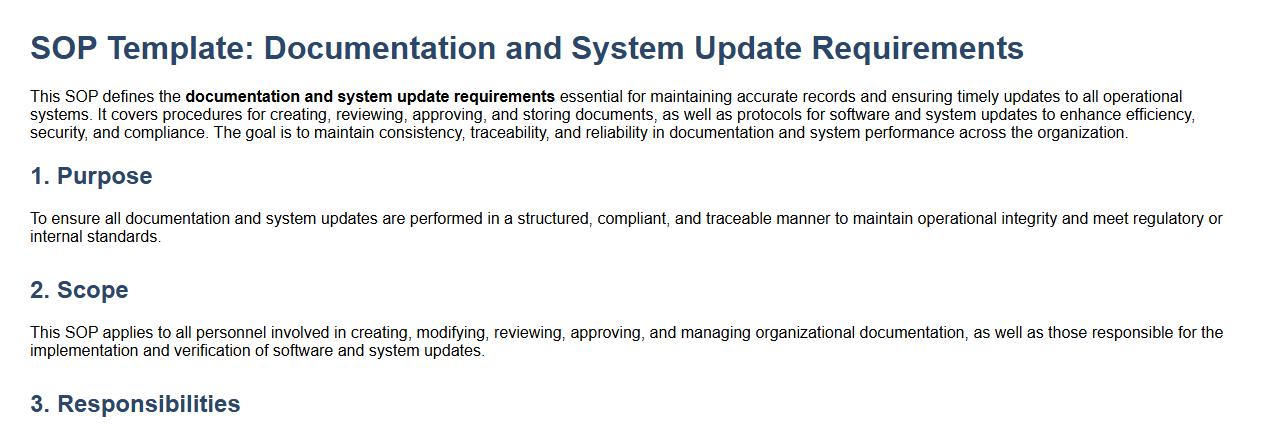
This SOP defines the documentation and system update requirements essential for maintaining accurate records and ensuring timely updates to all operational systems. It covers procedures for creating, reviewing, approving, and storing documents, as well as protocols for software and system updates to enhance efficiency, security, and compliance. The goal is to maintain consistency, traceability, and reliability in documentation and system performance across the organization.
Handling Defective, Damaged, or Incorrect Items.
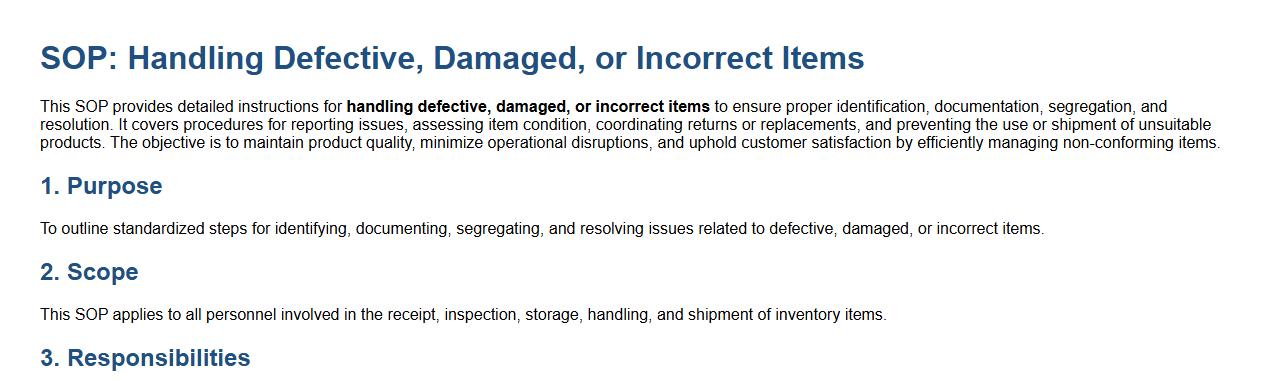
This SOP provides detailed instructions for handling defective, damaged, or incorrect items to ensure proper identification, documentation, segregation, and resolution. It covers procedures for reporting issues, assessing item condition, coordinating returns or replacements, and preventing the use or shipment of unsuitable products. The objective is to maintain product quality, minimize operational disruptions, and uphold customer satisfaction by efficiently managing non-conforming items.
Communication Standards with Customers Regarding Returns.
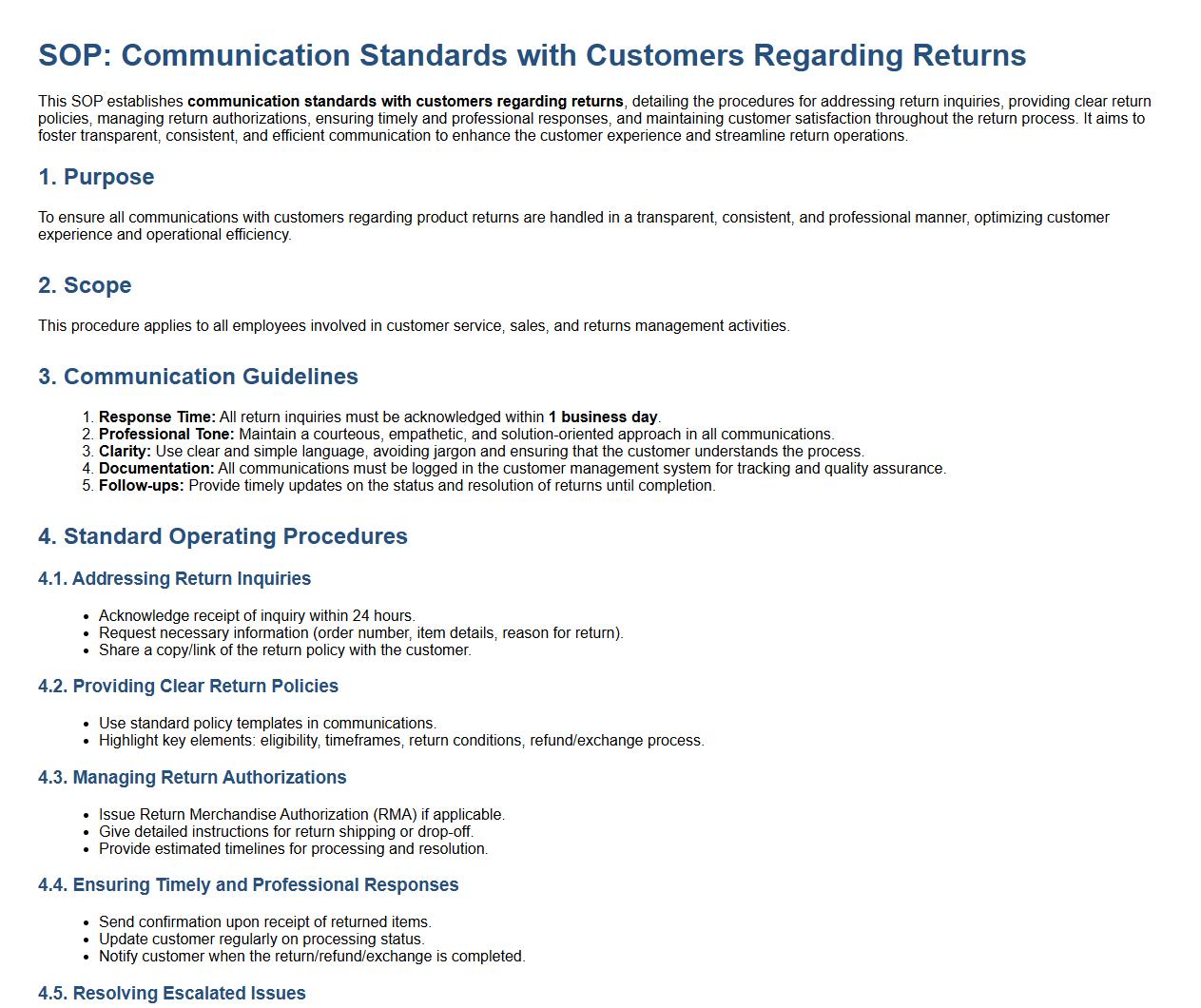
This SOP establishes communication standards with customers regarding returns, detailing the procedures for addressing return inquiries, providing clear return policies, managing return authorizations, ensuring timely and professional responses, and maintaining customer satisfaction throughout the return process. It aims to foster transparent, consistent, and efficient communication to enhance the customer experience and streamline return operations.
Packaging and Restocking Procedures for Returned Goods.
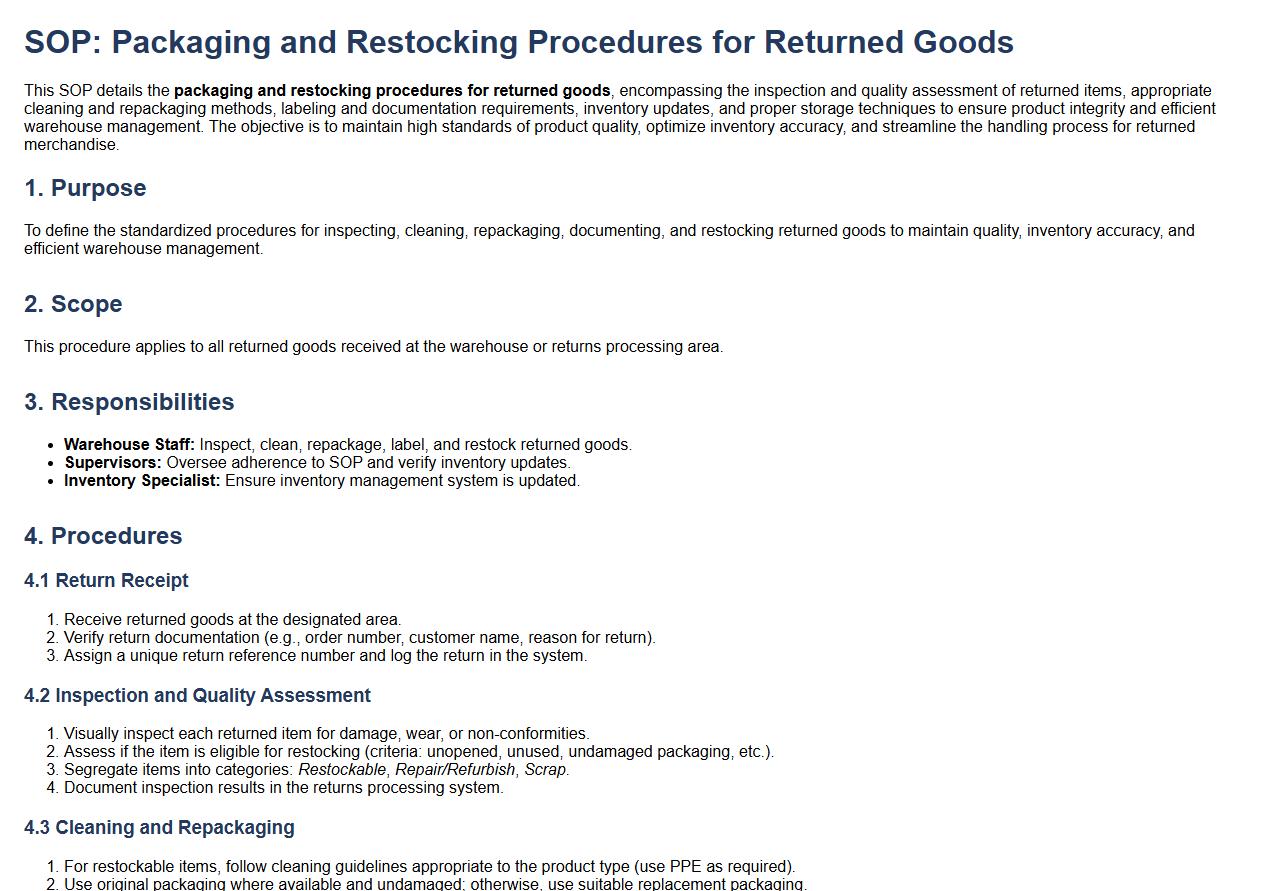
This SOP details the packaging and restocking procedures for returned goods, encompassing the inspection and quality assessment of returned items, appropriate cleaning and repackaging methods, labeling and documentation requirements, inventory updates, and proper storage techniques to ensure product integrity and efficient warehouse management. The objective is to maintain high standards of product quality, optimize inventory accuracy, and streamline the handling process for returned merchandise.
Reporting, Review, and Continuous Improvement of Return Processes.
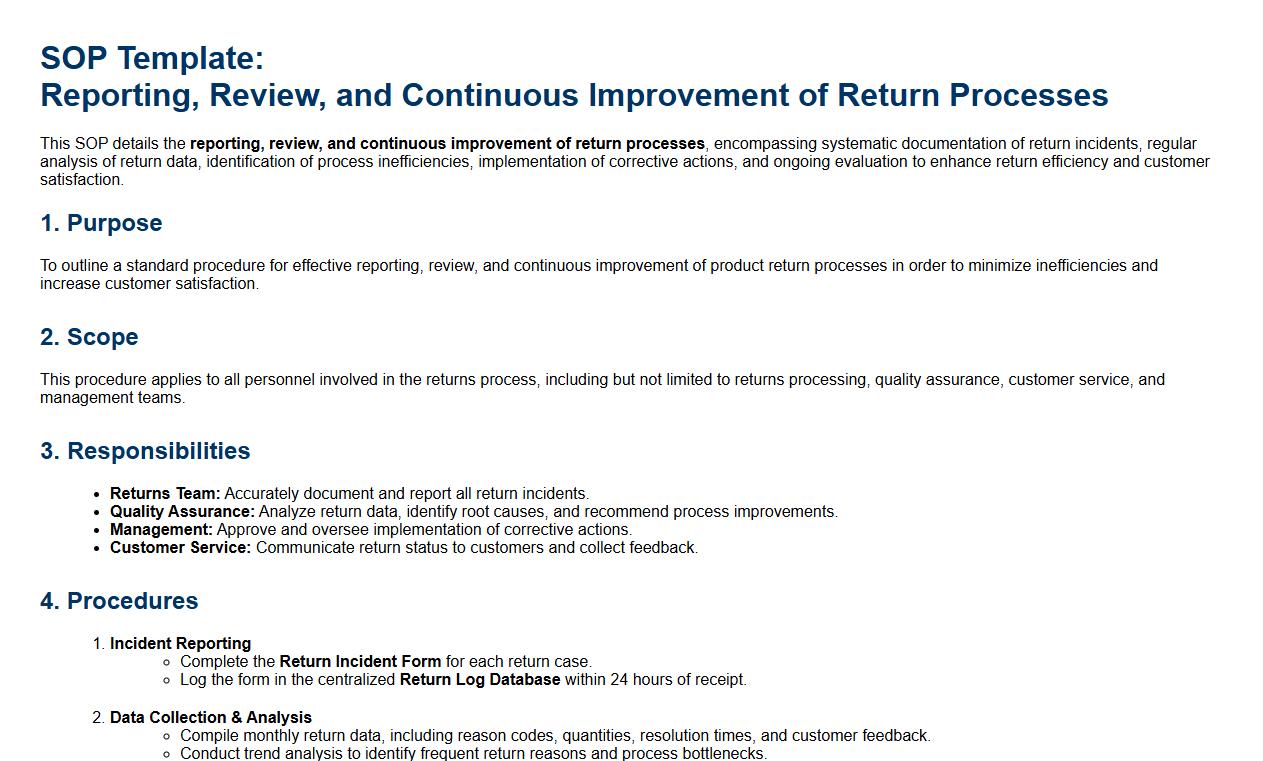
This SOP details the reporting, review, and continuous improvement of return processes, encompassing systematic documentation of return incidents, regular analysis of return data, identification of process inefficiencies, implementation of corrective actions, and ongoing evaluation to enhance return efficiency and customer satisfaction.
What is the primary purpose of the Retail Returns and Exchanges SOP?
The primary purpose of the Retail Returns and Exchanges SOP is to establish a clear and consistent process for handling product returns and exchanges. This SOP ensures customer satisfaction by providing guidelines for efficient and transparent transactions. It also helps minimize errors and maintain accurate inventory records.
Which types of products are eligible for returns or exchanges under this SOP?
Under this SOP, products that are unused, in original packaging, and within the specified return period are eligible for returns or exchanges. Defective items and products damaged during shipping are also covered. However, final sale or customized items are generally excluded from the return policy.
What documentation is required from customers to process a return or exchange?
Customers must provide a valid receipt or proof of purchase to initiate a return or exchange. Additionally, the returned product should be accompanied by any original packaging and tags. In some cases, customers may need to complete a return form for record-keeping purposes.
Who is responsible for authorizing and completing the returns/exchanges in the retail store?
The responsibility for authorizing and completing returns or exchanges lies with the store manager or designated retail staff. They review the return request to ensure compliance with the SOP. After verification, they process the transaction using the store's point-of-sale system.
What are the specific steps outlined for handling defective versus non-defective returns?
For defective returns, the SOP requires prompt inspection and verification of the defect, followed by offering a replacement or refund. Non-defective returns must be checked for condition and packaging before processing the refund or exchange. Both types of returns require updating inventory records to maintain accuracy.