

A SOP Template for Retail Store Opening and Closing provides a clear and consistent framework to ensure all daily operations are performed efficiently and securely. This template outlines step-by-step procedures for tasks such as cash register setup, inventory checks, and security protocols. Following this standardized process helps maintain store readiness and enhances overall operational consistency.
Store Opening Procedures Checklist.
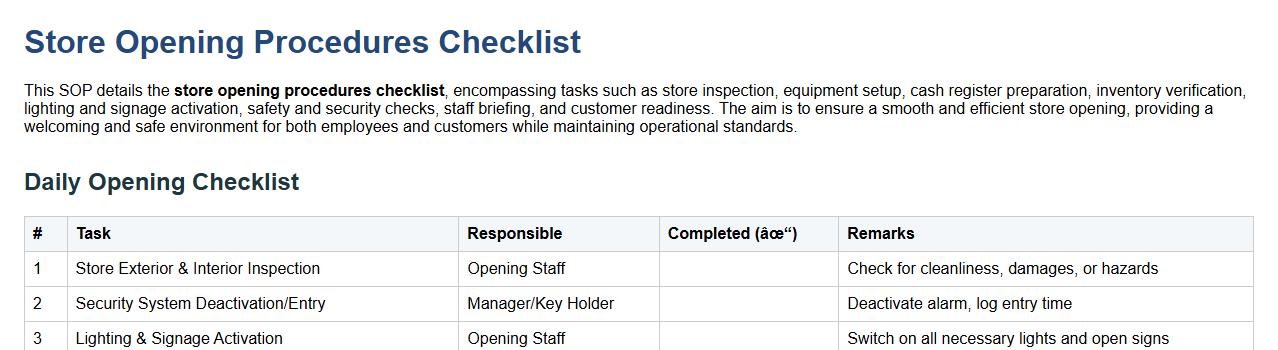
This SOP details the store opening procedures checklist, encompassing tasks such as store inspection, equipment setup, cash register preparation, inventory verification, lighting and signage activation, safety and security checks, staff briefing, and customer readiness. The aim is to ensure a smooth and efficient store opening, providing a welcoming and safe environment for both employees and customers while maintaining operational standards.
Security and Alarm System Protocols.
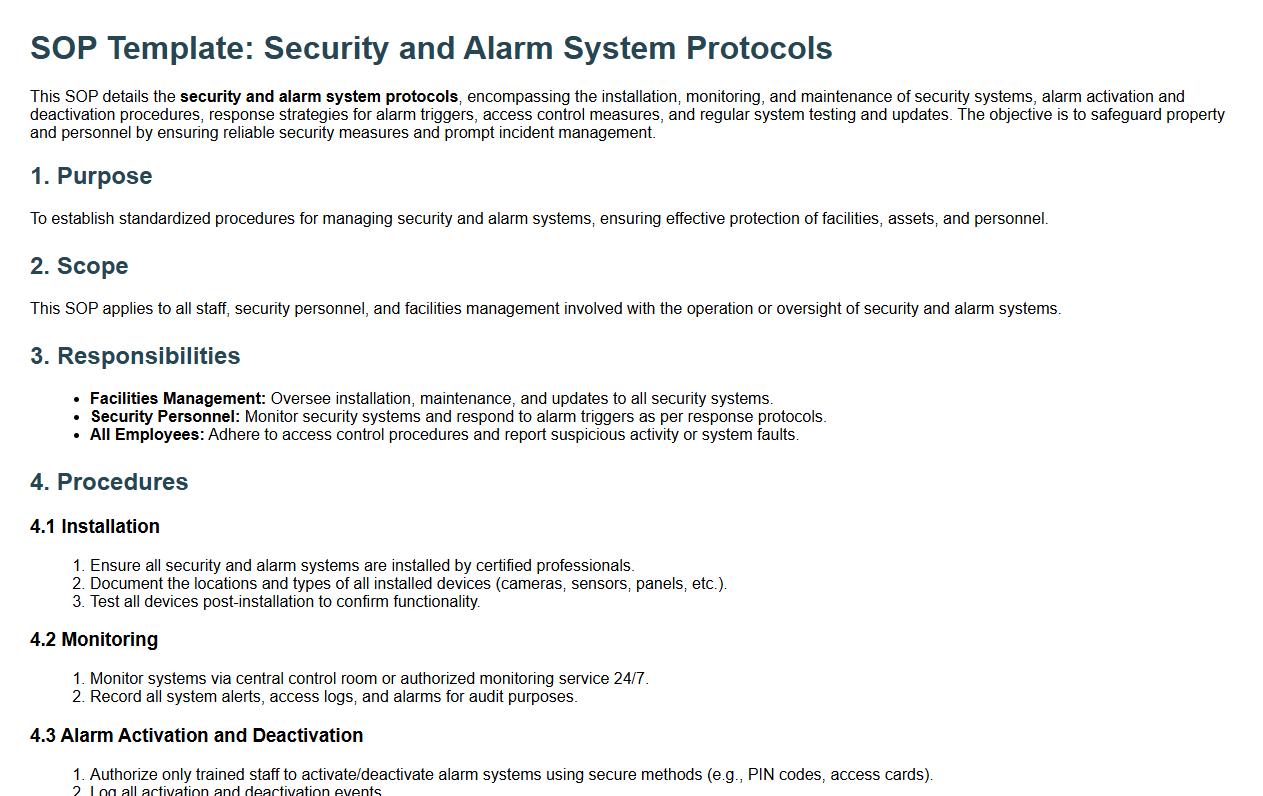
This SOP details the security and alarm system protocols, encompassing the installation, monitoring, and maintenance of security systems, alarm activation and deactivation procedures, response strategies for alarm triggers, access control measures, and regular system testing and updates. The objective is to safeguard property and personnel by ensuring reliable security measures and prompt incident management.
Cash Register Setup and Float Preparation.
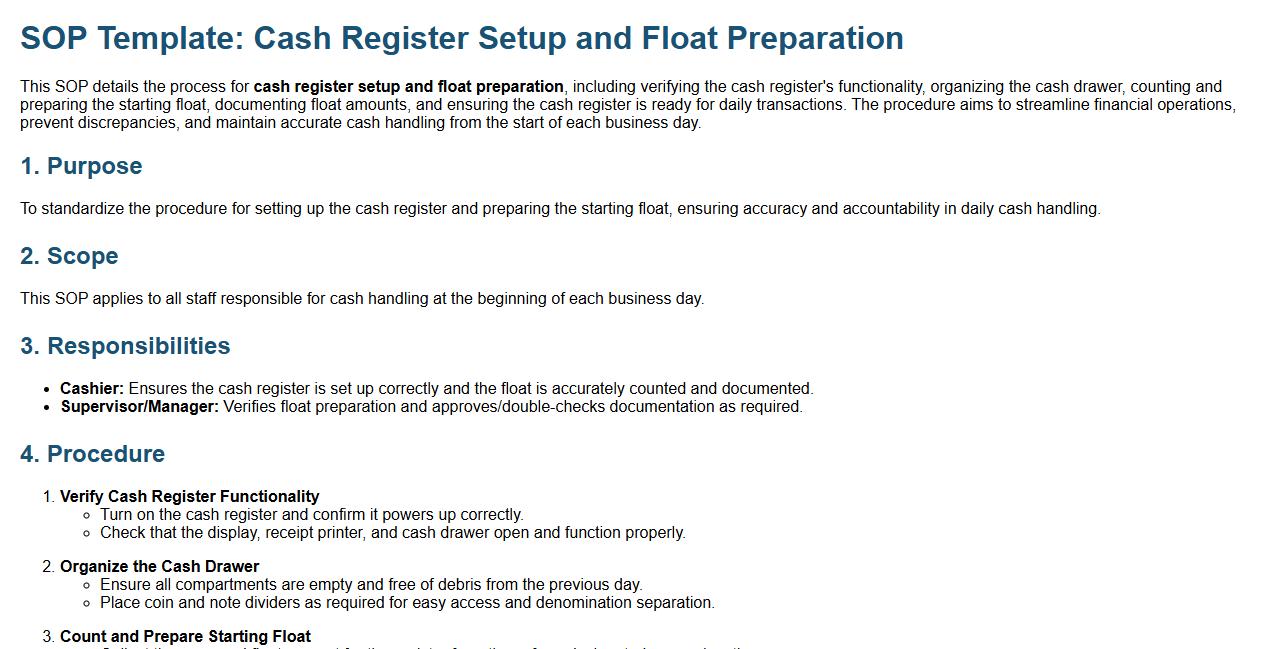
This SOP details the process for cash register setup and float preparation, including verifying the cash register's functionality, organizing the cash drawer, counting and preparing the starting float, documenting float amounts, and ensuring the cash register is ready for daily transactions. The procedure aims to streamline financial operations, prevent discrepancies, and maintain accurate cash handling from the start of each business day.
Store Cleanliness and Merchandising Standards.
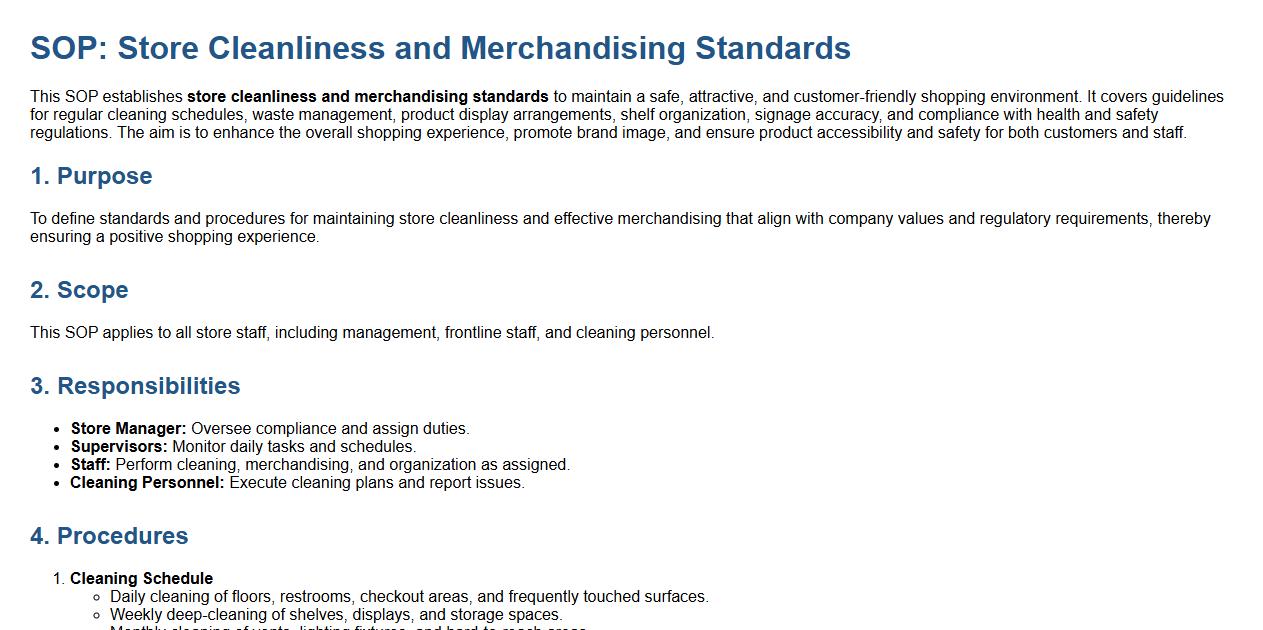
This SOP establishes store cleanliness and merchandising standards to maintain a safe, attractive, and customer-friendly shopping environment. It covers guidelines for regular cleaning schedules, waste management, product display arrangements, shelf organization, signage accuracy, and compliance with health and safety regulations. The aim is to enhance the overall shopping experience, promote brand image, and ensure product accessibility and safety for both customers and staff.
Daily Stock Replenishment Guidelines.
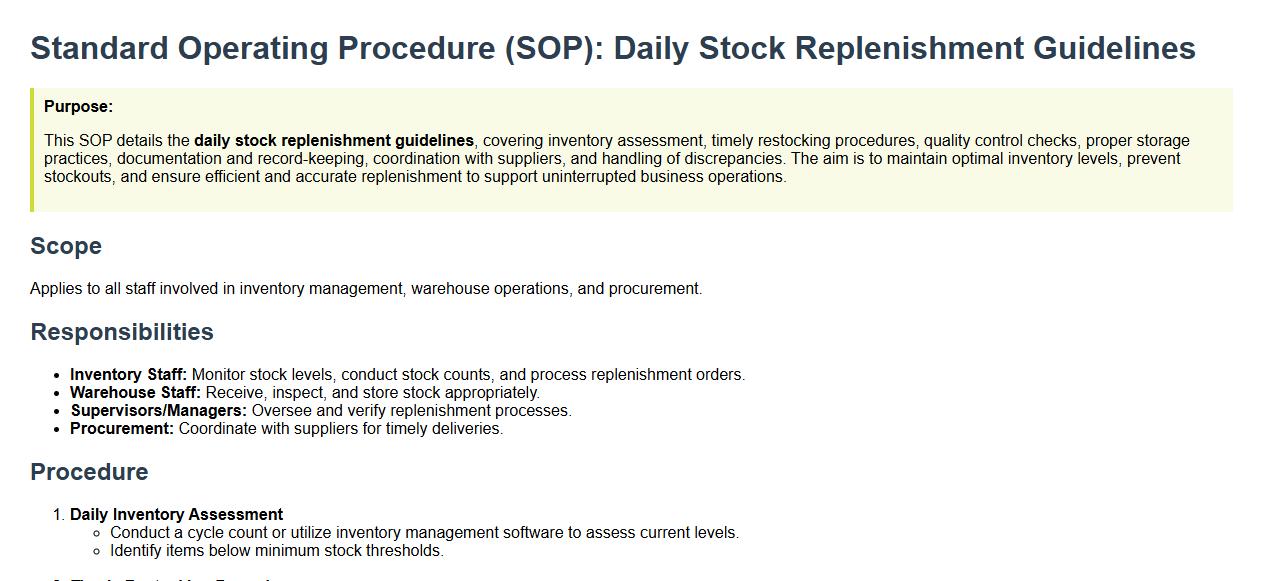
This SOP details the daily stock replenishment guidelines, covering inventory assessment, timely restocking procedures, quality control checks, proper storage practices, documentation and record-keeping, coordination with suppliers, and handling of discrepancies. The aim is to maintain optimal inventory levels, prevent stockouts, and ensure efficient and accurate replenishment to support uninterrupted business operations.
Customer Service Readiness Checklist.
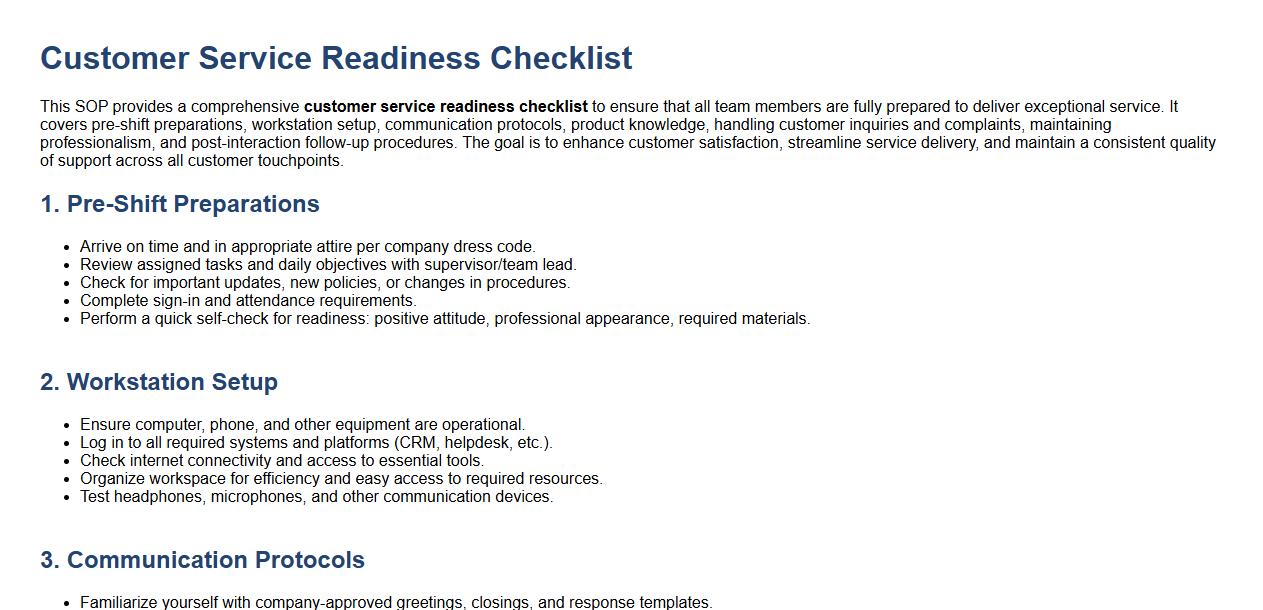
This SOP provides a comprehensive customer service readiness checklist to ensure that all team members are fully prepared to deliver exceptional service. It covers pre-shift preparations, workstation setup, communication protocols, product knowledge, handling customer inquiries and complaints, maintaining professionalism, and post-interaction follow-up procedures. The goal is to enhance customer satisfaction, streamline service delivery, and maintain a consistent quality of support across all customer touchpoints.
End-of-Day Sales Reconciliation and Deposits.
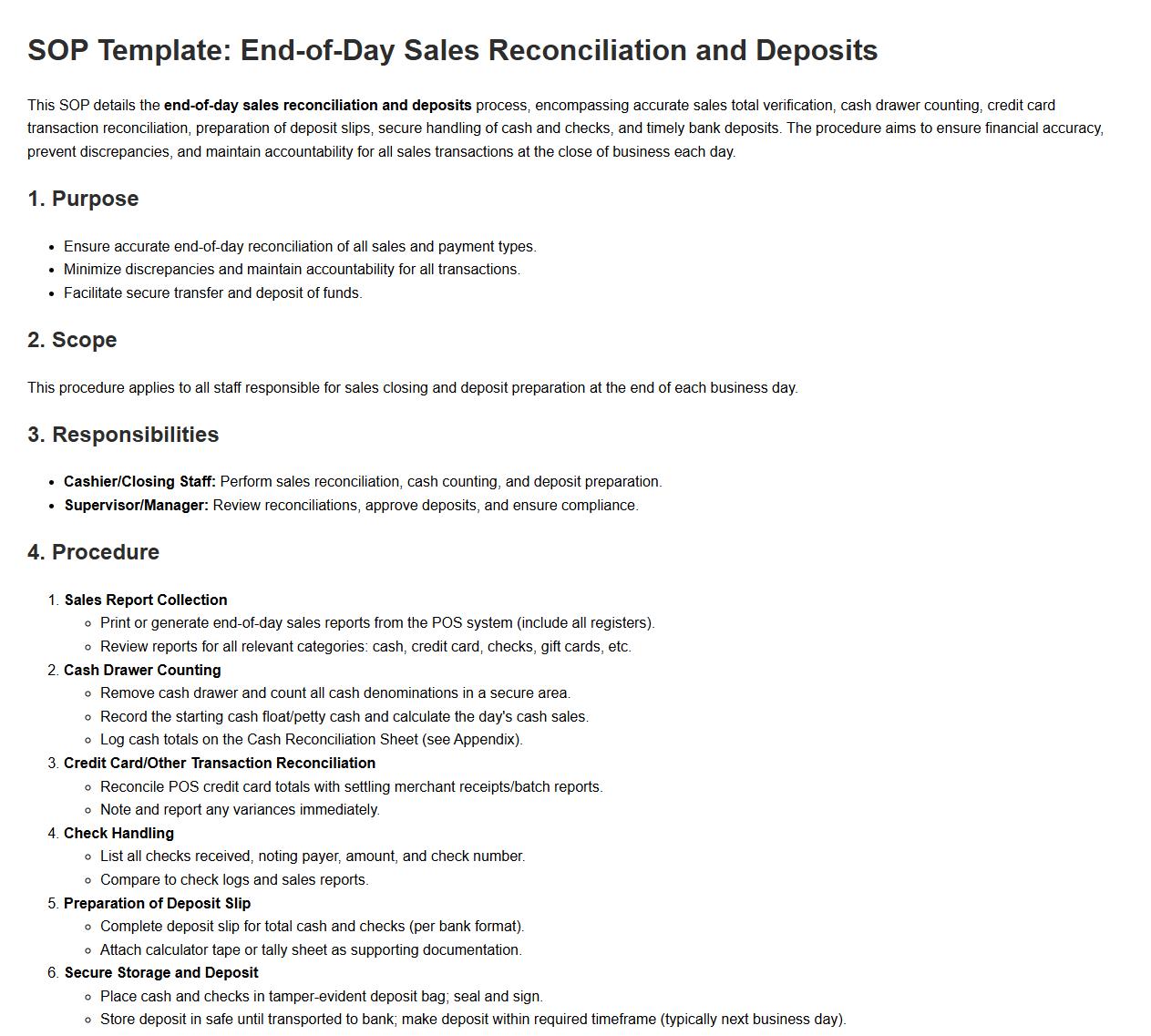
This SOP details the end-of-day sales reconciliation and deposits process, encompassing accurate sales total verification, cash drawer counting, credit card transaction reconciliation, preparation of deposit slips, secure handling of cash and checks, and timely bank deposits. The procedure aims to ensure financial accuracy, prevent discrepancies, and maintain accountability for all sales transactions at the close of business each day.
Final Store Walkthrough and Security Checks.
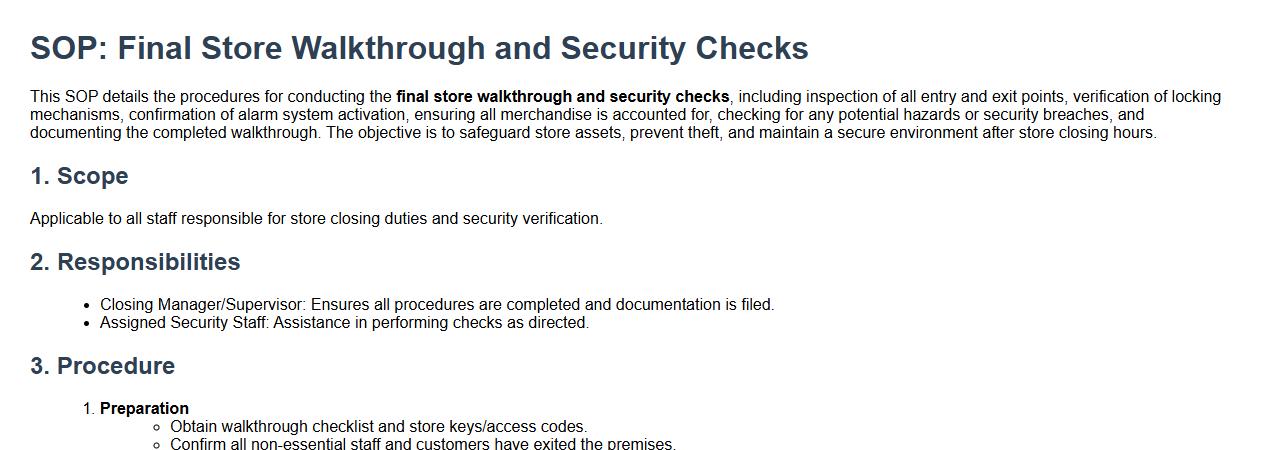
This SOP details the procedures for conducting the final store walkthrough and security checks, including inspection of all entry and exit points, verification of locking mechanisms, confirmation of alarm system activation, ensuring all merchandise is accounted for, checking for any potential hazards or security breaches, and documenting the completed walkthrough. The objective is to safeguard store assets, prevent theft, and maintain a secure environment after store closing hours.
Closing Cash Handling and Safe Procedures.
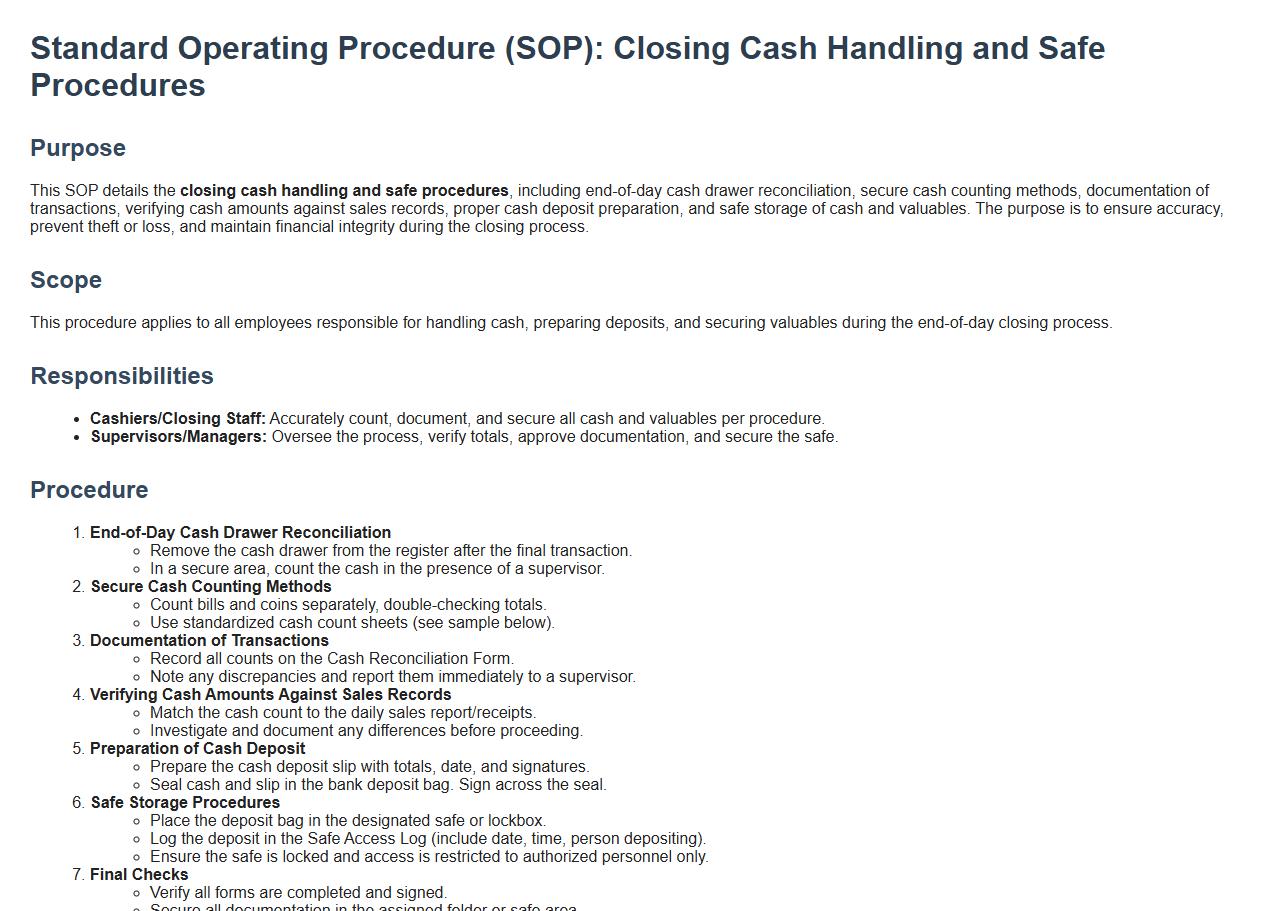
This SOP details the closing cash handling and safe procedures, including end-of-day cash drawer reconciliation, secure cash counting methods, documentation of transactions, verifying cash amounts against sales records, proper cash deposit preparation, and safe storage of cash and valuables. The purpose is to ensure accuracy, prevent theft or loss, and maintain financial integrity during the closing process.
Store Closing Alarm System and Lock-up Protocols.
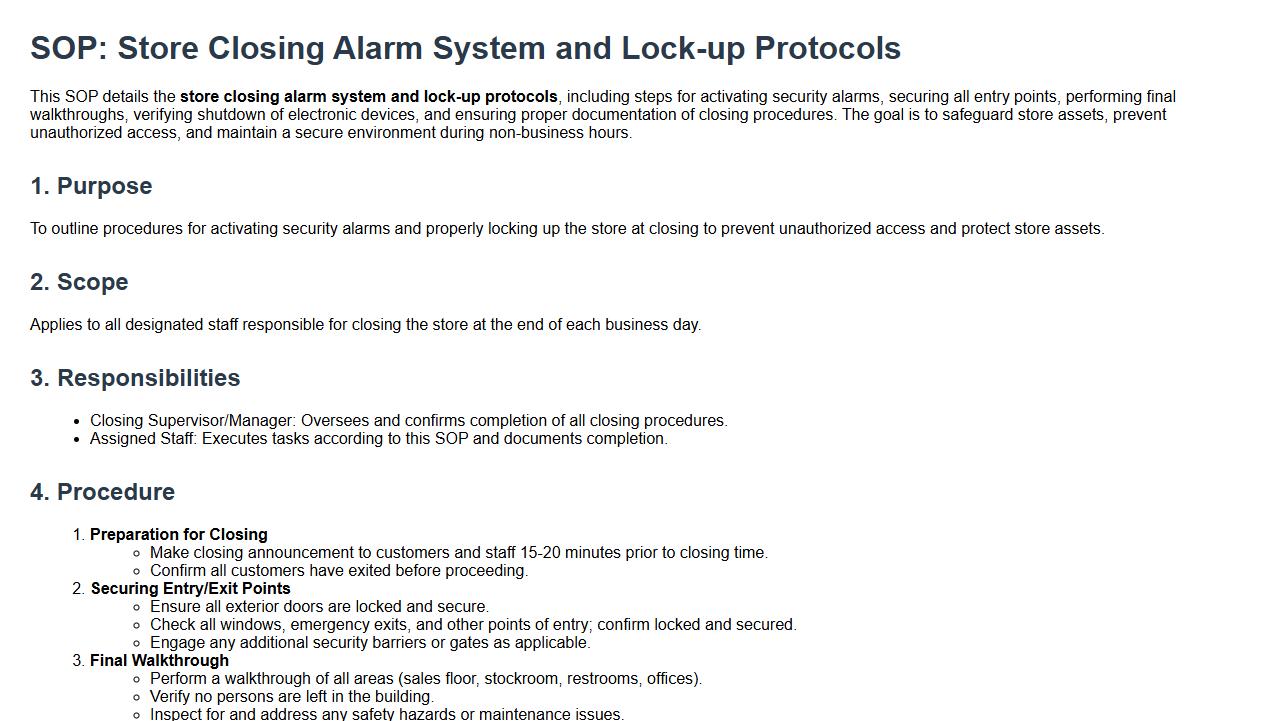
This SOP details the store closing alarm system and lock-up protocols, including steps for activating security alarms, securing all entry points, performing final walkthroughs, verifying shutdown of electronic devices, and ensuring proper documentation of closing procedures. The goal is to safeguard store assets, prevent unauthorized access, and maintain a secure environment during non-business hours.
What are the mandatory security checks outlined in the SOP for opening the retail store?
The SOP mandates that a thorough security inspection be conducted before opening to ensure all entry points are secure. Staff must verify the functioning of security alarms and CCTV systems as part of the opening routine. Additionally, any suspicious activity observed during the check must be reported immediately to management.
Which key activities must be completed during the end-of-day closing procedure?
During the closing procedure, employees are required to shut down all electronic devices and secure all merchandise. The SOP emphasizes locking all doors and setting the alarm system before leaving the premises. Inventory checks and final walkthroughs ensure nothing is left unattended.
How does the SOP address cash register reconciliation and documentation requirements?
The SOP stipulates that cash registers must be balanced at the end of each shift to prevent discrepancies. Detailed documentation of sales, cash, and card transactions is required for accountability. This reconciliation process is vital for auditing and financial accuracy.
What steps are specified for maintaining cleanliness and merchandising standards at opening?
Maintaining store cleanliness is a priority, with the SOP calling for sweeping, dusting, and sanitizing surfaces before customers arrive. Merchandising standards include organizing displays and restocking shelves according to company guidelines. These steps ensure a welcoming and professional retail environment.
Who is responsible for verifying compliance with the SOP before final store closure?
The store manager or assigned closing supervisor is responsible for verifying that all SOP procedures are followed. This includes reviewing security measures, cash reconciliation, and cleanliness. Final approval ensures that the store closes securely and efficiently each day.