

A SOP Template for Retail Employee Scheduling streamlines the process of assigning shifts, ensuring consistent coverage and efficient workforce management. It outlines step-by-step procedures for creating schedules, handling shift swaps, and managing time-off requests. This template helps maintain organization, reduce scheduling conflicts, and improve overall store productivity.
Weekly shift planning and assignment procedures.
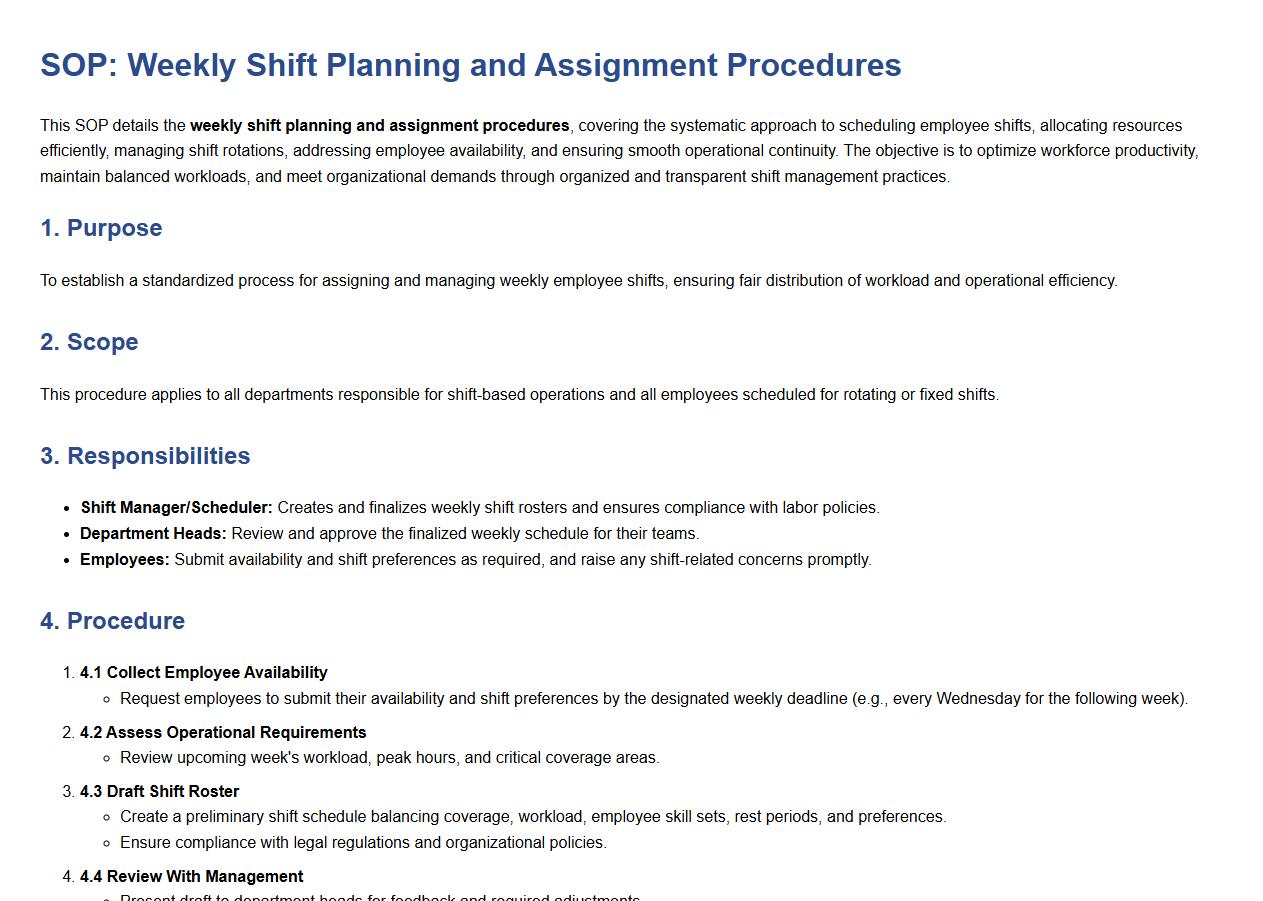
This SOP details the weekly shift planning and assignment procedures, covering the systematic approach to scheduling employee shifts, allocating resources efficiently, managing shift rotations, addressing employee availability, and ensuring smooth operational continuity. The objective is to optimize workforce productivity, maintain balanced workloads, and meet organizational demands through organized and transparent shift management practices.
Employee availability collection and update protocols.
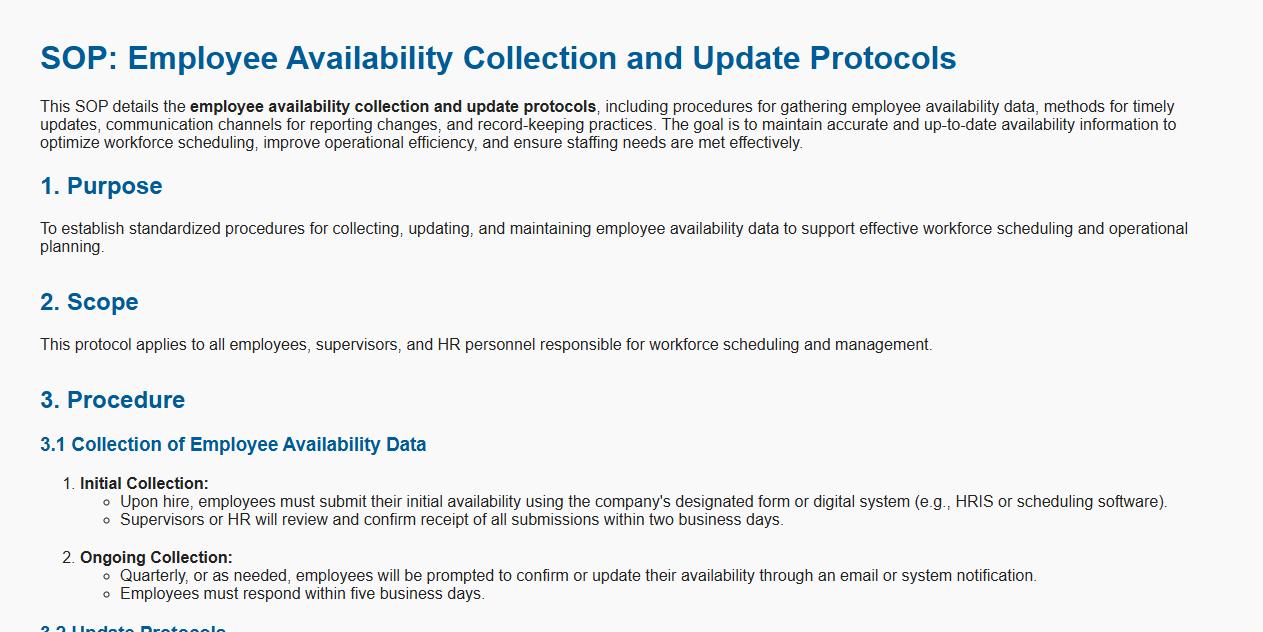
This SOP details the employee availability collection and update protocols, including procedures for gathering employee availability data, methods for timely updates, communication channels for reporting changes, and record-keeping practices. The goal is to maintain accurate and up-to-date availability information to optimize workforce scheduling, improve operational efficiency, and ensure staffing needs are met effectively.
Shift swapping and time-off request guidelines.
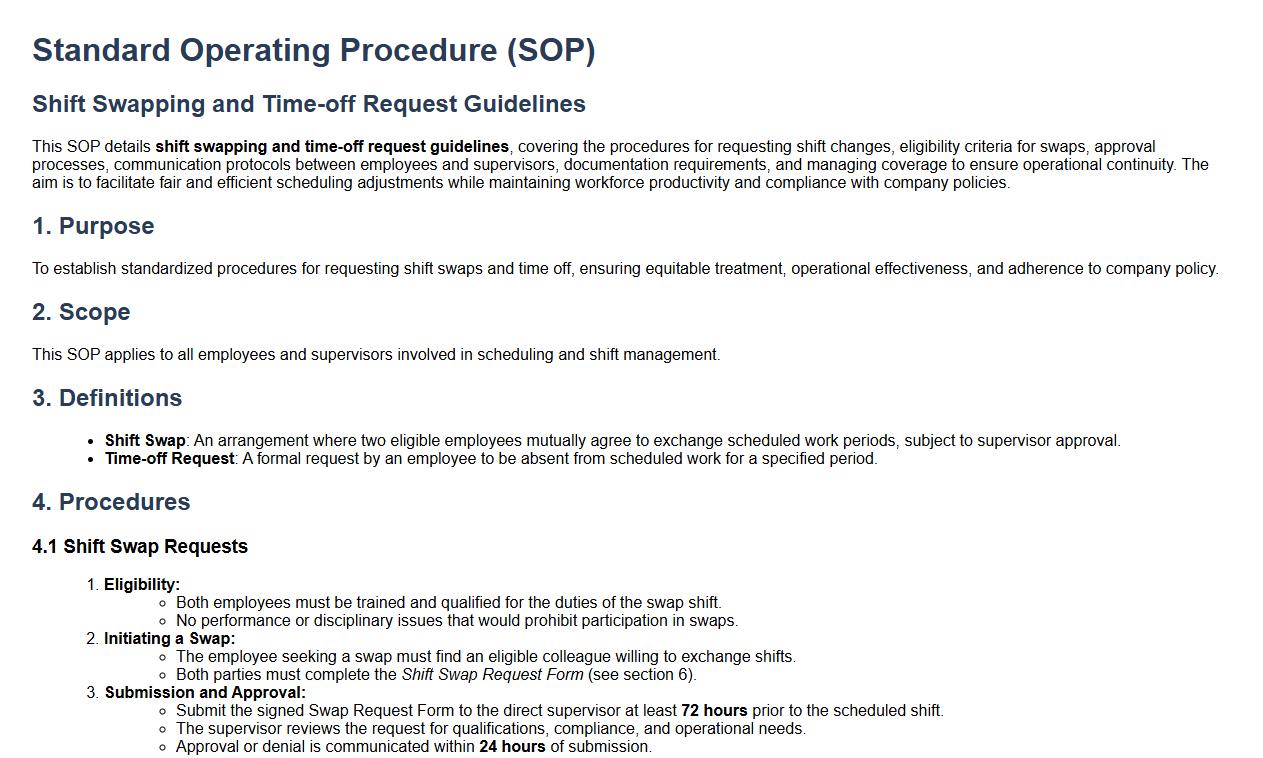
This SOP details shift swapping and time-off request guidelines, covering the procedures for requesting shift changes, eligibility criteria for swaps, approval processes, communication protocols between employees and supervisors, documentation requirements, and managing coverage to ensure operational continuity. The aim is to facilitate fair and efficient scheduling adjustments while maintaining workforce productivity and compliance with company policies.
Procedures for handling last-minute scheduling changes.
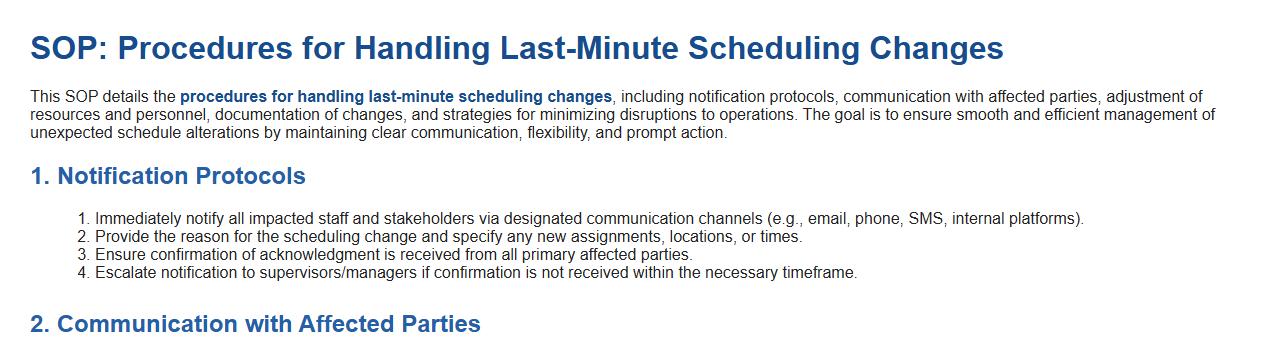
This SOP details the procedures for handling last-minute scheduling changes, including notification protocols, communication with affected parties, adjustment of resources and personnel, documentation of changes, and strategies for minimizing disruptions to operations. The goal is to ensure smooth and efficient management of unexpected schedule alterations by maintaining clear communication, flexibility, and prompt action.
Documentation and communication of posted schedules.
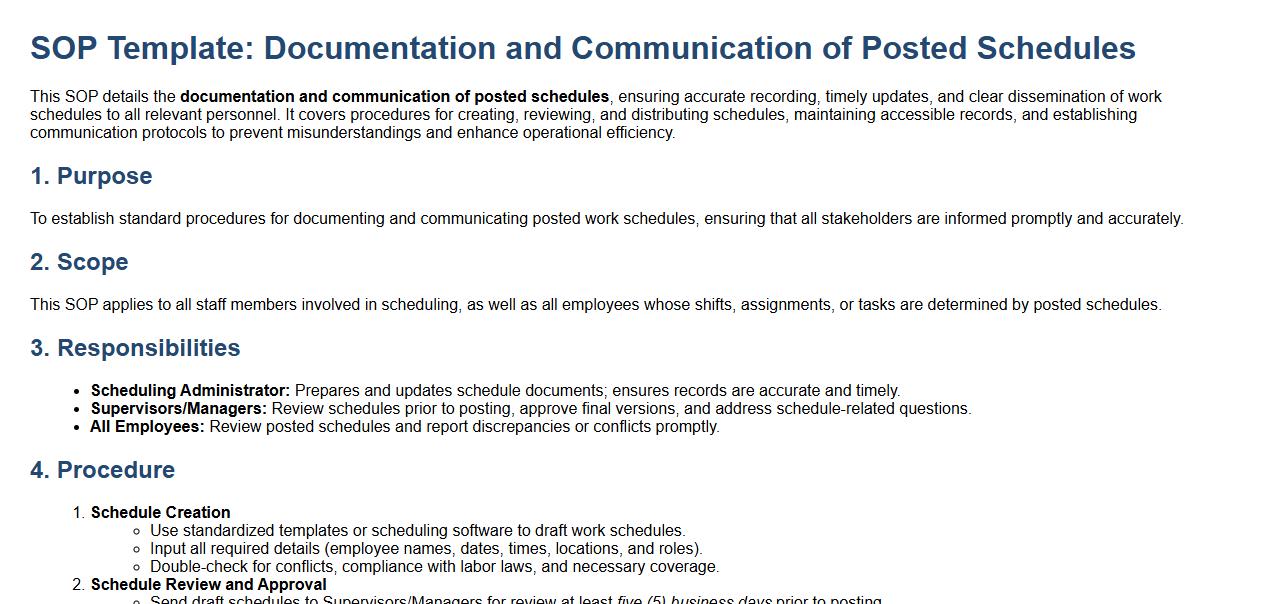
This SOP details the documentation and communication of posted schedules, ensuring accurate recording, timely updates, and clear dissemination of work schedules to all relevant personnel. It covers procedures for creating, reviewing, and distributing schedules, maintaining accessible records, and establishing communication protocols to prevent misunderstandings and enhance operational efficiency.
Compliance with labor laws and break requirements.
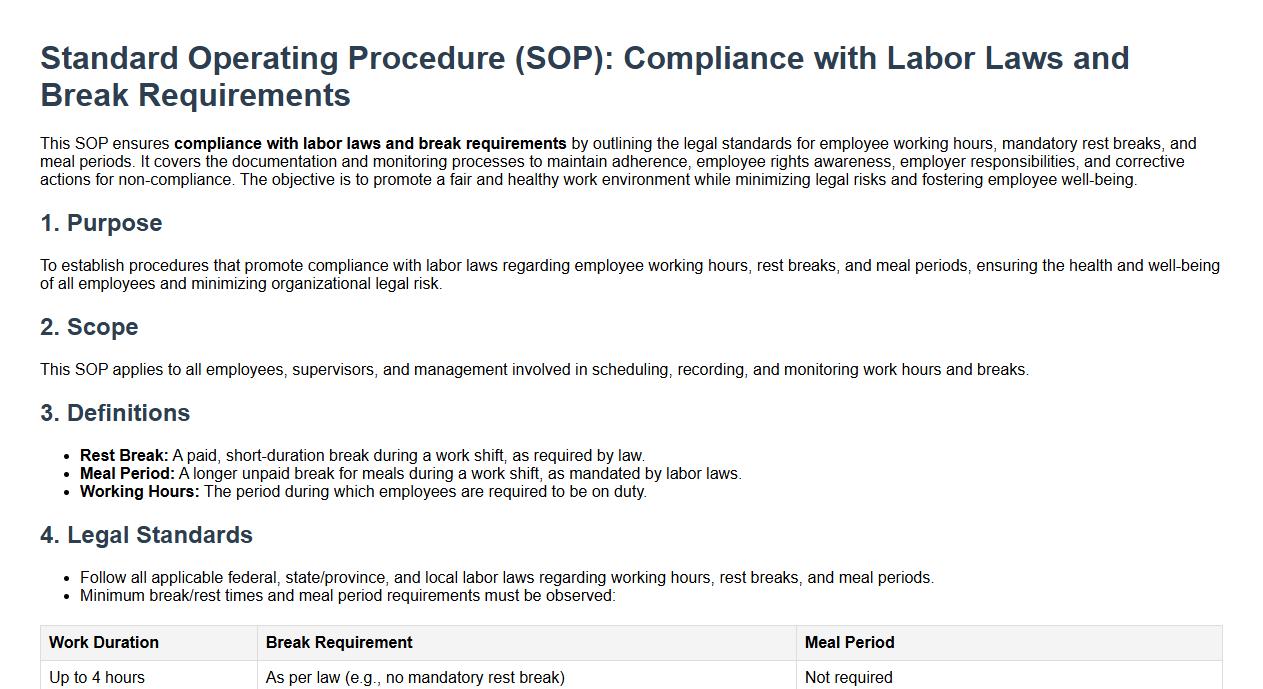
This SOP ensures compliance with labor laws and break requirements by outlining the legal standards for employee working hours, mandatory rest breaks, and meal periods. It covers the documentation and monitoring processes to maintain adherence, employee rights awareness, employer responsibilities, and corrective actions for non-compliance. The objective is to promote a fair and healthy work environment while minimizing legal risks and fostering employee well-being.
Overtime approval and monitoring processes.
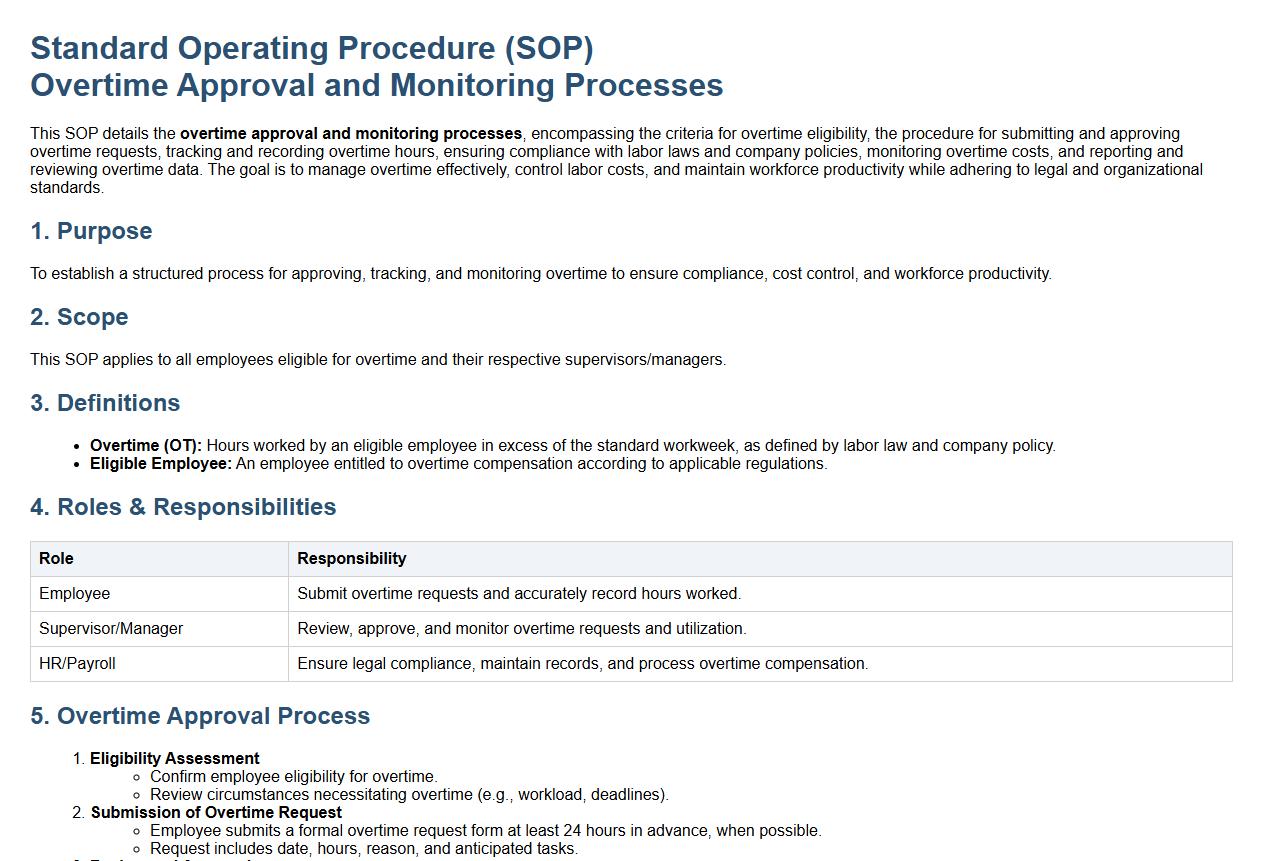
This SOP details the overtime approval and monitoring processes, encompassing the criteria for overtime eligibility, the procedure for submitting and approving overtime requests, tracking and recording overtime hours, ensuring compliance with labor laws and company policies, monitoring overtime costs, and reporting and reviewing overtime data. The goal is to manage overtime effectively, control labor costs, and maintain workforce productivity while adhering to legal and organizational standards.
Procedures for early clock-ins and late clock-outs.
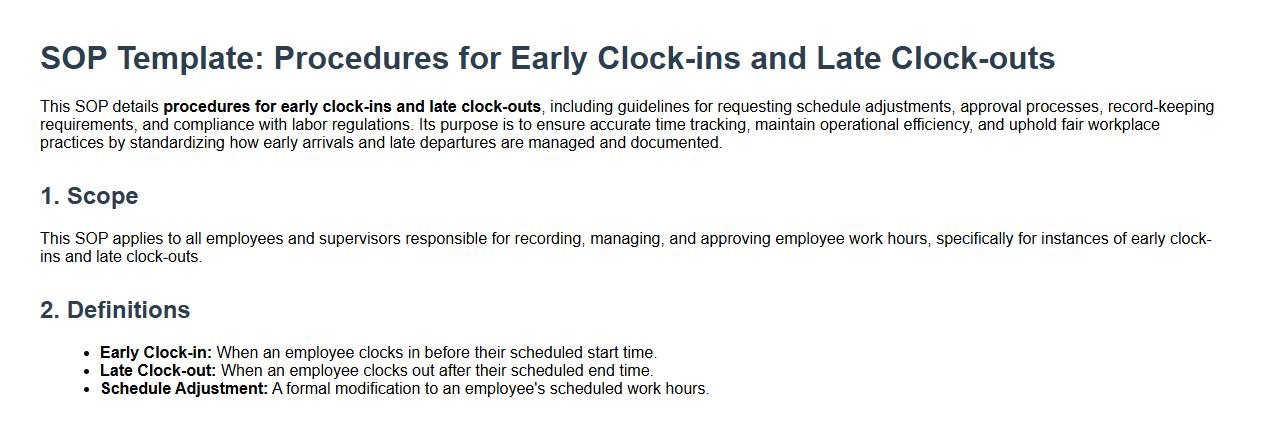
This SOP details procedures for early clock-ins and late clock-outs, including guidelines for requesting schedule adjustments, approval processes, record-keeping requirements, and compliance with labor regulations. Its purpose is to ensure accurate time tracking, maintain operational efficiency, and uphold fair workplace practices by standardizing how early arrivals and late departures are managed and documented.
Guidelines for emergency coverage and backup staff assignment.
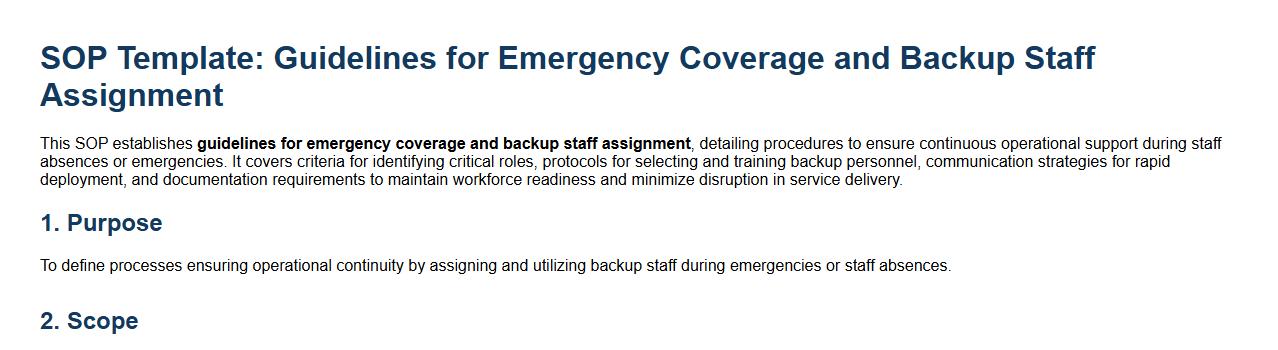
This SOP establishes guidelines for emergency coverage and backup staff assignment, detailing procedures to ensure continuous operational support during staff absences or emergencies. It covers criteria for identifying critical roles, protocols for selecting and training backup personnel, communication strategies for rapid deployment, and documentation requirements to maintain workforce readiness and minimize disruption in service delivery.
Record-keeping and schedule audit trails.
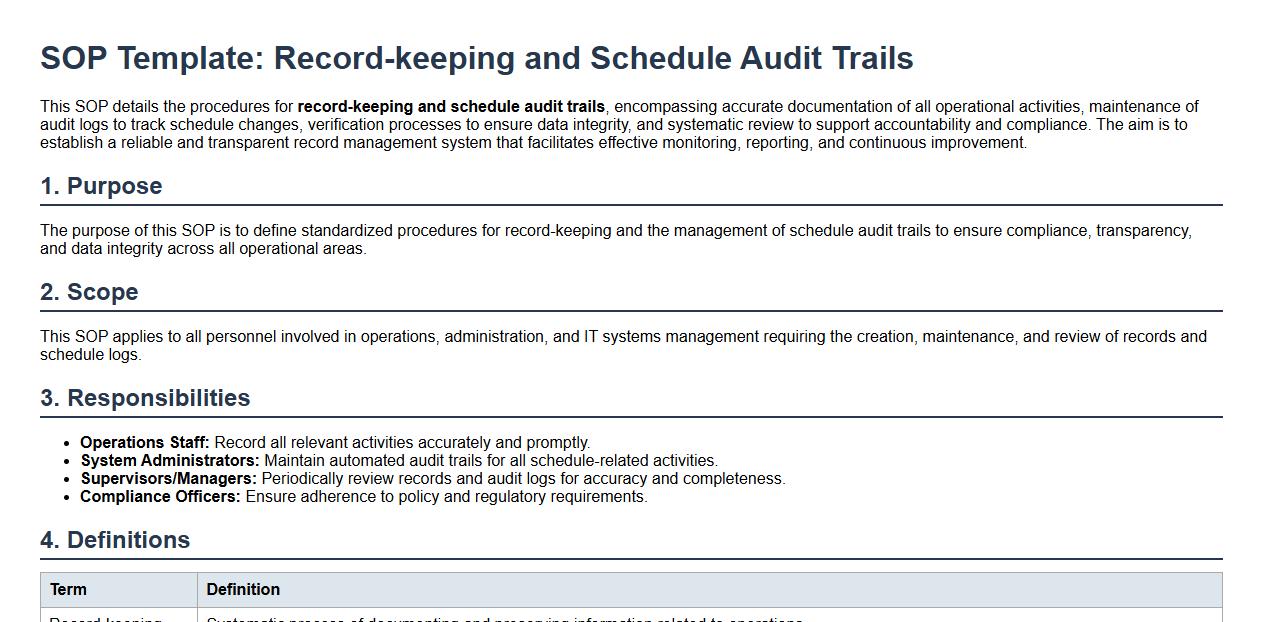
This SOP details the procedures for record-keeping and schedule audit trails, encompassing accurate documentation of all operational activities, maintenance of audit logs to track schedule changes, verification processes to ensure data integrity, and systematic review to support accountability and compliance. The aim is to establish a reliable and transparent record management system that facilitates effective monitoring, reporting, and continuous improvement.
What is the main objective of the Retail Employee Scheduling SOP?
The main objective of the Retail Employee Scheduling SOP is to establish a standardized process for creating and managing employee work schedules. It aims to optimize workforce allocation to meet business demands efficiently while maintaining employee satisfaction. This ensures consistent coverage across all retail shifts, reducing scheduling conflicts and absenteeism.
Which roles and responsibilities are defined for schedule creation and approval in the SOP?
The SOP clearly defines the roles of store managers, supervisors, and HR personnel in schedule creation and approval. Store managers are typically responsible for drafting schedules, while supervisors may assist in adjusting shifts as needed. HR ensures that the final schedules comply with labor laws and internal policies before approval.
What procedures are outlined for handling shift swaps or schedule changes?
The SOP outlines a formal procedure for shift swaps and schedule changes requiring prior approval from management. Employees must submit requests within a specified timeframe, and replacements must be qualified and approved. This protocol maintains operational continuity and avoids unauthorized absences or conflicts.
How does the SOP ensure compliance with labor laws and company policies?
The SOP enforces compliance by integrating labor laws and company policies into the scheduling framework. It mandates adherence to maximum work hours, mandatory breaks, overtime rules, and equitable shift distribution. Regular audits and manager training support ongoing compliance and risk mitigation.
What are the designated communication channels for distributing and updating employee schedules?
The SOP designates digital tools such as scheduling software, email, and employee portals as primary communication channels for distributing schedules. Updates and changes are promptly communicated through these platforms to ensure all staff are informed. This approach enhances transparency and reduces miscommunication.