

A SOP Template for Retail Inventory Management provides a standardized procedure to efficiently track, organize, and control stock levels in retail stores. This template helps ensure accuracy in inventory counts, reduce stock discrepancies, and optimize reorder processes. Implementing a clear SOP enhances operational efficiency and supports better decision-making in retail inventory control.
Inventory receiving and inspection procedures.
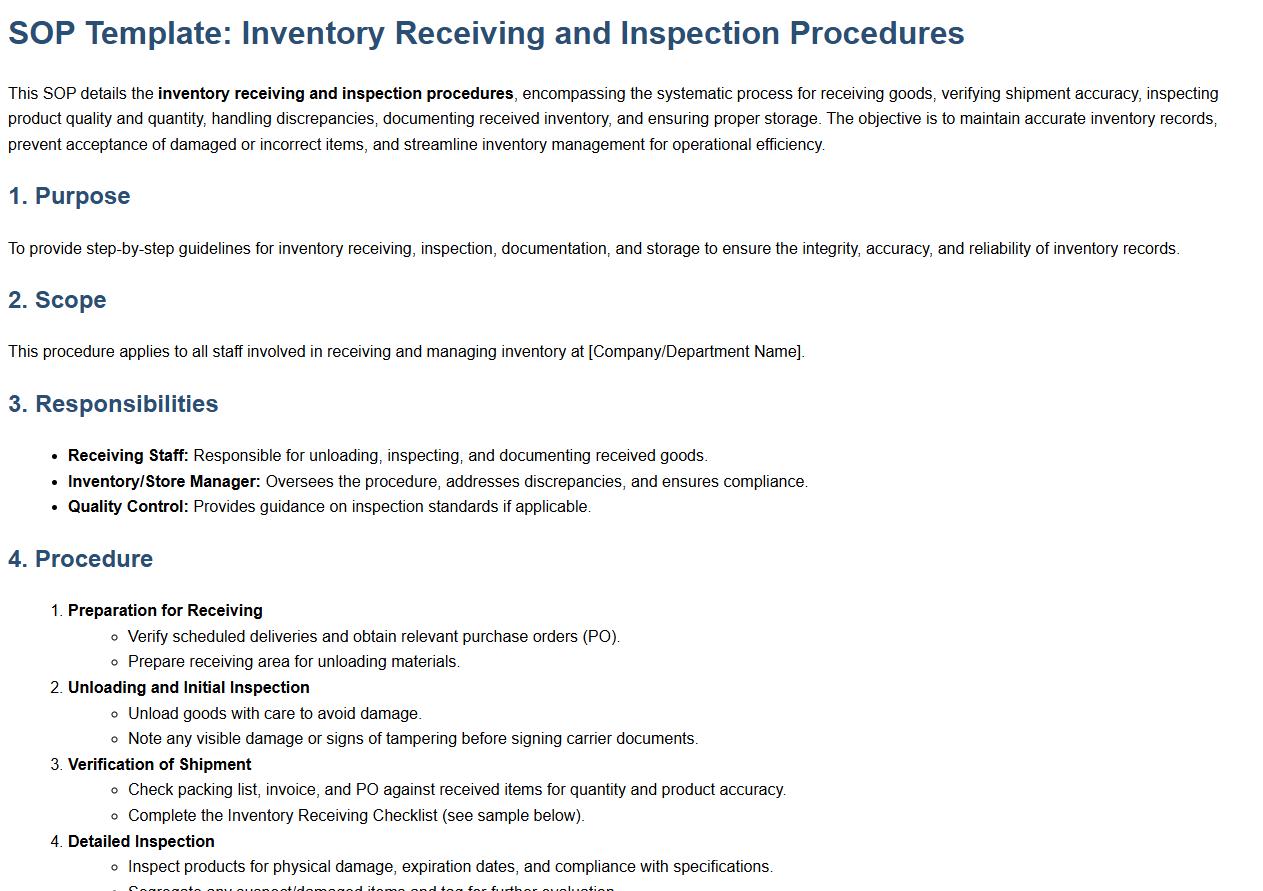
This SOP details the inventory receiving and inspection procedures, encompassing the systematic process for receiving goods, verifying shipment accuracy, inspecting product quality and quantity, handling discrepancies, documenting received inventory, and ensuring proper storage. The objective is to maintain accurate inventory records, prevent acceptance of damaged or incorrect items, and streamline inventory management for operational efficiency.
Product labeling and barcode assignment.
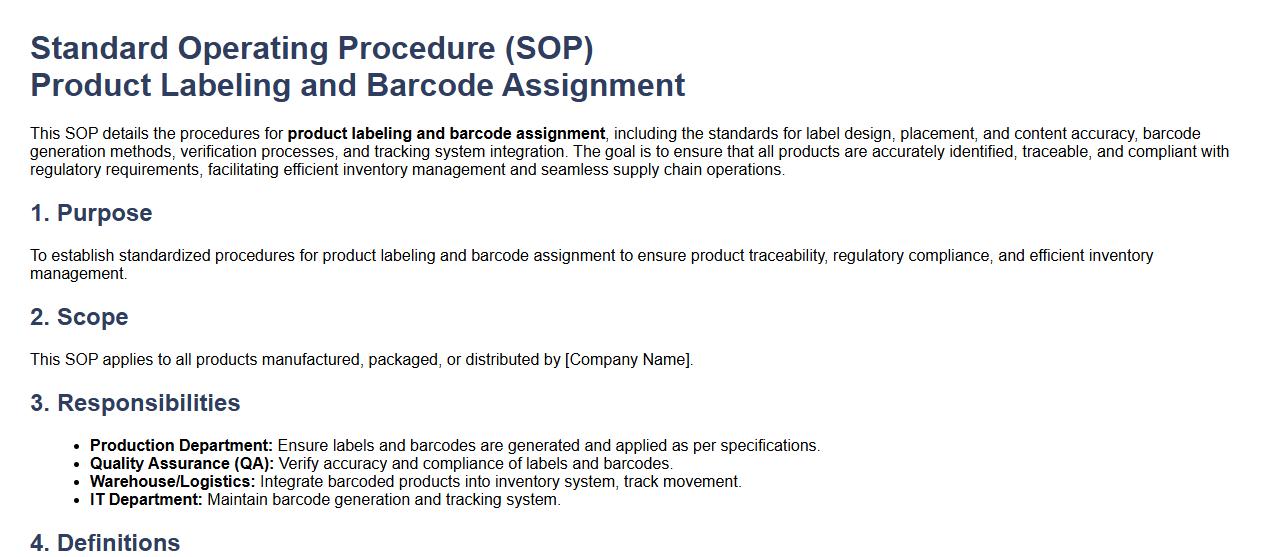
This SOP details the procedures for product labeling and barcode assignment, including the standards for label design, placement, and content accuracy, barcode generation methods, verification processes, and tracking system integration. The goal is to ensure that all products are accurately identified, traceable, and compliant with regulatory requirements, facilitating efficient inventory management and seamless supply chain operations.
Stock shelving and organization protocols.
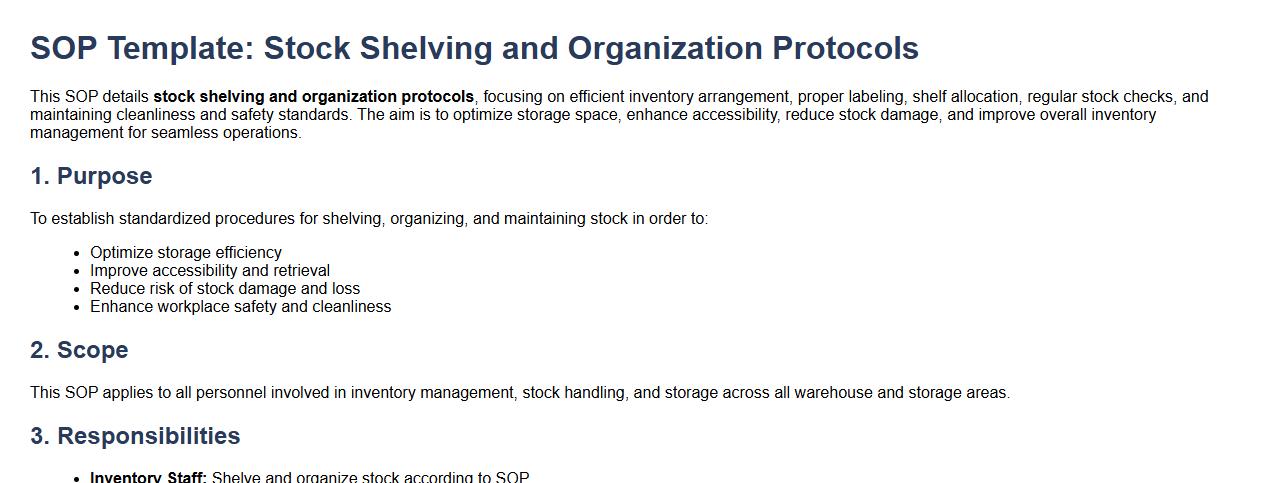
This SOP details stock shelving and organization protocols, focusing on efficient inventory arrangement, proper labeling, shelf allocation, regular stock checks, and maintaining cleanliness and safety standards. The aim is to optimize storage space, enhance accessibility, reduce stock damage, and improve overall inventory management for seamless operations.
Inventory counting and cycle count schedules.
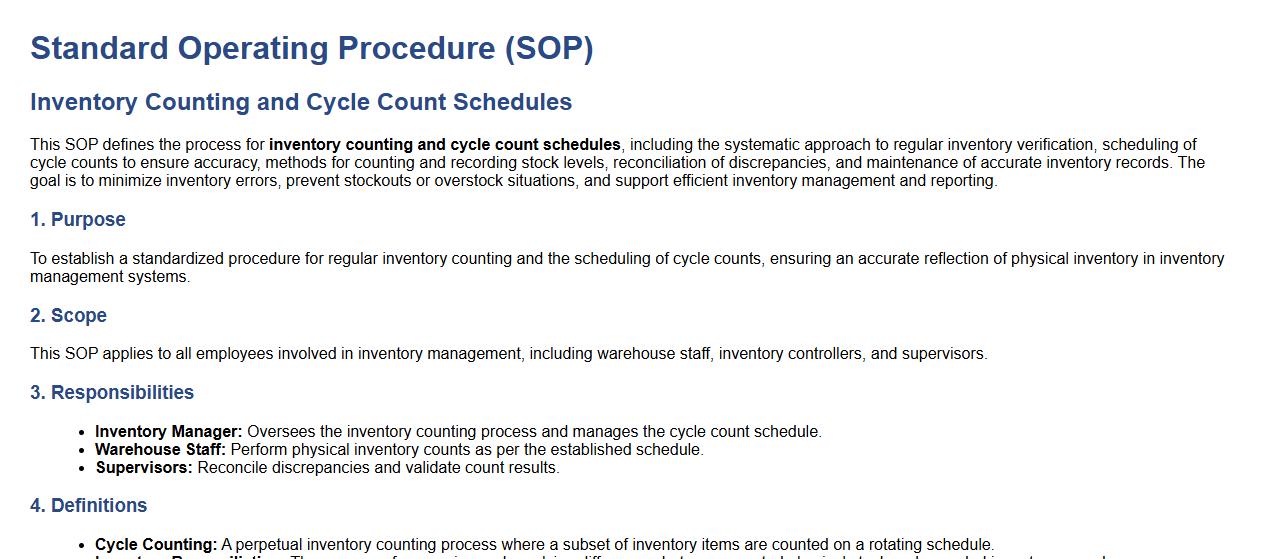
This SOP defines the process for inventory counting and cycle count schedules, including the systematic approach to regular inventory verification, scheduling of cycle counts to ensure accuracy, methods for counting and recording stock levels, reconciliation of discrepancies, and maintenance of accurate inventory records. The goal is to minimize inventory errors, prevent stockouts or overstock situations, and support efficient inventory management and reporting.
Damaged goods handling and reporting.
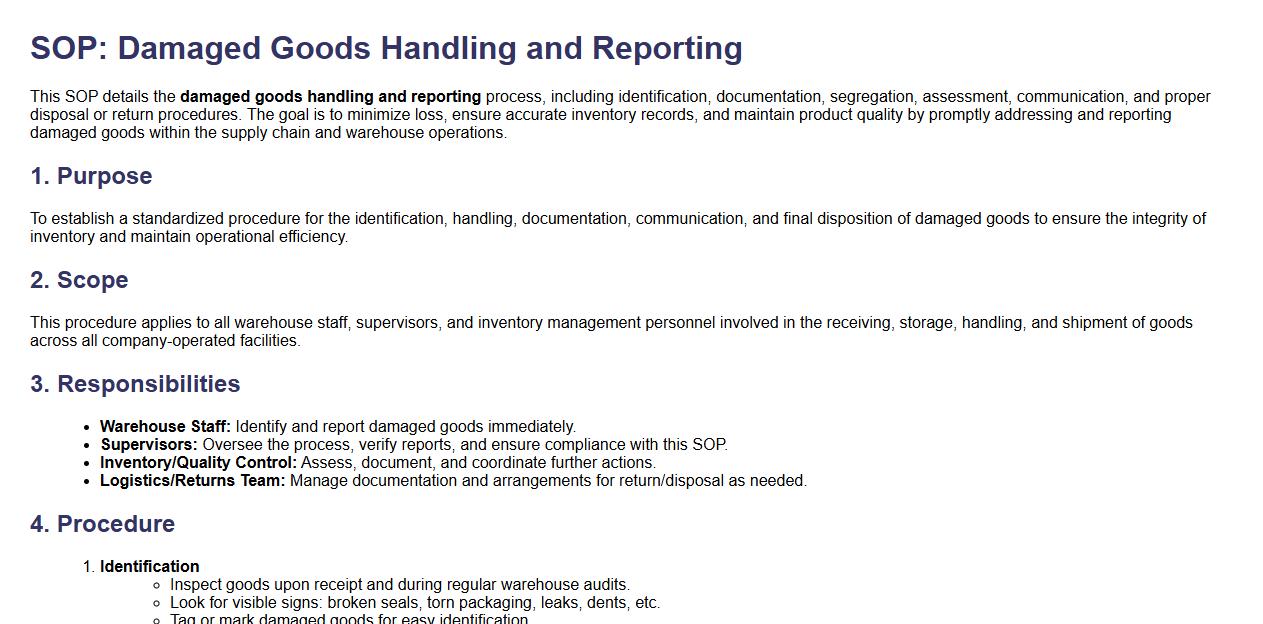
This SOP details the damaged goods handling and reporting process, including identification, documentation, segregation, assessment, communication, and proper disposal or return procedures. The goal is to minimize loss, ensure accurate inventory records, and maintain product quality by promptly addressing and reporting damaged goods within the supply chain and warehouse operations.
Stock replenishment and reorder processes.
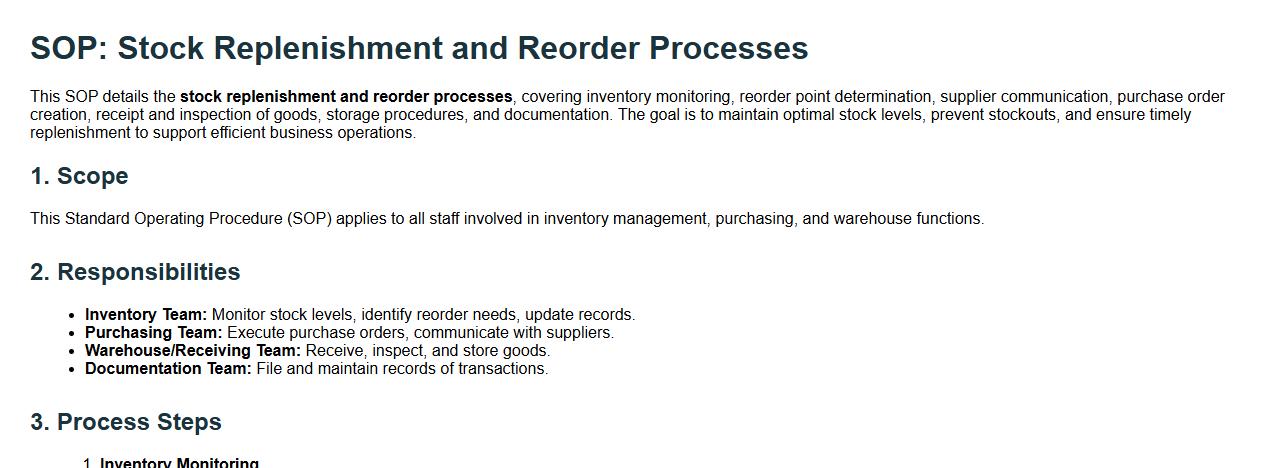
This SOP details the stock replenishment and reorder processes, covering inventory monitoring, reorder point determination, supplier communication, purchase order creation, receipt and inspection of goods, storage procedures, and documentation. The goal is to maintain optimal stock levels, prevent stockouts, and ensure timely replenishment to support efficient business operations.
Returns and exchanges procedure.
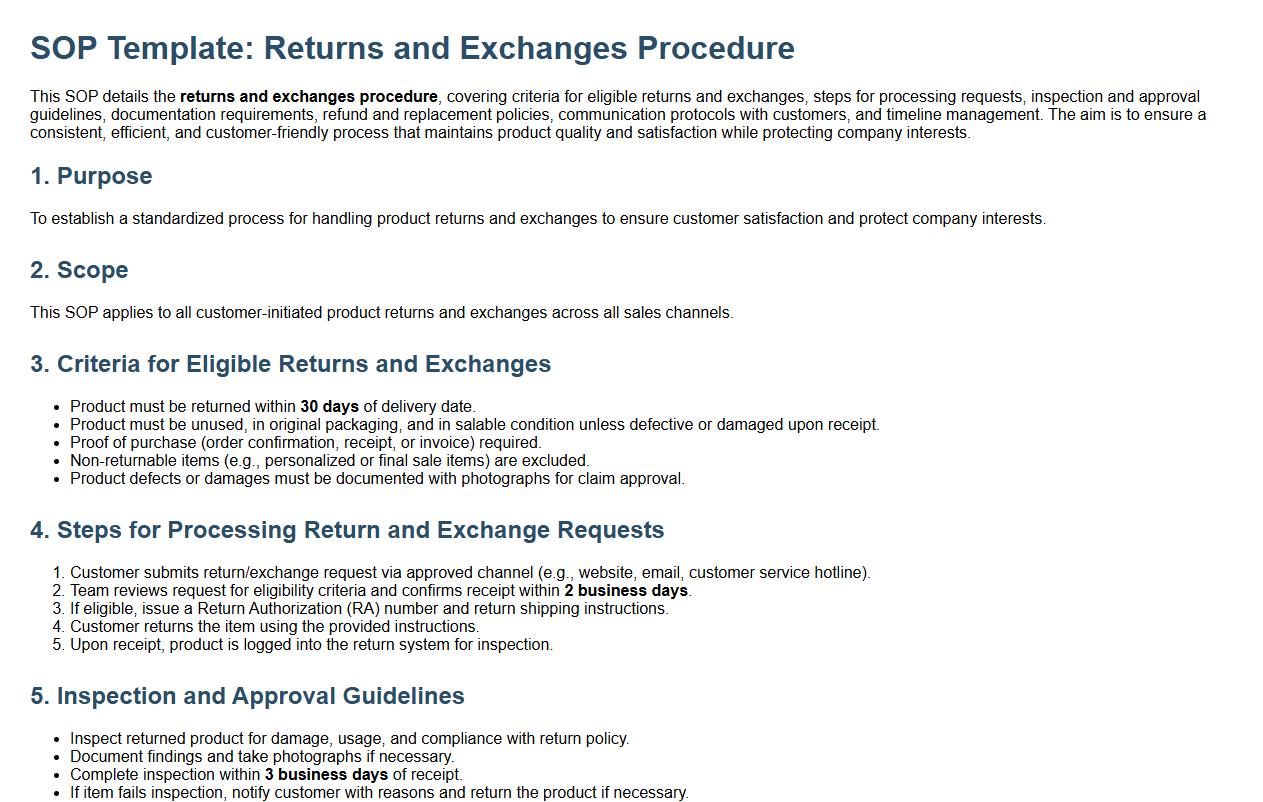
This SOP details the returns and exchanges procedure, covering criteria for eligible returns and exchanges, steps for processing requests, inspection and approval guidelines, documentation requirements, refund and replacement policies, communication protocols with customers, and timeline management. The aim is to ensure a consistent, efficient, and customer-friendly process that maintains product quality and satisfaction while protecting company interests.
Inventory loss prevention and security checks.
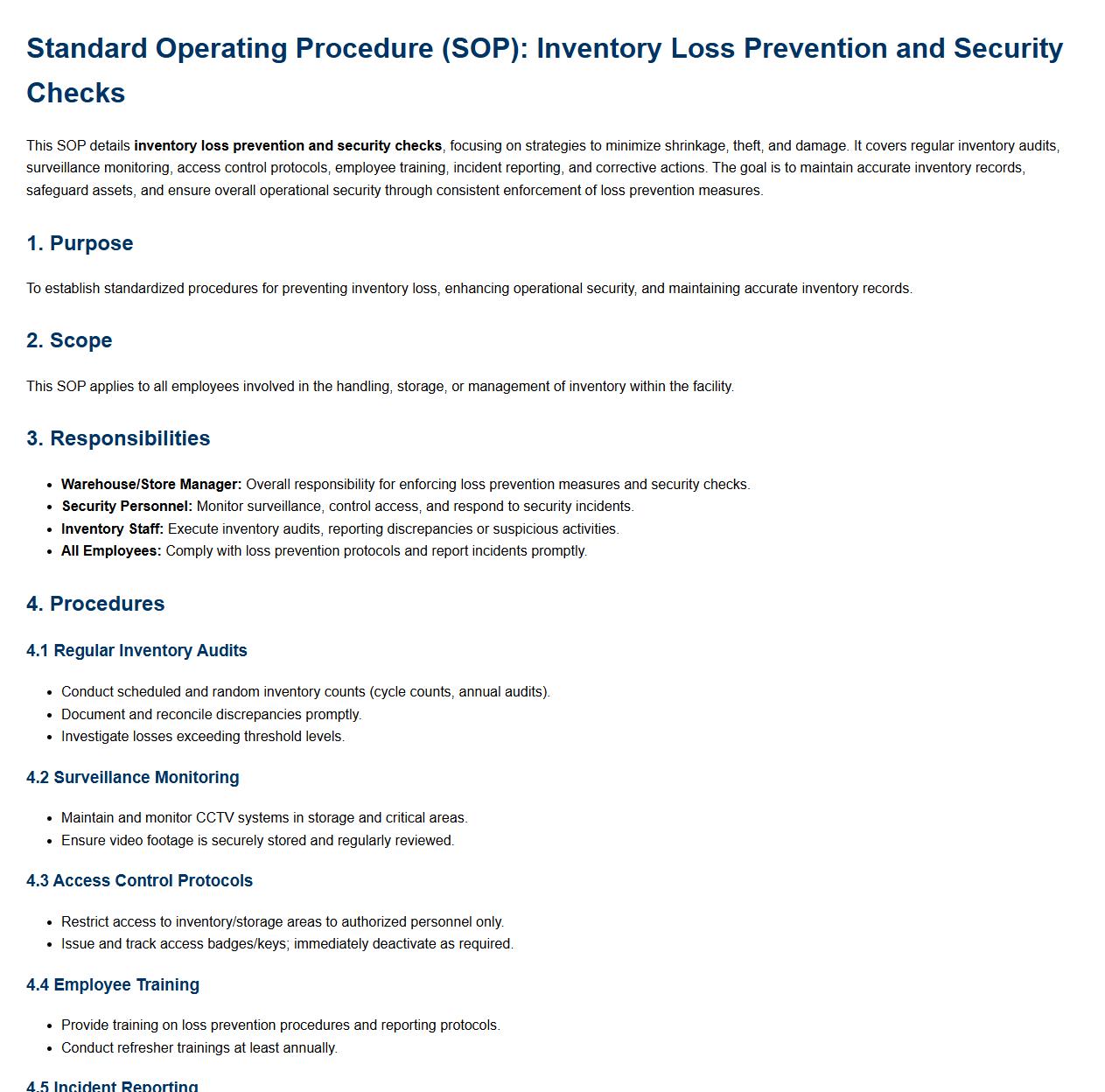
This SOP details inventory loss prevention and security checks, focusing on strategies to minimize shrinkage, theft, and damage. It covers regular inventory audits, surveillance monitoring, access control protocols, employee training, incident reporting, and corrective actions. The goal is to maintain accurate inventory records, safeguard assets, and ensure overall operational security through consistent enforcement of loss prevention measures.
Data entry and inventory management system updates.
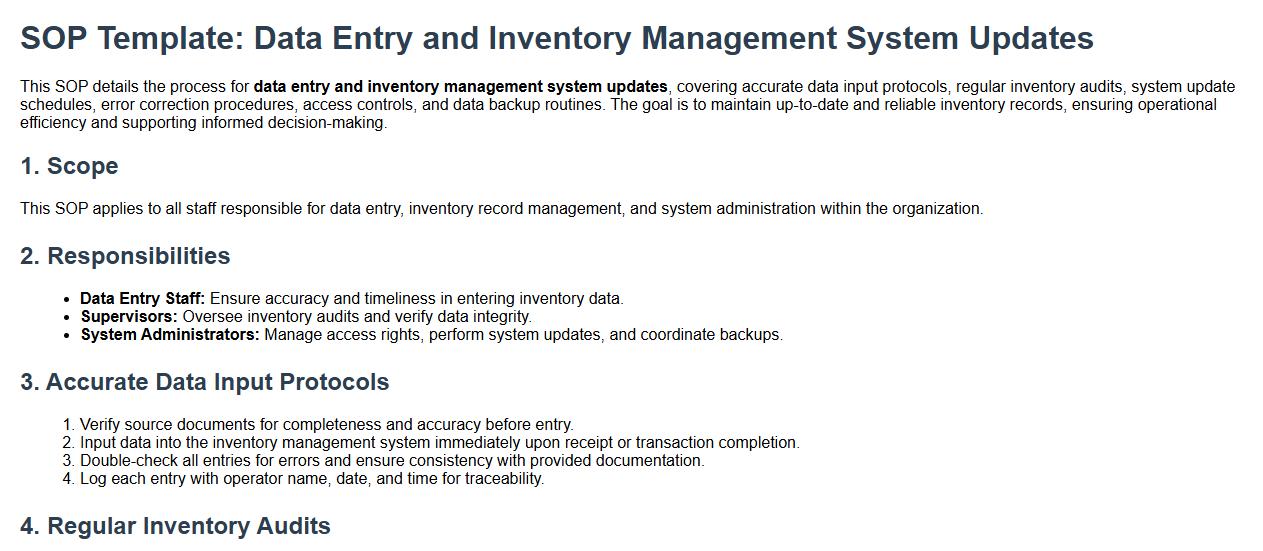
This SOP details the process for data entry and inventory management system updates, covering accurate data input protocols, regular inventory audits, system update schedules, error correction procedures, access controls, and data backup routines. The goal is to maintain up-to-date and reliable inventory records, ensuring operational efficiency and supporting informed decision-making.
Inventory audit and discrepancy resolution.
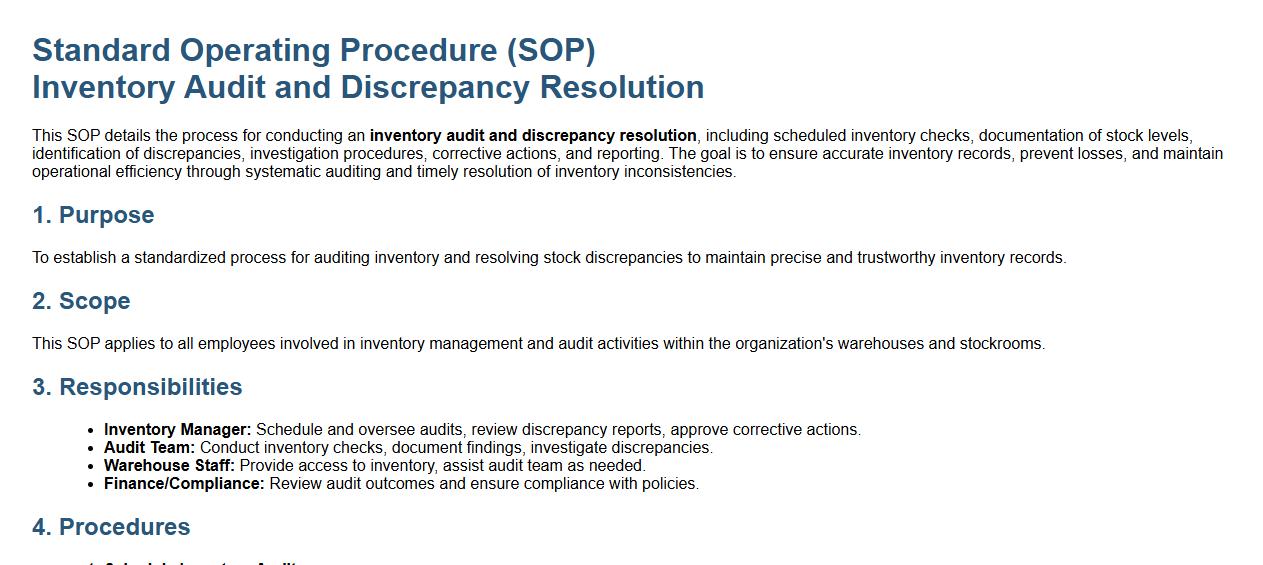
This SOP details the process for conducting an inventory audit and discrepancy resolution, including scheduled inventory checks, documentation of stock levels, identification of discrepancies, investigation procedures, corrective actions, and reporting. The goal is to ensure accurate inventory records, prevent losses, and maintain operational efficiency through systematic auditing and timely resolution of inventory inconsistencies.
What key processes are outlined in the SOP for receiving and recording new inventory in the retail store?
The SOP highlights the inspection of incoming stock to verify quantities and quality against purchase orders. Staff are required to record detailed information such as SKU numbers, descriptions, and arrival dates into the inventory management system. This process ensures accurate tracking and immediate update of stock levels for operational efficiency.
How does the SOP specify procedures for regular stock audits and discrepancy resolution?
The SOP mandates scheduled stock audits at regular intervals to maintain inventory accuracy. It outlines steps for identifying discrepancies between physical counts and recorded data, including investigating possible causes. Resolution protocols involve adjusting records after thorough verification to prevent stock mismanagement.
What protocols does the SOP set for inventory storage, organization, and labeling within the retail environment?
The SOP enforces strict guidelines on systematic storage to maximize space and facilitate easy access. Clear and legible labeling of all products is required to enhance identification and reduce picking errors. Additionally, organization practices promote safety and efficiency across all retail inventory areas.
How does the SOP address the process for handling damaged or expired inventory?
The SOP specifies immediate segregation of damaged or expired items from sellable stock to maintain product quality standards. It requires documentation of such inventory with reasons for damage or expiration and appropriate disposal procedures. These measures help protect customers and uphold retail compliance guidelines.
What are the reporting and documentation requirements according to the SOP for Retail Inventory Management?
The SOP demands comprehensive reporting on stock levels, audit outcomes, and discrepancy resolutions for transparency. Proper documentation must be maintained for all inventory transactions to ensure traceability and accountability. This systematic record-keeping supports informed decision-making and inventory control.