

A SOP Template for Retail Price Tagging ensures consistent and accurate labeling of products by outlining clear procedures for pricing, tagging, and verification. This template helps retail staff maintain uniformity, reduce pricing errors, and improve inventory management. Efficient use of the SOP supports better customer experience and compliance with pricing regulations.
Product receiving and verification process.
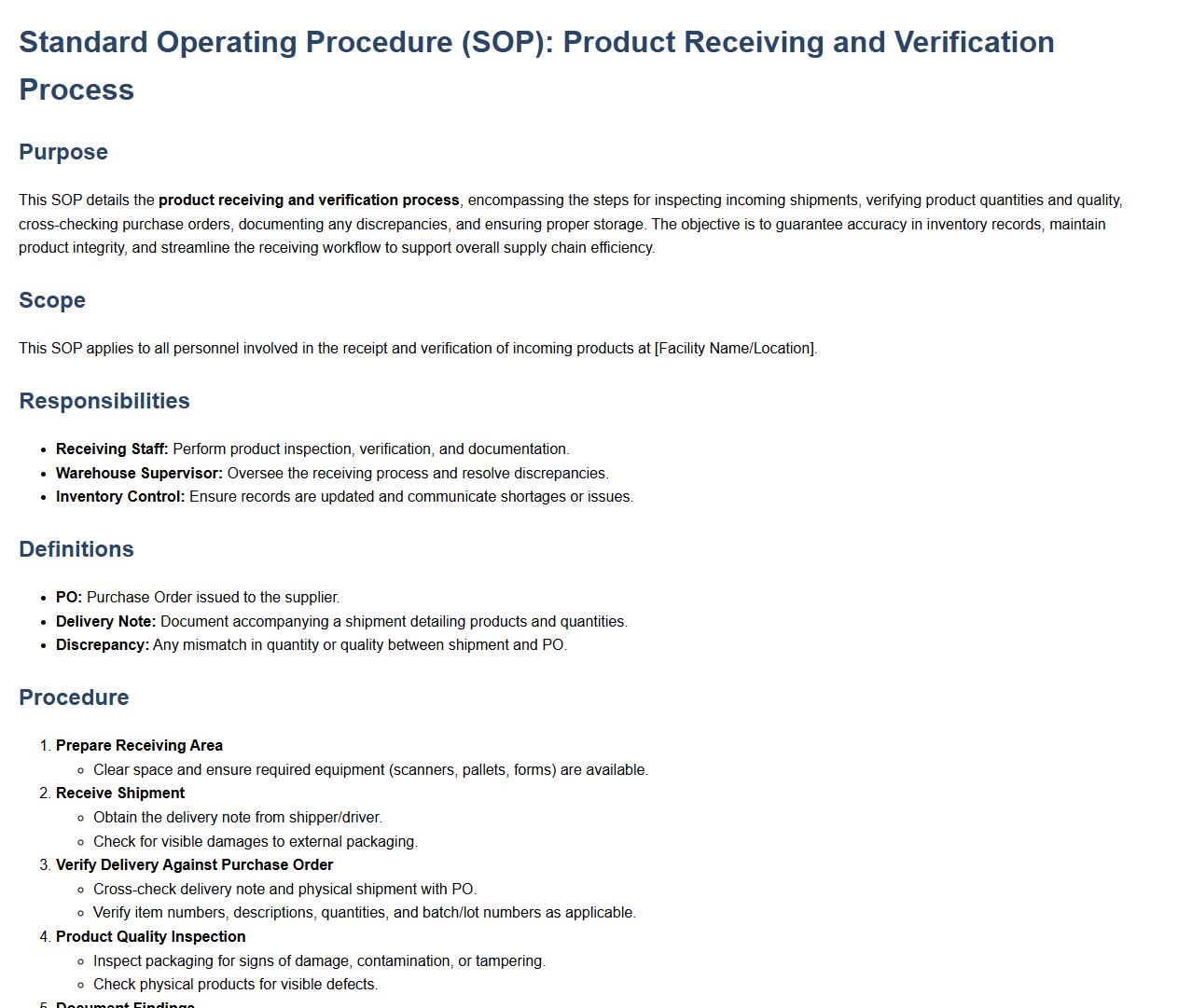
This SOP details the product receiving and verification process, encompassing the steps for inspecting incoming shipments, verifying product quantities and quality, cross-checking purchase orders, documenting any discrepancies, and ensuring proper storage. The objective is to guarantee accuracy in inventory records, maintain product integrity, and streamline the receiving workflow to support overall supply chain efficiency.
Inspection and sorting of merchandise for tagging.
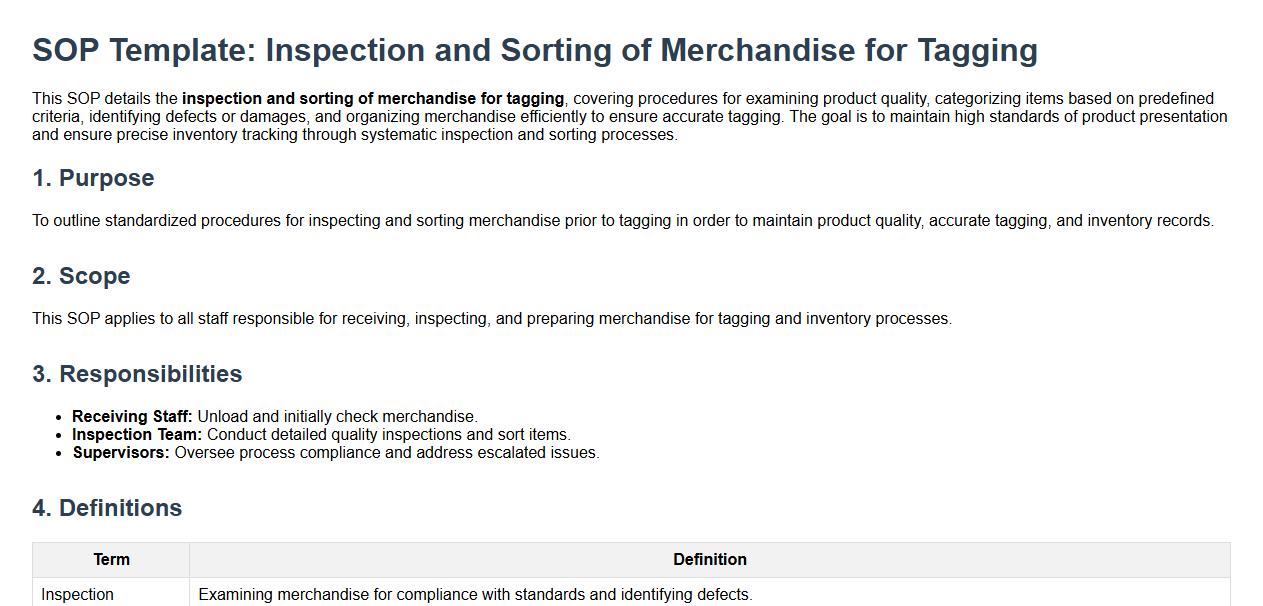
This SOP details the inspection and sorting of merchandise for tagging, covering procedures for examining product quality, categorizing items based on predefined criteria, identifying defects or damages, and organizing merchandise efficiently to ensure accurate tagging. The goal is to maintain high standards of product presentation and ensure precise inventory tracking through systematic inspection and sorting processes.
Assignment of SKU/barcode to each product.
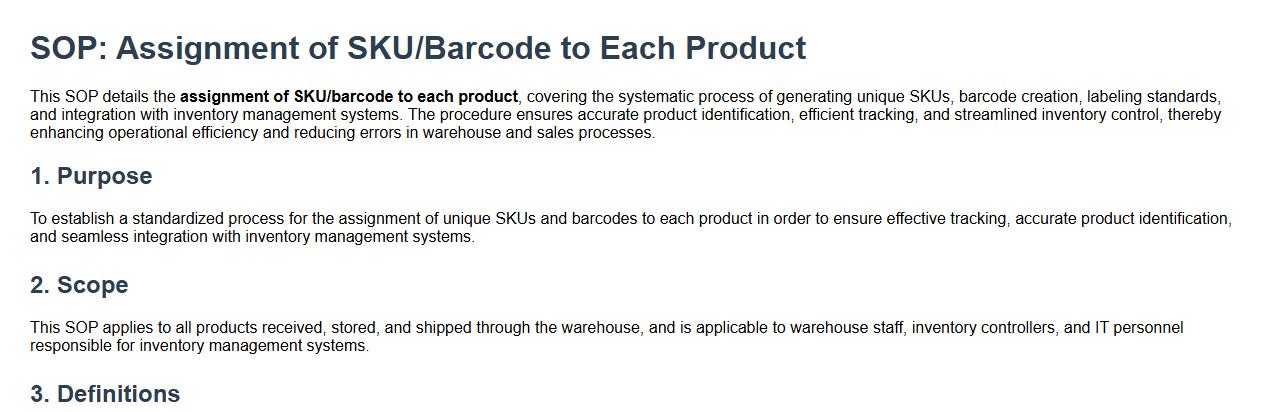
This SOP details the assignment of SKU/barcode to each product, covering the systematic process of generating unique SKUs, barcode creation, labeling standards, and integration with inventory management systems. The procedure ensures accurate product identification, efficient tracking, and streamlined inventory control, thereby enhancing operational efficiency and reducing errors in warehouse and sales processes.
Preparation of price tags (printing and data entry).
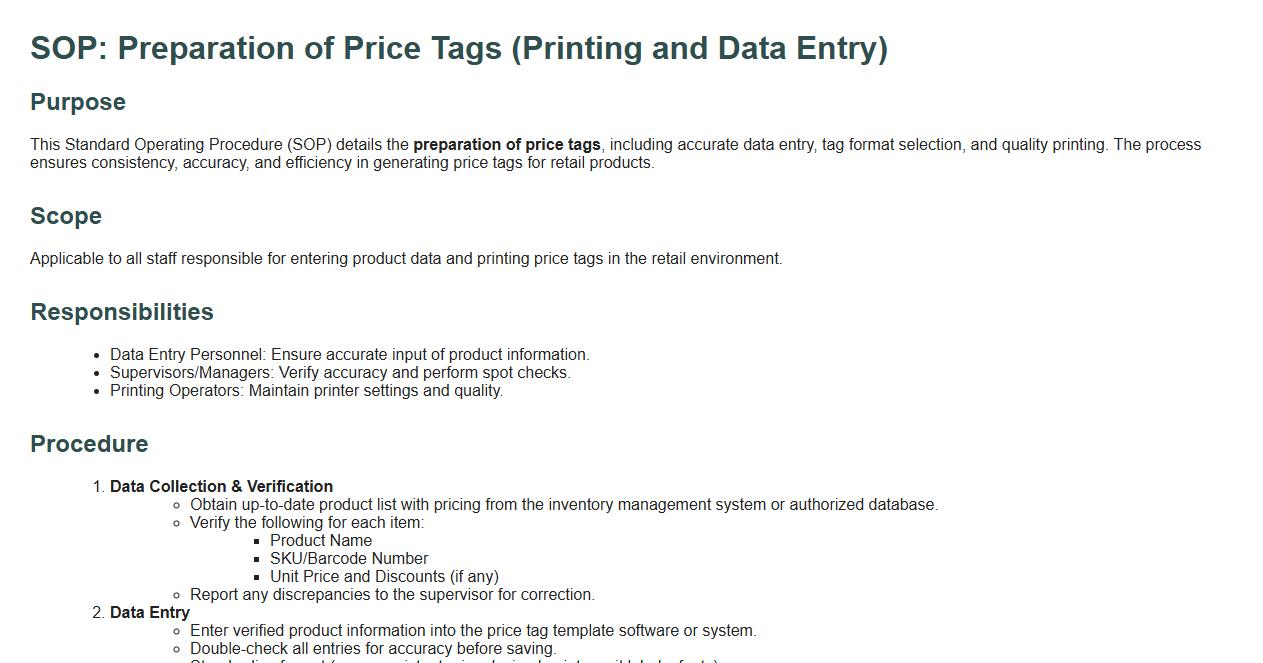
This SOP details the process for the preparation of price tags, including steps for accurate data entry, selecting appropriate tag formats, and ensuring high-quality printing. It covers guidelines for verifying product information, standardizing price tag design, maintaining printer settings, and quality checks to ensure accurate and clear price tagging. This procedure ensures consistency, accuracy, and efficiency in generating price tags for retail products.
Verification of price accuracy against master price list.
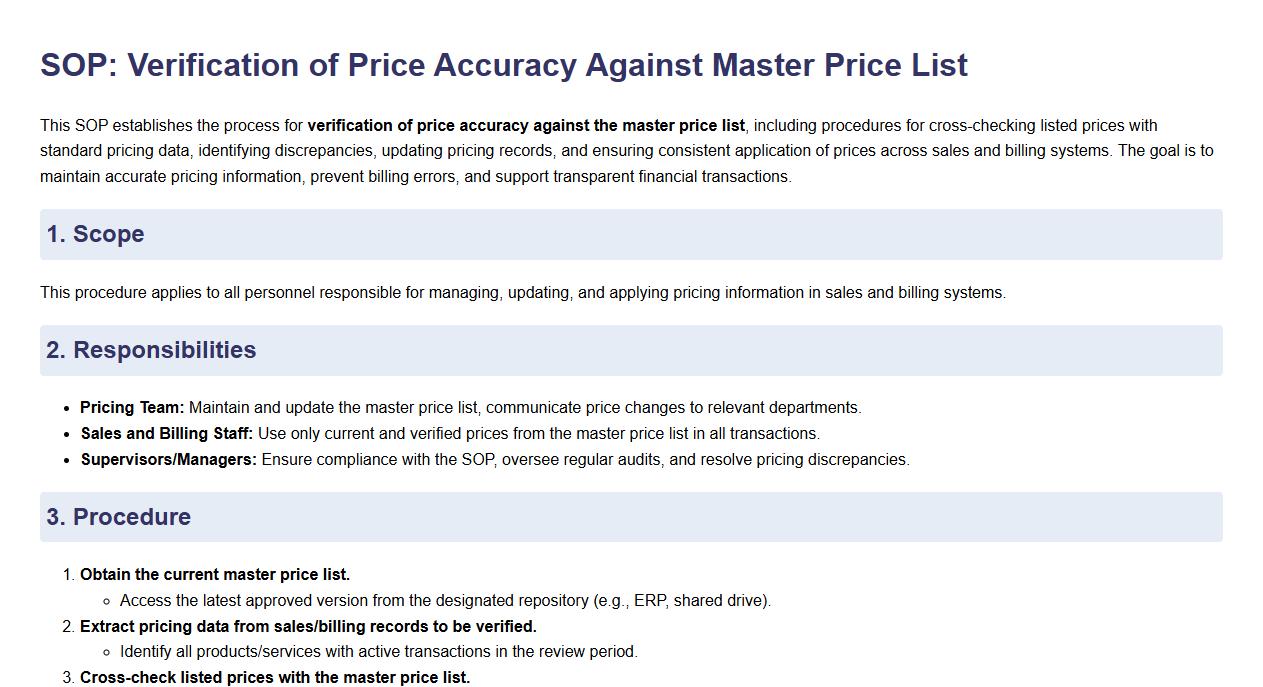
This SOP establishes the process for verification of price accuracy against the master price list, including procedures for cross-checking listed prices with standard pricing data, identifying discrepancies, updating pricing records, and ensuring consistent application of prices across sales and billing systems. The goal is to maintain accurate pricing information, prevent billing errors, and support transparent financial transactions.
Attachment of tags or labels to products according to guidelines.

This SOP details the process of attachment of tags or labels to products according to guidelines, ensuring accurate placement, adherence to labeling standards, and consistency across all products. It covers the selection of appropriate tags or labels, proper attachment techniques, quality checks, and documentation requirements to maintain product identification and traceability throughout the supply chain.
Double-checks and supervisor approval of tagged items.
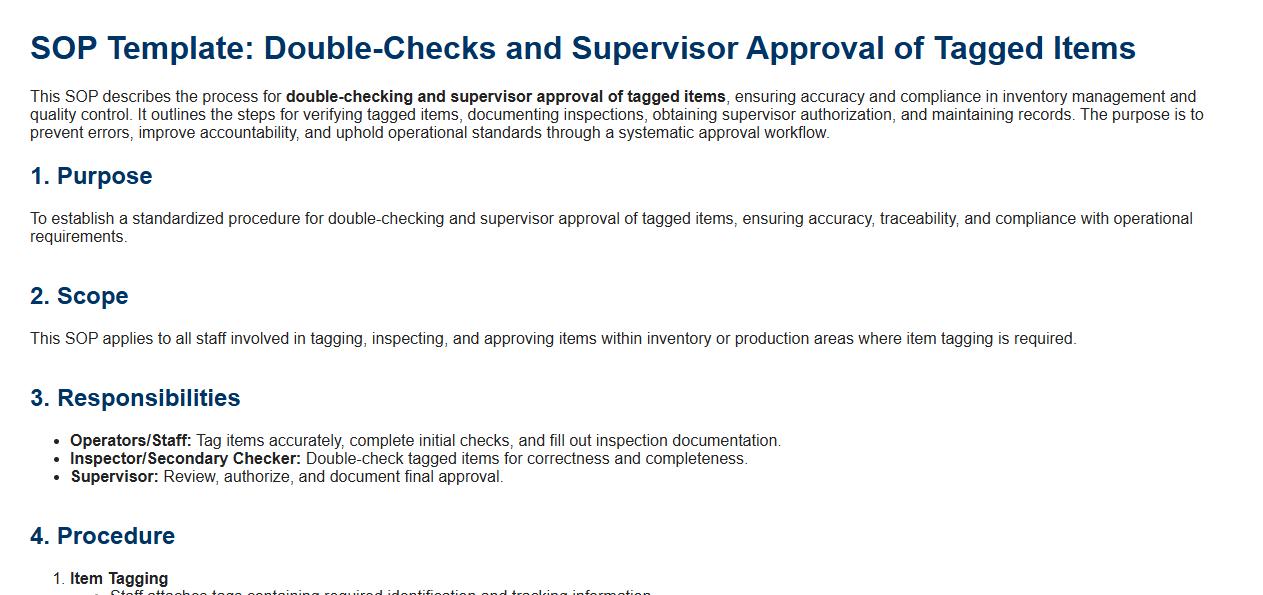
This SOP describes the process for double-checking and supervisor approval of tagged items, ensuring accuracy and compliance in inventory management and quality control. It outlines the steps for verifying tagged items, documenting inspections, obtaining supervisor authorization, and maintaining records. The purpose is to prevent errors, improve accountability, and uphold operational standards through a systematic approval workflow.
Procedures for handling price changes or markdowns.
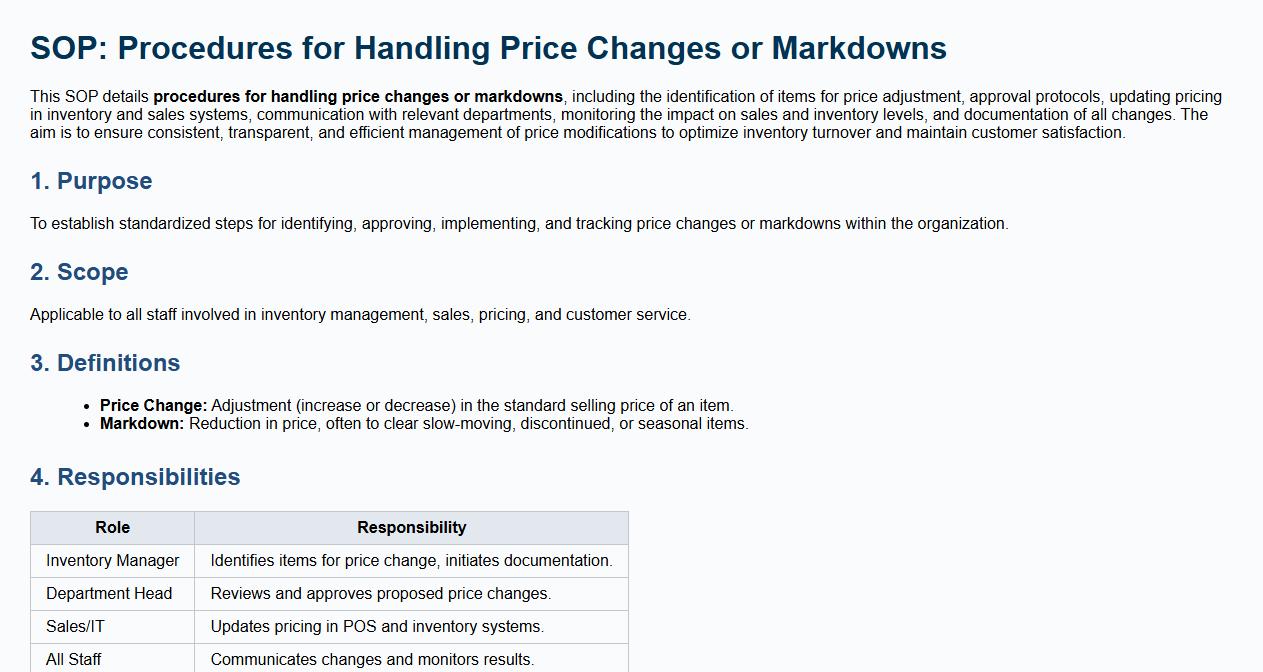
This SOP details procedures for handling price changes or markdowns, including the identification of items for price adjustment, approval protocols, updating pricing in inventory and sales systems, communication with relevant departments, monitoring the impact on sales and inventory levels, and documentation of all changes. The aim is to ensure consistent, transparent, and efficient management of price modifications to optimize inventory turnover and maintain customer satisfaction.
Documentation and tracking of tagged inventory.
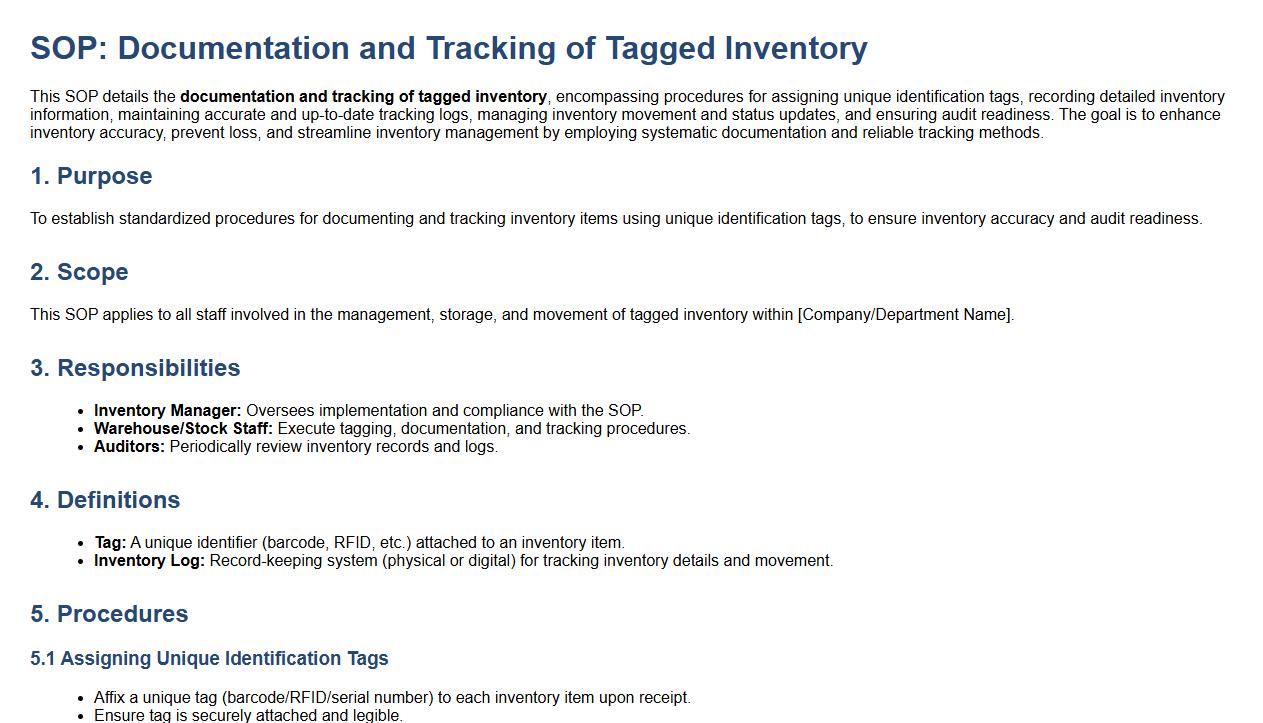
This SOP details the documentation and tracking of tagged inventory, encompassing procedures for assigning unique identification tags, recording detailed inventory information, maintaining accurate and up-to-date tracking logs, managing inventory movement and status updates, and ensuring audit readiness. The goal is to enhance inventory accuracy, prevent loss, and streamline inventory management by employing systematic documentation and reliable tracking methods.
Final placement of tagged products on sales floor displays.
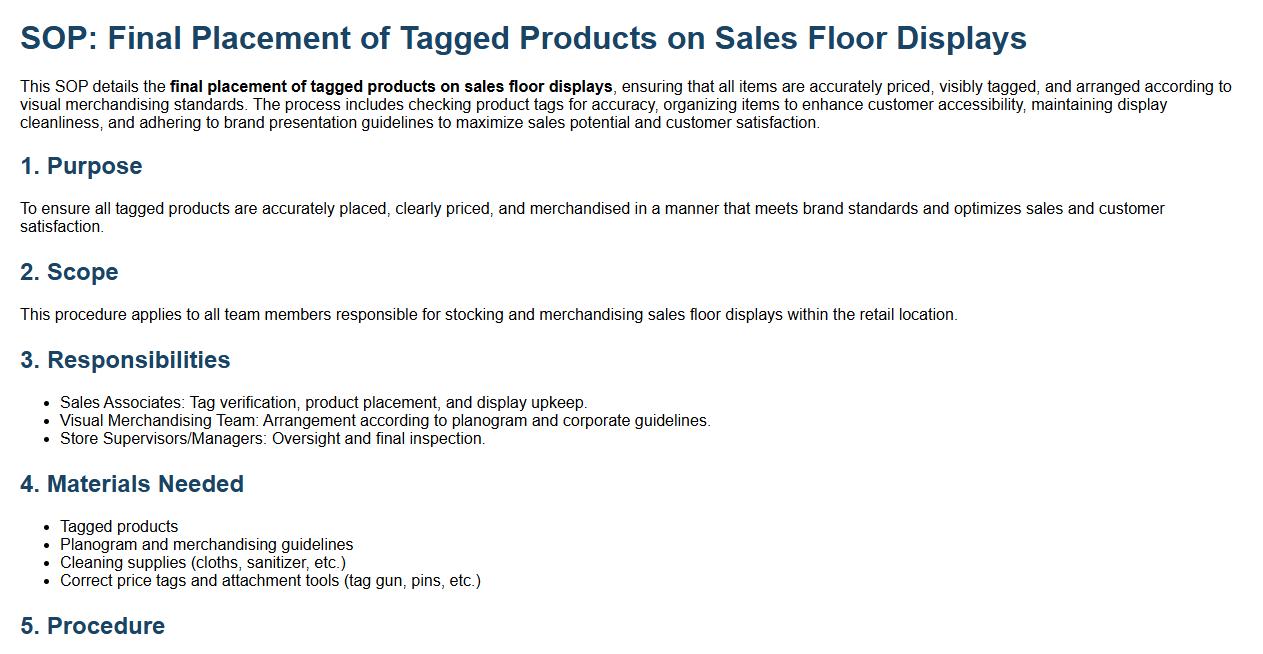
This SOP details the final placement of tagged products on sales floor displays, ensuring that all items are accurately priced, visibly tagged, and arranged according to visual merchandising standards. The process includes checking product tags for accuracy, organizing items to enhance customer accessibility, maintaining display cleanliness, and adhering to brand presentation guidelines to maximize sales potential and customer satisfaction.
What is the primary purpose of the SOP for Retail Price Tagging?
The primary purpose of the SOP for Retail Price Tagging is to ensure consistency and accuracy in labeling products with their retail prices. This document helps standardize the process across all store locations to maintain uniform customer experience. Ultimately, it aims to minimize pricing errors and enhance operational efficiency.
Which team members are responsible for executing the retail price tagging process?
The responsibility for retail price tagging typically falls on the sales associates and inventory team members. Store managers also oversee the accuracy and timeliness of the tagging process. Proper training ensures these team members correctly follow the SOP guidelines.
What are the key steps outlined in the document for accurate price tag placement?
The SOP highlights critical steps, including verifying the correct price, selecting the appropriate tag size, and firmly attaching the tag to the product. It emphasizes placing the price tag in a visible but non-obtrusive location on the merchandise. Finally, a double-check process is included to ensure accuracy before products reach the sales floor.
How does the SOP address handling discrepancies or errors in price tagging?
The SOP defines a clear protocol for identifying and correcting discrepancies in pricing tags, involving immediate removal and replacement of incorrect tags. Employees must report errors to store management for further review and documentation. This systematic approach prevents customer confusion and maintains pricing integrity.
What compliance or regulatory standards are referenced in the price tagging SOP?
The SOP references applicable consumer protection laws and pricing regulations that retailers must follow to avoid legal issues. It ensures that all price tags include mandatory information such as unit price and currency format. Compliance with these standards protects both the retailer and the customer.