

A SOP Template for Retail Vendor Management provides a clear framework for streamlining vendor selection, evaluation, and communication processes. It ensures consistency in managing supplier relationships, maintaining quality standards, and optimizing inventory flow. This structured approach helps retail businesses enhance efficiency and reduce risks associated with vendor operations.
Vendor onboarding and qualification process.
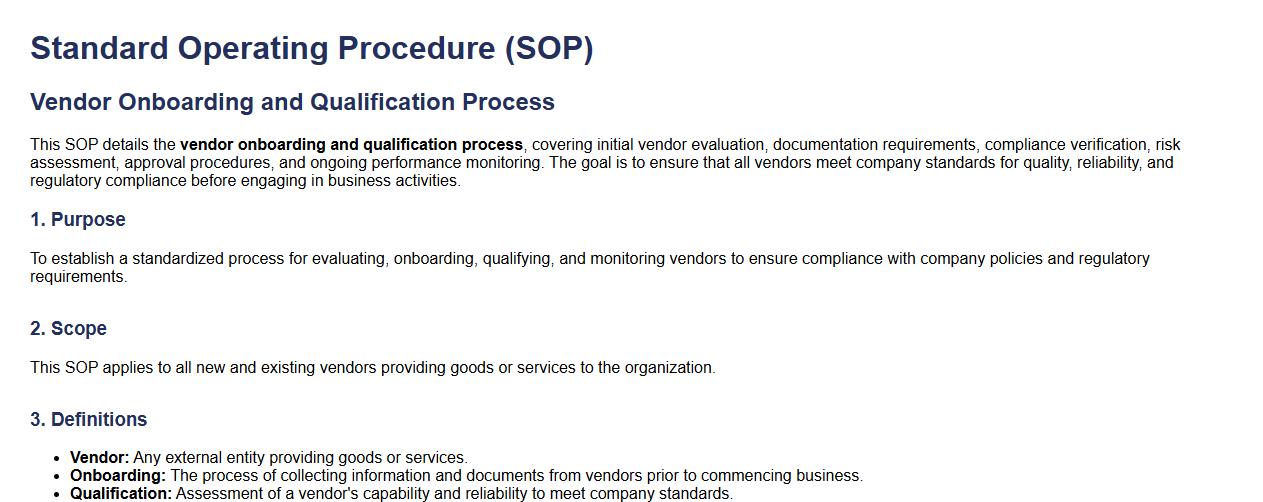
This SOP details the vendor onboarding and qualification process, covering initial vendor evaluation, documentation requirements, compliance verification, risk assessment, approval procedures, and ongoing performance monitoring. The goal is to ensure that all vendors meet company standards for quality, reliability, and regulatory compliance before engaging in business activities.
Vendor contract negotiation and documentation.
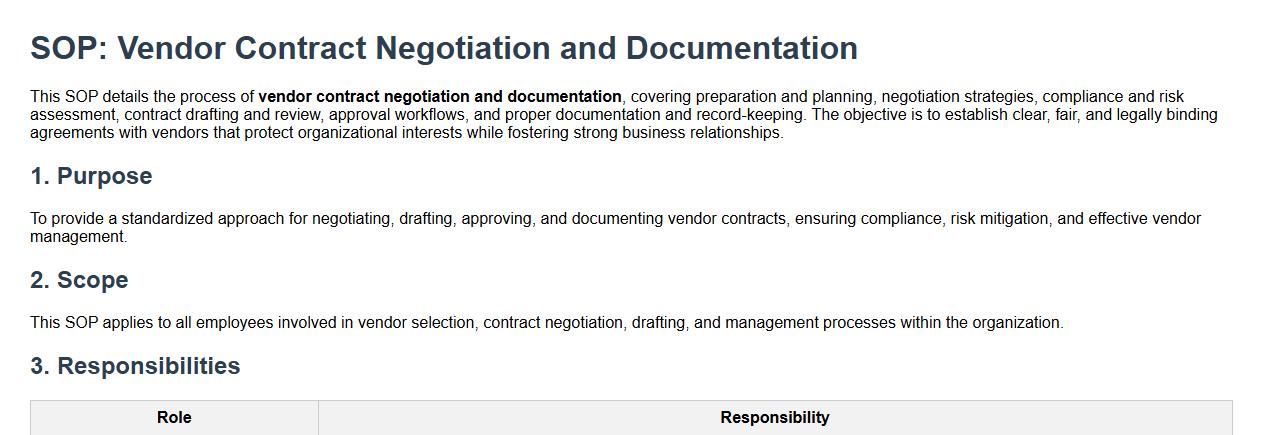
This SOP details the process of vendor contract negotiation and documentation, covering preparation and planning, negotiation strategies, compliance and risk assessment, contract drafting and review, approval workflows, and proper documentation and record-keeping. The objective is to establish clear, fair, and legally binding agreements with vendors that protect organizational interests while fostering strong business relationships.
Product quality assurance and inspection protocols.
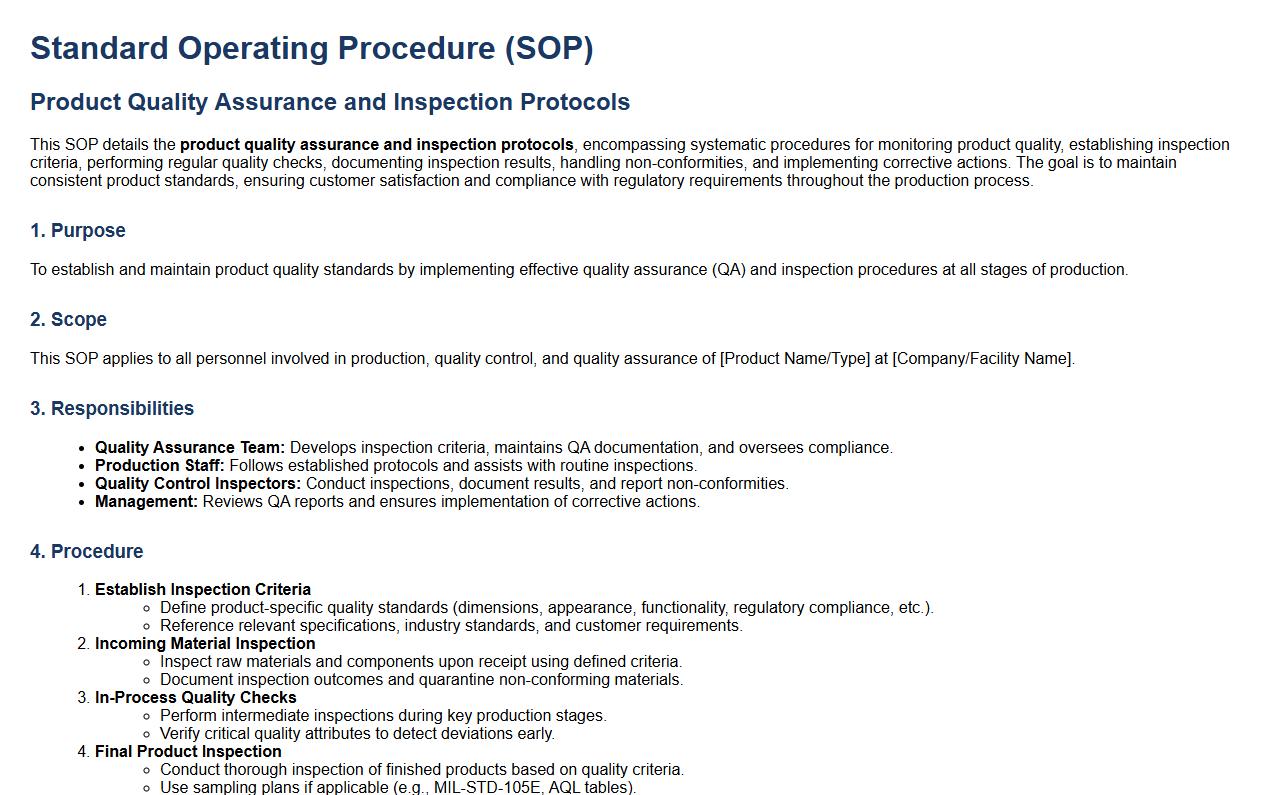
This SOP details the product quality assurance and inspection protocols, encompassing systematic procedures for monitoring product quality, establishing inspection criteria, performing regular quality checks, documenting inspection results, handling non-conformities, and implementing corrective actions. The goal is to maintain consistent product standards, ensuring customer satisfaction and compliance with regulatory requirements throughout the production process.
Order placement, tracking, and delivery guidelines.
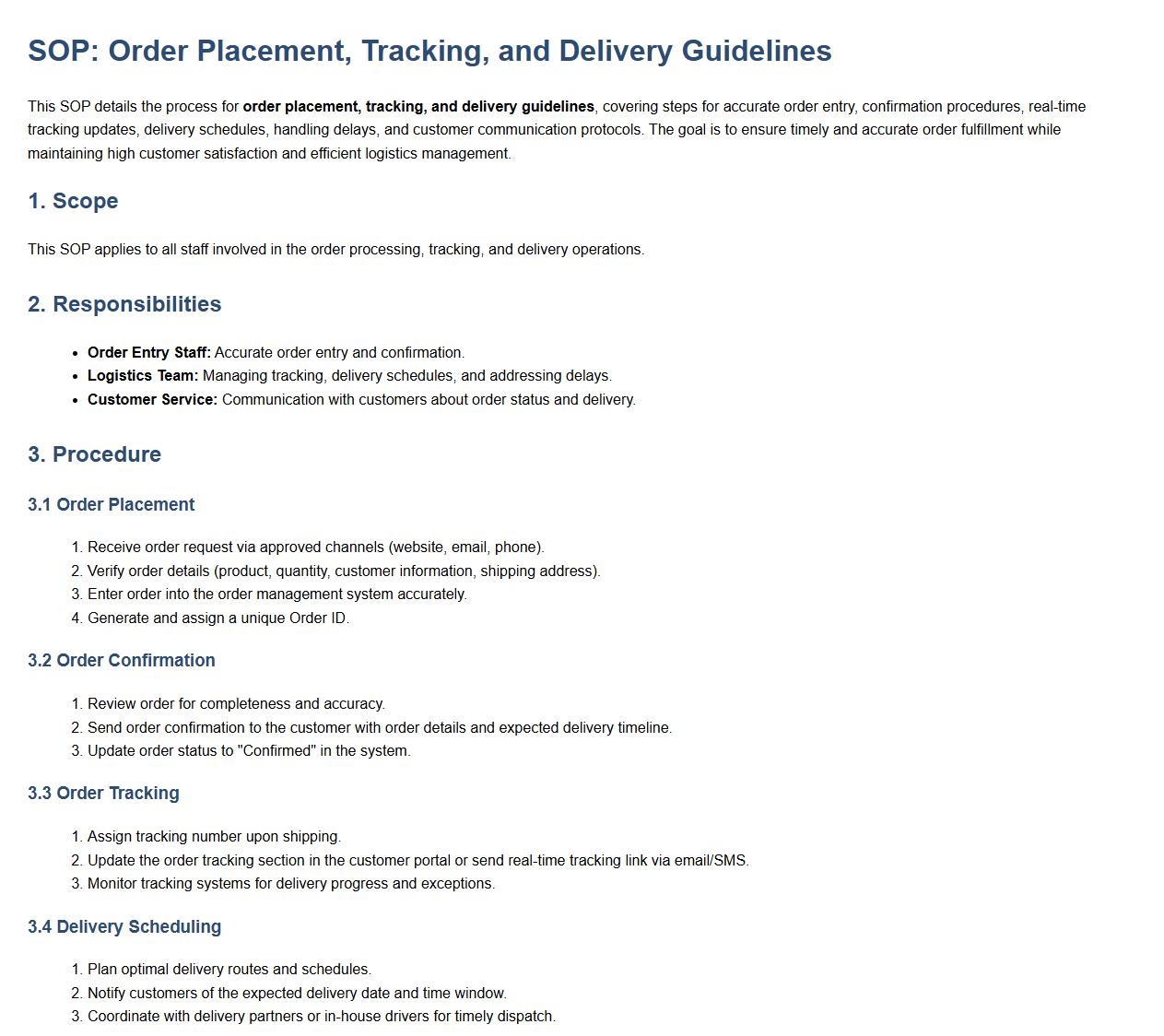
This SOP details the process for order placement, tracking, and delivery guidelines, covering steps for accurate order entry, confirmation procedures, real-time tracking updates, delivery schedules, handling delays, and customer communication protocols. The goal is to ensure timely and accurate order fulfillment while maintaining high customer satisfaction and efficient logistics management.
Inventory receiving and reconciliation procedures.
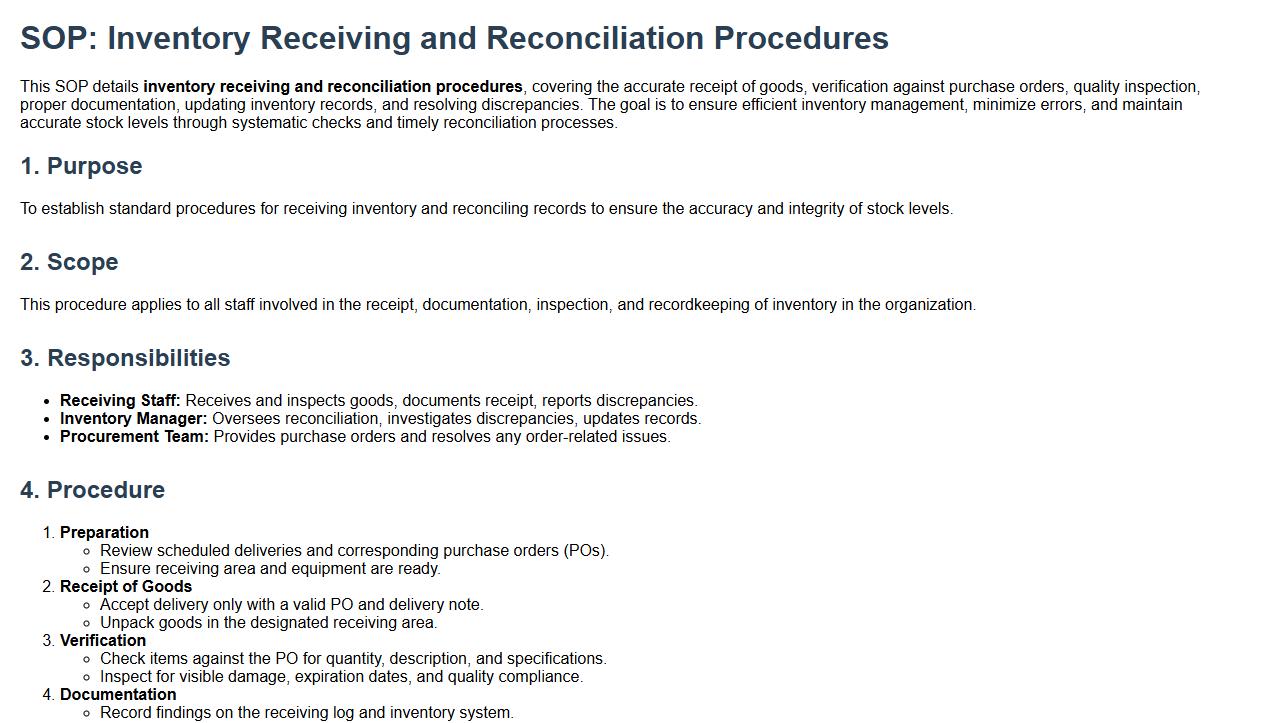
This SOP details inventory receiving and reconciliation procedures, covering the accurate receipt of goods, verification against purchase orders, quality inspection, proper documentation, updating inventory records, and resolving discrepancies. The goal is to ensure efficient inventory management, minimize errors, and maintain accurate stock levels through systematic checks and timely reconciliation processes.
Vendor performance monitoring and evaluation.
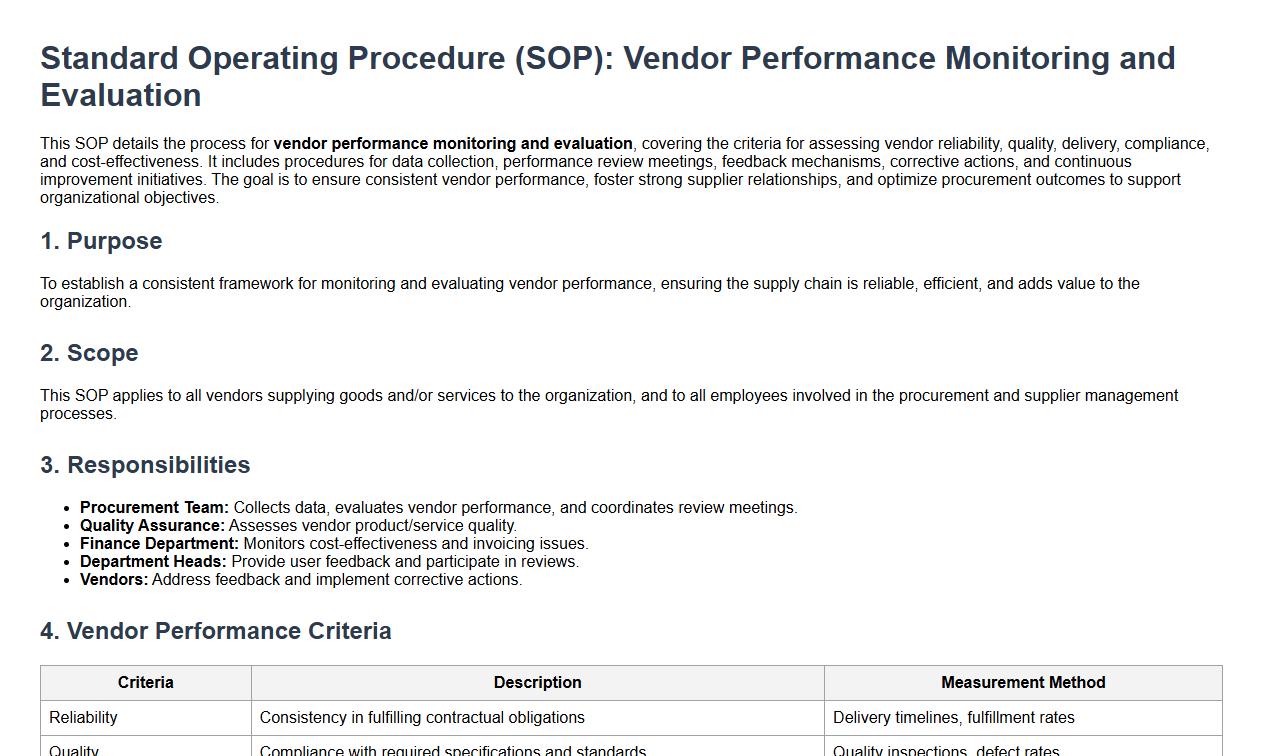
This SOP details the process for vendor performance monitoring and evaluation, covering the criteria for assessing vendor reliability, quality, delivery, compliance, and cost-effectiveness. It includes procedures for data collection, performance review meetings, feedback mechanisms, corrective actions, and continuous improvement initiatives. The goal is to ensure consistent vendor performance, foster strong supplier relationships, and optimize procurement outcomes to support organizational objectives.
Non-compliance handling and corrective actions.
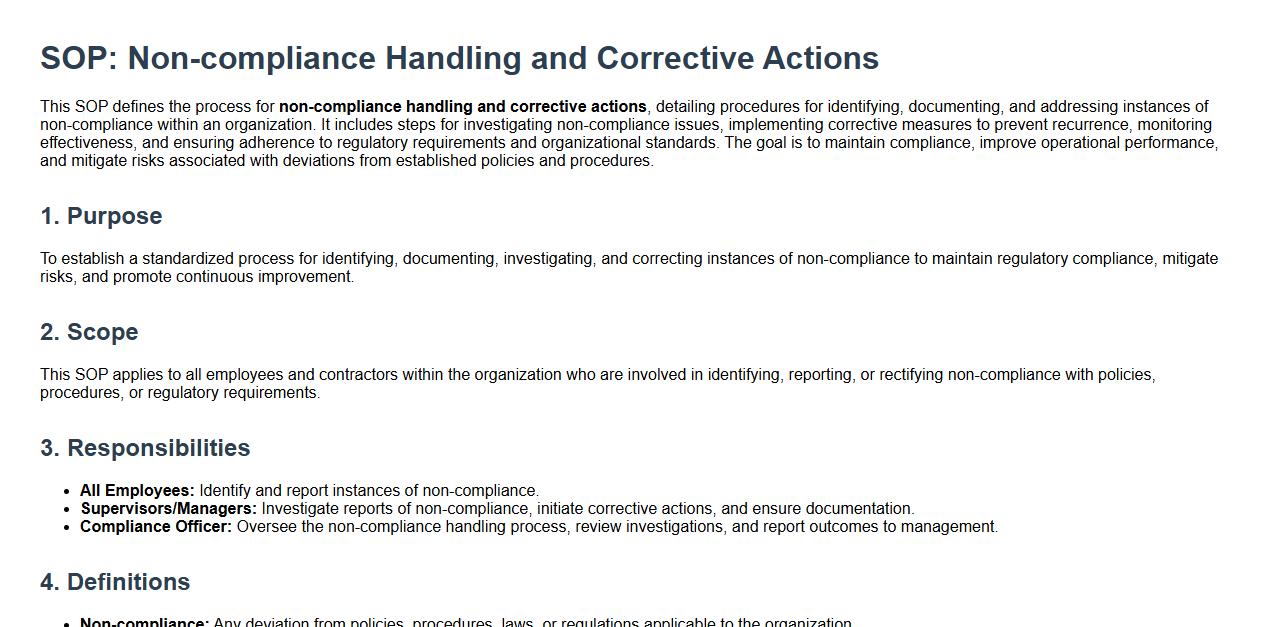
This SOP defines the process for non-compliance handling and corrective actions, detailing procedures for identifying, documenting, and addressing instances of non-compliance within an organization. It includes steps for investigating non-compliance issues, implementing corrective measures to prevent recurrence, monitoring effectiveness, and ensuring adherence to regulatory requirements and organizational standards. The goal is to maintain compliance, improve operational performance, and mitigate risks associated with deviations from established policies and procedures.
Vendor payment processing and invoicing standards.
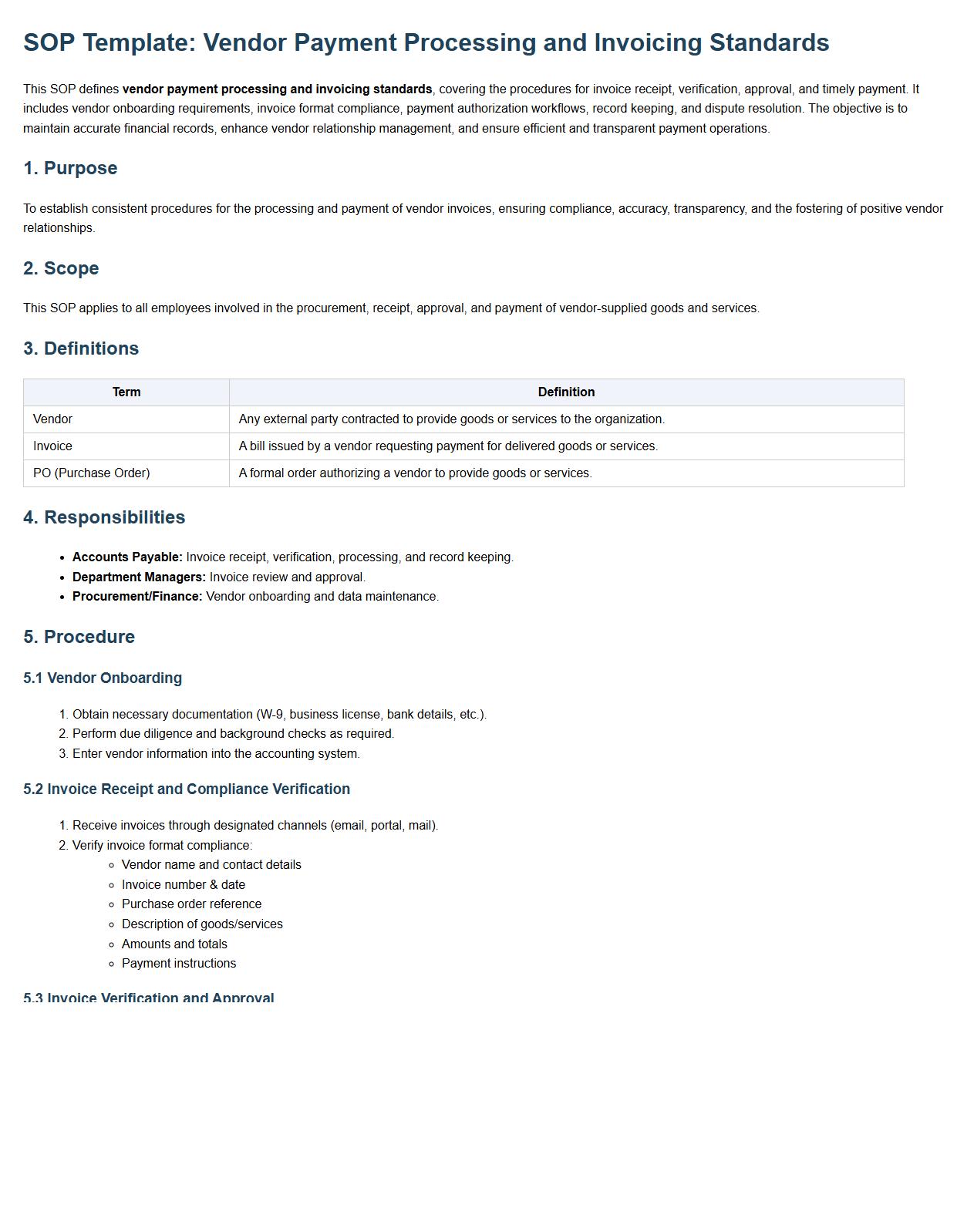
This SOP defines vendor payment processing and invoicing standards, covering the procedures for invoice receipt, verification, approval, and timely payment. It includes vendor onboarding requirements, invoice format compliance, payment authorization workflows, record keeping, and dispute resolution. The objective is to maintain accurate financial records, enhance vendor relationship management, and ensure efficient and transparent payment operations.
Product return and exchange procedures.
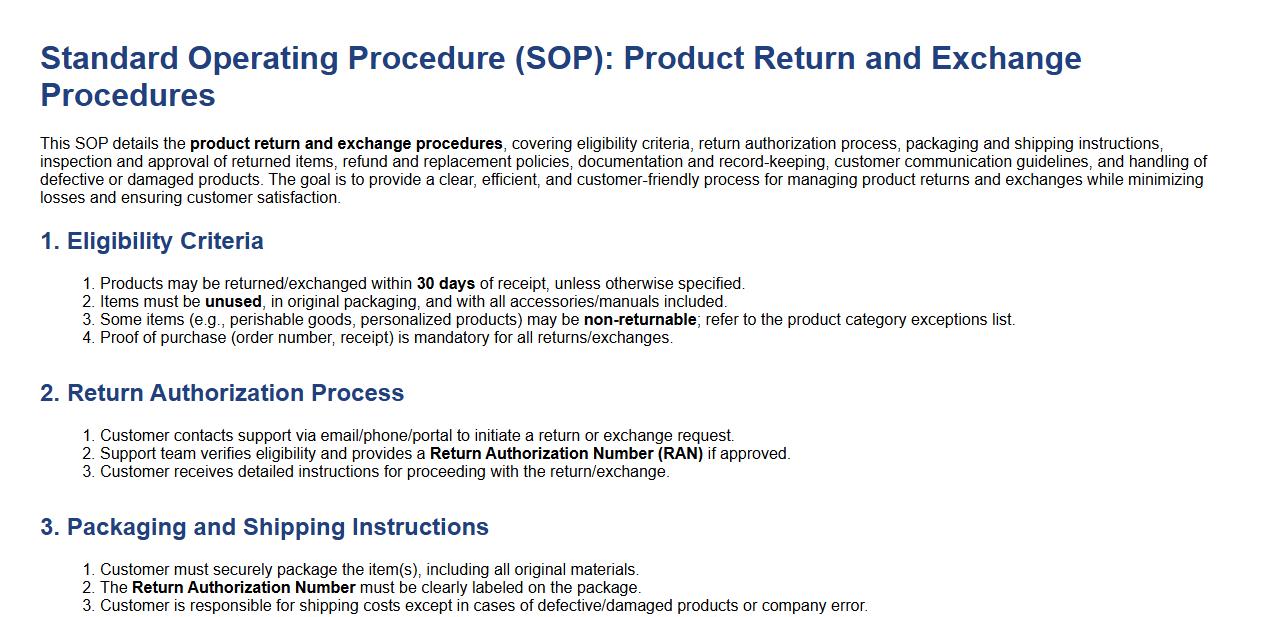
This SOP details the product return and exchange procedures, covering eligibility criteria, return authorization process, packaging and shipping instructions, inspection and approval of returned items, refund and replacement policies, documentation and record-keeping, customer communication guidelines, and handling of defective or damaged products. The goal is to provide a clear, efficient, and customer-friendly process for managing product returns and exchanges while minimizing losses and ensuring customer satisfaction.
Vendor communication and relationship management.
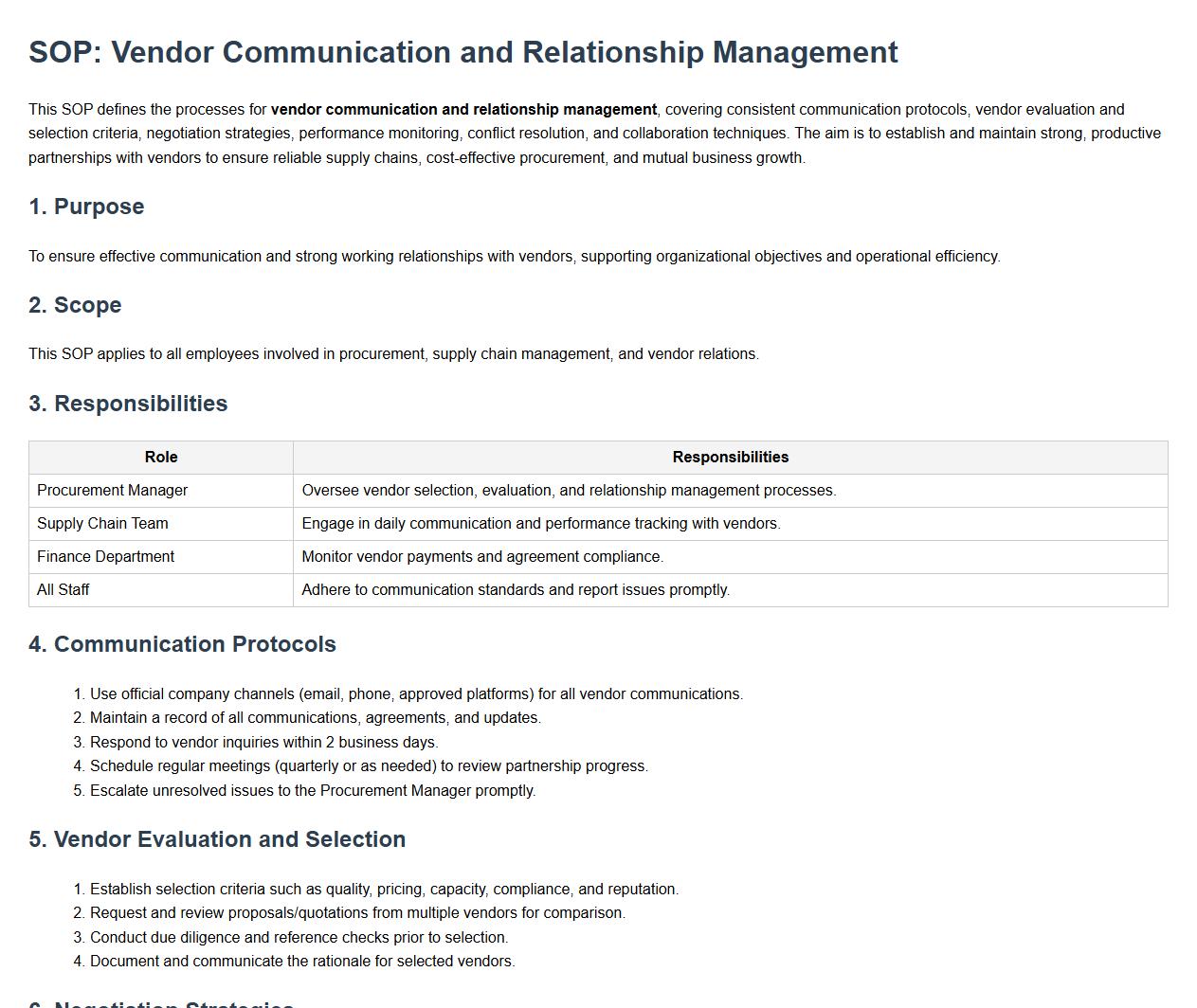
This SOP defines the processes for vendor communication and relationship management, covering consistent communication protocols, vendor evaluation and selection criteria, negotiation strategies, performance monitoring, conflict resolution, and collaboration techniques. The aim is to establish and maintain strong, productive partnerships with vendors to ensure reliable supply chains, cost-effective procurement, and mutual business growth.
Key Steps Involved in Vendor Onboarding Process
The vendor onboarding process begins with the initial registration and submission of required credentials. Next, a thorough evaluation and approval are conducted to verify compliance and capability. Finally, vendors receive access to the retail systems and are briefed on operational expectations.
Criteria for Vendor Performance Evaluation and Monitoring
The SOP defines vendor performance evaluation based on timely delivery, product quality, and adherence to contract terms. Continuous monitoring is implemented through periodic reviews and scorecards. Key performance indicators are regularly updated to ensure ongoing improvement and accountability.
Standard Procedures for Resolving Disputes or Compliance Issues
The SOP specifies a clear dispute resolution framework that starts with informal dialogue between parties. If unresolved, it progresses to formal mediation conducted by management representatives. Persistent issues trigger corrective action plans with defined timelines for resolution.
Documentation and Records Required Throughout Vendor Management Lifecycle
Essential documentation includes vendor registration forms, compliance certificates, contracts, and performance reviews. Records of communication, invoices, and audit reports are maintained systematically. This comprehensive documentation supports transparency and audit readiness.
Escalation Protocols for Vendor Non-Compliance or Critical Issues
The SOP outlines a structured escalation protocol starting with vendor notification and request for corrective measures. If non-compliance persists, issues escalate to senior management for intervention. Critical cases may lead to suspension or termination of the vendor contract.