

A SOP Template for Home Healthcare Visits provides a structured framework to ensure consistent and high-quality care during patient home visits. It outlines step-by-step procedures, including patient assessment, medication management, and safety protocols, to improve efficiency and compliance with healthcare regulations. Utilizing this template helps caregivers maintain clear communication and documentation throughout each visit.
Patient identification and verification procedures.
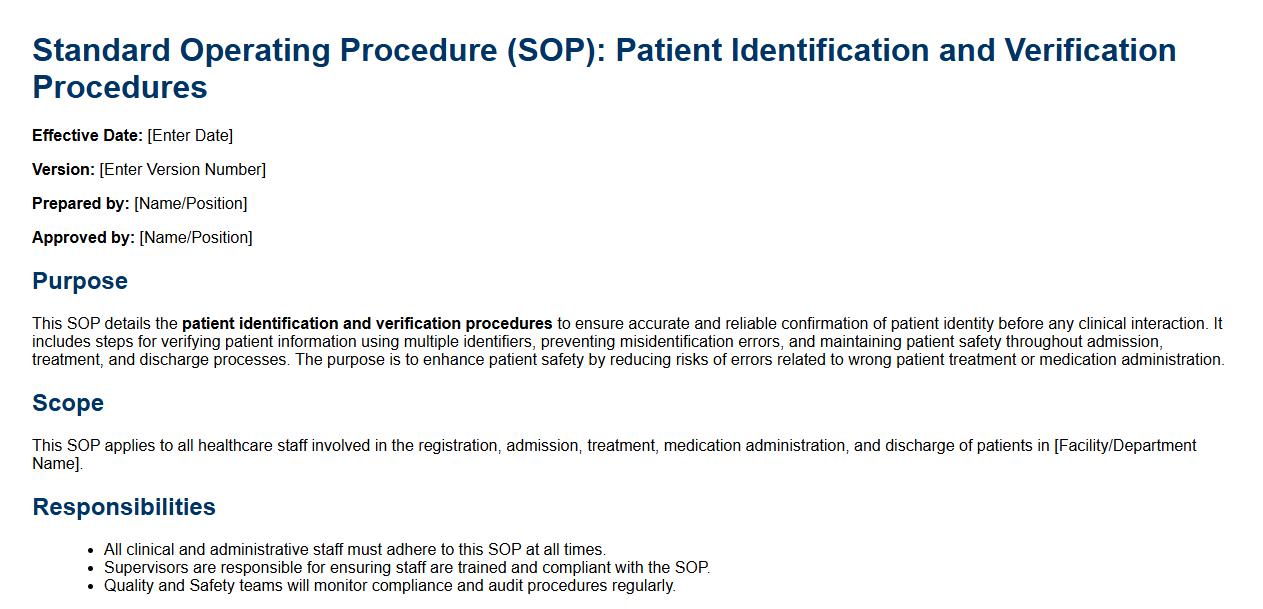
This SOP details the patient identification and verification procedures, including steps for accurately confirming patient identity prior to any medical intervention, use of multiple identifiers such as name and date of birth, verification of identification bands, communication protocols among healthcare staff, and documentation requirements. The purpose is to minimize errors, ensure patient safety, and maintain the integrity of medical treatments and records throughout the care process.
Pre-visit scheduling and confirmation protocols.
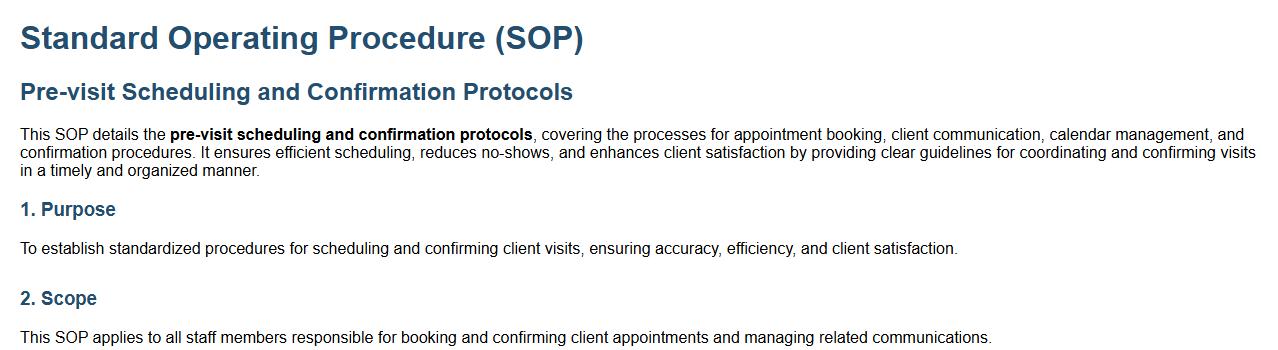
This SOP details the pre-visit scheduling and confirmation protocols, covering the processes for appointment booking, client communication, calendar management, and confirmation procedures. It ensures efficient scheduling, reduces no-shows, and enhances client satisfaction by providing clear guidelines for coordinating and confirming visits in a timely and organized manner.
Personal protective equipment (PPE) usage guidelines.
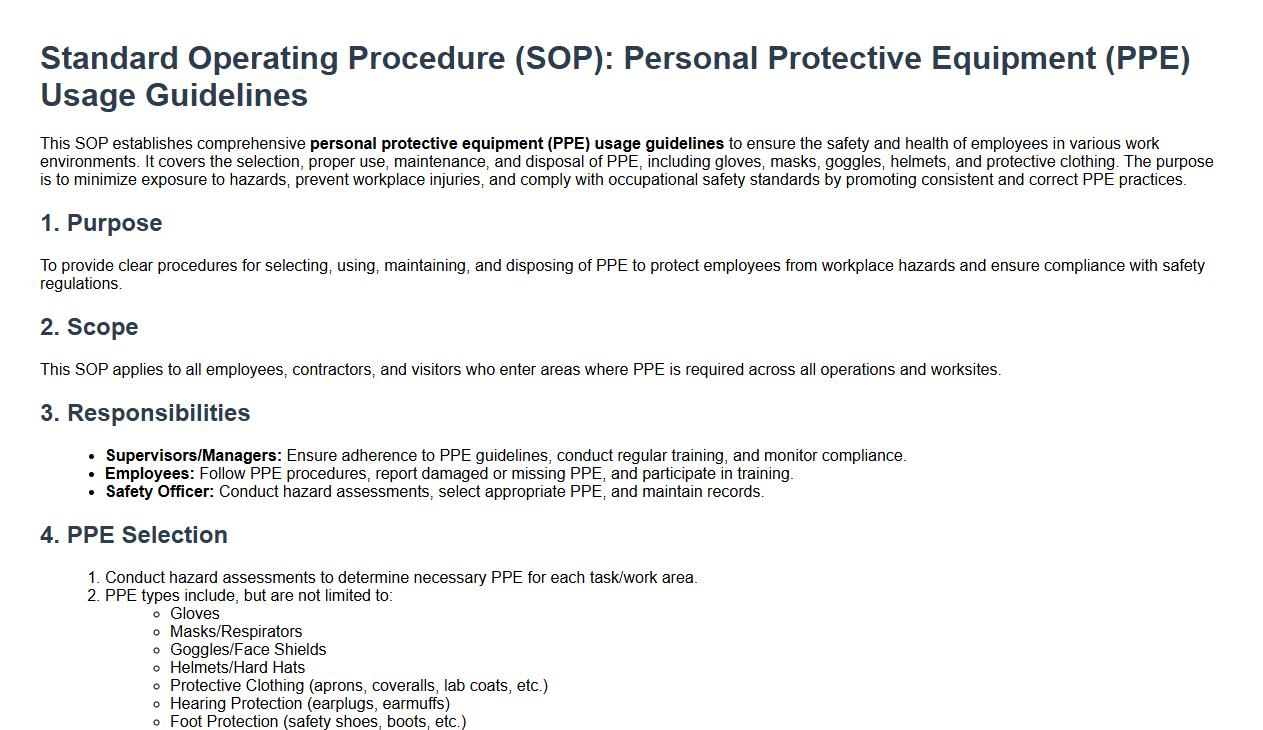
This SOP establishes comprehensive personal protective equipment (PPE) usage guidelines to ensure the safety and health of employees in various work environments. It covers the selection, proper use, maintenance, and disposal of PPE, including gloves, masks, goggles, helmets, and protective clothing. The purpose is to minimize exposure to hazards, prevent workplace injuries, and comply with occupational safety standards by promoting consistent and correct PPE practices.
Hand hygiene and infection control standards.
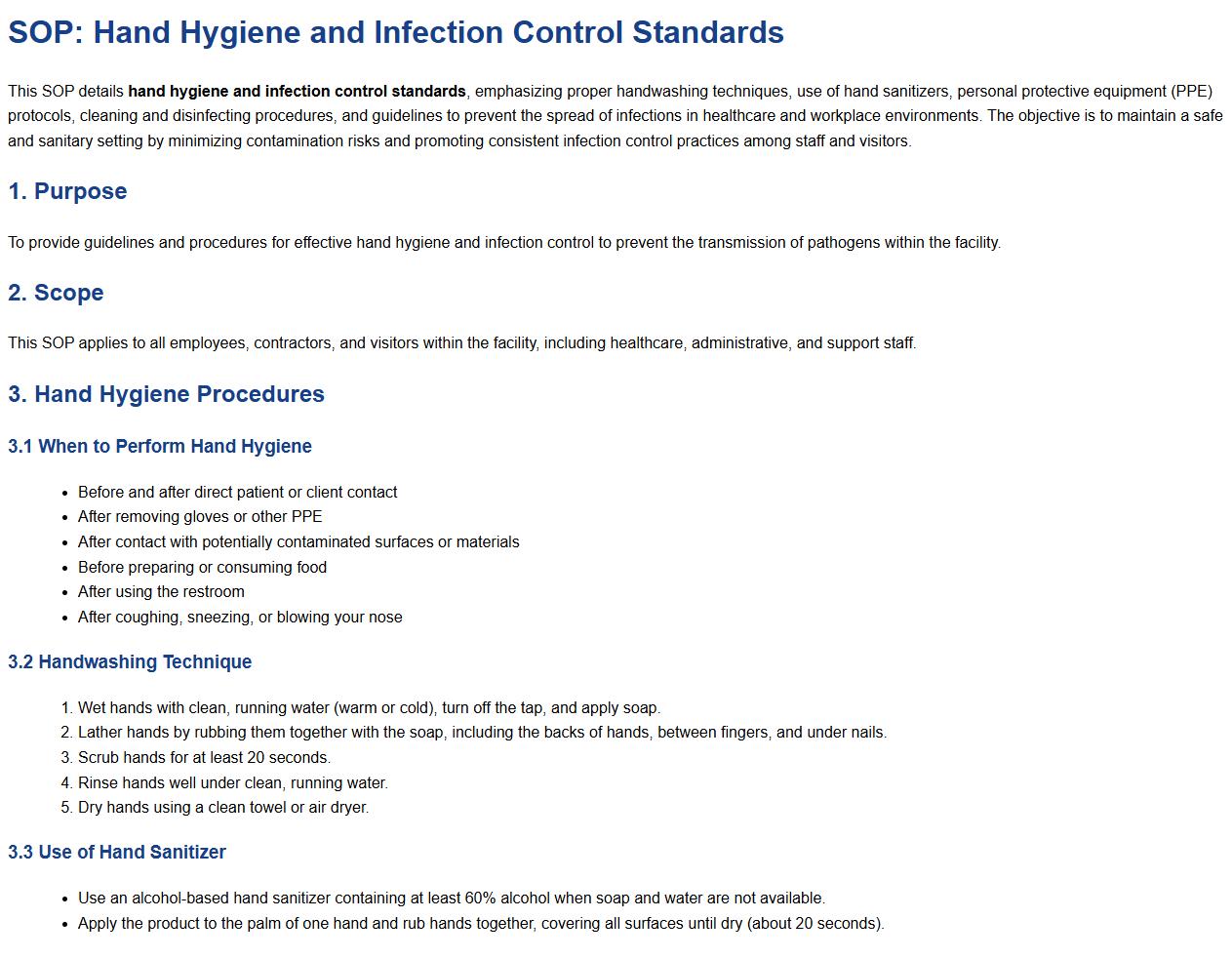
This SOP details hand hygiene and infection control standards, emphasizing proper handwashing techniques, use of hand sanitizers, personal protective equipment (PPE) protocols, cleaning and disinfecting procedures, and guidelines to prevent the spread of infections in healthcare and workplace environments. The objective is to maintain a safe and sanitary setting by minimizing contamination risks and promoting consistent infection control practices among staff and visitors.
Patient assessment and documentation routines.
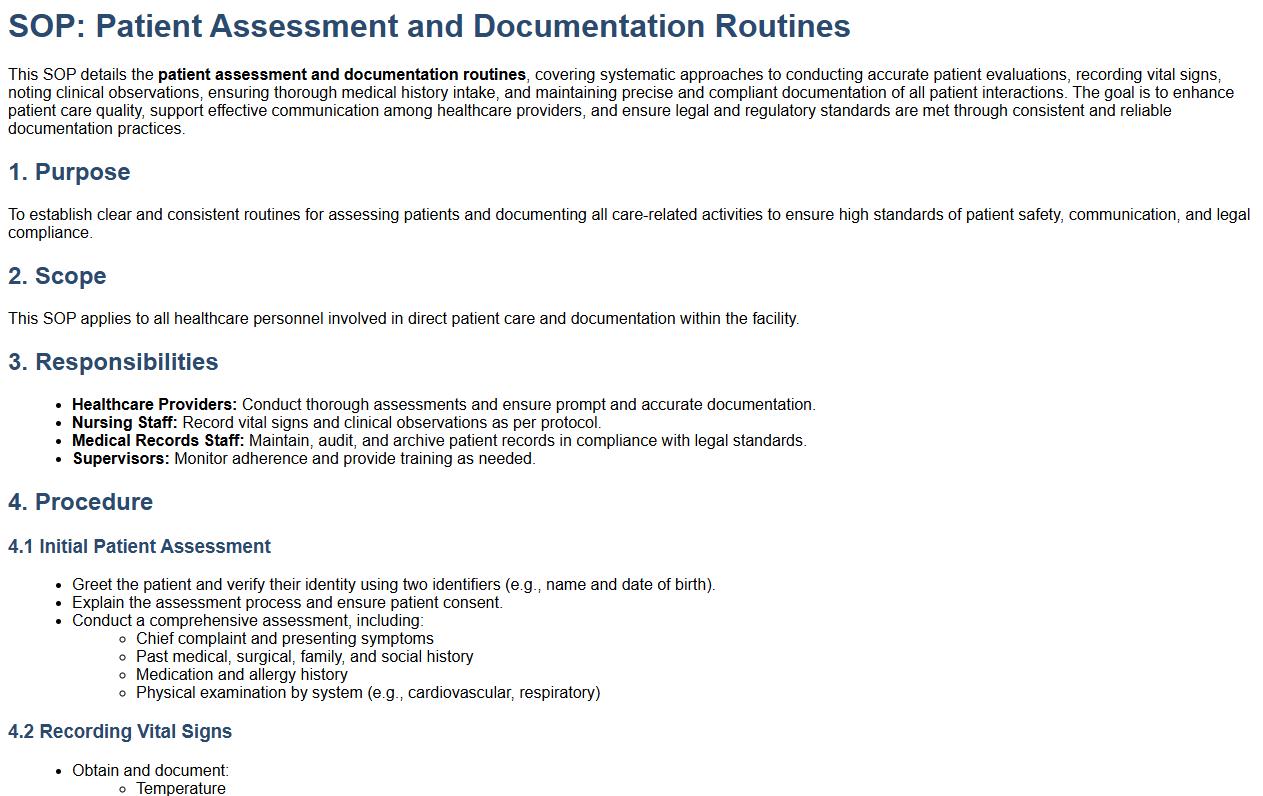
This SOP details the patient assessment and documentation routines, covering systematic approaches to conducting accurate patient evaluations, recording vital signs, noting clinical observations, ensuring thorough medical history intake, and maintaining precise and compliant documentation of all patient interactions. The goal is to enhance patient care quality, support effective communication among healthcare providers, and ensure legal and regulatory standards are met through consistent and reliable documentation practices.
Medication administration and reconciliation processes.
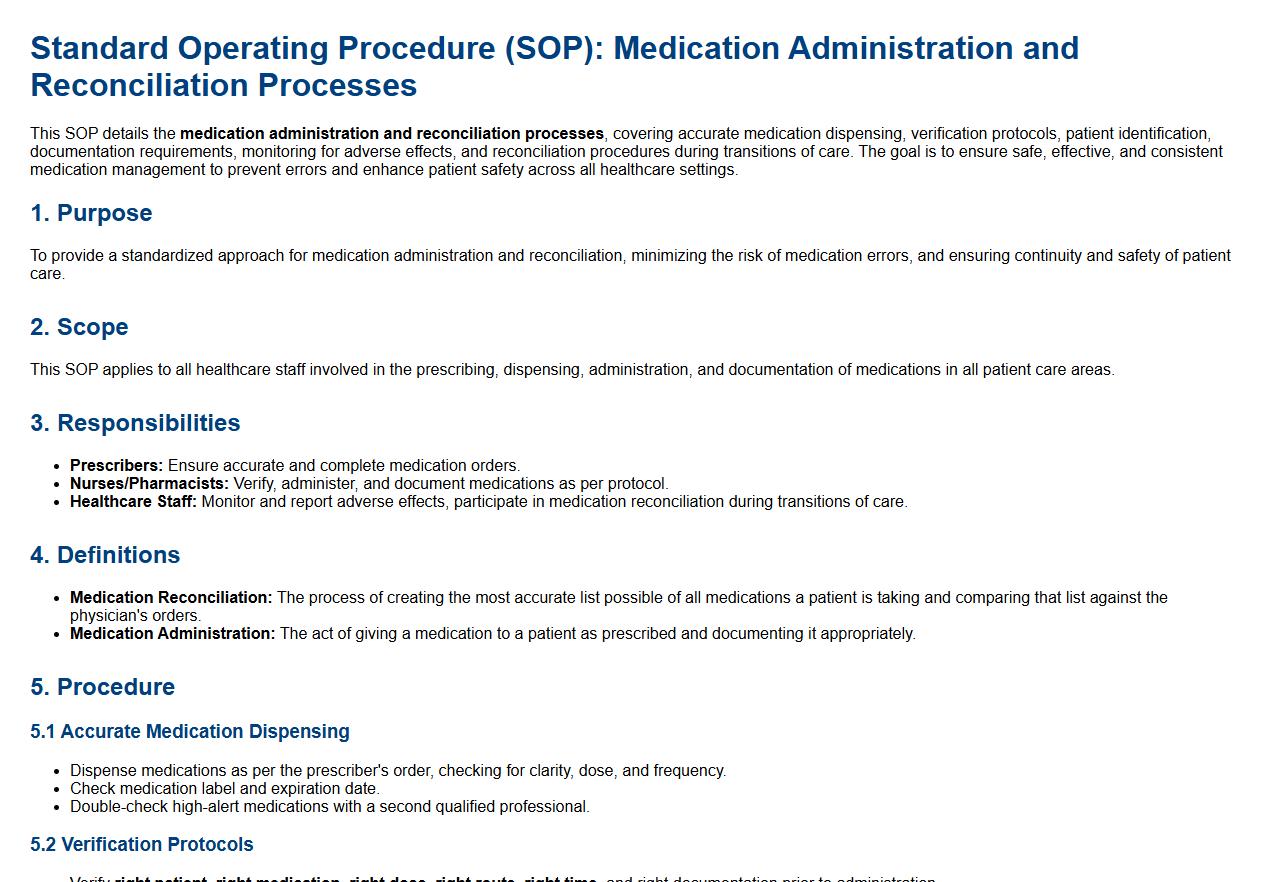
This SOP details the medication administration and reconciliation processes, covering accurate medication dispensing, verification protocols, patient identification, documentation requirements, monitoring for adverse effects, and reconciliation procedures during transitions of care. The goal is to ensure safe, effective, and consistent medication management to prevent errors and enhance patient safety across all healthcare settings.
Emergency response and escalation procedures.
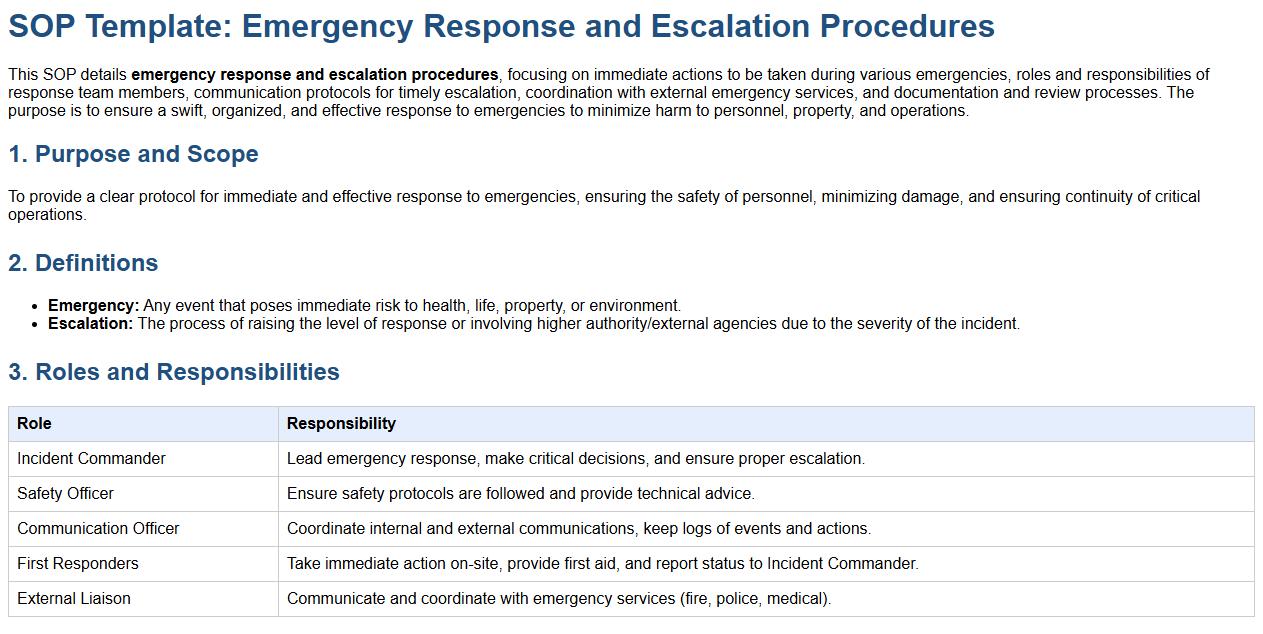
This SOP details emergency response and escalation procedures, focusing on immediate actions to be taken during various emergencies, roles and responsibilities of response team members, communication protocols for timely escalation, coordination with external emergency services, and documentation and review processes. The purpose is to ensure a swift, organized, and effective response to emergencies to minimize harm to personnel, property, and operations.
Waste disposal and sharps management instructions.
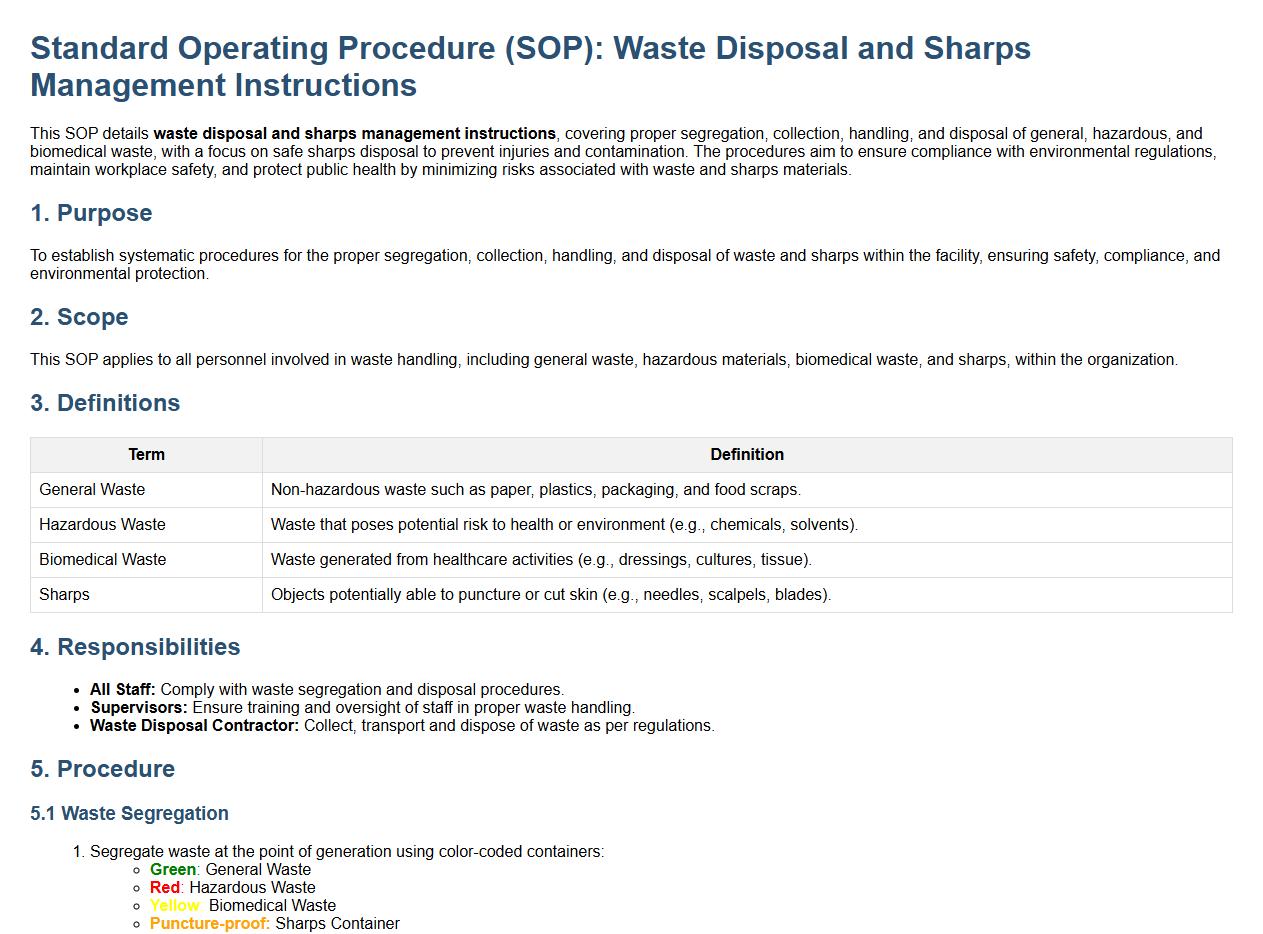
This SOP details waste disposal and sharps management instructions, covering proper segregation, collection, handling, and disposal of general, hazardous, and biomedical waste, with a focus on safe sharps disposal to prevent injuries and contamination. The procedures aim to ensure compliance with environmental regulations, maintain workplace safety, and protect public health by minimizing risks associated with waste and sharps materials.
Communication and reporting to supervising nurse/physician.
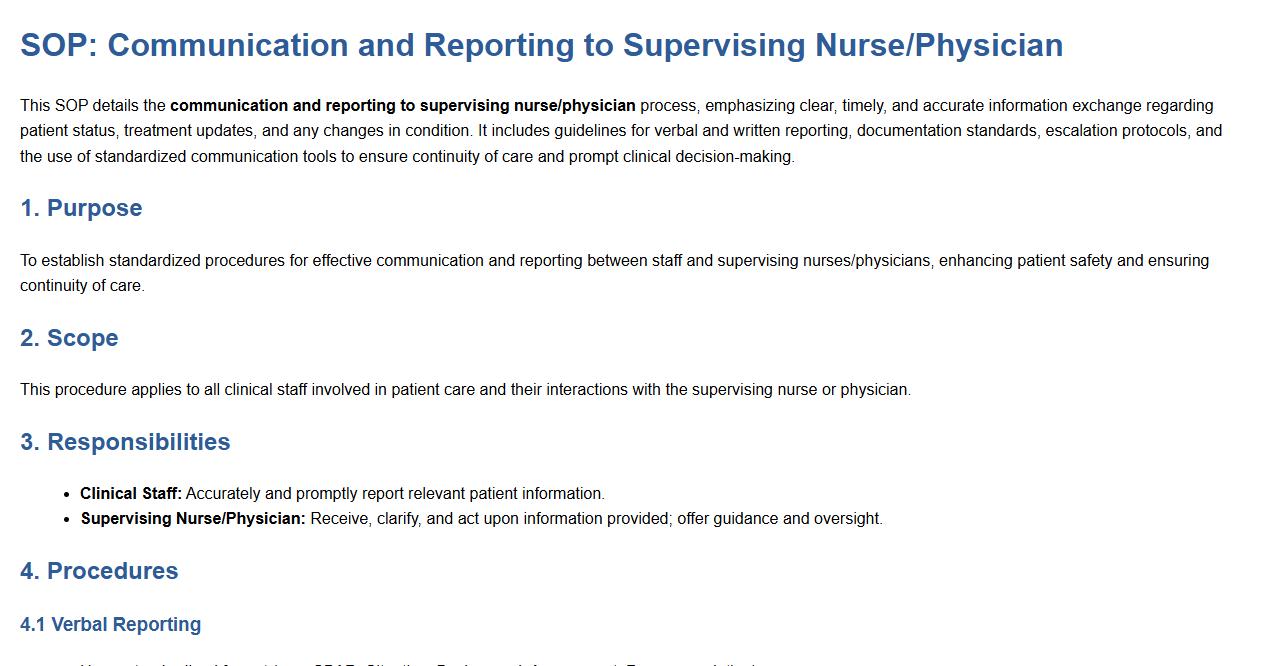
This SOP details the communication and reporting to supervising nurse/physician process, emphasizing clear, timely, and accurate information exchange regarding patient status, treatment updates, and any changes in condition. It includes guidelines for verbal and written reporting, documentation standards, escalation protocols, and the use of standardized communication tools to ensure continuity of care and prompt clinical decision-making.
Post-visit documentation and care plan updates.
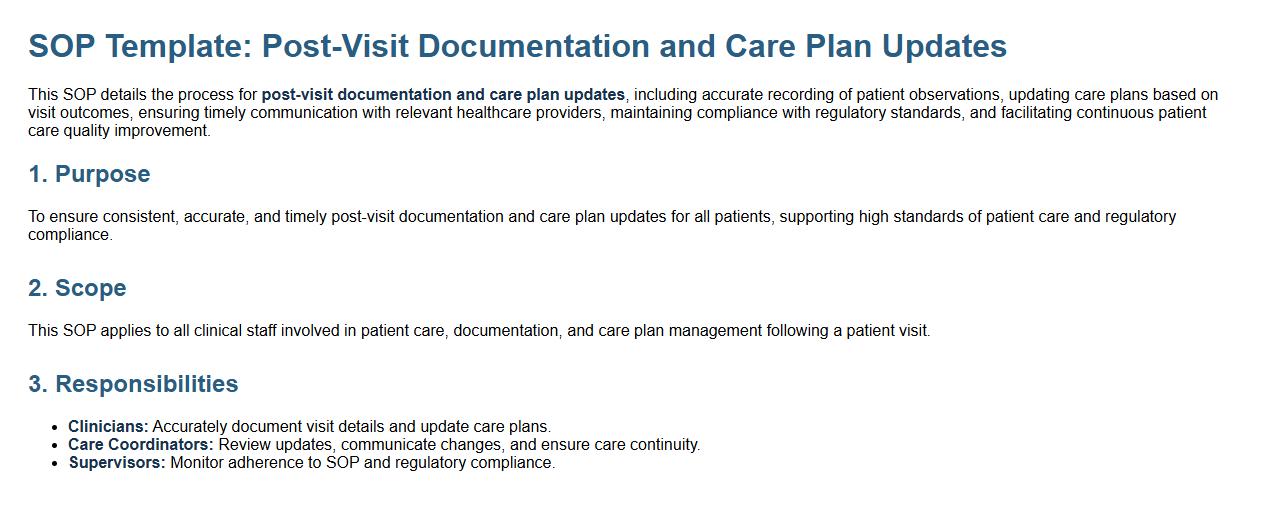
This SOP details the process for post-visit documentation and care plan updates, including accurate recording of patient observations, updating care plans based on visit outcomes, ensuring timely communication with relevant healthcare providers, maintaining compliance with regulatory standards, and facilitating continuous patient care quality improvement.
What are the essential steps outlined in the SOP for initiating a home healthcare visit?
The SOP emphasizes the importance of pre-visit planning, including patient assessment and scheduling. It mandates verifying patient identity and confirming the visit purpose before arrival. Additionally, healthcare providers must prepare necessary equipment and documentation to ensure an efficient visit.
Which documentation procedures must be followed during and after each home healthcare visit?
During the visit, all patient interactions and care activities must be accurately recorded in real-time documentation. Post-visit, healthcare providers are required to update electronic health records (EHR) and submit detailed reports on patient status and treatments administered. This ensures continuity of care and legal compliance.
How does the SOP address infection control and patient safety during home healthcare visits?
The SOP mandates strict adherence to infection control protocols, including hand hygiene, use of personal protective equipment (PPE), and sterilization of medical tools. It also requires healthcare workers to assess the home environment for safety hazards to protect both patients and staff. Regular training on infection prevention is stipulated to maintain high safety standards.
What qualifications and responsibilities are specified for healthcare personnel conducting home visits according to the SOP?
Healthcare personnel must possess relevant licenses and certifications, demonstrating competency in home-based care. They are responsible for providing professional, patient-centered care, maintaining confidentiality, and adhering to ethical standards. The SOP also highlights the need for ongoing education to keep skills current.
How does the SOP outline communication protocols between home healthcare providers, patients, and supervising medical staff?
The SOP prescribes clear communication channels to facilitate timely and accurate information exchange. It requires healthcare providers to use standardized reporting tools and maintain regular updates with supervising clinicians. Effective communication ensures coordinated care and enhances patient outcomes.