

A SOP Template for Ambulance Dispatch Procedures standardizes the critical steps involved in receiving and responding to emergency calls efficiently. It outlines clear roles, communication protocols, and safety measures to ensure timely dispatch and coordination with medical teams. This template helps improve response times and enhances the overall quality of emergency medical services.
Emergency call intake and information gathering.
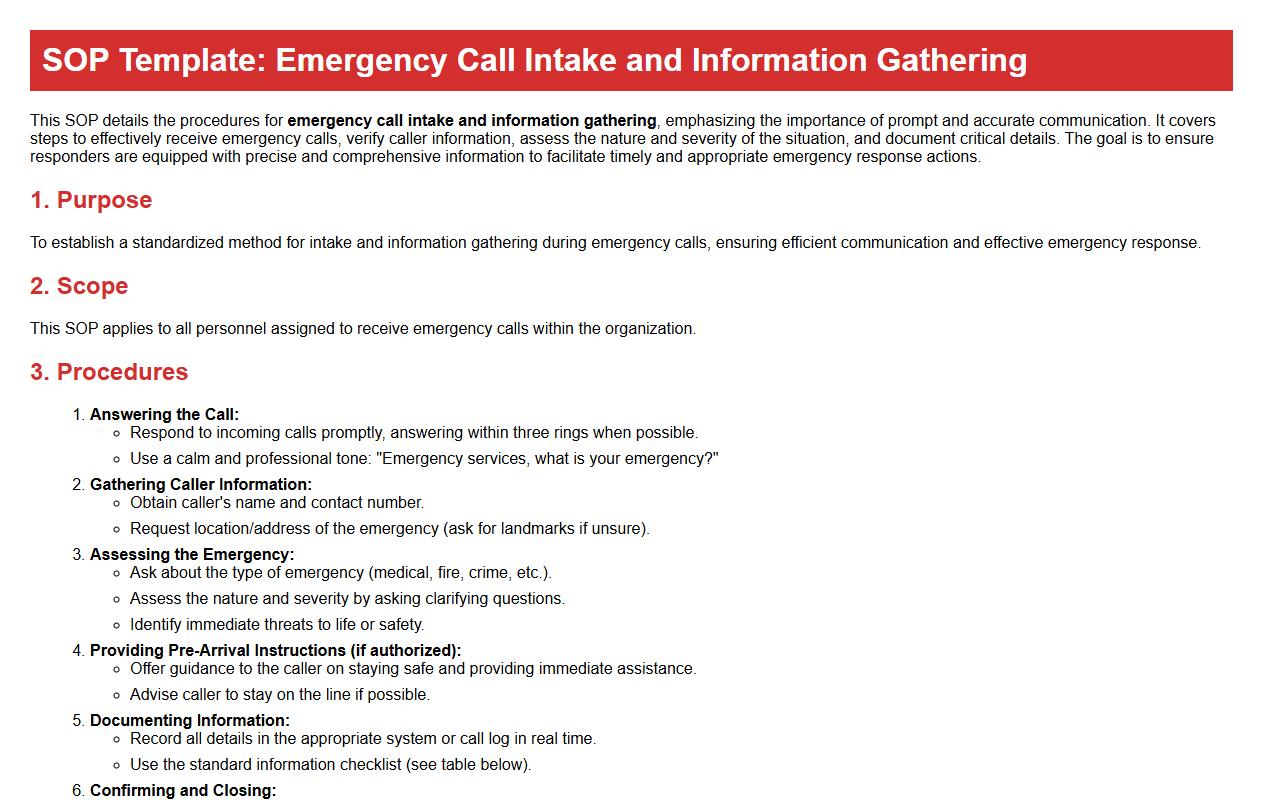
This SOP details the procedures for emergency call intake and information gathering, emphasizing the importance of prompt and accurate communication. It covers steps to effectively receive emergency calls, verify caller information, assess the nature and severity of the situation, and document critical details. The goal is to ensure responders are equipped with precise and comprehensive information to facilitate timely and appropriate emergency response actions.
Incident categorization and prioritization.
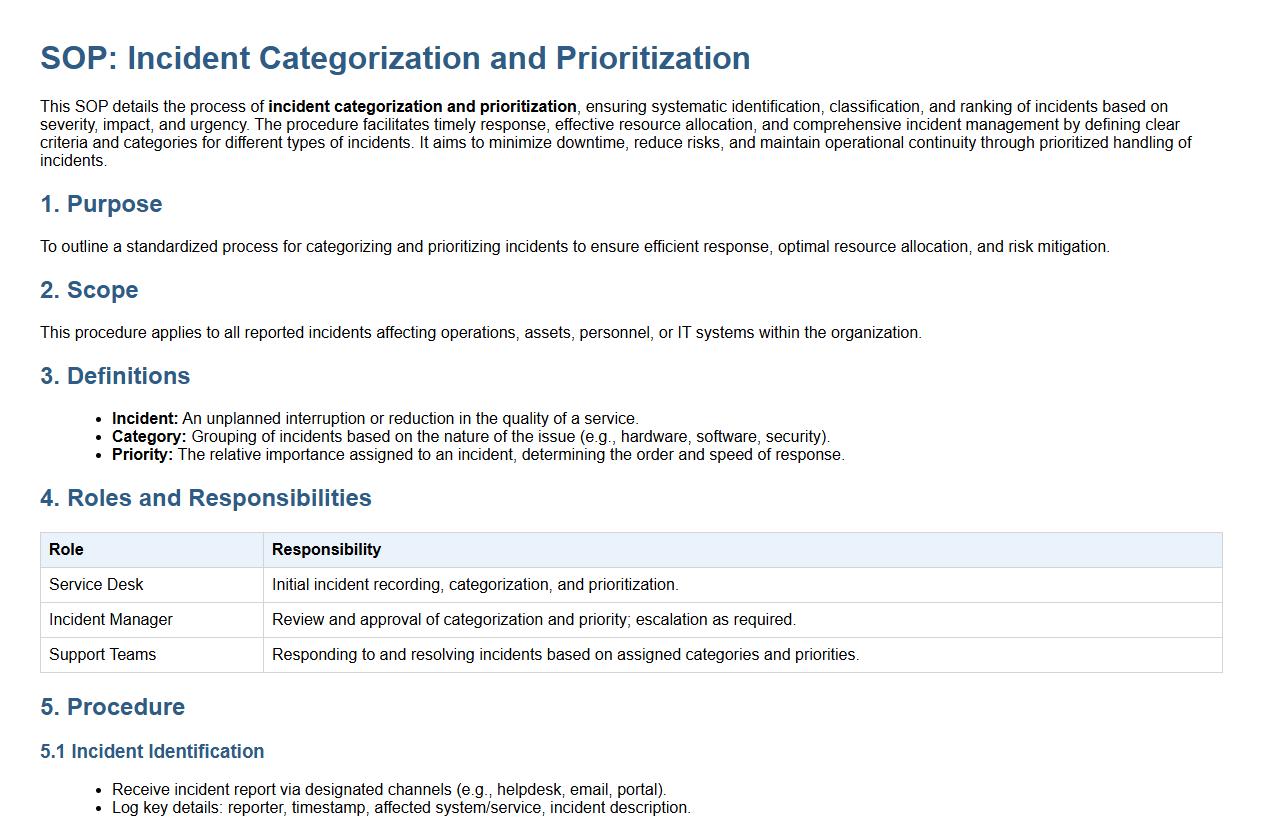
This SOP details the process of incident categorization and prioritization, ensuring systematic identification, classification, and ranking of incidents based on severity, impact, and urgency. The procedure facilitates timely response, effective resource allocation, and comprehensive incident management by defining clear criteria and categories for different types of incidents. It aims to minimize downtime, reduce risks, and maintain operational continuity through prioritized handling of incidents.
Ambulance unit assignment and crew notification.
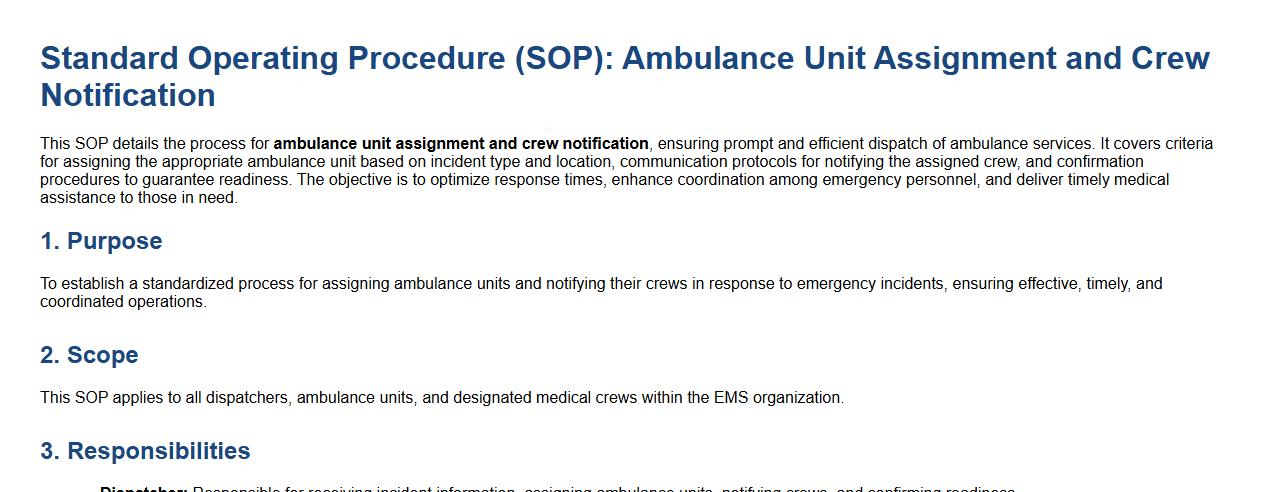
This SOP details the process for ambulance unit assignment and crew notification, ensuring prompt and efficient dispatch of ambulance services. It covers criteria for assigning the appropriate ambulance unit based on incident type and location, communication protocols for notifying the assigned crew, and confirmation procedures to guarantee readiness. The objective is to optimize response times, enhance coordination among emergency personnel, and deliver timely medical assistance to those in need.
GPS navigation and route optimization protocols.
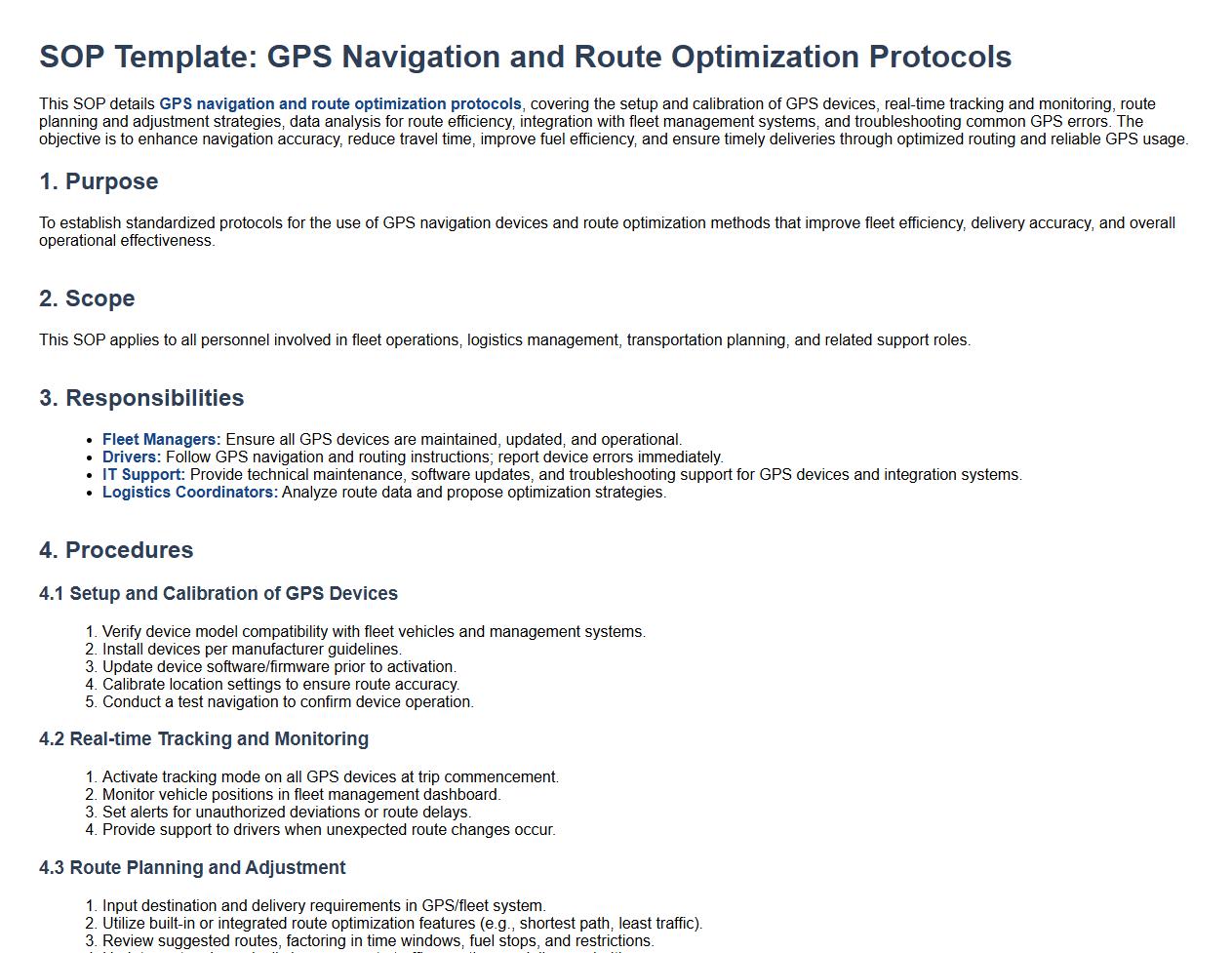
This SOP details GPS navigation and route optimization protocols, covering the setup and calibration of GPS devices, real-time tracking and monitoring, route planning and adjustment strategies, data analysis for route efficiency, integration with fleet management systems, and troubleshooting common GPS errors. The objective is to enhance navigation accuracy, reduce travel time, improve fuel efficiency, and ensure timely deliveries through optimized routing and reliable GPS usage.
Pre-departure vehicle and equipment checks.
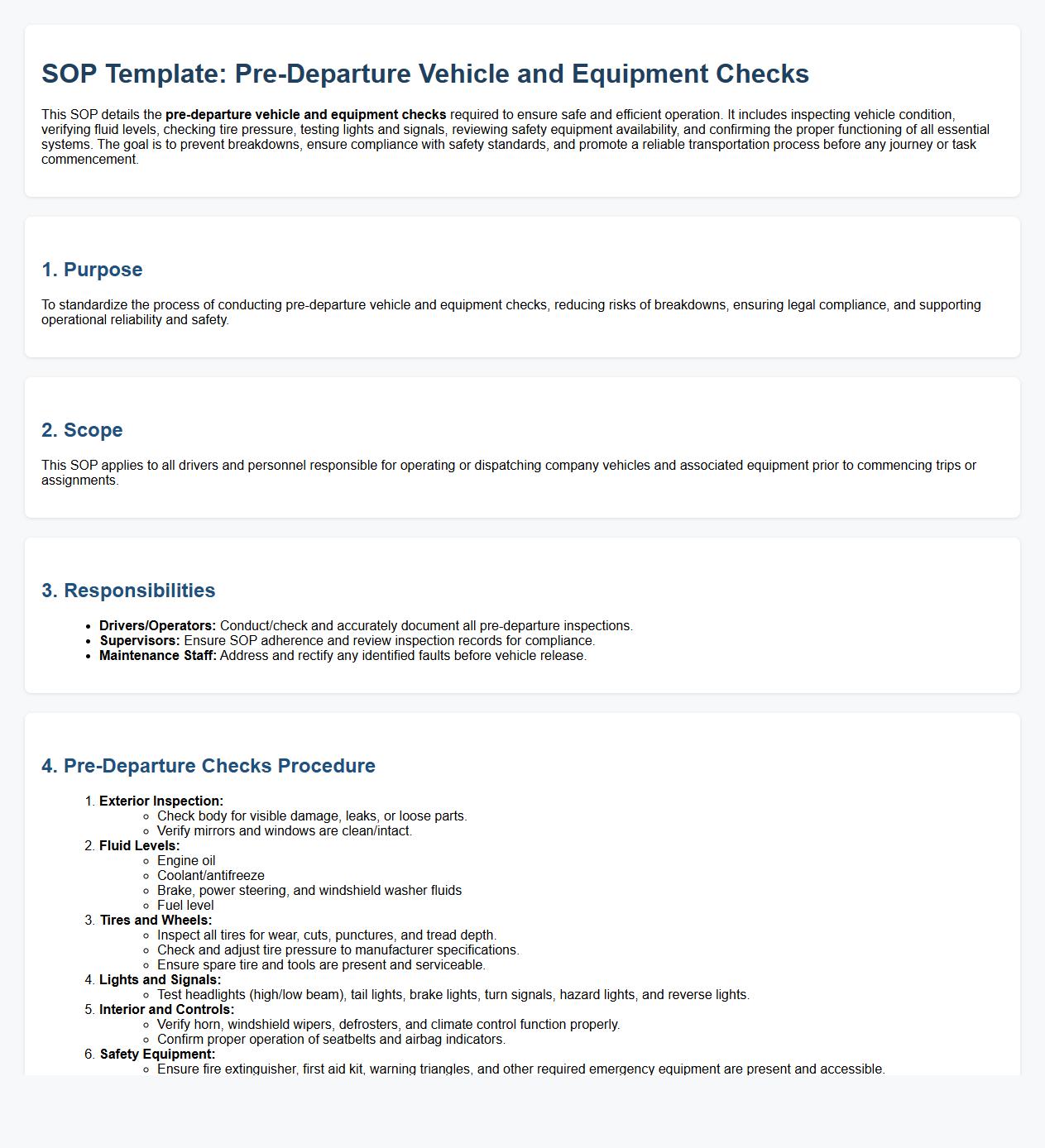
This SOP details the pre-departure vehicle and equipment checks required to ensure safe and efficient operation. It includes inspecting vehicle condition, verifying fluid levels, checking tire pressure, testing lights and signals, reviewing safety equipment availability, and confirming the proper functioning of all essential systems. The goal is to prevent breakdowns, ensure compliance with safety standards, and promote a reliable transportation process before any journey or task commencement.
Continuous communication with en-route ambulance crews.
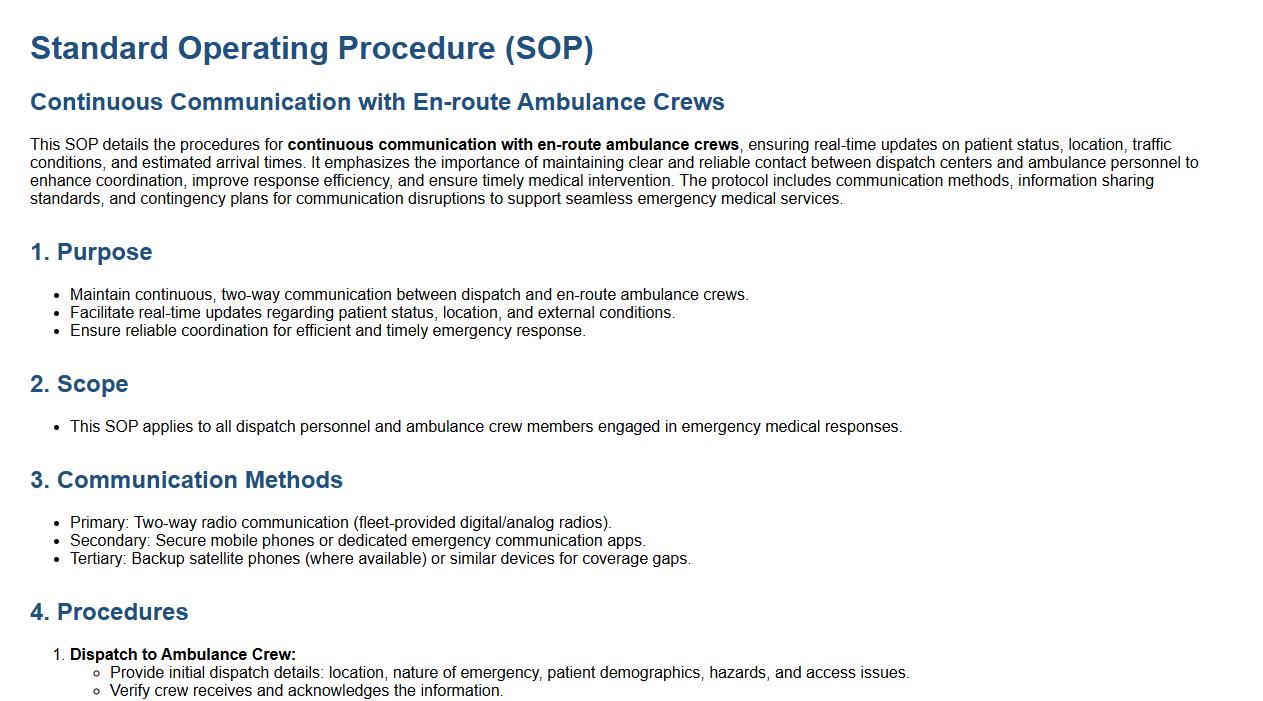
This SOP details the procedures for continuous communication with en-route ambulance crews, ensuring real-time updates on patient status, location, traffic conditions, and estimated arrival times. It emphasizes the importance of maintaining clear and reliable contact between dispatch centers and ambulance personnel to enhance coordination, improve response efficiency, and ensure timely medical intervention. The protocol includes communication methods, information sharing standards, and contingency plans for communication disruptions to support seamless emergency medical services.
On-scene arrival procedures and patient assessment.
This SOP details the on-scene arrival procedures and patient assessment for emergency responders, including initial scene safety evaluation, establishing scene control, rapid patient triage, comprehensive primary and secondary assessments, vital signs monitoring, and documentation. The goal is to ensure a systematic approach to patient evaluation and care, prioritizing safety, accuracy, and effective communication to optimize treatment outcomes.
Patient transport decision and hospital notification.
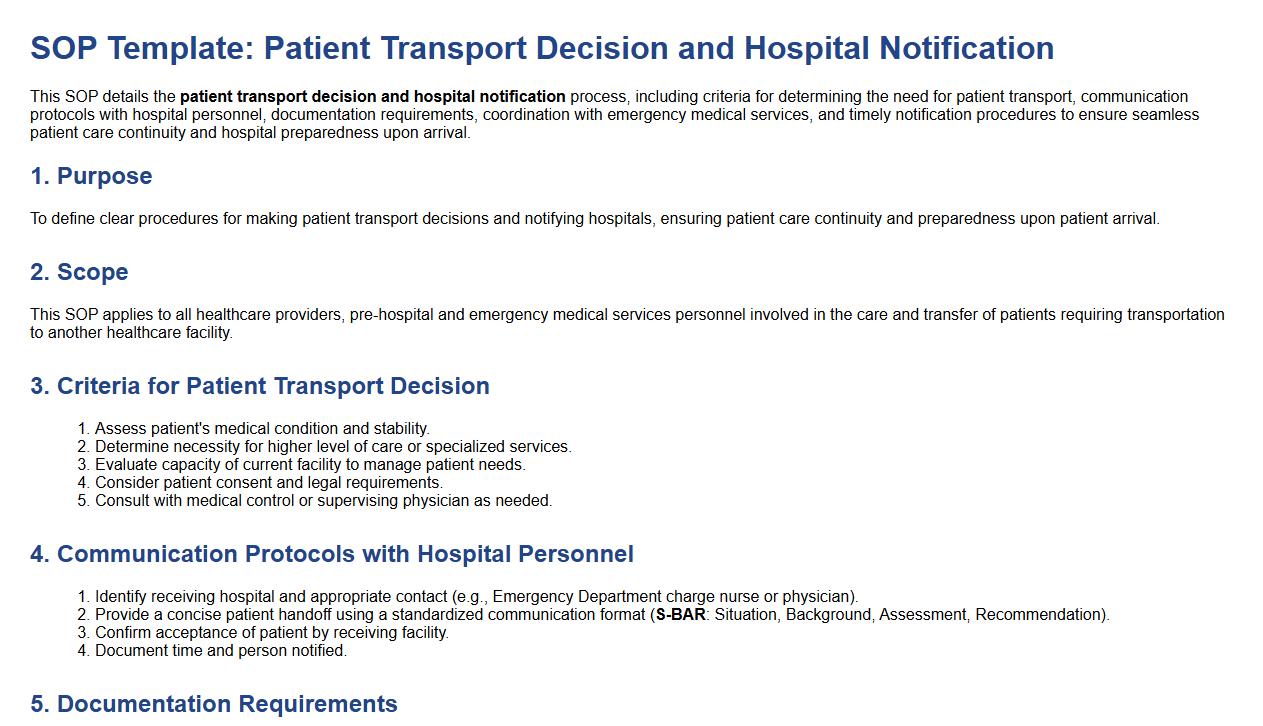
This SOP details the patient transport decision and hospital notification process, including criteria for determining the need for patient transport, communication protocols with hospital personnel, documentation requirements, coordination with emergency medical services, and timely notification procedures to ensure seamless patient care continuity and hospital preparedness upon arrival.
Handover process at receiving medical facility.
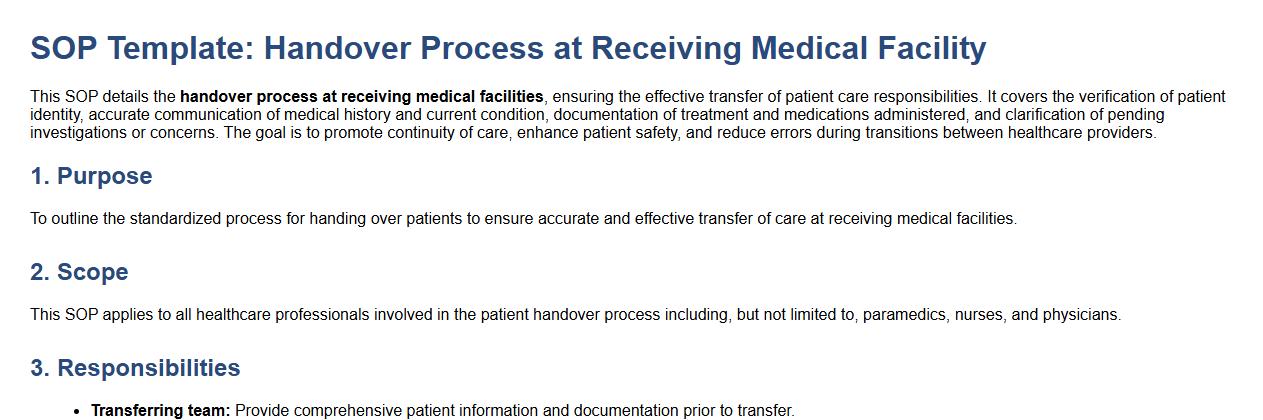
This SOP details the handover process at receiving medical facilities, ensuring the effective transfer of patient care responsibilities. It covers the verification of patient identity, accurate communication of medical history and current condition, documentation of treatment and medications administered, and clarification of pending investigations or concerns. The goal is to promote continuity of care, enhance patient safety, and reduce errors during transitions between healthcare providers.
Post-mission debrief, documentation, and vehicle sanitization.
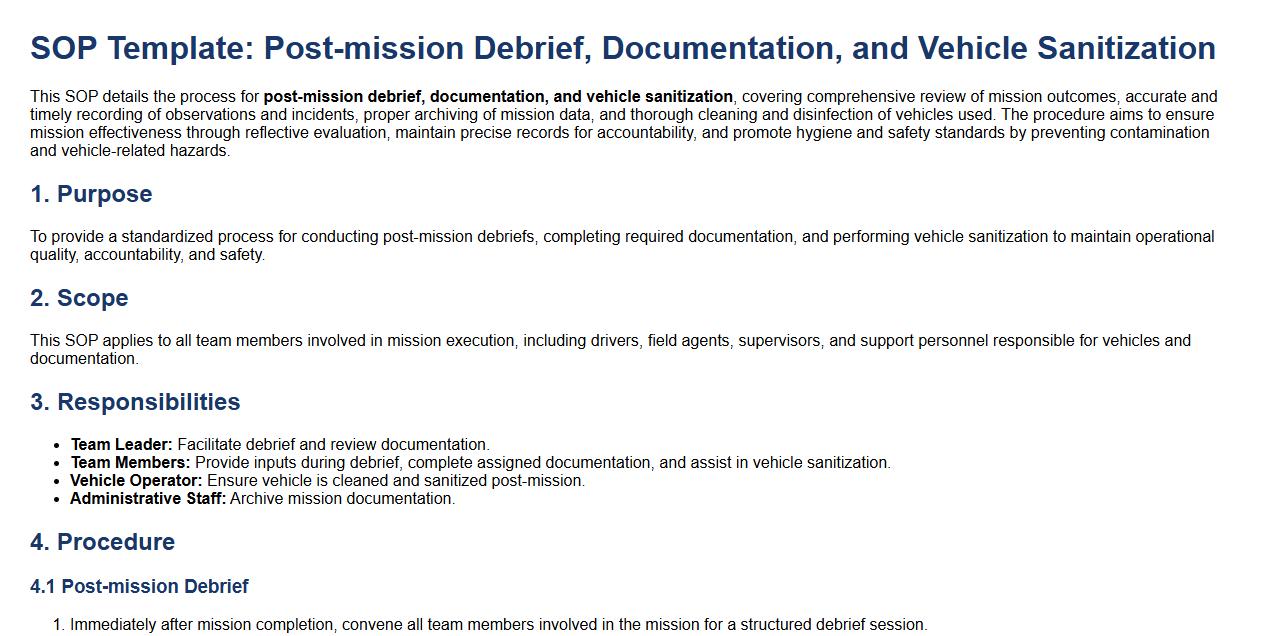
This SOP details the process for post-mission debrief, documentation, and vehicle sanitization, covering comprehensive review of mission outcomes, accurate and timely recording of observations and incidents, proper archiving of mission data, and thorough cleaning and disinfection of vehicles used. The procedure aims to ensure mission effectiveness through reflective evaluation, maintain precise records for accountability, and promote hygiene and safety standards by preventing contamination and vehicle-related hazards.
What are the required steps to verify and record a call for ambulance dispatch according to the SOP?
The call verification process begins with confirming the caller's identity and location. Operators must obtain clear and concise details about the emergency's nature and severity. All information is then accurately recorded in the dispatch system to ensure proper triage and response.
How does the SOP define prioritization criteria for urgent versus non-urgent dispatch requests?
The prioritization criteria in the SOP classify emergencies based on the patient's condition and immediate risk. Urgent calls demanding immediate response are given top priority, while non-urgent requests are managed accordingly to optimize resource allocation. This system ensures a balanced and effective ambulance dispatch workflow.
What standard information must operators collect before dispatching an ambulance as per the SOP?
Operators are required to gather essential details including the patient's condition, exact location, and contact information. Additionally, they must confirm any specific medical history or potential hazards at the scene. This preparation enables responders to arrive equipped and ready for treatment.
What communication protocols must be followed between dispatchers and ambulance crews during dispatch?
The SOP mandates continuous and clear two-way communication between dispatchers and ambulance crews. Dispatchers provide real-time updates about the emergency and any changing conditions. Ambulance crews must confirm receipt and report arrival and status promptly to maintain operational efficiency.
What post-dispatch documentation and reporting processes are mandated by the SOP?
After dispatch, the SOP requires comprehensive documentation of response times, patient details, and outcomes. Dispatchers must complete incident reports and log any issues encountered during the mission. This ensures accountability and supports quality improvement initiatives.