

A SOP Template for Telemedicine Consultations ensures standardized procedures for virtual patient interactions, enhancing consistency and quality of care. It outlines key steps such as patient identification, data privacy protocols, and documentation requirements. Utilizing this template helps healthcare providers maintain compliance with regulatory standards while delivering efficient remote consultations.
Telemedicine platform setup and login procedures.
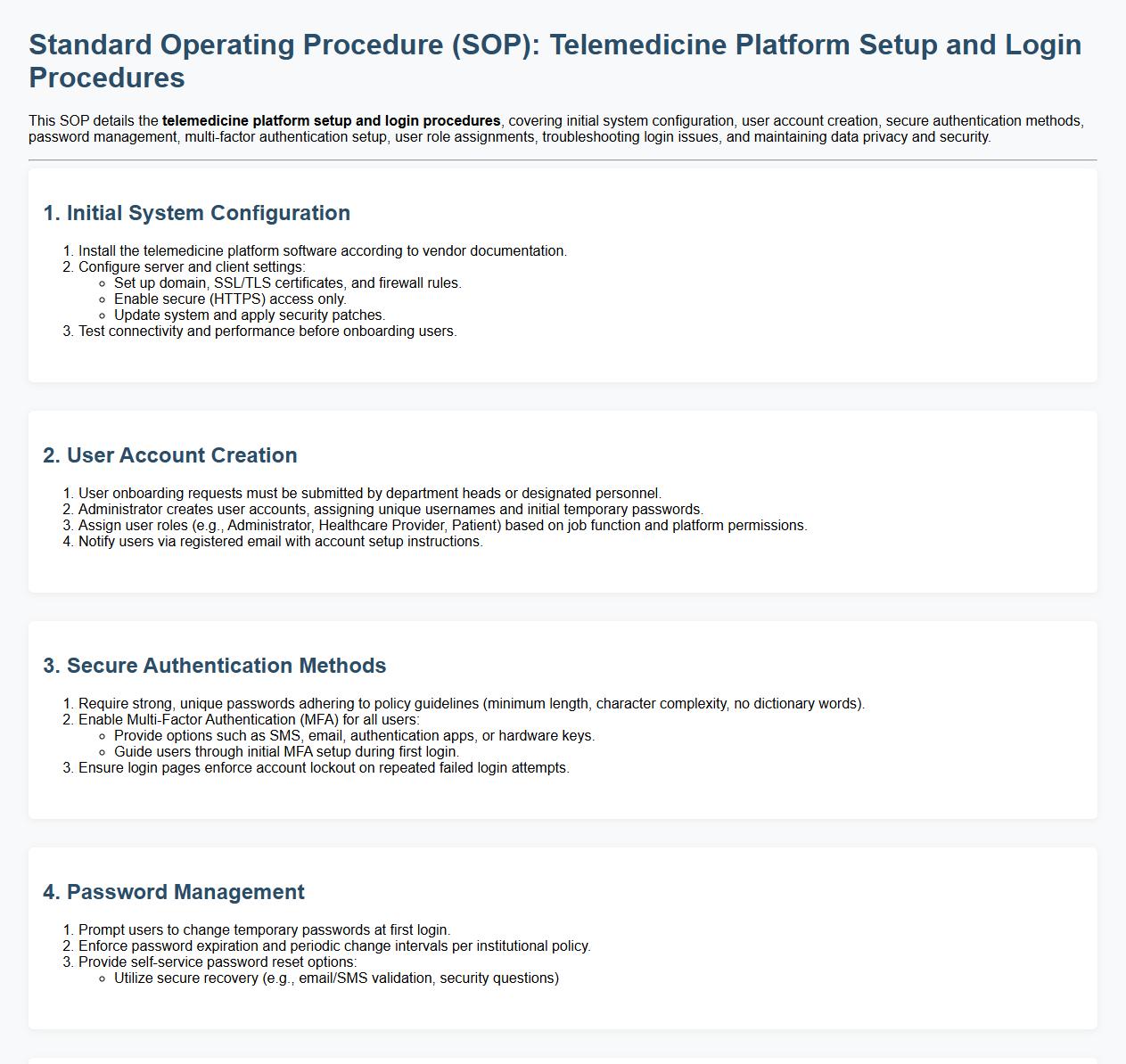
This SOP details the telemedicine platform setup and login procedures, covering initial system configuration, user account creation, secure authentication methods, password management, multi-factor authentication setup, user role assignments, troubleshooting login issues, and maintaining data privacy and security. The purpose is to ensure a seamless and secure access process for healthcare providers and patients using the telemedicine platform, facilitating effective remote consultations and patient care.
Patient identification and consent verification.
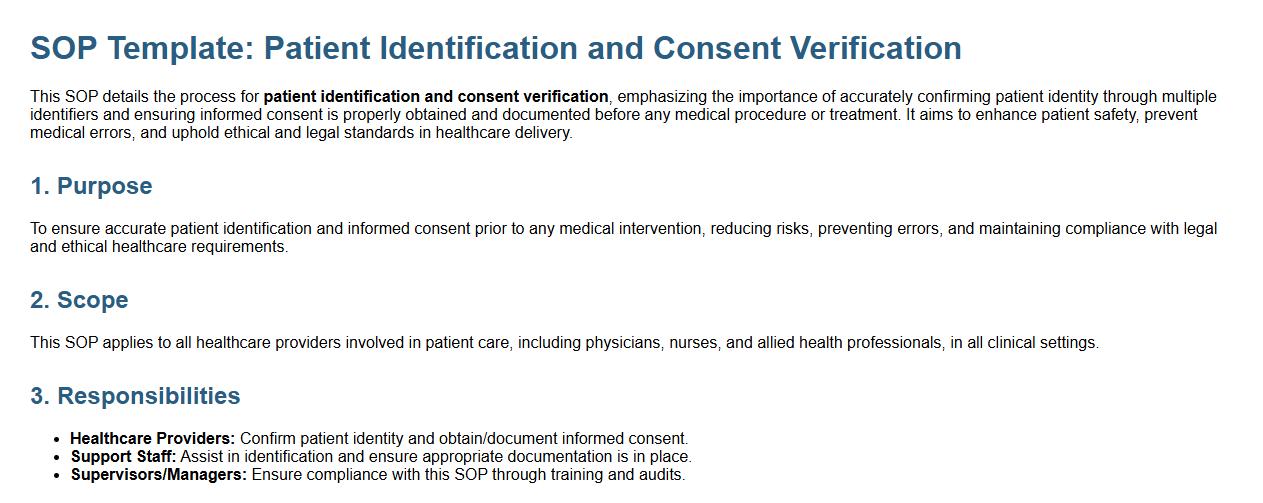
This SOP details the process for patient identification and consent verification, emphasizing the importance of accurately confirming patient identity through multiple identifiers and ensuring informed consent is properly obtained and documented before any medical procedure or treatment. It aims to enhance patient safety, prevent medical errors, and uphold ethical and legal standards in healthcare delivery.
Pre-consultation patient information review.
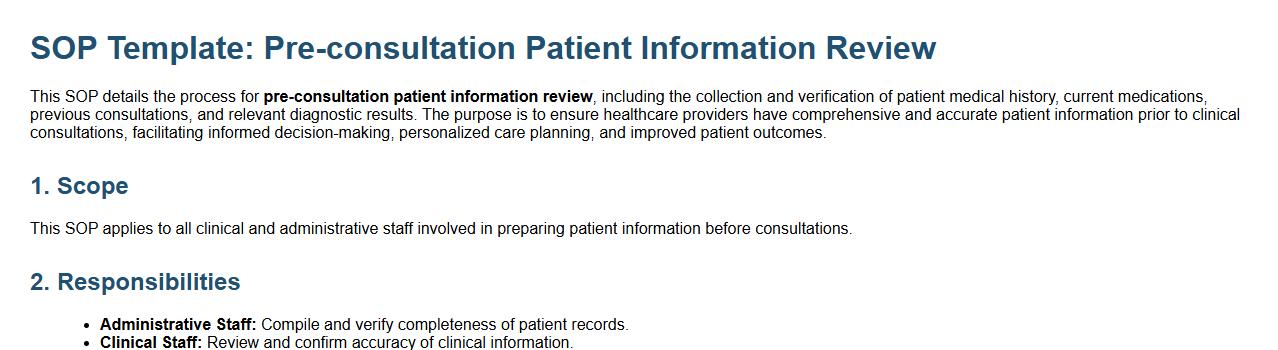
This SOP details the process for pre-consultation patient information review, including the collection and verification of patient medical history, current medications, previous consultations, and relevant diagnostic results. The purpose is to ensure healthcare providers have comprehensive and accurate patient information prior to clinical consultations, facilitating informed decision-making, personalized care planning, and improved patient outcomes.
Secure and private environment preparation.
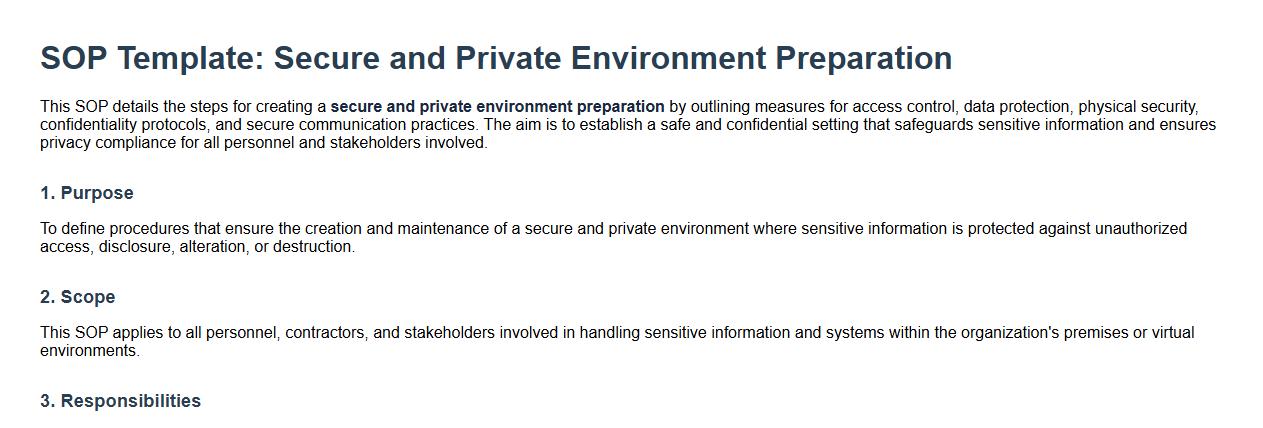
This SOP details the steps for creating a secure and private environment preparation by outlining measures for access control, data protection, physical security, confidentiality protocols, and secure communication practices. The aim is to establish a safe and confidential setting that safeguards sensitive information and ensures privacy compliance for all personnel and stakeholders involved.
Step-by-step process for initiating the virtual consultation.
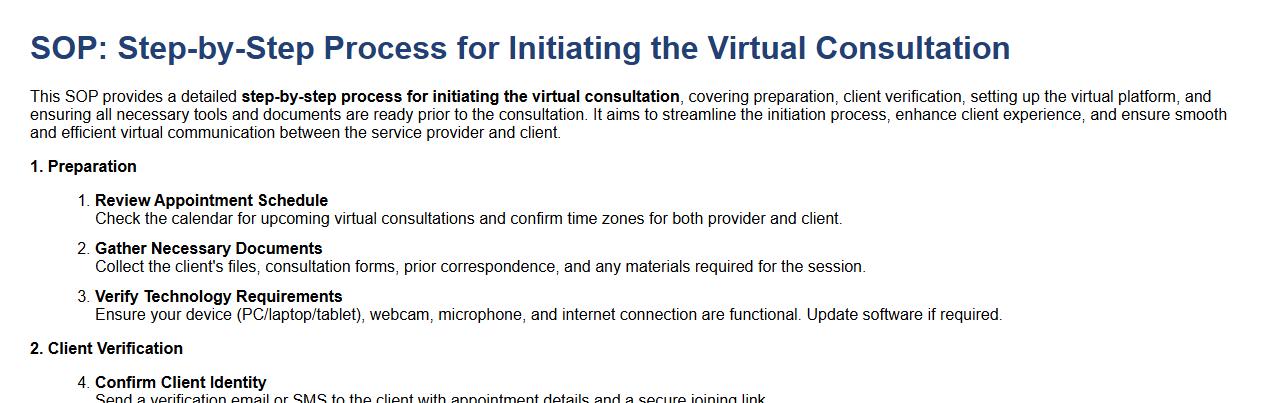
This SOP provides a detailed step-by-step process for initiating the virtual consultation, covering preparation, client verification, setting up the virtual platform, and ensuring all necessary tools and documents are ready prior to the consultation. It aims to streamline the initiation process, enhance client experience, and ensure smooth and efficient virtual communication between the service provider and client.
Guidelines for conducting patient assessments remotely.
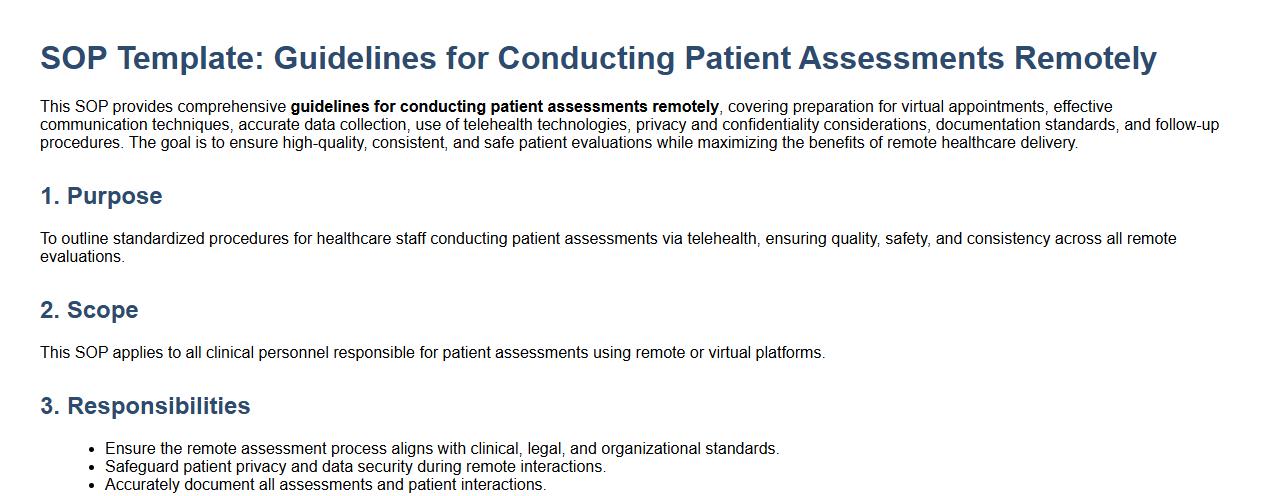
This SOP provides comprehensive guidelines for conducting patient assessments remotely, covering preparation for virtual appointments, effective communication techniques, accurate data collection, use of telehealth technologies, privacy and confidentiality considerations, documentation standards, and follow-up procedures. The goal is to ensure high-quality, consistent, and safe patient evaluations while maximizing the benefits of remote healthcare delivery.
Documentation and electronic health record (EHR) entry protocol.
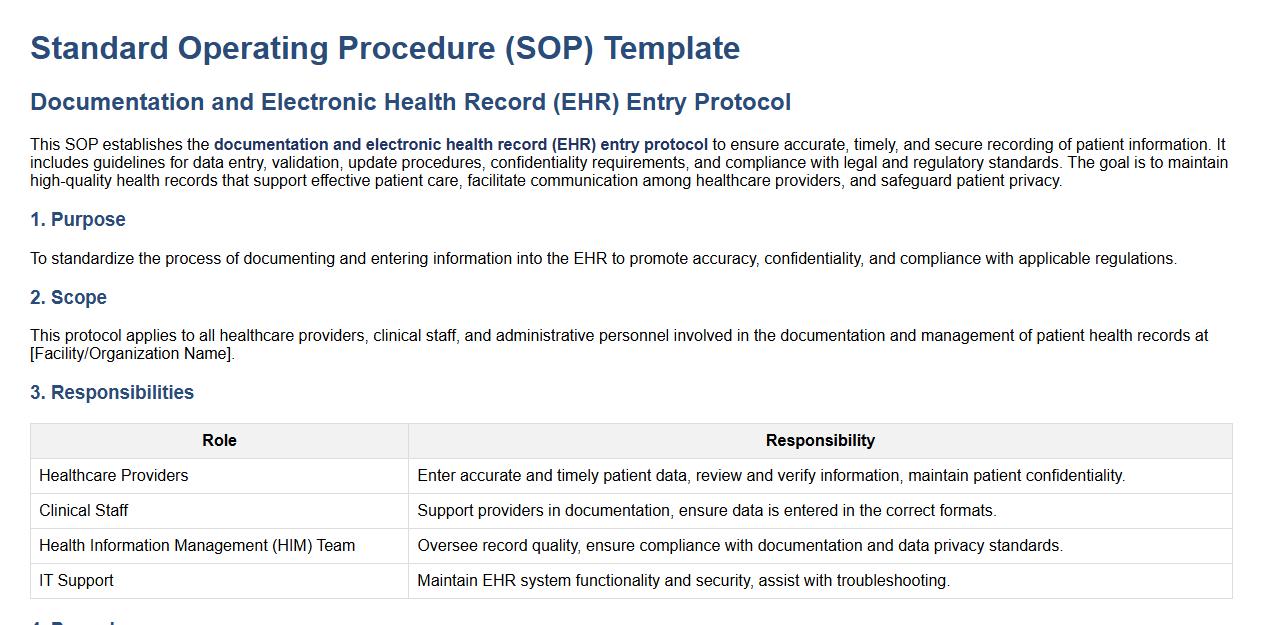
This SOP establishes the documentation and electronic health record (EHR) entry protocol to ensure accurate, timely, and secure recording of patient information. It includes guidelines for data entry, validation, update procedures, confidentiality requirements, and compliance with legal and regulatory standards. The goal is to maintain high-quality health records that support effective patient care, facilitate communication among healthcare providers, and safeguard patient privacy.
Prescription and follow-up instructions communication.
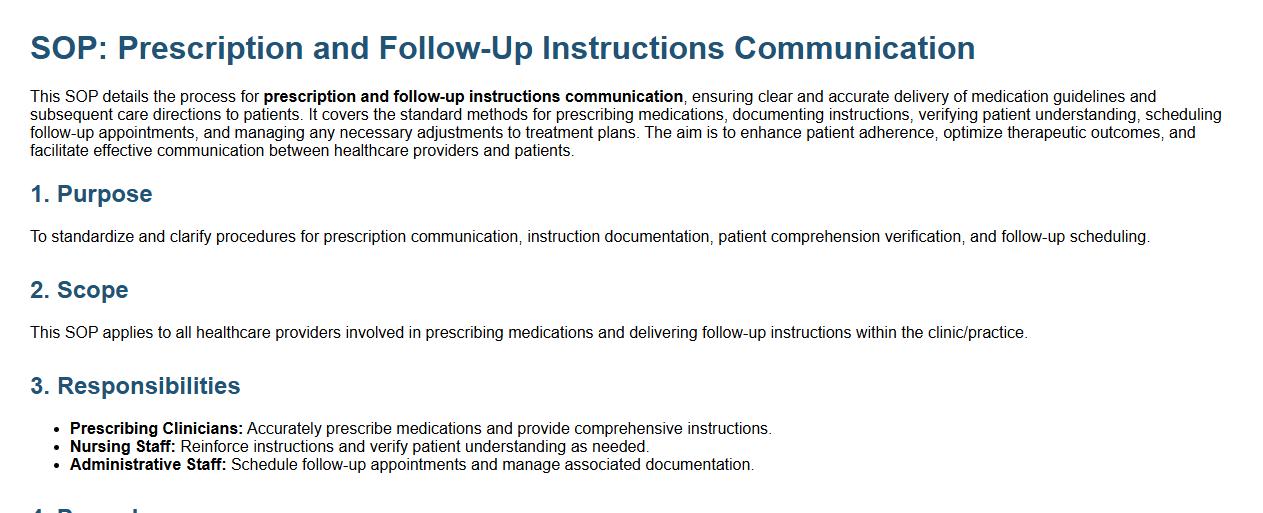
This SOP details the process for prescription and follow-up instructions communication, ensuring clear and accurate delivery of medication guidelines and subsequent care directions to patients. It covers the standard methods for prescribing medications, documenting instructions, verifying patient understanding, scheduling follow-up appointments, and managing any necessary adjustments to treatment plans. The aim is to enhance patient adherence, optimize therapeutic outcomes, and facilitate effective communication between healthcare providers and patients.
Handling technical issues and connectivity problems.
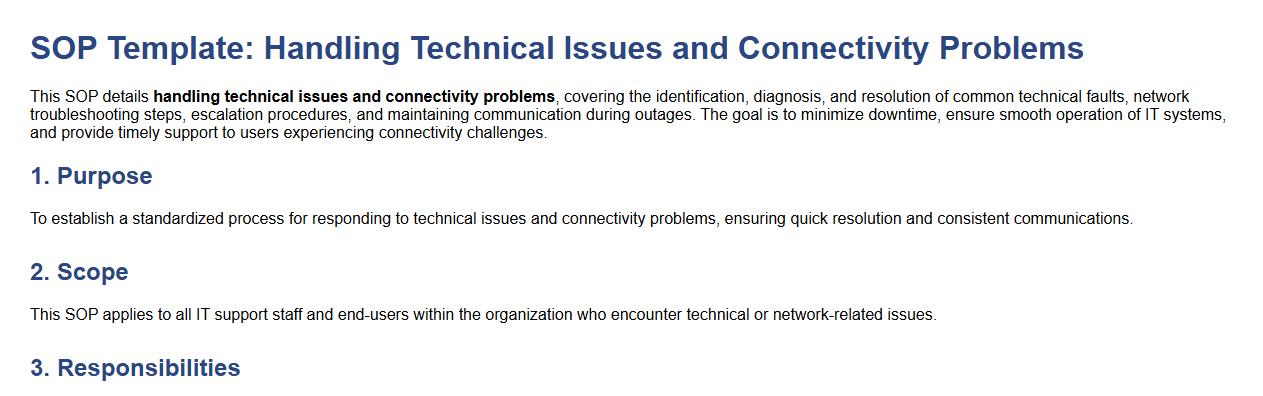
This SOP details handling technical issues and connectivity problems, covering the identification, diagnosis, and resolution of common technical faults, network troubleshooting steps, escalation procedures, and maintaining communication during outages. The goal is to minimize downtime, ensure smooth operation of IT systems, and provide timely support to users experiencing connectivity challenges.
Post-consultation data security and session closure procedures.
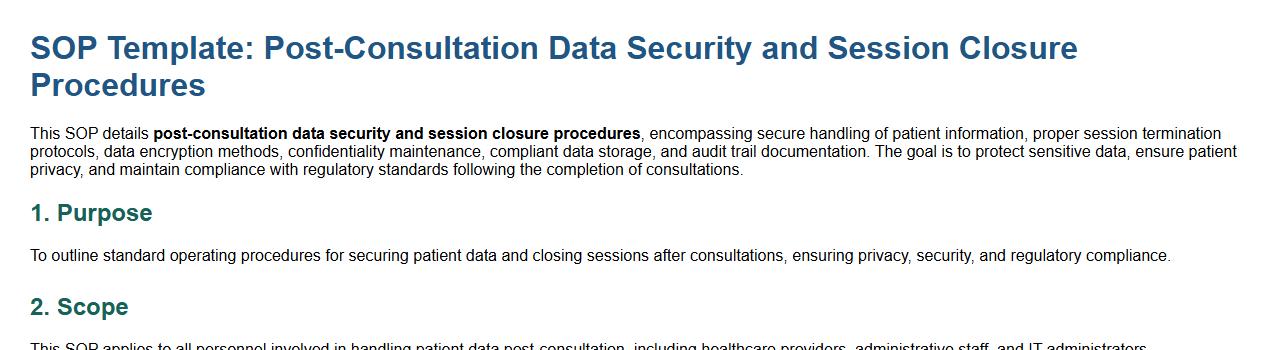
This SOP details post-consultation data security and session closure procedures, encompassing secure handling of patient information, proper session termination protocols, data encryption methods, confidentiality maintenance, compliant data storage, and audit trail documentation. The goal is to protect sensitive data, ensure patient privacy, and maintain compliance with regulatory standards following the completion of consultations.
Essential Steps for a Secure Telemedicine Consultation
The SOP mandates a thorough verification of technological setup before each session to ensure a secure connection. It emphasizes initiating consultations through secure communication channels to protect patient data. Additionally, it requires healthcare providers to confirm patient identity and consent prior to diagnosis or treatment.
Patient Identification and Consent During Telemedicine
The SOP specifies that validating patient identity is crucial and must be done through multi-factor authentication methods. It requires explicit informed consent that is documented electronically before proceeding with any clinical interaction. These steps ensure compliance with legal and ethical standards in virtual care.
Documentation Requirements for Telemedicine Consultations
The SOP directs that all telemedicine sessions must be accurately documented, including date, time, and participants involved. Clinicians are instructed to record clinical findings, diagnosis, treatment plans, and any patient instructions provided. This documentation must be stored securely in the patient's medical record to maintain continuity of care.
Escalation Procedures for Telemedicine Emergencies
The SOP outlines clear protocols for escalating emergencies encountered during virtual consultations, including immediate referral to emergency services. It stresses the importance of having emergency contact information readily available. Providers must also inform patients about the limits of telemedicine and advise on when urgent in-person evaluation is necessary.
Technical and Privacy Standards for Telemedicine Platforms
The SOP enforces strict technical standards such as end-to-end encryption and regular security audits for telemedicine platforms. Privacy policies must comply with relevant healthcare regulations like HIPAA to safeguard patient information. Continuous staff training on data protection and platform use is mandated to uphold these standards.