

A SOP Template for Medical Inventory Management provides a standardized framework to efficiently track, store, and manage medical supplies. It ensures accuracy in inventory records, reduces wastage, and maintains compliance with healthcare regulations. Implementing this template helps healthcare facilities optimize stock levels and streamline procurement processes.
Inventory receiving and verification procedures.
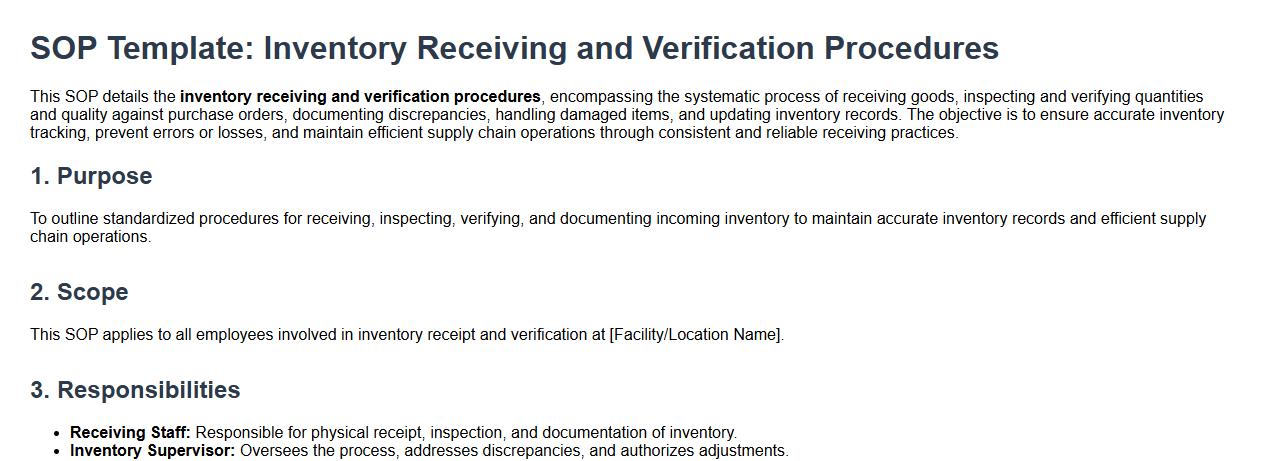
This SOP details the inventory receiving and verification procedures, encompassing the systematic process of receiving goods, inspecting and verifying quantities and quality against purchase orders, documenting discrepancies, handling damaged items, and updating inventory records. The objective is to ensure accurate inventory tracking, prevent errors or losses, and maintain efficient supply chain operations through consistent and reliable receiving practices.
Storage and organization of medical supplies.
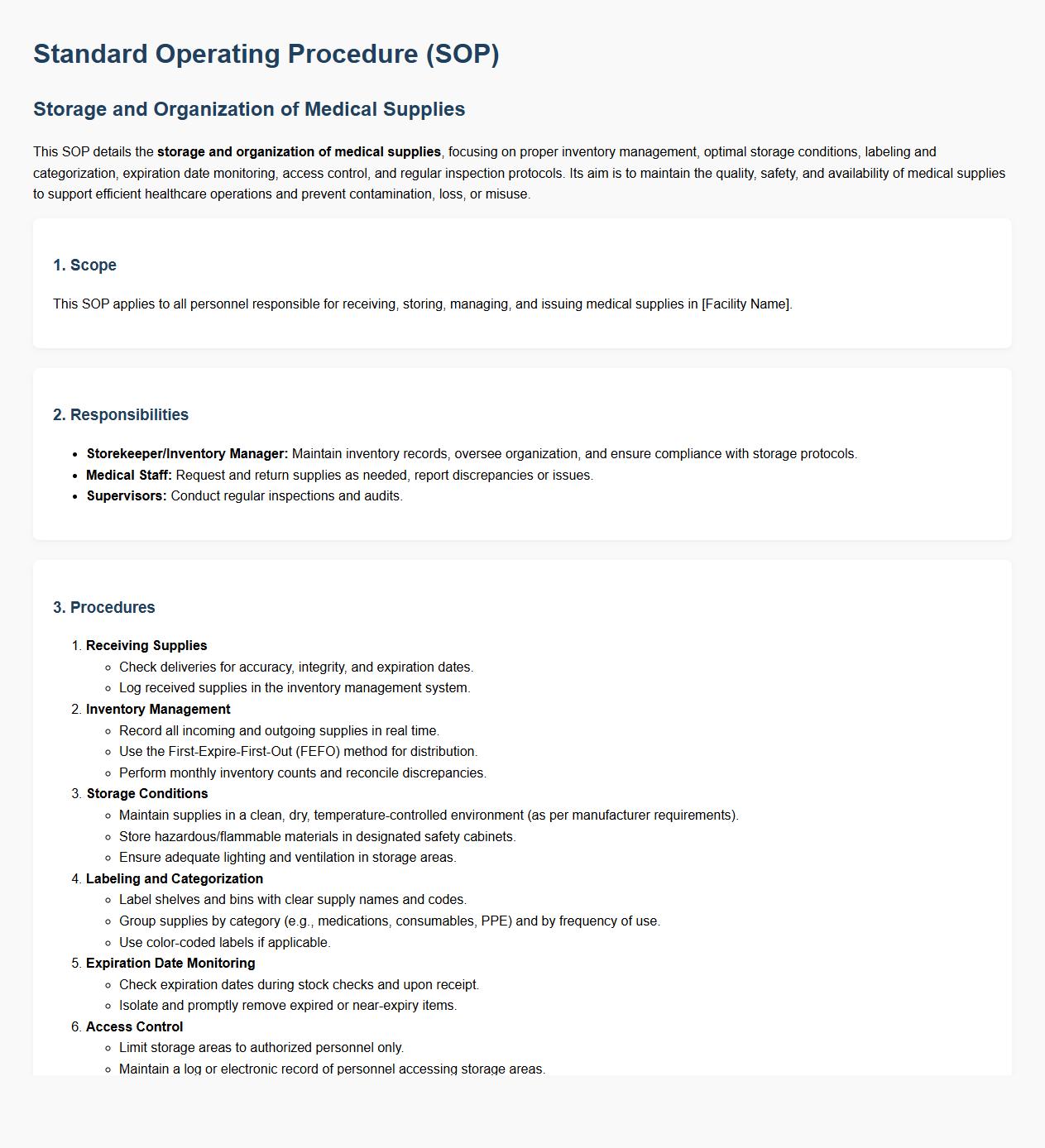
This SOP details the storage and organization of medical supplies, focusing on proper inventory management, optimal storage conditions, labeling and categorization, expiration date monitoring, access control, and regular inspection protocols. Its aim is to maintain the quality, safety, and availability of medical supplies to support efficient healthcare operations and prevent contamination, loss, or misuse.
Stock rotation and expiry date monitoring.
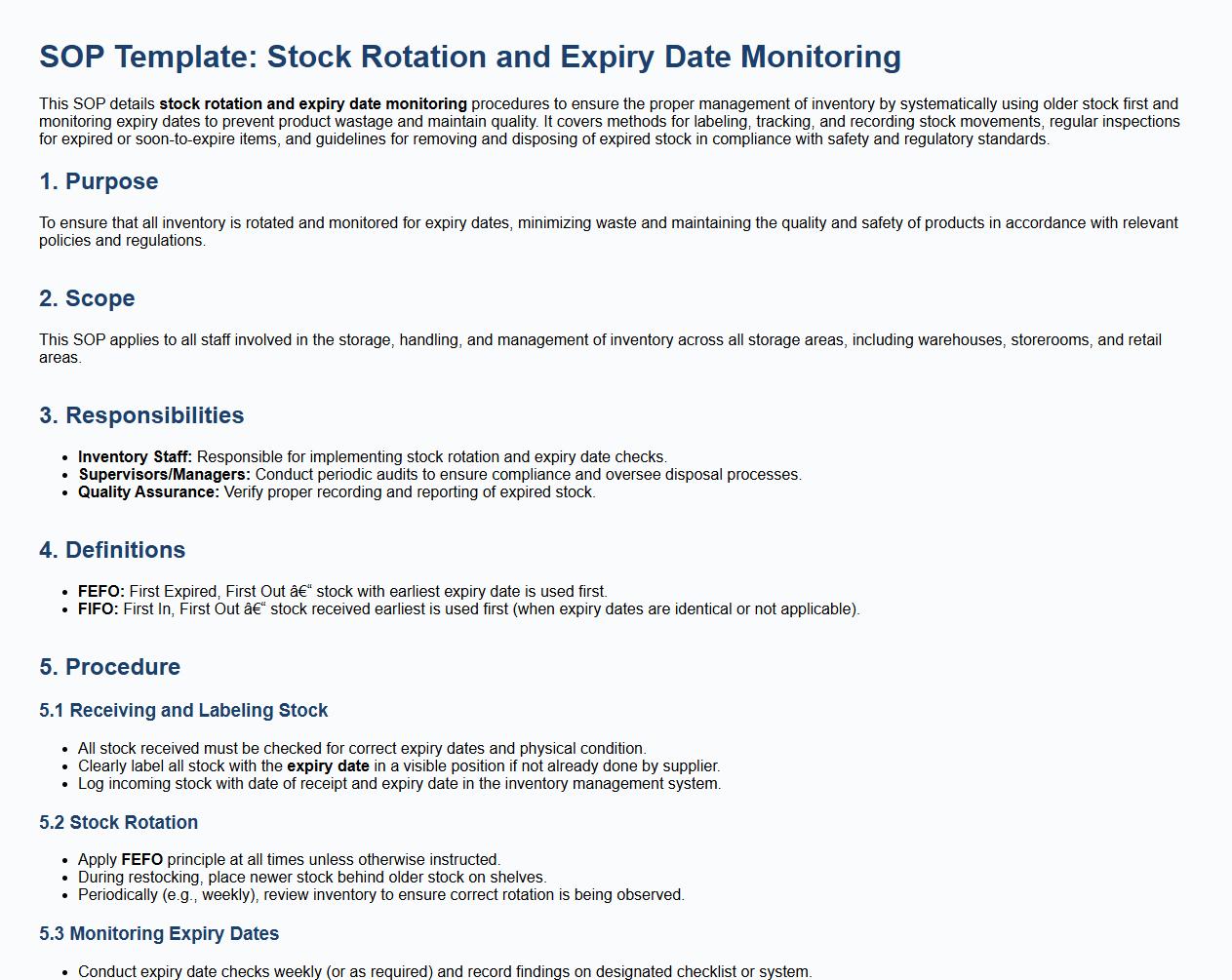
This SOP details stock rotation and expiry date monitoring procedures to ensure the proper management of inventory by systematically using older stock first and monitoring expiry dates to prevent product wastage and maintain quality. It covers methods for labeling, tracking, and recording stock movements, regular inspections for expired or soon-to-expire items, and guidelines for removing and disposing of expired stock in compliance with safety and regulatory standards.
Issuance and requisition process for medical items.
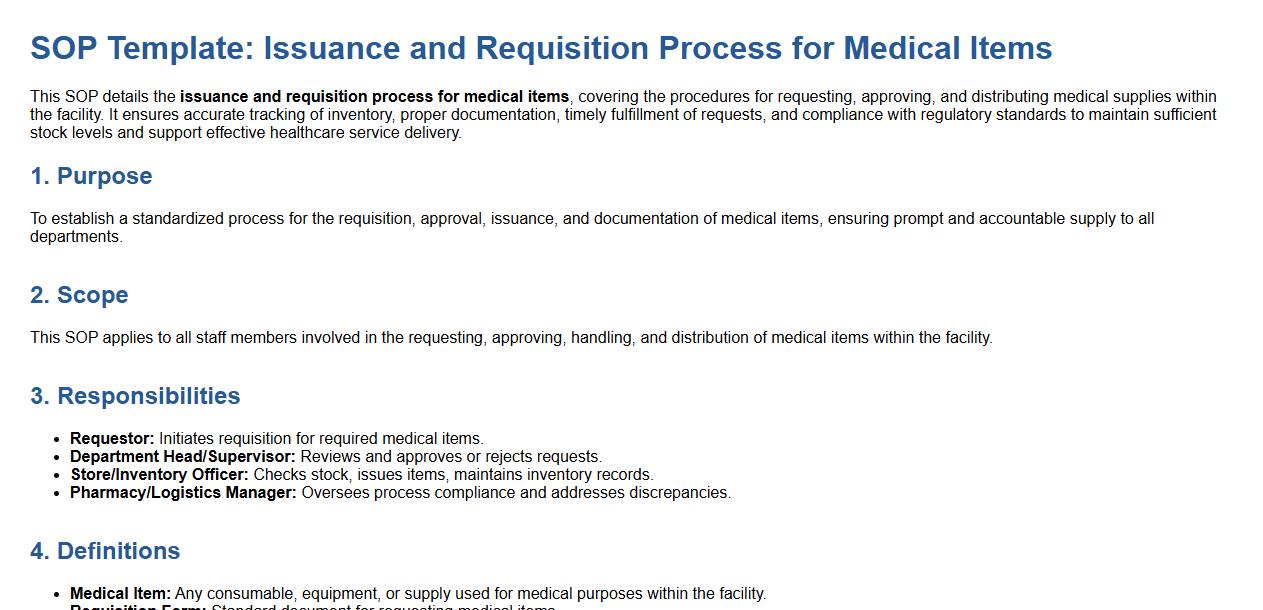
This SOP details the issuance and requisition process for medical items, covering the procedures for requesting, approving, and distributing medical supplies within the facility. It ensures accurate tracking of inventory, proper documentation, timely fulfillment of requests, and compliance with regulatory standards to maintain sufficient stock levels and support effective healthcare service delivery.
Inventory tracking and record-keeping methods.
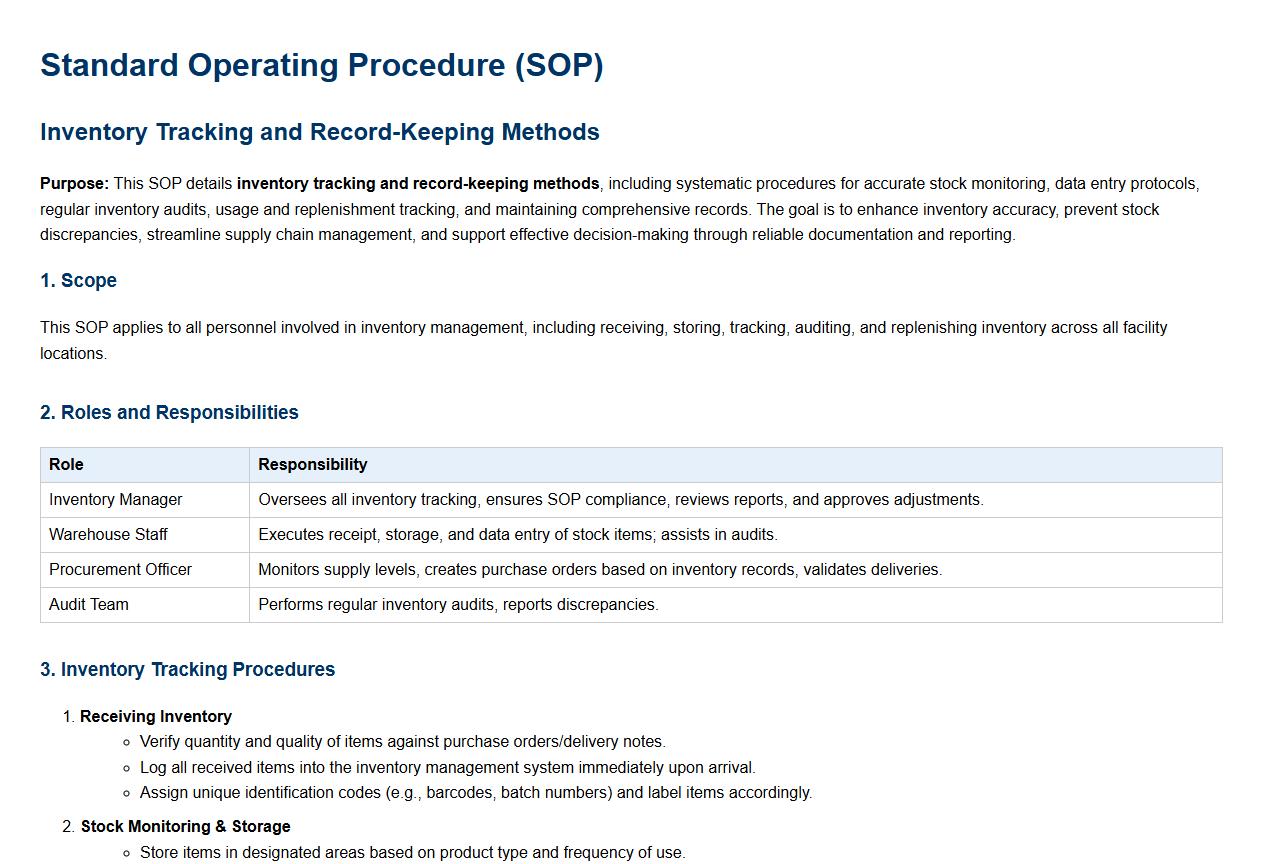
This SOP details inventory tracking and record-keeping methods, including systematic procedures for accurate stock monitoring, data entry protocols, regular inventory audits, usage and replenishment tracking, and maintaining comprehensive records. The goal is to enhance inventory accuracy, prevent stock discrepancies, streamline supply chain management, and support effective decision-making through reliable documentation and reporting.
Handling and disposal of expired or damaged items.
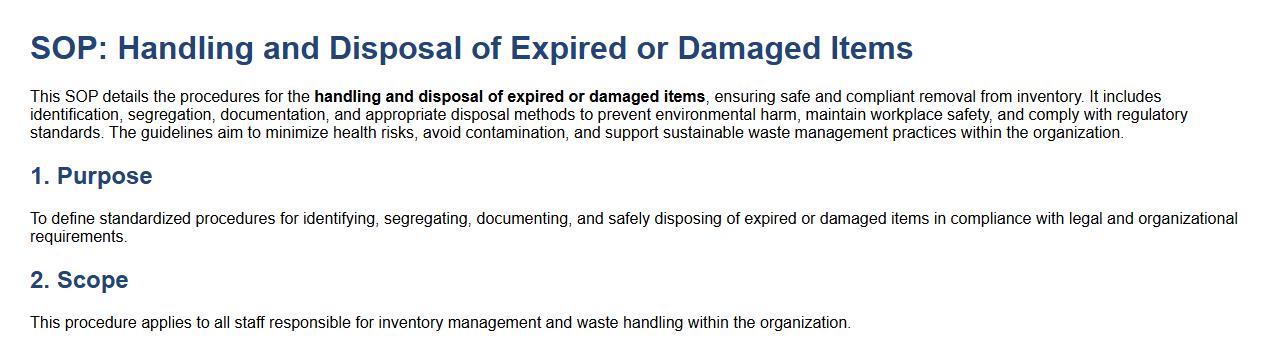
This SOP details the procedures for the handling and disposal of expired or damaged items, ensuring safe and compliant removal from inventory. It includes identification, segregation, documentation, and appropriate disposal methods to prevent environmental harm, maintain workplace safety, and comply with regulatory standards. The guidelines aim to minimize health risks, avoid contamination, and support sustainable waste management practices within the organization.
Routine inventory audits and reconciliation.
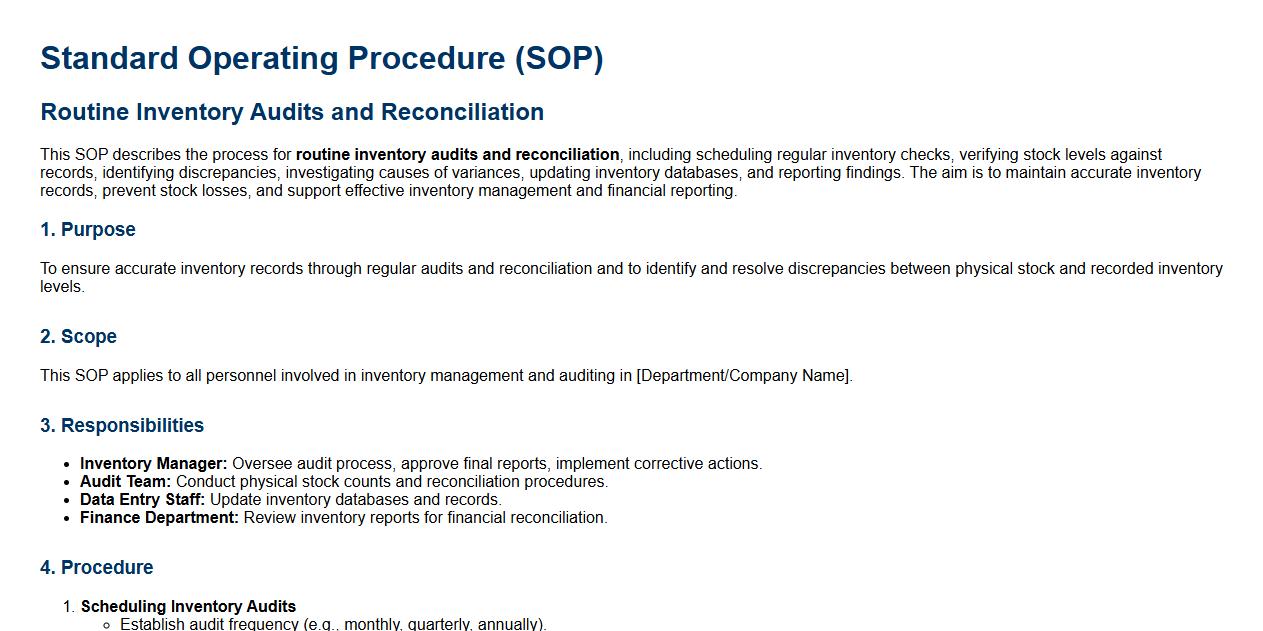
This SOP describes the process for routine inventory audits and reconciliation, including scheduling regular inventory checks, verifying stock levels against records, identifying discrepancies, investigating causes of variances, updating inventory databases, and reporting findings. The aim is to maintain accurate inventory records, prevent stock losses, and support effective inventory management and financial reporting.
Guidelines for emergency restocking.
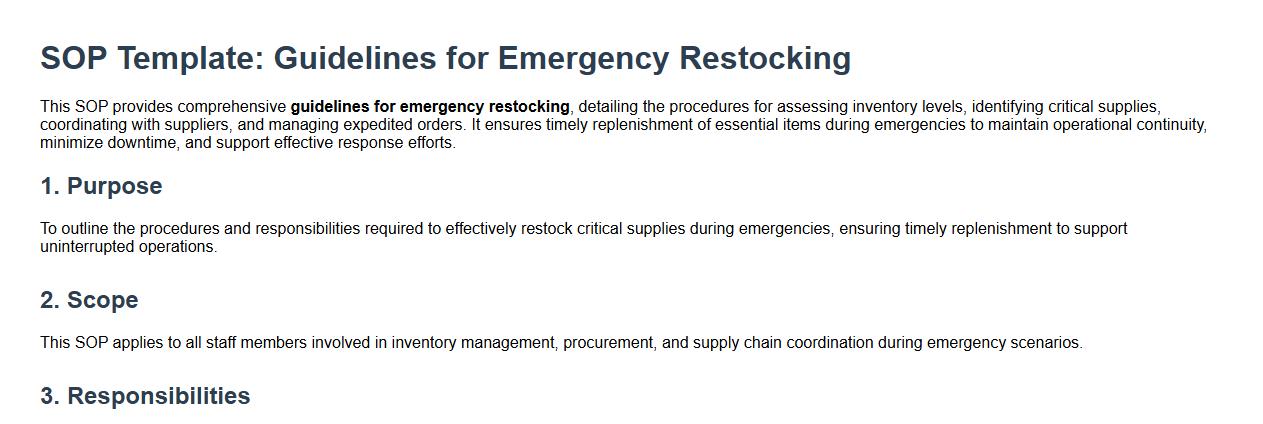
This SOP provides comprehensive guidelines for emergency restocking, detailing the procedures for assessing inventory levels, identifying critical supplies, coordinating with suppliers, and managing expedited orders. It ensures timely replenishment of essential items during emergencies to maintain operational continuity, minimize downtime, and support effective response efforts.
Supplier communication and order placement protocol.
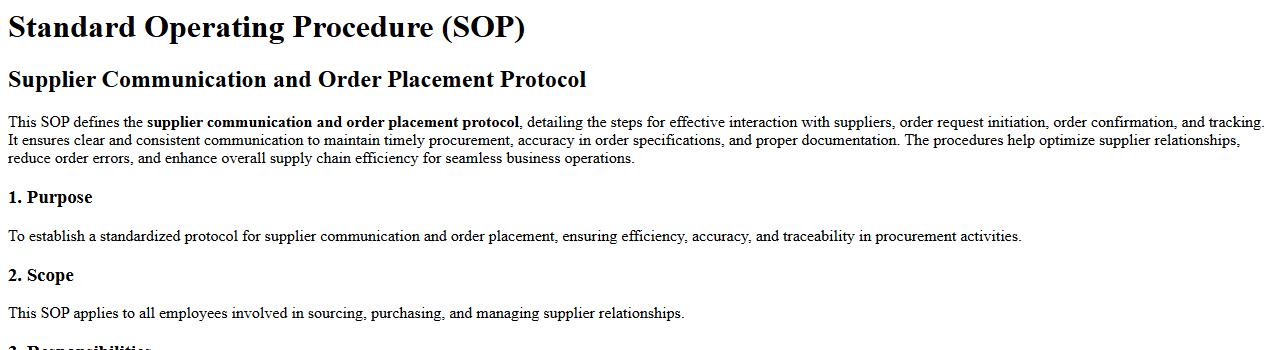
This SOP defines the supplier communication and order placement protocol, detailing the steps for effective interaction with suppliers, order request initiation, order confirmation, and tracking. It ensures clear and consistent communication to maintain timely procurement, accuracy in order specifications, and proper documentation. The procedures help optimize supplier relationships, reduce order errors, and enhance overall supply chain efficiency for seamless business operations.
Compliance with regulatory and safety standards.
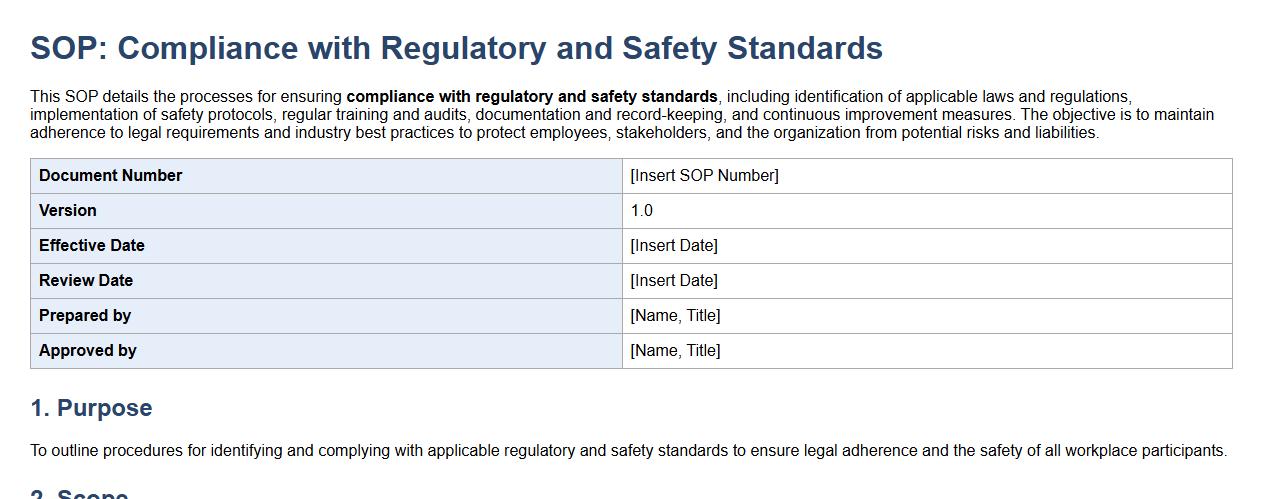
This SOP details the processes for ensuring compliance with regulatory and safety standards, including identification of applicable laws and regulations, implementation of safety protocols, regular training and audits, documentation and record-keeping, and continuous improvement measures. The objective is to maintain adherence to legal requirements and industry best practices to protect employees, stakeholders, and the organization from potential risks and liabilities.
What are the main objectives outlined in the SOP for Medical Inventory Management?
The main objectives of the SOP for Medical Inventory Management are to ensure accurate tracking and availability of medical supplies. It aims to minimize waste and reduce the risk of stockouts by maintaining optimal inventory levels. Additionally, the SOP promotes compliance with regulatory standards and supports patient safety through efficient inventory control.
Which procedures are specified for the ordering and receiving of medical inventory?
The SOP specifies detailed ordering and receiving procedures to maintain an organized inventory system. Orders must be approved based on current stock levels and forecasted needs to prevent overstocking. Upon receipt, items are verified for accuracy and quality before being recorded in the inventory management system.
How does the SOP define roles and responsibilities for inventory tracking?
The SOP clearly defines roles and responsibilities to ensure accountability in inventory tracking. Designated personnel are assigned to monitor stock levels, update records, and report discrepancies promptly. This structured approach fosters transparency and effective management of medical supplies.
What protocols are included for the storage and handling of sensitive or perishable medical supplies?
Special protocols for storage and handling of sensitive or perishable supplies are emphasized in the SOP. These include temperature controls, secure storage conditions, and compliance with manufacturer guidelines. The protocols ensure the integrity and efficacy of medical supplies until use.
What steps are detailed in the SOP for conducting regular inventory audits and addressing discrepancies?
The SOP outlines systematic inventory audit procedures to regularly verify stock accuracy. Audits involve physical counts compared to recorded data, with any discrepancies investigated promptly. Corrective actions are implemented to resolve issues and maintain accurate inventory records.