

A SOP Template for Health Records Management streamlines the process of organizing, storing, and maintaining patient information securely and efficiently. This template ensures compliance with healthcare regulations while improving data accuracy and accessibility. Utilizing a standardized approach helps healthcare providers reduce errors and enhance overall record-keeping practices.
Patient registration and identification procedures.
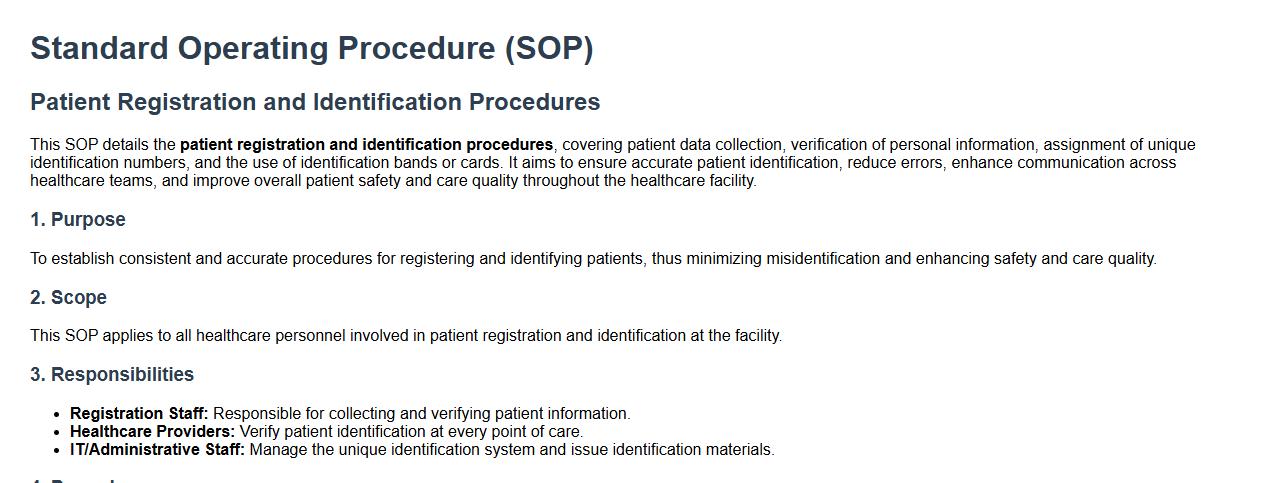
This SOP details the patient registration and identification procedures, covering patient data collection, verification of personal information, assignment of unique identification numbers, and the use of identification bands or cards. It aims to ensure accurate patient identification, reduce errors, enhance communication across healthcare teams, and improve overall patient safety and care quality throughout the healthcare facility.
Health records data entry standards and protocols.
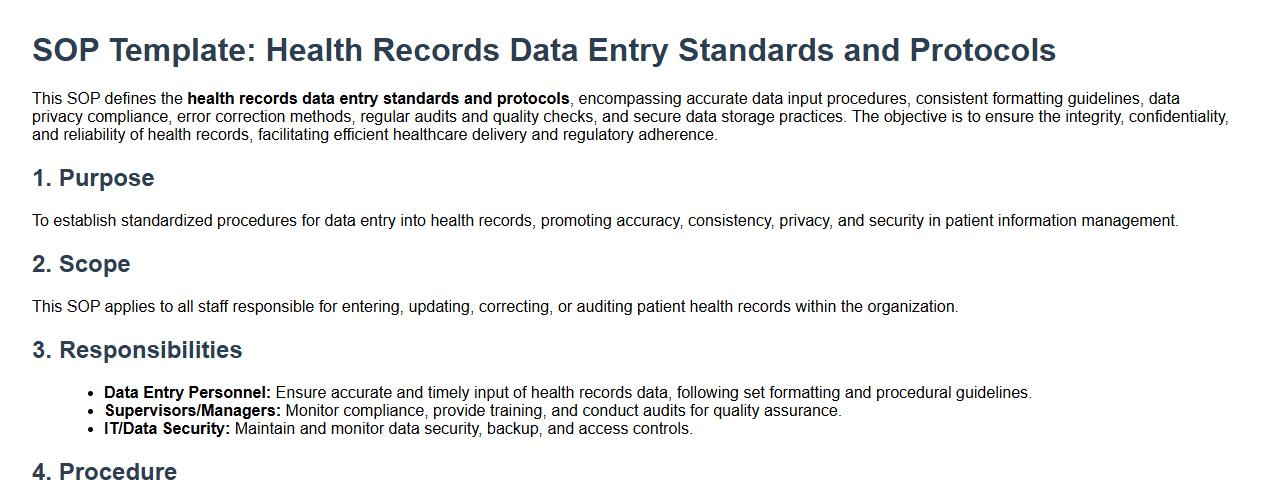
This SOP defines the health records data entry standards and protocols, encompassing accurate data input procedures, consistent formatting guidelines, data privacy compliance, error correction methods, regular audits and quality checks, and secure data storage practices. The objective is to ensure the integrity, confidentiality, and reliability of health records, facilitating efficient healthcare delivery and regulatory adherence.
Guidelines for electronic health records (EHR) access and security.
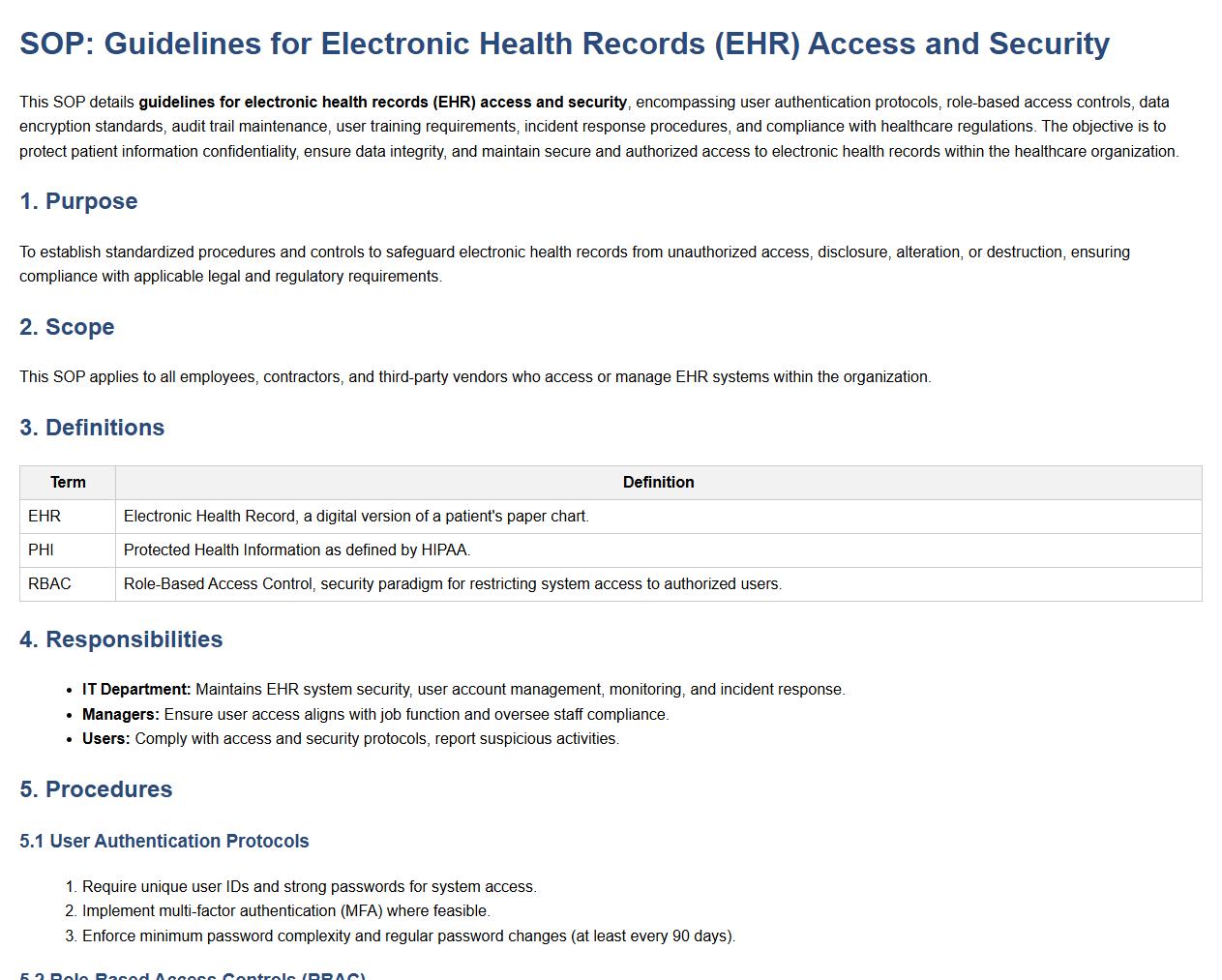
This SOP details guidelines for electronic health records (EHR) access and security, encompassing user authentication protocols, role-based access controls, data encryption standards, audit trail maintenance, user training requirements, incident response procedures, and compliance with healthcare regulations. The objective is to protect patient information confidentiality, ensure data integrity, and maintain secure and authorized access to electronic health records within the healthcare organization.
Procedures for updating and amending health information.
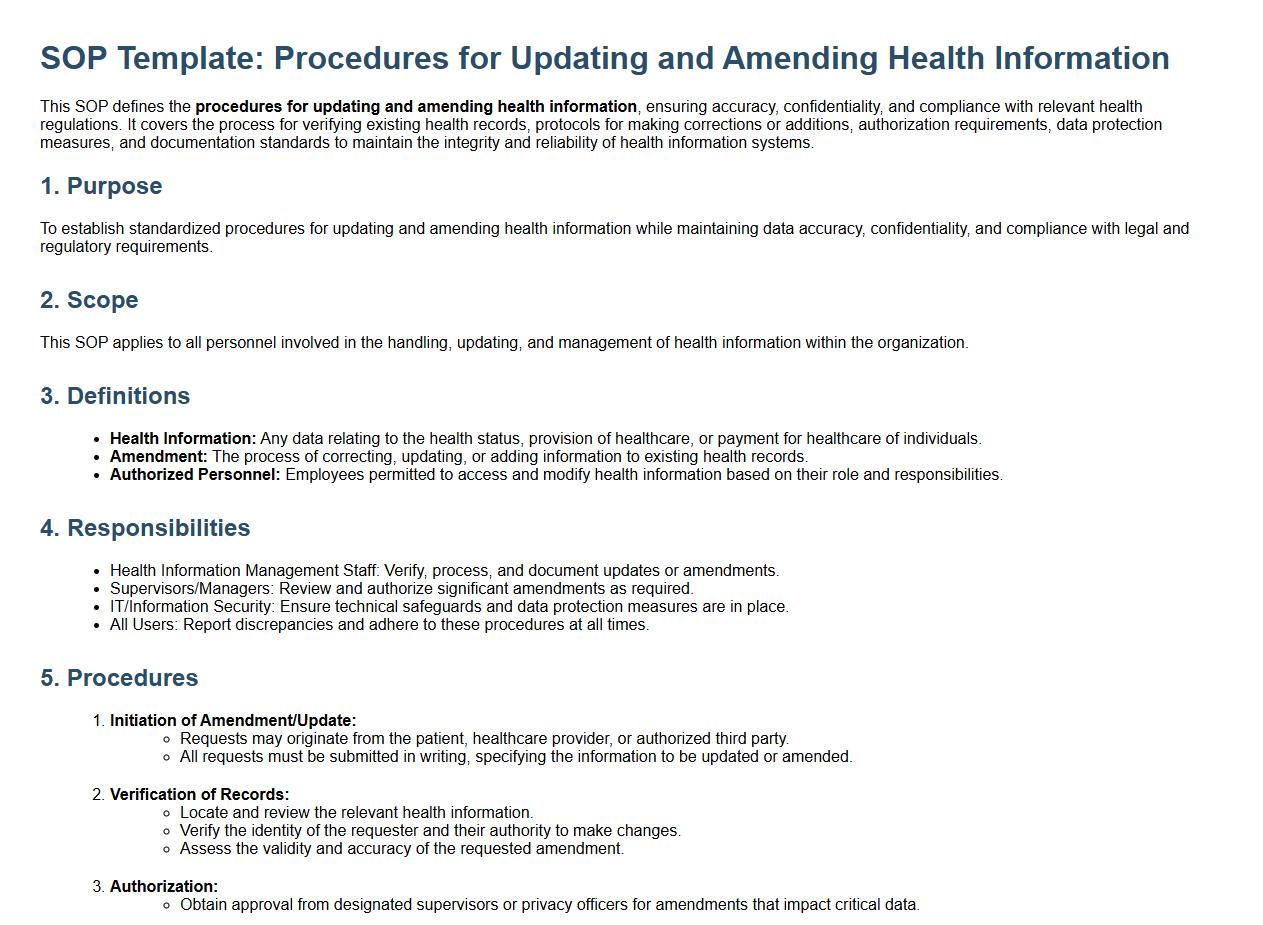
This SOP defines the procedures for updating and amending health information, ensuring accuracy, confidentiality, and compliance with relevant health regulations. It covers the process for verifying existing health records, protocols for making corrections or additions, authorization requirements, data protection measures, and documentation standards to maintain the integrity and reliability of health information systems.
Health records retention and archiving policies.
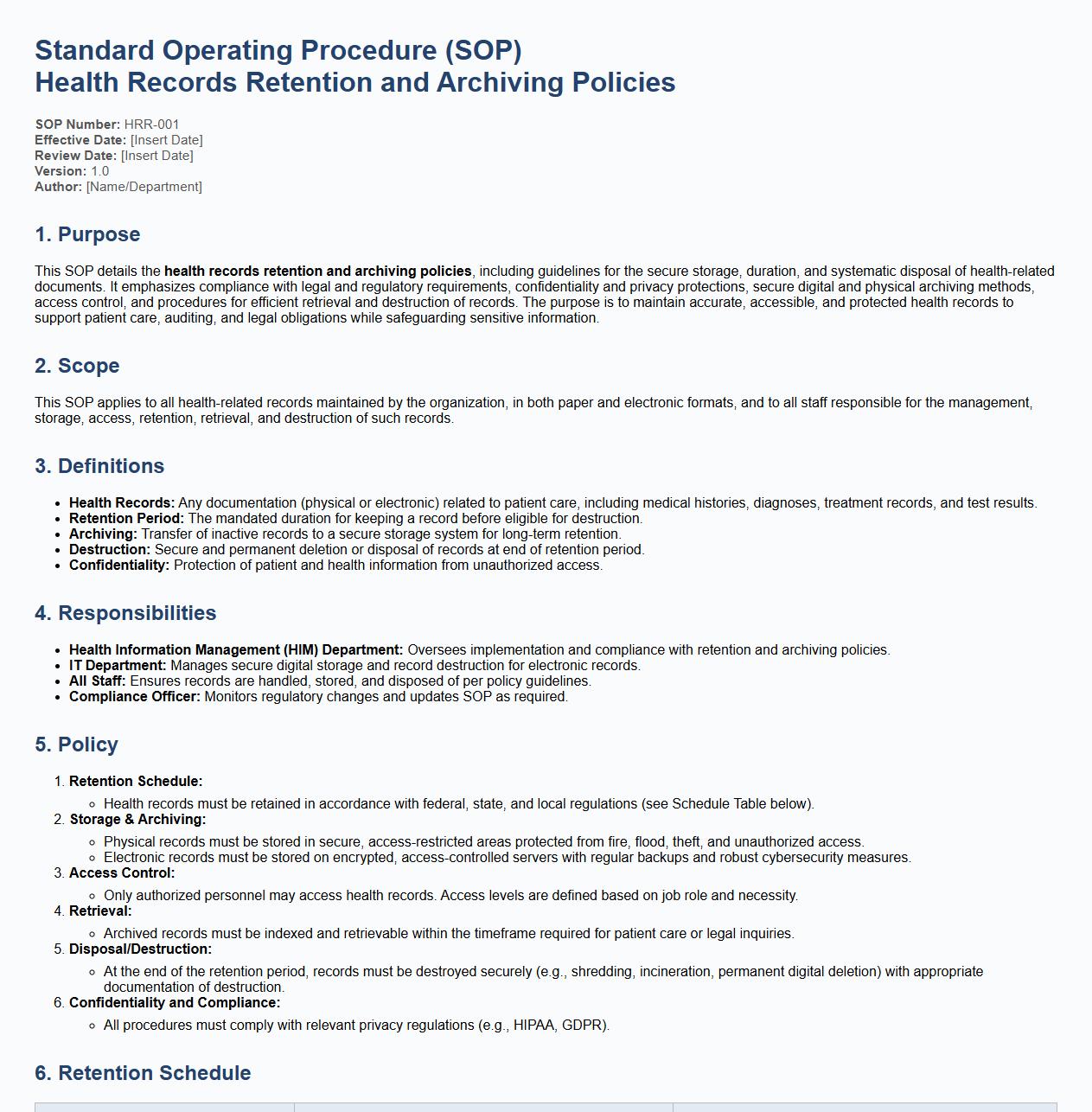
This SOP details the health records retention and archiving policies, including guidelines for the secure storage, duration, and systematic disposal of health-related documents. It emphasizes compliance with legal and regulatory requirements, confidentiality and privacy protections, secure digital and physical archiving methods, access control, and procedures for efficient retrieval and destruction of records. The purpose is to maintain accurate, accessible, and protected health records to support patient care, auditing, and legal obligations while safeguarding sensitive information.
Patient confidentiality and information-sharing protocols.
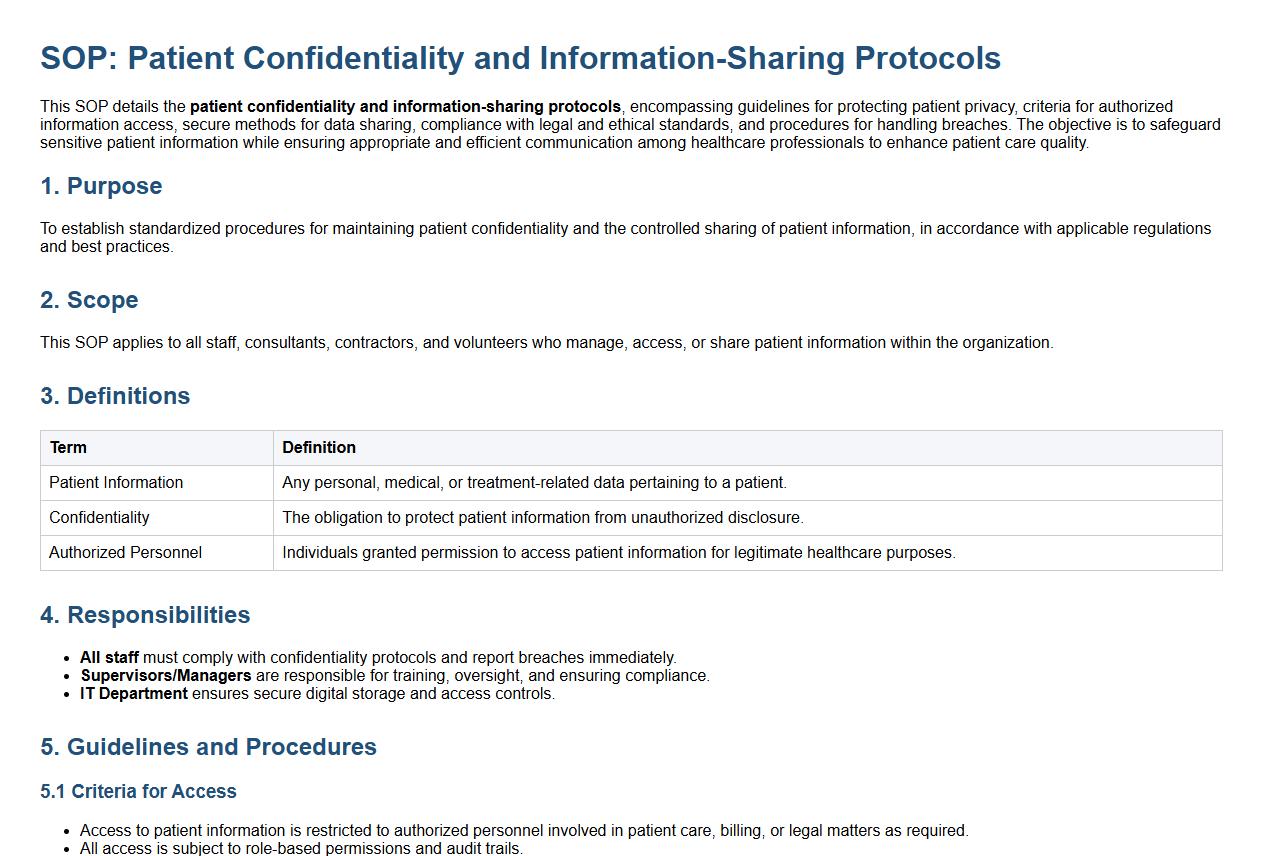
This SOP details the patient confidentiality and information-sharing protocols, encompassing guidelines for protecting patient privacy, criteria for authorized information access, secure methods for data sharing, compliance with legal and ethical standards, and procedures for handling breaches. The objective is to safeguard sensitive patient information while ensuring appropriate and efficient communication among healthcare professionals to enhance patient care quality.
Health records audit and quality assurance checks.
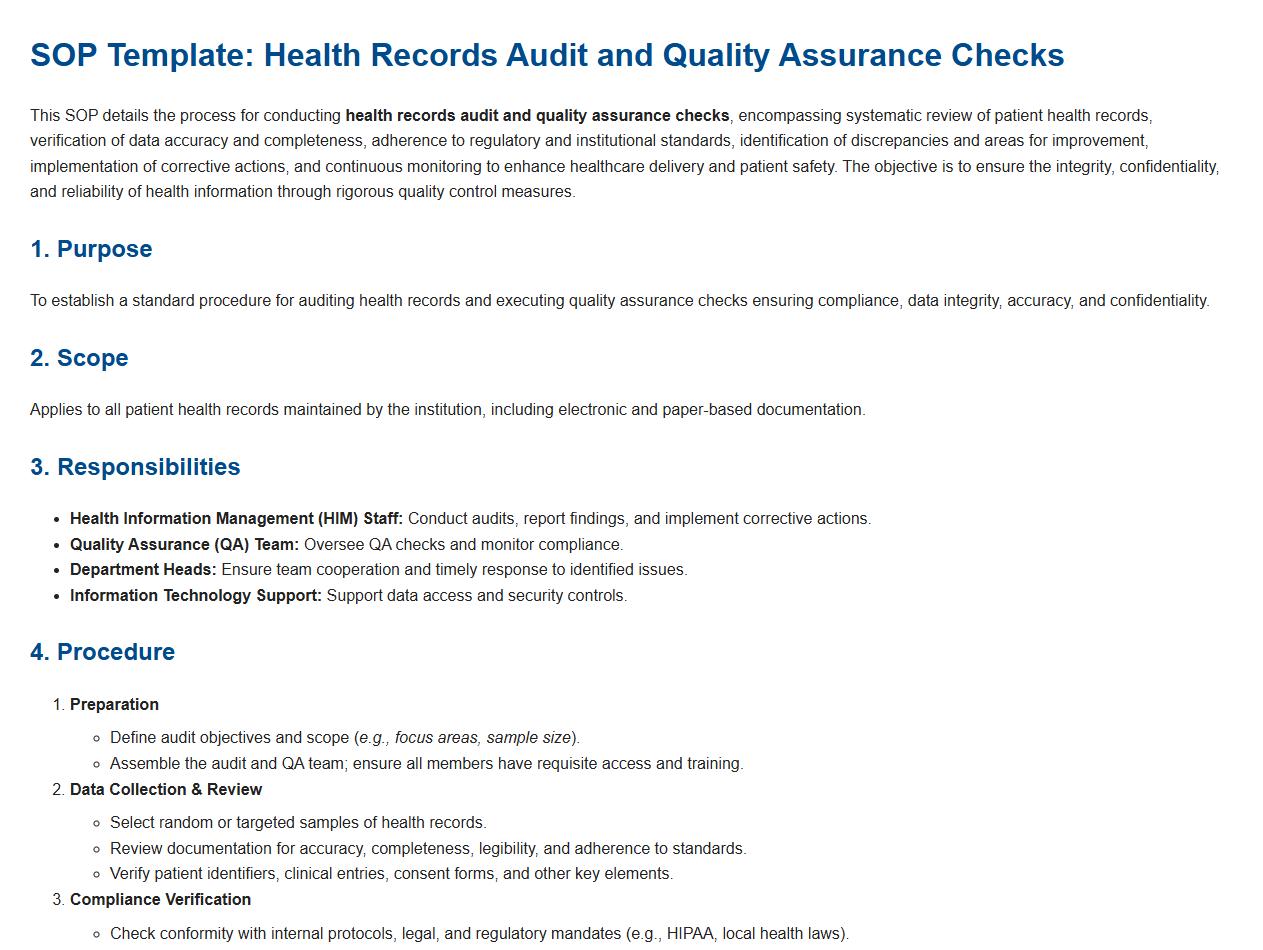
This SOP details the process for conducting health records audit and quality assurance checks, encompassing systematic review of patient health records, verification of data accuracy and completeness, adherence to regulatory and institutional standards, identification of discrepancies and areas for improvement, implementation of corrective actions, and continuous monitoring to enhance healthcare delivery and patient safety. The objective is to ensure the integrity, confidentiality, and reliability of health information through rigorous quality control measures.
Protocols for health record retrieval and release of information.
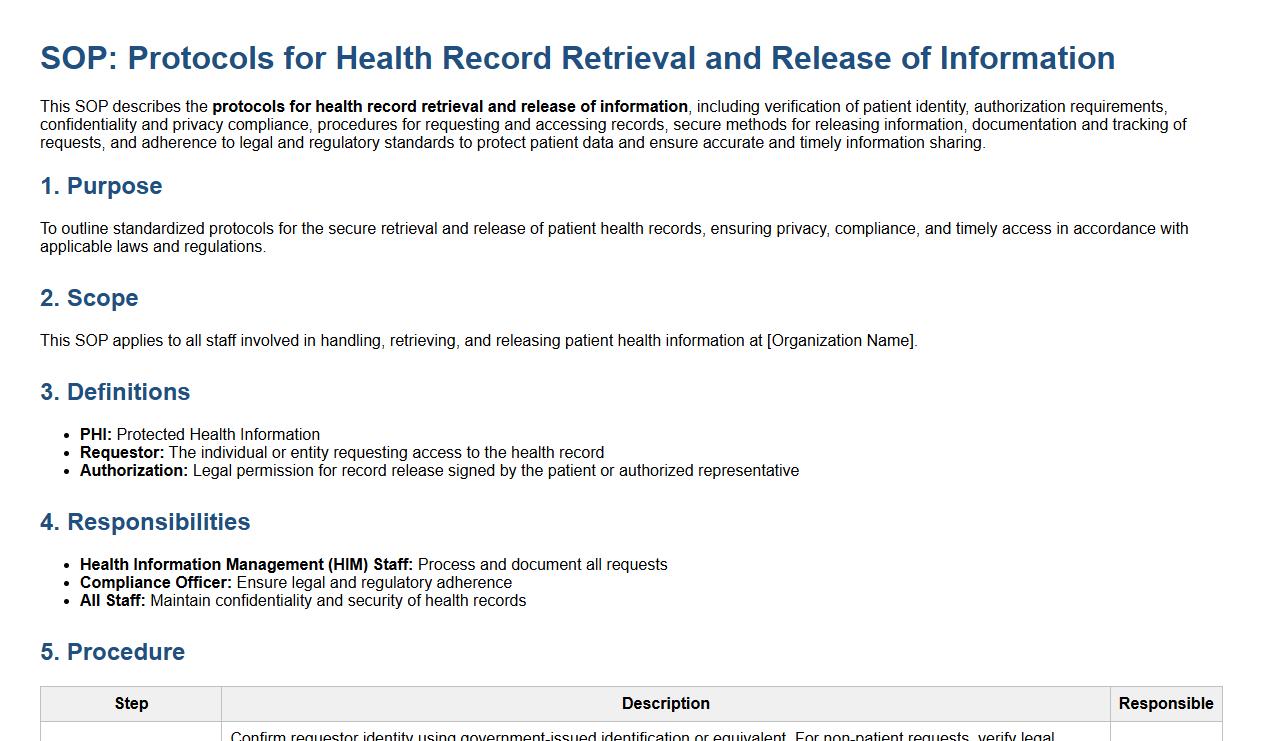
This SOP describes the protocols for health record retrieval and release of information, including verification of patient identity, authorization requirements, confidentiality and privacy compliance, procedures for requesting and accessing records, secure methods for releasing information, documentation and tracking of requests, and adherence to legal and regulatory standards to protect patient data and ensure accurate and timely information sharing.
Disaster recovery and backup procedures for health records.
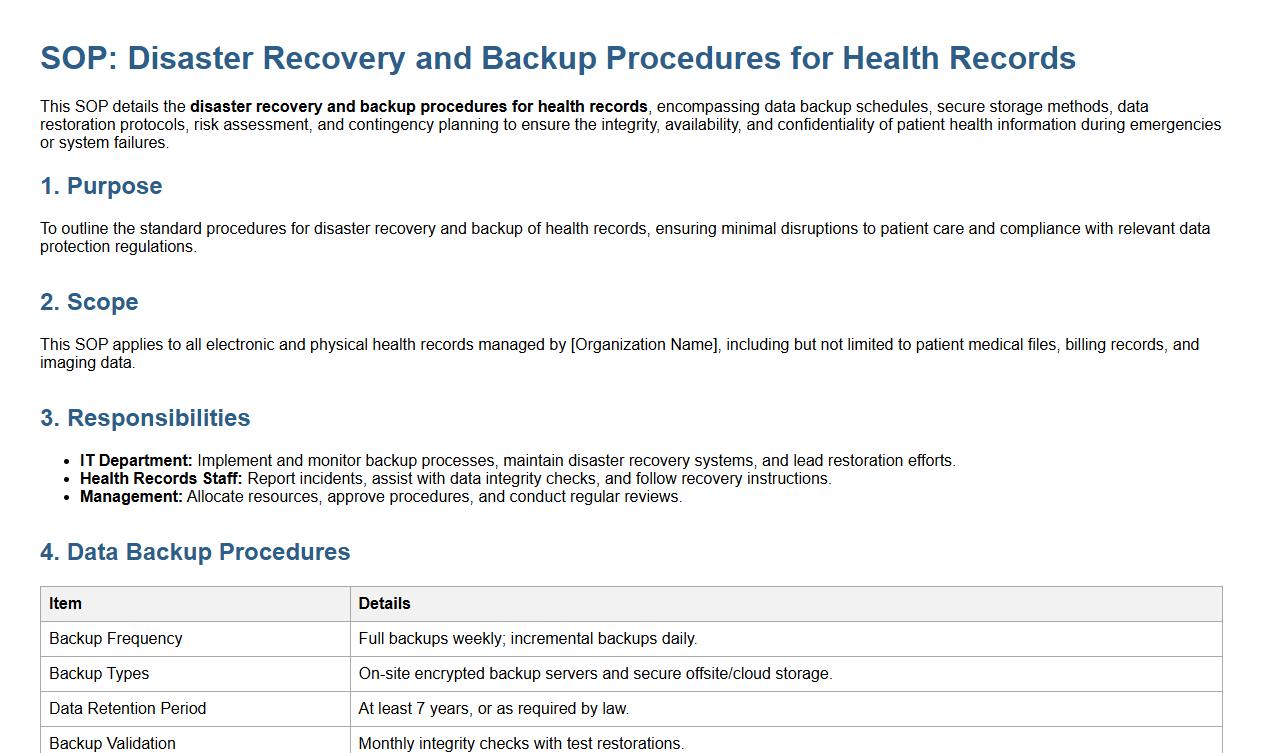
This SOP details the disaster recovery and backup procedures for health records, encompassing data backup schedules, secure storage methods, data restoration protocols, risk assessment, and contingency planning to ensure the integrity, availability, and confidentiality of patient health information during emergencies or system failures.
Reporting and incident management for breaches of health records.
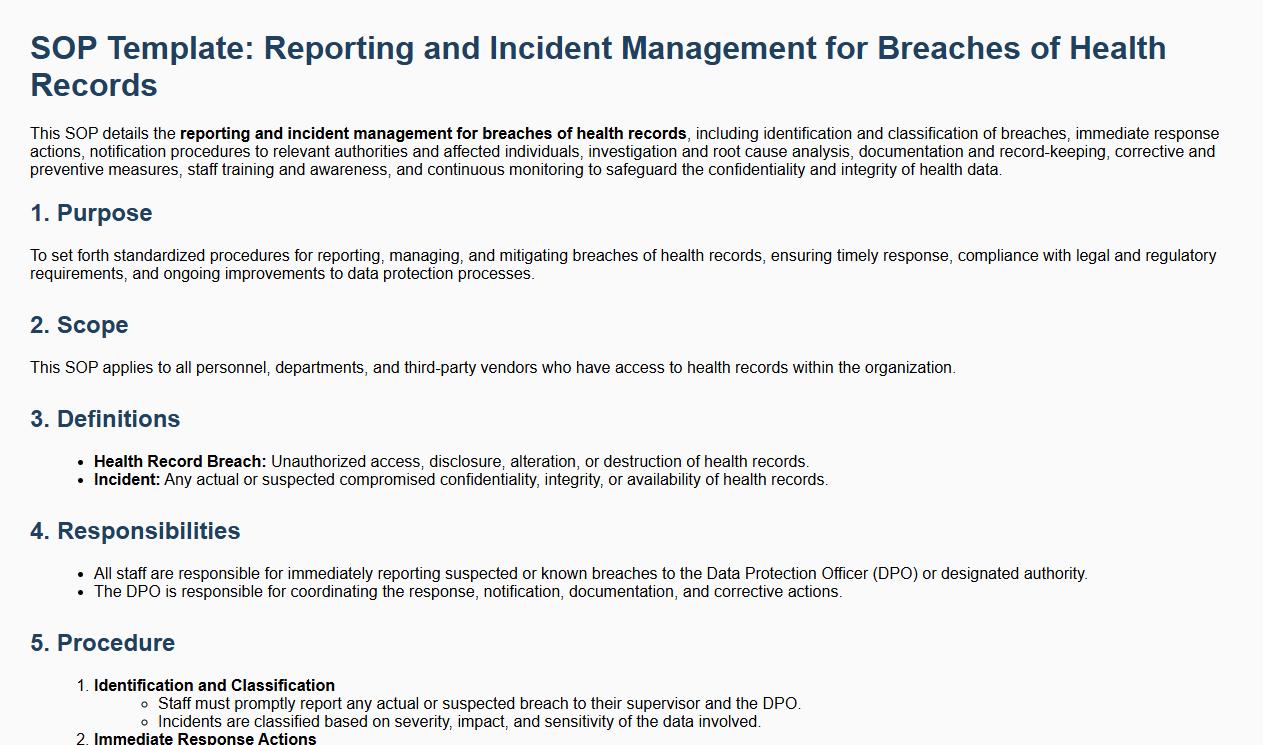
This SOP details the reporting and incident management for breaches of health records, including identification and classification of breaches, immediate response actions, notification procedures to relevant authorities and affected individuals, investigation and root cause analysis, documentation and record-keeping, corrective and preventive measures, staff training and awareness, and continuous monitoring to safeguard the confidentiality and integrity of health data.
Key Components Required in a Standard Operating Procedure for Health Records Management
A standard operating procedure (SOP) for health records management must include clear documentation of processes to ensure consistency and compliance. Essential components are the scope, objectives, and definitions related to health record handling. It also specifies tools, resources, and compliance requirements critical to effective records management.
Definition of Roles and Responsibilities in the SOP for Handling Health Records
The SOP clearly defines roles and responsibilities for all personnel involved in health records management, ensuring accountability. Each role, from record creators to security officers, has specific duties detailed to maintain data integrity and confidentiality. This structured approach facilitates smooth collaboration and adherence to regulatory standards.
Procedures Outlined in the SOP for Maintaining Confidentiality and Security of Health Records
Maintaining confidentiality and security is a core focus in the SOP, incorporating strict access controls and encryption methods. Procedures include auditing access, training staff on privacy protocols, and reporting breaches promptly. These steps guarantee that sensitive health information remains protected from unauthorized disclosure.
Standardized Methods for Record Creation, Storage, and Retrieval in the SOP
The SOP standardizes procedures for record creation to ensure accuracy and consistency, including data entry protocols and verification steps. It also defines secure storage solutions, using both physical and electronic methods designed to prevent loss and damage. Efficient retrieval processes are established to facilitate timely access to health records when needed.
Guidelines for Retention, Archiving, and Disposal of Health Records According to the SOP
The SOP provides comprehensive guidelines for retaining health records based on legal requirements and organizational policies. Archiving protocols ensure long-term preservation and accessibility of important data. Safe disposal methods, including shredding or secure deletion, are prescribed to protect patient privacy at the end of the retention period.