

A SOP Template for Ambulance Dispatch Services provides a structured framework to ensure efficient and timely response to emergency calls. It outlines standardized procedures for communication, resource allocation, and coordination between dispatchers and ambulance teams. This template helps improve service quality, reduce response times, and maintain compliance with healthcare regulations.
Emergency call intake and verification procedures.
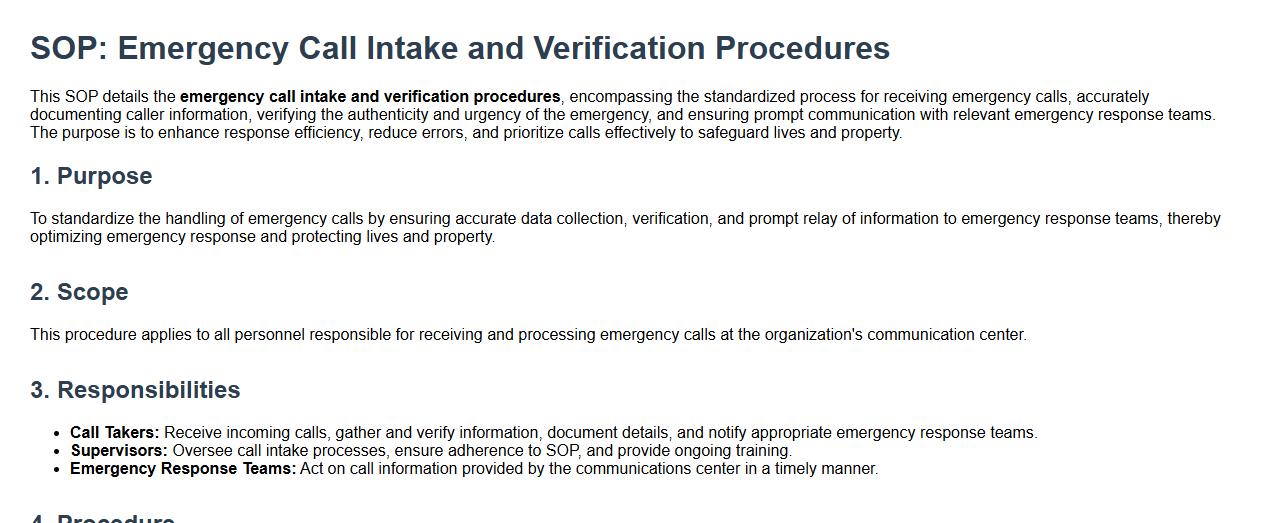
This SOP details the emergency call intake and verification procedures, encompassing the standardized process for receiving emergency calls, accurately documenting caller information, verifying the authenticity and urgency of the emergency, and ensuring prompt communication with relevant emergency response teams. The purpose is to enhance response efficiency, reduce errors, and prioritize calls effectively to safeguard lives and property.
Response time logging and prioritization of calls.
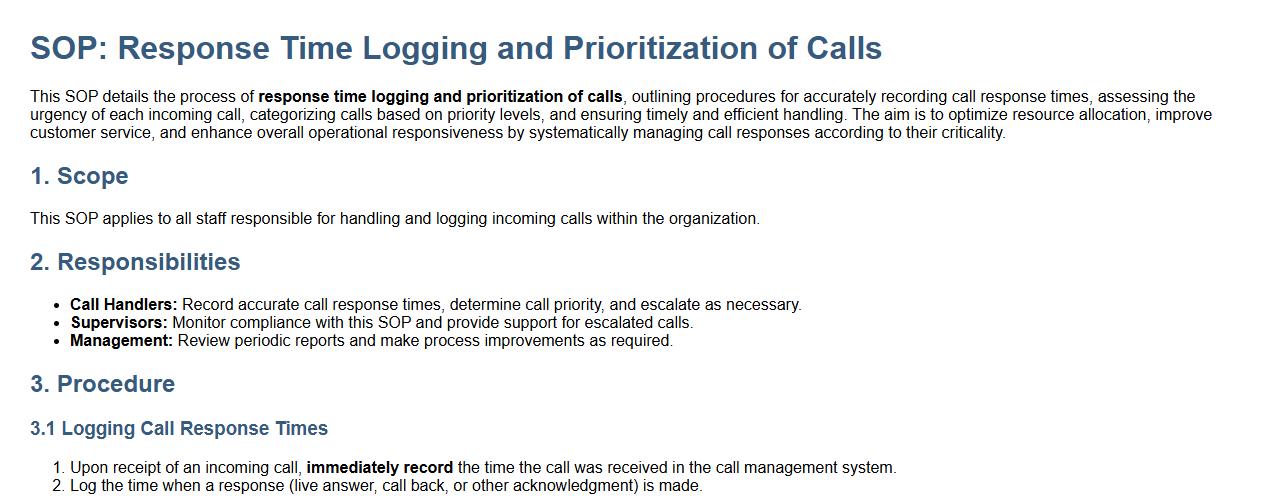
This SOP details the process of response time logging and prioritization of calls, outlining procedures for accurately recording call response times, assessing the urgency of each incoming call, categorizing calls based on priority levels, and ensuring timely and efficient handling. The aim is to optimize resource allocation, improve customer service, and enhance overall operational responsiveness by systematically managing call responses according to their criticality.
Vehicle and equipment readiness checks.
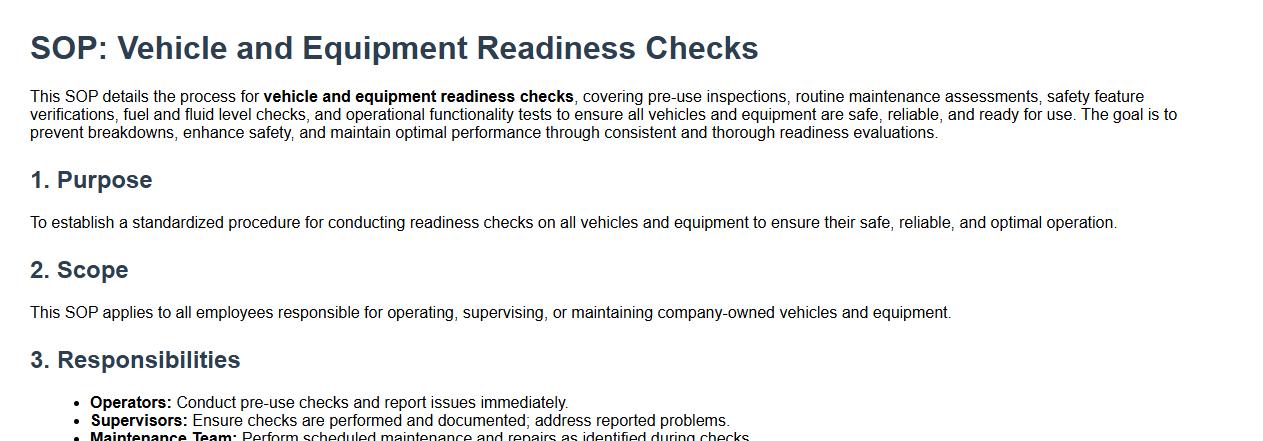
This SOP details the process for vehicle and equipment readiness checks, covering pre-use inspections, routine maintenance assessments, safety feature verifications, fuel and fluid level checks, and operational functionality tests to ensure all vehicles and equipment are safe, reliable, and ready for use. The goal is to prevent breakdowns, enhance safety, and maintain optimal performance through consistent and thorough readiness evaluations.
Crew assignment and daily briefing protocols.
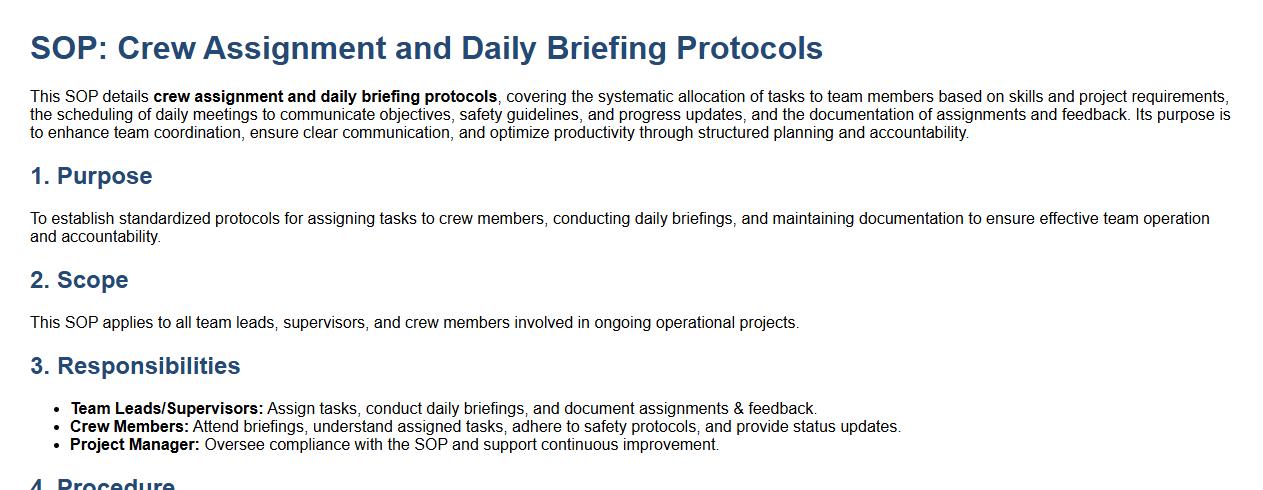
This SOP details crew assignment and daily briefing protocols, covering the systematic allocation of tasks to team members based on skills and project requirements, the scheduling of daily meetings to communicate objectives, safety guidelines, and progress updates, and the documentation of assignments and feedback. Its purpose is to enhance team coordination, ensure clear communication, and optimize productivity through structured planning and accountability.
Dispatch communication and route optimization guidelines.
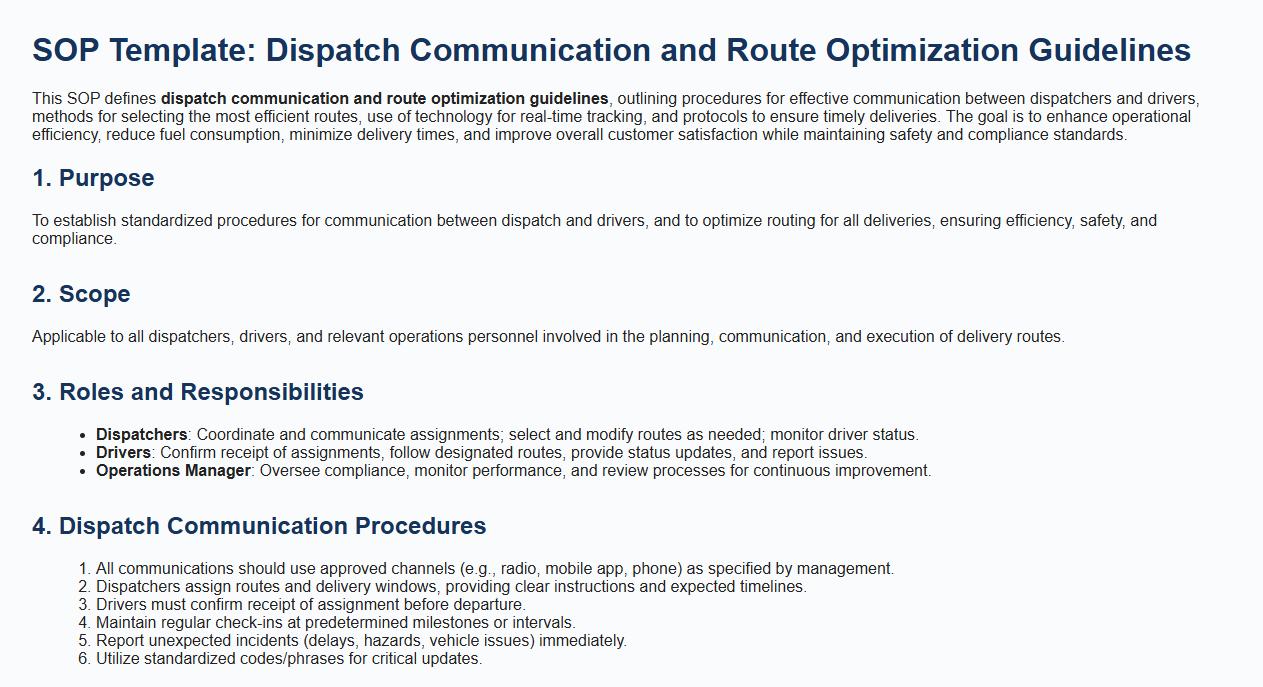
This SOP defines dispatch communication and route optimization guidelines, outlining procedures for effective communication between dispatchers and drivers, methods for selecting the most efficient routes, use of technology for real-time tracking, and protocols to ensure timely deliveries. The goal is to enhance operational efficiency, reduce fuel consumption, minimize delivery times, and improve overall customer satisfaction while maintaining safety and compliance standards.
Patient assessment and on-site care protocols.
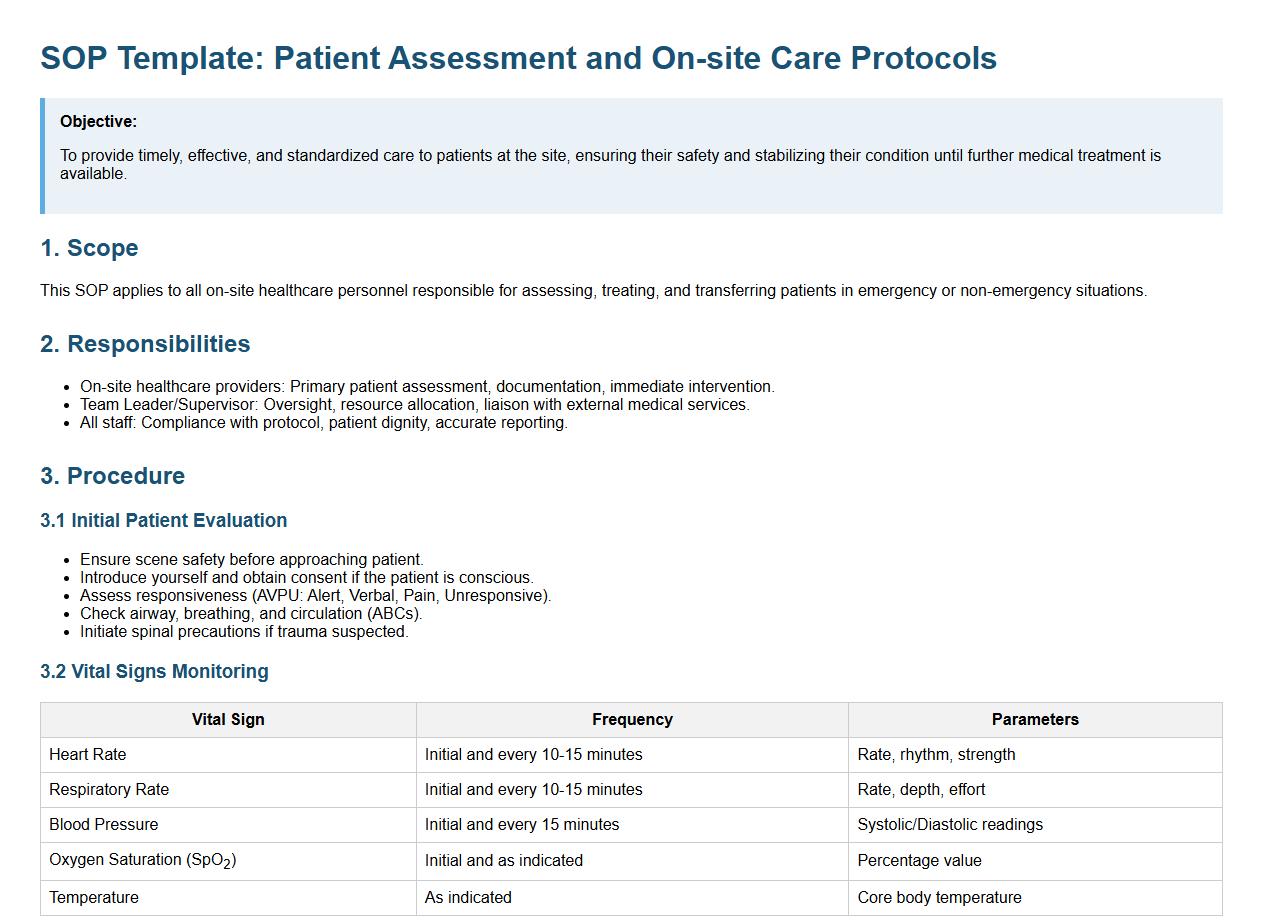
This SOP details comprehensive patient assessment and on-site care protocols, encompassing initial patient evaluation, vital signs monitoring, injury and symptom documentation, immediate medical interventions, communication with emergency services, patient transfer procedures, and continuous care monitoring. The objective is to provide timely, effective, and standardized care to patients at the site, ensuring their safety and stabilizing their condition until further medical treatment is available.
Inter-facility transfer procedures and documentation.
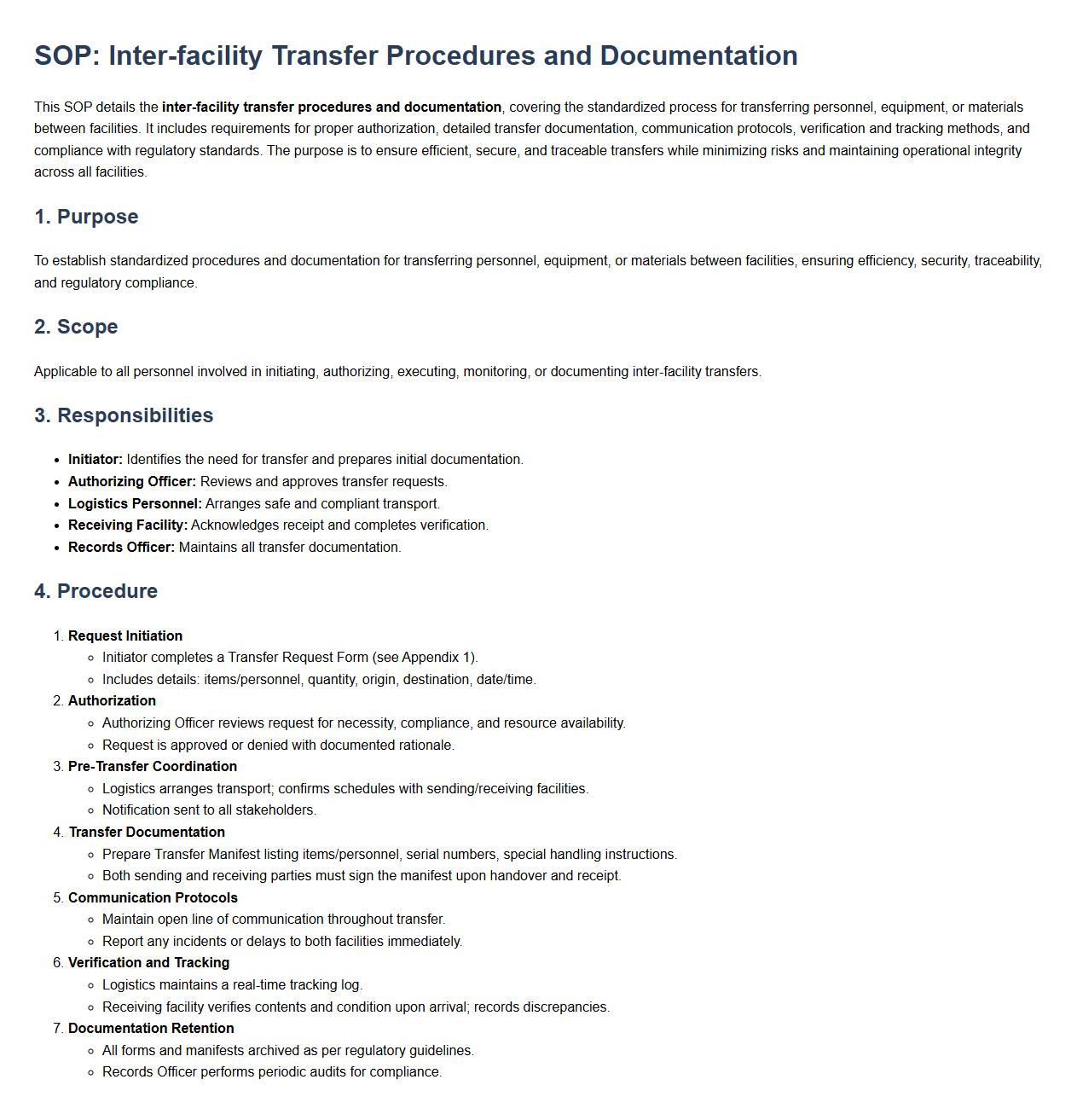
This SOP details the inter-facility transfer procedures and documentation, covering the standardized process for transferring personnel, equipment, or materials between facilities. It includes requirements for proper authorization, detailed transfer documentation, communication protocols, verification and tracking methods, and compliance with regulatory standards. The purpose is to ensure efficient, secure, and traceable transfers while minimizing risks and maintaining operational integrity across all facilities.
Decontamination and post-call ambulance cleaning.
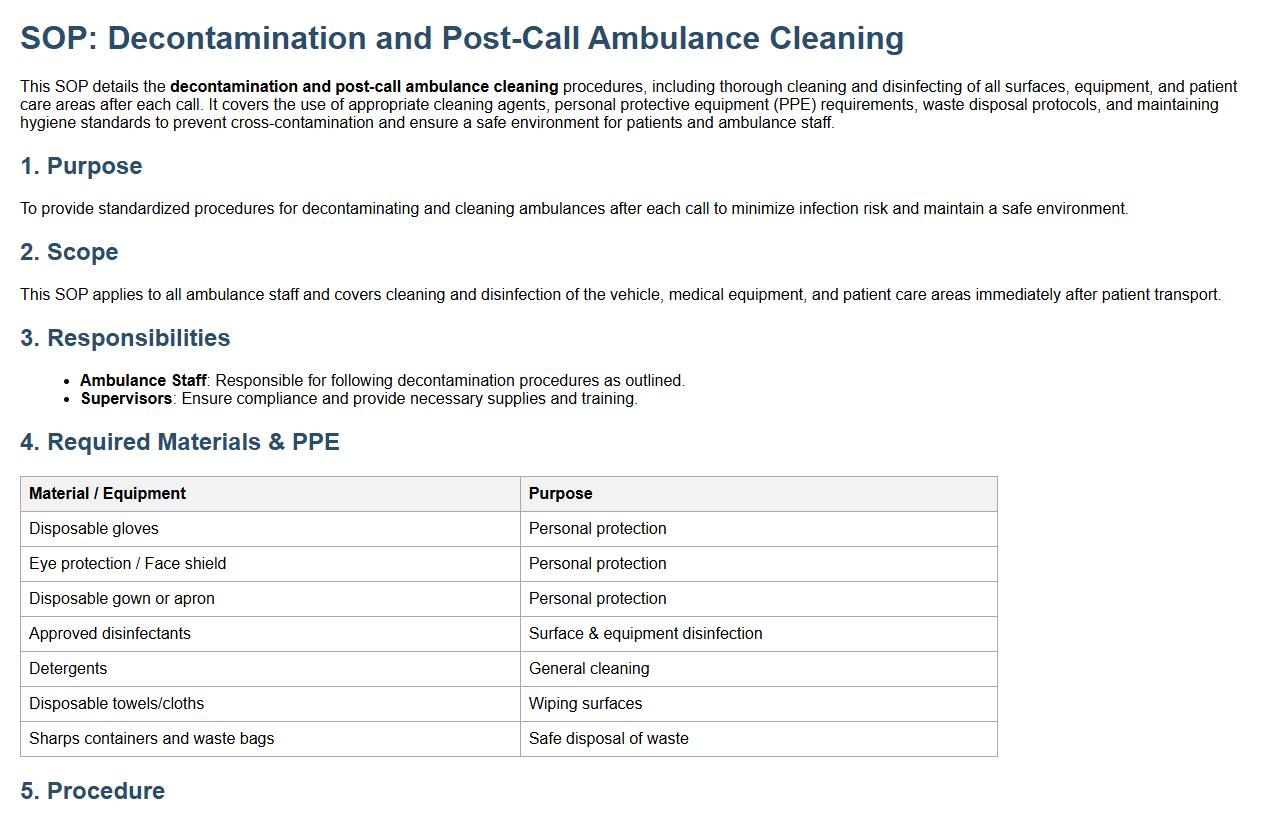
This SOP details the decontamination and post-call ambulance cleaning procedures, including thorough cleaning and disinfecting of all surfaces, equipment, and patient care areas after each call. It covers the use of appropriate cleaning agents, personal protective equipment (PPE) requirements, waste disposal protocols, and maintaining hygiene standards to prevent cross-contamination and ensure a safe environment for patients and ambulance staff.
Incident reporting and data entry standards.
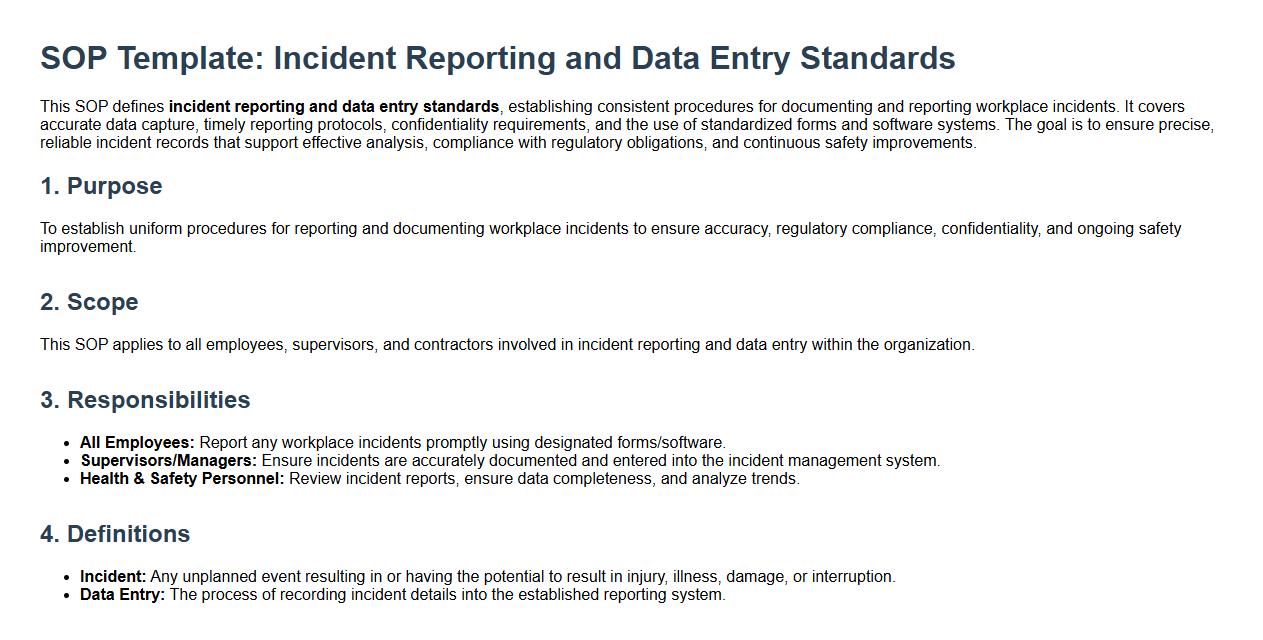
This SOP defines incident reporting and data entry standards, establishing consistent procedures for documenting and reporting workplace incidents. It covers accurate data capture, timely reporting protocols, confidentiality requirements, and the use of standardized forms and software systems. The goal is to ensure precise, reliable incident records that support effective analysis, compliance with regulatory obligations, and continuous safety improvements.
Quality assurance and continuous improvement reviews.
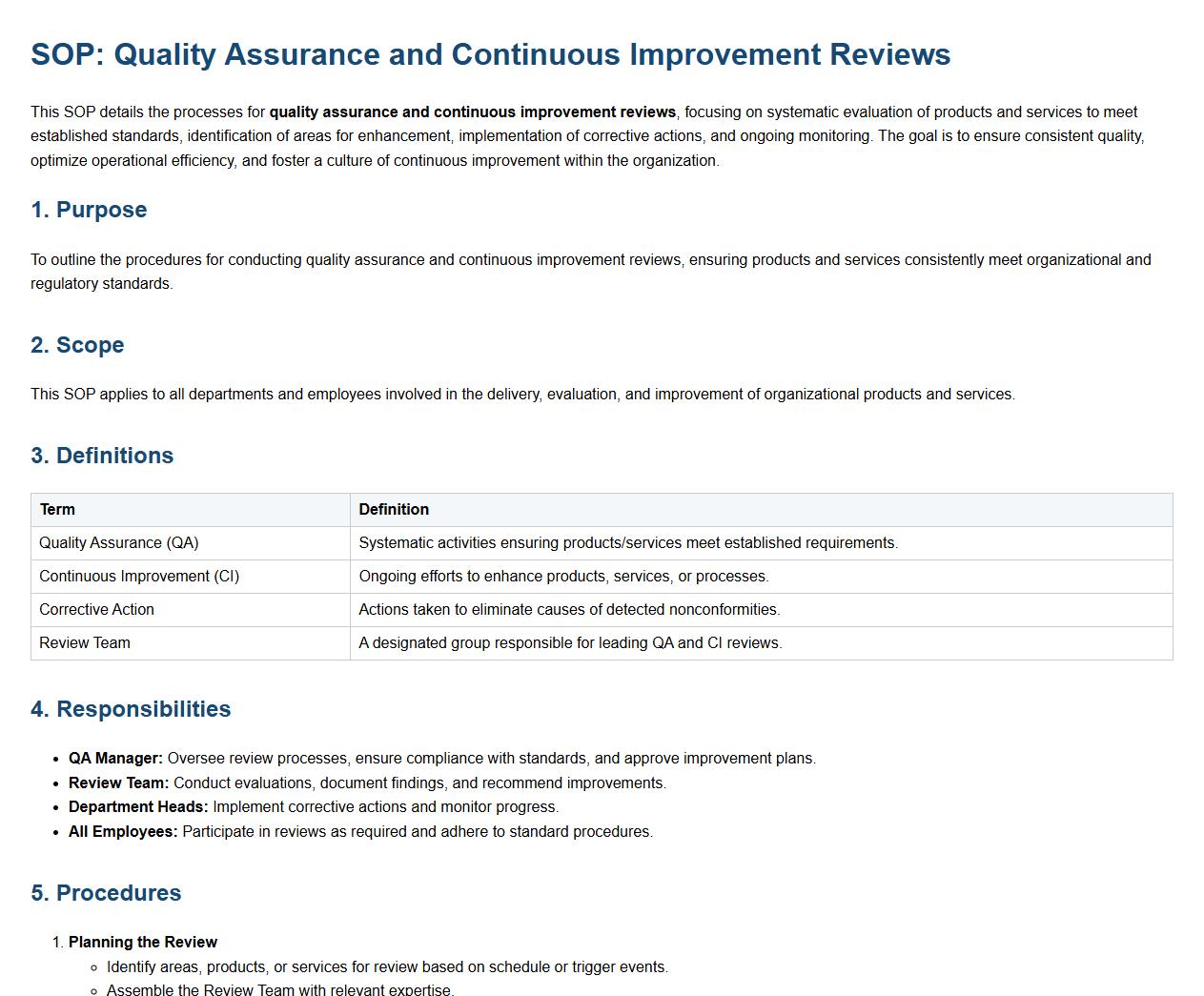
This SOP details the processes for quality assurance and continuous improvement reviews, focusing on systematic evaluation of products and services to meet established standards, identification of areas for enhancement, implementation of corrective actions, and ongoing monitoring. The goal is to ensure consistent quality, optimize operational efficiency, and foster a culture of continuous improvement within the organization.
Key Steps for Initiating an Ambulance Dispatch
The SOP emphasizes prompt assessment of emergency calls to determine the urgency and resource needs. It requires dispatchers to verify the patient's location and condition before activating the nearest available ambulance. Clear communication of essential details to the ambulance crew is critical to ensure an effective response.
Authorized Personnel for Approving and Implementing Dispatch
Only designated dispatch supervisors and control room managers have the authority to approve ambulance dispatch decisions. These personnel are trained to evaluate the situation and allocate resources efficiently. The SOP restricts dispatch approvals to maintain accountability and operational integrity.
Response Time Targets and Priority Levels
The SOP defines specific response time goals based on the severity of the incident, categorizing calls into high, medium, and low priority levels. High priority emergencies require immediate dispatch with targets often set under 8 minutes. This structured approach ensures that critical cases receive the fastest possible ambulance responses.
Documentation and Communication Protocols
During and after dispatch events, the SOP mandates comprehensive record-keeping and continuous communication between dispatch centers and ambulance crews. Accurate logs of call details, dispatch times, and patient information are required for accountability. Real-time updates help coordinate additional support if necessary and facilitate smooth patient handovers.
Safety and Infection Control Measures
The SOP outlines strict safety and infection control protocols for ambulance staff, including the use of personal protective equipment (PPE) and routine sanitation of vehicles. Staff must follow guidelines to minimize exposure risks during patient handling and transport. These measures protect both healthcare workers and patients during all stages of the dispatch process.