

A SOP Template for Clinical Waste Management provides a structured guideline to ensure the safe handling, segregation, and disposal of medical waste. This template helps healthcare facilities comply with regulatory standards while minimizing environmental impact and health risks. Proper implementation promotes a hygienic workspace and protects staff, patients, and the community from contamination and infection.
Clinical waste identification and segregation procedures.
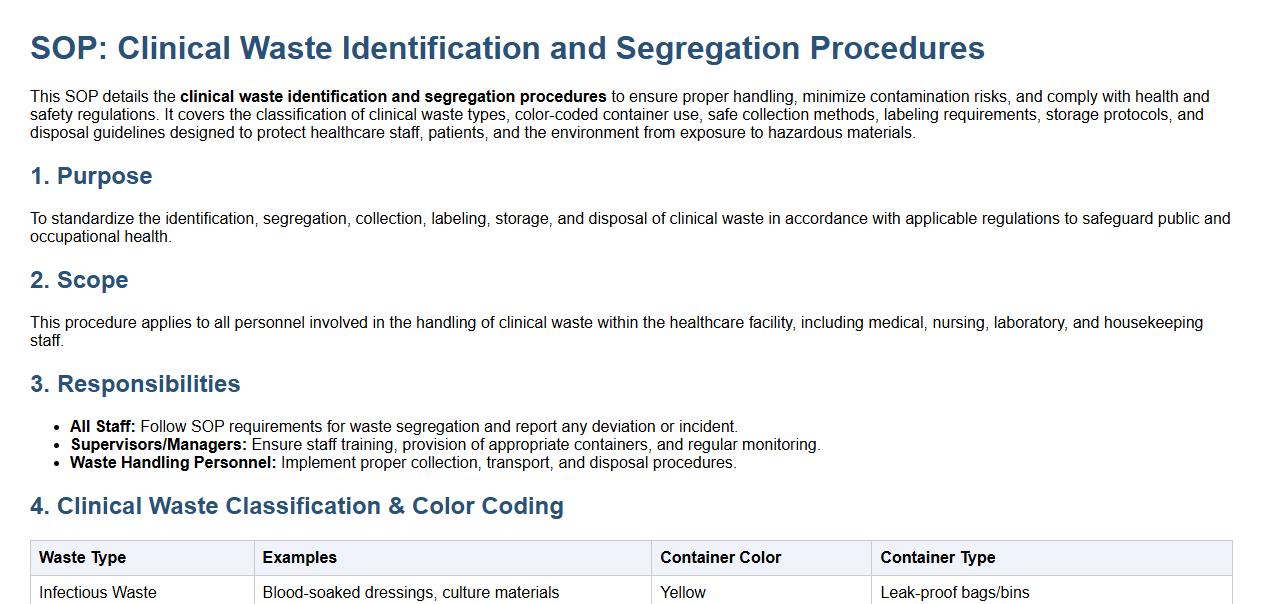
This SOP details the clinical waste identification and segregation procedures to ensure proper handling, minimize contamination risks, and comply with health and safety regulations. It covers the classification of clinical waste types, color-coded container use, safe collection methods, labeling requirements, storage protocols, and disposal guidelines designed to protect healthcare staff, patients, and the environment from exposure to hazardous materials.
Waste collection, handling, and internal transport protocols.
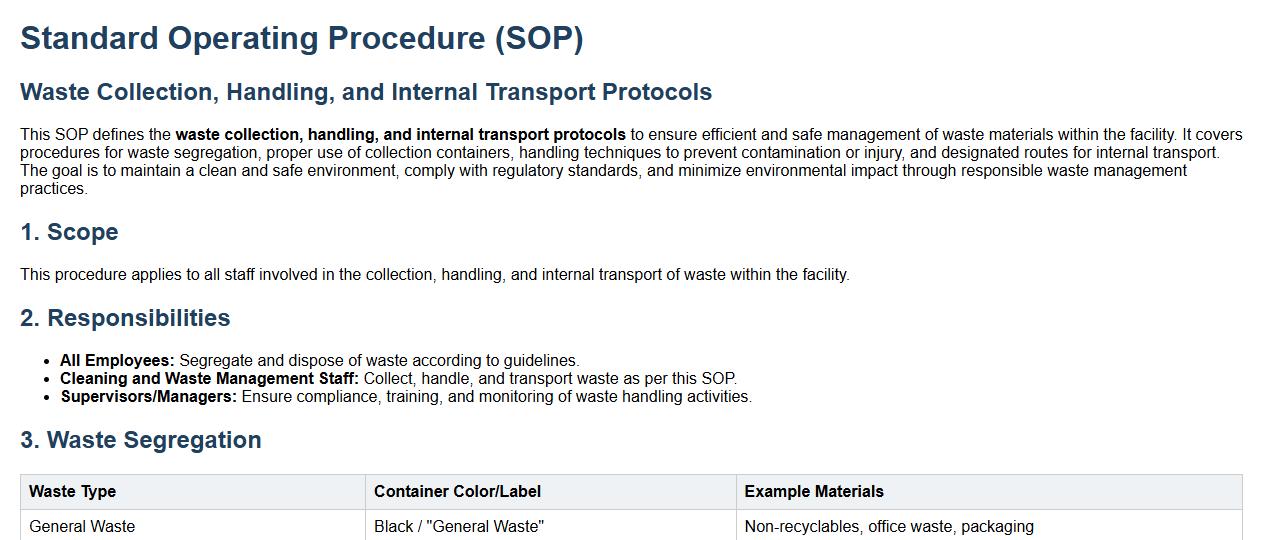
This SOP defines the waste collection, handling, and internal transport protocols to ensure efficient and safe management of waste materials within the facility. It covers procedures for waste segregation, proper use of collection containers, handling techniques to prevent contamination or injury, and designated routes for internal transport. The goal is to maintain a clean and safe environment, comply with regulatory standards, and minimize environmental impact through responsible waste management practices.
Use of personal protective equipment (PPE) guidelines.
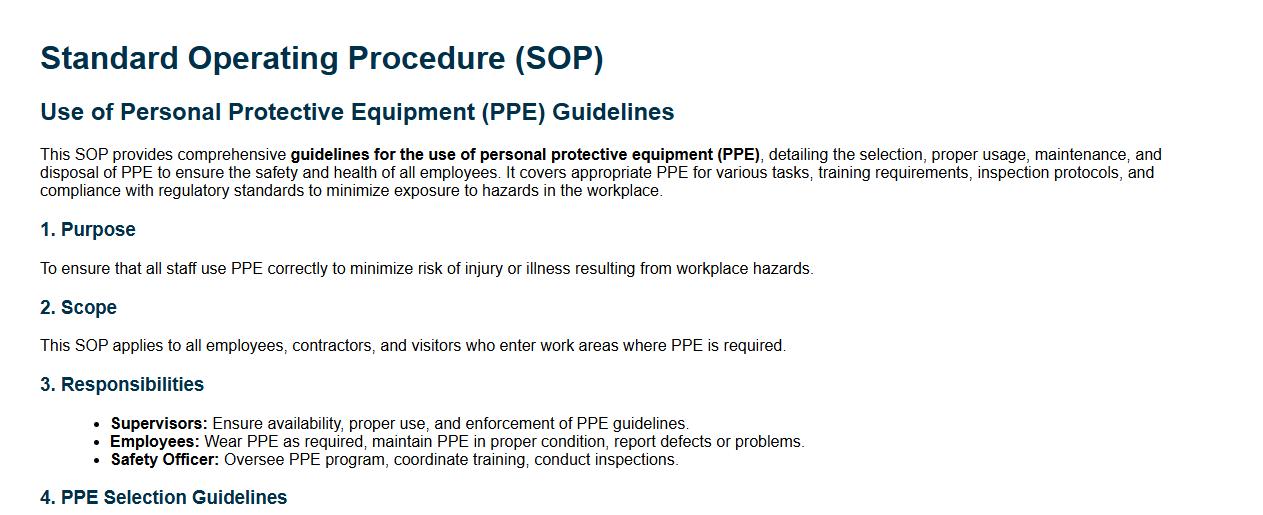
This SOP provides comprehensive guidelines for the use of personal protective equipment (PPE), detailing the selection, proper usage, maintenance, and disposal of PPE to ensure the safety and health of all employees. It covers appropriate PPE for various tasks, training requirements, inspection protocols, and compliance with regulatory standards to minimize exposure to hazards in the workplace.
Labeling and color-coding of waste containers.
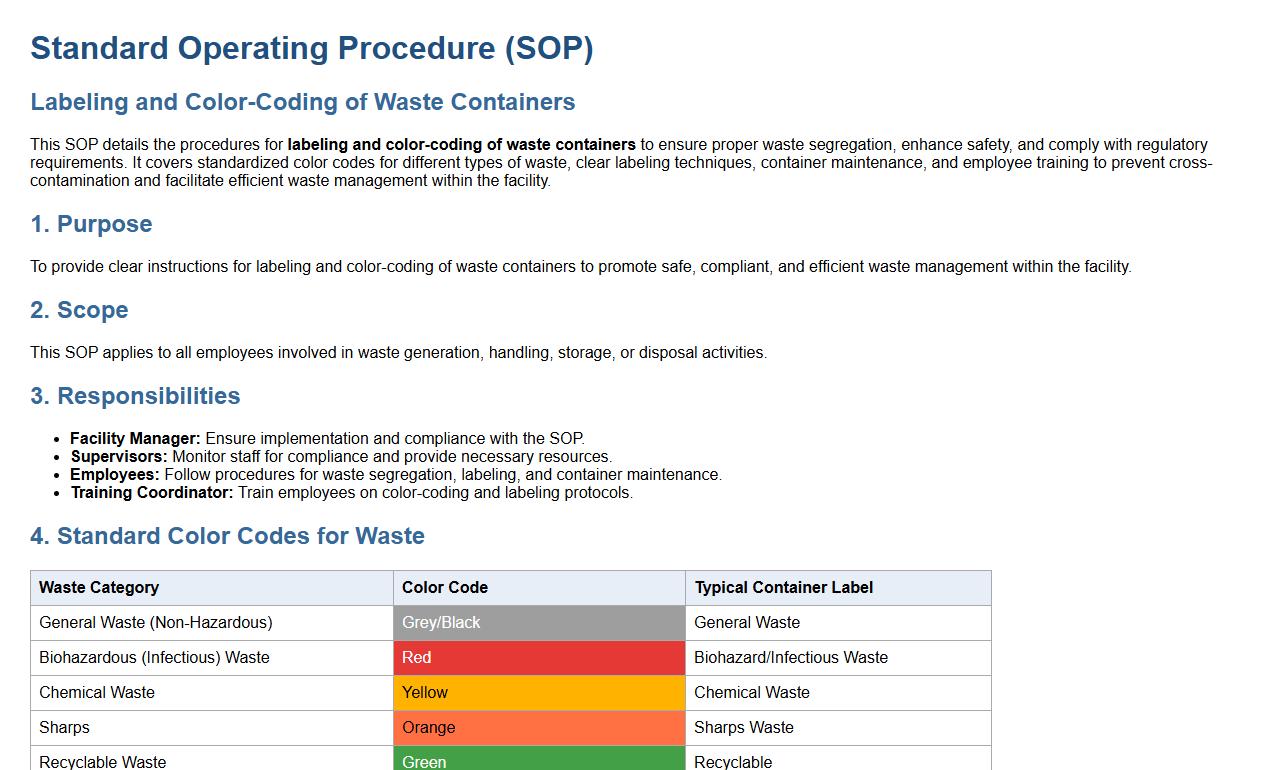
This SOP details the procedures for labeling and color-coding of waste containers to ensure proper waste segregation, enhance safety, and comply with regulatory requirements. It covers standardized color codes for different types of waste, clear labeling techniques, container maintenance, and employee training to prevent cross-contamination and facilitate efficient waste management within the facility.
Storage and containment of clinical waste before disposal.
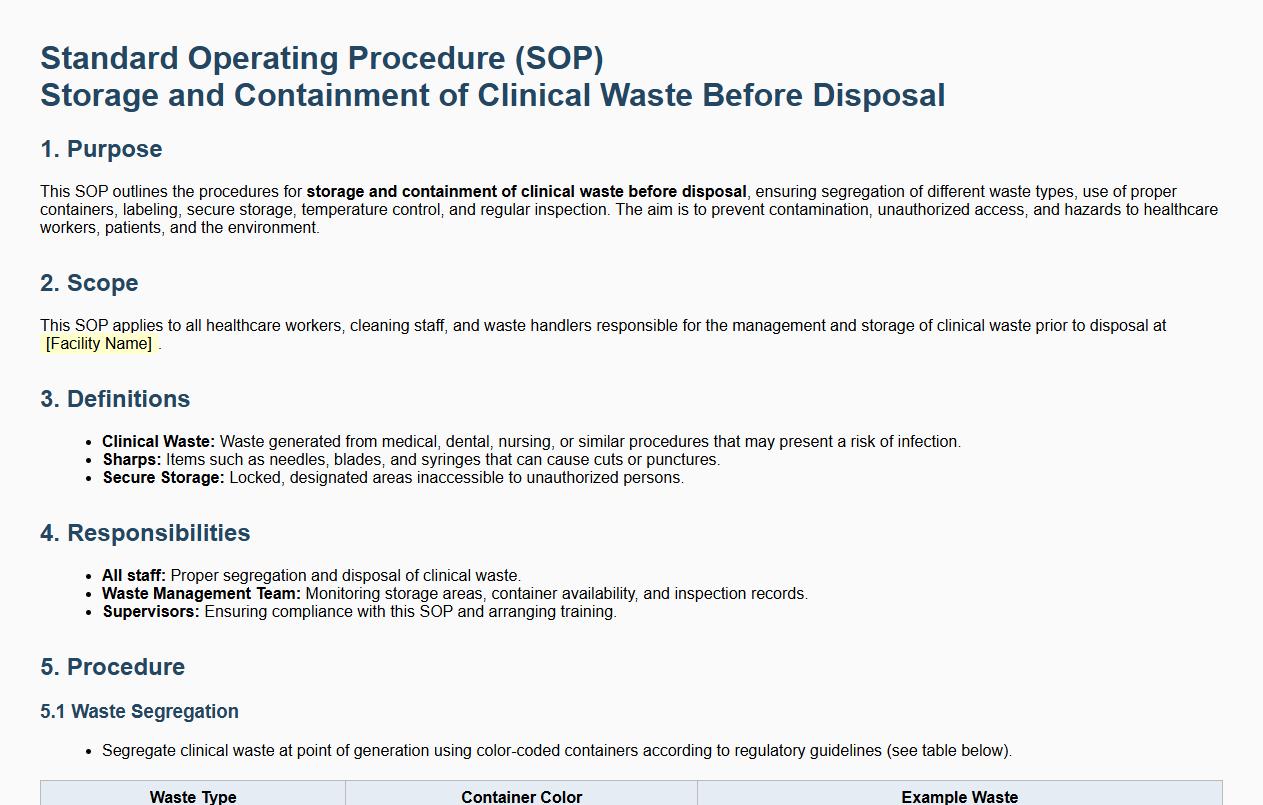
This SOP details the storage and containment of clinical waste before disposal, including protocols for segregating different types of clinical waste, using appropriate containers, labeling requirements, secure storage practices to prevent contamination and access by unauthorized personnel, temperature controls, and routine inspection procedures. The goal is to ensure safe, compliant management of clinical waste to protect healthcare workers, patients, and the environment from potential hazards associated with improper waste handling.
Procedures for the safe transport of waste offsite.
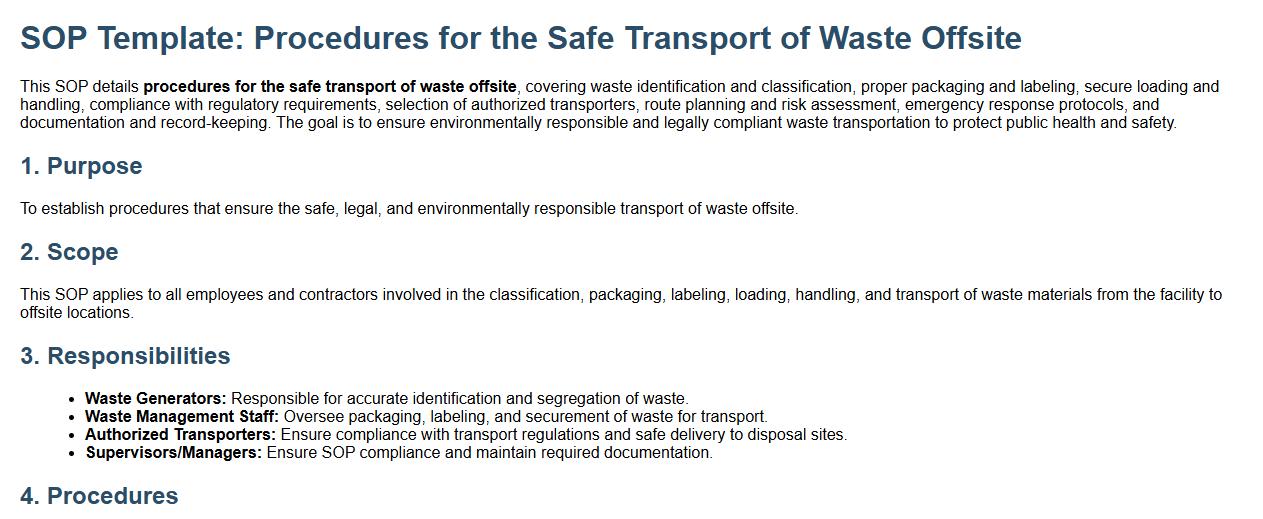
This SOP details procedures for the safe transport of waste offsite, covering waste identification and classification, proper packaging and labeling, secure loading and handling, compliance with regulatory requirements, selection of authorized transporters, route planning and risk assessment, emergency response protocols, and documentation and record-keeping. The goal is to ensure environmentally responsible and legally compliant waste transportation to protect public health and safety.
Disinfection and decontamination procedures for waste storage areas.
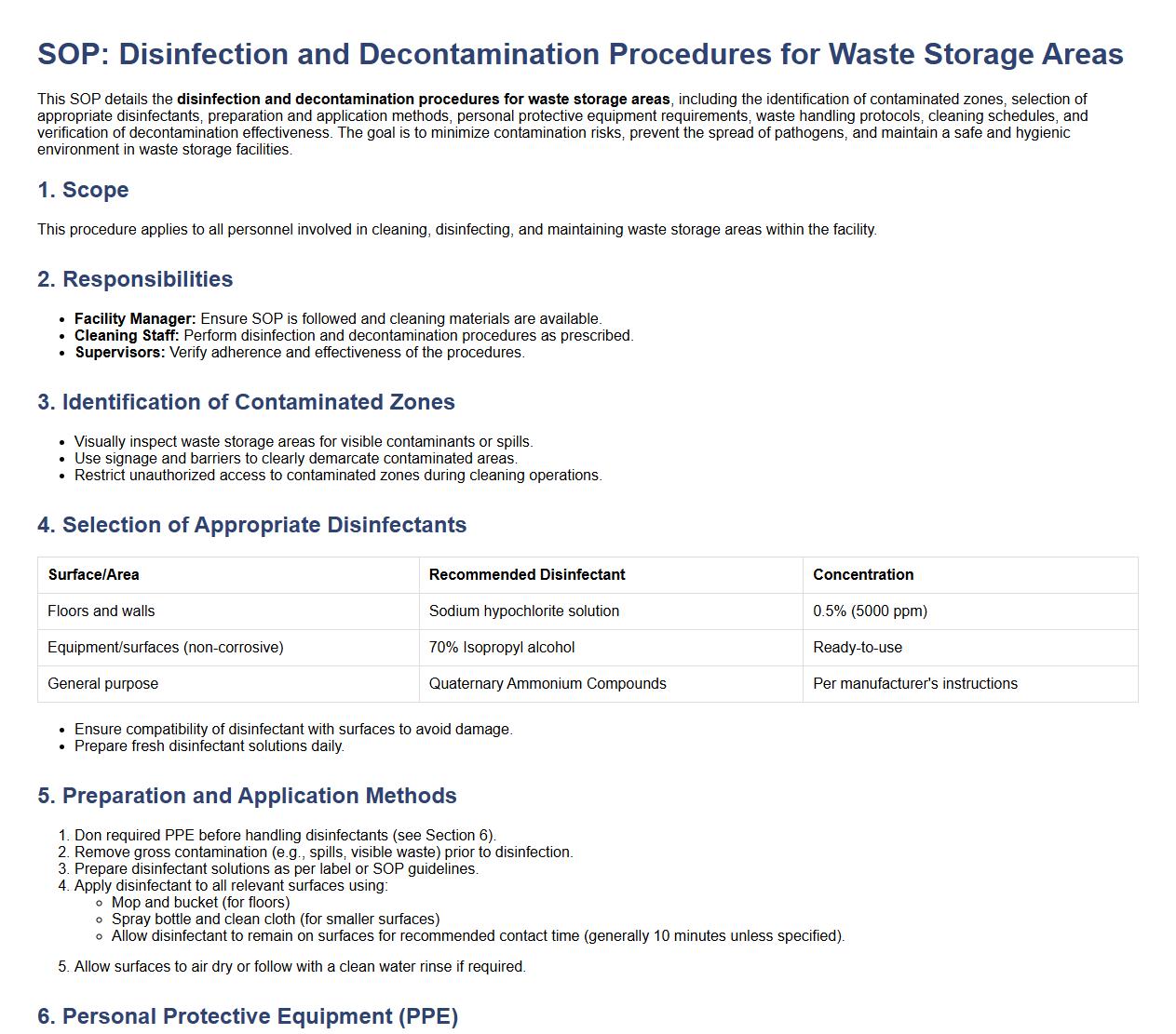
This SOP details the disinfection and decontamination procedures for waste storage areas, including the identification of contaminated zones, selection of appropriate disinfectants, preparation and application methods, personal protective equipment requirements, waste handling protocols, cleaning schedules, and verification of decontamination effectiveness. The goal is to minimize contamination risks, prevent the spread of pathogens, and maintain a safe and hygienic environment in waste storage facilities.
Incident reporting and response protocols for spills or exposures.
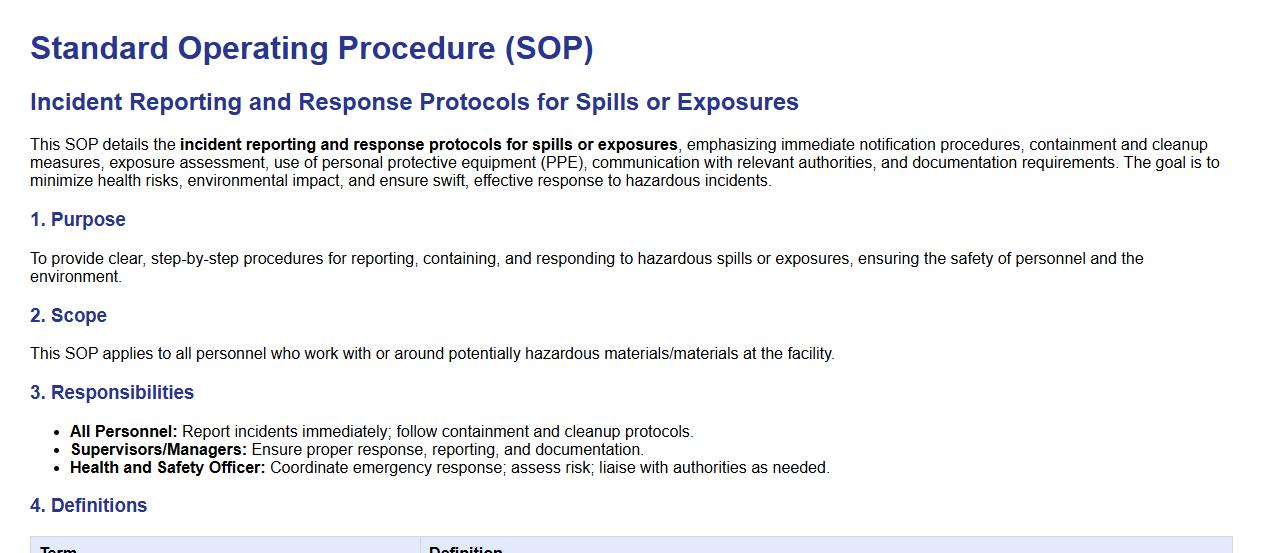
This SOP details the incident reporting and response protocols for spills or exposures, emphasizing immediate notification procedures, containment and cleanup measures, exposure assessment, use of personal protective equipment, communication with relevant authorities, and documentation requirements. The goal is to minimize health risks, environmental impact, and ensure swift, effective response to hazardous incidents.
Training and competency requirements for staff involved.
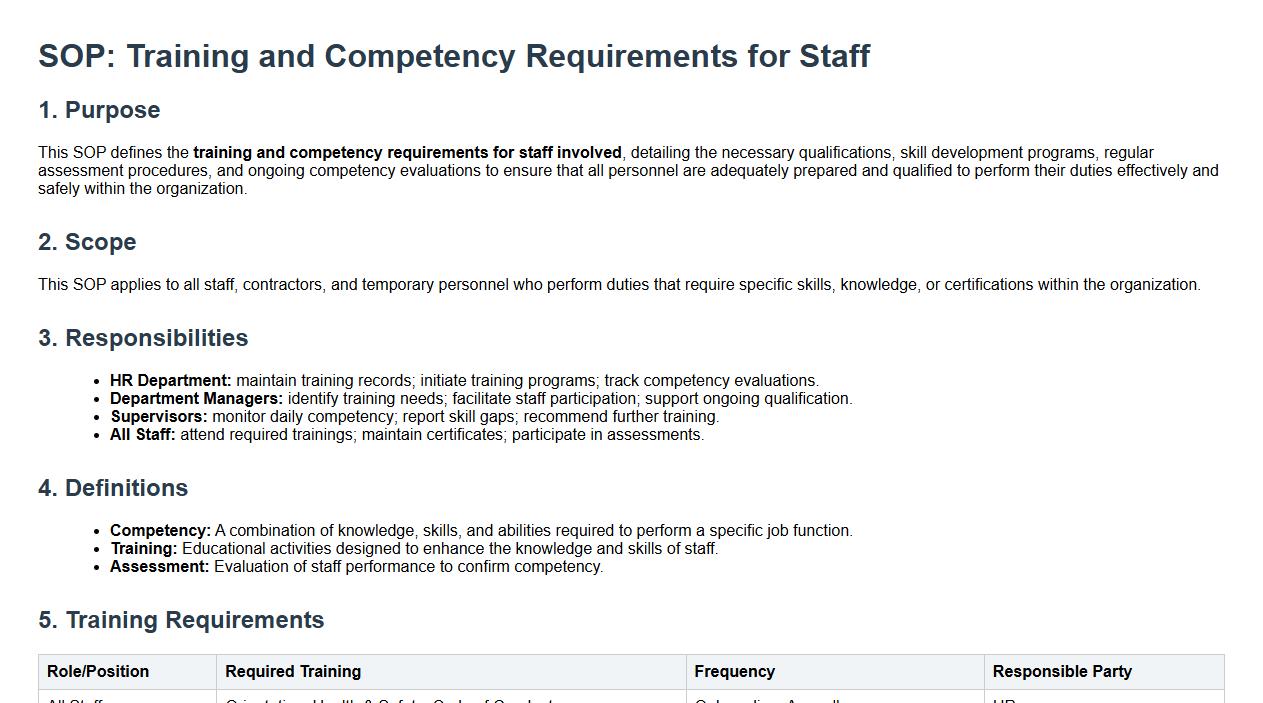
This SOP defines the training and competency requirements for staff involved, detailing the necessary qualifications, skill development programs, regular assessment procedures, and ongoing competency evaluations to ensure that all personnel are adequately prepared and qualified to perform their duties effectively and safely within the organization.
Documentation, tracking, and record-keeping requirements.
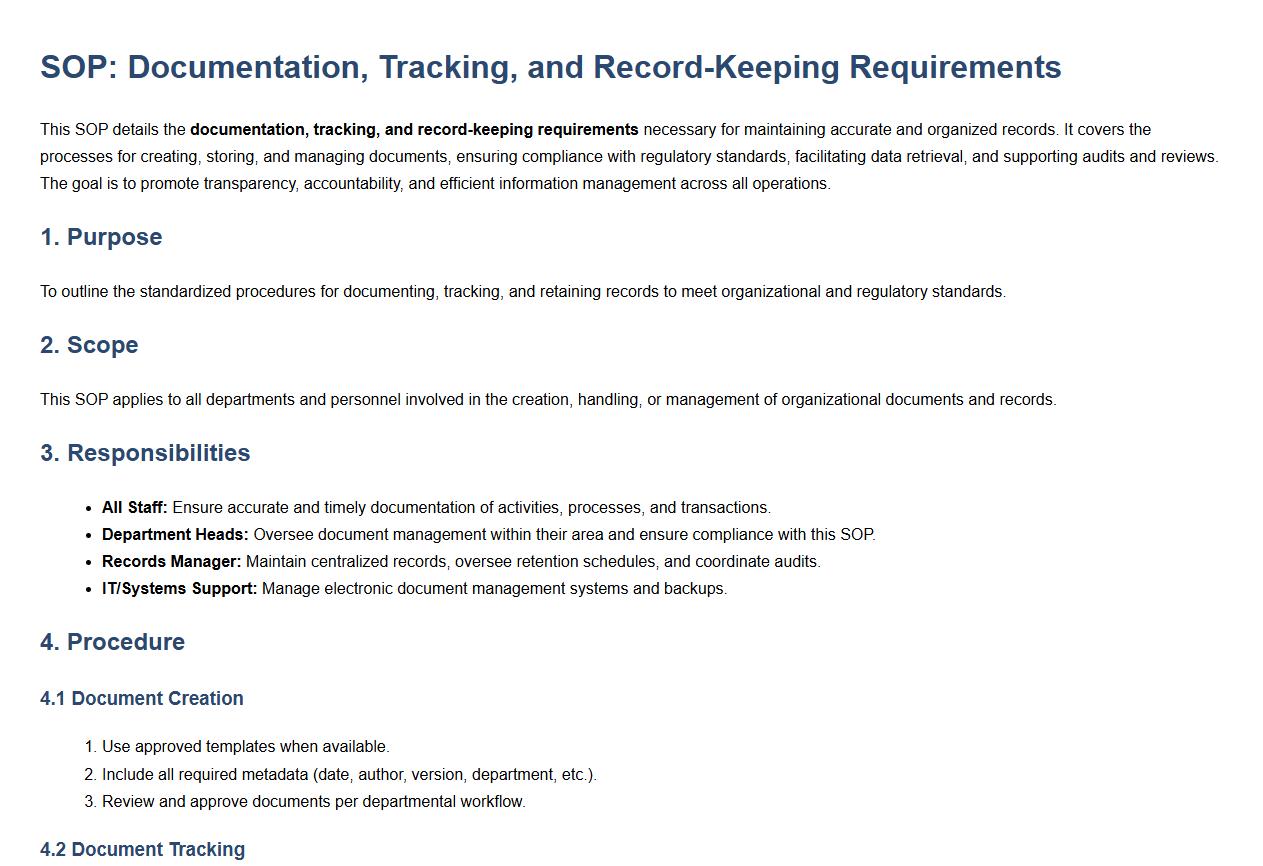
This SOP details the documentation, tracking, and record-keeping requirements necessary for maintaining accurate and organized records. It covers the processes for creating, storing, and managing documents, ensuring compliance with regulatory standards, facilitating data retrieval, and supporting audits and reviews. The goal is to promote transparency, accountability, and efficient information management across all operations.
What are the primary categories of clinical waste as defined in the SOP?
The primary categories of clinical waste include infectious, hazardous, and non-hazardous waste. Infectious waste comprises materials contaminated with blood or other bodily fluids. Hazardous waste contains chemical or pharmaceutical substances that pose health risks.
Which personal protective equipment (PPE) is mandatory when handling clinical waste?
The mandatory PPE includes gloves, gowns, and masks to prevent contamination. Eye protection is required when there is a risk of splashing. Proper footwear must also be worn to ensure safety from sharp objects and spills.
What are the designated color-coded bins for different types of clinical waste?
Color-coded bins help segregate clinical waste efficiently for disposal. Yellow bins are used for infectious waste, while purple bins are designated for chemical or pharmaceutical waste. Black bins typically handle non-hazardous general waste.
What are the correct procedures for the temporary storage of clinical waste within the facility?
Temporary storage of clinical waste must be in secure, clearly labeled areas to prevent exposure. Waste should be stored in leak-proof containers and kept separate from public access zones. Storage areas must be cleaned regularly and maintained at appropriate temperatures.
What steps must be followed for the safe transportation and final disposal of clinical waste according to the SOP?
Safe transportation requires sealed, labeled containers and the use of appropriate vehicles compliant with health regulations. Waste must be transported directly to authorized facilities without unnecessary delays. Final disposal includes incineration or treatment processes that neutralize hazards.