

A SOP Template for Pharmacy Inventory Management provides a standardized framework to efficiently track and control medication stocks, ensuring accuracy and compliance with regulatory standards. It outlines specific procedures for ordering, receiving, storing, and dispensing pharmaceutical products to minimize errors and prevent shortages. Implementing this template enhances inventory accuracy, reduces waste, and supports patient safety.
Inventory receiving and verification procedures.
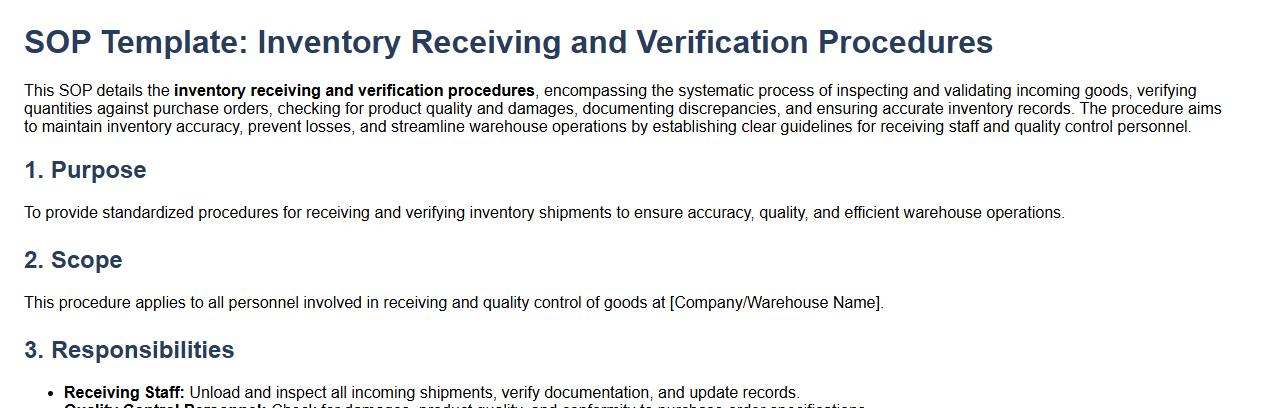
This SOP details the inventory receiving and verification procedures, encompassing the systematic process of inspecting and validating incoming goods, verifying quantities against purchase orders, checking for product quality and damages, documenting discrepancies, and ensuring accurate inventory records. The procedure aims to maintain inventory accuracy, prevent losses, and streamline warehouse operations by establishing clear guidelines for receiving staff and quality control personnel.
Storage guidelines for medications and supplies.
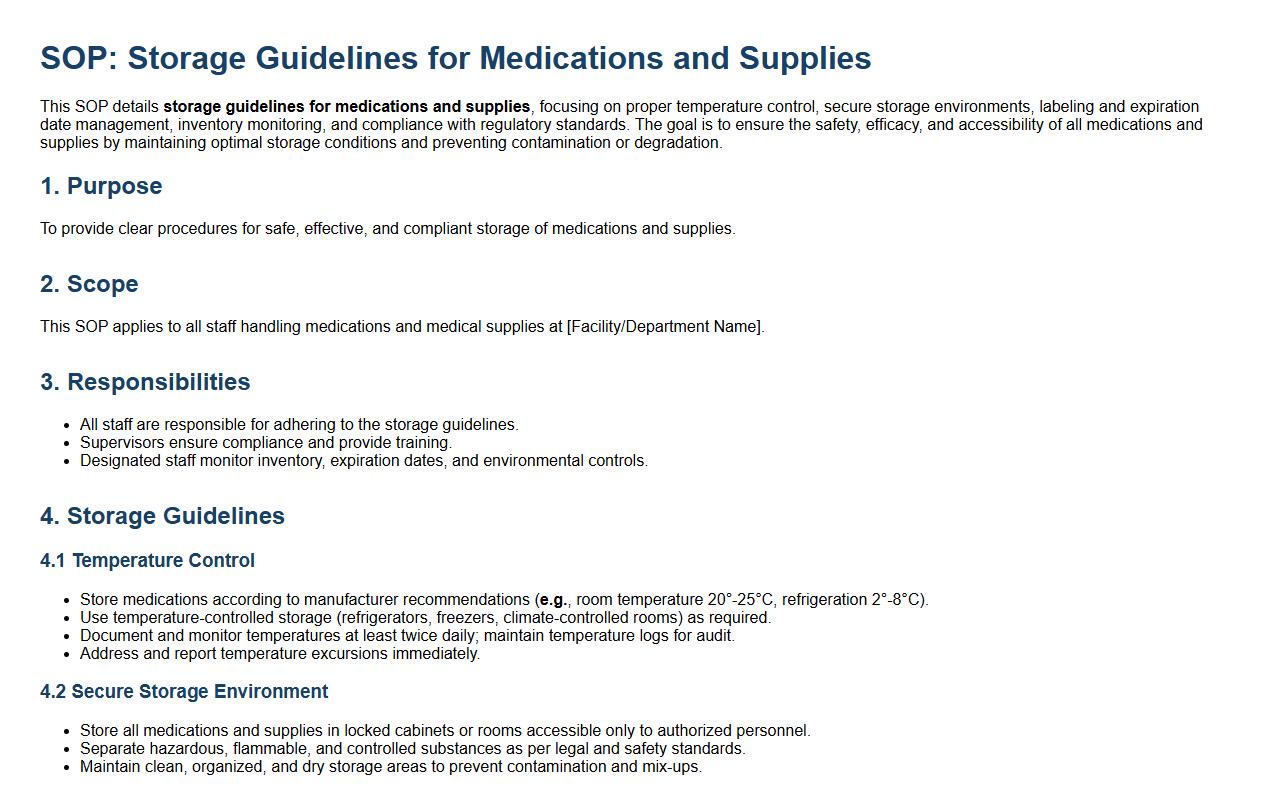
This SOP details storage guidelines for medications and supplies, focusing on proper temperature control, secure storage environments, labeling and expiration date management, inventory monitoring, and compliance with regulatory standards. The goal is to ensure the safety, efficacy, and accessibility of all medications and supplies by maintaining optimal storage conditions and preventing contamination or degradation.
Stock rotation and expiration date monitoring.
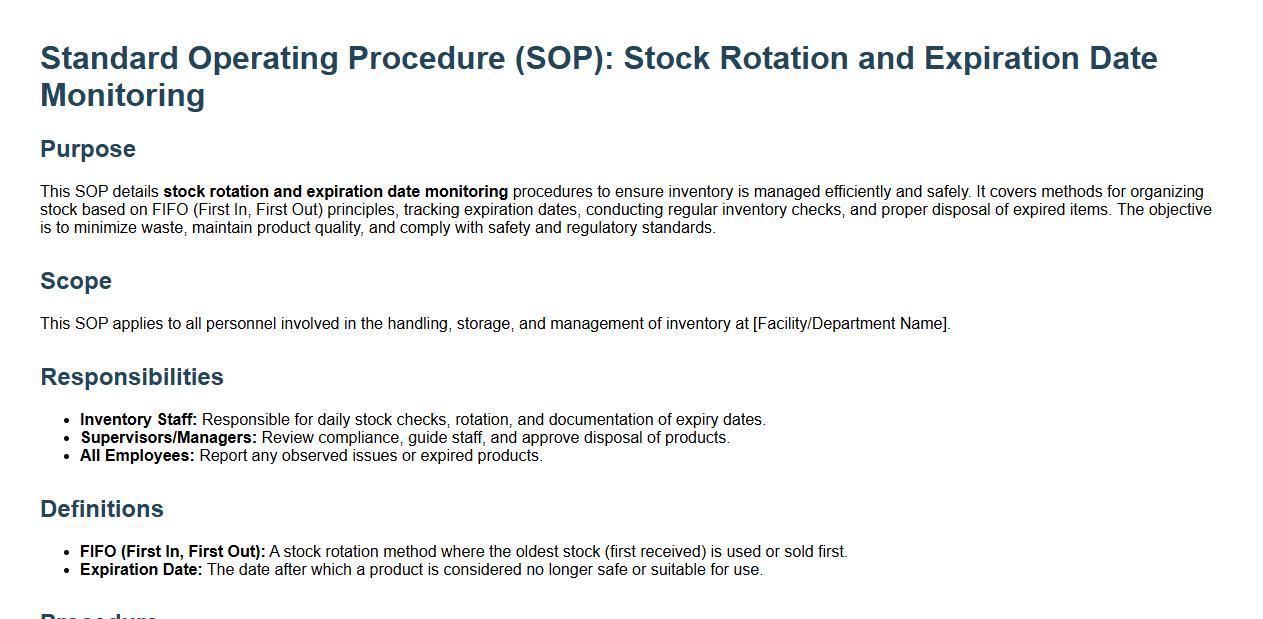
This SOP details stock rotation and expiration date monitoring procedures to ensure inventory is managed efficiently and safely. It covers methods for organizing stock based on FIFO (First In, First Out) principles, tracking expiration dates, conducting regular inventory checks, and proper disposal of expired items. The objective is to minimize waste, maintain product quality, and comply with safety and regulatory standards.
Controlled substances handling and documentation.
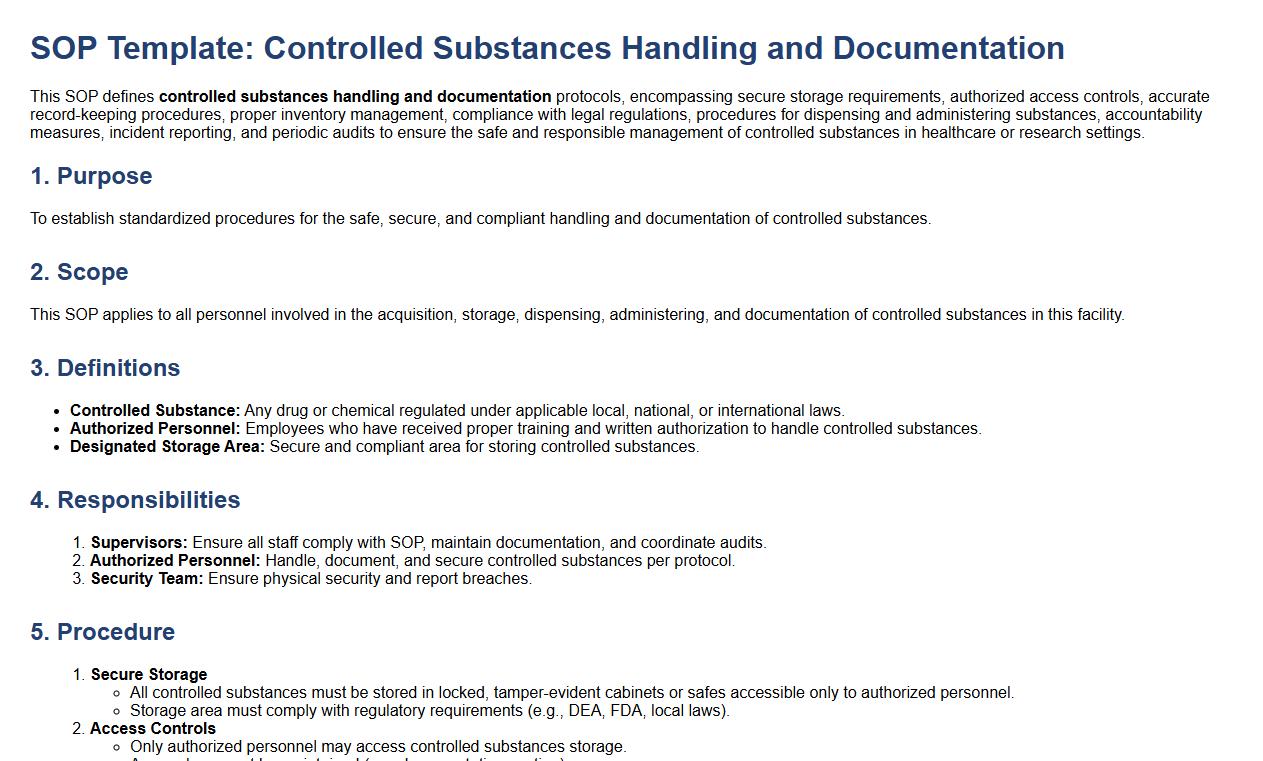
This SOP defines controlled substances handling and documentation protocols, encompassing secure storage requirements, authorized access controls, accurate record-keeping procedures, proper inventory management, compliance with legal regulations, procedures for dispensing and administering substances, accountability measures, incident reporting, and periodic audits to ensure the safe and responsible management of controlled substances in healthcare or research settings.
Damaged or expired product disposal process.
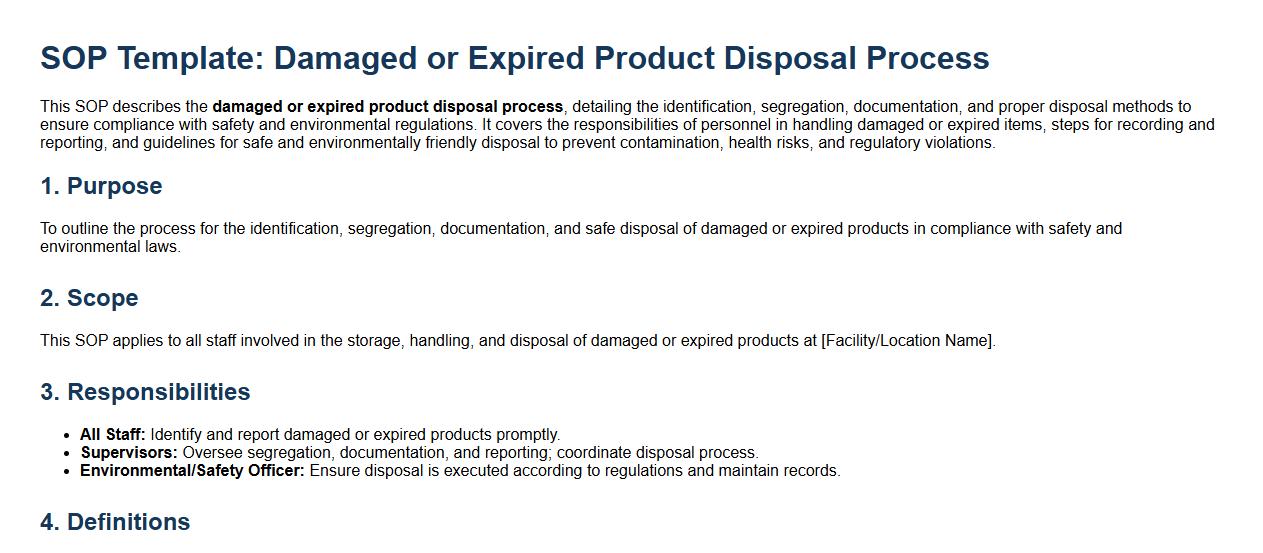
This SOP describes the damaged or expired product disposal process, detailing the identification, segregation, documentation, and proper disposal methods to ensure compliance with safety and environmental regulations. It covers the responsibilities of personnel in handling damaged or expired items, steps for recording and reporting, and guidelines for safe and environmentally friendly disposal to prevent contamination, health risks, and regulatory violations.
Inventory tracking and reconciliation schedules.
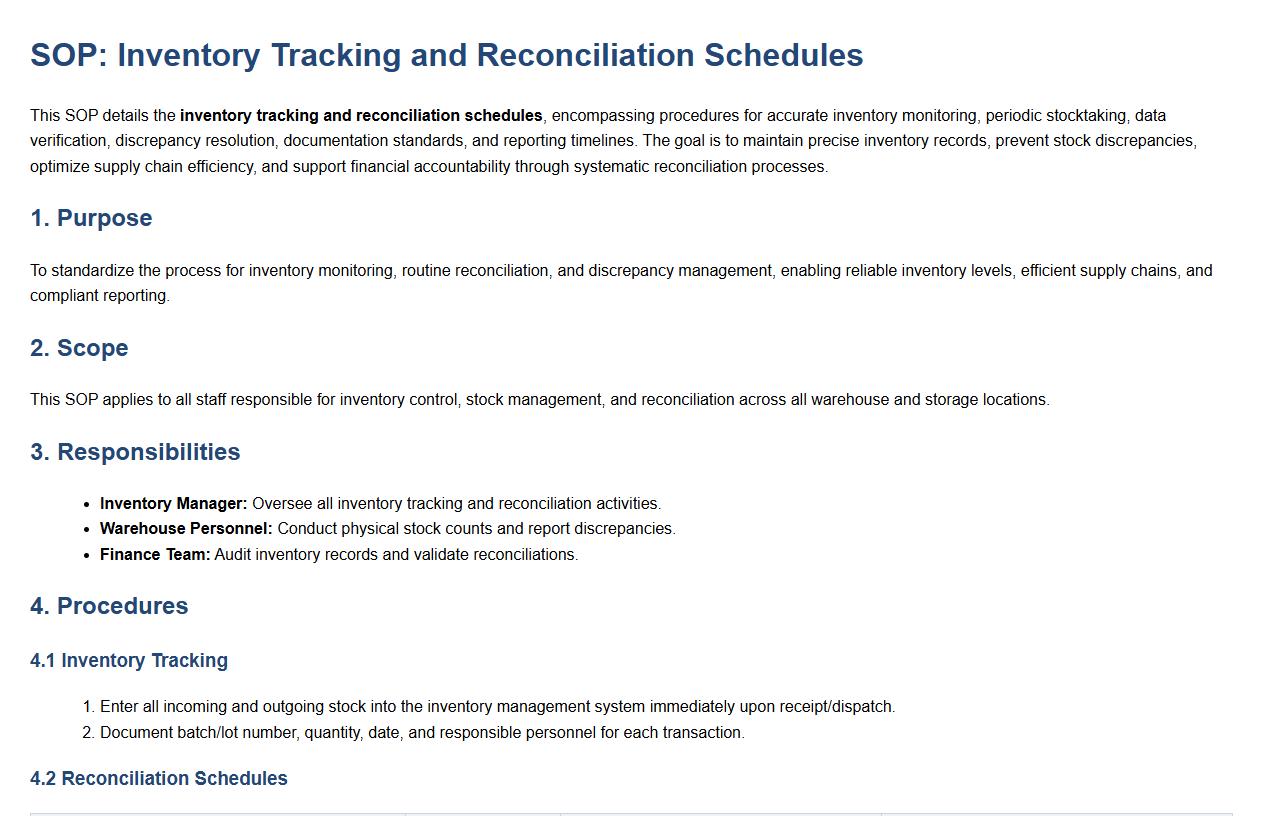
This SOP details the inventory tracking and reconciliation schedules, encompassing procedures for accurate inventory monitoring, periodic stocktaking, data verification, discrepancy resolution, documentation standards, and reporting timelines. The goal is to maintain precise inventory records, prevent stock discrepancies, optimize supply chain efficiency, and support financial accountability through systematic reconciliation processes.
Ordering and restocking protocols.
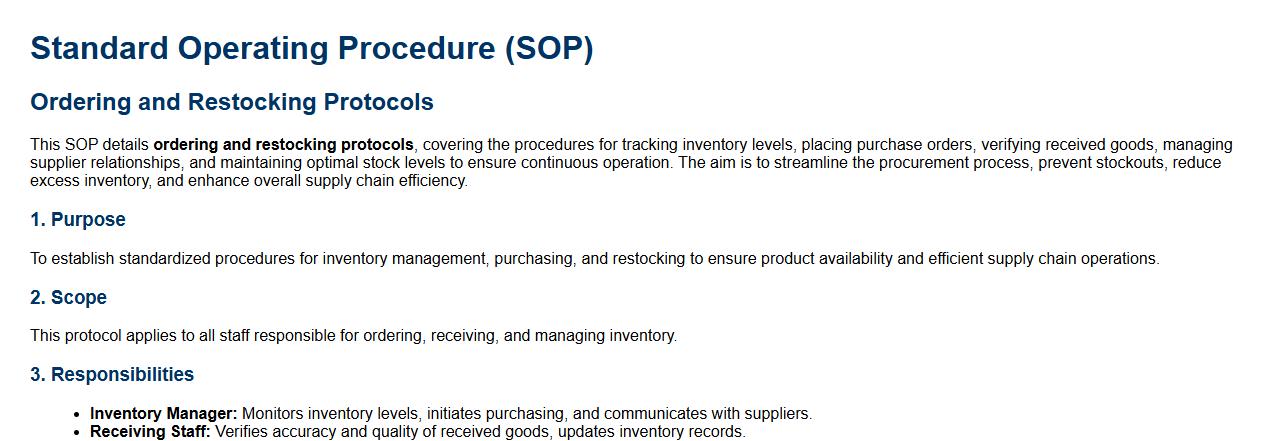
This SOP details ordering and restocking protocols, covering the procedures for tracking inventory levels, placing purchase orders, verifying received goods, managing supplier relationships, and maintaining optimal stock levels to ensure continuous operation. The aim is to streamline the procurement process, prevent stockouts, reduce excess inventory, and enhance overall supply chain efficiency.
Handling and reporting inventory discrepancies.
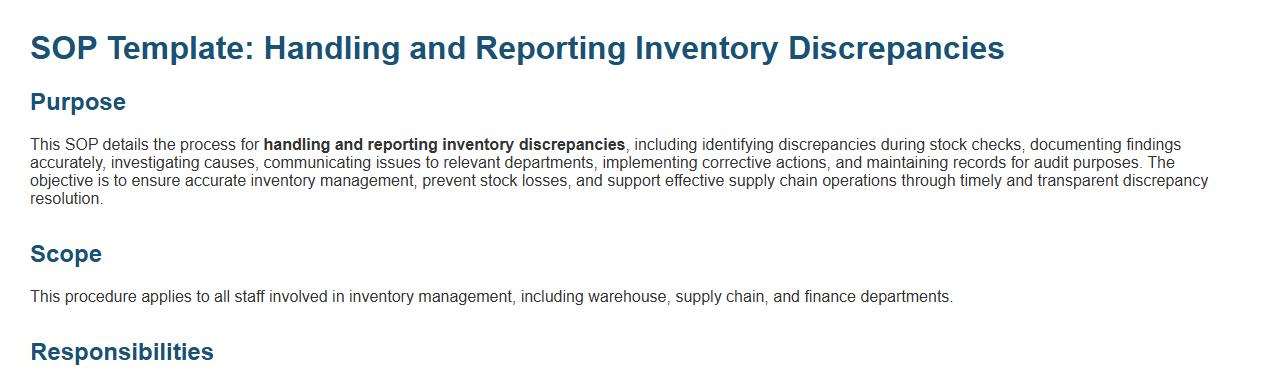
This SOP details the process for handling and reporting inventory discrepancies, including identifying discrepancies during stock checks, documenting findings accurately, investigating causes, communicating issues to relevant departments, implementing corrective actions, and maintaining records for audit purposes. The objective is to ensure accurate inventory management, prevent stock losses, and support effective supply chain operations through timely and transparent discrepancy resolution.
Quarantine procedures for recalled products.
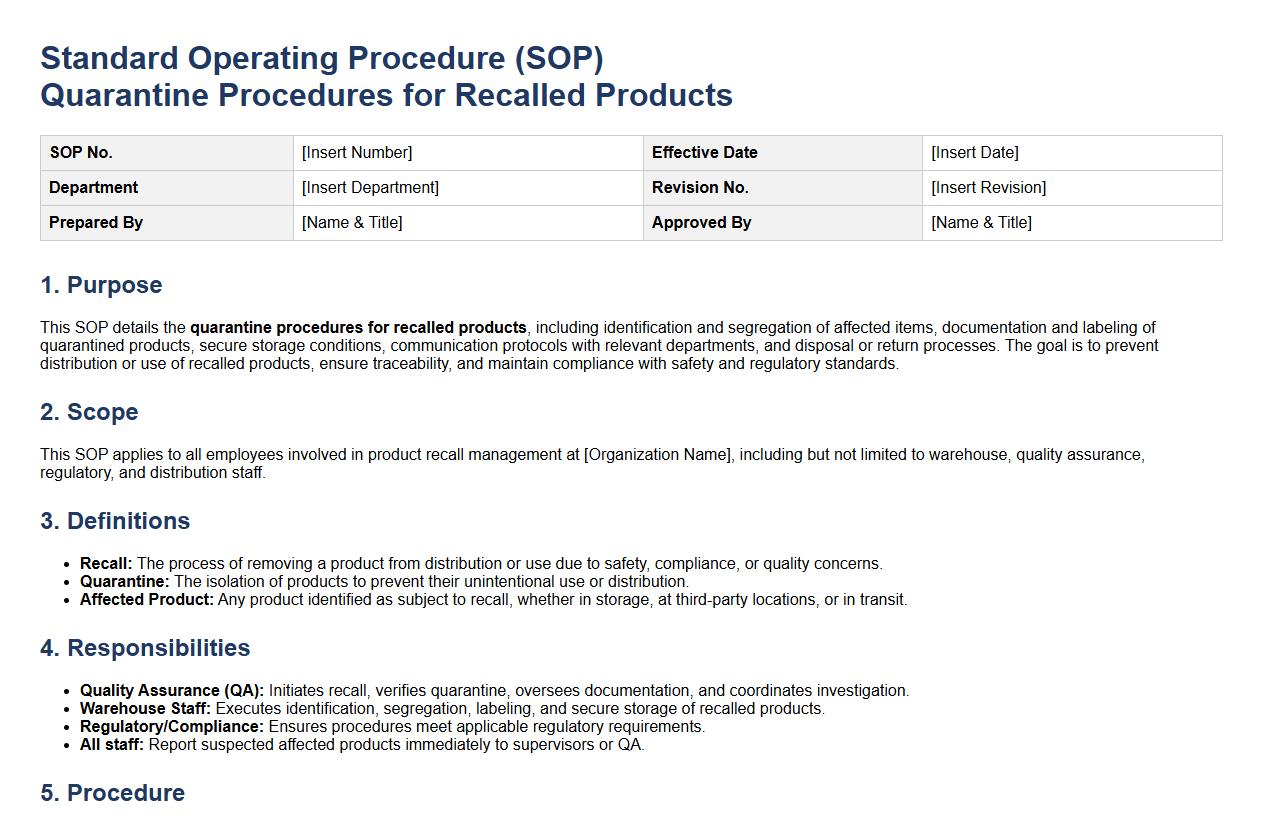
This SOP details the quarantine procedures for recalled products, including identification and segregation of affected items, documentation and labeling of quarantined products, secure storage conditions, communication protocols with relevant departments, and disposal or return processes. The goal is to prevent distribution or use of recalled products, ensure traceability, and maintain compliance with safety and regulatory standards.
Pharmacy inventory record-keeping and audit trails.
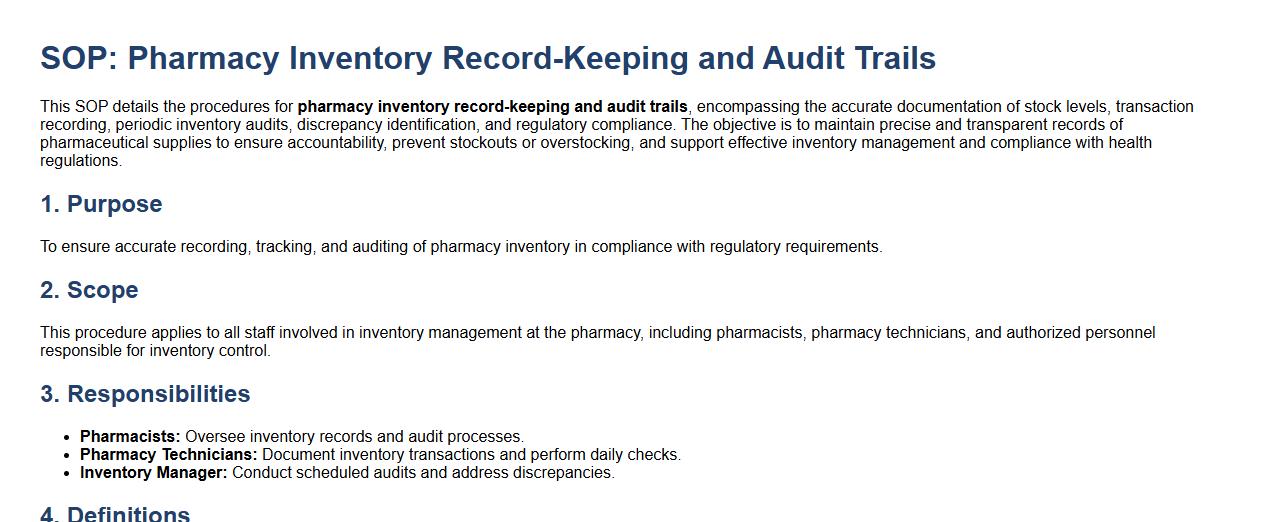
This SOP details the procedures for pharmacy inventory record-keeping and audit trails, encompassing the accurate documentation of stock levels, transaction recording, periodic inventory audits, discrepancy identification, and regulatory compliance. The objective is to maintain precise and transparent records of pharmaceutical supplies to ensure accountability, prevent stockouts or overstocking, and support effective inventory management and compliance with health regulations.
Key Processes for Receiving and Verifying Pharmacy Stock Deliveries
The SOP emphasizes the verification of delivery accuracy by matching received items against purchase orders. It requires a thorough inspection for damage and correct labeling to ensure product integrity. Any discrepancies must be documented and reported immediately to maintain proper stock accuracy.
Procedures for Inventory Record Maintenance and Documentation
The SOP mandates detailed record-keeping of all inventory transactions including receipts, dispenses, and adjustments. Electronic or manual logs must be updated in real-time to reflect current stock levels. Proper documentation supports traceability and facilitates audits.
Handling and Reporting Expired or Damaged Medications
The SOP specifies prompt quarantine and segregation of expired or damaged medications to prevent dispensing. Staff are required to document these items and notify the pharmacy management for further action. Proper disposal processes must follow regulatory guidelines to ensure safety.
Protocols for Controlled Substance Inventory Management and Auditing
The SOP mandates strict accountability and secure storage of controlled substances to prevent diversion. Regular audits and reconciliations are required to detect discrepancies promptly. Documentation must comply with legal regulations to maintain compliance.
Guidelines for Periodic Stock Checks and Variance Resolution
The SOP outlines scheduled cycle counts and full stock audits to verify inventory accuracy. Any discrepancies identified must be investigated and documented with corrective actions implemented. This process ensures ongoing inventory integrity and operational efficiency.