

A SOP Template for Blood Transfusion Process provides a standardized framework to ensure safe and effective administration of blood products. This template outlines critical steps such as patient identification, blood compatibility checks, and monitoring for adverse reactions. Following this protocol minimizes errors and enhances patient safety during transfusions.
Patient identification and consent verification process.
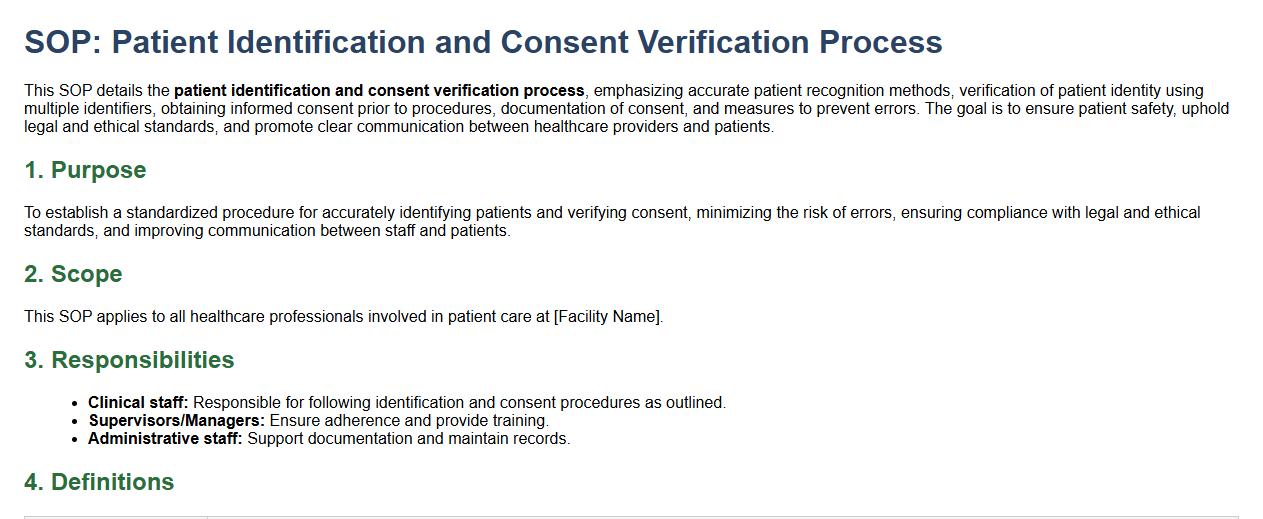
This SOP details the patient identification and consent verification process, emphasizing accurate patient recognition methods, verification of patient identity using multiple identifiers, obtaining informed consent prior to procedures, documentation of consent, and measures to prevent errors. The goal is to ensure patient safety, uphold legal and ethical standards, and promote clear communication between healthcare providers and patients.
Pre-transfusion blood sampling and labeling procedures.
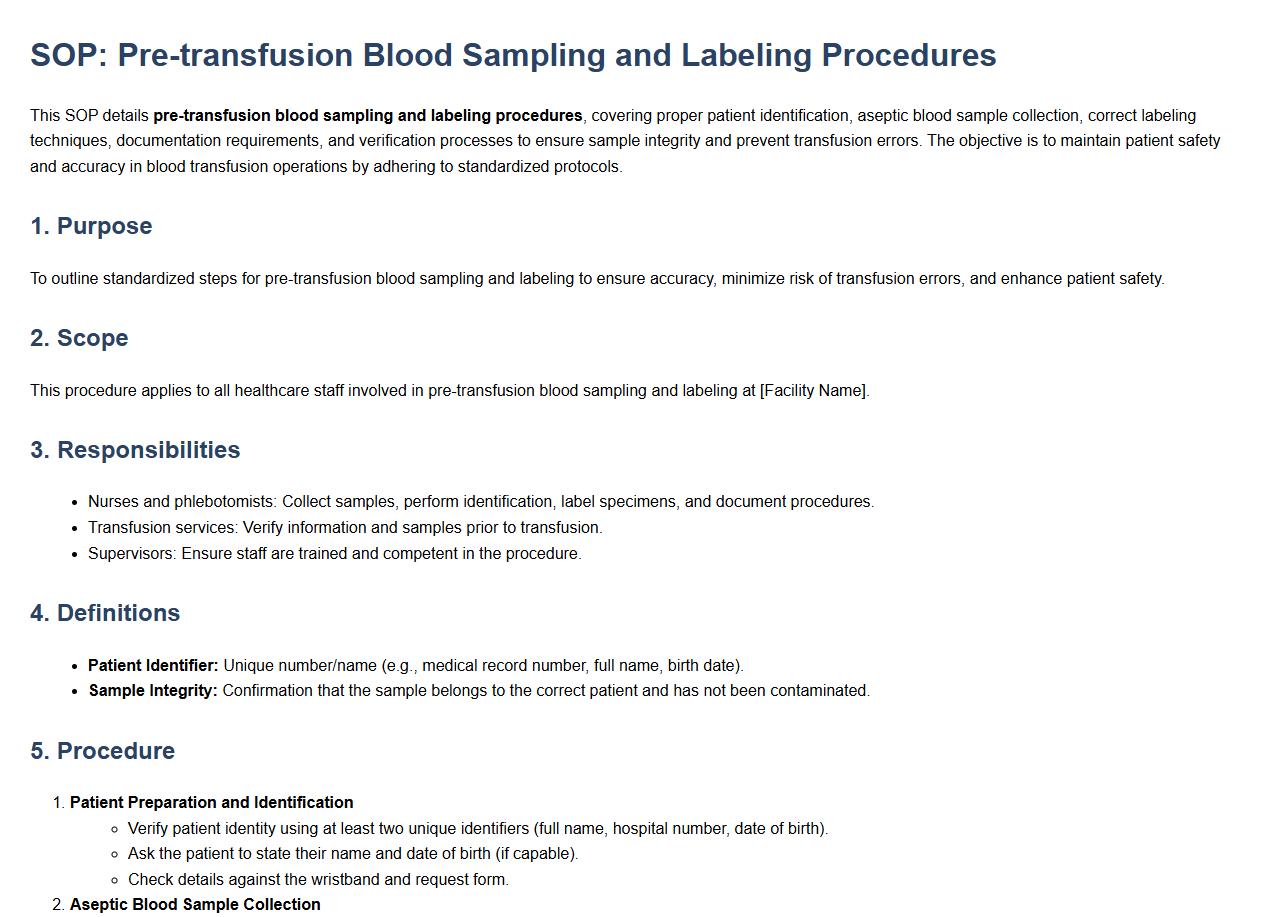
This SOP details pre-transfusion blood sampling and labeling procedures, covering proper patient identification, aseptic blood sample collection, correct labeling techniques, documentation requirements, and verification processes to ensure sample integrity and prevent transfusion errors. The objective is to maintain patient safety and accuracy in blood transfusion operations by adhering to standardized protocols.
Blood unit requisition and cross-matching protocols.
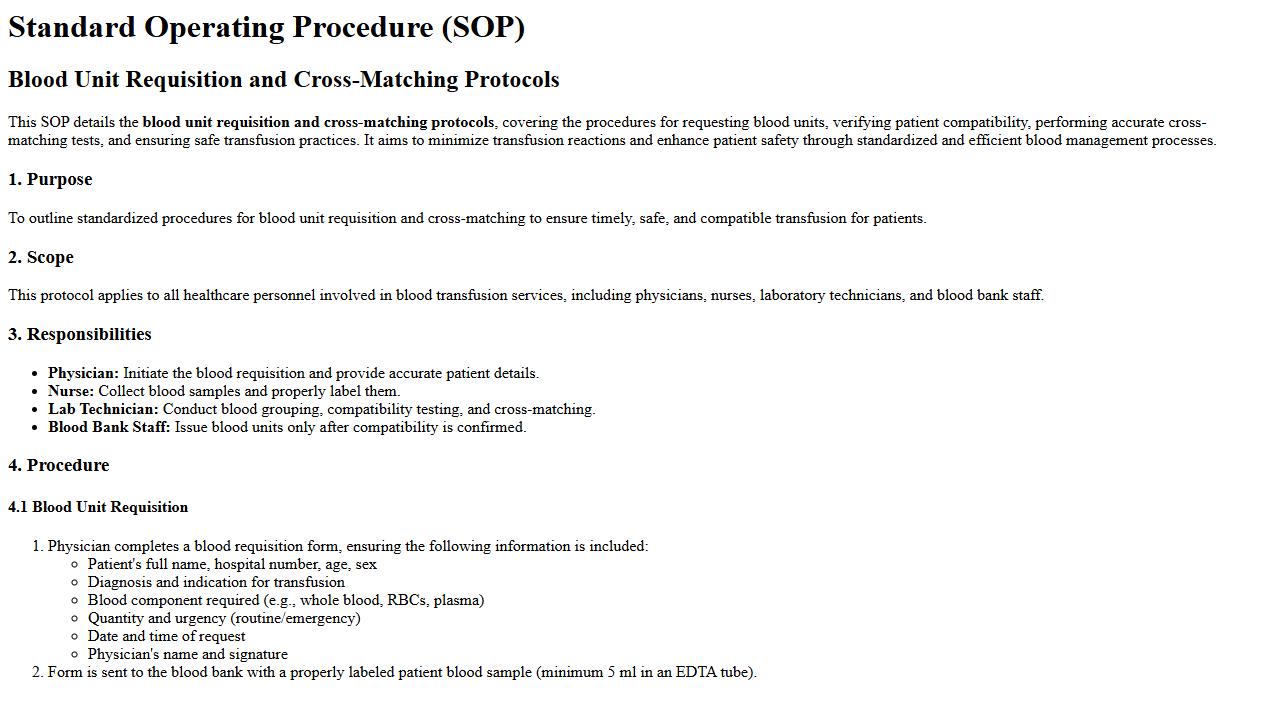
This SOP details the blood unit requisition and cross-matching protocols, covering the procedures for requesting blood units, verifying patient compatibility, performing accurate cross-matching tests, and ensuring safe transfusion practices. It aims to minimize transfusion reactions and enhance patient safety through standardized and efficient blood management processes.
Blood storage and handling requirements.
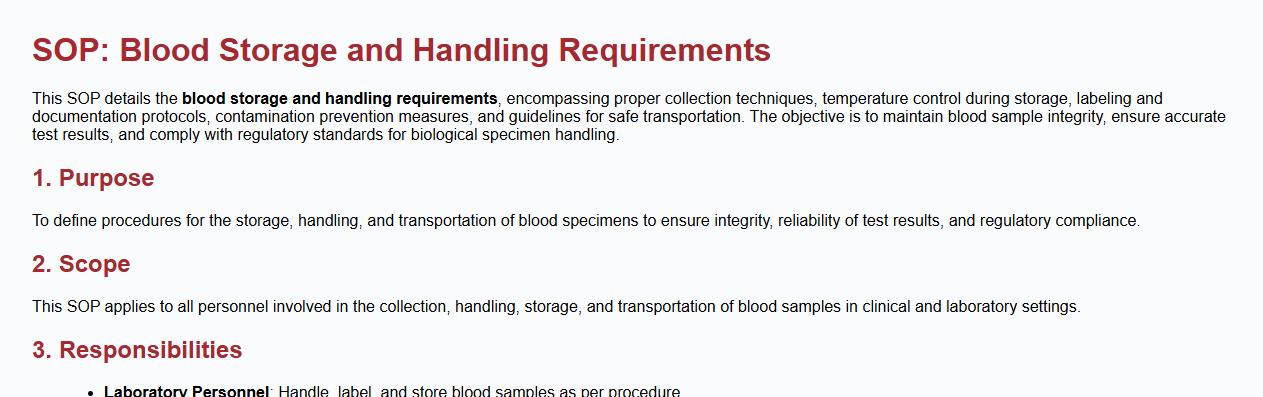
This SOP details the blood storage and handling requirements, encompassing proper collection techniques, temperature control during storage, labeling and documentation protocols, contamination prevention measures, and guidelines for safe transportation. The objective is to maintain blood sample integrity, ensure accurate test results, and comply with regulatory standards for biological specimen handling.
Pre-transfusion patient assessment and documentation.
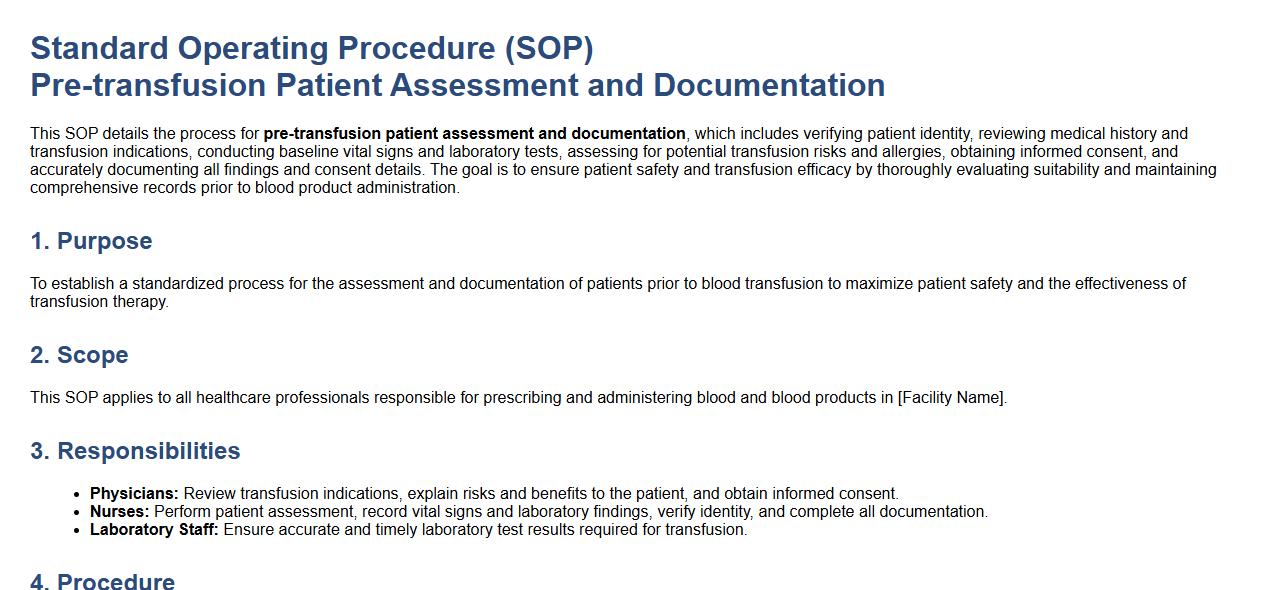
This SOP details the process for pre-transfusion patient assessment and documentation, which includes verifying patient identity, reviewing medical history and transfusion indications, conducting baseline vital signs and laboratory tests, assessing for potential transfusion risks and allergies, obtaining informed consent, and accurately documenting all findings and consent details. The goal is to ensure patient safety and transfusion efficacy by thoroughly evaluating suitability and maintaining comprehensive records prior to blood product administration.
Blood product verification and bedside check steps.
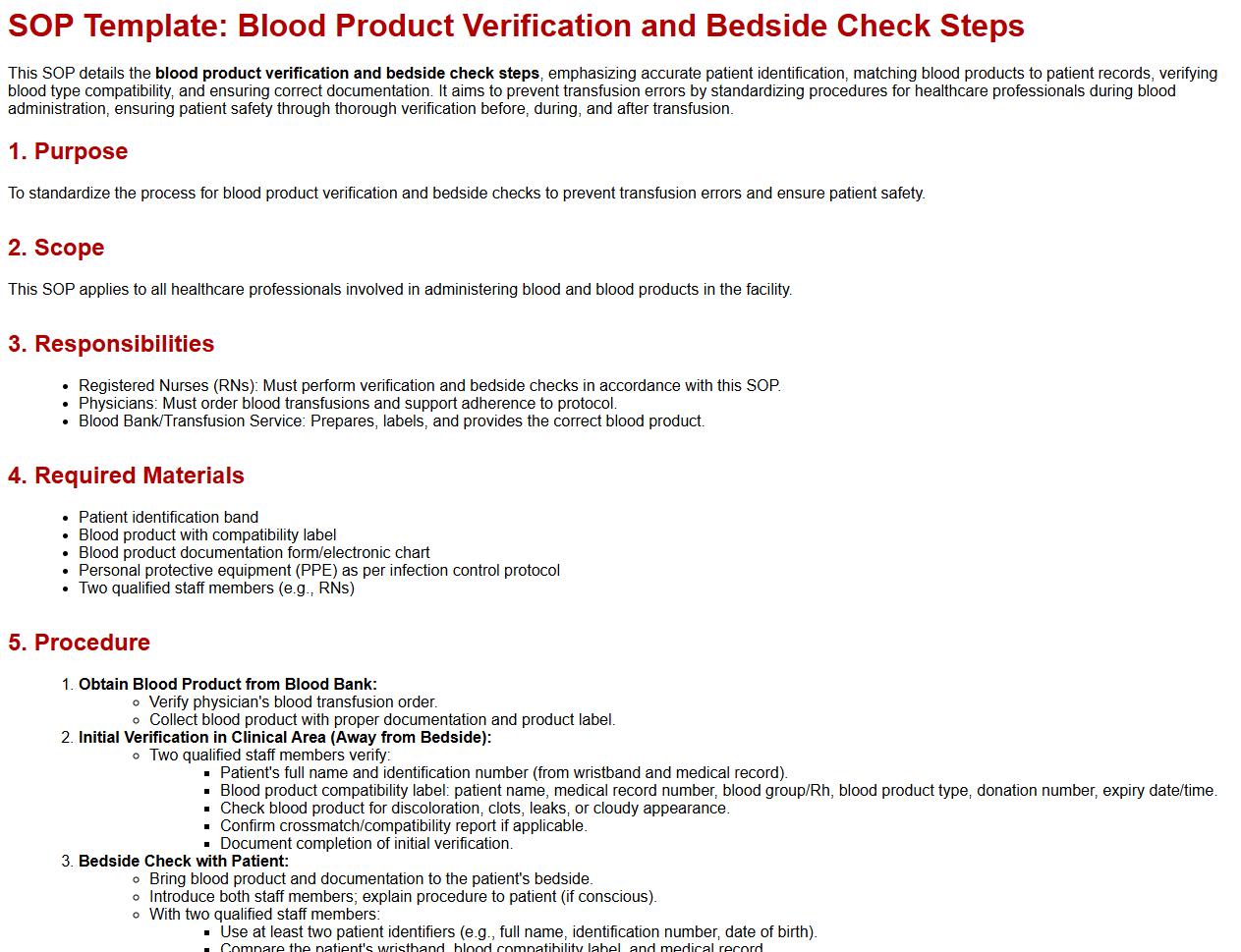
This SOP details the blood product verification and bedside check steps, emphasizing accurate patient identification, matching blood products to patient records, verifying blood type compatibility, and ensuring correct documentation. It aims to prevent transfusion errors by standardizing procedures for healthcare professionals during blood administration, ensuring patient safety through thorough verification before, during, and after transfusion.
Aseptic technique and intravenous set-up instructions.
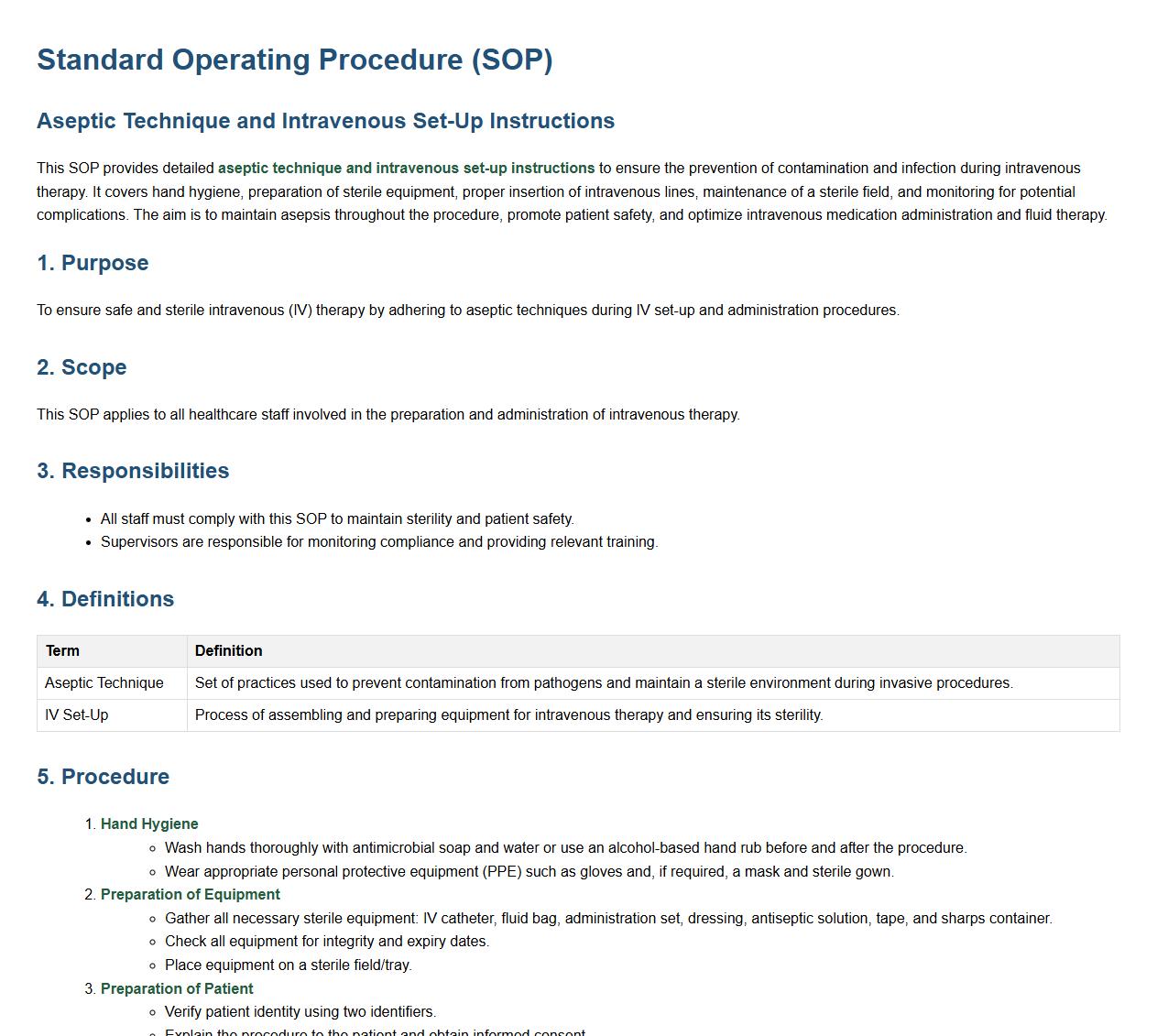
This SOP provides detailed aseptic technique and intravenous set-up instructions to ensure the prevention of contamination and infection during intravenous therapy. It covers hand hygiene, preparation of sterile equipment, proper insertion of intravenous lines, maintenance of a sterile field, and monitoring for potential complications. The aim is to maintain asepsis throughout the procedure, promote patient safety, and optimize intravenous medication administration and fluid therapy.
Transfusion monitoring, vital signs recording, and reaction recognition.
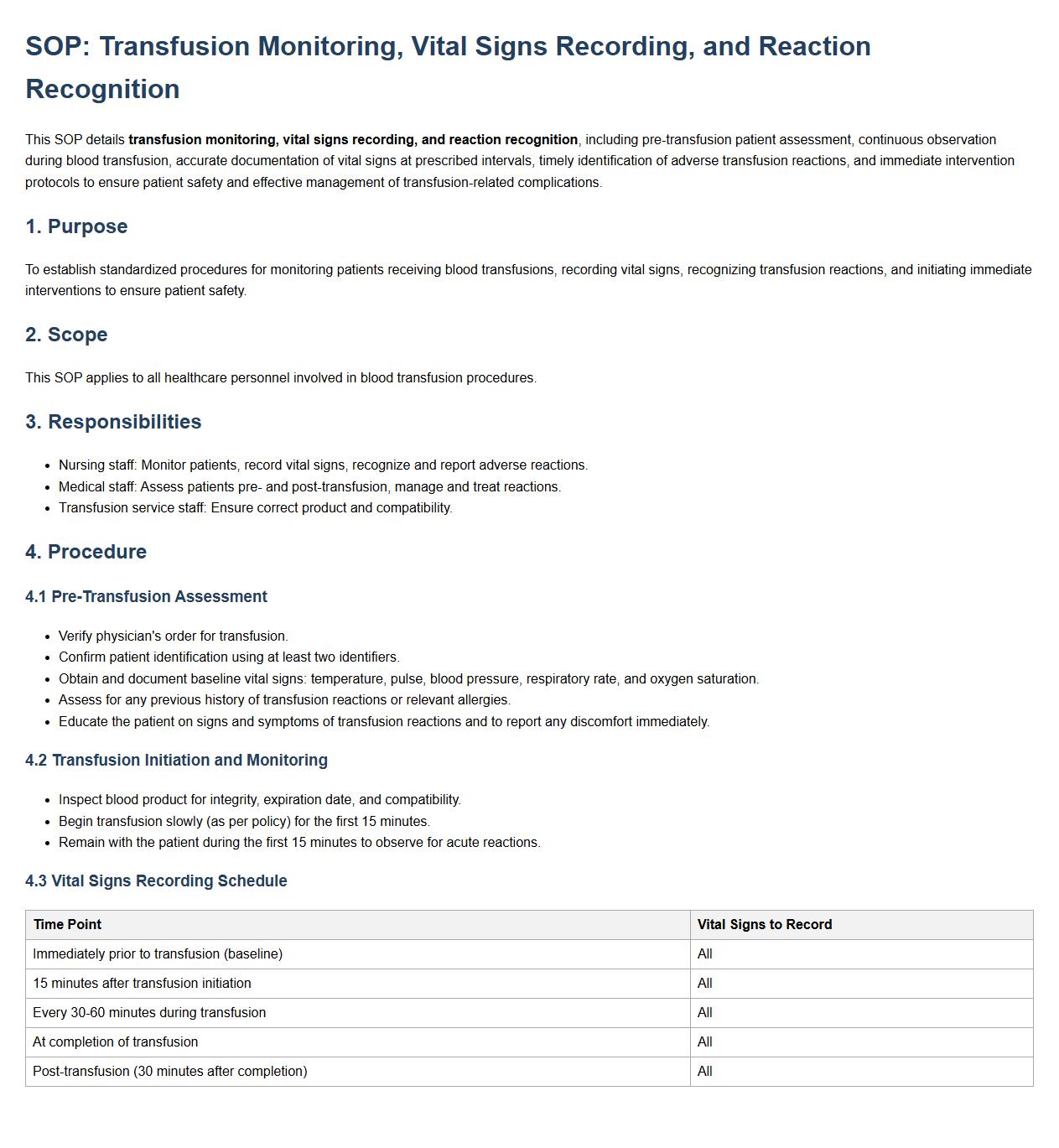
This SOP details transfusion monitoring, vital signs recording, and reaction recognition, including pre-transfusion patient assessment, continuous observation during blood transfusion, accurate documentation of vital signs at prescribed intervals, timely identification of adverse transfusion reactions, and immediate intervention protocols to ensure patient safety and effective management of transfusion-related complications.
Post-transfusion documentation and patient observation.
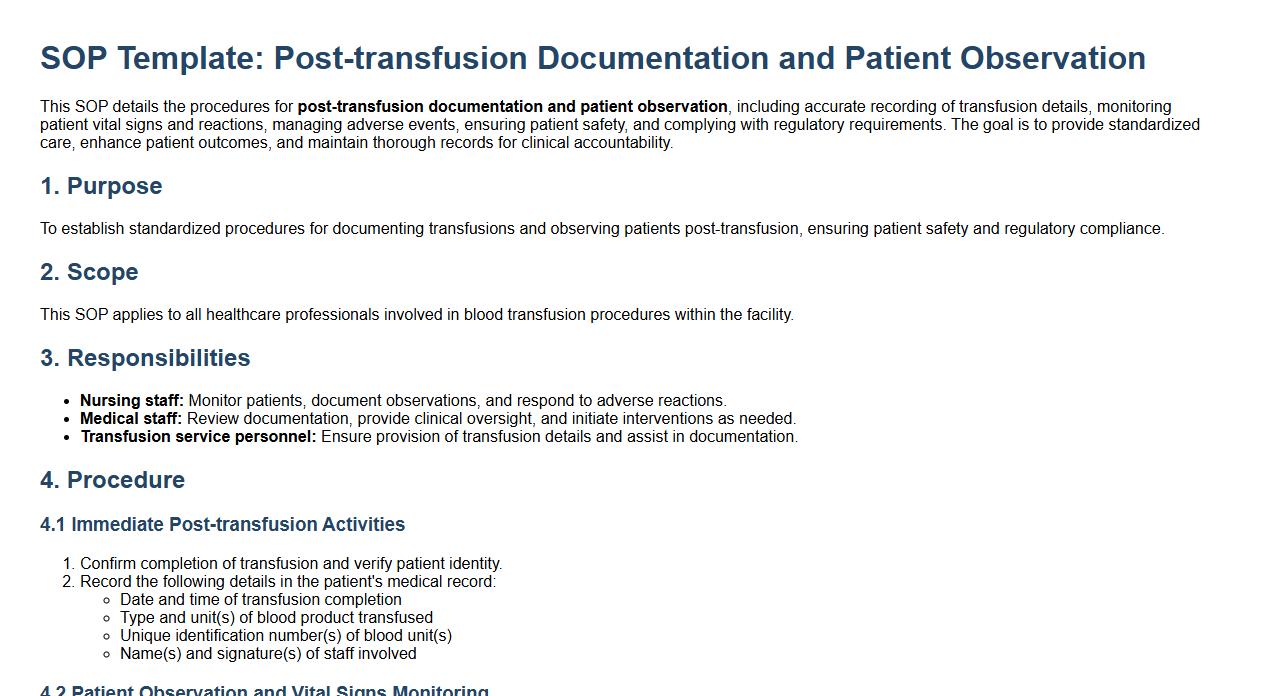
This SOP details the procedures for post-transfusion documentation and patient observation, including accurate recording of transfusion details, monitoring patient vital signs and reactions, managing adverse events, ensuring patient safety, and complying with regulatory requirements. The goal is to provide standardized care, enhance patient outcomes, and maintain thorough records for clinical accountability.
Management and reporting of transfusion reactions or complications.
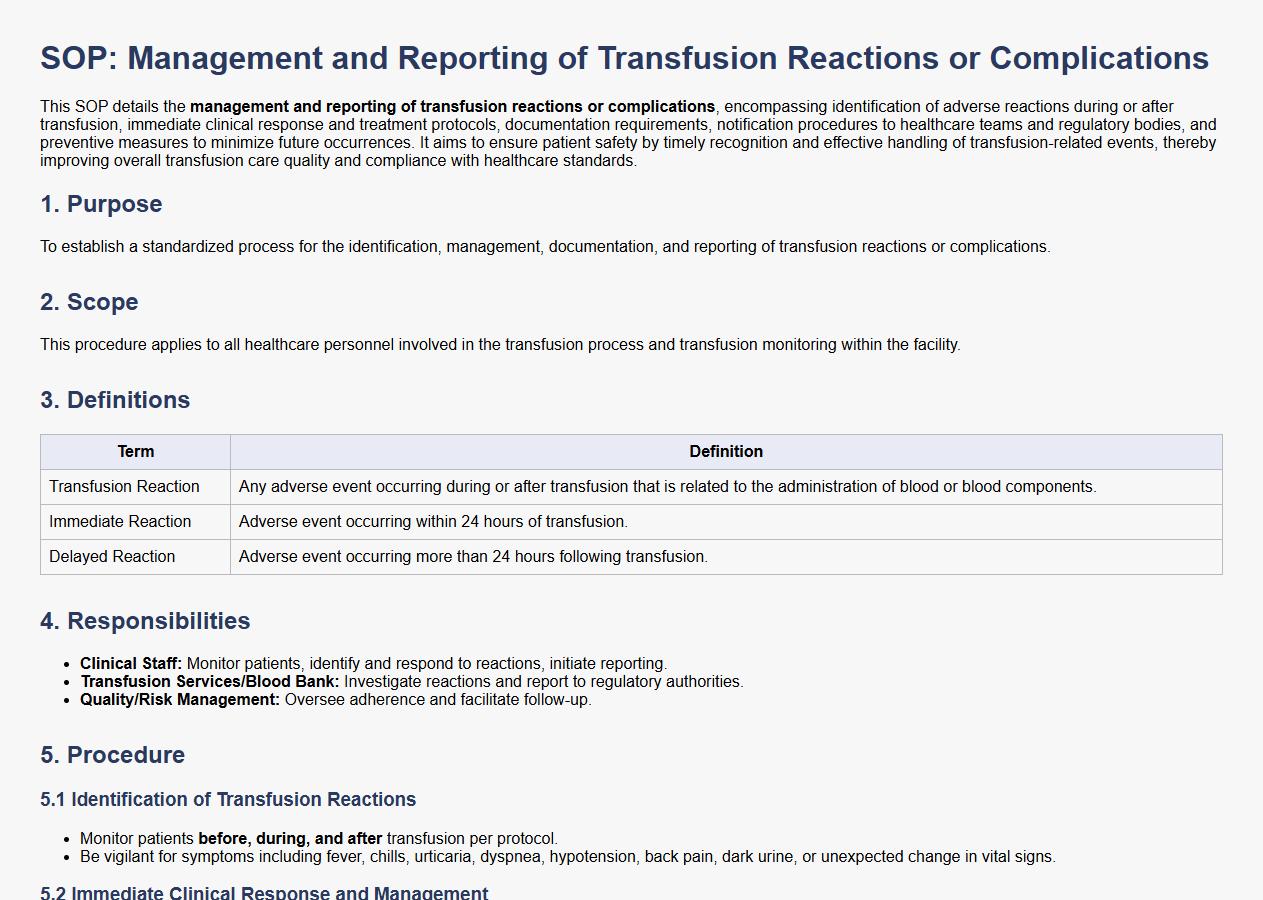
This SOP details the management and reporting of transfusion reactions or complications, encompassing identification of adverse reactions during or after transfusion, immediate clinical response and treatment protocols, documentation requirements, notification procedures to healthcare teams and regulatory bodies, and preventive measures to minimize future occurrences. It aims to ensure patient safety by timely recognition and effective handling of transfusion-related events, thereby improving overall transfusion care quality and compliance with healthcare standards.
What are the mandatory patient identification steps before initiating a blood transfusion according to the SOP?
Patient identification is a critical step to ensure transfusion safety and prevent errors. The SOP mandates verifying the patient's full name, date of birth, and unique identification number against the blood product label. Additionally, a separate healthcare professional must independently confirm these identifiers before the transfusion begins.
Which documentation is required to be completed before, during, and after the transfusion process?
The SOP requires thorough documentation at all stages of the transfusion. Before transfusion, consent forms and blood request forms must be signed and verified. During and after transfusion, monitoring logs detailing vital signs, any reactions, and completion of transfusion must be accurately recorded.
What are the specific timeframes and methods outlined in the SOP for monitoring patients during blood transfusion?
The SOP specifies that patients must be monitored intensively during the first 15 minutes of transfusion, as this period carries the highest risk for reactions. Vital signs should be checked prior to transfusion, at 5 and 15 minutes after starting, then hourly until completion. Continuous observation is required to promptly detect any adverse symptoms.
What actions does the SOP specify in case of suspected transfusion reactions?
Upon suspicion of a transfusion reaction, the SOP directs immediate cessation of the transfusion and stabilization of the patient's condition. The responsible staff must notify the transfusion service and document the event comprehensively. Follow-up involves investigating the cause, including blood sample analysis and reporting according to institutional policy.
What are the storage and handling requirements for blood products as per the SOP?
Blood products must be stored at designated temperatures between 1degC and 6degC to maintain product integrity. The SOP mandates strict monitoring and logging of storage conditions with immediate corrective action if deviations occur. Handling procedures emphasize minimizing temperature fluctuations and avoiding contamination during transport and preparation.